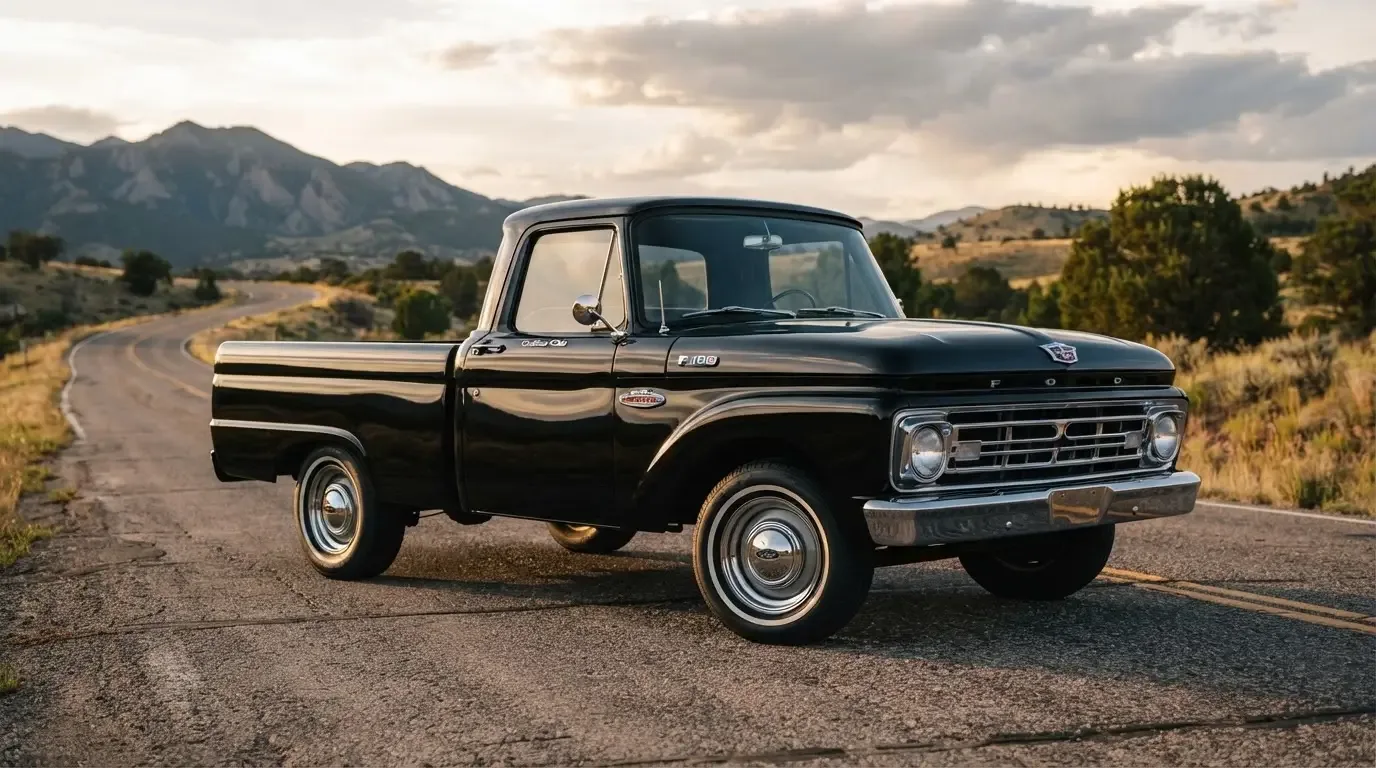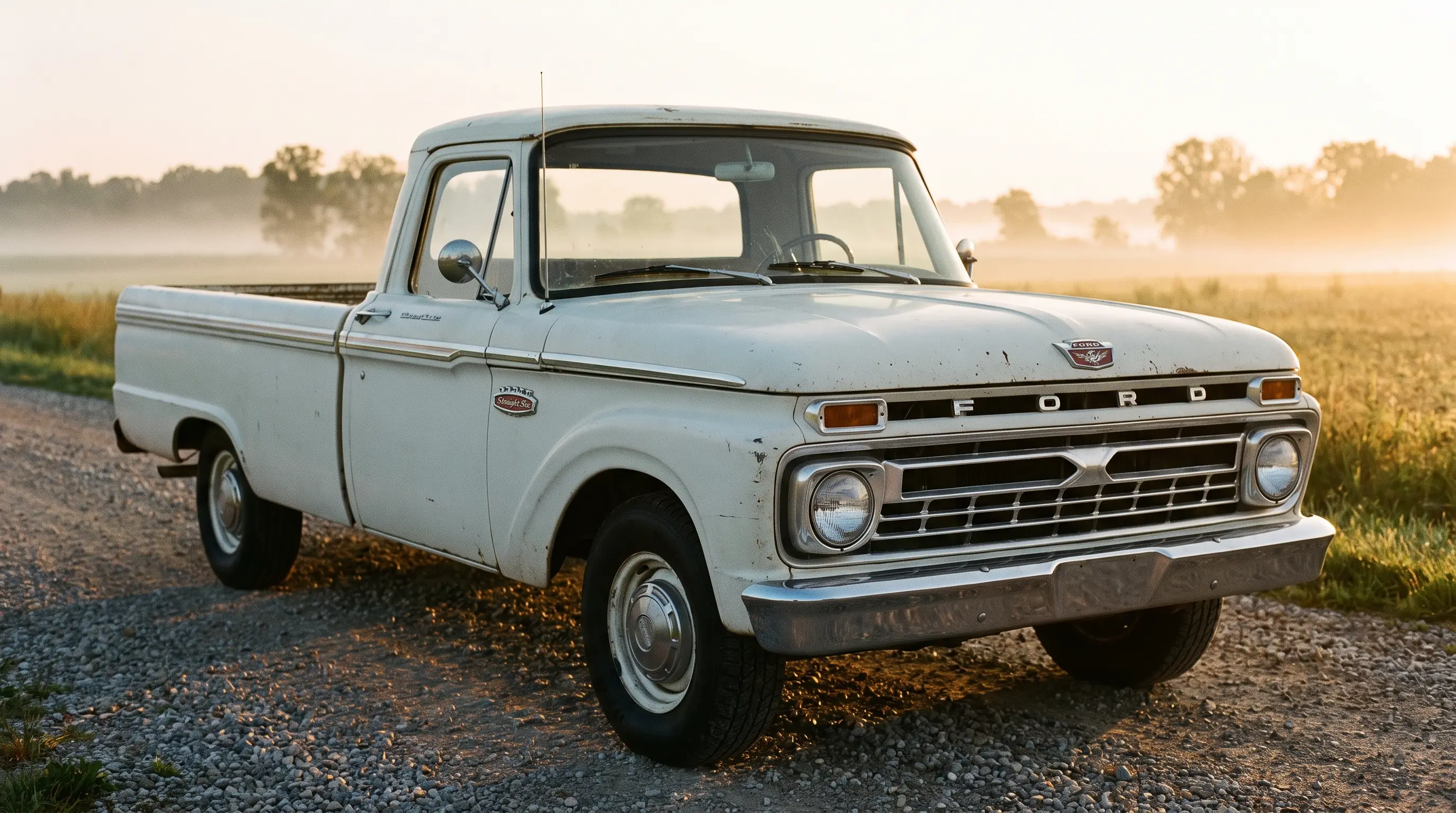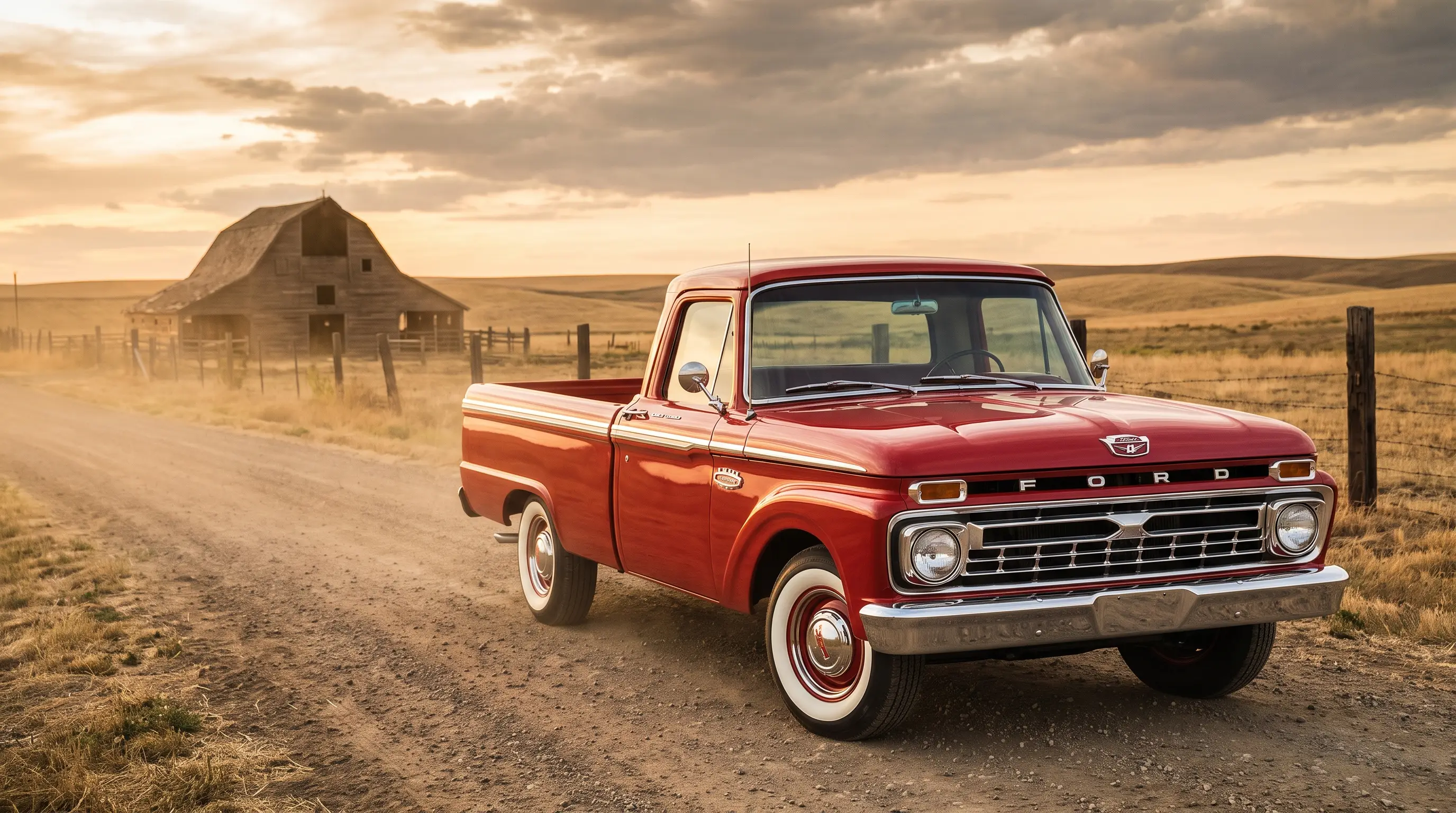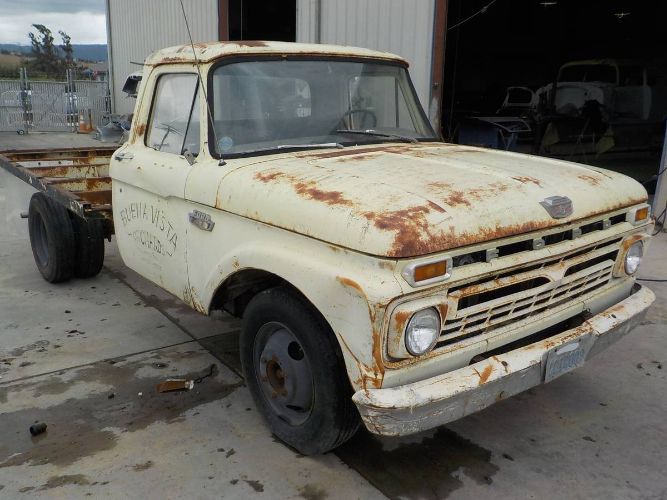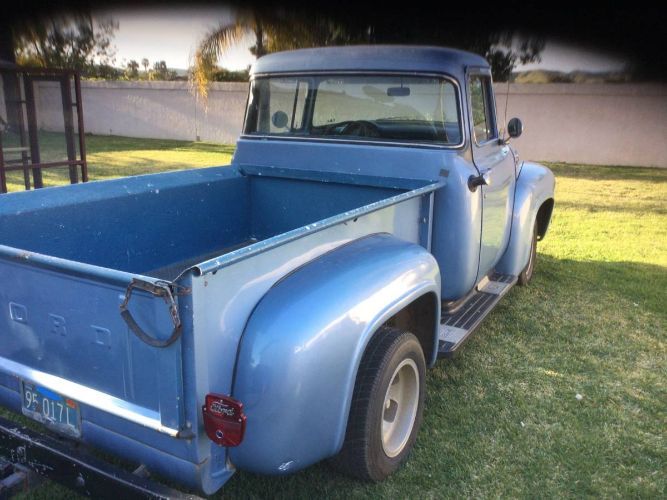
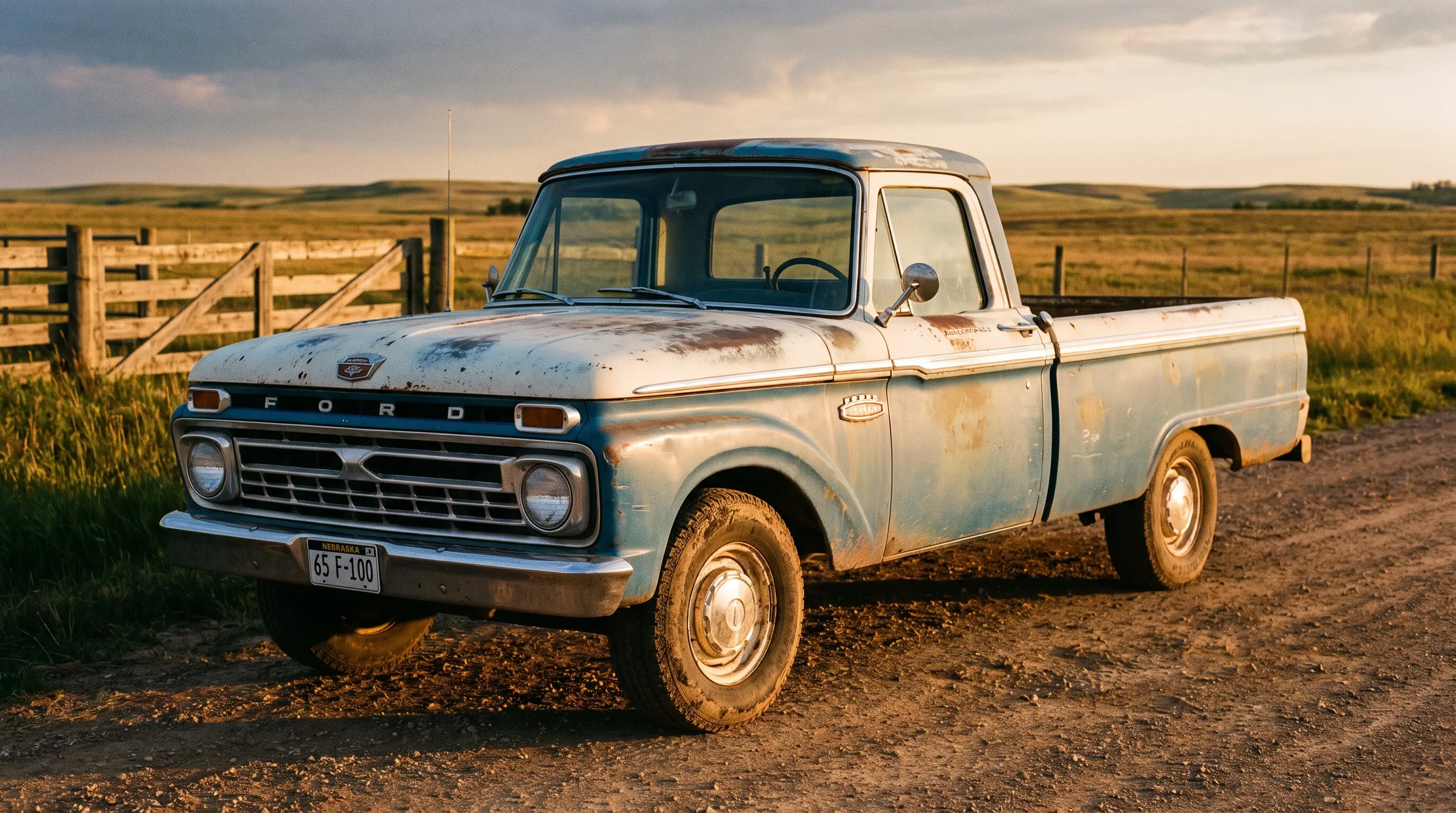
Ford redesigned the F-100 for 1961, and by the time the third year of that generation rolled around, 1965 ford f100 production had settled into a rhythm that reflects how the truck was actually being bought and used. The build sheets and plant assignments from this era tell a more precise story than the folklore that usually surrounds these trucks, and the numbers are worth walking through carefully rather than repeating the rounded figures that get passed around at swap meets.
The plants building the F-100 in this generation
Ford built the 1961 to 1966 F-100 across multiple assembly plants, a normal practice for a high volume truck line that needed to serve regional dealer networks without shipping every unit cross-country from a single site. Norfolk, Virginia and Louisville, Kentucky were both active F-Series plants through this window, alongside additional capacity brought online as demand justified it. Each plant stamped its own code into the build data, which is one of the first things a documentation-minded buyer should check against a truck's data plate before trusting a seller's claims about originality.
The importance of plant codes is not trivia for its own sake. A truck's build location affects which parts suppliers fed the line, which in turn shows up in small production variations that a knowledgeable eye can spot. It also matters for verifying a truck's story. A seller claiming a truck was originally built and sold in a specific region should have a data plate consistent with a plant that actually served that region, and inconsistencies are worth asking about before money changes hands.
Production volume across 1961 to 1966
Ford's total F-Series production during this generation ran into the hundreds of thousands annually across the full model range, with the F-100 representing the largest single share of that volume as the entry level and most widely ordered configuration. In 1965 alone, Ford built roughly 220,000 F-100s, the bulk of them Styleside models, against a much smaller run of F-250s and F-350s that same year. What is better documented is the general trend: volume climbed through the middle years of the generation as the 1961 redesign proved itself in the market, with the unibody cab and box design of 1961 to early 1963 giving way to the separate bed configuration that Ford reverted to after dealers and buyers pushed back on the unibody's practical drawbacks.
That mid-generation change, moving away from the unibody design, is one of the clearest production-era pivots in F-100 history, and it happened because Ford was willing to listen to real world feedback rather than defend an engineering decision for its own sake. Trucks built before the change and after it are visually similar at a glance but structurally different in a way that matters enormously to a restoration-minded buyer.
| Model year | Notable production detail | Body configuration |
|---|---|---|
| 1961 | First year of unibody cab and bed design | Integrated cab and box |
| 1962 | Unibody continued alongside early running changes | Integrated cab and box |
| 1963 | Mid-year shift away from unibody | Transition year, both configurations built |
| 1964 | Separate bed fully reinstated | Conventional cab and separate box |
| 1965 to 1966 | Twin I-Beam front suspension introduced for 1965 | Conventional cab and separate box |
Trim levels and how they shaped the order sheet
The 1961 to 1966 F-100 was not a one-size-fits-all truck on the order form, and the trim structure Ford offered across these years shaped which trucks survive in better condition today. A base work-spec truck came with minimal chrome, rubber floor mats, and a bench seat built for durability rather than comfort. Step up the order sheet and a buyer could option a truck with more brightwork, better upholstery, and additional convenience items that pushed the F-100 closer to what a farm family or a small business owner might actually want to drive on weekends as well as job sites.
That range matters to today's collector because surviving examples skew toward whichever trim level got babied rather than worked hard. A loaded truck ordered by a buyer who wanted something nicer tended to get gentler treatment over its working life than a stripped-down fleet truck bought purely for utility. It is not a hard rule, plenty of base trucks survived in great shape and plenty of nicer trucks got run into the ground, but the pattern shows up often enough in the surviving population that documentation-minded buyers pay attention to original trim level as part of the overall picture.
What the data plate actually tells you
Every F-100 from this generation carries a data plate with encoded information about the plant, the model, the engine, the color, and the trim level as built. Reading that plate correctly is the difference between confirming a truck's history and taking a seller's word for it. The codes are not standardized in a way that makes them intuitive at a glance, which is exactly why so many buyers skip this step and why so many trucks get sold with inflated or simply incorrect claims about their originality.
For anyone serious about buying a documented example from this generation, cross-referencing the data plate against known code tables before finalizing a purchase is not optional. It takes twenty minutes and it either confirms the truck is what it claims to be or it raises a question the seller needs to answer. Our team has covered the year by year specifics of this generation at length in 1965 ford f100 history, which is the place to start if you want the complete picture before evaluating an individual truck.
Why production details matter to today's buyers
Collectors chasing a 1961 to 1966 F-100 today are not just buying a truck, they are buying a specific slice of Ford's engineering history, and the production details separate a documented, correctly represented truck from a generic old pickup wearing the right badges. A truck with a data plate that checks out, panels that match its stated plant and year, and a build story that holds together under scrutiny commands a real premium over one that cannot be verified. That premium is not snobbery. It reflects the actual scarcity of trucks that survived with their original documentation intact.
If you are looking at value questions specific to this generation, from what a documented example commands versus a driver-grade truck with an uncertain history, a related story breaks down what the market is actually paying right now. And if you are ready to start looking at real trucks rather than just reading about them, you can find F-100s for sale now and begin narrowing the field.
"I've had people tell me a truck's data plate doesn't matter, that a truck is a truck. I disagree completely. The data plate is the closest thing this generation has to a birth certificate, and if you're not reading it, you're buying a guess."
— Tom Ramirez