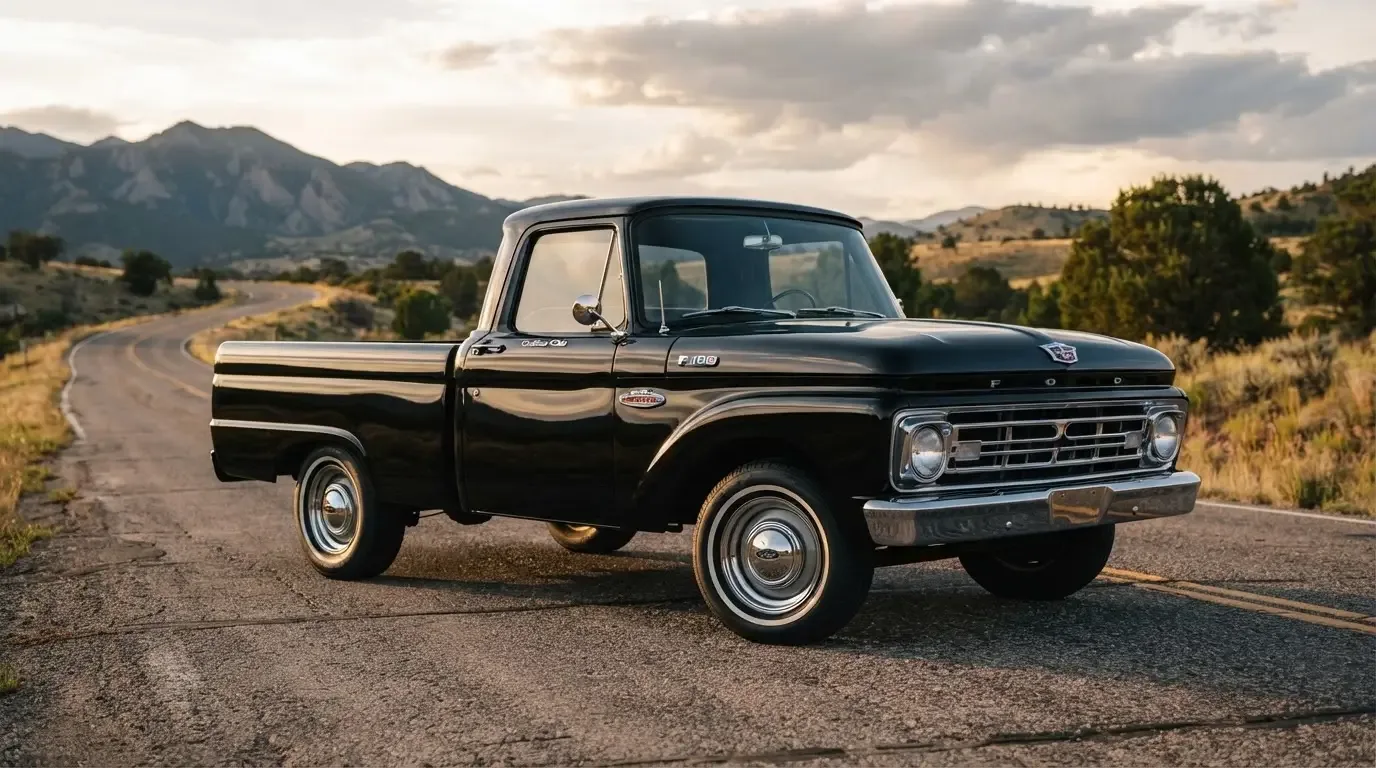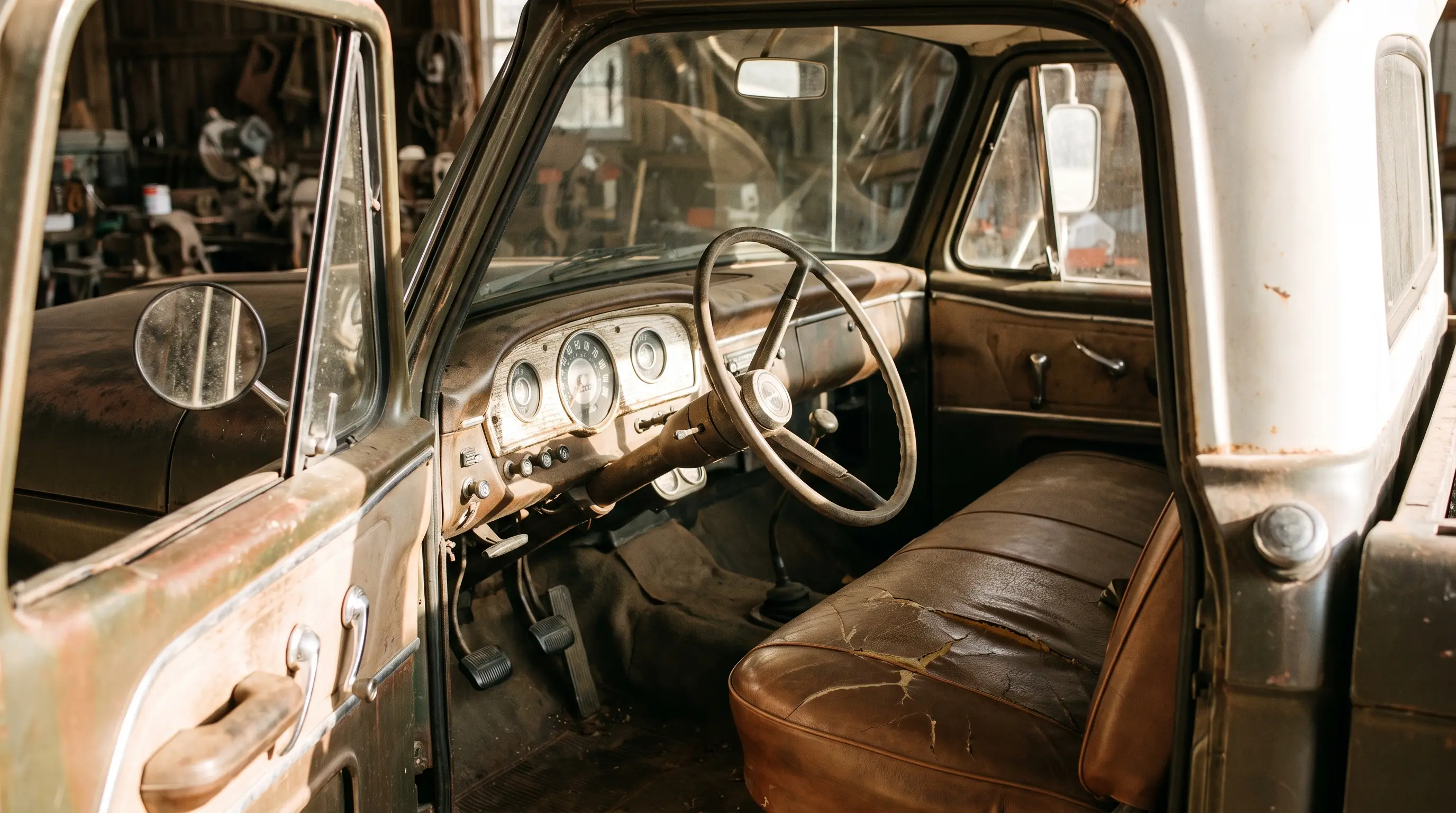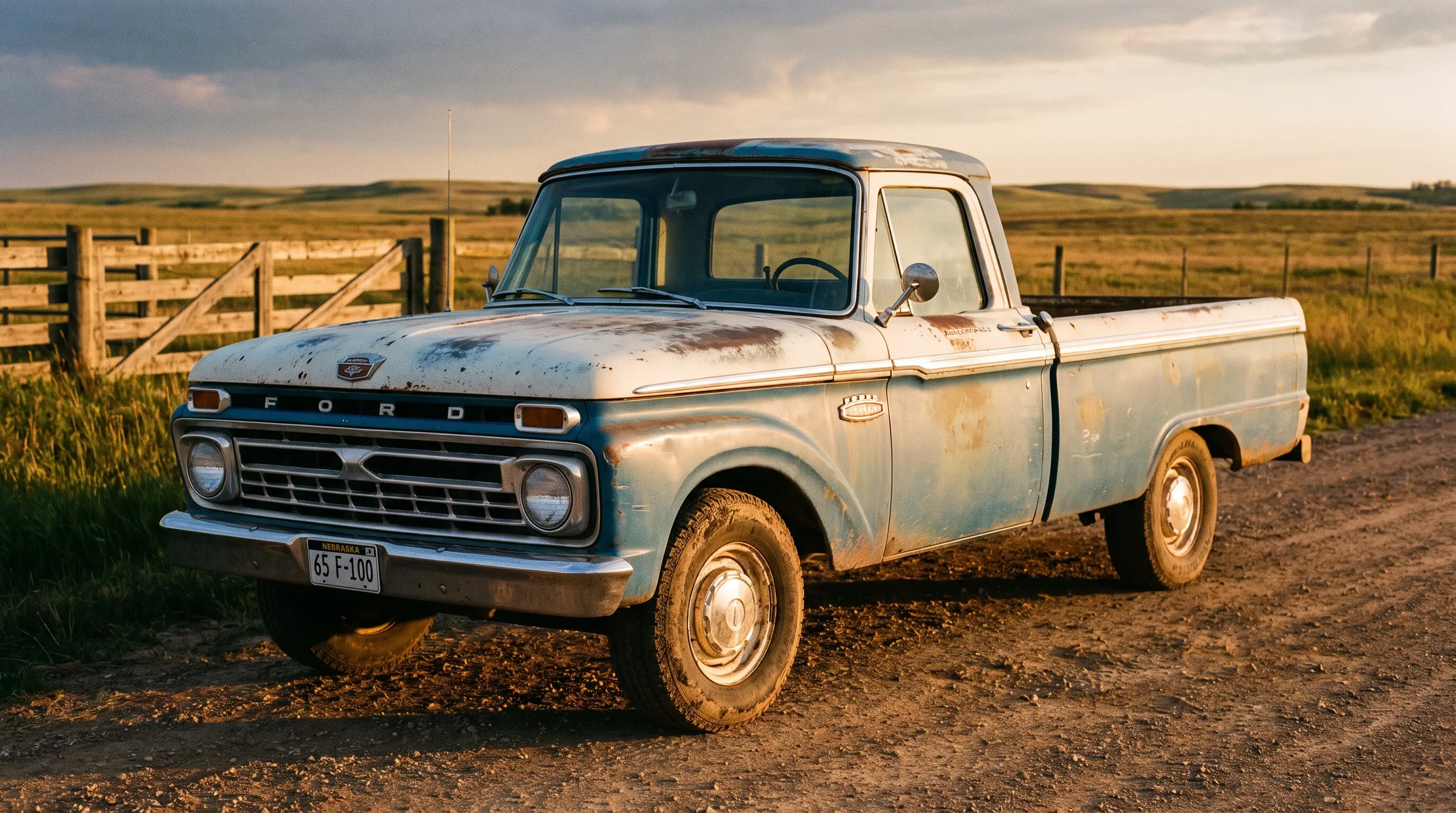
The ford 300 inline six did not show up with fanfare. It arrived for the 1965 model year, a bigger displacement version of a family that had been running in Ford trucks since the 1950s, and it took most of a decade to earn the reputation it has now. Ask anyone who has actually put miles behind one and the story is the same: unglamorous, overbuilt, and very hard to kill. That combination is why the 300 became the engine people specifically look for when they shop for an F-100, not the one they settle for.
Where the 300 came from
Ford's truck six family traces back to the 223 cubic inch engine used through the 1950s and into the early 1960s F-100s. The 240 arrived first as the larger member of the new-generation truck six lineup, built with a taller deck and more material in the block than the passenger car sixes Ford was running at the same time. The 300 followed as a stroked version of the 240, sharing the same bore but reaching further down the cylinder for more displacement. Ford was not chasing horsepower with this family. It was chasing torque low in the rev range, because a truck engine spends most of its life under load at low RPM, not screaming toward redline on a test track.
The distinction matters because it explains every decision Ford made with this engine afterward. The 300 kept a cast iron block and head, a forged crankshaft in most years, and a seven main bearing design borrowed conceptually from the small block V8 line rather than the flimsier four and five bearing sixes some competitors ran. None of that was for bragging rights. It was because Ford expected these trucks to work for a living, and a farm truck or a fleet truck that breaks a crank at forty thousand miles does not sell more trucks.
What made the 300 different from the 240
On paper the two engines look similar, and for good reason. Same basic architecture, same general layout, related parts in a lot of places. But the 300's longer stroke changed the personality of the engine more than the numbers suggest. Torque came in lower and stayed flatter across the range, which is exactly what a work truck wants when it is pulling a loaded trailer away from a stop sign. Fuel figures on the 300 were also respectable for a truck of this size and era, and that made it an easy choice once buyers understood the difference between the two sixes on the order sheet.
The 240 did not disappear once the 300 arrived. Ford kept both in production for years, positioning the 240 as the standard six in lighter duty applications and the 300 as the step-up option for buyers who wanted more pulling power without moving to a V8. That overlap is part of why the two engines get confused in casual conversation today. They look alike sitting in an engine bay. They are not the same engine once you understand what the stroke difference actually does to how the truck drives.
Why the reputation stuck
Reliability reputations are usually built slowly, one truck at a time, over years of actual use, and that is exactly what happened with the 300. Fleet operators noticed it. Farmers noticed it. The engine kept showing up in trucks that had covered enormous mileage with nothing more than routine maintenance, and word travels in that world. By the time enthusiasts started paying attention to F-100s as collector trucks rather than used work trucks, the 300's reputation was already established from decades of unglamorous daily use.
There is a mechanical honesty to the design that explains the durability without needing a mystique. Lower stress per cylinder than a V8 doing equivalent work, a stout bottom end, and a design that was never pushed to its limits in factory tune. An engine that is not fighting its own tolerances tends to last, and the 300 was built with margin rather than built to a minimum spec. The seven main bearing bottom end, unchanged in basic layout across the run, is the kind of detail engine builders still argue about at swap meets, which tells you something about how seriously people take this engine even now.
The 300 in the collector market today
Buyers shopping F-100s today treat the 300 as a selling point rather than a compromise, which is a real shift from how sixes were viewed against V8s decades ago. A numbers matching 300 in a well documented truck holds its own against V8 trucks in the same condition tier, especially among buyers who want a truck they can drive regularly rather than trailer to shows. That is a practical calculation. A well sorted 300 is cheaper to maintain, easier to source parts for, and forgiving of the kind of casual ownership a lot of these trucks get.
None of that means every 300 in a listing today is original or correctly built. Swaps happened in both directions over the decades, six for V8 and V8 for six, and a buyer evaluating a truck should confirm what is actually under the hood rather than trusting a description. For the full generational context on how the 300 fits into the bigger F-100 story across the 1960s, our complete history covers the years and changes around it in more depth.
Living with a 300 today
A properly sorted 300 in an F-100 is a genuinely pleasant engine to own as a driver. Torque delivery low in the range means the truck does not feel underpowered around town even without a V8's outright power. Parts availability remains strong because the basic architecture was used across so many Ford trucks for so many years, and a mechanic who has never touched a classic truck before can usually still recognize the family the moment the valve cover comes off.
The honest caveat is that a tired 300 with worn valve guides and a stretched timing chain will not impress anyone, and thirty or forty years of neglect can happen to any engine regardless of reputation. What the reputation buys a shopper is confidence that a well maintained example, given basic care, is not going to strand them. If you are hunting for a truck built around one of these engines, you can browse classic F-100 listings and start narrowing down candidates by year and condition.
"People treat the 300 like it's some kind of secret weapon, and honestly, the secret is that Ford just did not cut corners on it. There is no trick to it. It is a well engineered, slightly overbuilt truck engine that got left alone to do its job for thirty years, and that is rarer than people think."
— Emily Chen
Sources and notes
- Ford straight-six engine - Wikipedia
- Here's Why The Ford 300 Inline-Six Is One Of The Greatest Engines Ever - Jalopnik
- Straightforward: Ford's Indestructible Inline Six-Cylinder Explained - EngineLabs
- Ford's Old-School Inline-Six Was Built To Last - CarBuzz
- Unsung Hero: Ford's 300 CID Straight-Six Engine - Military.com