
There is a moment in every truck collector's education when they learn that Ford once welded the cab and the bed of a pickup into a single piece, and the reaction is almost always the same: they assume it must be a myth. It isn't. The Ford F100 unibody, built for a short handful of years in the early 1960s, was a genuine attempt to rethink what a pickup truck could be, and it is one of the more fascinating dead ends in the whole history of the F-series.
Car Features
7 min read
The 1961 F-100 Unibody: Ford's Bold Experiment
The Ford F100 unibody welded cab and bed into one piece for a seamless look, a bold styling bet that ran headlong into real-world durability problems.
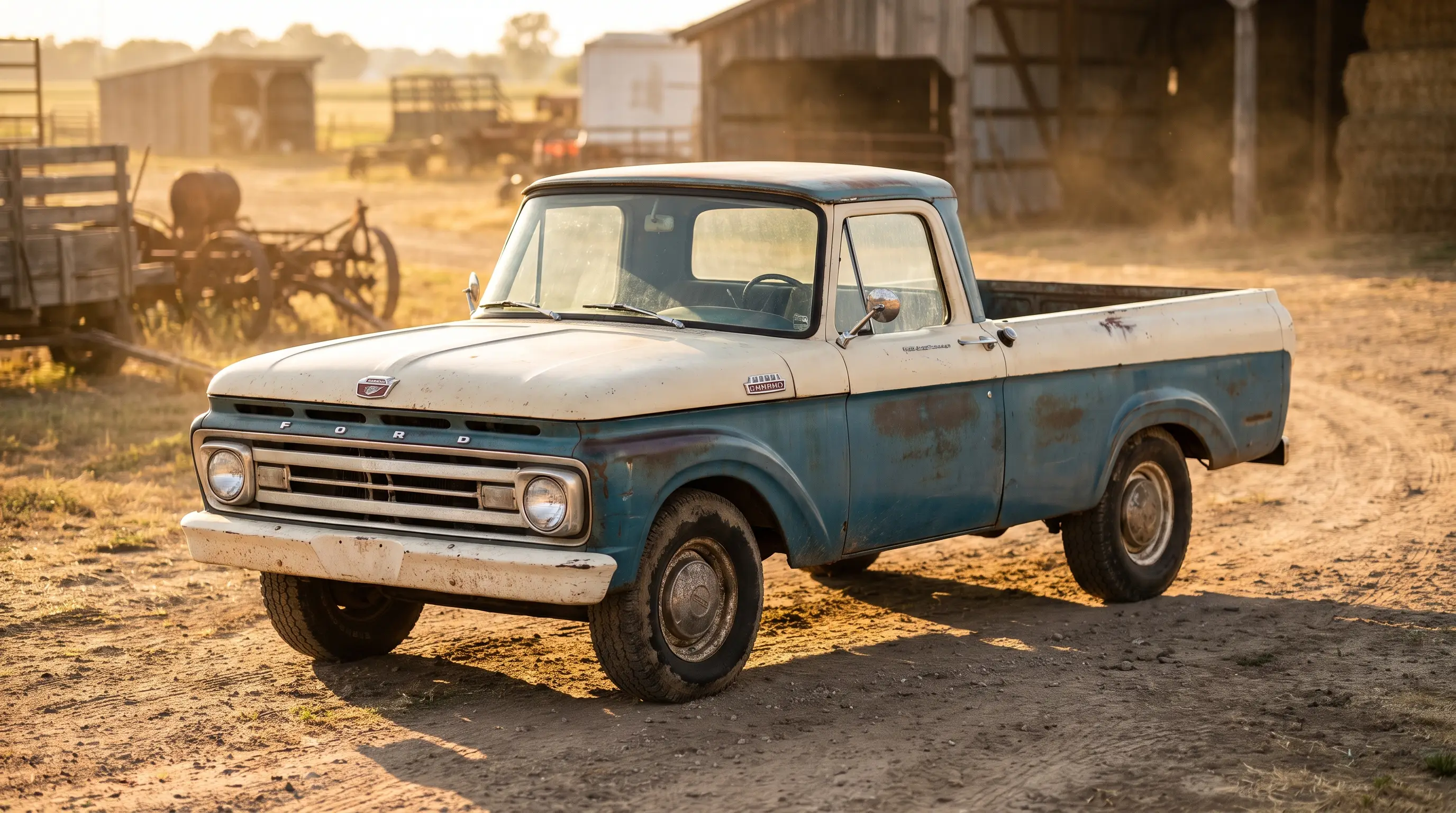
An engineer's answer to a styling problem
By the start of the new decade, Ford's designers wanted a cleaner look than the traditional pickup silhouette allowed, where a visible gap always separated the cab from the bed no matter how well the two were styled to match. Their solution was radical for the segment: build the cab and bed as one continuous, unibody structure, welded together into a single unit rather than bolted on separately over a traditional ladder frame bed mount. The result was a truck with a smooth, unbroken beltline running from the windshield all the way to the tailgate, something no domestic pickup had offered before.
It was a genuinely bold move for a company that built its reputation on rugged, conventional engineering. Ford was betting that buyers wanted their trucks to look more like passenger cars, cleaner and more integrated, even if that meant a fundamentally different structure underneath.
The looks were undeniable
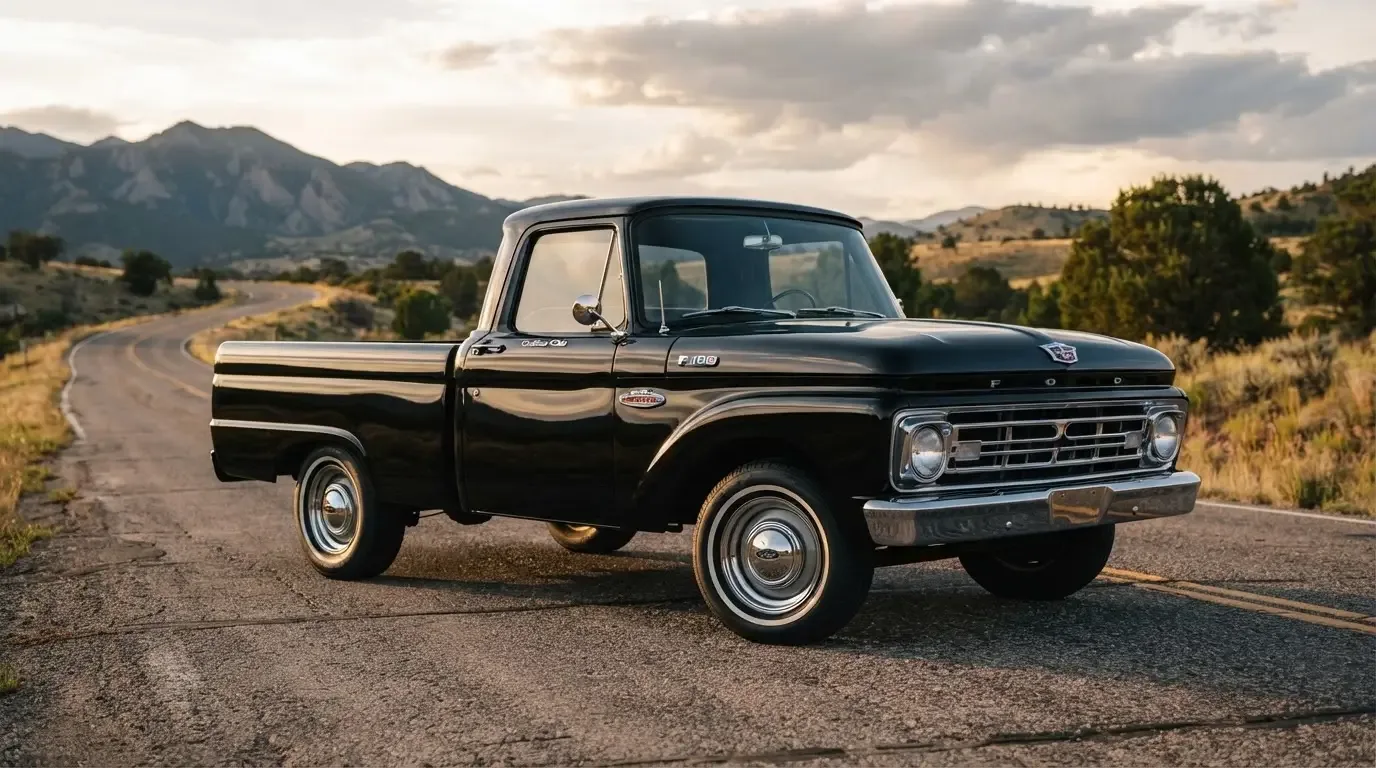
Whatever else you say about the unibody experiment, it produced a genuinely handsome truck. The seamless line from cab to bed gave it a low, integrated look that stood apart from every competitor on the lot, and period photography shows just how different it read next to a conventional pickup parked beside it. Enthusiasts today who track this generation down specifically for that styling are not chasing nostalgia alone. They are chasing a design that Ford, for all sorts of practical reasons, never fully repeated.
Inside, the truck carried forward much of the comfort focus that had defined Ford's trucks since the previous generation's redesign, with a wide cab and a driver-oriented dash. The unibody structure did not compromise cab comfort. If anything, the rigid single-piece construction gave the cab a slightly more solid, quiet feel than a conventional frame-and-bed truck of the same era.
Where the idea started to strain
The trouble showed up under real-world load. A traditional pickup frame is designed to flex slightly, twisting a small amount as the truck crosses uneven ground, with the cab and bed mounted independently enough to absorb that movement separately. Weld the two together into a single unibody structure, and that independent flex disappears. Under a heavy load or on rough terrain, the whole structure twisted as one piece, and that twisting showed up as stress cracks near the cab-to-bed seam and misaligned doors that would not close cleanly after enough abuse.
For a truck that buyers expected to actually work, hauling gravel, lumber, and equipment across unpaved roads, that was a real problem, not a cosmetic annoyance. Ford heard about it from dealers and from unhappy owners, and the company's response tells you everything about how seriously they took it.
"You have to respect the ambition here. Ford looked at a category everyone assumed had to look a certain way and said, what if it didn't. That the engineering couldn't quite keep up with the styling doesn't make the attempt any less interesting."
- Patrick Walsh
A short chapter in a much longer story
The unibody design lasted three model years, 1961 through 1963, before Ford quietly walked it back partway through the 1963 run, returning to a conventional separate bed while keeping much of the styling language the unibody trucks had introduced. Even during those years it was never the only option: unibody construction applied to two-wheel-drive F-100 and F-250 Styleside models, while four-wheel-drive trucks and Flareside beds kept a conventional separate cab and bed throughout. It is a classic case of a good idea arriving slightly ahead of the manufacturing tolerances needed to make it durable at scale, and Ford was not shy about correcting course once the field reports came in.
That short production window is exactly why these trucks carry a certain cult status now. They represent a road not taken, a truck that looked like nothing else Ford built before or after, and that rarity alone makes them a genuinely interesting corner of F-series history for anyone who likes their classic trucks with a side of what-if.
How rivals reacted, or didn't
What makes the unibody experiment even more interesting in hindsight is how little competitive pressure actually drove it. Rival truck makers were not pushing integrated cab-and-bed styling at the time, and none of them rushed to copy Ford's approach once it appeared on the market, which suggests the industry as a whole understood the structural tradeoffs Ford was making even if buyers did not immediately grasp them from the showroom floor. That silence from competitors is its own kind of verdict on how risky the engineering community considered the idea to be.
It also means the unibody F-100 stands almost entirely alone in domestic truck history as a serious factory attempt at this specific construction method, rather than one entry in a broader industry trend. Collectors interested in genuinely unusual engineering choices, not just unusual styling, tend to gravitate toward these trucks precisely because nothing else in the segment quite compares to them, before or since.
Collecting one today
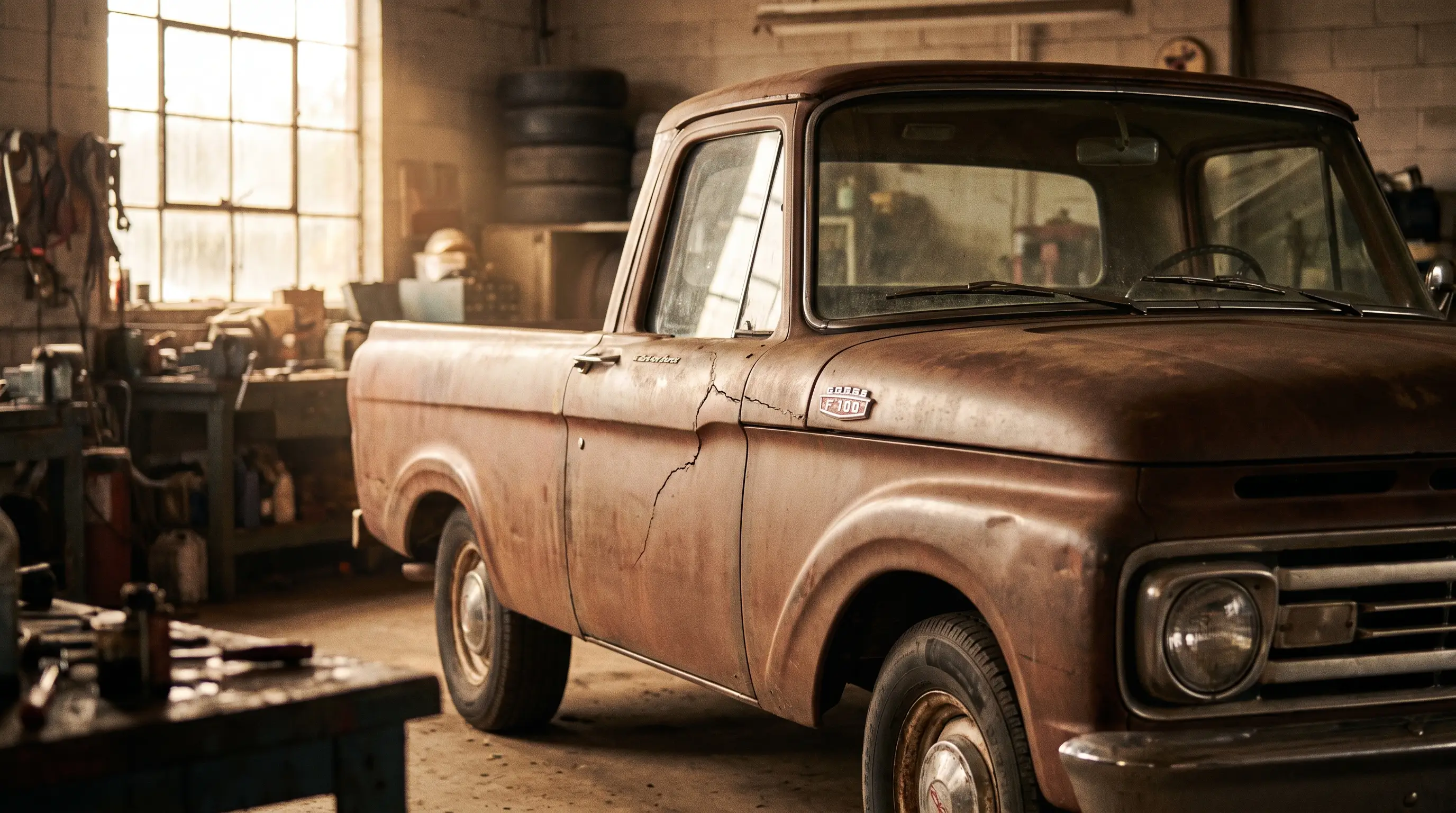
Finding a well-preserved unibody survivor takes real patience, since the production window was short and decades of hard use have thinned the surviving population considerably. Buyers should inspect the cab-to-bed seam carefully as a first step, since that is where the structural stress this design was known for tends to show up first, whether as hairline cracking, filled and repainted repairs, or misaligned doors that never quite closed the way they did from the factory.
A truck that shows honest, disclosed repair work at that seam is not automatically a lesser purchase than one that appears pristine there. Given how widely reported this issue was during the truck's original production, an untouched, crack-free seam on a truck that has clearly seen real use over sixty years is worth a second, more skeptical look rather than an automatic vote of confidence.
Where this fits in the bigger picture
The unibody chapter sits inside a broader story about how this generation of Ford truck evolved through the first half of the 1960s. For the complete account of that period, including how the unibody experiment led into what came after, 1965 ford f100 history covers the full arc. And if the practical side of why this design did not last is what interests you most, a related story digs deeper into exactly what went wrong under real-world use.
If this era has you hunting for one of your own, current F-100s for sale now occasionally include survivors from this window, and they are worth a serious look for anyone drawn to the road Ford almost stayed on.
Sources and notes
Related Reading
Have a
Ford F-100
for Sale?
Reach thousands of serious classic car collectors across the US.
Sell It Here →
Are You a Classic Car Dealer?
List your full inventory and connect with targeted classic car buyers.
Join as a Dealer →

About the author
Patrick Walsh
Automotive journalist covering classic car shows, events, and the enthusiast community across North America.
Related Listings - Ford F-100

Comments
Be the first to comment on this article.