
Camaro SS history is a story about two letters that got borrowed, dropped and handed back. Chevrolet put them on the first Camaros in 1967, pulled them after 1972, and let an outside engineering firm bolt them back on for 1996. In between, the letters meant a big-block, then a tired small-block, then nothing at all for 23 model years. If you want the whole family of fast Camaros, start with the performance Camaros.
Car Features
7 min read
The Camaro SS Name, From 1967 to 2002
The Camaro SS badge year by year: the 350 and 396 cars, the 1972 exit, the SLP revival of 1996 and the LS1 SS that closed the run in 2002.
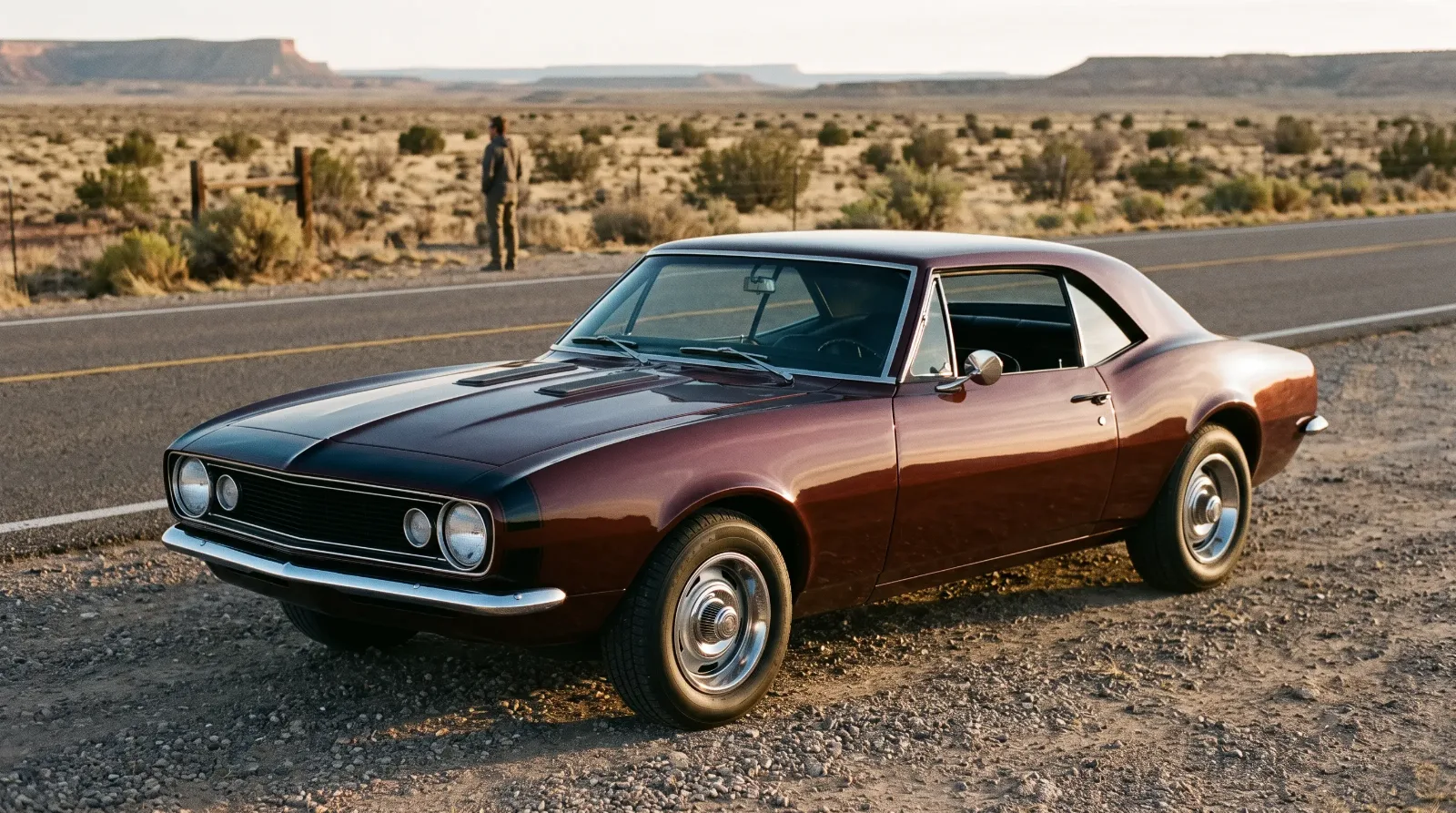
Camaro SS history starts with a 350 and a 396
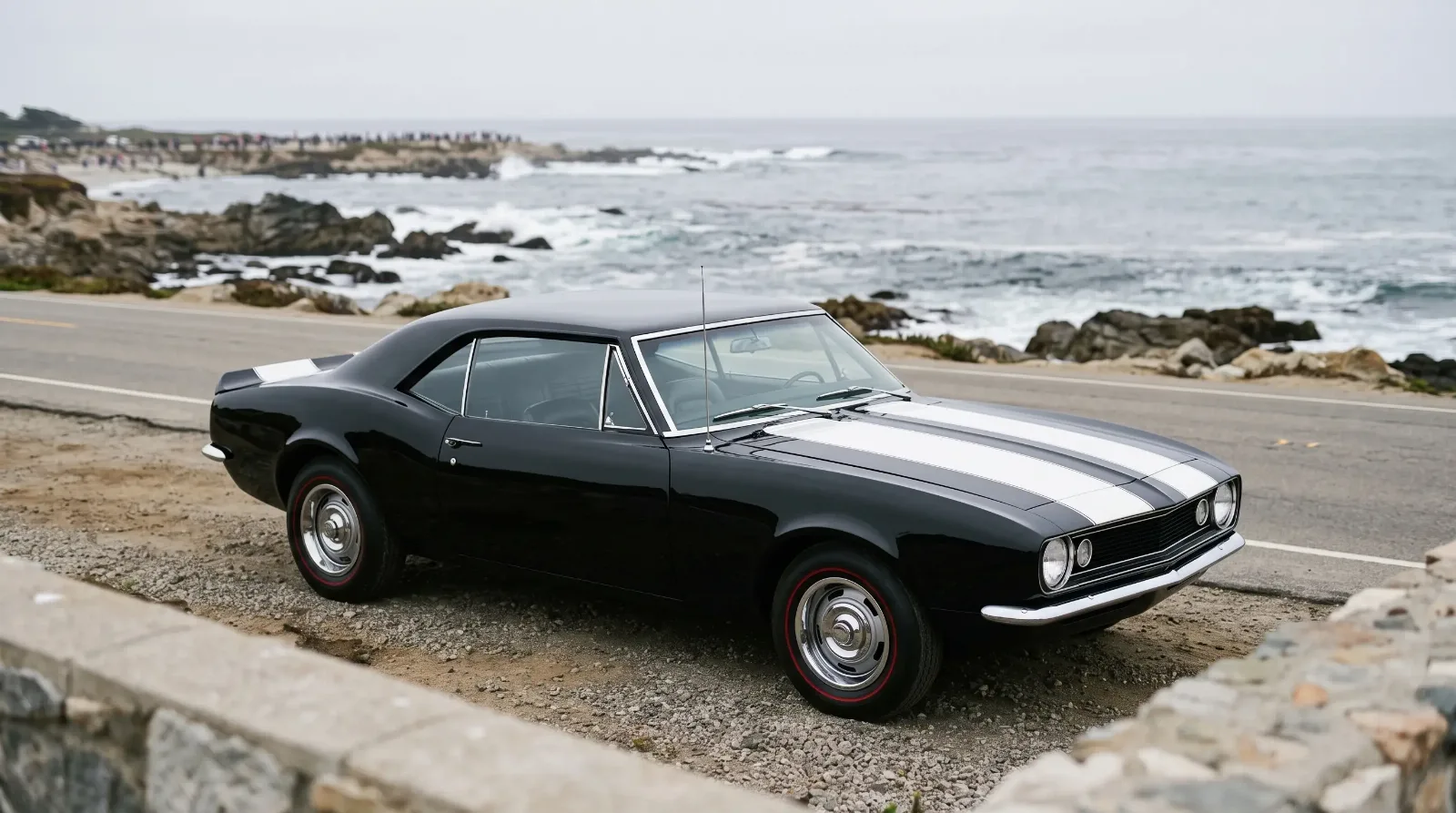
The Camaro went on sale on September 29, 1966, as a 1967 model, and the SS was on the order form from day one. Two engine families wore it. The SS 350 got the L48 350, rated 295 hp gross at 4,800 rpm with 380 lb-ft. In 1967 that engine was a Camaro exclusive. The SS 396 started with the L35 at 325 hp and topped out with the L78 at 375 hp at 5,600 rpm and 415 lb-ft. For 1968 and 1969 Chevrolet slotted the 350-hp L34 in between, and L78 buyers could add L89 aluminum heads.
The emblems told you which was which. "SS 350" went on L48 cars and "SS 396" on all three big-blocks. The nose stripe changed mid-run: the D91 "bumble-bee" stripe gave way to the D90 stripe from January 1968. From the same month, power brakes became mandatory on the SS 396. That second change is Chevrolet admitting something without saying it out loud.
People bought them in volume. Chevrolet built 34,411 SS Camaros for 1967, 27,884 for 1968 and 34,932 for 1969. A 1967 RS/SS 396 convertible paced the Indianapolis 500, and the 1969 pace car package, RPO Z11, went on 3,675 RS/SS convertibles. The engines and options of those three years get the long treatment in the original SS story. A few dealers decided 396 cubic inches was not enough and stuffed 427s into new Camaros. That side business has its own article here.
1970 to 1972: the SS shrinks, then quits
The second-generation car kept the badge as RPO Z27, priced at $289.65 for 1970. That bought the 300-hp L48 350 four-barrel, power brakes, hood insulation, a black-painted grille and F70-14 white-letter tires on 14x7 wheels. The big-block was still on the sheet. Chevrolet called it a 396. It measured 402 cubic inches. The 350-hp L34 cost $152.75 extra and the 375-hp L78 cost $385.50. One source puts 1970 SS production at 12,476.
Then the numbers went the wrong way. For 1971 the Z27 cost $313.90, the L48 was down to 270 hp gross (210 net), and the LS3 big-block was rated 300 hp gross, 260 net. Chevrolet built 8,377 SS cars that year, 6,844 with the 350 and 1,533 with the 396. Road & Track still named the 1971 SS 350 one of the world's 10 best cars in August 1971. That tells you how good the chassis was while the engines lost ground every year.
The 1972 model year finished it. The LS3 was rated 240 hp net, and only 970 SS 396 cars were built out of 6,562 SS Camaros in total. A 174-day UAW strike at Norwood stopped the line, and about 1,100 unfinished cars were scrapped. It was also the last factory big-block in the classic Camaro. For 1973 the Super Sport package was gone, and the Type LT, a luxury model, took its place as the featured Camaro.
The 1996 return, built by SLP
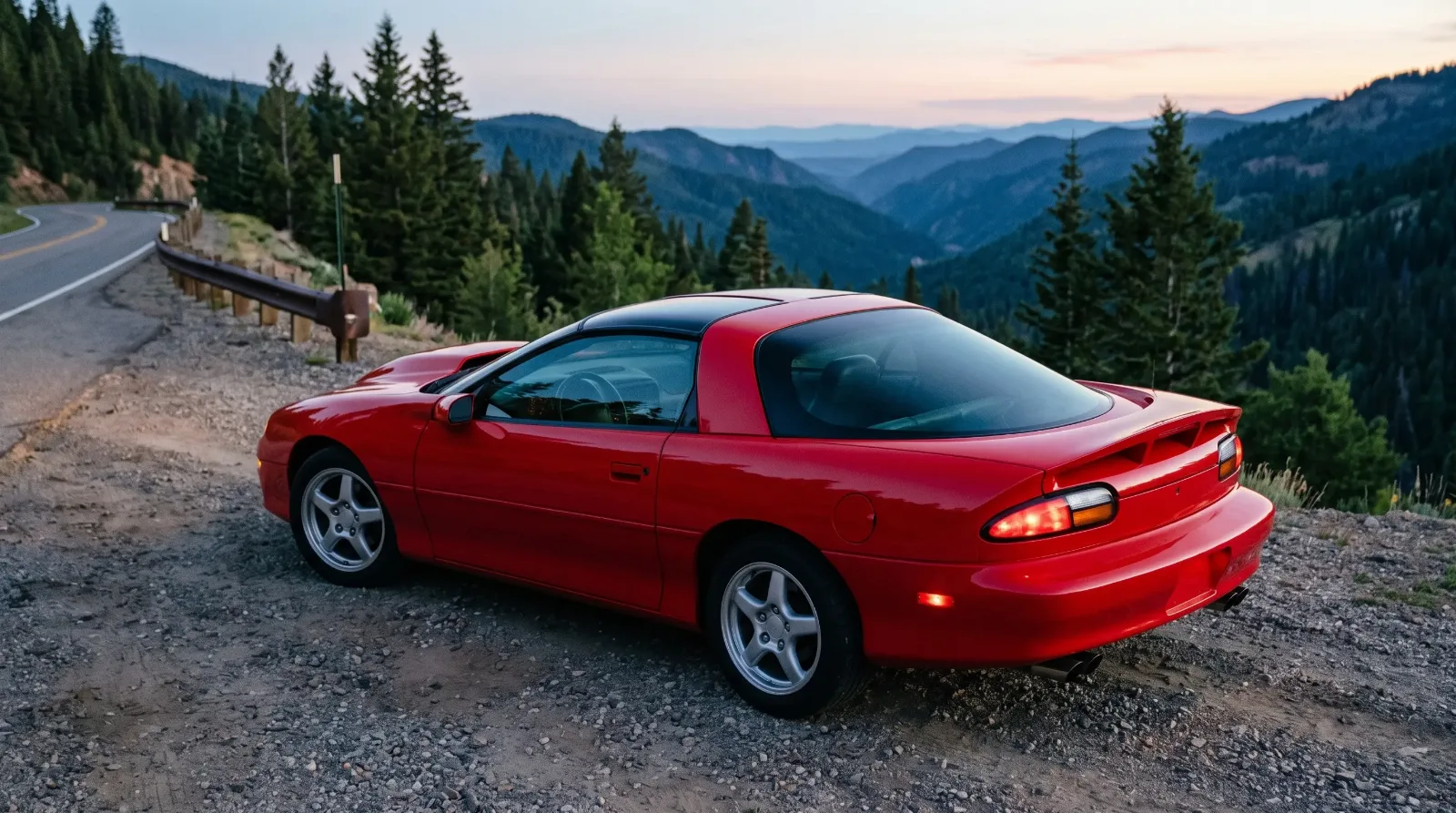
When the SS came back for 1996, Chevrolet did not build it in-house. The car started life as a Z28, and SLP Engineering converted it under a GM contract. The option cost $3,999. The LT1 was rated 305 hp, 20 more than that year's 285-hp Z28, and the gain came from SLP's cold-air intake and a freer exhaust.
It was more than a sticker job. The package had a composite hood with a working scoop and cold-air induction, a new decklid spoiler, 17x9 ZR-1-style five-spoke wheels, a bigger front anti-roll bar, a revised rear track, synthetic oil and a console plaque with the car's production number. How many were built is still argued over. Hagerty's own pages give both 2,257 and 2,410, dealer listings add figures such as 2,263, and nobody has settled which one is right.
The press liked it. In a December 1995 comparison against the Mustang Cobra and the Firebird Formula WS6, Car and Driver called the SS "the quickest, the fastest, and the best handler." A 0-60 time of 4.9 seconds, credited to the magazine, gets repeated in sale listings, but nobody quoting it names the issue. Treat it as a claim, not a spec.
For 1997 the SS stayed at 305 hp, and 3,137 buyers paid the $3,999. It was also the 30th Anniversary year: 4,533 cars got the $575 package in Arctic White with Hugger Orange stripes, and 957 of them were SS cars. The oddball was the LT4 SS. SLP put the 330-hp, 340 lb-ft LT4 from the 1996 Corvette into 108 of those anniversary cars: 100 for the US, 6 for Canada and 2 prototypes. At about $40,000 new it was the most expensive factory Camaro.
"An LT4 SS is a Corvette engine in a Camaro with a factory warranty. That is the whole pitch, and for once the pitch is true."
Mike Sullivan
The LS1 SS, 1998 to 2002
For 1998 the SS became a regular order code, RPO WU8, at $3,500. The engine was the LS1, rated 320 hp, with a forced-air hood, a special spoiler, 17-inch wheels and tires, and special suspension. The cars were built at Ste-Thérèse in Quebec and shipped to SLP in nearby LaSalle, where the hood, spoiler, wheels and suspension went on.
The rated gap over the Z28 stayed small: 320 hp against 305 from 1998 to 2000. For 2001 both cars got the LS6 intake manifold, a revised camshaft and no EGR, and the SS went to 325 hp against the Z28's 310. Car and Driver ran a 1999 SS to 60 mph in 5.3 seconds and to 100 mph in 12.8, with a 160-mph top speed.
The last year was the busiest. Hagerty counts 11,191 SS cars for 2002 out of 24,805 Z28-based cars, so about 45 percent of buyers ticked the box. Of those, 3,369 also paid $2,500 for the 35th Anniversary package, RPO Z4C: Bright Rally Red, silver stripes with a checkered-flag motif, and 35th embroidery on the headrests. It was an appearance package. It added no horsepower.
| Model year | SS engine (rating) | SS package price | SS built |
|---|---|---|---|
| 1967 | L48 350 (295 hp) or 396 (325 to 375 hp) | n/a | 34,411 |
| 1968 | L48 350 (295 hp) or 396 (325 to 375 hp) | n/a | 27,884 |
| 1969 | L48 350 (300 hp) or 396 (325 to 375 hp) | n/a | 34,932 |
| 1970 | L48 350 (300 hp) or 402 (350 or 375 hp) | $289.65 | 12,476 |
| 1971 | L48 350 (210 hp net) or LS3 402 (260 hp net) | $313.90 | 8,377 |
| 1972 | 350 or LS3 402 (240 hp net) | n/a | 6,562 |
| 1996 | LT1 (305 hp) | $3,999 | 2,257 or 2,410 |
| 1997 | LT1 (305 hp); LT4 (330 hp) | $3,999 | 3,137 LT1; 108 LT4 |
| 1998 | LS1 (320 hp) | $3,500 | 3,025 |
| 1999 | LS1 (320 hp) | $3,700 | 4,829 |
| 2000 | LS1 (320 hp) | $3,950 | 8,913 |
| 2001 | LS1 (325 hp) | $3,950 | 6,332 |
| 2002 | LS1 (325 hp) | $3,625 | 11,191 |
What the SS badge is worth on a used car
Here is the blunt part. An SS emblem costs next to nothing, and on a first-gen car the VIN will not catch a fake. On a 1967 to 1972 car, documentation does the talking: build paperwork, a dealer invoice, anything from the factory that names the package. Without it you are paying SS money for a Camaro with SS stickers.
The 1996 to 2002 cars are easier, but only a little. On a 1996 or 1997 car, look for the numbered console plaque. On any of them, check that the SLP parts are all still there: the cold-air hood, the spoiler, the 17-inch wheels. A car that has lost its hood to a fender bender and gained a Z28 hood is now a Z28 with a story. Hagerty's Greg Ingold said in 2018 that the 1996 to 2002 SS had the best collectibility outlook of the standard fourth-gen cars, and that any SLP-built car carries weight with buyers. That only holds when the car can prove what it is.
Chevrolet put the SS badge on the new Camaro again for 2010, but that is a different car and a different story. For the rest of the fourth-generation car that carried the last classic SS, read more here. Buy the paperwork first. The letters are the cheap part.
Sources and notes
- Camaro Research Group: 1967 to 1969 model and engine identification
- Silodrome: the Camaro Z27 SS, its package contents and 1971 to 1972 production
- Wikipedia: Chevrolet Camaro (second generation)
- Hagerty Marketplace: 1996 Camaro SS listing with the SLP package contents
- Wikipedia: Chevrolet Camaro (fourth generation)
- Hagerty: is the fourth-gen Camaro collectible?
Related Reading
Have a
Chevrolet Camaro
for Sale?
Reach thousands of serious classic car collectors across the US.
Sell It Here →
Are You a Classic Car Dealer?
List your full inventory and connect with targeted classic car buyers.
Join as a Dealer →

About the author
Mike Sullivan
Detroit-area muscle car enthusiast and restoration specialist with three decades of hands-on experience working on American iron.
Related Listings - Chevrolet Camaro
Comments
Be the first to comment on this article.