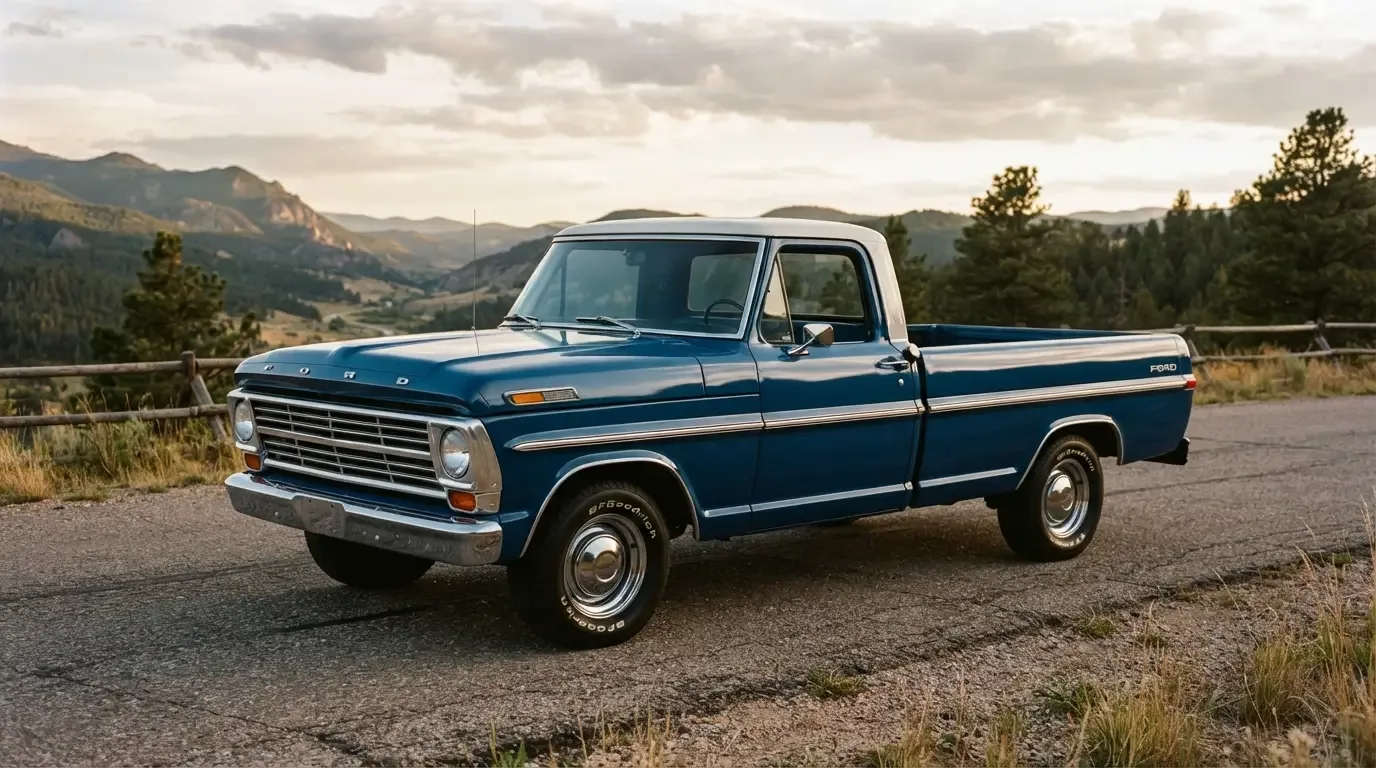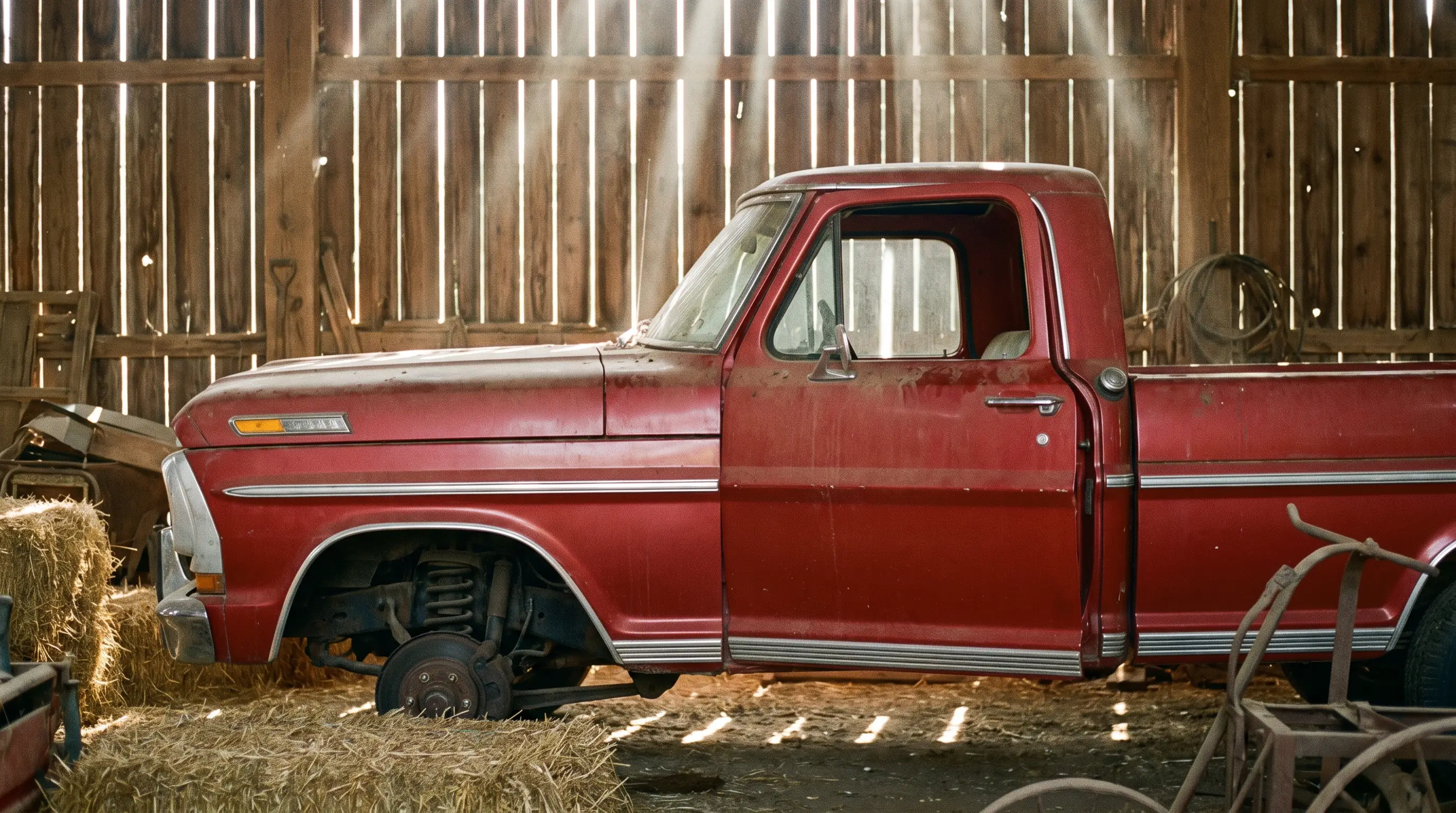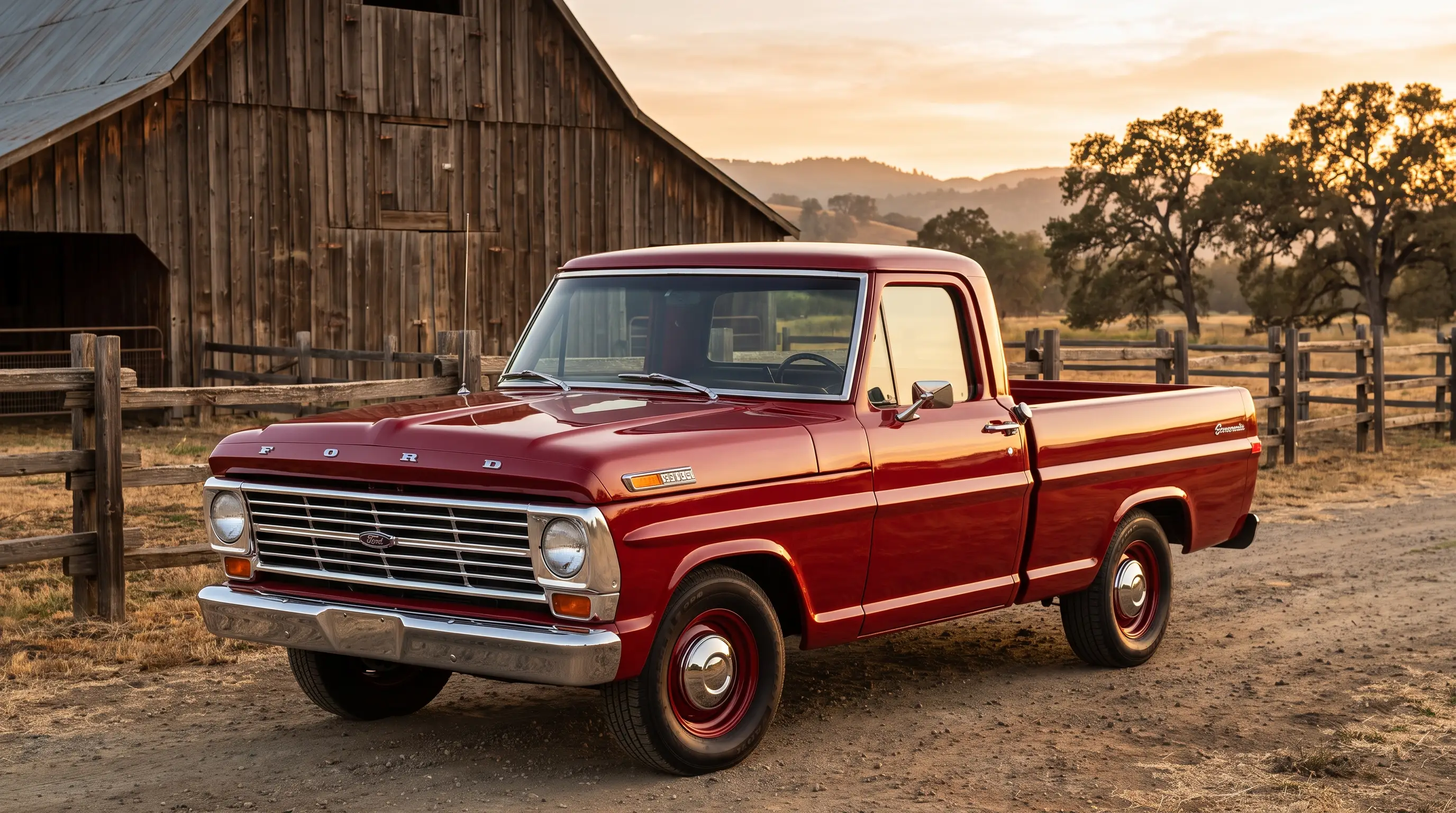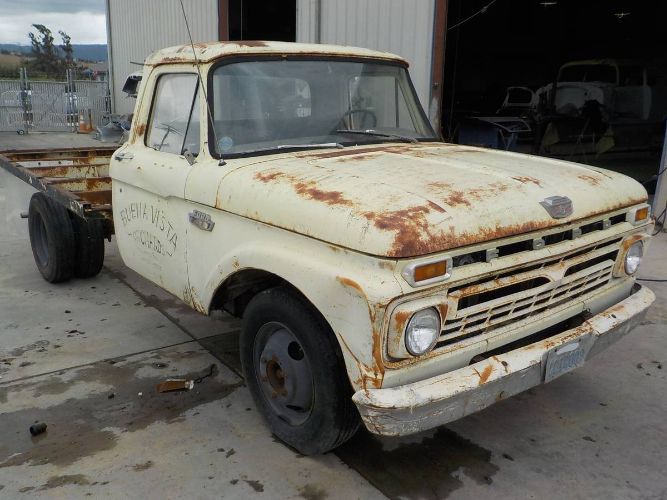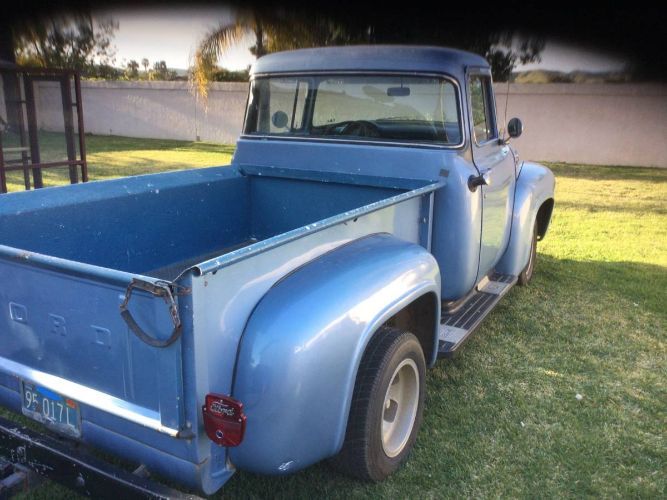
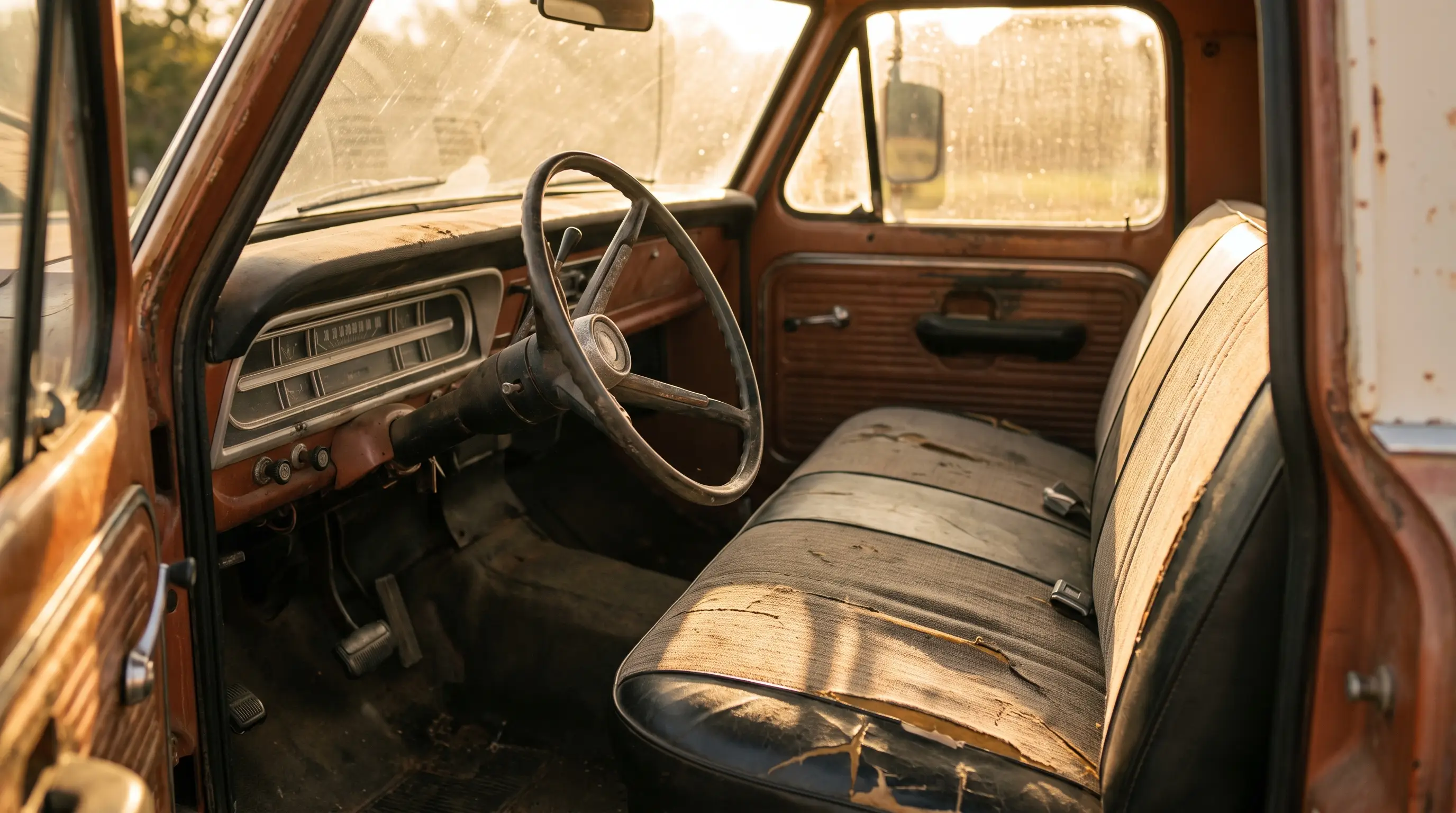
There is a particular quiet inside a 1968 Ford F-100 interior that you do not find in a modern truck cab, no chimes, no screens, just the soft tick of a clock and vinyl that has taken the shape of decades of drivers leaning the same way against the same door panel. I climbed into one last spring at a small county fairgrounds show, borrowed for ten minutes by an owner who wanted a stranger's honest reaction, and the thing that struck me was not the dash or the gauges. It was how much the cab felt like a room somebody had actually lived in.
A cab built for people, not just for work
Ford's bumpside generation, running from 1967 through 1972, marked a real shift in how much attention the company paid to the space where a driver actually spent their day. Earlier trucks treated the interior as an afterthought behind the wheel, functional but bare. By 1968, Ford had started layering in real comfort details, better seat padding, more thoughtful switch placement, a dash design that borrowed genuine warmth from the company's passenger cars rather than feeling like a stripped-down industrial fixture.
The truck I sat in that afternoon wore its original bench seat, the vinyl cracked in exactly the places you would expect after a lifetime of sun through the windshield, and the owner told me he had never once considered reupholstering it in anything but the original pattern. "It's not broken," he said. "It's just old, the same way I'm old." For the complete history of how this generation of F-100 developed around interiors like this one, our complete history covers the full arc.
What made a Ranger cab feel different
Step up to a Ranger interior from that same year, or a Ranger XLT once Ford added that top trim in 1970, and the difference is immediate. Carpet instead of rubber matting. Bucket seats in place of the standard bench, for buyers who wanted the option. Woodgrain accents warming up the dash in a way that made the whole cab feel less like a tool and more like a place somebody had chosen to be, rather than a place they had to be for the workday.
I have talked to more than one owner who remembers a parent or grandparent specifically choosing the upgraded interior for reasons that had nothing to do with hauling capacity. One woman told me her father special-ordered his F-100 with the nicer cab because her mother refused to ride in the plain version on family trips, and he wanted a truck the whole family could use, not just a work vehicle he happened to also drive home.
| Interior element | Base Custom cab | Ranger XLT cab |
|---|---|---|
| Flooring | Rubber mat | Carpet |
| Seating | Bench, basic vinyl | Bucket seats available |
| Dash trim | Painted metal | Woodgrain accents |
| Insulation | Minimal | Substantially upgraded |
The small details that stay with people
What surprises me most, talking to owners about these cabs, is how rarely the conversation stays on specs for long. Someone will mention the specific smell of the vinyl warming in the sun, or the exact sound the door makes when it closes, or where their father kept a coffee thermos wedged against the seat every single morning for years. These are not details anyone writes into a sales brochure, and they are exactly the details that make a fifty-year-old interior feel like it still has a pulse.
A worn steering wheel, polished smooth by decades of hands, tells a story a fresh reproduction part never could. Owners who choose to preserve an original interior, cracks and all, are often making a quieter argument than they realize: that the wear itself is part of what the truck is, not a flaw waiting to be corrected.
I think about that argument every time I see a beautifully restored cab at a show next to an untouched original sitting quietly a few spots down. Both are valid choices, and both come from real love for the vehicle. But there is something particular about the untouched cab, the one that still carries the actual shape of the people who used it, that a restoration, however careful, simply cannot replicate. It is the difference between a photograph of a memory and the memory itself.
"It's not broken. It's just old, the same way I'm old."
- Nora Beckett
The dashboard as a family artifact
Glove boxes in these trucks tend to hold more than owner's manuals. I have seen faded gas station receipts from towns that no longer have that same gas station, a child's crayon drawing tucked behind the jack instructions, a folded map with a route traced in pen from a trip nobody quite remembers the reason for anymore. None of it belongs in a parts catalog, and all of it is exactly why these cabs feel inhabited rather than merely preserved.
One owner in Ohio showed me a dashboard clock that had stopped sometime in the late 1970s and never been fixed, not because parts were unavailable but because his mother had once told him the truck stopped keeping time the same week his father passed, and nobody in the family ever had the heart to wind it again. Whether that is literal fact or the kind of story that grows softer and truer with every retelling, it is the sort of detail a spec sheet will never capture, and it is the reason I keep coming back to these interiors instead of the engine bays.
Sources and notes
- 1970 Ford Trucks: F-100, Ranger XLT introduction
- 1971 Ford F-100: Ranger XLT Debut, 360 V8 Specs and Values
- 1967-1972 Ford F-100 Bumpside Identification and Builder's Guide
- History of the Bumpside: 1967-1972 Ford F-Series Trucks
- Hagerty Valuation Tools: Ford F-100
Why these interiors still matter
A truck interior from this era is not just upholstery and a dashboard. It carries the specific texture of a family's ordinary days, the school runs and the feed store trips and the long quiet drives that never made it into anybody's photo album. That is part of why so many owners resist restoring these cabs to showroom perfection, choosing instead to keep the wear that proves the truck actually lived a life.
For anyone drawn to that same feeling, and hoping to find a cab with its own story still intact, the search usually starts the same way mine did that afternoon at the fairgrounds: by looking to browse classic F-100 listings and asking not just what condition a truck is in, but who sat in it, and for how long, before it ever reached the market.
Before I left the fairgrounds that day, the owner asked if I wanted to sit in the truck one more time, alone, without him talking over the moment. I did. I sat there for a few minutes with the door closed, listening to nothing but the wind moving across the fairgrounds and the faint tick of that same clock I mentioned earlier, and I understood, in a way no spec sheet could ever explain, why he had never once considered replacing a single stitch of that original bench seat.