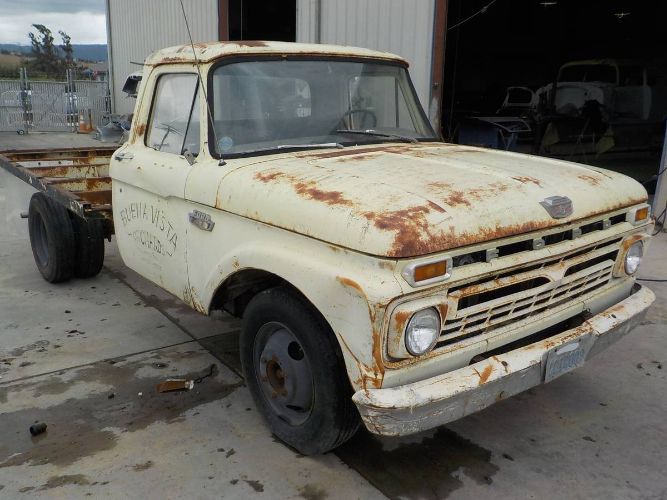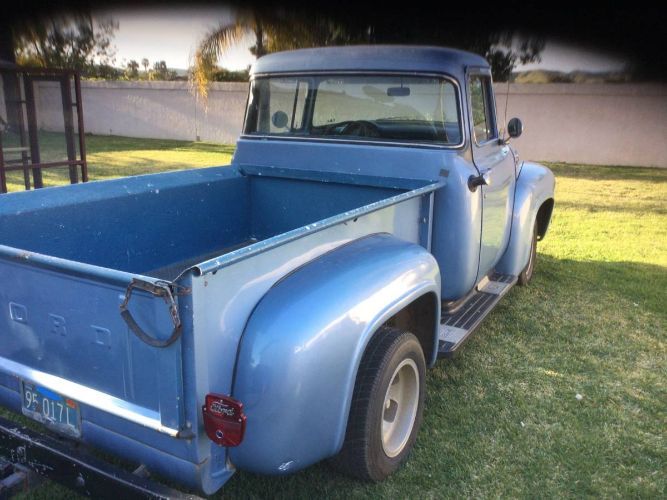
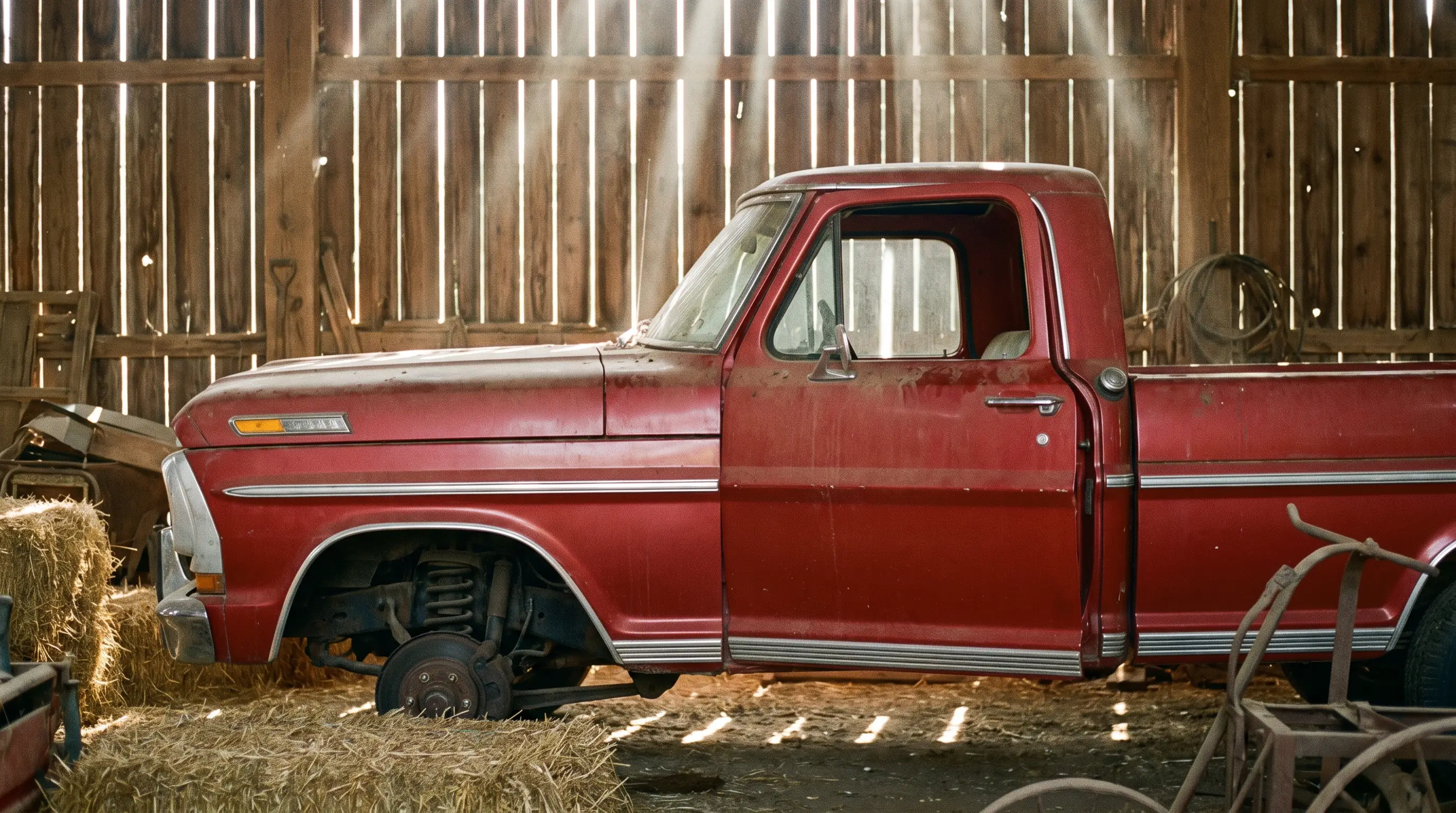
Paint code plates rust, fade, and disappear over fifty-plus years, which means half the job of identifying a truck's original 1970 Ford F-100 colors comes down to knowing what Ford actually offered rather than trusting whatever coat of paint happens to be on the truck when you find it. Color is one of the fastest ways to spot a truck that has drifted from factory-correct, and for a builder who spends real time under these panels, getting the palette right matters as much as getting the panel gaps right.
The factory palette for the bumpside generation
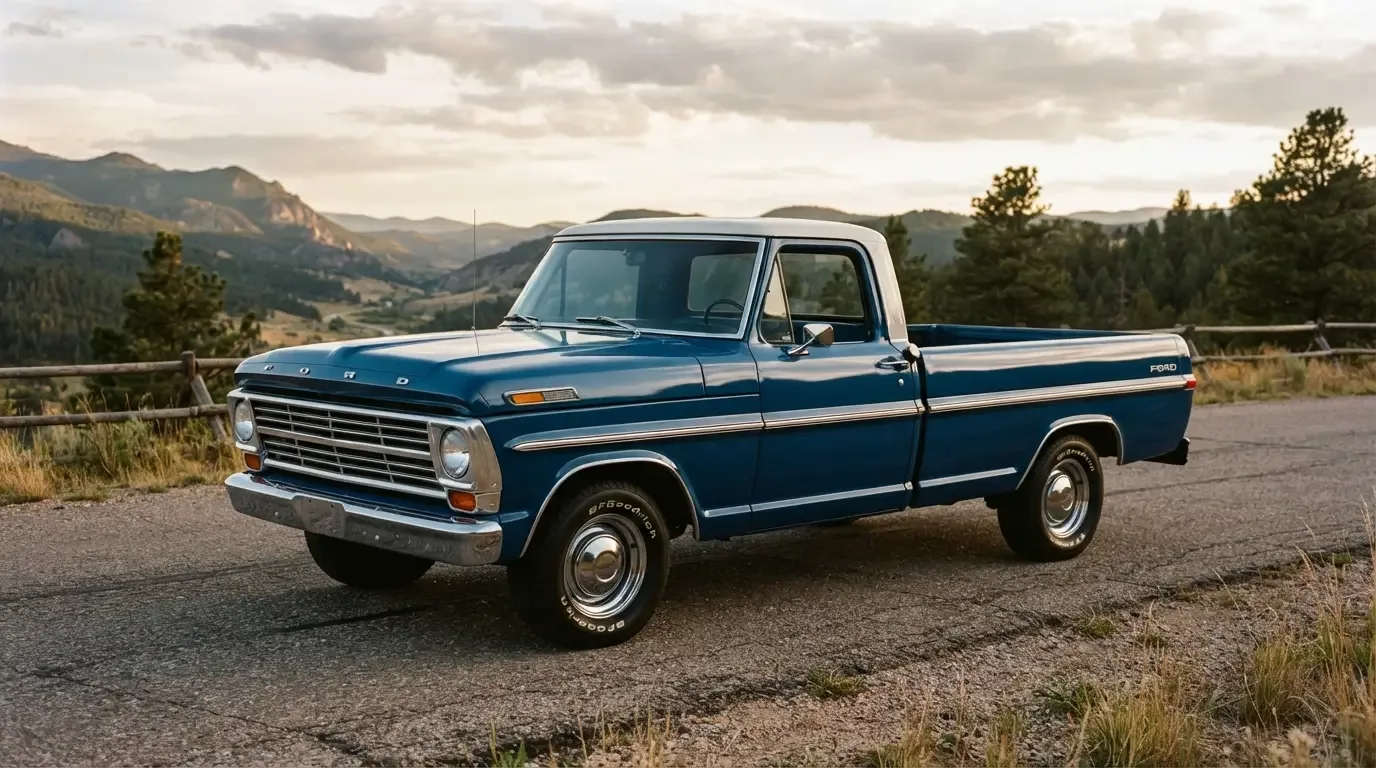
Ford's color offerings across the 1967-72 F-100 run leaned toward confident, honest hues rather than flashy show colors. Deep blues, forest and avocado greens, warm golds, and a handful of reds and whites made up the bulk of factory orders, with two-tone combinations available that split colors along the bumpside's horizontal ridge line itself, a detail that made the design element functional as well as decorative. For the broader history of how the generation developed alongside these color options, the full story of the 1967-72 F-100 covers the full context.
Two-tone trucks typically paired a bright upper cab color with a darker lower panel, and Ford offered this combination across multiple trim levels rather than restricting it to the top-tier Ranger XLT. That accessibility meant even a modestly optioned Custom cab could leave the factory looking sharp, provided the original buyer checked the right box on the order form.
| Color family | Common period examples |
|---|---|
| Blues | Deep royal and mid-tone blues |
| Greens | Forest green, avocado |
| Neutrals | Wimbledon white, cream |
| Warm tones | Gold, tan |
| Two-tone split | Along the bumpside ridge line |
Reading a truck's paint history
Original paint, where it survives under a layer of primer or a hasty repaint, often shows up in wheel wells, door jambs, and under the bed rails, spots that later owners rarely bothered to strip when they refreshed the exterior. I check these areas first on any truck I am asked to evaluate, because a jamb color that does not match Ford's documented palette for a given year is the fastest tell that a truck has been repainted, sometimes more than once, without any record of the change.
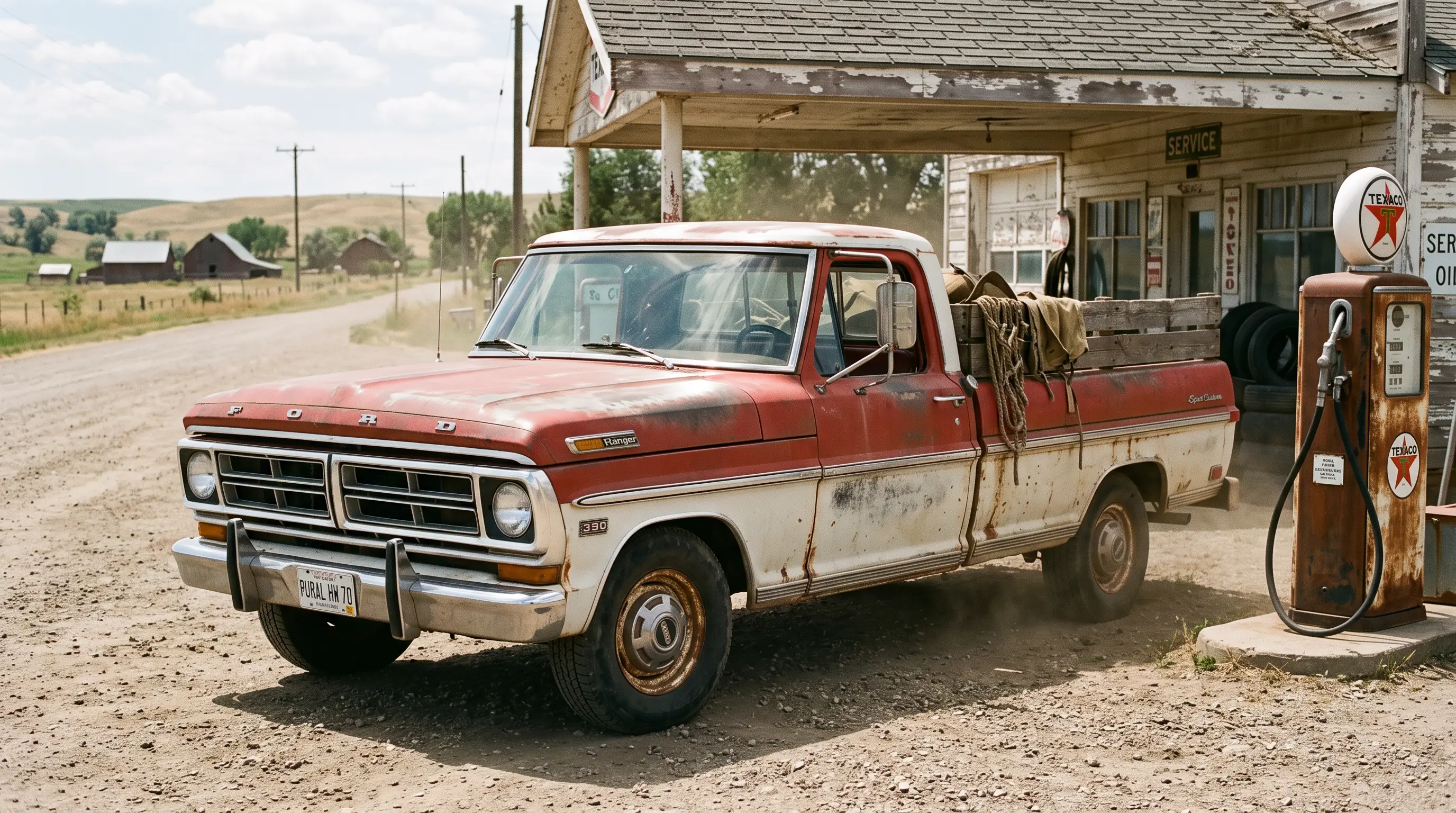
Fading complicates this detective work considerably. A green that spent forty years under direct sun can shift enough that it reads as a completely different shade than what left the factory, and I have seen owners genuinely convinced their truck wore an off-catalog custom color when it was simply a documented factory hue that had faded and oxidized over decades of exposure.
"You can tell more about a truck's honesty from the paint in the door jamb than from anything the seller tells you on the phone."
- Jim Vasquez
How color choice tracked buyer intent
Fleet and commercial buyers overwhelmingly ordered their F-100s in white, tan, or a single flat color without the two-tone treatment, a practical choice that kept resale value predictable and matched the utilitarian purpose these trucks served. Individual retail buyers, by contrast, gravitated toward the bolder blues and greens, and two-tone orders climbed steadily as the Ranger and Ranger XLT trims gained popularity through the early 1970s. That pattern means color alone can hint at how a truck spent its early life, long before anyone checks a build sheet.
Regional preferences also shaped what showed up on dealer lots. Trucks ordered in the Southwest tended toward lighter colors that reflected heat better, a practical consideration in a pre-widespread-air-conditioning era, while trucks built for colder markets showed more variety across the full palette. None of this was written into any Ford policy that I am aware of, but it shows up consistently enough in surviving trucks that regional color trends are a real, if informal, pattern worth knowing.
Repaints, fleet colors, and spotting a mismatch
One of the more common issues I run into is a truck that left the factory in a documented fleet color and was later repainted in a retail-palette shade to make it more appealing on the used market decades ago. This kind of repaint is not malicious, usually just a previous owner chasing a color they liked better, but it does mean the truck's current finish tells a different story than its original build sheet. A careful buyer checks both the visible paint and any surviving documentation before assuming the two agree.
Spotting a mismatch takes practice, but the tell is usually consistency. A factory paint job, even faded, shows uniform wear and color transition across every panel because it was all sprayed at the same facility under the same conditions. A later repaint, even a good one, almost always shows subtle differences in texture or gloss between panels that were masked separately, especially around trim pieces and door jambs that a repaint shop might rush through compared to the visible exterior surfaces.
What matters to buyers chasing originality
A truck wearing its original factory color, even in worn condition, generally carries more value among serious collectors than a truck resprayed in a color that never appeared on Ford's period order sheet, regardless of how good the newer paint job looks. That preference runs counter to how a lot of casual buyers think about classic trucks, since a fresh, glossy repaint often looks more impressive at first glance than a faded original finish. Collectors who understand the generation know better, and they will pay accordingly for documented originality.
For anyone shopping with color authenticity in mind, cross-referencing a truck's paint code plate against Ford's published palette for the specific model year is worth the extra effort before committing to a purchase. Buyers can start that search by looking to classic F-100 for sale listings and asking sellers directly whether they have documentation for the paint code, since that single question filters out a surprising number of trucks with undisclosed repaints.
None of this is about chasing perfection for its own sake. A truck that has been honestly repainted in a close but not exact color, with the change disclosed, is still a good buy for plenty of owners who just want a solid driver. The distinction matters most at the top end of the market, where documented originality separates a genuinely correct show truck from a good-looking truck wearing a story nobody can verify.