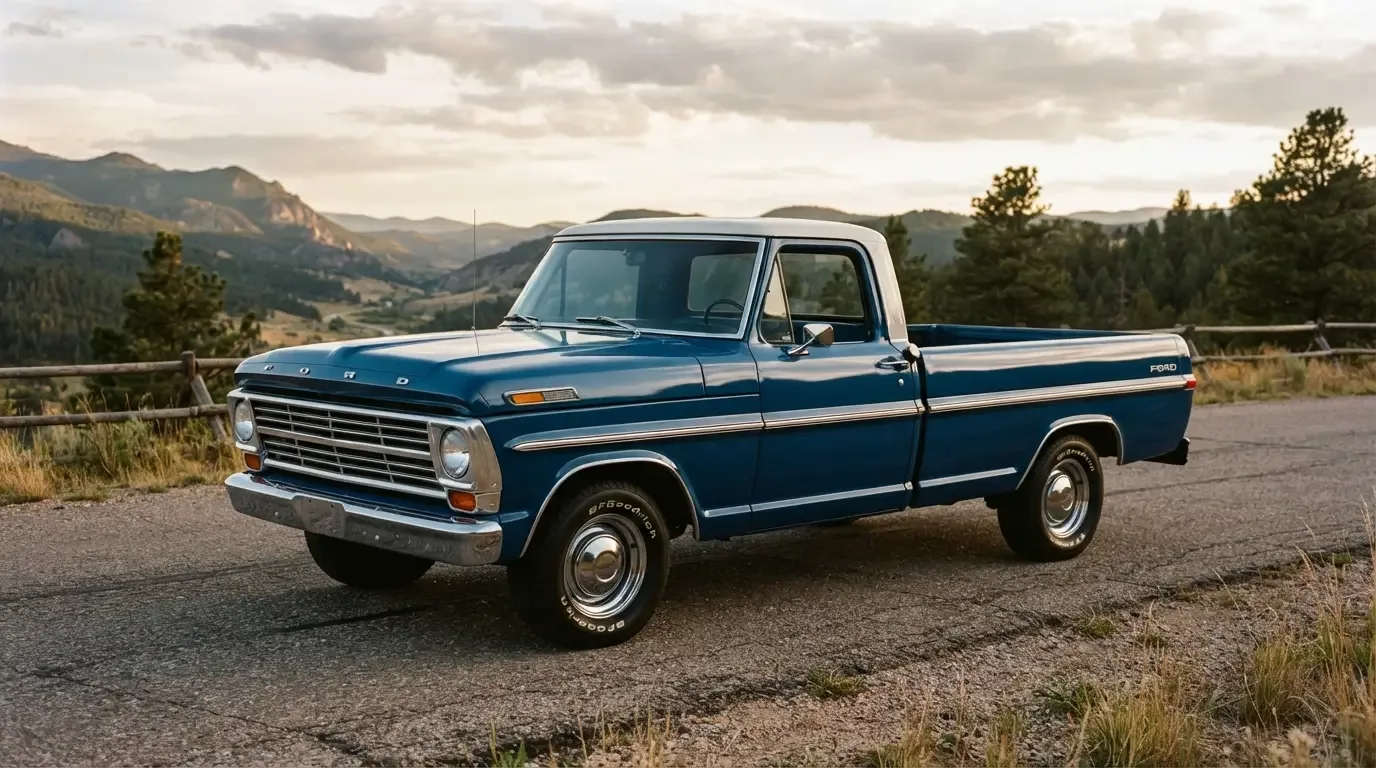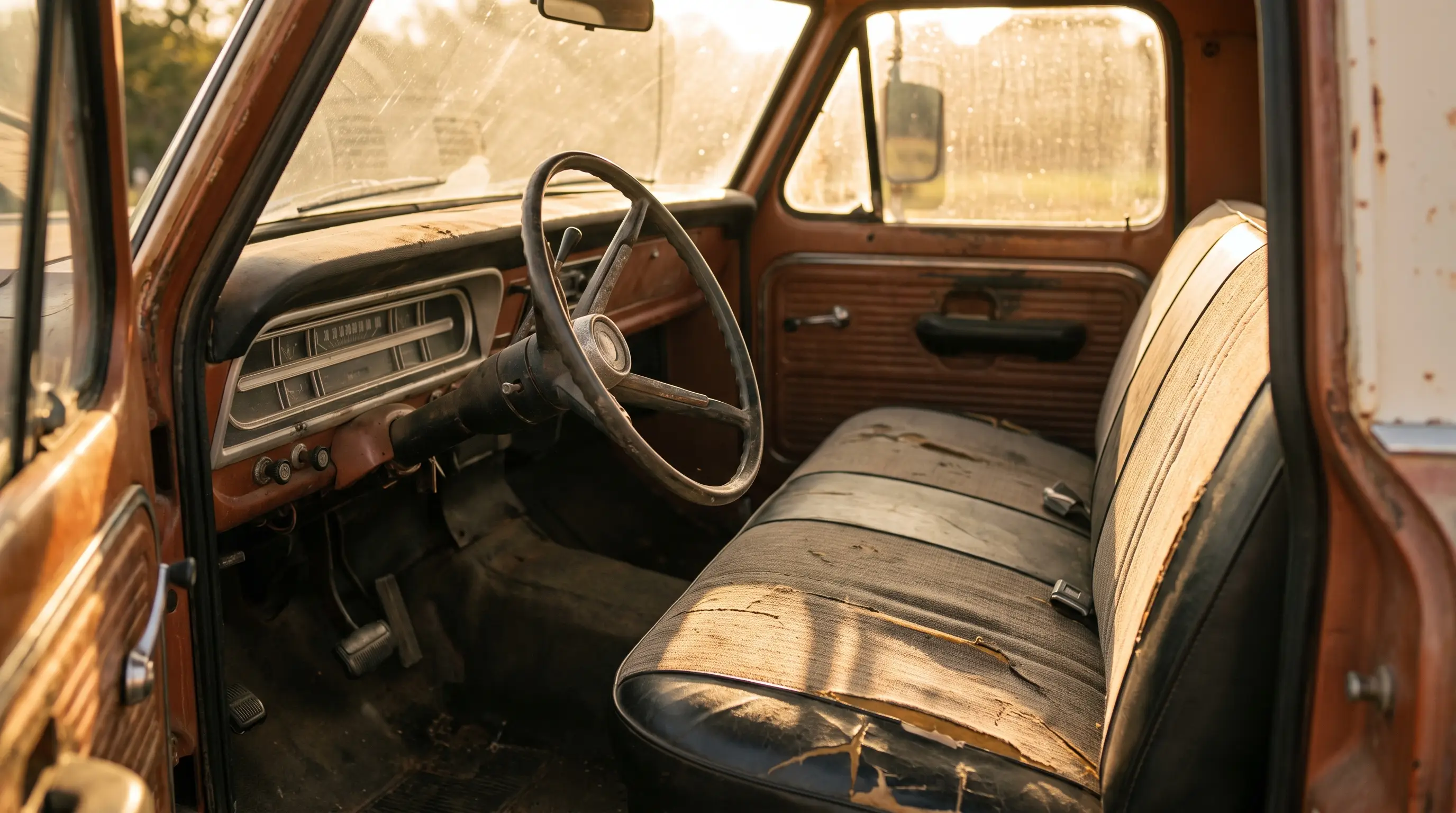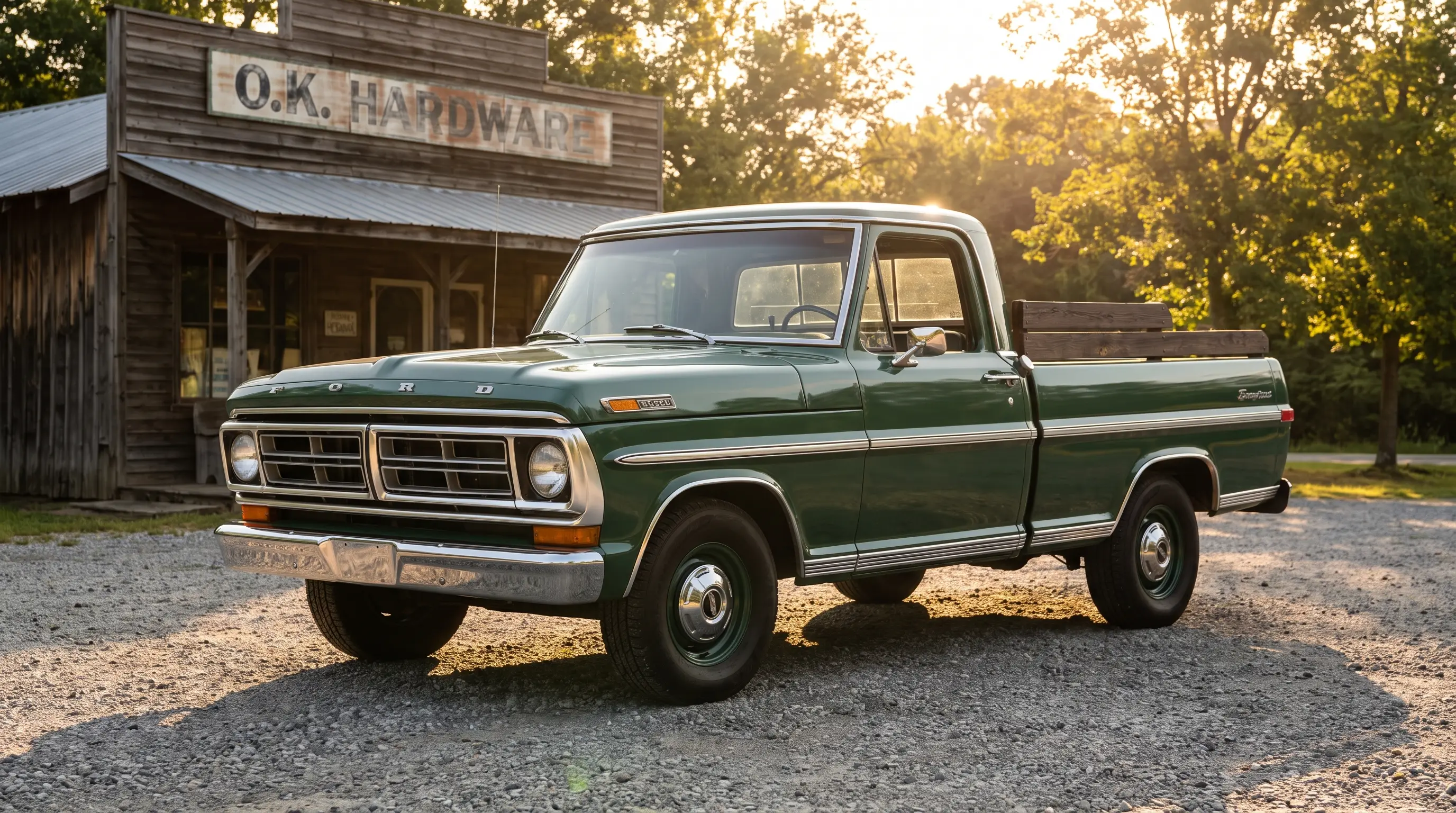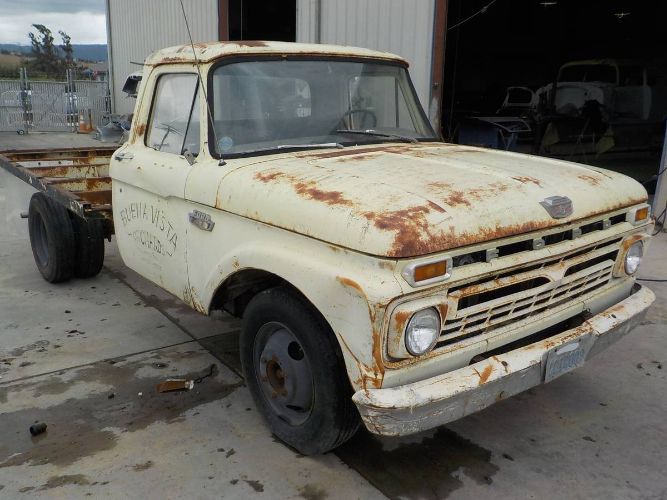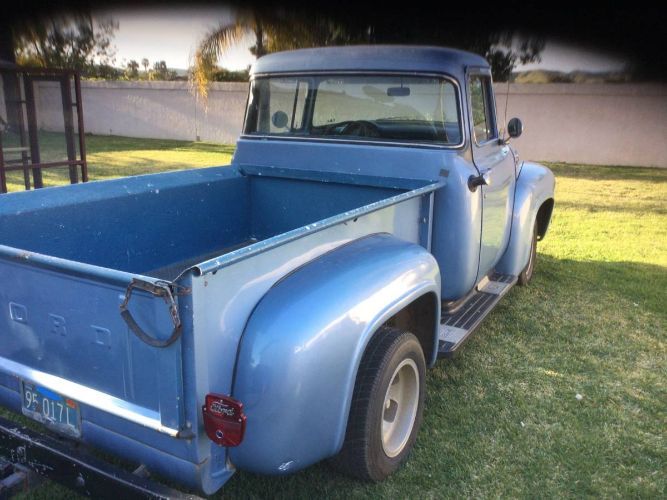
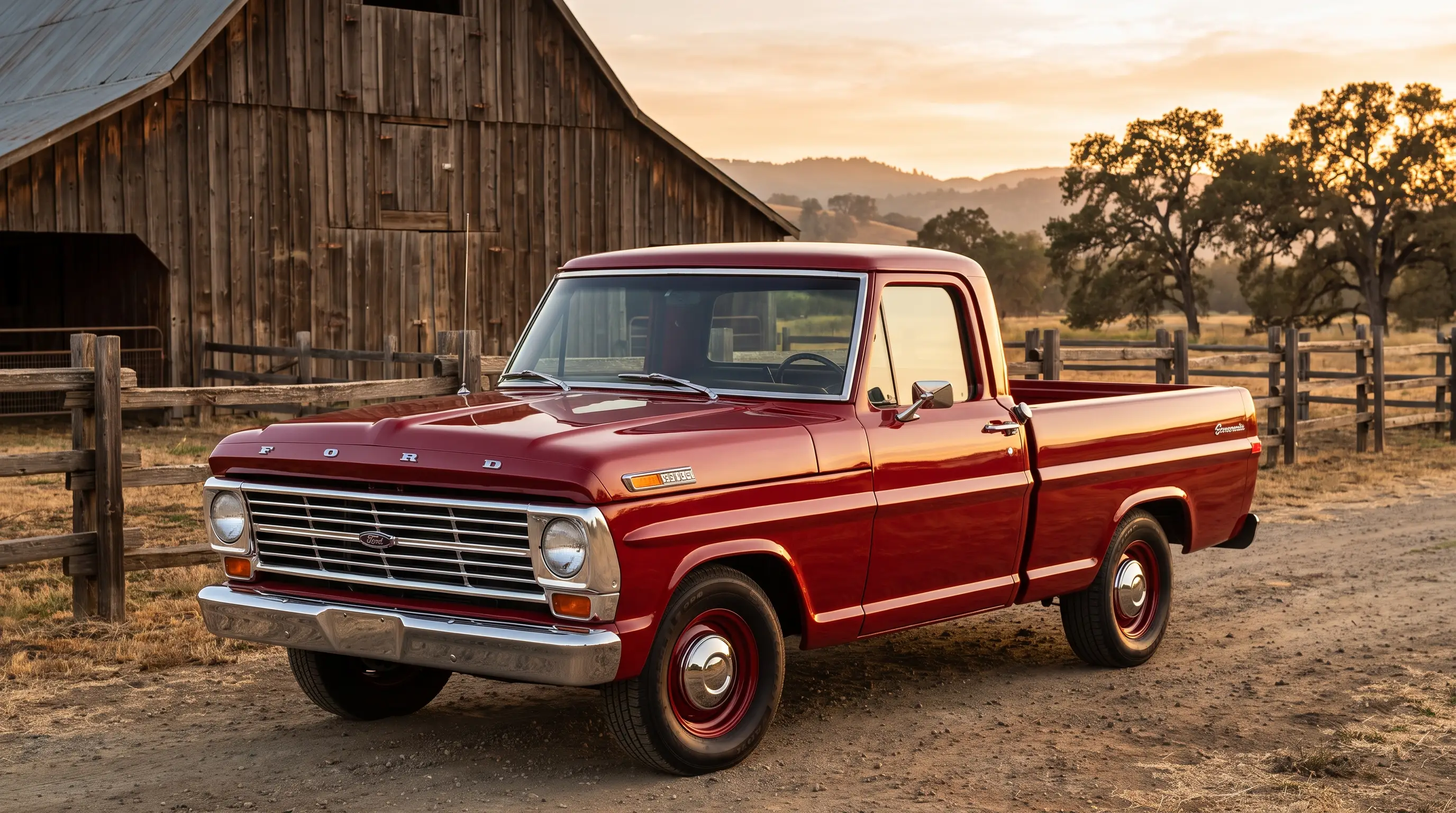
Walk any Ford truck show in the country and count the trucks under restoration. More often than not, the fifth-generation F-100, the one collectors call the Bumpside, outnumbers everything else Ford built between 1948 and 1979. That is not nostalgia talking. It is a pattern visible in parts catalogs, in swap meet inventory, and in the restoration shop schedules that book out a year in advance. The 1967 Ford F100 restoration popularity is not an accident of taste. It is the product of a very specific set of engineering and market decisions Ford made in the mid-1960s, and once you trace them, the reason this generation dominates restoration bays becomes obvious.
I have spent years pulling build sheets and production records for this era, and the numbers back up what any restorer will tell you from experience. This was the truck Ford built in the highest volumes up to that point, and volume from fifty years ago becomes availability today.
The body style that started the trend
Ford redesigned the F-100 for the 1967 model year, giving it the smoother, rounder flanks that earned the Bumpside nickname from the character line running down the door. It replaced the boxier fourth generation and ran through 1972 with only modest updates along the way. For the full arc of how Ford got to this design, our 1967 ford f100 history covers the generation in depth. What matters for restoration purposes is that Ford built this body on a scale no earlier F-100 had matched, and scale is the single biggest predictor of which classic trucks survive in restorable numbers.
The Bumpside also arrived at the exact moment pickup trucks began shifting from pure work tool to personal vehicle. Ford answered that shift with the Ranger package, plusher trim, and color options that made these trucks desirable to keep rather than trade in after a few hard years. Trucks people wanted to keep are trucks that survive in barns and garages instead of scrapyards.
Why parts availability drives restoration choice
Restoration is a math problem before it is a passion project. A truck is only as restorable as the parts you can find for it, and the Bumpside wins that math by a wide margin. Reproduction sheet metal, interior kits, trim, and glass are all in active production for this generation, something you cannot say for the earlier F-1 through F-3 trucks or even some of the fourth-generation runs. When a fender or a floor pan is a phone call away instead of a years-long hunt, restorers gravitate toward the platform.
The engine bay tells the same story. The 240 and 300 cubic inch sixes, along with the 289 and 352 V8s offered through this run, share huge amounts of parts commonality with other Ford products of the era. That means a rebuild kit or a carburetor is never a special-order item. Compare that to hunting parts for a low-production early truck, and the appeal of the Bumpside for a first restoration becomes clear fast.
None of this happened by luck. Ford built these trucks in numbers large enough that scrapyards across the country still held clean donor trucks decades later, feeding the reproduction parts industry with patterns and cores. A restoration culture needs both original examples to study and a reliable parts pipeline, and the Bumpside generation delivered both.
The restoration community built around this generation
Club membership numbers and forum activity for 1967 to 1972 trucks dwarf those for other F-100 generations, and that community effect compounds itself. New restorers gravitate toward whichever generation has the most documented builds, the most tutorial threads, and the most people willing to answer a three in the morning question about a wiring harness. The Bumpside has decades of that goodwill built up, and it keeps drawing newcomers who want support along the way.
There is also a design maturity argument worth making plainly. The Bumpside sits at a sweet spot where the body is modern enough to accept later drivetrain swaps cleanly, yet classic enough to read as an unmistakably vintage truck. That flexibility appeals to two very different buyers, the strict originality crowd and the resto-mod crowd, and both keep demand for these trucks high. If you want to see how the tail end of this generation compares, a related story digs into why the final model year draws its own following.
| Detail | Ford F-100 Bumpside (1967 to 1972) |
|---|---|
| Generation | Fifth generation F-Series |
| Nickname origin | Character line, or bump, running the length of the door and bed |
| Engine range | 240 and 300 six, 289, 302, 352, 360, 390 V8 options across the run |
| Body styles | Styleside and Flareside beds, regular cab (crew cab optional on F-250/F-350) |
| Restoration edge | Widest reproduction parts support of any pre-1973 F-100 generation |
"Every restoration shop I have talked to has a waiting list for these trucks, and every one of them says the same thing. It is not that the Bumpside is rarer or more valuable than what came before. It is that you can actually finish the job."
- Tom Ramirez
What the production record actually shows
Digging through Ford's own documentation corrects a misconception that floats around swap meets, the idea that these trucks are popular because they were somehow special or limited. The opposite is true. Ford built the fifth-generation F-100 in high numbers across six model years precisely because demand for light trucks was surging through the late 1960s. That surge is why survivors are common enough to restore rather than merely preserve, and why prices for solid project trucks stayed reasonable long after the earliest F-1 trucks became unaffordable to newcomers.
The correction matters because it changes how a buyer should think about value. A Bumpside is not desirable because it is scarce. It is desirable because it is achievable, and achievable is exactly what most people restoring their first classic truck actually need. If you are ready to see what is currently available, you can browse F-100s for sale now and get a sense of the range between rough project trucks and finished drivers.
The record also shows Ford refined build quality steadily across this run, tightening panel gaps and improving rust protection year over year even before anyone called it that. Restorers who understand those small year-to-year differences make better buying decisions, because a 1967 project and a 1972 project are not interchangeable despite sharing a body style.
The takeaway for anyone starting a project
The Bumpside earned its place at the top of the restoration list the honest way, through volume, parts support, and a body design that rewards the work put into it. That combination is rare enough in the classic truck world that it is worth respecting rather than dismissing as mere popularity. For a first restoration or a tenth, the fifth-generation F-100 remains the safest bet in the F-100 family, and the production record explains exactly why.