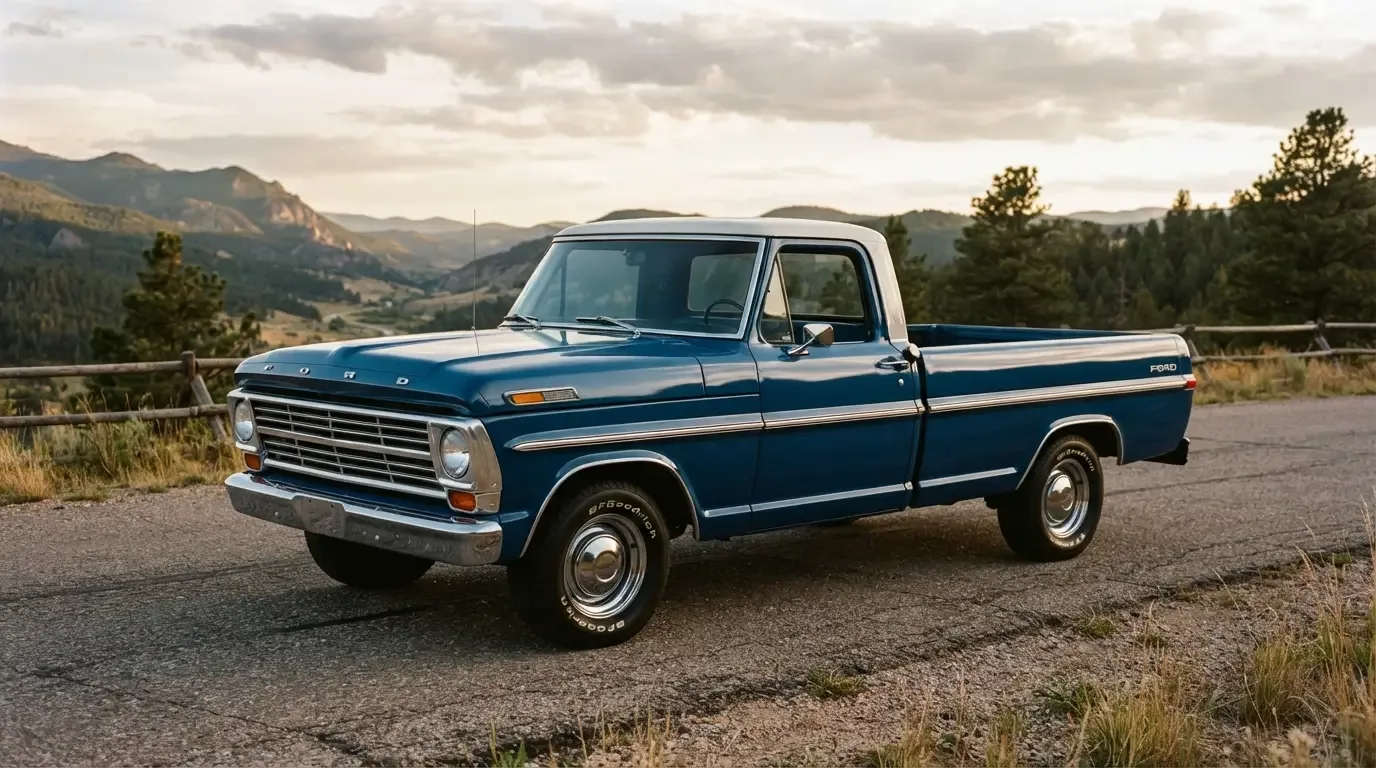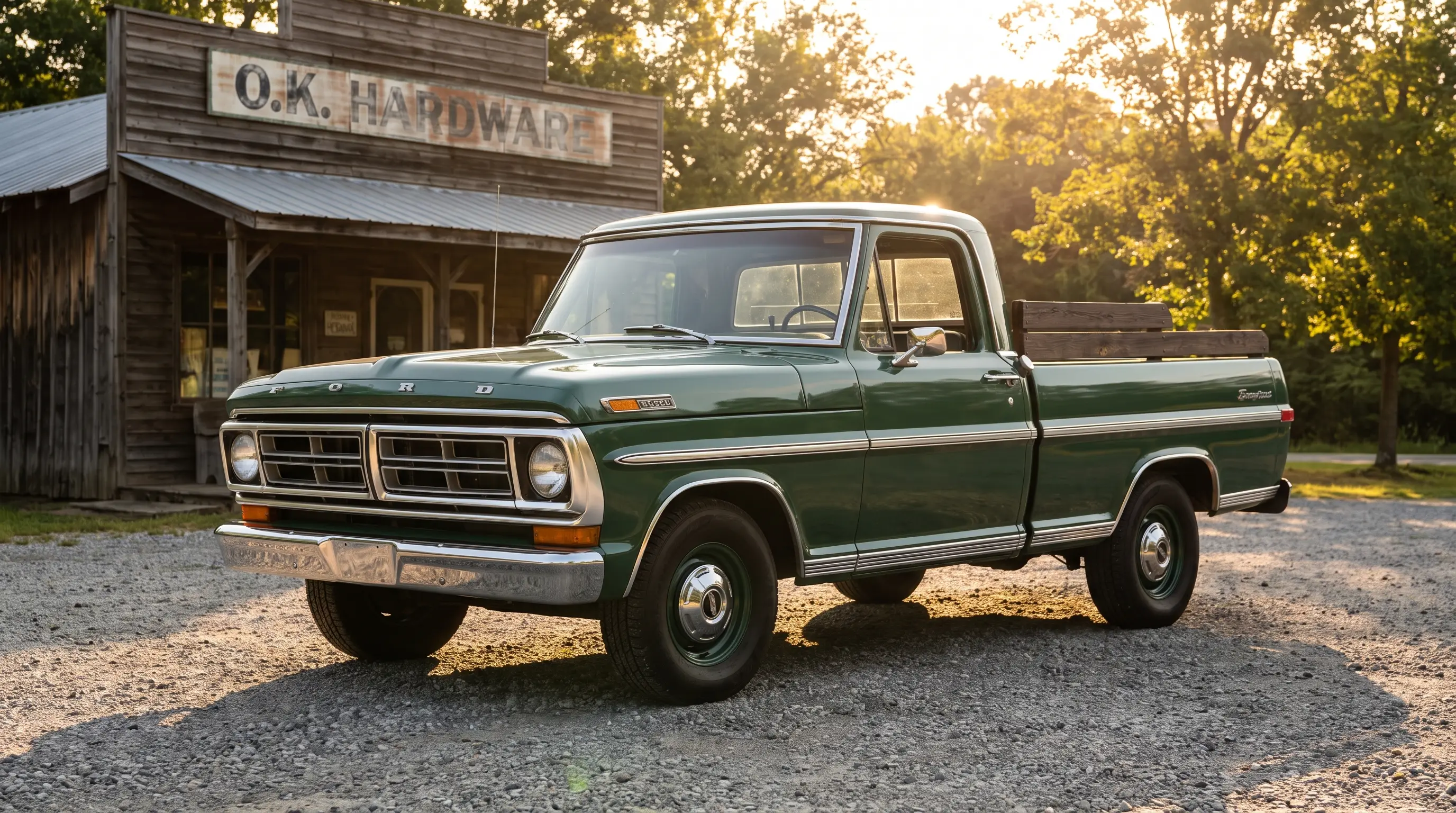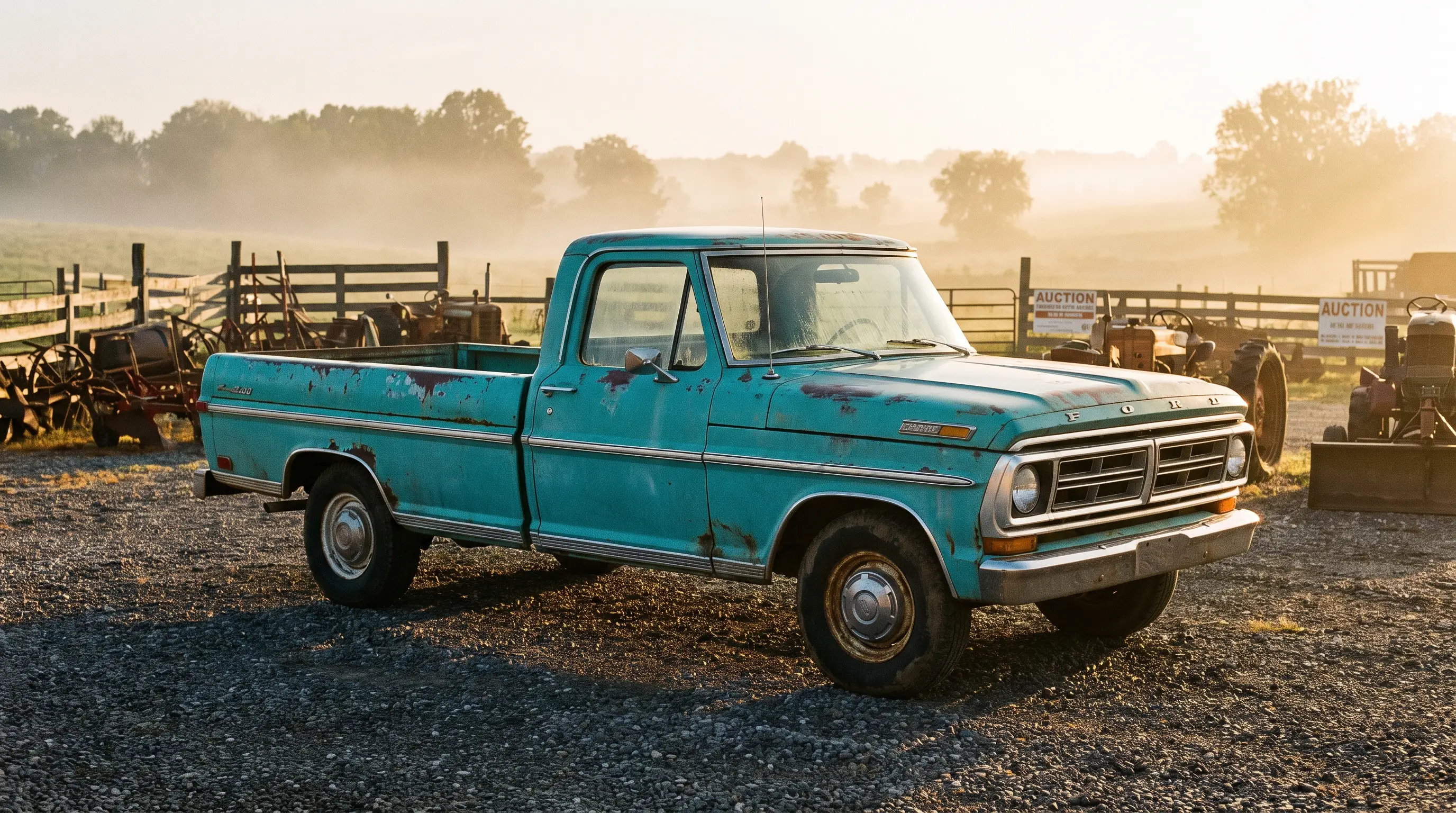
Production records rarely make for exciting reading, but they tell you things about a truck that no brochure ever will. The 1967 Ford F100 production run sits at the center of one of the most consequential stretches in the F-Series story, a six-year window where Ford scaled the light truck business into something closer to what we recognize today. Reading the plant data and model year breakdowns from this era explains far more about why these trucks exist in the numbers they do than any marketing copy from the period ever could.
I have spent a good portion of my research career chasing down build sheets, dealer invoices, and factory documentation from this exact window, and the picture that emerges is one of deliberate, steady expansion rather than a single dramatic leap.
Where this generation began
Ford launched the fifth-generation F-Series for the 1967 model year, replacing the boxier fourth-generation trucks that had carried the line since 1961. The redesign was comprehensive, touching the frame, the cab structure, and the sheet metal all at once, and it set the template Ford would refine through 1972. For the complete account of how the earlier generations led to this point, our feature on where this started lays out the full lineage.
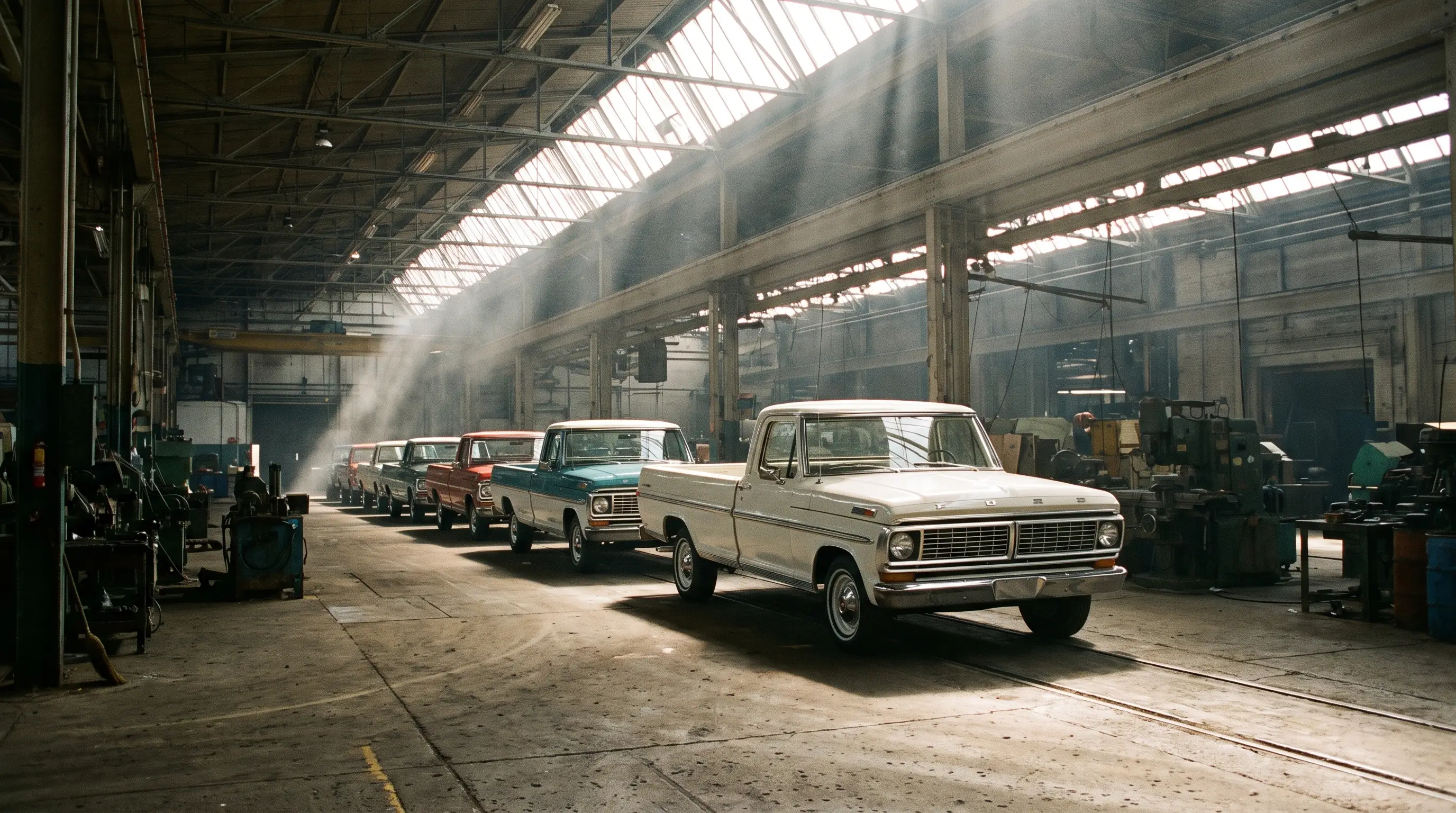
What separates 1967 from a simple styling refresh is the scale at which Ford committed to it. Multiple assembly plants across the country tooled up for the new body, a sign that Ford's planners expected sustained high demand rather than a modest bump. That expectation proved correct. Light truck sales climbed steadily through the late 1960s as construction, agriculture, and a growing personal-use market all pulled from the same well.
How annual volume shifted across the run
Production volume for the F-100 did not move in a straight line across these six years. Early years saw strong demand as buyers responded to the new styling, and Ford adjusted output at its plants to match. Mid-run years reflected the broader economic conditions of the period, with light truck demand generally trending upward as more buyers treated a pickup as a primary vehicle rather than strictly a work tool. By the final years of the run, Ford had refined its production processes enough that output stayed consistently high even as the company began planning the next generation behind the scenes.
This steady climb in volume is precisely why parts and complete trucks from this generation remain accessible to collectors and restorers today. A production run built in modest numbers leaves a thin trail decades later. A production run built at genuine scale, spread across multiple plants and six model years, leaves enough surviving trucks and salvage parts that the restoration ecosystem around the generation stays healthy.
Fleet and commercial buyers made up a meaningful share of this production too, and their trucks were typically ordered in simpler configurations built for durability over trim. Those work trucks logged hard years of service, and fewer of them survive in restorable condition compared to personal-use trucks ordered with more comfort options. That imbalance shapes what collectors find available today, with well-optioned personal trucks generally easier to locate than plain fleet-spec examples.
What the plant codes and build sheets reveal
Every F-100 built during this run carries a data plate with codes identifying the assembly plant, the build date, and the factory-ordered options. Learning to read these codes is essential for anyone trying to verify a truck's history rather than simply trusting a seller's description. A truck's plant code tells you which facility built it, and cross-referencing that against known production patterns for the era can confirm or contradict claims made about a truck's originality.
Correcting a common misconception matters here. Many buyers assume every F-100 from this era was built the same way regardless of plant, but regional assembly plants sometimes used slightly different supplier parts depending on what was available locally, and those small variances show up in careful restoration work. A researcher who understands plant-specific quirks can often date a truck more precisely than the model year alone would suggest, simply by matching trim details against known plant practices.
| Detail | Fifth Generation F-100 Production (1967 to 1972) |
|---|---|
| Production span | Six model years, 1967 through 1972 |
| Assembly approach | Multiple plants building the body simultaneously |
| Buyer mix | Growing share of personal-use buyers alongside traditional fleet and commercial orders |
| Documentation | Data plate codes identify plant, build date, and factory options |
| Legacy | High surviving volume supports strong parts and restoration ecosystem today |
"Every build sheet I track down adds another data point to the picture, and the picture that keeps forming is a company that scaled this truck deliberately, plant by plant, rather than stumbling into demand it did not expect."
- Tom Ramirez
Why the production story still matters to buyers
Understanding how these trucks were built and in what numbers gives today's buyers a genuine advantage. Knowing that personal-use, well-optioned trucks survive in greater numbers than stripped fleet trucks helps set realistic expectations when hunting for a specific trim level. Knowing that Ford's plant network was already mature and multi-site by 1967 helps explain why regional variations exist and why they matter to serious restorers chasing authenticity.
The production record also confirms something buyers sometimes forget in the excitement of a purchase: these were, first and foremost, mass-produced work vehicles built to a business plan, not limited-run collectibles. That context should inform how much weight any single truck's rarity claims deserve. When you are ready to compare what survives from this era, you can shop classic F-100 listings and see how condition, options, and documentation vary across the available inventory.
A build sheet from this era typically lists the engine code, transmission type, rear axle ratio, and any factory-ordered options ordered with the truck, and cross-checking those against the data plate is the most reliable way to confirm a truck's originality. Discrepancies happen for innocent reasons often enough, a dealer swap before delivery, a warranty-era engine replacement, a later owner upgrading a rear end for towing. But discrepancies also happen because a seller wants a truck to look more special than it is, and a careful buyer who knows how to read these documents is far harder to mislead than one who takes a listing at face value.
I tell people who are new to this hobby to start by requesting whatever paperwork the seller has before they even go look at a truck in person. A truck with a complete paper trail is not automatically the better buy, since plenty of excellent trucks lost their documentation decades ago through no fault of their own. But paperwork removes guesswork, and guesswork is where buyers lose money.
The bottom line on this production era
The 1967 to 1972 F-100 production run represents Ford operating at full institutional confidence in the light truck market, and the surviving numbers today reflect that confidence directly. For collectors and researchers alike, understanding the scale and structure of this production run is not a dry academic exercise. It is the foundation for making informed decisions about what a specific truck actually is, and what it is worth.