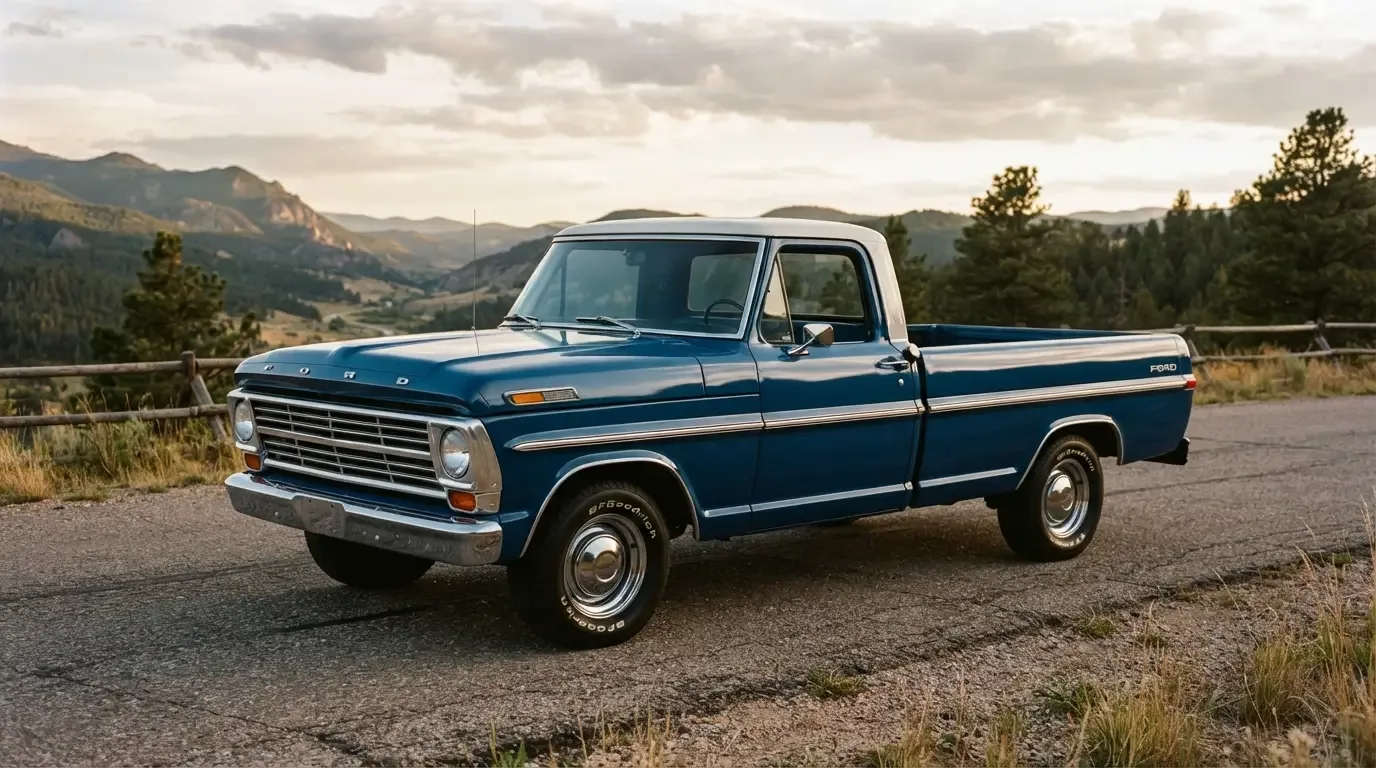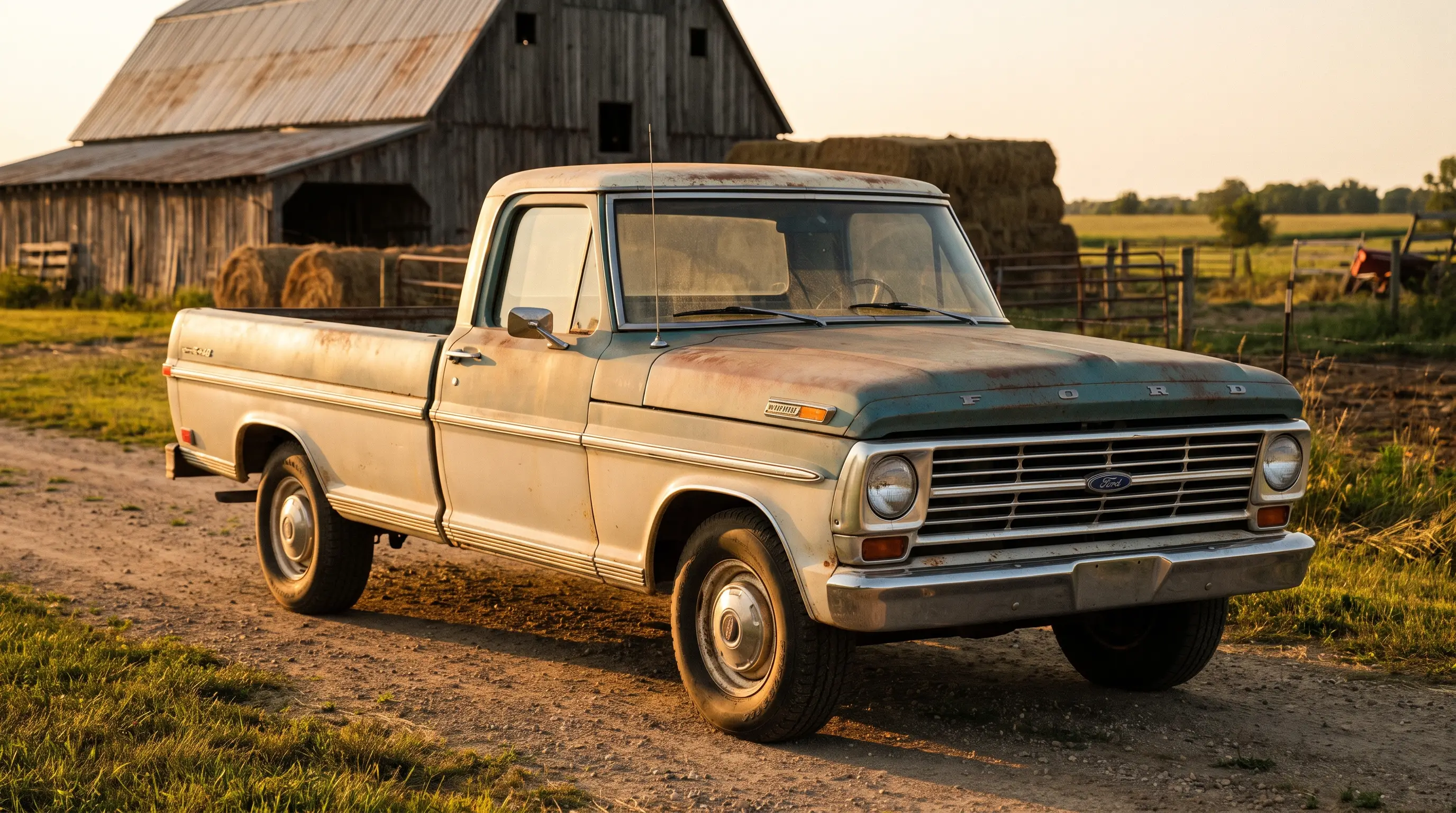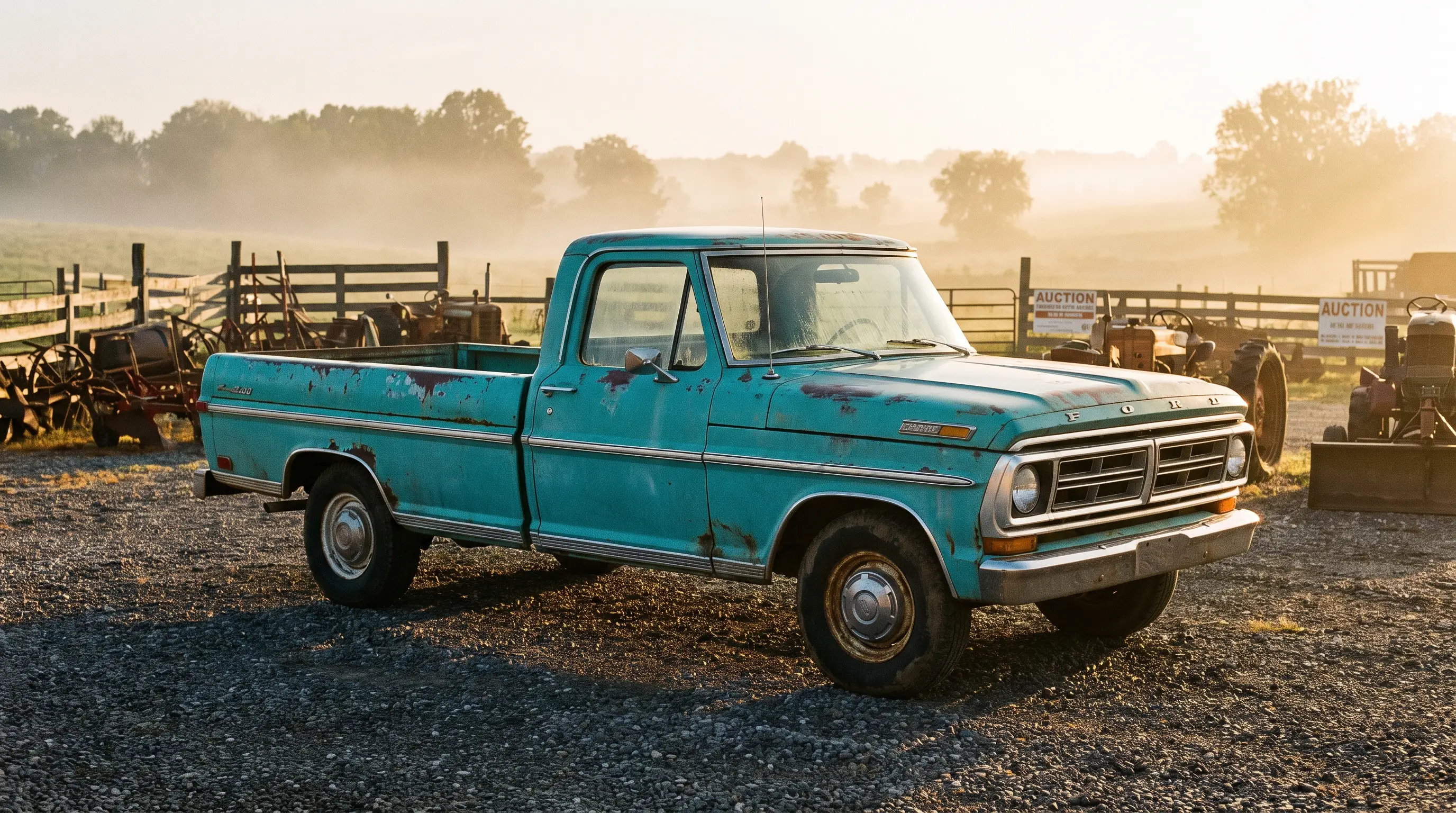
There is a moment every generation gets when a car company decides the last thing was too rough around the edges for where the market is heading. For Ford's pickup line, that moment landed in 1967. The ford f100 bumpside, as the truck world would come to call it years later, was Ford's answer to a country that increasingly wanted its work truck to double as a daily driver, and the change showed up everywhere from the ride quality to the upholstery.
A truck built for comfort, not just capability
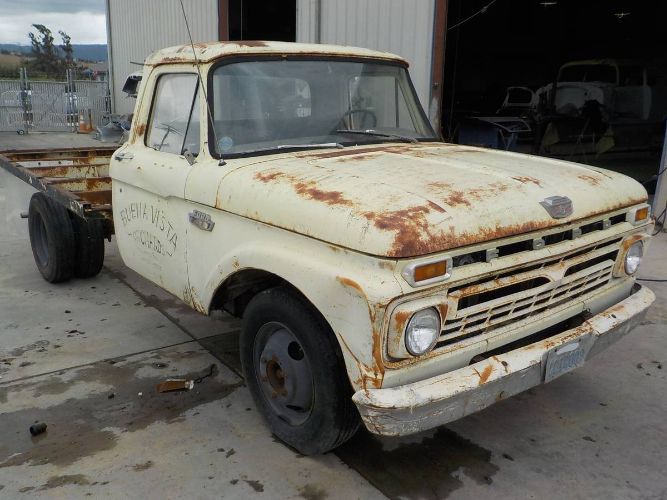
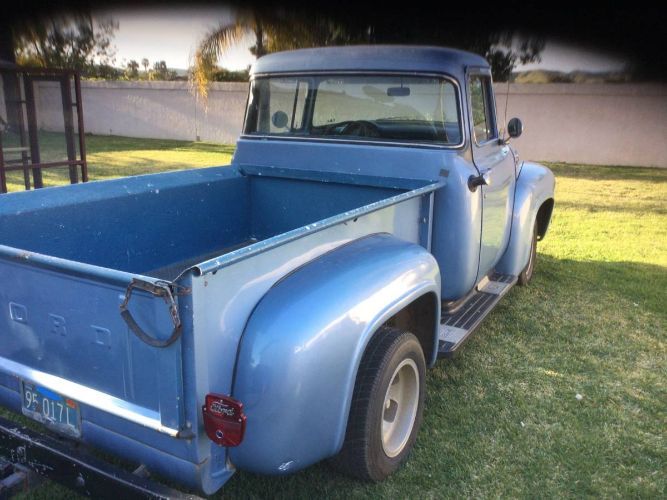
Walk up to a 1967 F-100 next to its 1966 predecessor and the family resemblance is obvious at a glance, but sit inside both and the differences become clear fast. Ford redesigned the cab interior with more attention to the driver's experience than any previous F-Series generation had received. Sound insulation improved. The dashboard layout moved toward something closer to a car's instrument panel than the strictly functional layouts of earlier trucks. Seat design got real attention instead of an afterthought bolted to the floor.
None of this happened by accident. Ford had watched the pickup market shift through the first half of the 1960s, as more buyers started using trucks for personal transportation rather than exclusively for hauling and work duty. The company that built the best work truck did not automatically win that customer anymore. Comfort mattered, and Ford responded with a truck that could still do the job on a ranch or a job site but no longer felt like a penalty for driving it to church on Sunday.
The shift also reflected something happening more broadly across American households in the mid-1960s. Two-car families became common enough that a pickup increasingly served as one household's primary or only vehicle rather than a dedicated work implement parked next to a sedan. A truck asked to do school runs and grocery trips alongside farm chores needed a different set of priorities than one that only ever left the barn for a job. Ford's engineers were reading that shift correctly, and the 1967 redesign was the company's clearest answer yet to a customer whose life had genuinely changed.
The styling that earned the nickname
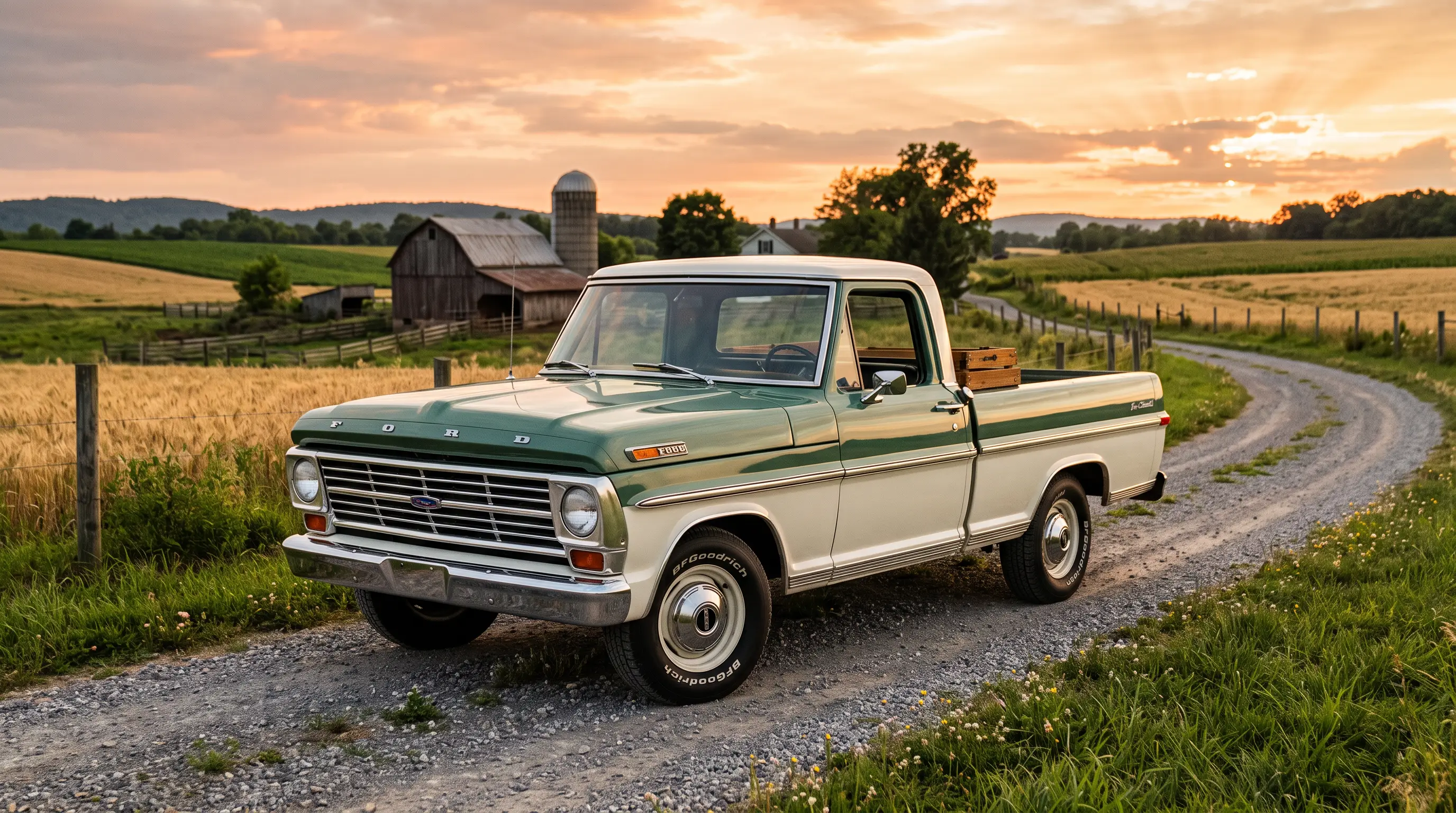
The new body brought rounded bumper contours and softer sheet metal lines that replaced the flatter, more angular look of the 1961 to 1966 trucks. It is those bumper and body contours that eventually gave the truck its enduring nickname among collectors, a name that stuck decades after the fact because it perfectly describes the visual signature of this generation at a glance. Fenders flowed into the cab with less of a hard break, and the overall profile softened without losing the truck's basic proportions.
People who were around dealer lots in 1967 remember the reaction being mixed at first. Some longtime F-Series buyers thought the new look was trying too hard to be something other than a truck. Others saw it as overdue, a truck finally catching up to the styling language the rest of the auto industry had been moving toward for years. History settled that argument. The bumpside look became one of the most recognized F-100 profiles among today's collectors, and trucks from this generation regularly show up at gatherings specifically because of how the body reads from across a parking lot.
Under the skin, still a working truck
For everything that changed on the outside and inside the cab, Ford did not soften the truck's fundamental job. Frame construction stayed robust. Engine options carried forward the reliable sixes and V8s buyers already trusted, refined rather than replaced. Payload and towing capability remained competitive with what the segment demanded. Ford's engineers understood something that a lot of manufacturers get wrong when chasing comfort: you do not have to give up capability to add refinement, you just have to be willing to spend the engineering budget on both instead of picking one.
That balance is a big part of why this generation aged so well in the collector market. A 1967 F-100 is not a truck that traded away its usefulness for a nicer interior. It kept the working-truck bones and added livability on top, which is precisely the combination that makes it appealing to someone today who wants a classic truck they can actually drive on a regular basis rather than trailer to shows.
The dealer floor reaction, decade by decade
Talk to enough people who were around F-Series dealer lots in the late 1960s and a pattern emerges that gets lost in how this generation is remembered today. The 1967 redesign was not a universally beloved instant classic when it launched. It was a bet, one Ford made deliberately, and it took a few years for the market to fully validate the decision through sales figures and repeat buyers who traded in an earlier truck specifically for the new comfort-oriented model. That slower build toward acceptance is a more honest version of the story than the retrospective narrative that treats every bumpside as an instant hit.
By the early 1970s, with several model years of the new body on the road and buyer feedback flowing back to Dearborn, the direction Ford had chosen in 1967 was clearly the right one. Competitors moved their own truck lines toward more car-like comfort in the years that followed, following a path Ford had staked out first. That is often how real shifts in an industry happen. Not with unanimous applause at launch, but with a competitor's slower, grudging admission that the bet paid off.
What the bumpside means to collectors now
Ask a longtime F-100 owner why they specifically sought out a 1967 or one of the years right around it, and the answer usually circles back to that combination of style and drivability. These are trucks people buy to use, not just to display. The comfort improvements that felt modest in 1967 read as a genuine advantage fifty-plus years later, when the alternative is climbing into a stiffer, louder, less forgiving earlier-generation cab for the same weekend cruise. For the complete year-by-year rundown of this generation's changes, 1967 ford f100 history covers everything from the styling shifts to the engine lineup across the full run.
Curious where the bumpside nickname actually came from and how enthusiasts settled on it? a related story traces that history in more detail. And if this generation has you thinking about buying one, you can browse F-100s for sale now and see what is currently on the market.
"I talked to a guy at a show in Nashville who bought his '67 new as a college kid working summers on a construction crew, and he still drives it every week fifty-some years later. That's the whole story of this truck right there. It was built to be lived with, not just looked at."
— Patrick Walsh
Sources and notes
- History of the Bumpside: 1967-1972 Ford F-Series Trucks - Street Trucks
- A Glimpse Into The Future: Fifth Gen Ford F-Series - Velocity Restorations
- 1967-1972 Ford F100 Identification and Builder's Guide - Classic Industries
- Ford F-Series (fifth generation) - Wikipedia
- Ford F-Series 5th Gen (1967 to 1972) - Classic.com