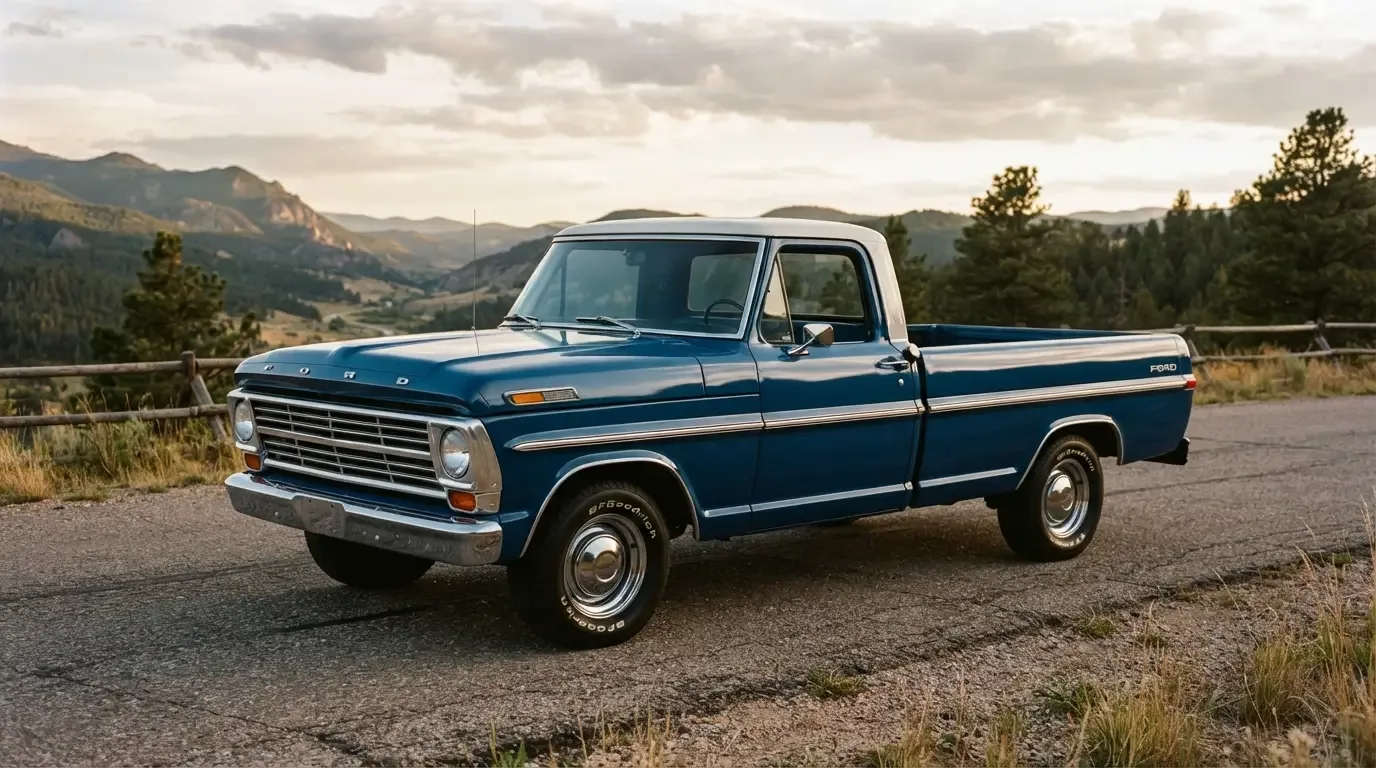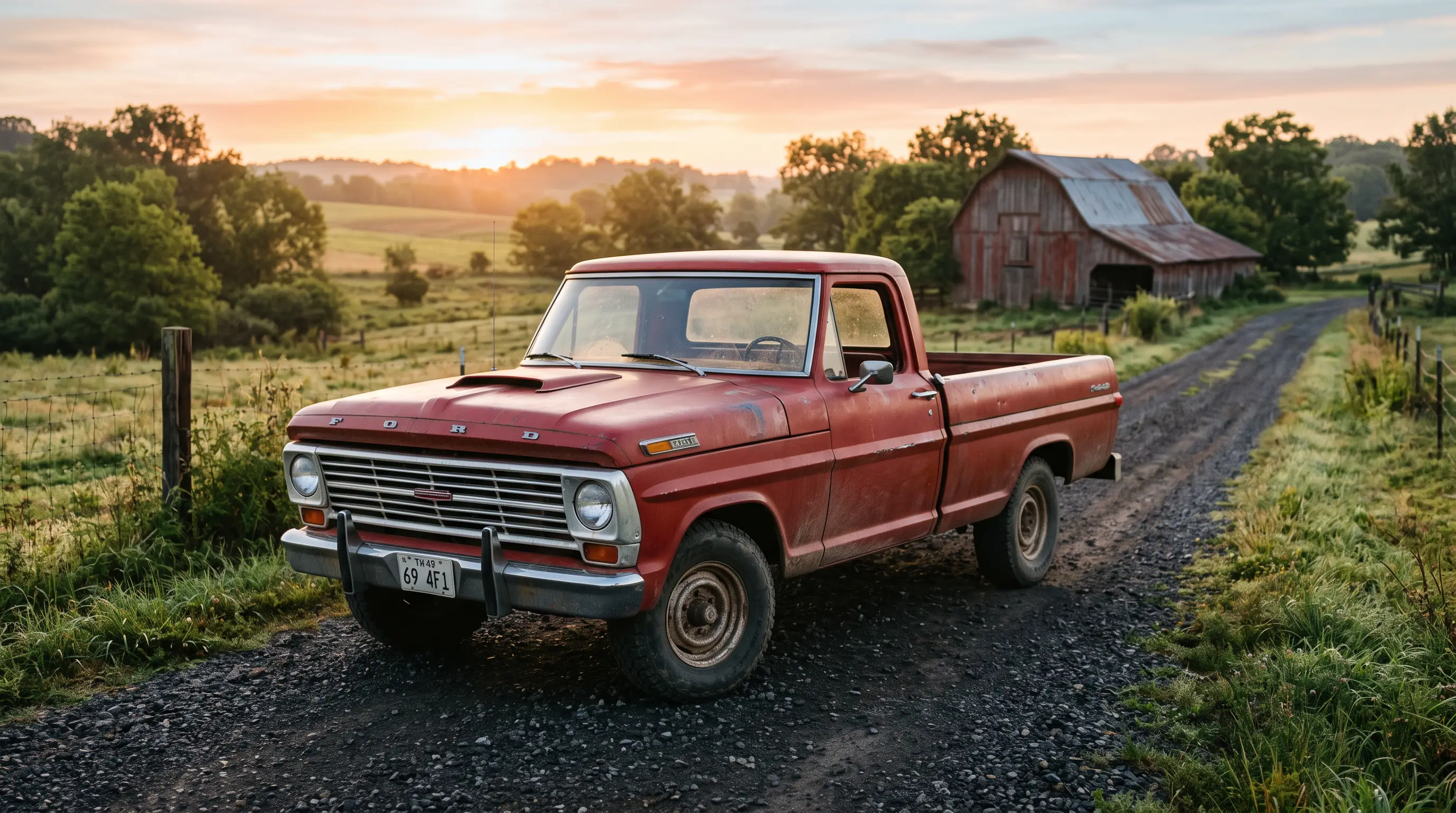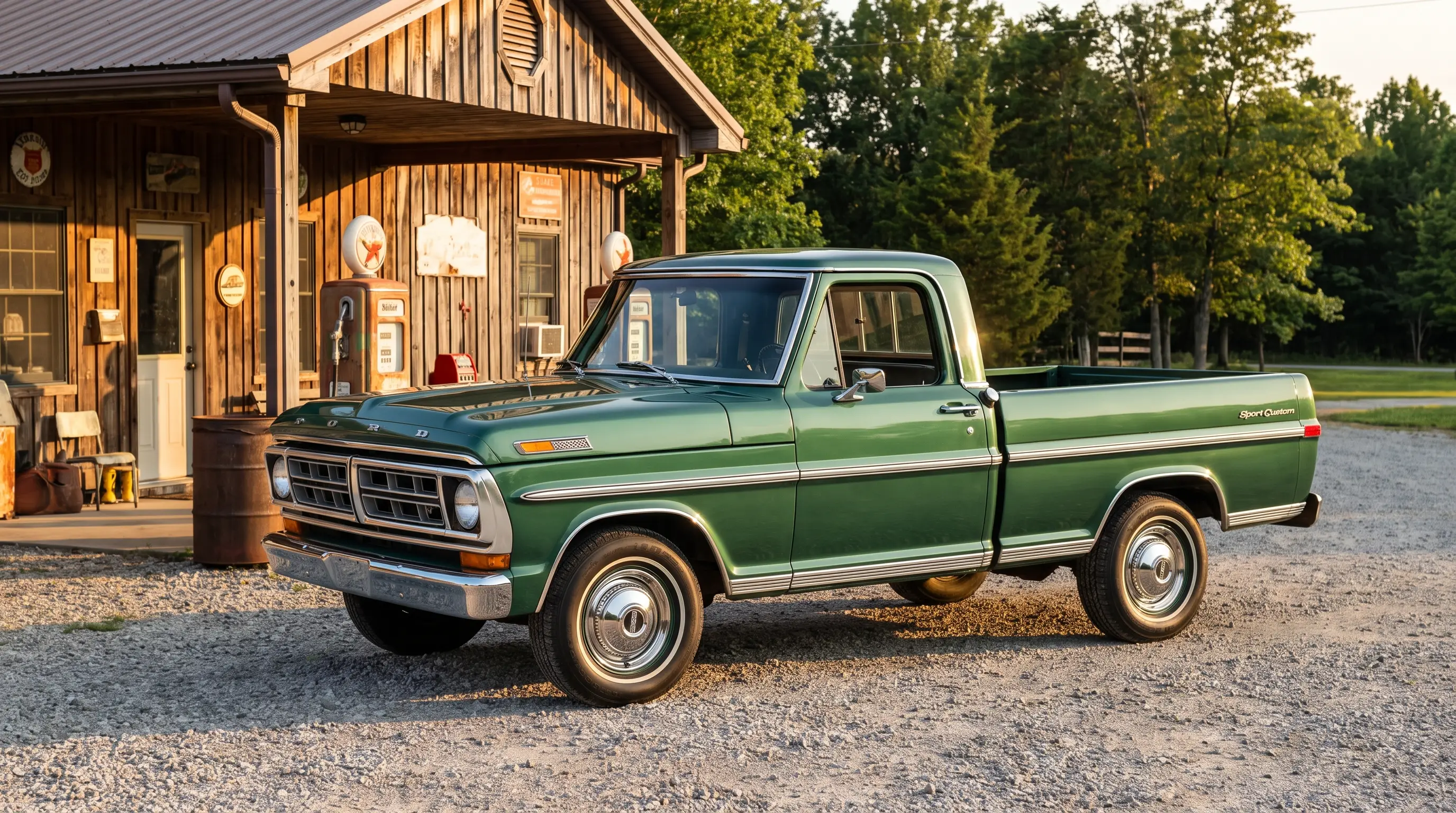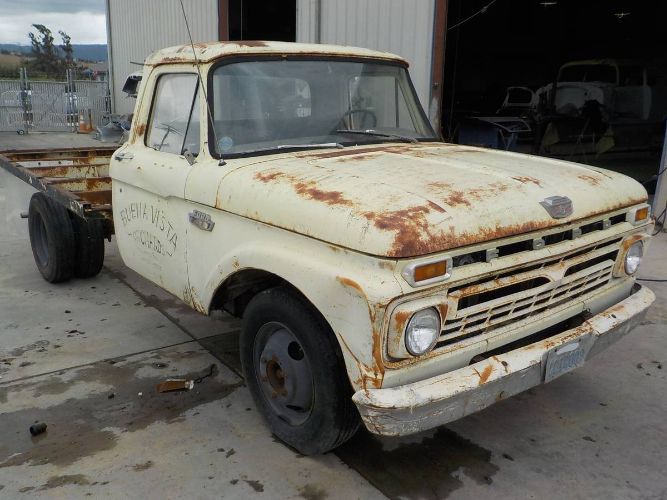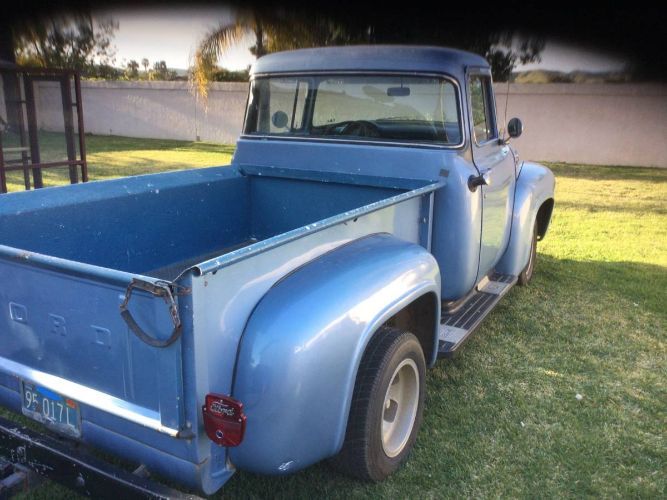
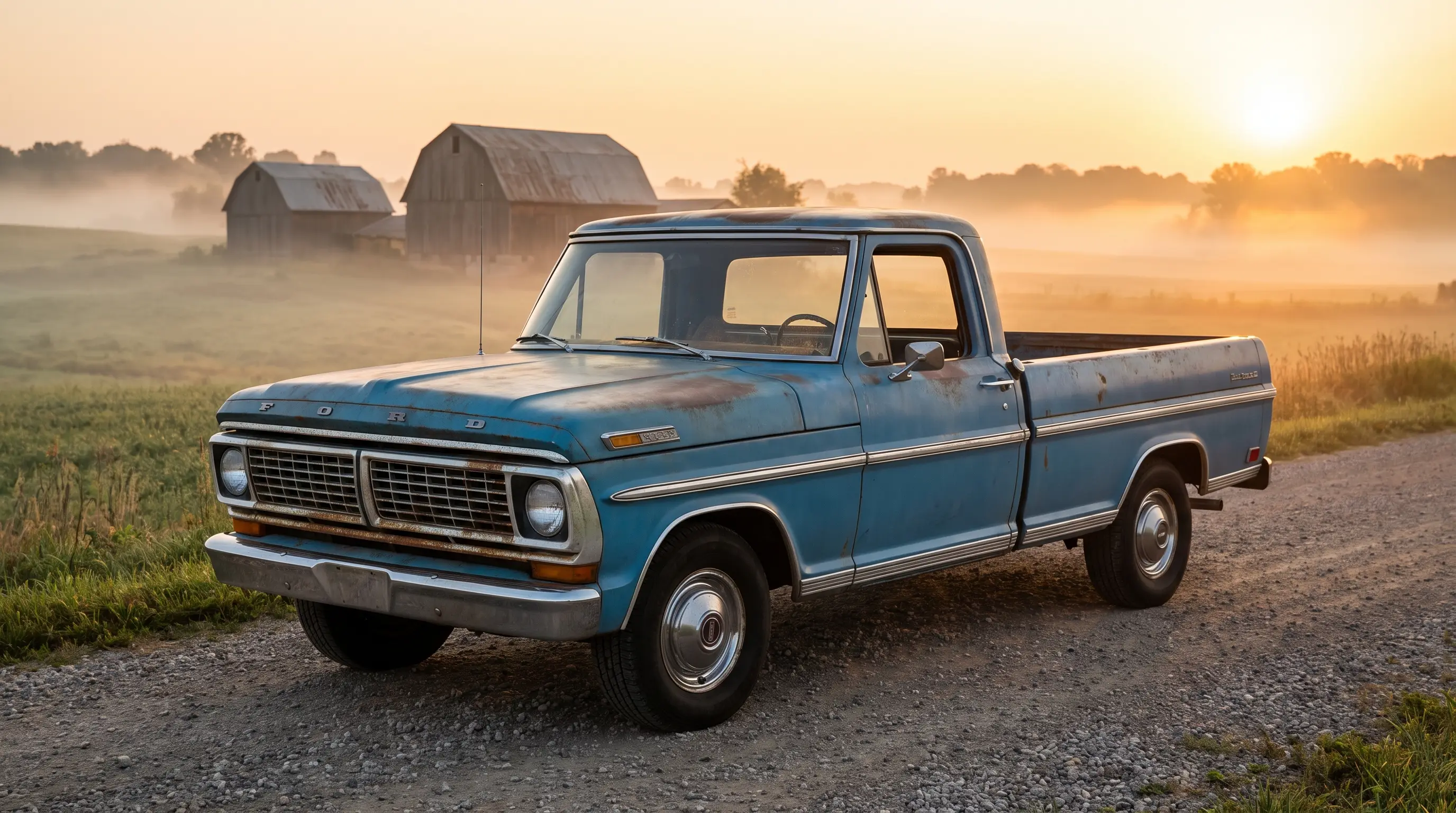
The 1970 Ford F-100 sits at a hinge point in the truck's history, the last model year before Ford began threading emissions hardware and federal safety mandates into every subsequent design decision. Production records place the 1970 run inside the second-generation "bumpside" body that Ford introduced for 1967, and by this point the factory had ironed out most of the early bugs while still building trucks the old way, with big iron blocks, simple wiring, and cabs assembled by hand on lines in Norfolk, Kansas City, and Louisville. For collectors today, the 1970 model represents a sweet spot: styling refinements over the 1967-68 trucks, but none of the smog-era compromises that arrived in 1971 and grew heavier every year after.
Where the 1970 model fits in the story
Ford's second-generation F-Series ran from 1967 through 1972, and the 1970 truck was effectively the midpoint of that run, close enough to the original design to share its clean flanks and simple grille, yet built with a few years of production experience behind it. Anyone researching the full arc should start with where this started, since the 1970 truck only makes sense in the context of what came before and what followed. Ford had settled the F-100 into a stable identity by 1970: a half-ton hauler that could be ordered as a stripped work truck or dressed up with the Ranger package for buyers who wanted chrome and carpet without stepping up to a car.
The changes for 1970 were modest by design. Ford tweaked the grille texture, shuffled trim badges, and continued offering the Styleside and Flareside bed options that had defined the truck since the 1950s. Underneath, the frame and suspension carried over largely unchanged from 1969, which suited a market that valued durability over novelty. Fleet buyers in particular did not want surprises, and Ford's engineering department spent 1970 refining rather than reinventing.
Engines and drivetrains for the model year
Ford offered the 1970 F-100 with a range of engines that spanned six-cylinder economy to big-block muscle. The base 240 cubic inch inline six remained the volume seller for fleet and farm buyers who prioritized simplicity and low operating cost. Above that sat the 302 and 360 V8 options, with the 390 available for buyers who wanted real towing capacity. Ford paired these engines with either a three-speed manual, a heavier-duty four-speed for trucks doing serious work, or the increasingly popular C6 automatic, which by 1970 had become a common sight in half-ton trucks ordered for daily driving rather than pure labor.
Horsepower figures for the era are notoriously inconsistent across factory literature, partly because Ford was in the process of shifting from gross to net ratings industry-wide. Ford's own literature pegged the top 390 V8 at roughly 255 gross horsepower for 1970, a figure that would look smaller once the industry moved to SAE net ratings a couple of years later. Buyers researching a specific engine code should cross-reference the build sheet rather than trust a single published number, since running changes within a model year were common.
| Spec | 1970 Ford F-100 |
|---|---|
| Base engine | 240 cid inline six |
| Available V8s | 302, 360, 390 |
| Transmissions | 3-speed manual, 4-speed manual, C6 automatic |
| Bed styles | Styleside, Flareside |
| Trim levels | Custom, Ranger, Ranger XLT |
Ranger trim and the shift toward comfort
By 1970 the Ranger package had matured into a genuine option for buyers cross-shopping trucks against sedans and wagons. Bucket seats, additional sound insulation, brighter trim, and upgraded upholstery separated a Ranger-equipped F-100 from the base Custom cab, and dealers reported growing demand for these dressed-up trucks in suburban markets. This was the era when Ford's marketing department started to understand that not every truck buyer wanted a work truck; some wanted a truck that happened to also be comfortable, and the F-100 line adjusted accordingly.
The Explorer package, introduced slightly later in the generation, would push this idea further, but the groundwork was laid in trucks like the 1970 model, where Ford proved that a half-ton could carry both lumber and a family without much compromise.
Why the 1970 truck holds up as a collector choice
Restorers gravitate toward the 1970 F-100 because parts interchangeability across the 1967-72 generation is excellent, and because the truck predates the catalytic converter and the heavier emissions plumbing that complicates later trucks. A 1970 example can run a period-correct carburetor and ignition without fighting federal mandates that arrived the following year. That makes the 1970 model a favorite among owners who want an authentic driving experience rather than a compliance exercise.
Values for clean 1970 examples have climbed steadily as the bumpside generation has earned recognition as a design high point, distinct from both the boxier 1973-79 trucks and the rounder trucks that came before. Buyers searching for a classic F-100 for sale often find the 1970 model year specifically called out because of this balance between usability and originality.
"The 1970 truck is Ford at its most confident with this body style. They knew what worked and they were not messing with it yet."
- Tom Ramirez
What to look for in a survivor
Rust remains the primary threat to any 1970 F-100, particularly in the cab corners, bed floor, and along the frame rails where road salt collects. Original build sheets, when they survive with a truck, are valuable documentation that can confirm factory engine and trim combinations, since many trucks from this era were reworked over decades of farm and ranch use. A truck with matching numbers and a legible build tag commands a real premium over one with an unknown history, and buyers should treat that documentation as seriously as they treat the sheet metal itself.
Ford did not publish model-year-specific production figures for the F-100 the way it did for passenger cars, and researchers piecing together 1970 output typically work from dealer shipping records and state title archives rather than a single factory tally. What is clear is that the F-100 outsold its heavier F-250 and F-350 siblings by a wide margin in 1970, since half-ton trucks served the broadest customer base, from tradesmen to ranchers to suburban commuters. Survival rates skew heavily toward drier climates. Trucks that spent their working lives in the Southwest or the interior West show up at auctions and swap meets far more often than northern trucks, which typically fought road salt for decades before anyone thought to preserve them.
That regional imbalance matters to buyers today. A 1970 F-100 with a documented Arizona or New Mexico history is worth a careful look even if the interior needs work, because the frame and floor pans underneath are far more likely to be sound. Positioned below the F-250 and above the compact Ranchero, the 1970 F-100 occupied the exact middle of Ford's truck strategy, light enough for daily use, strong enough for real work. That flexibility is part of why so many 1970 examples survive in such varied condition today, some pampered as second vehicles, others worked hard until the day they were parked behind a barn.