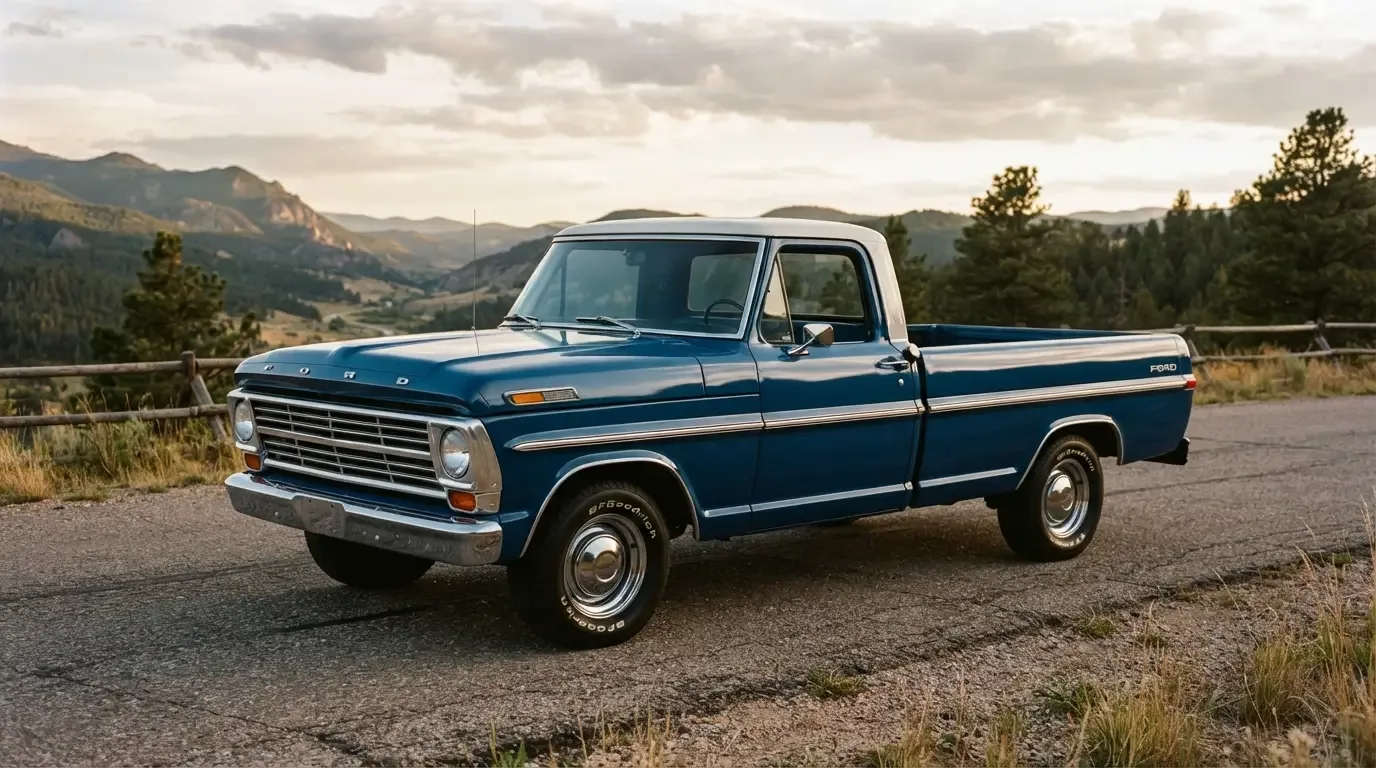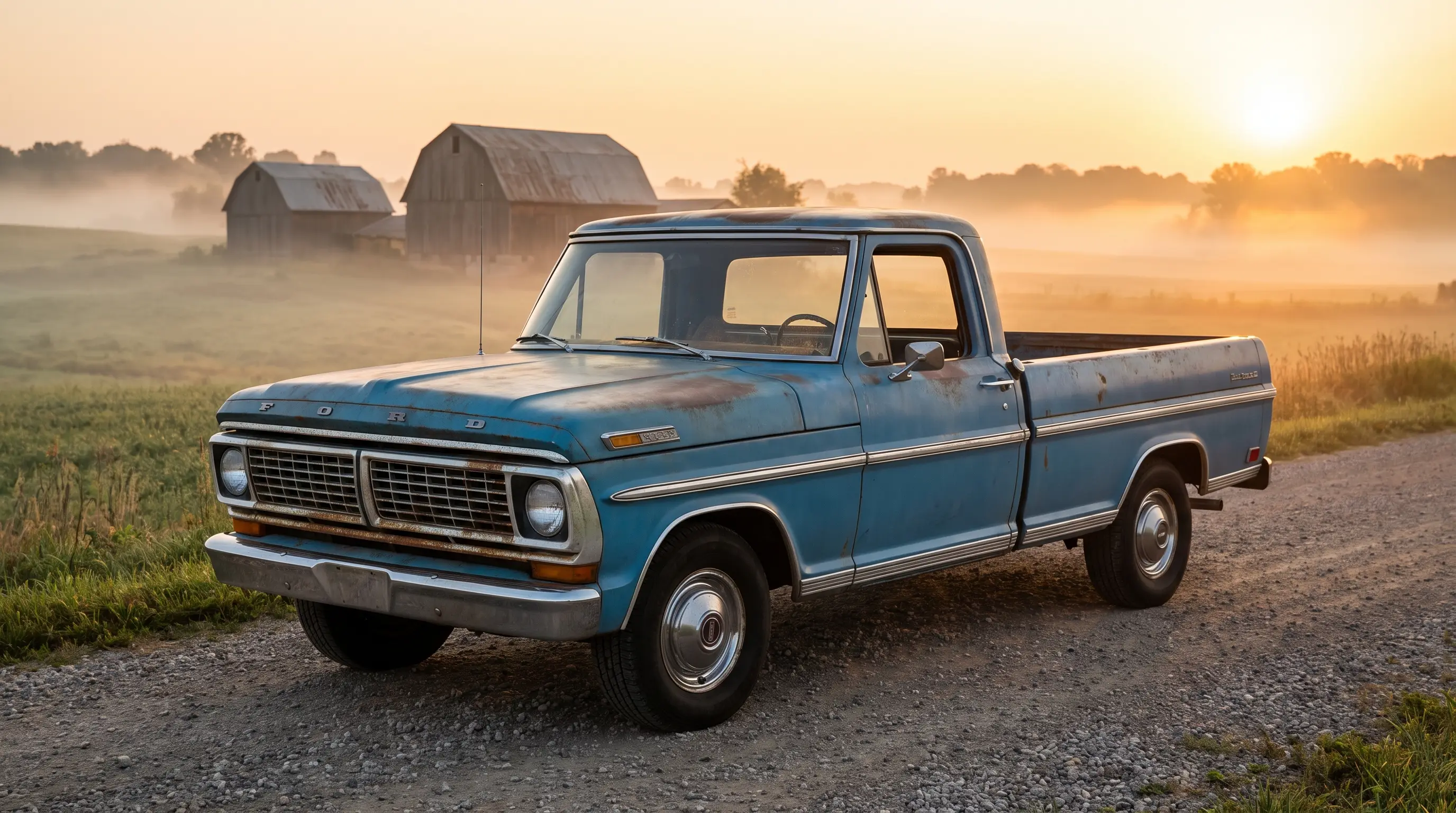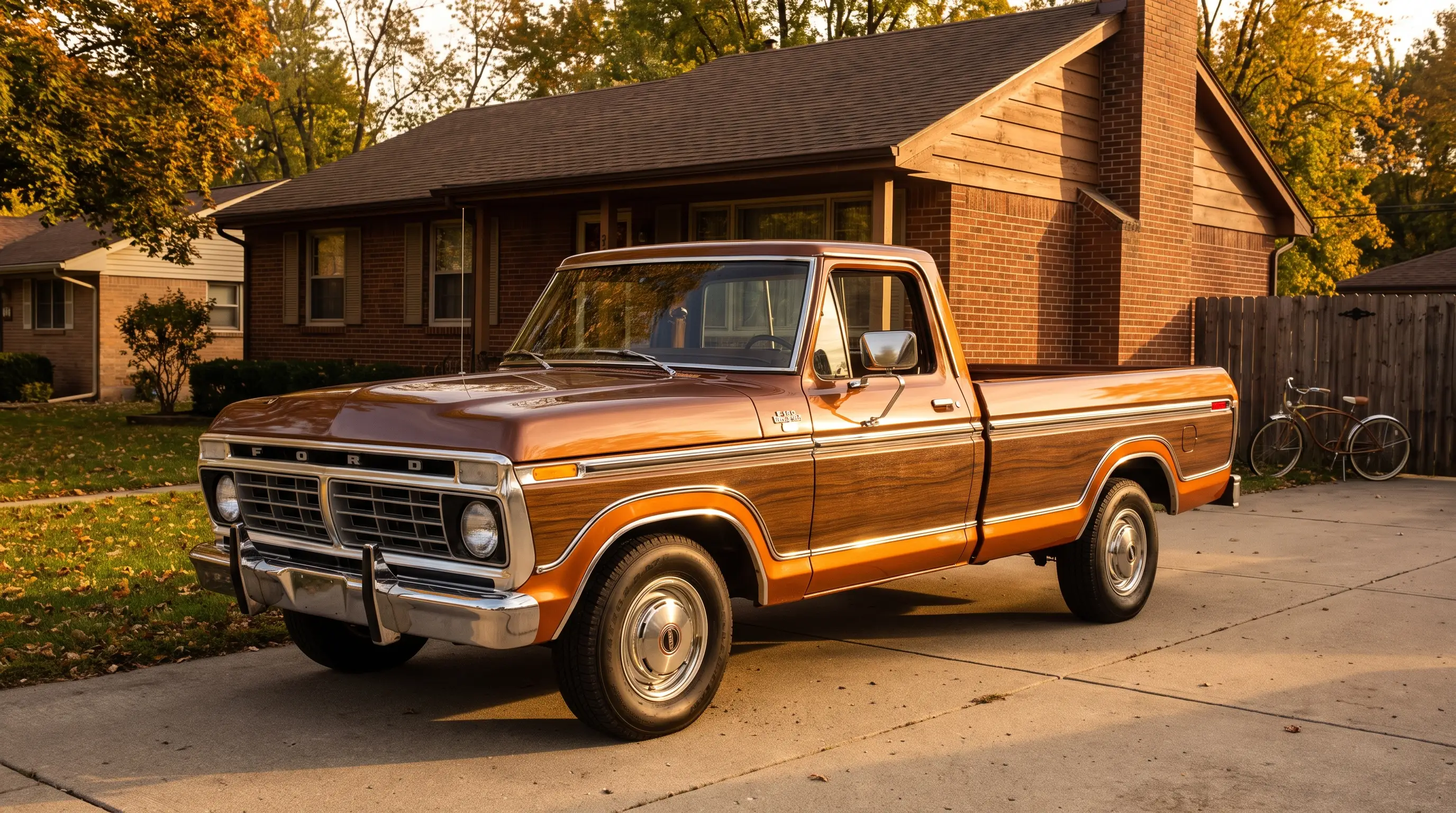
The 1972 Ford F-100 closed out the second-generation bumpside body, and the 1971-72 model years together mark a period of transition that historians often overlook in favor of the flashier trucks that came before or after. By 1972, Ford had absorbed the first wave of federal emissions requirements, adjusted its engine lineup accordingly, and pushed the Ranger XLT trim to a new level of refinement. Documentation from this period is unusually rich, which makes the 1971-72 trucks a rewarding subject for anyone who cares about provenance as much as sheet metal.
The final act of the bumpside generation
Ford introduced the second-generation F-Series in 1967 and carried it through 1972, and the 1971-72 trucks represent the design at its most developed. Anyone approaching this period should first read the full story of the generation, since the changes made in 1971 and 1972 only register clearly against that baseline. The grille grew slightly heavier for 1971, side marker lights (already required across the range since the 1968 model year) carried forward unchanged, and Ford quietly reworked the engine mounts and exhaust routing to accommodate early emissions plumbing without disturbing the truck's fundamental proportions.
Records from Ford's engineering archive show the company treating 1971 and 1972 as a single continuous update rather than two separate redesigns, and dealer literature from both years shares most of its language and photography. That continuity is useful for researchers today, since a build tag or invoice from either year can usually be cross-referenced against the same parts catalog.
The Sport Custom package
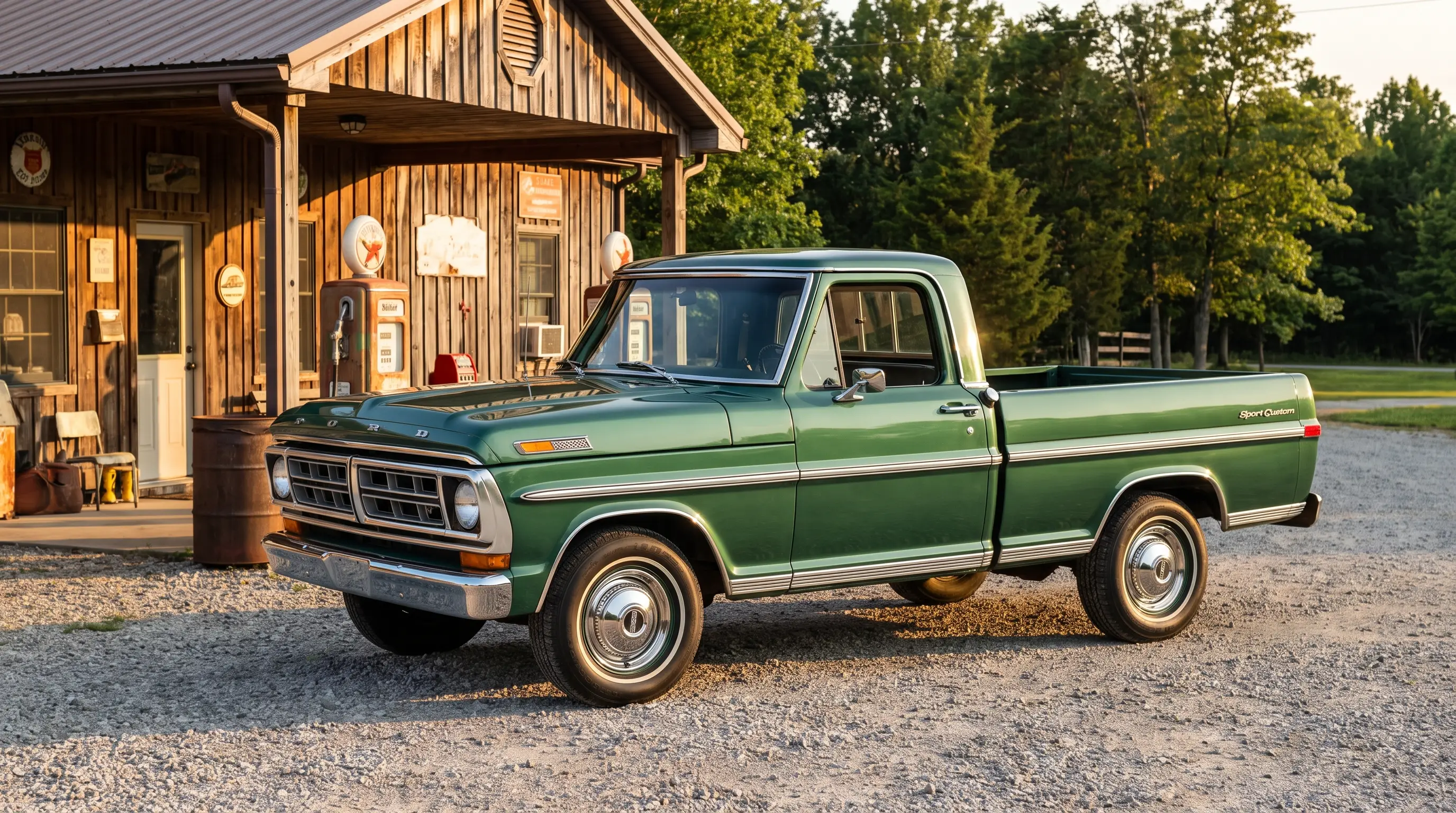
The Sport Custom trim, introduced during this window, targeted buyers who wanted visual distinction without stepping all the way up to the Ranger XLT's full comfort package. Ford fitted the Sport Custom with bright wheel lip moldings, a distinct paint treatment, and badging that separated it clearly from the base Custom cab on dealer lots. It was a relatively low-volume option, and surviving examples with documented Sport Custom equipment carry a premium among collectors who specialize in the bumpside generation's trim variations.
The package reflected a broader shift in how Ford marketed half-ton trucks by the early 1970s. Where the F-100 had once been sold almost exclusively on capability and price, Ford's dealer network increasingly presented it as a lifestyle vehicle, something a buyer might choose over a station wagon rather than instead of a heavier work truck.
| Spec | 1971-72 Ford F-100 |
|---|---|
| Body generation | Second-generation bumpside, final years |
| Notable trims | Custom, Sport Custom, Ranger, Ranger XLT |
| Engines available | 240 six, 302, 360, 390 V8 |
| New for 1971 | Revised grille, running mount and exhaust changes |
| Emissions changes | Early exhaust and mount revisions ahead of federal standards |
Engines and the early emissions shift
The engine roster for 1971-72 carried over the familiar 240 cubic inch six as the base offering, with 302, 360, and 390 V8 options above it. Ford began adjusting compression ratios and ignition timing across several of these engines to accommodate the leaded and unleaded fuel transition that was underway industry-wide, a change that shows up in period service literature as running revisions rather than a clean model-year break. The top-line 390 FE, for example, ran around 8.6:1 compression in 1971, down from the higher ratios of the mid-1960s. Power output figures from this era should be read with some caution, since 1972 brought the industry-wide SAE switch from gross to net horsepower measurement, a change that dropped published figures across the board (the 360 V8, for instance, is listed at 215 gross horsepower for 1971 and 196 net for 1972) without the engines themselves losing real output.
Despite these behind-the-scenes changes, the driving character of a 1971 or 1972 F-100 remains close to its 1967-70 siblings. The frame, suspension geometry, and cab structure carried over largely unchanged, which is part of why parts interchangeability across the entire second generation remains one of the strongest selling points for owners today.
"Documentation from this generation is unusually good, and the 1972 truck rewards anyone willing to chase down the paperwork alongside the sheet metal."
- Sarah Whitfield
Interior and cab refinements by 1972
Inside the cab, the 1971-72 trucks show the clearest evidence of Ford's shift toward comfort. Seat foam density improved over the 1967-68 trucks, door panels gained additional padding, and the dash layout received minor revisions to accommodate new switchgear required by federal regulation, including a steering column lock that became standard across the range. Ranger XLT cabs from these two years featured woodgrain accents on the dash and door caps, a detail that Ford borrowed directly from its passenger car interiors of the period.
Ford also revised the F-100's seat track hardware and steering wheel design slightly between 1971 and 1972, changes documented in factory parts books but rarely discussed outside specialist circles. For restorers chasing exact originality, these small differences matter, since a 1971 interior part will not always bolt directly into a 1972 truck without minor fitment adjustments.
Radio placement and heater controls also moved slightly within the dash for 1972, a change tied to the steering column lock hardware rather than any stylistic decision. Ford's parts diagrams from the period show the two model years sharing perhaps ninety percent of their interior components, which means a careful buyer comparing two trucks side by side needs to check date-stamped parts rather than assume a shared model year guarantees a shared part number. Upholstery patterns also shifted subtly between the two years, with 1972 cars gaining a slightly heavier vinyl grain on base Custom seats that Ford introduced to improve wear resistance under daily use.
Collector interest and what survives
The 1971-72 trucks occupy an interesting niche among bumpside collectors. They lack the historical significance of being the generation's debut, yet they represent its most refined execution, with fewer of the early production quirks that show up in 1967 and 1968 examples. Buyers researching the model often start by looking to browse classic F-100 listings and comparing 1971-72 examples against earlier bumpside trucks side by side, since the visual differences are subtle but the mechanical maturity is real.
Survival rates favor trucks that spent their working lives in dry climates, as with most vintage Fords, and a documented history carries significant weight at auction. A 1972 F-100 with an intact Sport Custom badge set and a verifiable build sheet is a genuinely uncommon find, and specialists in this generation treat that combination as a meaningful step above a standard Custom cab in both desirability and resale value.
Because 1972 was the final year before Ford's third-generation redesign arrived for 1973, these trucks also mark the end of an identifiable design language that had defined the brand's half-ton trucks for six full years. Buyers who value that closing-chapter status often pay a small premium for a well-documented 1972 truck over an otherwise comparable 1971, treating it as the definitive version of the bumpside shape before Ford moved on to a boxier, heavier truck for the rest of the decade.