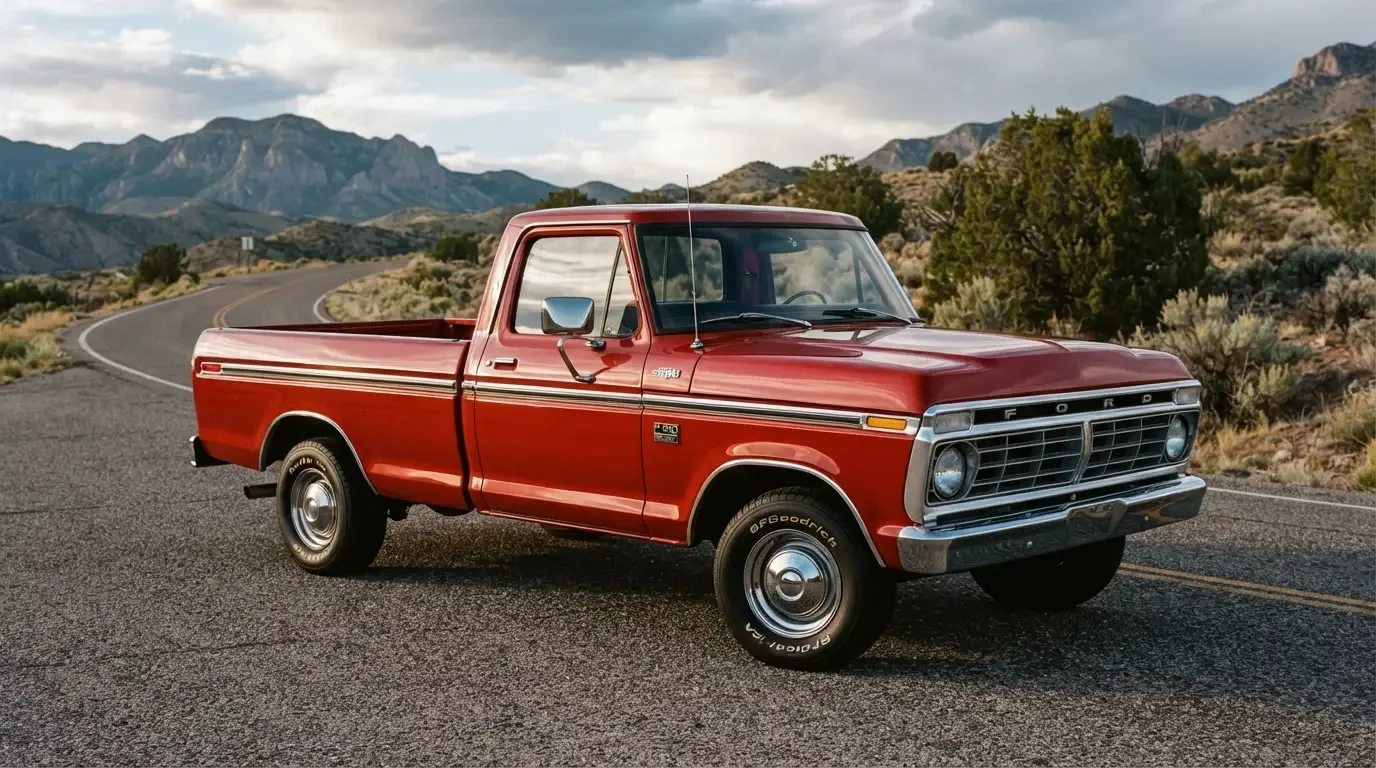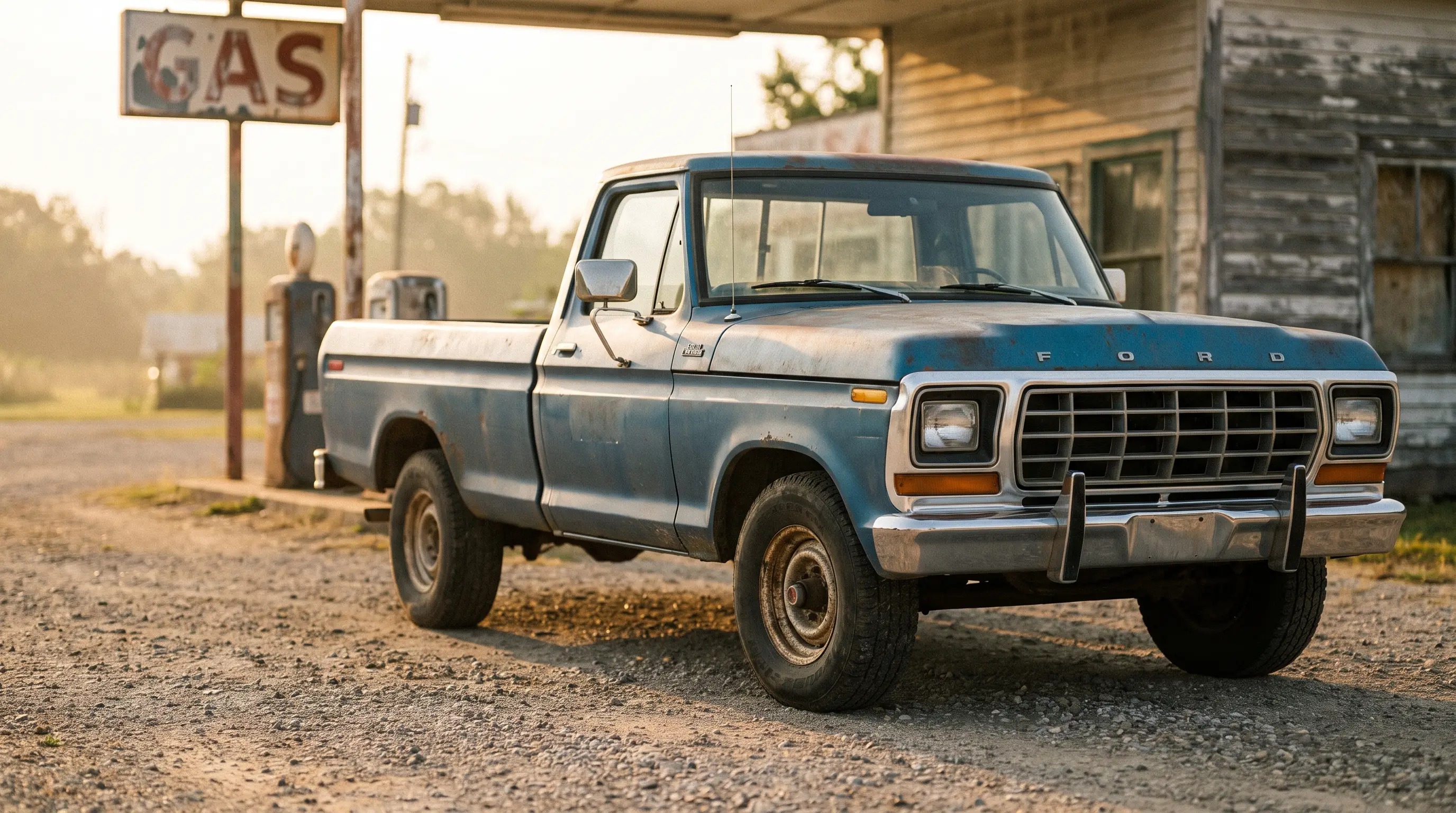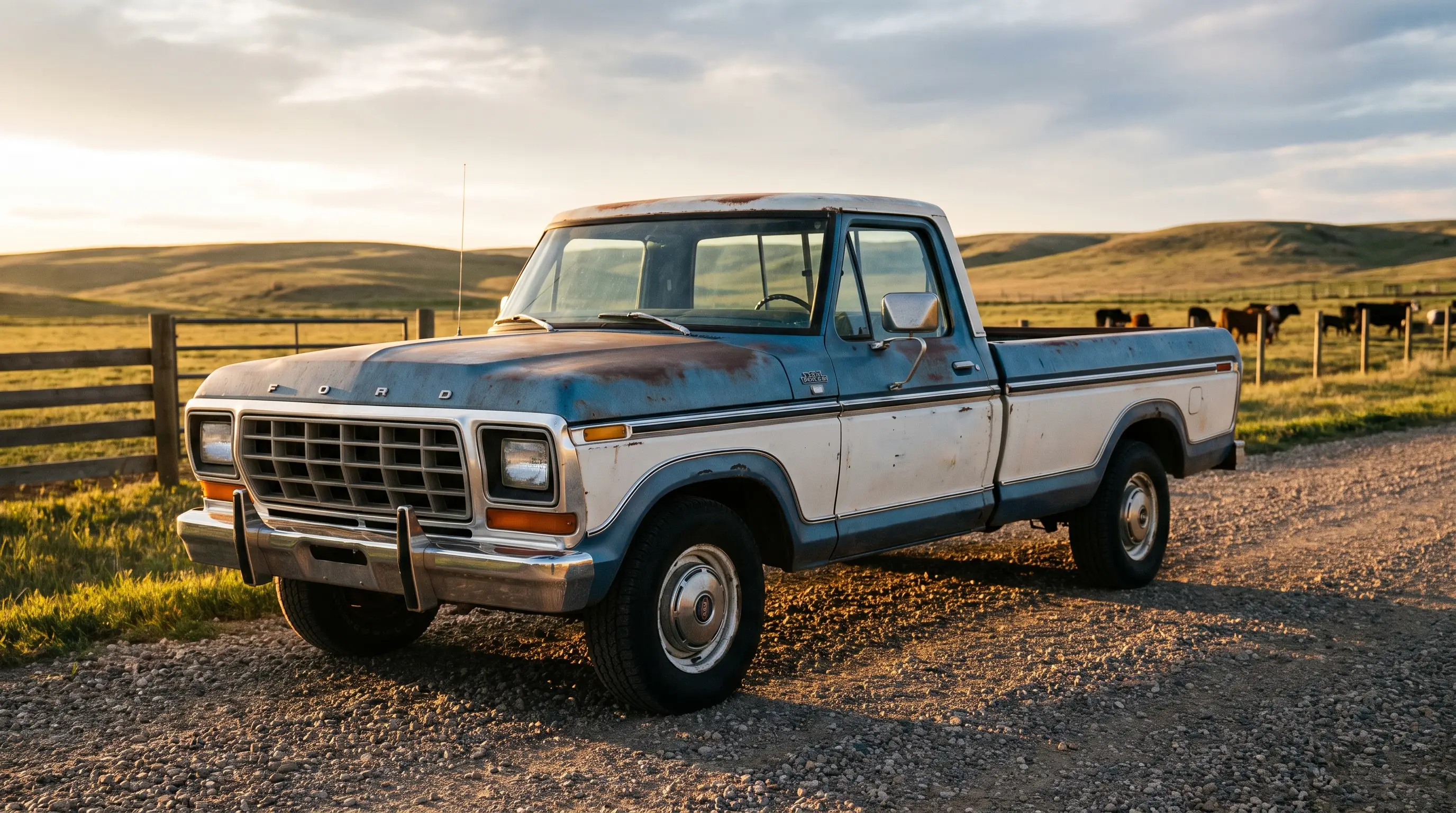
Picture a contractor in 1973, standing in a Ford dealership showroom, running a hand along the door of a brand new pickup that suddenly feels like an actual vehicle instead of a stripped-down tool. That was the moment Ford wanted every buyer to have that year, and by most accounts they got it. The Ford F100 Dentside, launched for the 1973 model year, was bigger than what came before it, bolder in its stance, and genuinely more comfortable to sit in for a full workday. It was the truck that convinced a generation of buyers that a pickup could do the job and still feel good doing it.
I have talked to more than one old-timer who remembers trading in a fifth-generation truck for one of these and being surprised by how different the whole experience felt, even though the drivetrain underneath was largely familiar. That gap between what the truck looked like and what it actually delivered is the whole story of 1973.
A bigger truck for a changing market
Ford grew the cab and widened the stance for this sixth generation, responding to a market that increasingly wanted trucks for personal use, not just fleet duty. The extra size was not vanity. It translated directly into more shoulder room, better visibility, and a cab that could genuinely seat three adults without anyone drawing the short straw. For the full account of how this generation came together, our 1973 ford f100 history feature covers the design decisions in depth.
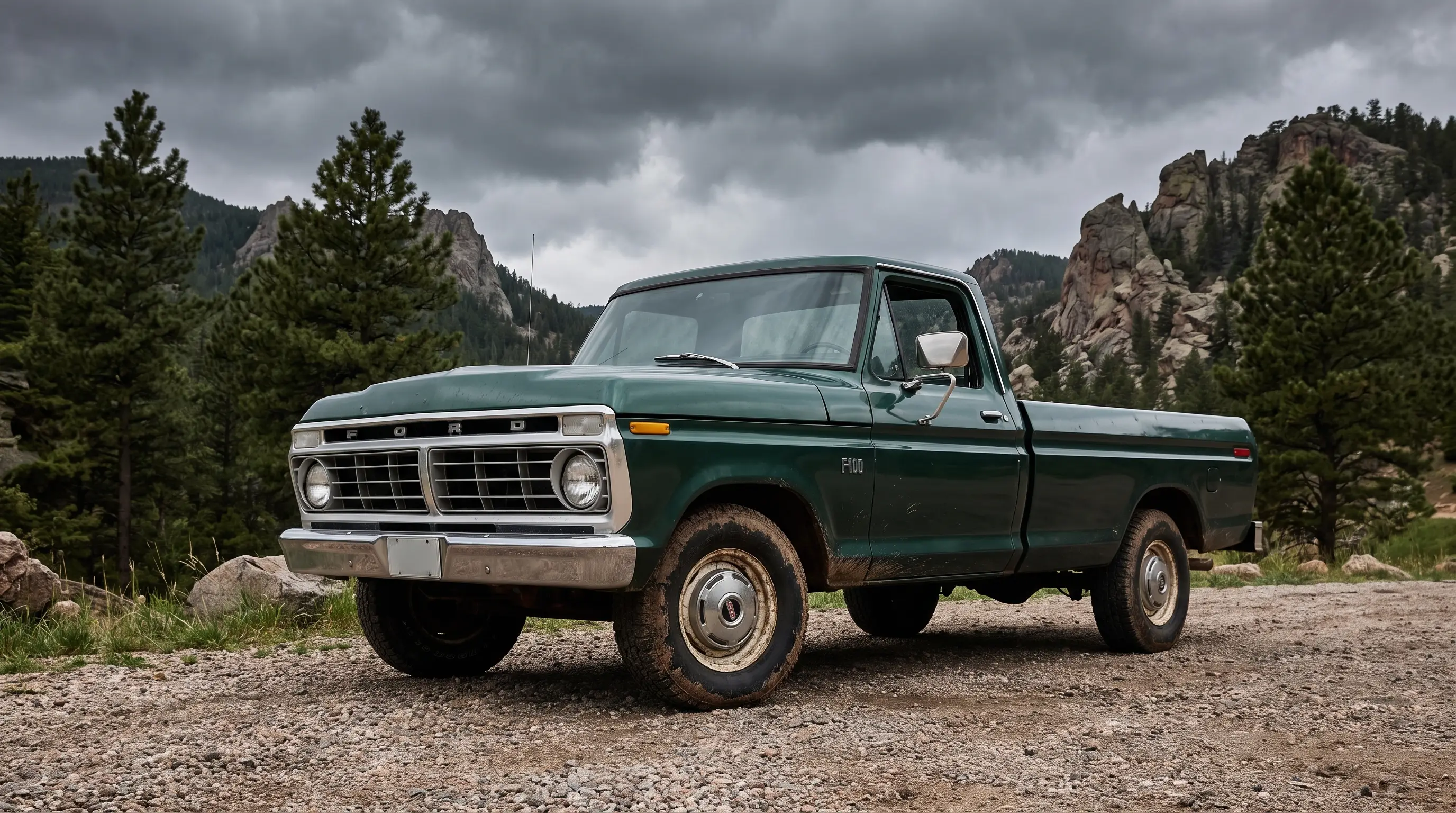
The proportions read differently too. Where the previous generation had a rounder, more compact look, the 1973 truck sat squarer and more planted, with a hood line and fender shape that made it look like it meant business from any angle. Dealers reported buyers responding immediately to the new look on the showroom floor, and sales figures for the model year backed up that early enthusiasm.
Where the nickname came from
Anyone who has run a hand along the side of one of these trucks knows exactly why the nickname stuck. A long, purposeful crease runs the length of the door and bed, looking for all the world like a dent that was supposed to be there. It became the defining visual signature of the generation, distinguishing it instantly from both the smoother Bumpside trucks before it and the trucks that came after. If you want the deeper story behind that crease and how the name entered common usage among owners, a related story traces exactly how it happened.
What strikes me talking to owners is how much affection that nickname carries. It is not a knock on the truck's looks. It is a term of endearment, the kind of nickname that only sticks when the people using it genuinely love the thing they are describing.
Comfort as a selling point, not an afterthought
The interior told the real story of where Ford's priorities had shifted. Softer seats, better sound insulation, and a dashboard laid out with the driver's comfort in mind replaced the strictly utilitarian cabins of earlier trucks. Ranger and Ranger XLT trim packages pushed even further, adding wood-tone accents, upgraded upholstery, and enough brightwork that a loaded Dentside could sit next to a passenger car in a driveway without looking out of place.
This was not Ford softening the truck into something less capable. The frame and suspension still handled real work, and the engine lineup, from the workhorse 300 cubic inch six to the big-block V8 options, kept the towing and hauling credentials intact. What changed was the assumption that a truck buyer had to choose between capability and comfort. The 1973 Dentside argued you could have both, and enough buyers agreed that the formula stuck for the rest of the decade.
| Detail | 1973 Ford F-100 Dentside |
|---|---|
| Model year introduced | 1973, opening the sixth F-Series generation |
| Signature styling | Long body crease along door and bed, source of the Dentside nickname |
| Comfort shift | Wider cab, softer seats, wider factory AC adoption |
| Trim packages | Custom base, Ranger, and Ranger XLT for upgraded comfort |
| Engine range | 240 and 300 sixes plus 302, 360, 390 V8 options |
"You could feel Ford trying to win over a different kind of buyer with this truck. It still worked like a truck, but for the first time it also felt like somewhere you wanted to spend your day."
- Patrick Walsh
Why the 1973 launch still resonates with owners today
Talk to enough owners of these trucks and a pattern emerges. People do not just own a Dentside. They tell stories about it, about the trip it made, the job it survived, the years it sat in a barn before someone brought it back. That kind of attachment usually only forms around vehicles that genuinely earned it, and the 1973 F100 Dentside earned it by delivering on the promise Ford made in the showroom that year.
The culture around these trucks has only grown since. Owners clubs, swap meets, and a steady stream of restoration projects keep the 1973 launch relevant decades later, and the truck's reputation as the one that made pickups comfortable has held up remarkably well. If that story has you curious about finding one of your own, you can browse F-100s for sale now and see what condition and trim combinations are currently available.
What separated the 1973 truck from its predecessor at a glance
Stand a 1973 Dentside next to a 1972 Bumpside and the differences announce themselves immediately. The grille grew wider and more upright, trading the previous generation's rounded face for something closer to a proper front end. The hood grew flatter and more horizontal, improving forward visibility in a way drivers noticed the first time they pulled into traffic. Even the bed sides carried themselves differently, squarer at the corners and more purposeful in their lines.
None of these were random styling choices. Ford's designers were responding directly to what buyers had told dealers they wanted, more presence on the road, easier entry and exit, and a truck that photographed as well parked in a driveway as it did on a job site. The 1973 launch delivered on every one of those requests, and the sales response through the rest of the decade proved the design team had read the room correctly.
Even the doors themselves felt different in the hand. Owners from the period describe a heavier, more solid closing sound compared to the previous generation, a small detail that says a lot about how much attention Ford put into the sense of quality this truck was meant to project, not just its capability on paper.
Bigger, bolder, and genuinely more comfortable was not just marketing language for 1973. It was an accurate description of what Ford delivered, and it is exactly why this launch year still gets talked about at truck shows nearly five decades later.