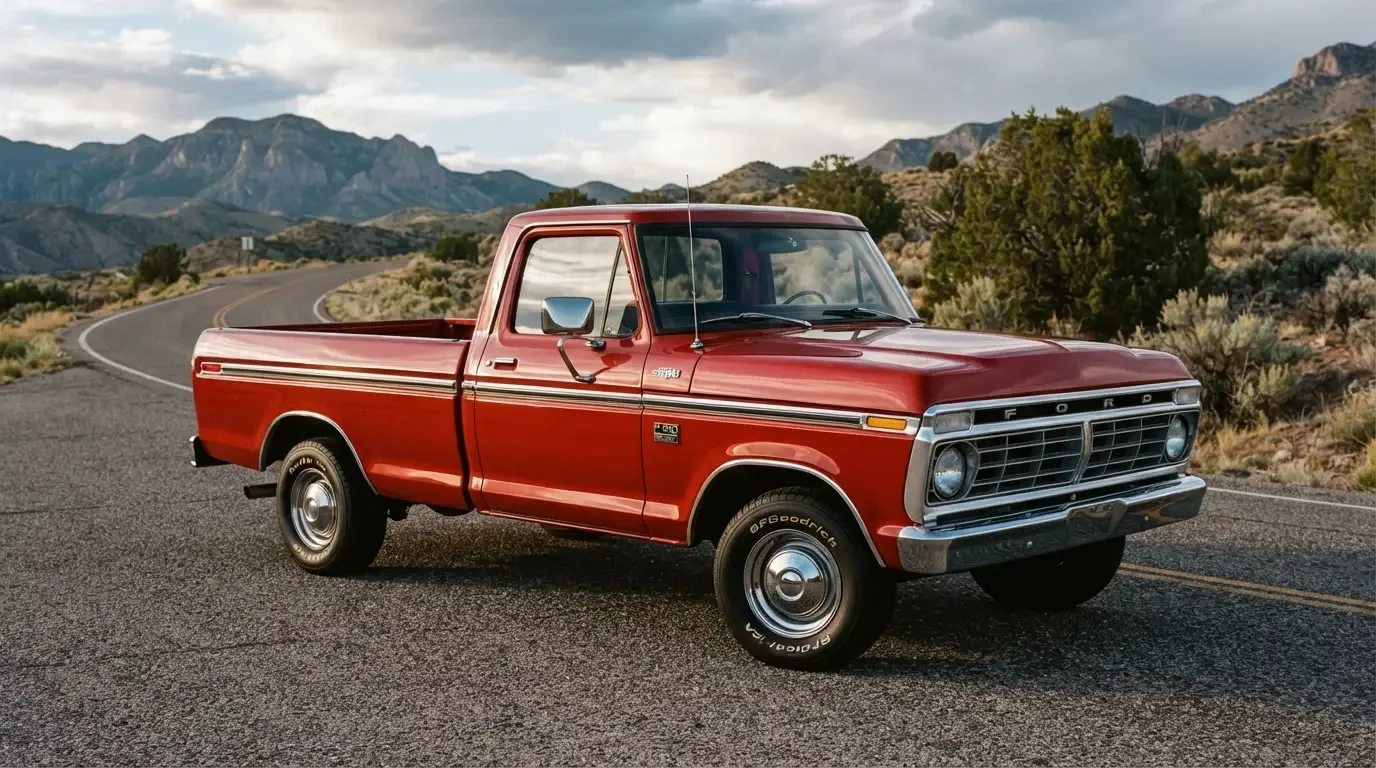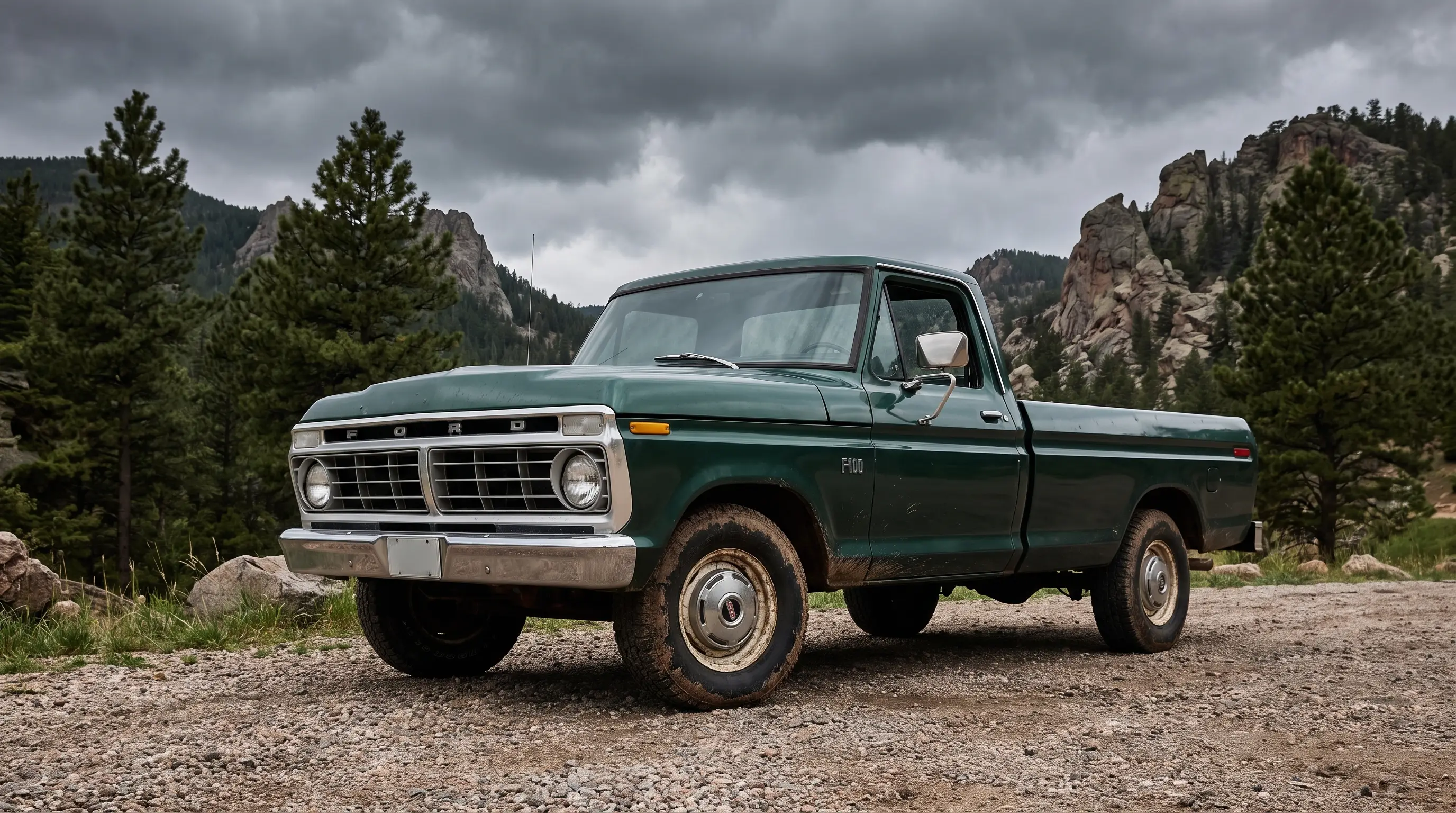
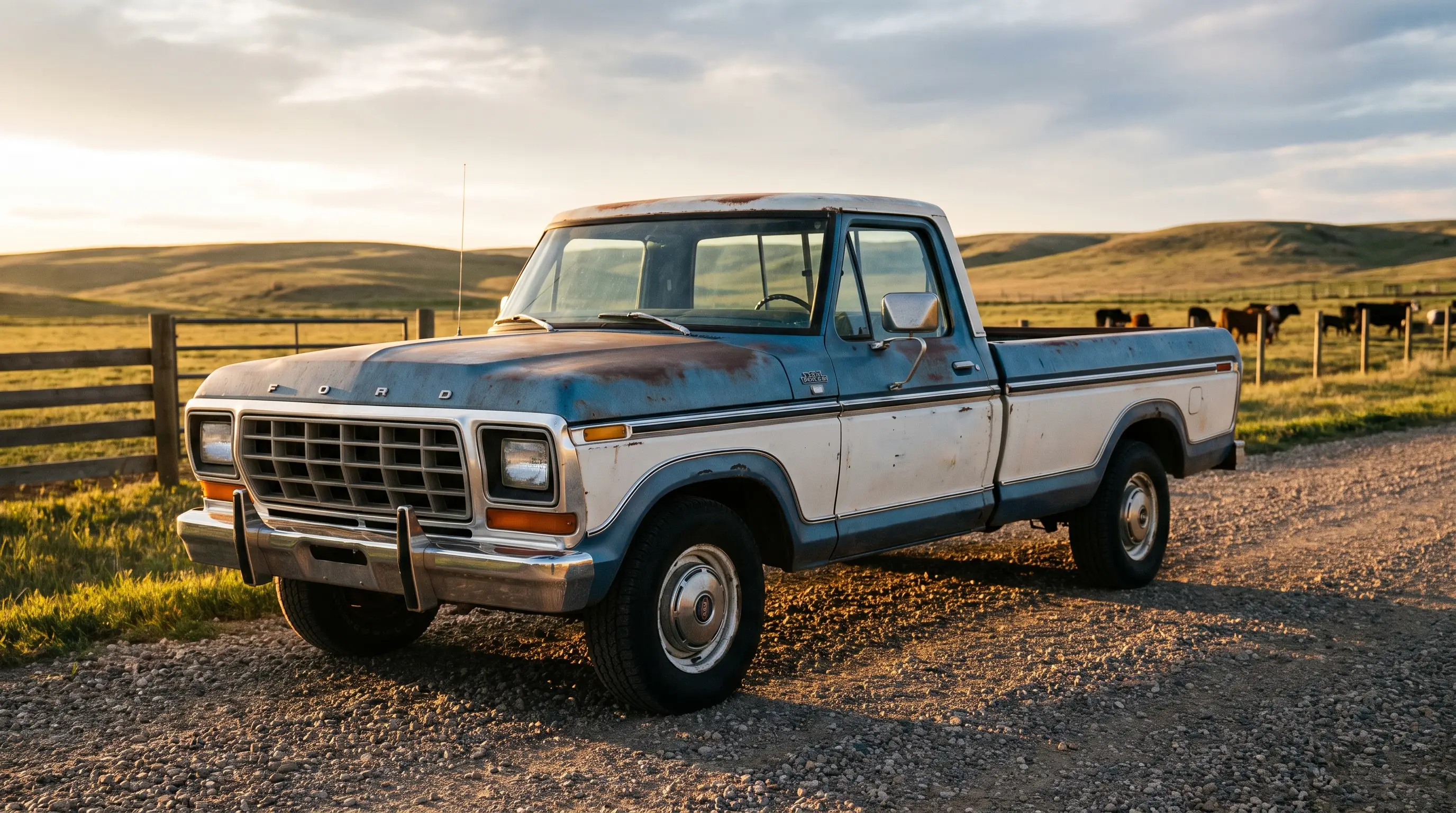
The 1978 Ford F-100 does not get the attention that a first-generation Mustang or a split-window Corvette gets, and that is exactly why it belongs on a serious collector's radar. 1978 ford f100 value has moved steadily upward over the past several years without the wild swings that hit flashier classics, and the trucks are still priced well below what the numbers say they should be. This is a buy-side breakdown, not a nostalgia piece.
What actually moves the number
Four variables decide what a dentside F-100 is worth: body style, driveline, drivetrain configuration, and originality. A short-bed two-wheel-drive truck with a V8 and a clean title brings meaningfully more than a long-bed six-cylinder with the same mileage. Four-wheel-drive Highboy trucks, especially 1973 through 1977 examples before the ride height dropped, sit in their own pricing tier entirely because off-road buyers and street truck buyers are both competing for the same small pool of survivors.
Originality matters more than most new buyers expect. A truck with its factory engine, correct paint code, and unmolested bed still commands a premium over an otherwise similar truck that has been reengined or resprayed in a non-factory color, even when the modified truck runs better. Documentation closes that gap. A build sheet, a title history, or period photographs can add real dollars to a sale because they remove the guesswork a buyer would otherwise be pricing in as risk.
Condition tiers, plainly stated
| Condition | Typical description | Relative price band |
|---|---|---|
| Driver / project | Runs, needs paint or interior, some rust | Entry level |
| Solid driver | Clean body, sound mechanicals, older repaint | Mid range |
| Excellent original or restored | Documented, correct drivetrain, straight sheet metal | Top tier |
| Concours / low-mile survivor | Rare, unmolested, exceptional provenance | Outlier pricing |
Most 1978 trucks on the market today fall into the driver or solid driver bands. Genuine low-mile survivors are uncommon enough that they set their own price whenever one surfaces, and those results should not be used to estimate what an average truck is worth.
Why 1978 specifically holds up
The 1978 model year sits late enough in the dentside run to benefit from Ford's refined interior and improved emissions-era driveability, but early enough to still carry some of the heavier-duty mechanical specification that got trimmed as the decade closed out. Buyers who want a dentside that feels closer to modern to drive, without going all the way to the final 1979 trucks, tend to land on 1977 or 1978. That sweet-spot positioning keeps steady demand under the year even when broader truck market sentiment cools.
Where the risk sits
Rust is the single biggest value killer on any dentside, and cab corners, bed floors, and frame rails are the places to inspect before anything else. A truck priced below market for its stated condition almost always has a structural reason, not a negotiating opportunity. Buyers should also be wary of engine swaps presented as upgrades without paperwork. A period-correct 302, 400M, or 460 in good tune (the 360 and 390 FE big-blocks were phased out of the F-100 lineup after 1976) is worth protecting; an unknown crate engine dropped in without documentation is a liability dressed up as a feature, and it will cost the seller money at resale even if it runs fine.
"Buy the body and the paperwork. The engine is the cheapest part of this truck to fix later and the most expensive part to fake convincingly."
- David Mercer
The buy case
Set against comparable Chevrolet and GMC trucks from the same model year, the 1978 F-100 remains underpriced relative to production numbers and survival rate. That gap has been closing gradually rather than suddenly, which is a healthier pattern for a buyer than a spike-driven market. A well-documented, mechanically sound example bought today is a reasonable bet to outpace inflation over a five to ten year hold, and it comes with the side benefit of being genuinely usable in the meantime rather than a garage queen that only makes sense on paper.
The wider context for how this generation got here, including what changed across the full 1973 to 1979 production run, is covered in the whole picture, which is worth reading before committing to a specific year.
It is also worth remembering that the 1978 truck did not exist in a vacuum. Ford made incremental changes almost every year of this run, from interior trim to emissions equipment to available options, and those small shifts add up to real differences in how a buyer should value one year against another. A truck one model year off from what a buyer specifically wants is not automatically a worse investment, but it is a different truck, and pricing it against the wrong comparable is one of the most common mistakes first-time dentside buyers make.
Region and color still swing the number
Geography matters more with these trucks than with almost any car from the same era. A dentside that spent its life in the rust belt has a different starting point than one that spent decades in Arizona or Southern California, and buyers pay a real premium for a truck with a documented dry-climate history even before an inspection confirms it. Shipping a truck across the country to escape a rusty regional market can still pencil out once the price difference is accounted for, which is part of why online listings have narrowed some of the old regional price gaps.
Color plays a smaller but real role too. Factory two-tone combinations, especially ones tied to the Free Wheeling package, tend to sell faster and for more than a single solid color, simply because they photograph better and stand out at a show. A repaint in a non-factory color is not a dealbreaker for a driver-grade truck, but it does close off some of the upside a correct color would carry into a sale.
How to read an asking price
New buyers often make the mistake of comparing a listing price against a national average without adjusting for the specifics above. A four-wheel-drive short bed with a documented history is not the same market as a rusty long-bed six-cylinder, even if both are technically 1978 F-100s. Before assuming a truck is overpriced or underpriced, work through drivetrain, body style, rust condition, and paperwork one at a time. Most listings that look mispriced at first glance turn out to be priced correctly once all four variables are accounted for, and the rare genuine bargain usually has a rust problem hiding underneath the price tag.
Bottom line for buyers
Do not chase the cheapest truck on the list. Chase the straightest body with the most complete history, even if it costs a little more up front, because that is the truck that holds its value when the broader market cools. For anyone ready to start looking at real inventory rather than auction recaps, it is worth taking the time to find a classic F-100 and compare actual asking prices against the condition tiers above before making an offer.