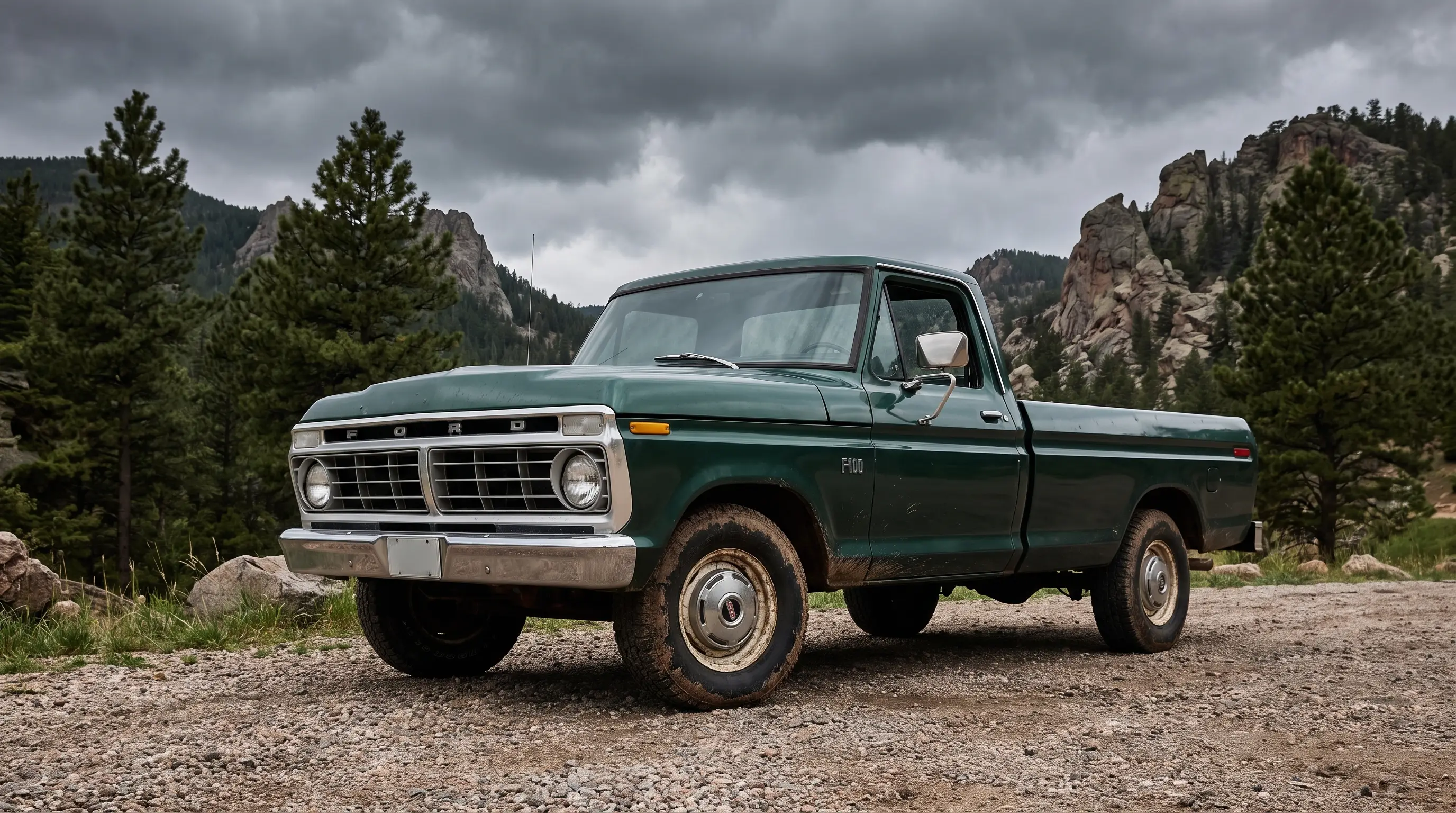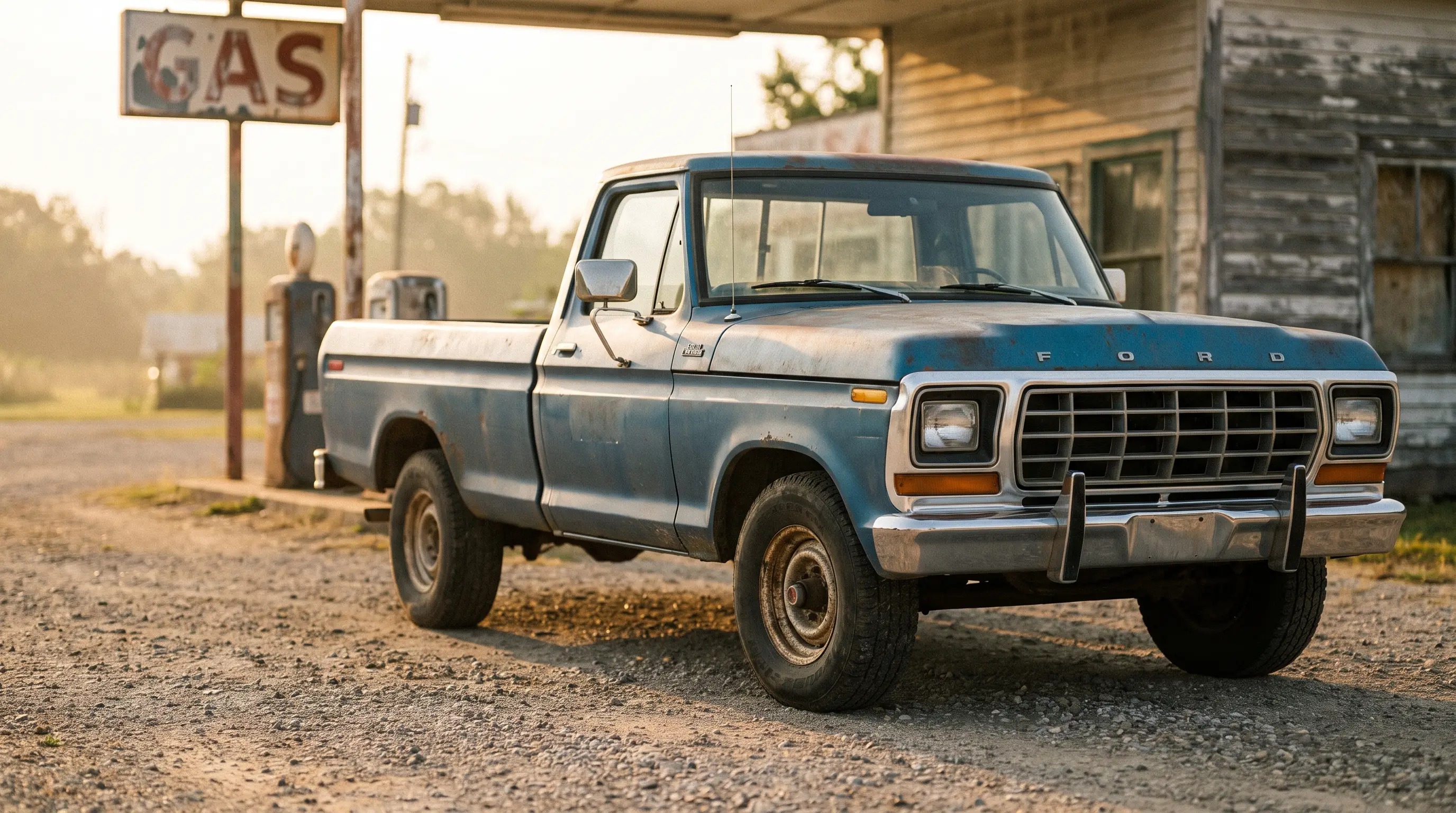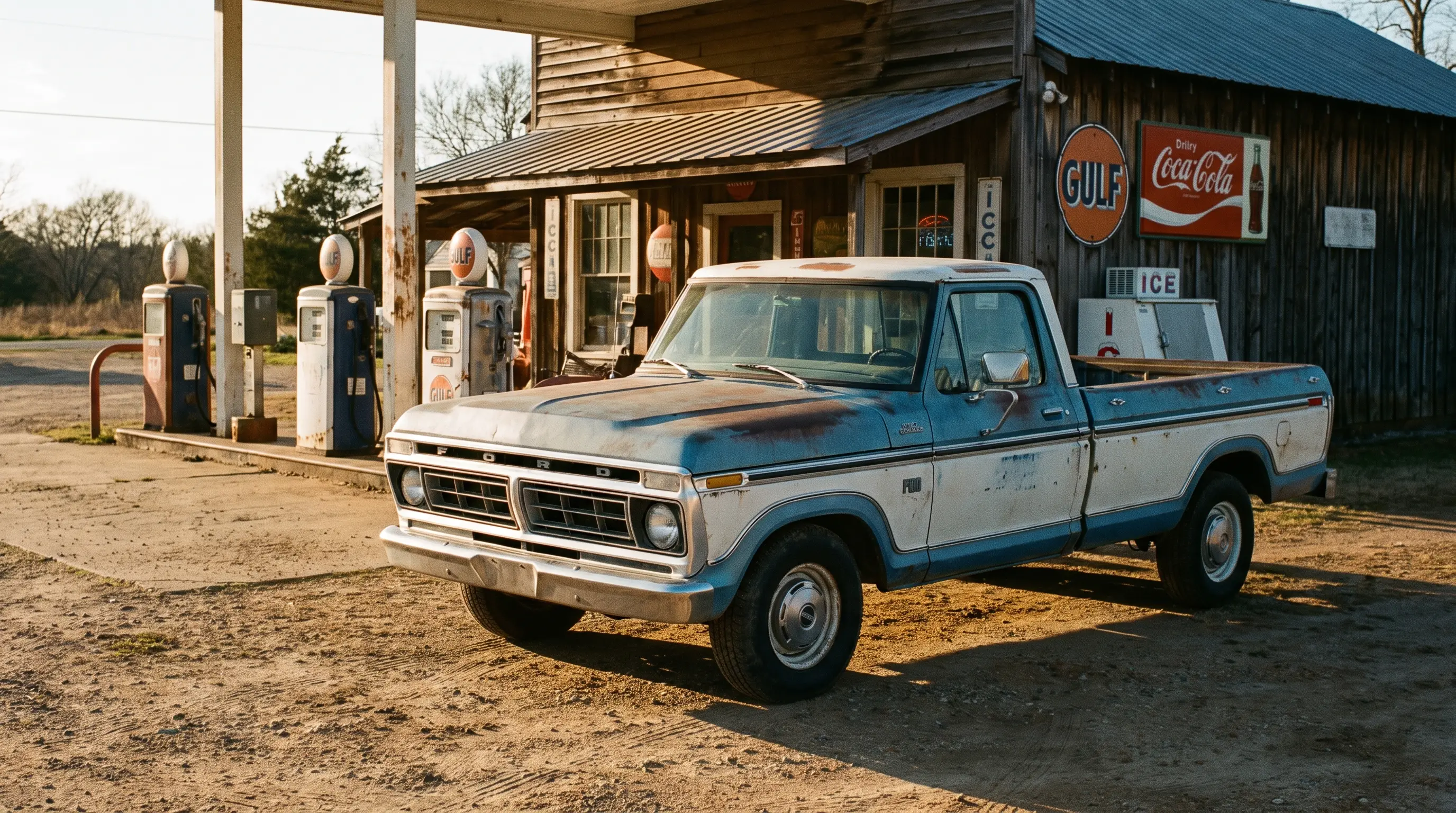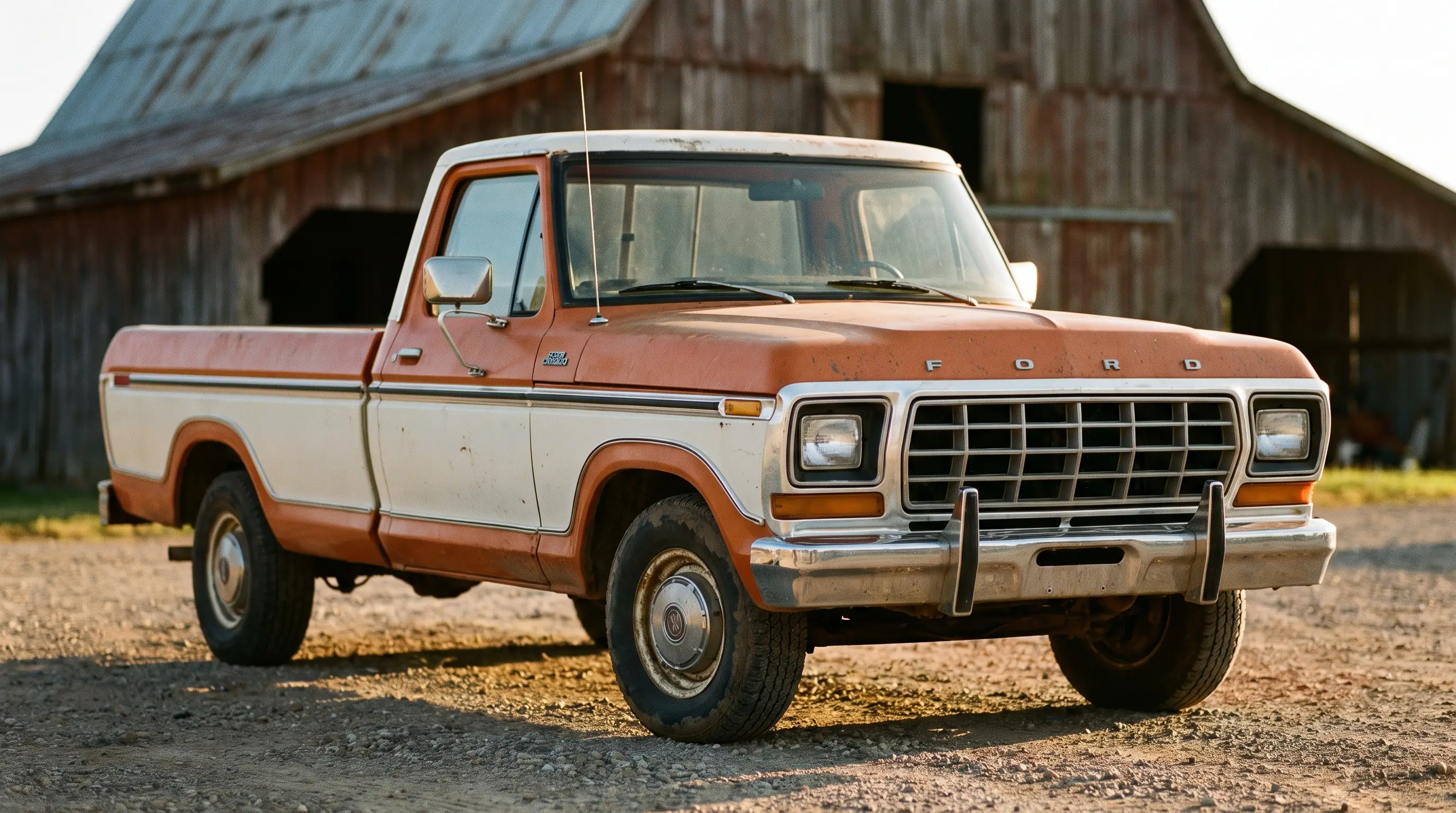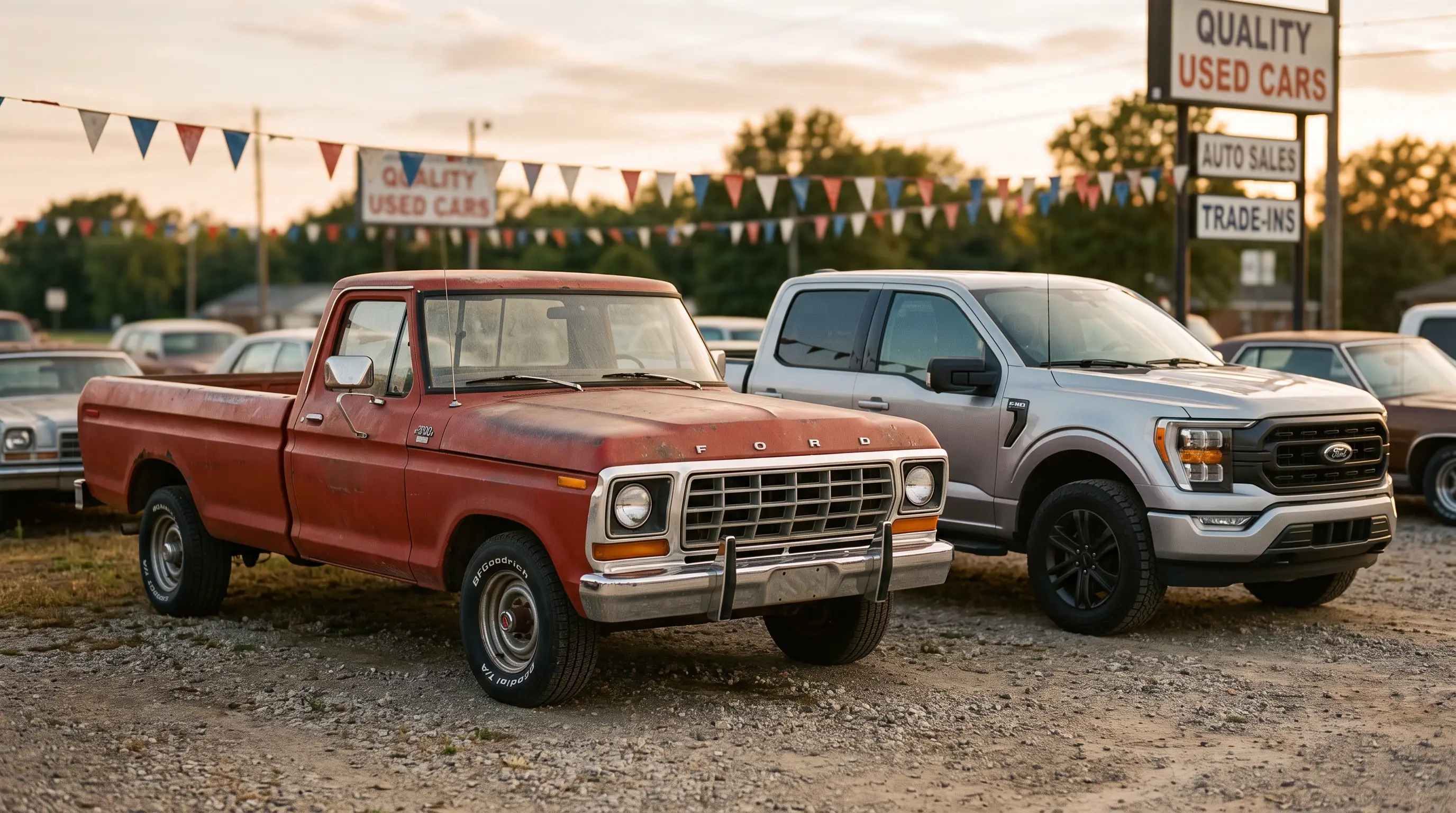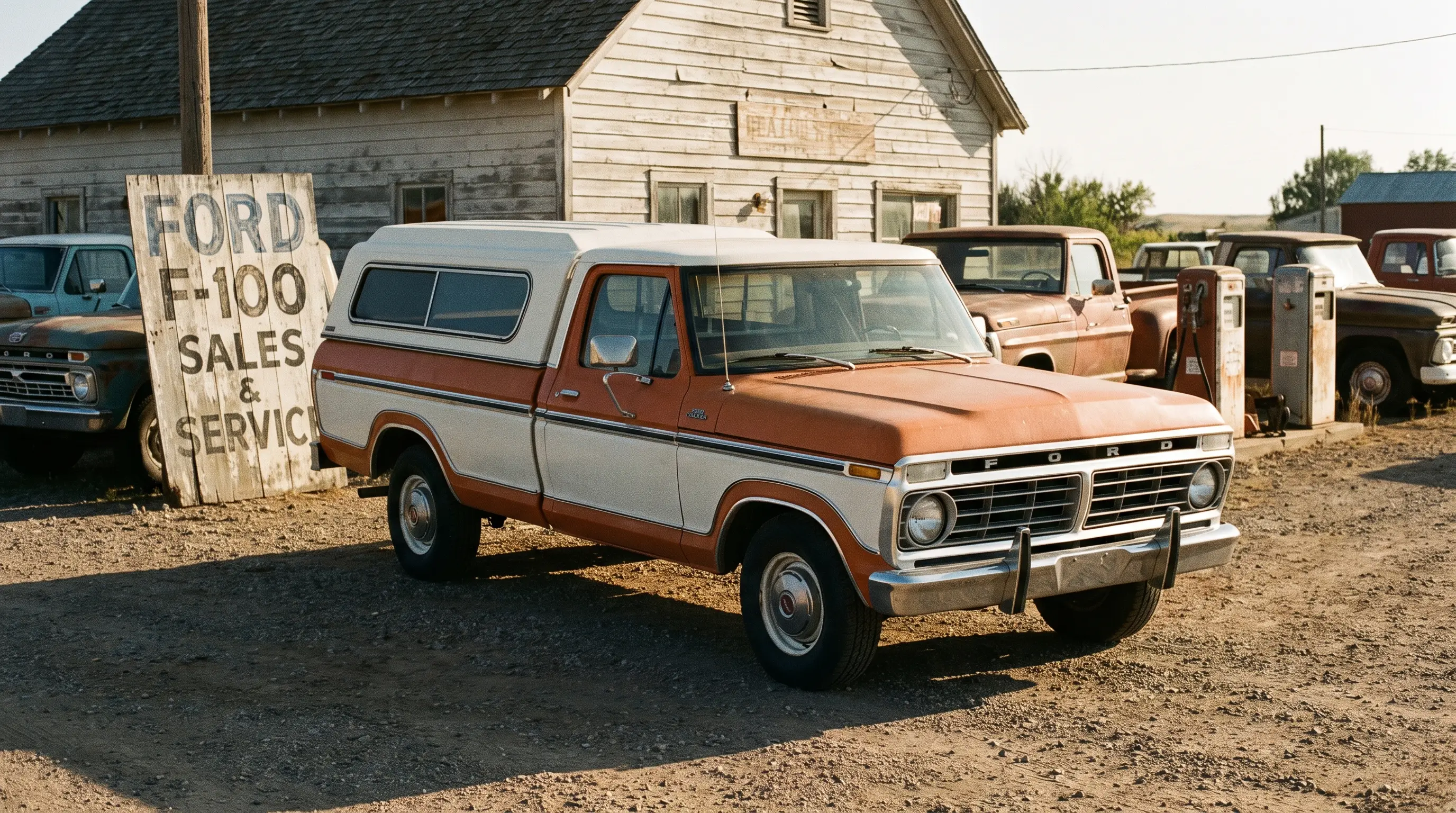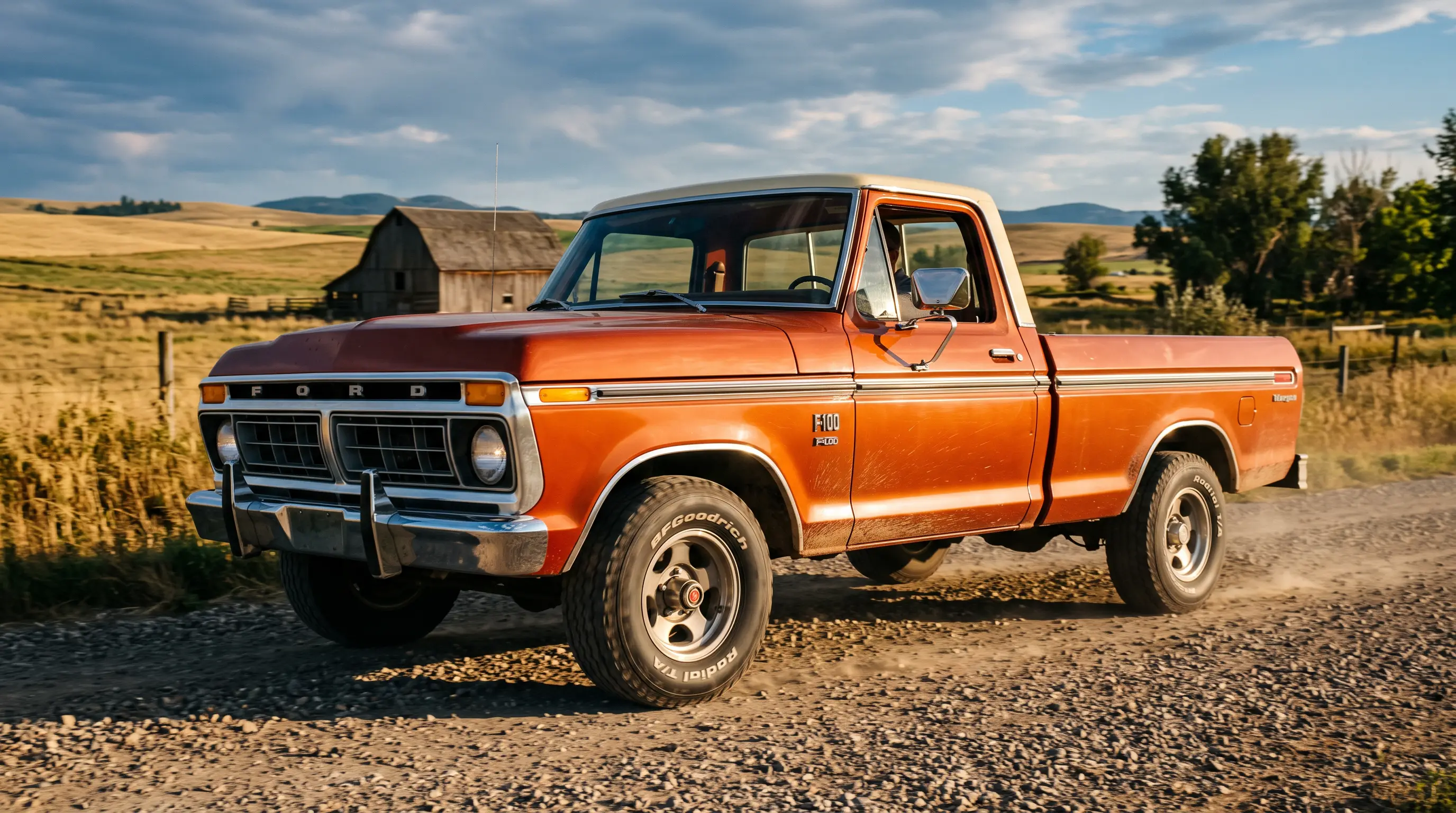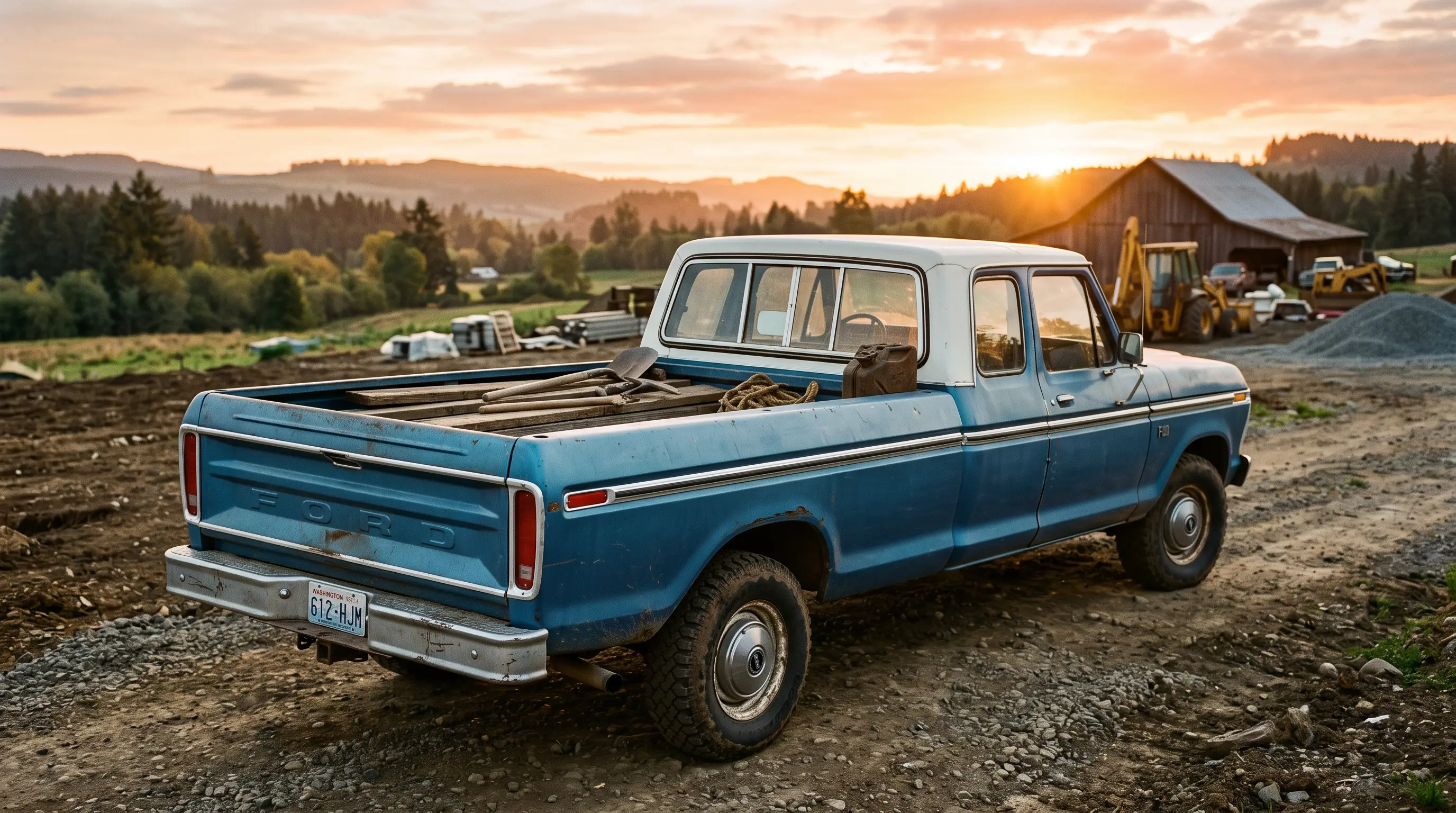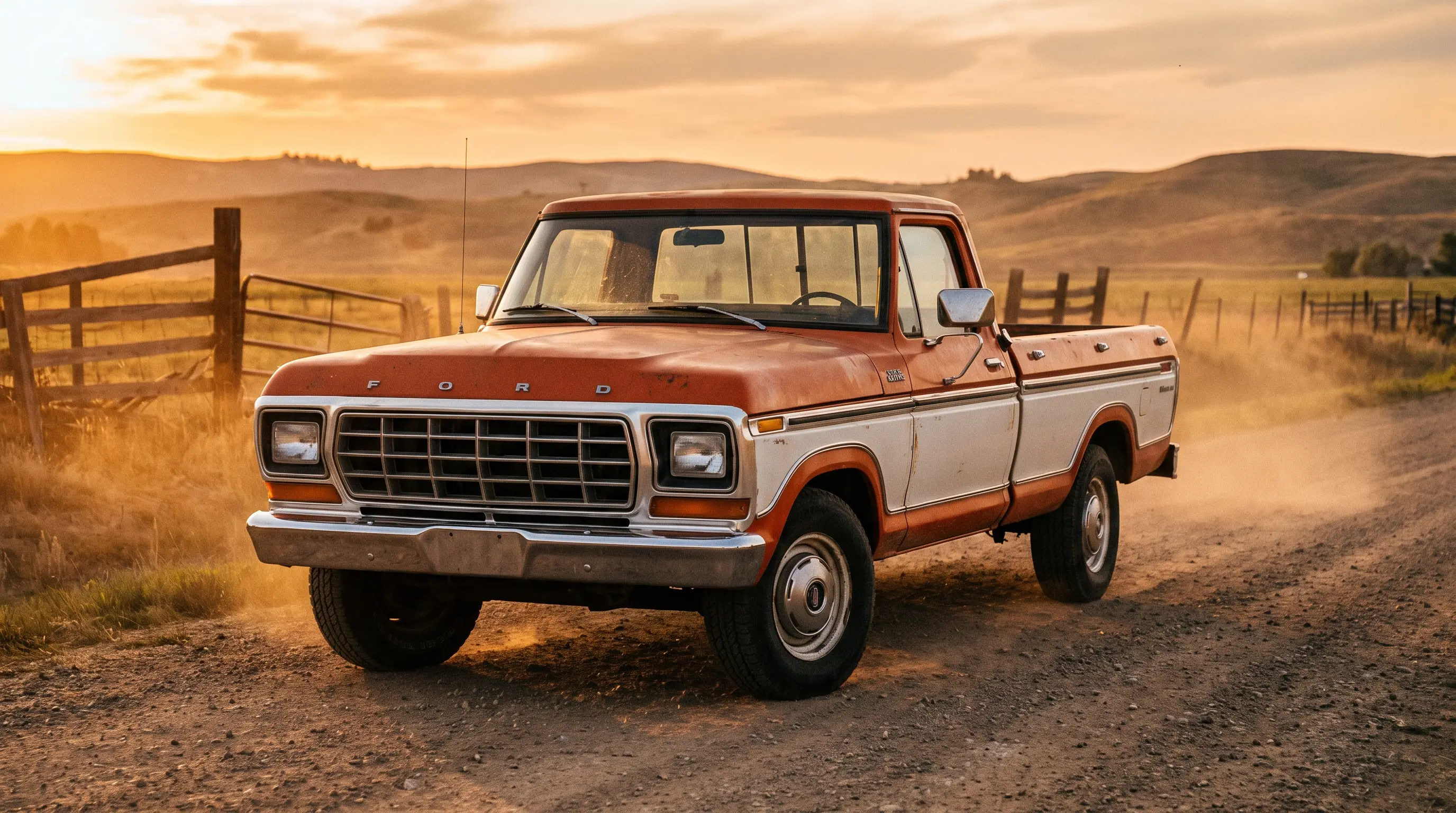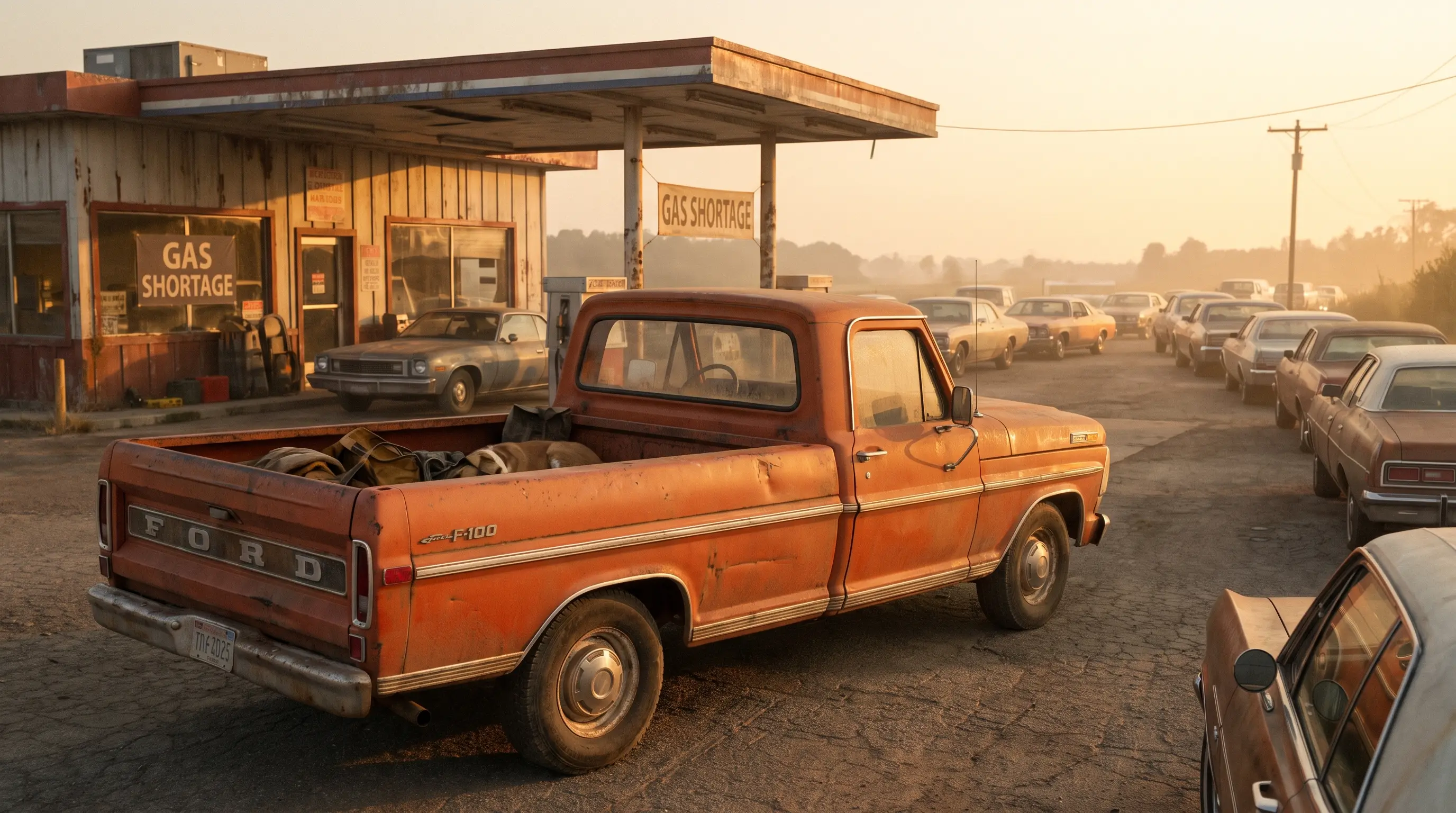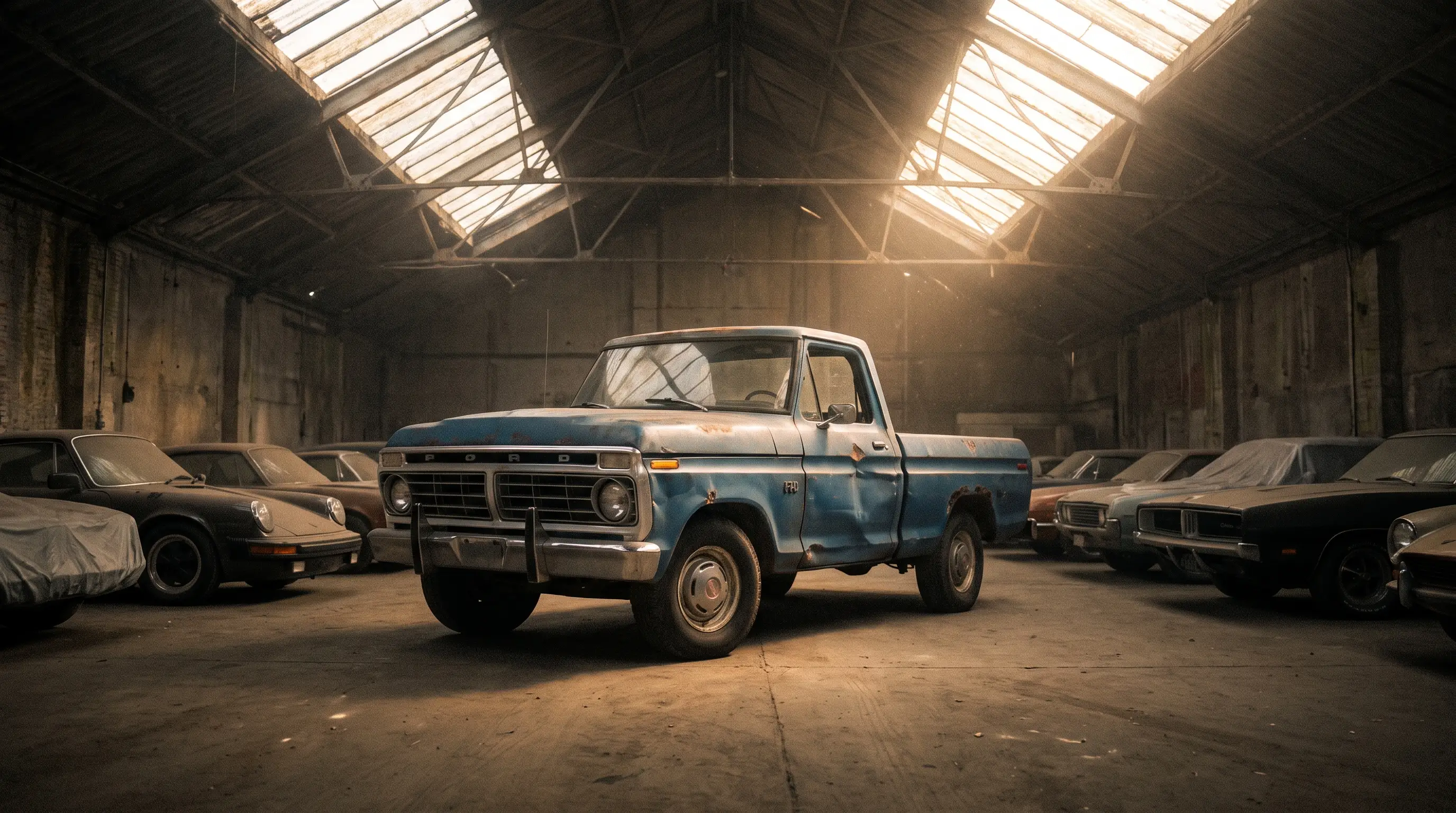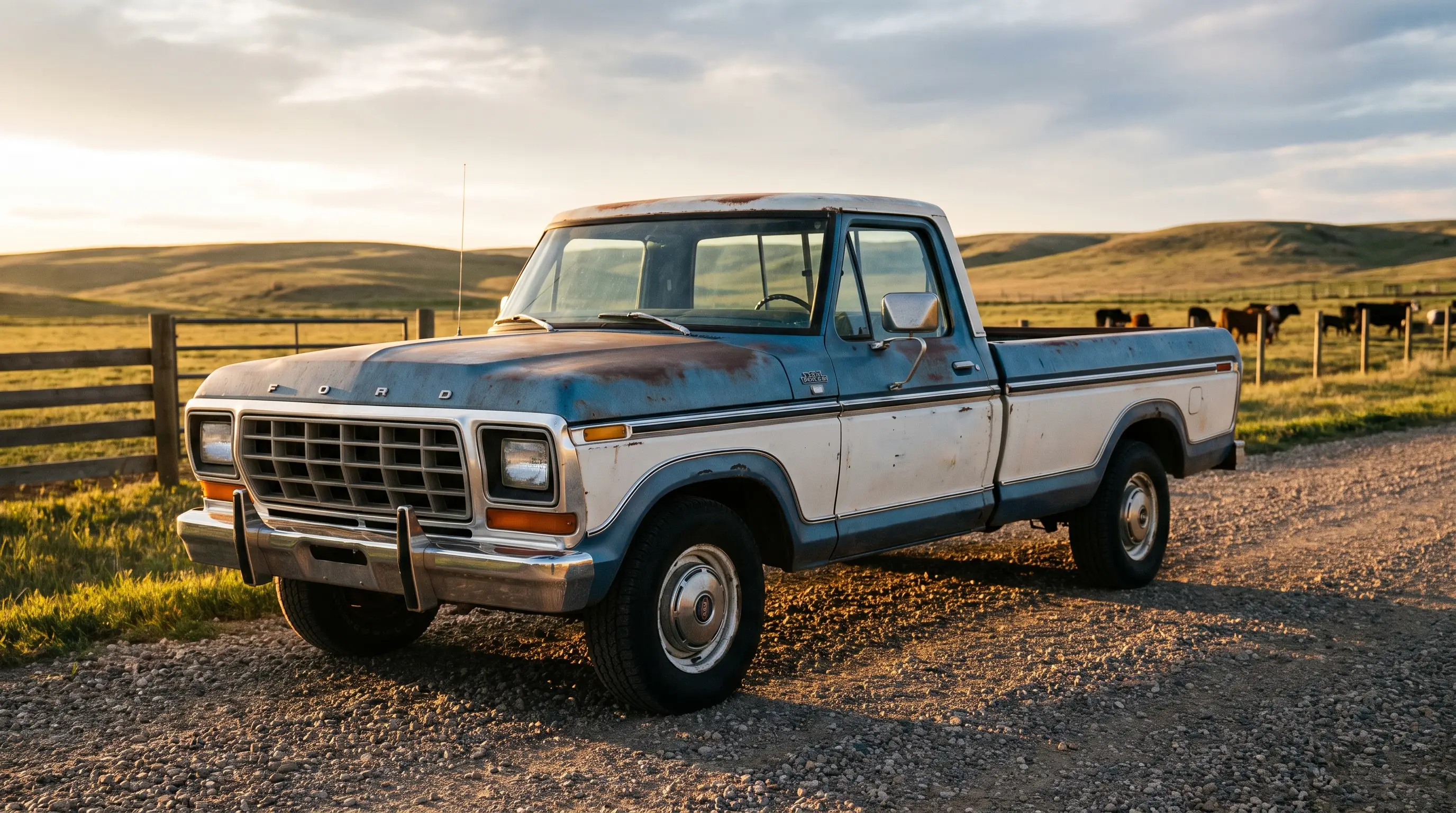
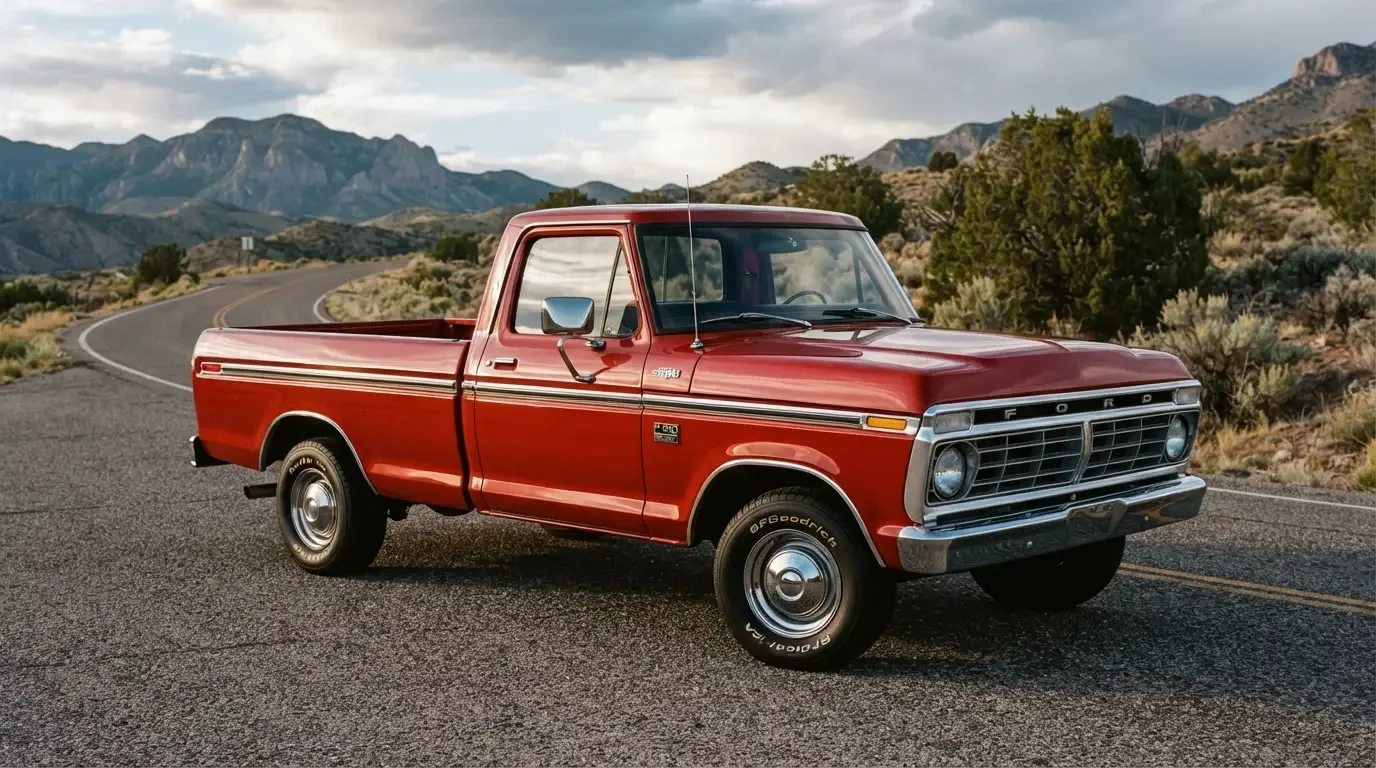
Every generation of Ford truck gets a nickname from the people who own them, and the sixth-generation trucks earned theirs the honest way. Run your hand down the side of a 1973 Ford F100 and you feel the answer under your palm: a long crease stamped into the door and bed, a dent that was supposed to be there. That is why the 1973 to 1979 trucks are called Dentsides, and it is a name owners say with affection, not complaint. These were the trucks that hauled plywood and pulled campers through the fuel crisis, the ones that showed up on job sites for two decades and refused to quit.
I have owned a couple of these over the years, and I will tell you up front that they are not the darlings of the F-100 world. The prettier money usually chases the earlier stuff. But if you want a classic Ford truck you can actually drive without babying it, the Dentside is hard to beat, and the market is finally starting to notice.
Where the Dentside sits in the F-100 story
Ford launched this generation for the 1973 model year, replacing the fifth-generation trucks that had run since 1967. On paper it was an evolution rather than a clean-sheet redesign. The cab structure carried over ideas from the previous run, but Ford reworked the sheet metal, widened the stance a touch, and gave the whole thing a squarer, more planted look. The result aged well. Where a lot of early-seventies vehicles look fussy now, the Dentside looks like what a work truck is supposed to look like.
If you want the full arc of how the nameplate got here, the older generations are covered in our ford f100 history, and the Dentside reads better once you know what came before it. This was the last stretch where the F-100 badge still meant the light half-ton, before Ford started steering buyers toward the heavier F-150 for good.
One thing worth stating plainly: this generation ran a long time. Seven model years is a big production window, and Ford changed plenty along the way. The 1973 truck and the 1979 truck share a silhouette but differ in grille, trim, emissions plumbing, and interior details. Collectors who lump them all together miss the point.
The grille and trim changes year by year
You can walk a swap meet and date most of these trucks by the front end alone. The early cars, 1973 through 1976, wore an eggcrate-style grille that changed pattern a few times but kept the two round headlights. Ranger and Ranger XLT packages dressed things up with brightwork, wood-look interior trim, and nicer seats, while the base Custom trucks stayed plain and proud of it.
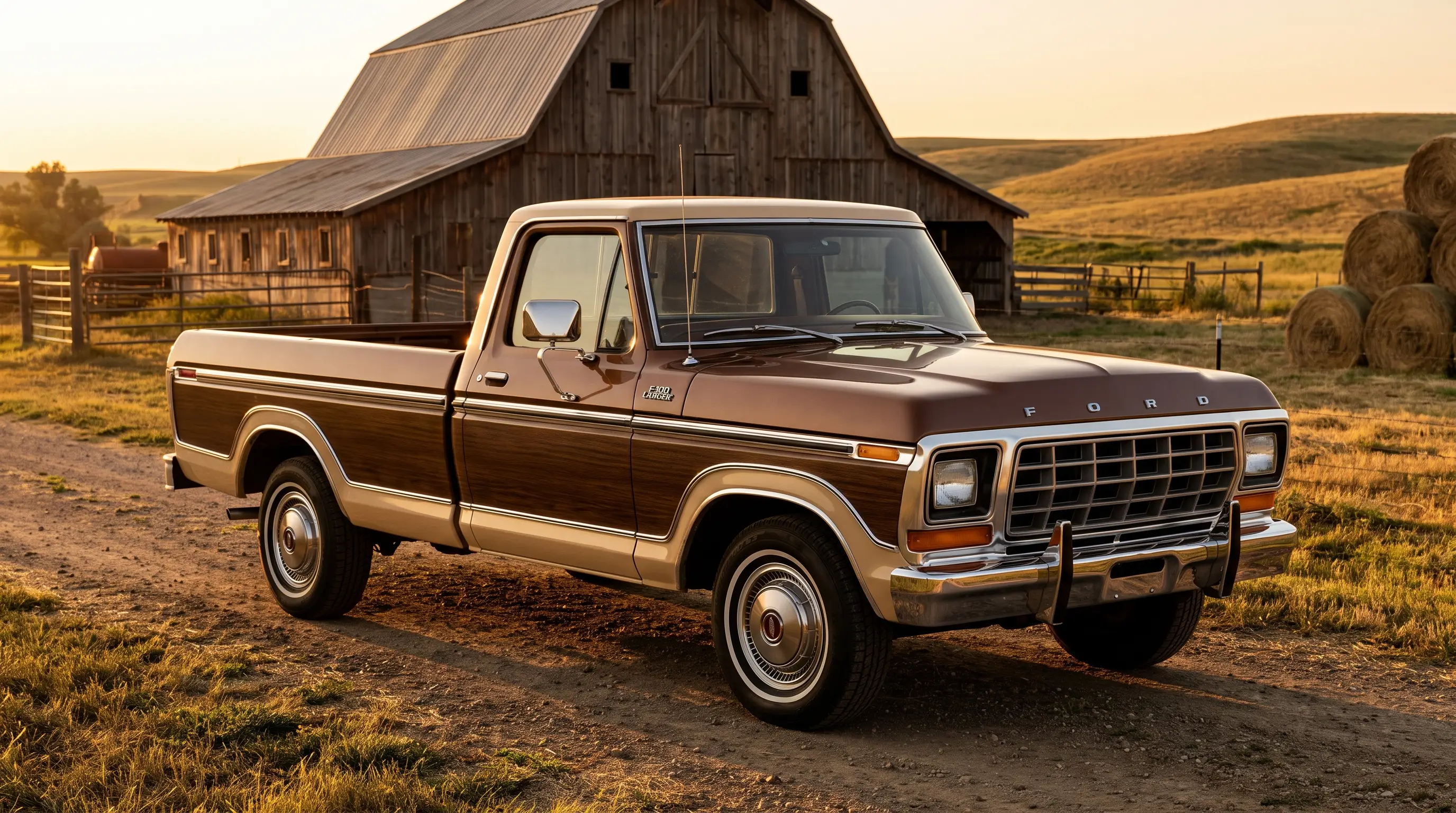
For 1978 the face got the biggest change of the run, a completely reworked one-piece grille with rectangular headlamps on the Ranger trims that a lot of people picture first when they hear Dentside. The base Custom kept round lights that year, and for 1979 every trim moved to the rectangular lamps. If you care about originality, learn these details before you buy, because a previous owner swapping a later grille onto an earlier truck is common and it quietly changes what you actually have.
Trim badges tell a story too. A truck wearing Ranger XLT trim from the factory was the loaded one in its day, and finding one with the original interior intact is getting harder. Most of these were tools, and tools get used up.
Engines that made it a workhorse
This is where the Dentside earns its keep. Ford offered a spread of engines across the run, from an inline six that would not die to big-block V8s that could pull a loaded trailer up a grade without drama. The 300 cubic inch six is the legend of the bunch, a torquey straight-six that owners treat like a family heirloom. The small-block 302 and 351 V8s did the everyday hauling, and the 360 and 390 FE big-blocks handled the heavy work in the early years, before Ford swapped in the 351M and 400 for 1977.
These are not high-strung engines. They make their power low, they tolerate neglect better than they should, and parts are everywhere. That combination is exactly why so many of these trucks are still on the road. If engine history is your thing, the full rundown is worth a look too, because the Dentside inherited a lineup that had already been proven for a decade.
The catch with this generation is emissions-era tuning. Mid-seventies trucks got saddled with early emissions hardware and lower compression, so a numbers-matching 1975 truck will feel softer than its displacement suggests. That is not a flaw so much as a fact of the era, and it is worth knowing before you expect too much off the line.
The transmission choices matched the honest character of these trucks. A three-speed column shift was the base setup, a four-speed manual was there for the people who worked their trucks hard, and the C6 automatic handled the towing crowd. None of it was fancy. All of it was durable. I have pulled apart a C6 out of one of these and found nothing wrong except old fluid, and that tells you most of what you need to know about how Ford built the drivetrain in this era. They built it to survive owners who never opened the manual.
The 300 six deserves one more word because it became a cult engine in its own right. Owners run these things to two hundred thousand miles and beyond, and the low-end pull makes it feel bigger than it is around town. If you find a Dentside with the 300 and a manual, you have found the setup a lot of long-time truck people quietly consider the sweet spot of the whole run.
| Detail | Ford F-100 Dentside (1973 to 1979) |
|---|---|
| Generation | Sixth generation F-Series |
| Body style | Styleside and Flareside beds, regular and SuperCab |
| Base six | 240 and 300 cubic inch inline sixes |
| V8 options | 302 all years, 360 and 390 FE through 1976, 351M and 400 from 1977, 460 big-block available |
| Front end change | Round headlights 1973 to 1977, rectangular on upper trims from 1978, all trims 1979 |
| Replaced by | Seventh generation for 1980, F-150 focus |
Living with one today
Here is the honest pitch. A Dentside is a truck you can buy, register, and drive to work without pretending it is jewelry. The cab is roomy by classic standards, the visibility is excellent because the glass is big and the hood is flat, and the ride is more civilized than the old trucks people fetishize. Parts availability is strong, both original and reproduction, which matters more than almost anything when you own something this old.
The rust is the enemy, same as any truck from this era. Cab corners, rocker panels, bed floors, and the lower front fenders are where these dissolve, and a straight body is worth chasing even if the mechanicals need work. Mechanical problems are cheap and cheerful on these. Body rot is neither.
Values have been climbing quietly. For years the Dentside was the cheap way into a vintage Ford truck, and the earlier generations soaked up all the attention and money. That gap is closing. Clean Ranger XLT trucks and well-kept short-bed Stylesides are the ones moving, and the 1978 and 1979 four-headlight trucks have their own following now. When you are ready to see what is out there, you can shop classic F-100 listings and get a feel for where prices actually sit.
The short-bed premium is real and it is worth understanding. Ford sold far more long-bed work trucks than short-bed Stylesides, so the shorter trucks are simply harder to find in clean shape, and the styling crowd wants them. A short-bed Styleside in Ranger trim will outrun a plain long-bed on price every time, even when the long-bed is the nicer truck mechanically. That is buyer psychology, not engineering, and you can use it either way depending on whether you are shopping for looks or for value.
"People spend years hunting the pretty early trucks and drive right past a solid Dentside sitting in the same lot for half the money. I have bought two of them. Neither ever left me on the side of the road."
- Mike Sullivan
What to know before you buy
Buy the body, fix the rest. That is the whole philosophy with these trucks. A rough-running truck with a clean cab and straight bed is a better project than a runner hiding rot under fresh paint. Sellers know which sells faster, so trust your eyes over the description.
Why the Dentside deserves a second look
The 1973 Ford F100 and its sixth-generation siblings spent decades as the truck nobody bragged about. They were too new to be antiques and too old to be daily drivers, so they slipped through the cracks while collectors chased shinier metal. That in-between era is over. These trucks are old enough now to be genuinely wanted, cheap enough to be reachable, and tough enough to reward the people who take them seriously. A Dentside is not the fanciest F-100 you can own. It might be the smartest.