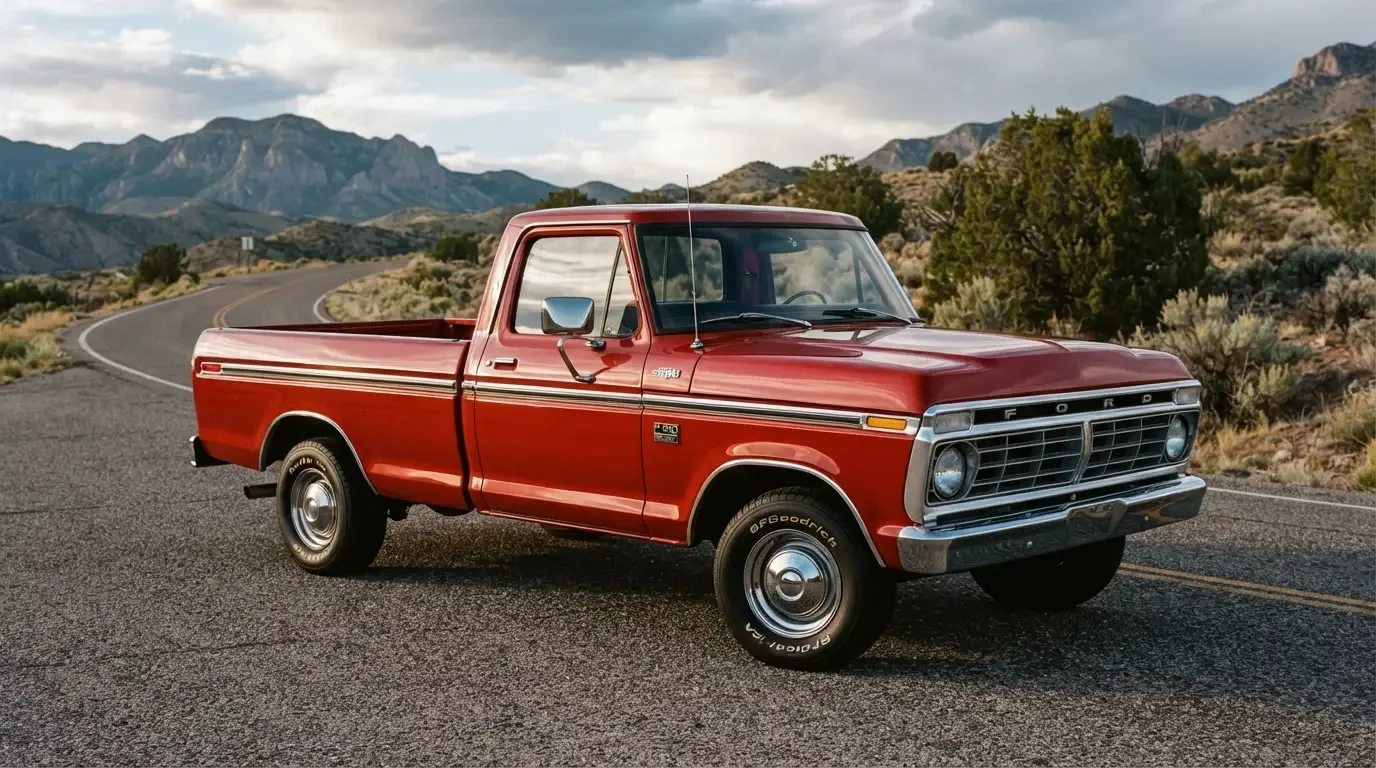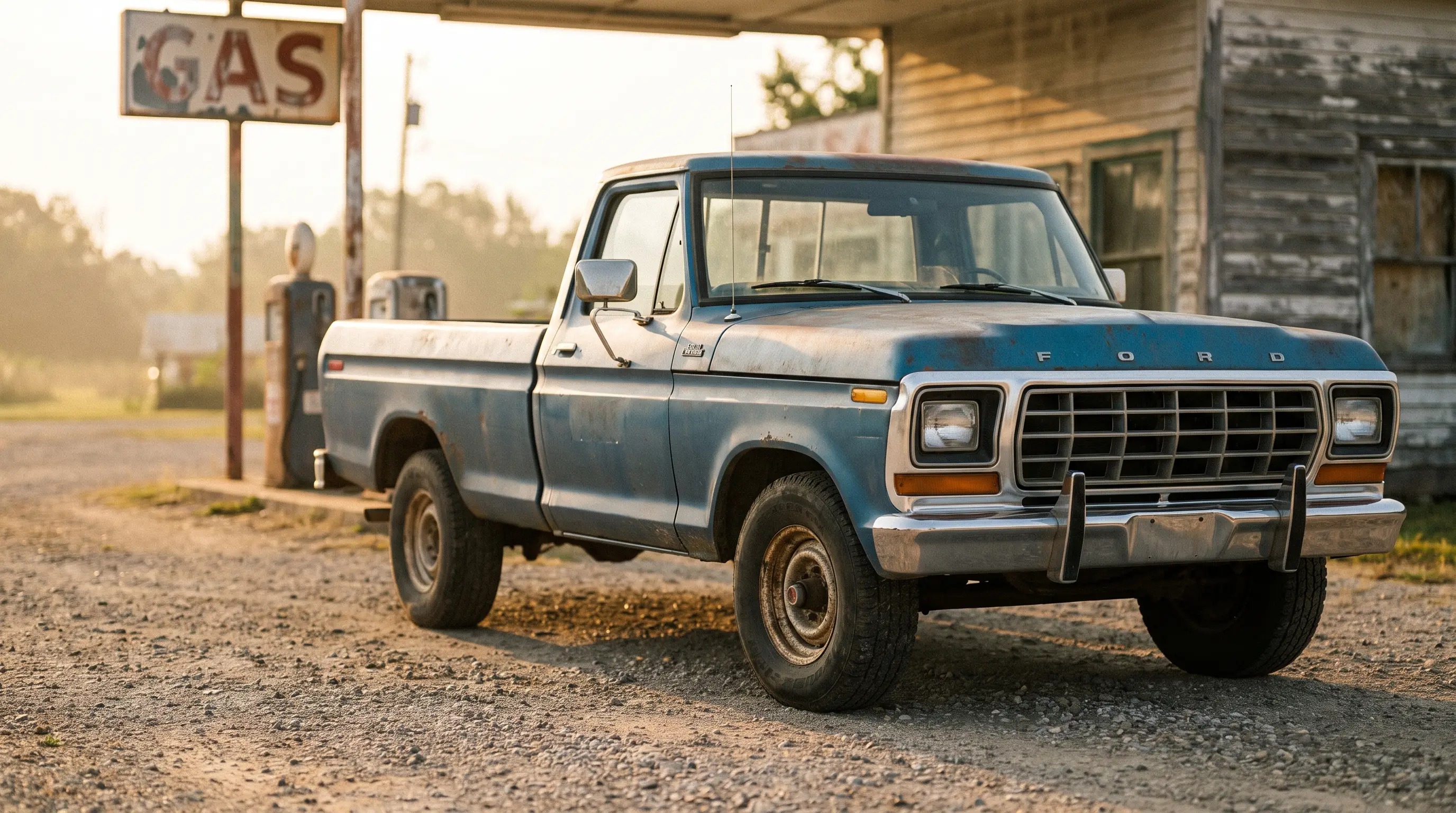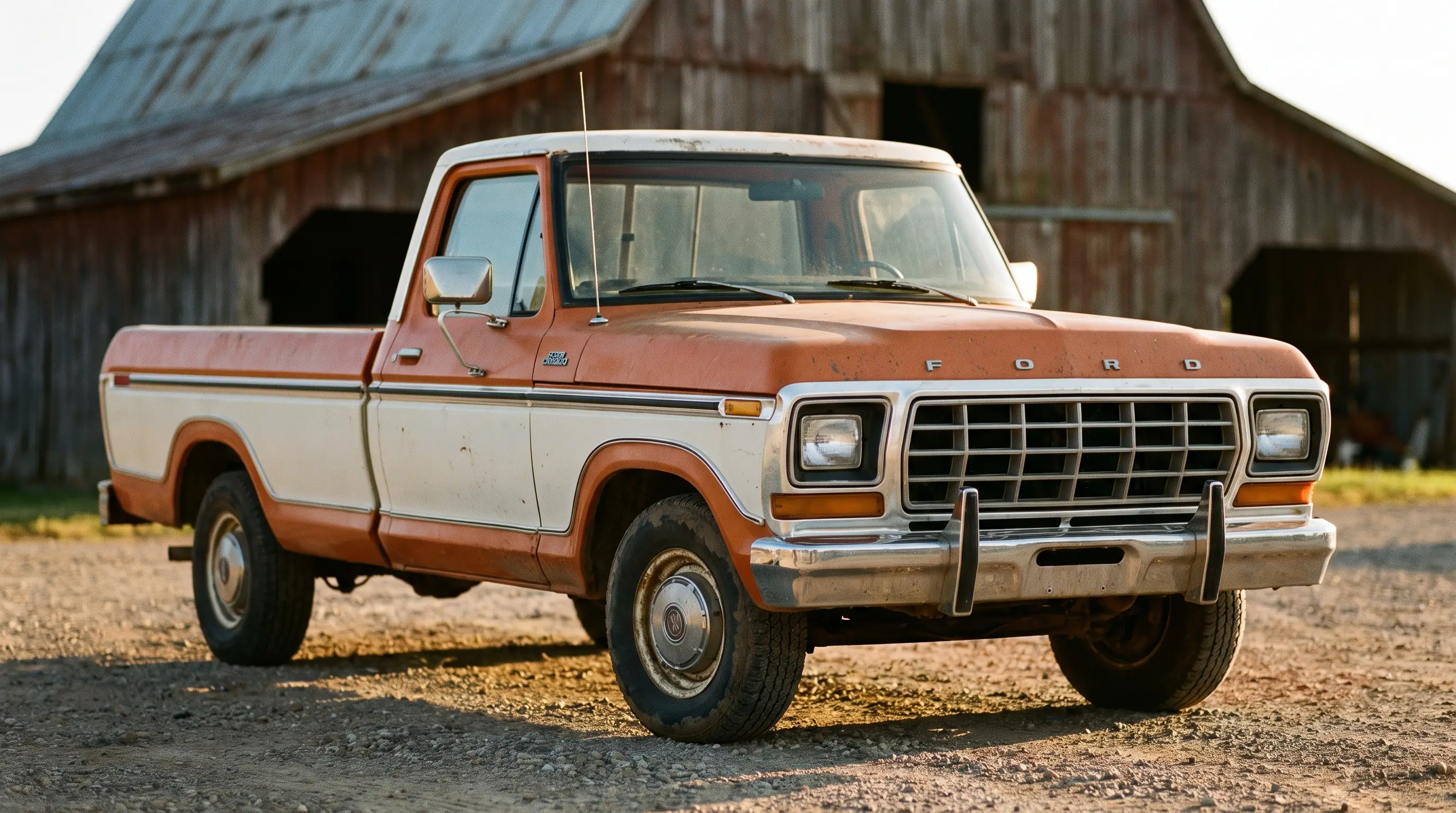
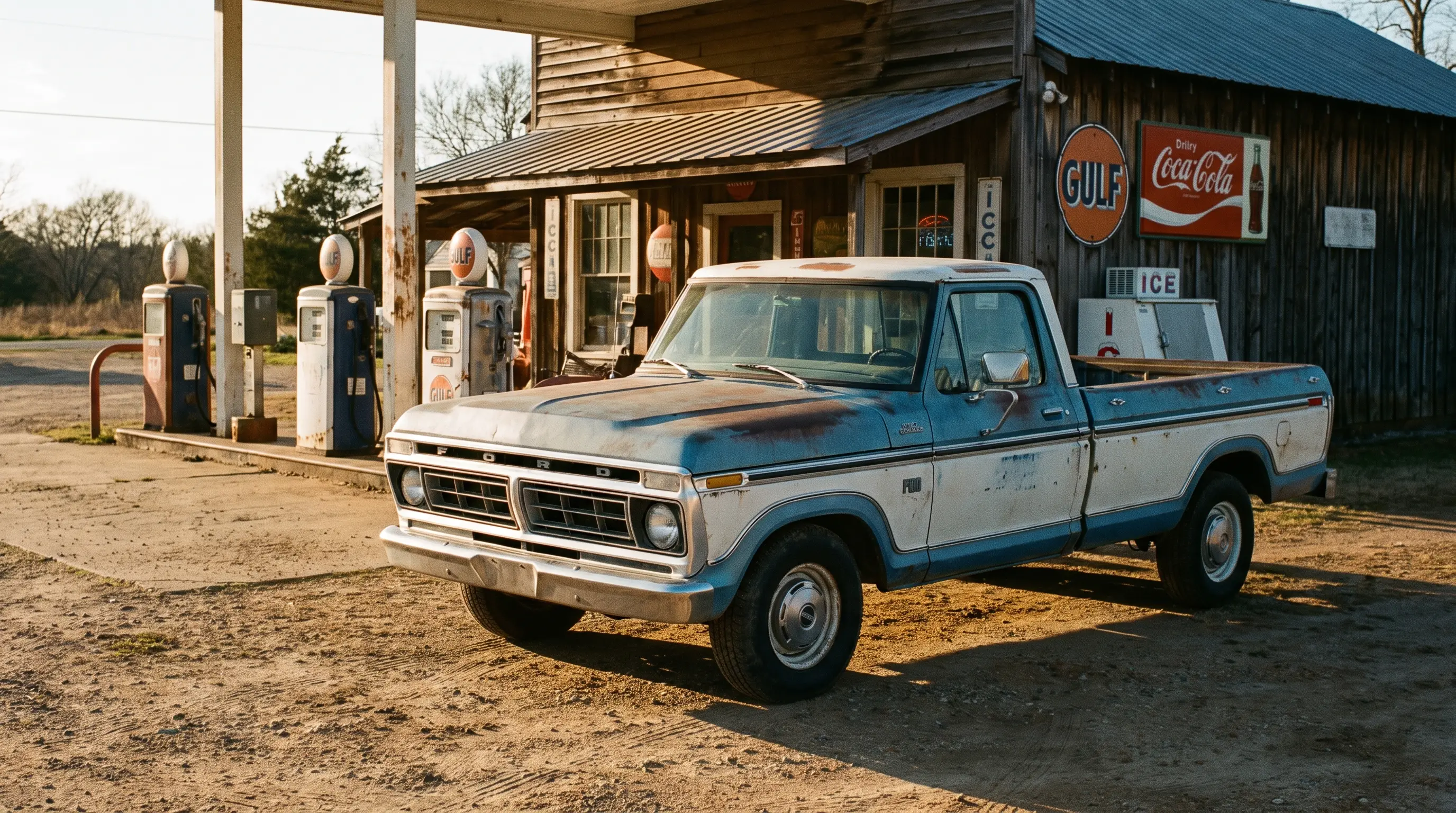
The 1975 Ford F100 sits at a fascinating pivot point in American automotive history, arriving right as federal emissions regulation began reshaping how every domestic manufacturer engineered its engines. Reading the factory documentation from this specific model year tells a story that a casual glance at the truck's sheet metal would never reveal, a story about a company adapting mid-stride to rules that changed faster than product cycles could keep up with.
As someone who spends most of my time in period service manuals and factory bulletins, I find 1975 one of the more instructive years in the entire F-100 production run, precisely because it captures Ford in the middle of that adjustment rather than at a tidy beginning or end.
Where 1975 sits in the Dentside generation
Ford introduced the sixth-generation body for 1973, and by 1975 the truck was three years into that run, sitting comfortably mid-cycle with the styling changes from launch fully settled in and the bigger four-headlight update still a few years away. For the full background on how this generation came together, our feature covers read the background in detail. What makes 1975 specifically worth studying is what was happening under the hood rather than on the surface.
Federal emissions standards tightened substantially for the 1975 model year across the entire American auto industry, and Ford's trucks were not exempt. Catalytic converters became standard equipment on many configurations, a first for the F-100 line, and that single change rippled through fuel system design, ignition timing, and even the exhaust routing on these trucks.
How emissions rules reshaped the engine lineup
The catalytic converter requirement forced Ford to specify unleaded fuel for equipped trucks, a genuine shift for owners accustomed to leaded gasoline and the additives that came with it. Compression ratios on several engines dropped compared to earlier in the run, a common industry response to emissions rules that also softened peak output on paper even as real-world drivability stayed reasonable for a work truck.
The 300 cubic inch six carried on as the workhorse of the lineup through this transition, proving durable enough to absorb the emissions changes without losing the reputation that made it a favorite among owners. The V8 options, spanning the 360 and 390 big-blocks alongside the smaller 302, all received calibration updates to meet the new standards, and factory service bulletins from the period show Ford's engineers making incremental adjustments throughout the model year as real-world data came in from dealers and fleet customers.
This is a detail collectors sometimes overlook. A 1975 truck is not simply a slightly updated 1974. The emissions transition genuinely changed how these engines were tuned and serviced, and a restorer working on a numbers-matching 1975 example needs to understand those differences rather than assuming the same specifications apply across the whole generation.
What the factory documentation reveals about build quality
Factory quality control bulletins from 1975 show Ford paying close attention to fit and finish issues that had cropped up in earlier years of the sixth generation, correcting supplier tolerances on trim pieces and tightening assembly line inspection standards. This was standard practice for any multi-year production run, but it means a well-preserved 1975 truck often shows tighter panel gaps and more consistent paint application than an early 1973 example, even though both share the same basic body design.
Correcting a misconception that circulates among casual buyers, the mid-run emissions and quality changes did not make 1975 trucks lesser vehicles compared to earlier years. If anything, the accumulated production refinement worked in the truck's favor, even as the emissions hardware added complexity that mechanics of the era had to learn to service correctly.
| Detail | 1975 Ford F-100 |
|---|---|
| Generation | Sixth generation, mid-cycle Dentside |
| Emissions milestone | Catalytic converter standard on many configurations |
| Fuel requirement | Unleaded fuel for catalytic converter equipped trucks |
| Engine range | 300 six, 302, 360, 390 V8 options with revised calibration |
| Build quality | Tighter panel fit than early sixth-generation trucks |
"People assume every mid-seventies truck was hobbled by emissions rules, but the documentation tells a more interesting story. Ford was adapting in real time, and you can trace that adaptation bulletin by bulletin if you know where to look."
- Tom Ramirez
Trim and options in the mid-cycle year
Away from the engine bay, 1975 buyers had access to a trim lineup that had matured well past the sixth generation's 1973 launch. Ranger and Ranger XLT packages remained the aspirational choices, bringing better seating, additional sound insulation, and brightwork that dressed up the squared-off Dentside body. Custom trim held the base end of the range, still solidly equipped by the standards of a decade earlier but plainly the value option next to its dressier siblings.
Factory paint and interior color offerings for 1975 reflected the broader automotive palette of the period, leaning into the earth tones and warm hues that defined mid-1970s design across the industry. Trucks ordered in those period-correct combinations, when they survive with original paint and upholstery intact, carry particular appeal for collectors chasing an authentic time capsule rather than a truck that has been repainted in a later, more generic color.
Options like power steering, power brakes, and air conditioning continued gaining traction among buyers through 1975, part of the broader trend toward comfort that had begun with the 1973 redesign. A well-optioned 1975 example, complete with these features and documented through its original window sticker, represents a more complete snapshot of what a well-heeled buyer actually drove home that year than a stripped work-spec truck ever could.
Why 1975 deserves attention from serious collectors
A 1975 F-100 represents a genuinely transitional moment in American truck history, caught between the pre-emissions era and the fully regulated engines that would follow for the rest of the decade. That transitional status gives the truck a documented complexity that earlier and later years in the run simply do not carry, and researchers who enjoy tracing how a manufacturer responds to sudden regulatory change will find plenty to study here.
For collectors comparing years within the sixth generation, the truck's later sibling is worth a look too, since the 1978 update brought its own set of changes worth understanding alongside 1975. When you are ready to see what survives from this era in person, you can shop classic F-100 listings and compare trucks from across the Dentside run.
The 1975 model year is a reminder that classic trucks carry more history than their styling alone suggests. Underneath a familiar Dentside body sits a genuine record of an industry adjusting to new rules in real time, and that record is exactly the kind of detail that separates a casual owner from someone who truly understands what they are driving.
Sources and notes
- F-100 vs F-150 (1975-1983): When Ford Killed the F-100 - fordf100s.com
- Ford F-Series (sixth generation) - Wikipedia
- 1973-1979 Ford F-100 (Dentside, 6th Gen) - fordf100s.com
- Your handy 1973-79 Ford F-Series buyer's guide - Hagerty Media
- 1975 F-150 factory catalytic converter discussion - Ford Truck Enthusiasts Forums