Concours judging teaches you to look past the obvious. Every 1978 Ford F100 in a lineup looks like a Dentside from ten feet away, but step closer and the differences that separate this specific model year from its siblings become the entire point of study. 1978 brought the biggest visual update of the sixth generation's run, and for anyone documenting authenticity, understanding exactly what changed and what stayed the same is essential before you can properly evaluate one of these trucks.
I have judged and researched enough of these to know that the 1978 model year rewards careful attention in a way earlier years in the run simply do not, because so much changed at once that getting the details right matters more here than almost anywhere else in the generation.
The most significant styling update since 1973
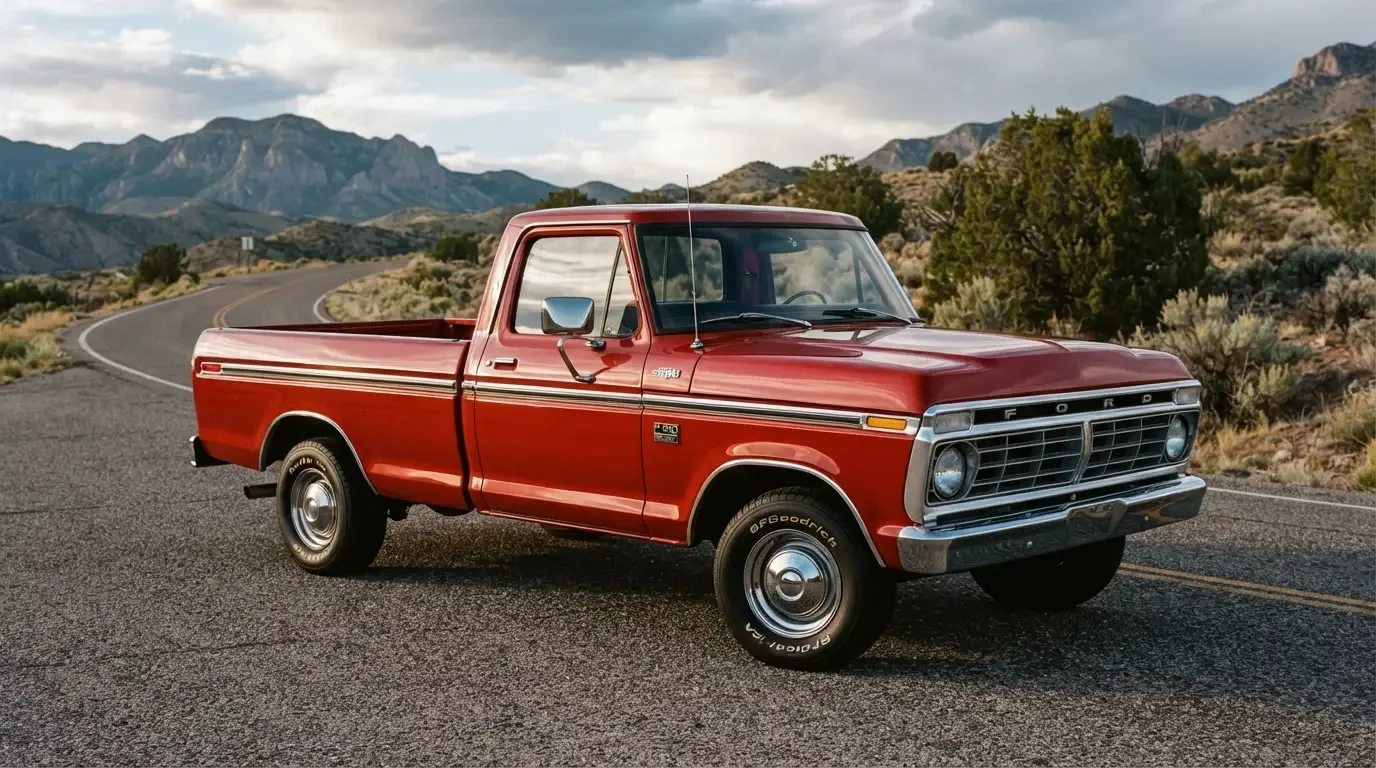
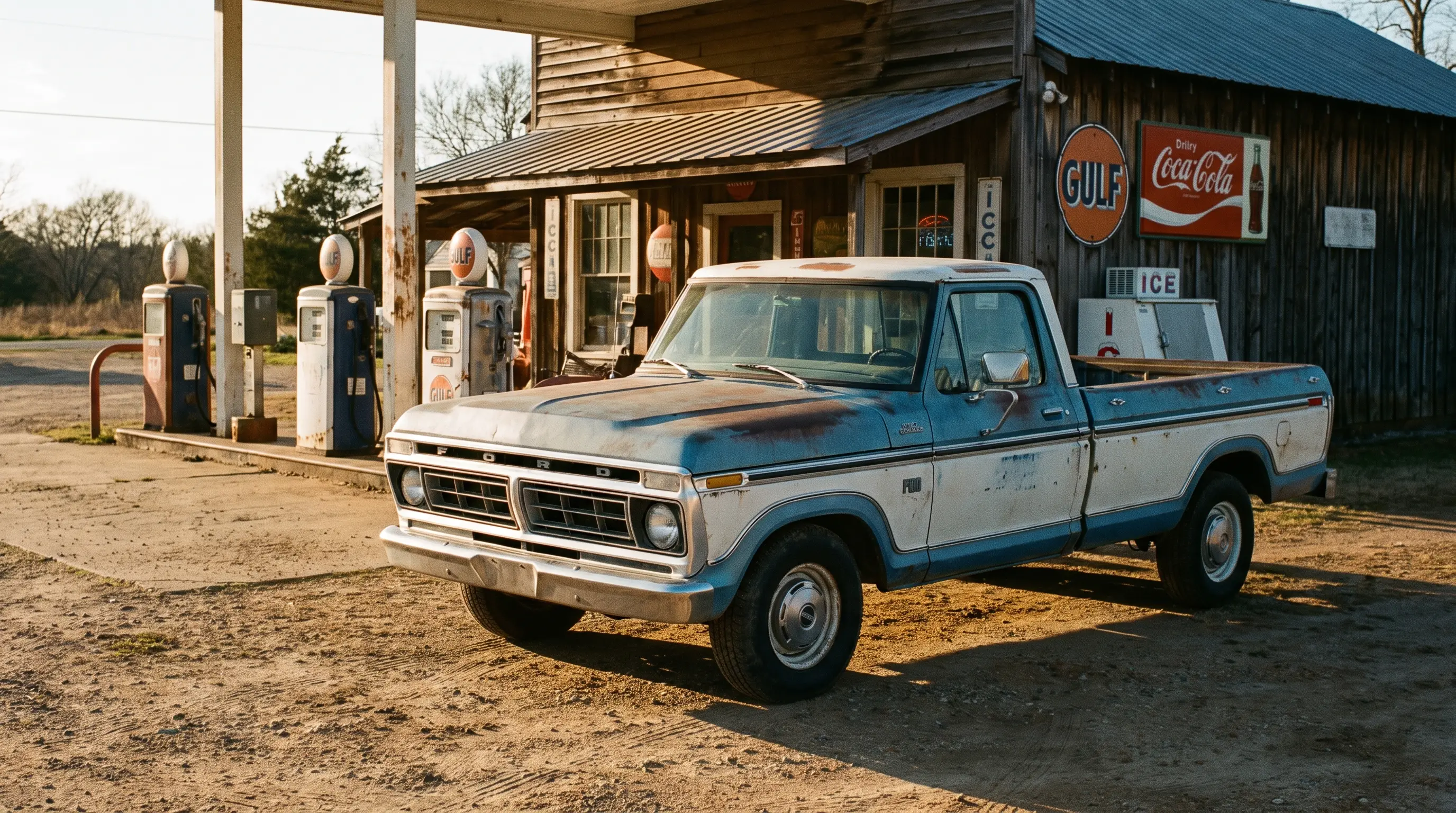
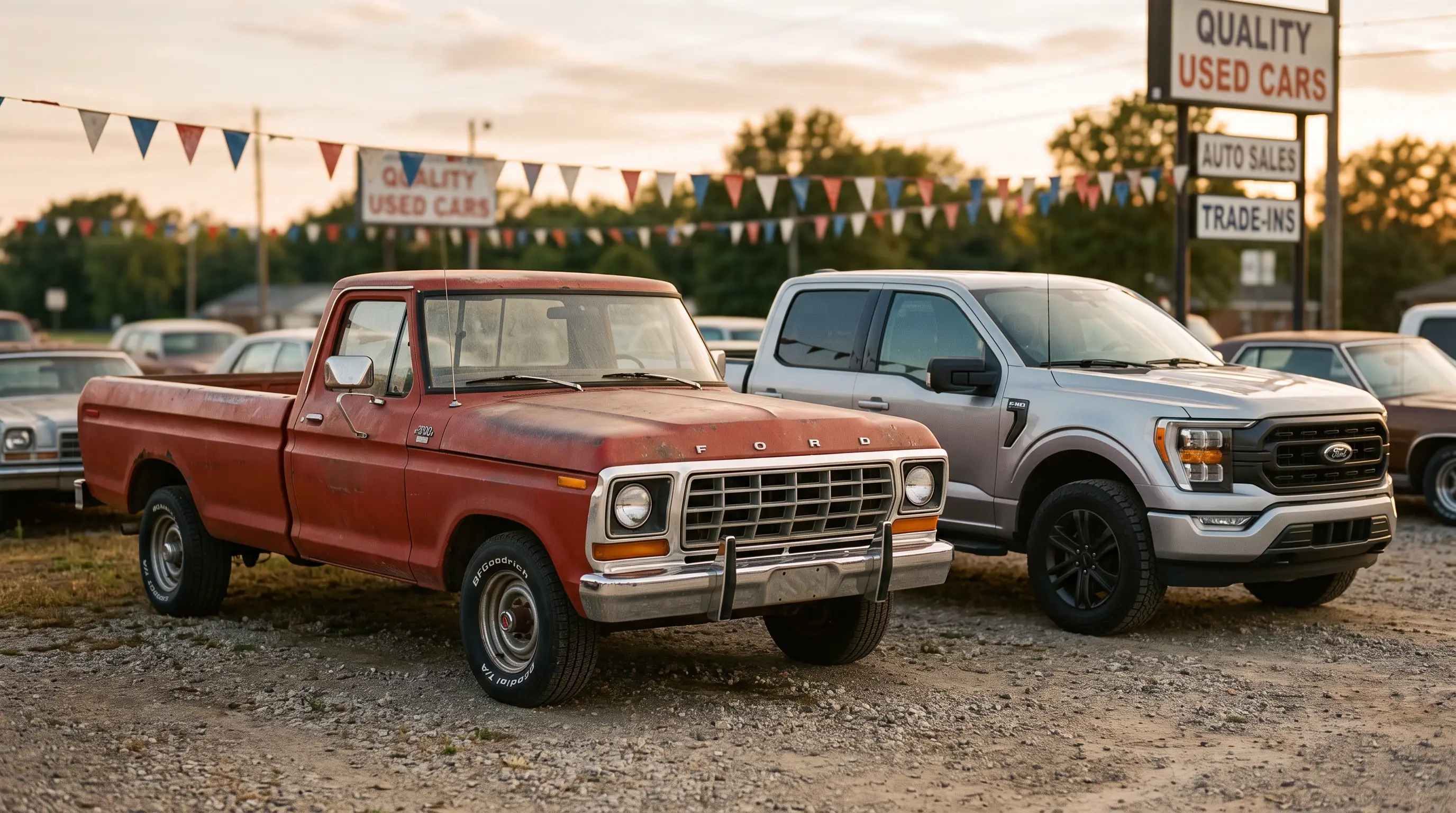
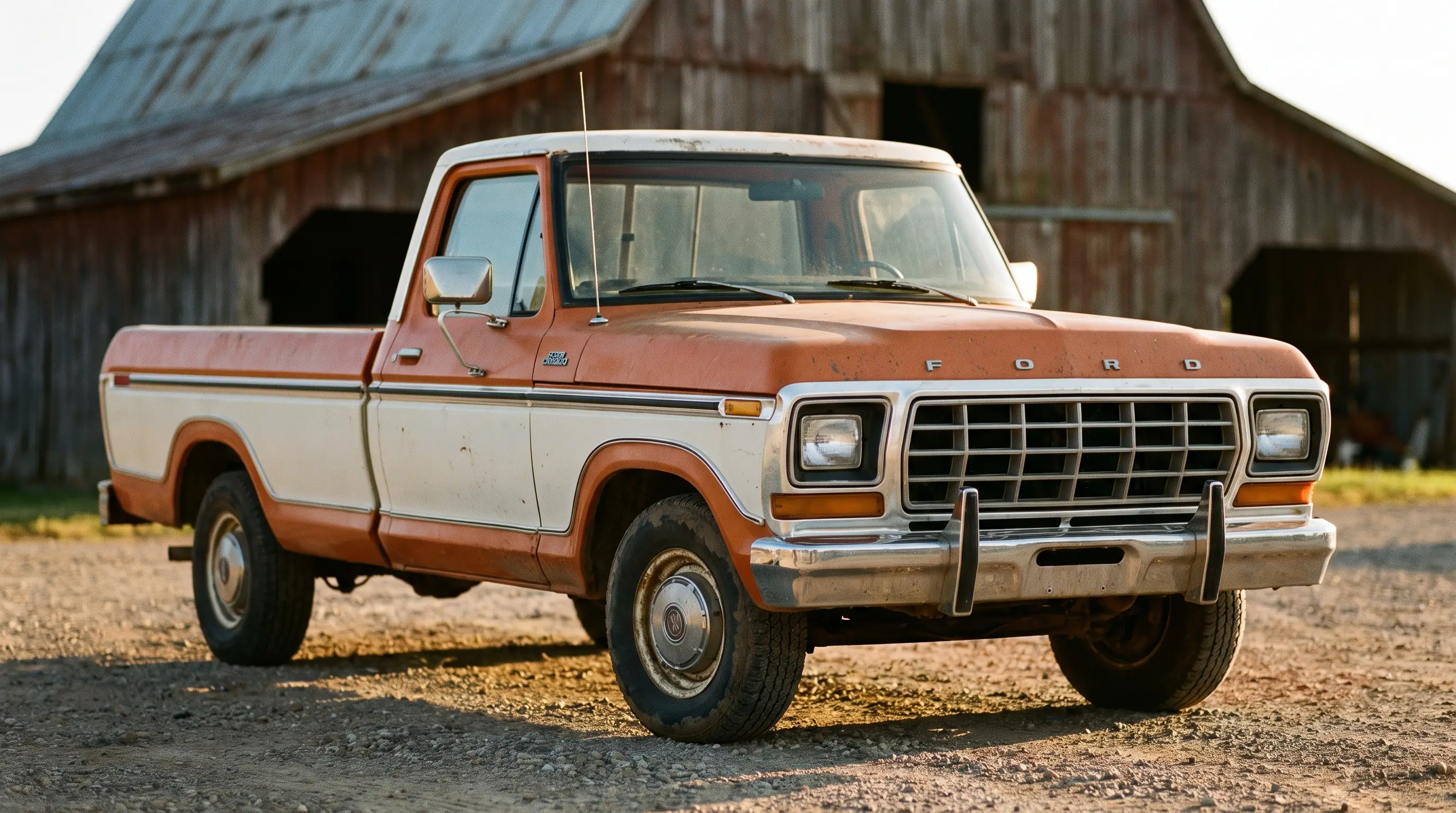
Ford launched the sixth-generation Dentside body for 1973, and it carried a round-headlight front end with a two-piece split grille through the middle years of the run. Rectangular headlights first became available as a trim option for 1977, once federal regulations finally permitted non-round sealed beams, but 1978 is where the front end changed most decisively. Ford replaced the two-piece split grille with a larger single-piece grille that no longer housed the headlamps, turn signals, or Ford lettering, moving the lamps into their own housings outboard of the grille. Base Custom trucks kept round headlights, while Ranger, Ranger XLT, and the newly introduced Ranger Lariat carried the rectangular units. For the earlier design history that led to this moment, our feature covers more on the 1973 ford f100 in full.
This was not a cosmetic tweak applied lightly. Redesigning a front clip mid-cycle requires new tooling, new sheet metal stampings, and coordination across every plant building the truck, and Ford committed to that investment because market feedback made clear the truck's face needed modernizing to stay competitive against updated offerings from other manufacturers.
What documentation experts look for on a 1978
Authentication work on a 1978 truck starts with the front clip, since a mismatched grille is the single fastest way to misidentify a truck's actual model year. A genuine 1978 carries the single-piece grille with headlamps in their own outboard housings, specific trim bezels, and a pattern distinct from the 1979 that followed it, and confusing the two years is a common mistake even among enthusiasts who should know better.
Beyond the grille, data plate verification remains the gold standard for confirming a truck's actual production date against any claims made in a listing or by a previous owner. The plate codes identify plant, build date, and factory-installed options, and cross-referencing those against known 1978-specific parts numbers is how a careful researcher separates a genuine example from a truck that received a later grille swap to chase the more popular rectangular-headlight look.
Interior details matter to authentication too. Ford revised dashboard trim and gauge cluster graphics as part of the broader 1978 update, and those changes provide another verification point independent of the exterior. A truck presenting a 1978-correct grille alongside an interior that does not match raises a flag worth investigating further before accepting a seller's dating of the vehicle.
| Detail | 1978 Ford F-100 |
|---|---|
| Generation position | Sixth generation Dentside, penultimate model year |
| Major update | New single-piece grille with outboard headlamp housings, replacing the earlier two-piece split grille |
| Rectangular headlights | First offered 1977, trim-dependent (round on Custom, rectangular on Ranger, Ranger XLT, and new Lariat) |
| Authentication focus | Grille trim bezels, data plate codes, dashboard graphics |
| Followed by | Seventh generation redesign for 1980 |
"The 1978 truck is where I tell newer researchers to slow down. The most desirable examples are also the easiest to misidentify, and that combination invites exactly the kind of confident mistake that costs a buyer real money."
- Sarah Whitfield
Why 1978 carries its own collector following
The rectangular-headlight look developed a dedicated fan base almost immediately and has held that appeal ever since, giving late-run trucks a following distinct from the earlier round-headlight Dentside years. Some collectors specifically seek out the 1978 single-piece grille and rectangular lamps over the earlier split-grille styling, treating it as the definitive late Dentside look, while others prefer the original round-headlight design for its closer connection to the generation's 1973 launch. Both camps have legitimate historical grounding for their preference, and understanding that split helps explain why 1978 trucks command their own conversation at shows rather than blending into the wider Dentside category.
Scarcity plays a role as well. With only two model years wearing this specific grille, well-preserved 1978 examples are inherently less common than trucks from the five years that came before, a fact documentation-minded collectors weigh heavily when comparing value against the rest of the generation. For the broader arc of how the F-100 nameplate arrived at this point, our feature on where this started traces the full lineage back to the beginning.
How trim and drivetrain evolved alongside the new face
The 1978 update was not limited to the front clip. Ranger and Ranger XLT packages carried forward with refreshed trim details that coordinated with the new grille, giving buyers a coherent, modernized look inside and out rather than a new face bolted onto an otherwise unchanged truck. Bumpers, side moldings, and badge placement all received subtle revisions that a trained eye recognizes immediately when comparing a 1978 against a 1977 parked beside it.
Under the hood, the engine lineup by this point reflected several years of emissions-driven refinement, with the 300 cubic inch six remaining the durable default and V8 options continuing to meet increasingly strict federal standards. Documentation from this period shows Ford's engineers had largely stabilized the calibration work that had been so turbulent earlier in the decade, giving 1978 trucks a more settled, predictable mechanical character than the mid-run years that absorbed the initial shock of new emissions rules.
For a concours evaluator, that mechanical maturity matters as much as the styling update. A 1978 truck represents Ford's most fully developed version of the sixth-generation formula, benefiting from everything the company had learned since 1973 while still wearing the freshest face the generation ever received. That combination of maturity and updated styling is precisely why serious collectors treat this model year as a distinct category worth its own careful study, rather than lumping it in with the earlier Dentside years.
Evaluating a 1978 before you buy
Anyone considering a 1978 example should treat the authentication steps outlined here as non-negotiable, not optional extras. Verify the grille trim, check the data plate against known codes for the year, and confirm interior details match before accepting any seller's claims at face value. The truck's genuine appeal and growing collector interest make it exactly the kind of vehicle where careful buyers protect themselves best through documentation rather than trust alone. When you are ready to compare available examples, you can browse classic F-100s on the market and apply these same standards to whatever you find.
A properly documented 1978 example, one that passes every check outlined above, represents one of the more satisfying purchases available in the entire F-100 range. It carries the visual statement collectors want, the mechanical maturity a decade of refinement provided, and a genuine scarcity that only two model years of that specific grille can offer. Approach the search with patience and the discipline to verify rather than assume, and the reward is a truck whose provenance holds up to whatever scrutiny you or a future buyer chooses to apply.
Sources and notes
- 1978 Ford F-100: Restyled Grille, Specs and Collector Values - fordf100s.com
- 1977 Ford F-100: Rectangular Headlights, 351W V8 Specs and Guide - fordf100s.com
- Ford F-Series (sixth generation) - Wikipedia
- Ford F-Series (seventh generation) - Wikipedia
- Your handy 1973-79 Ford F-Series buyer's guide - Hagerty Media