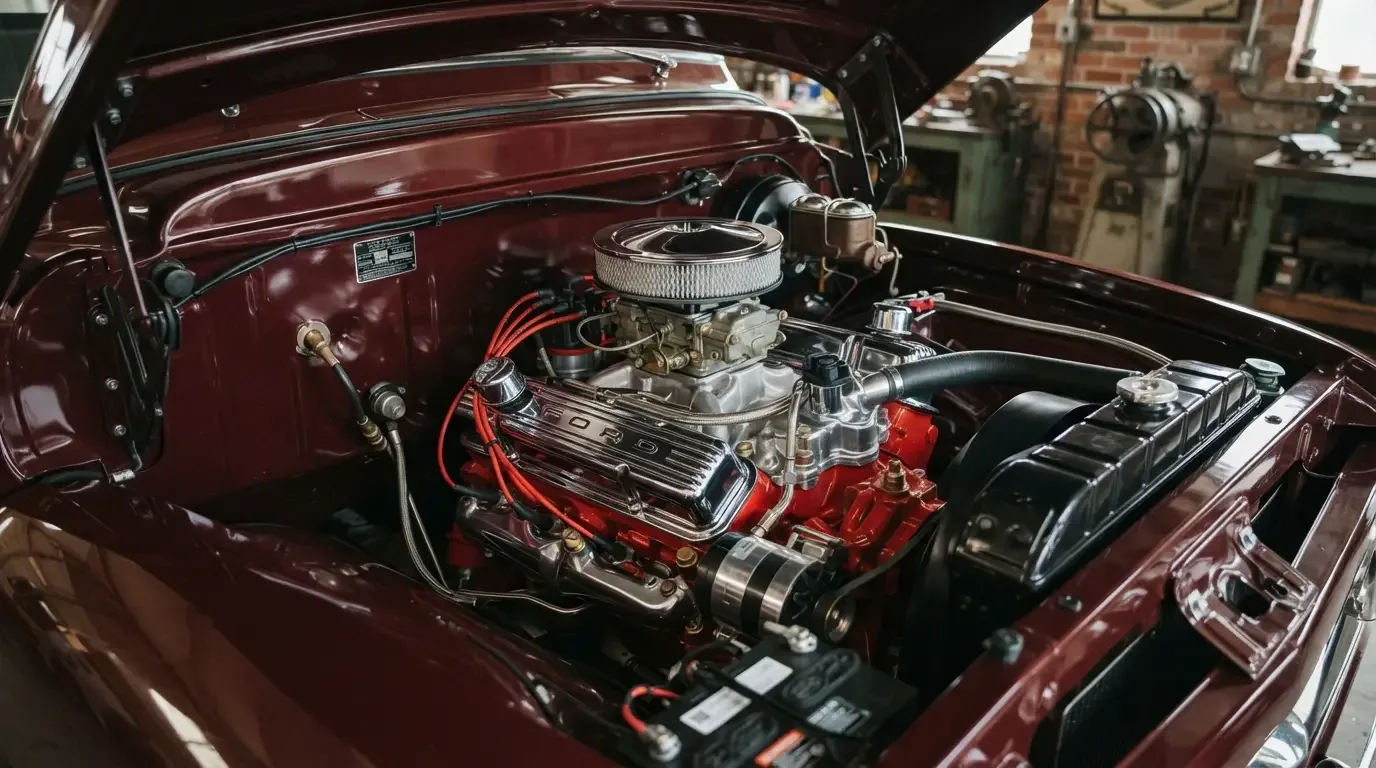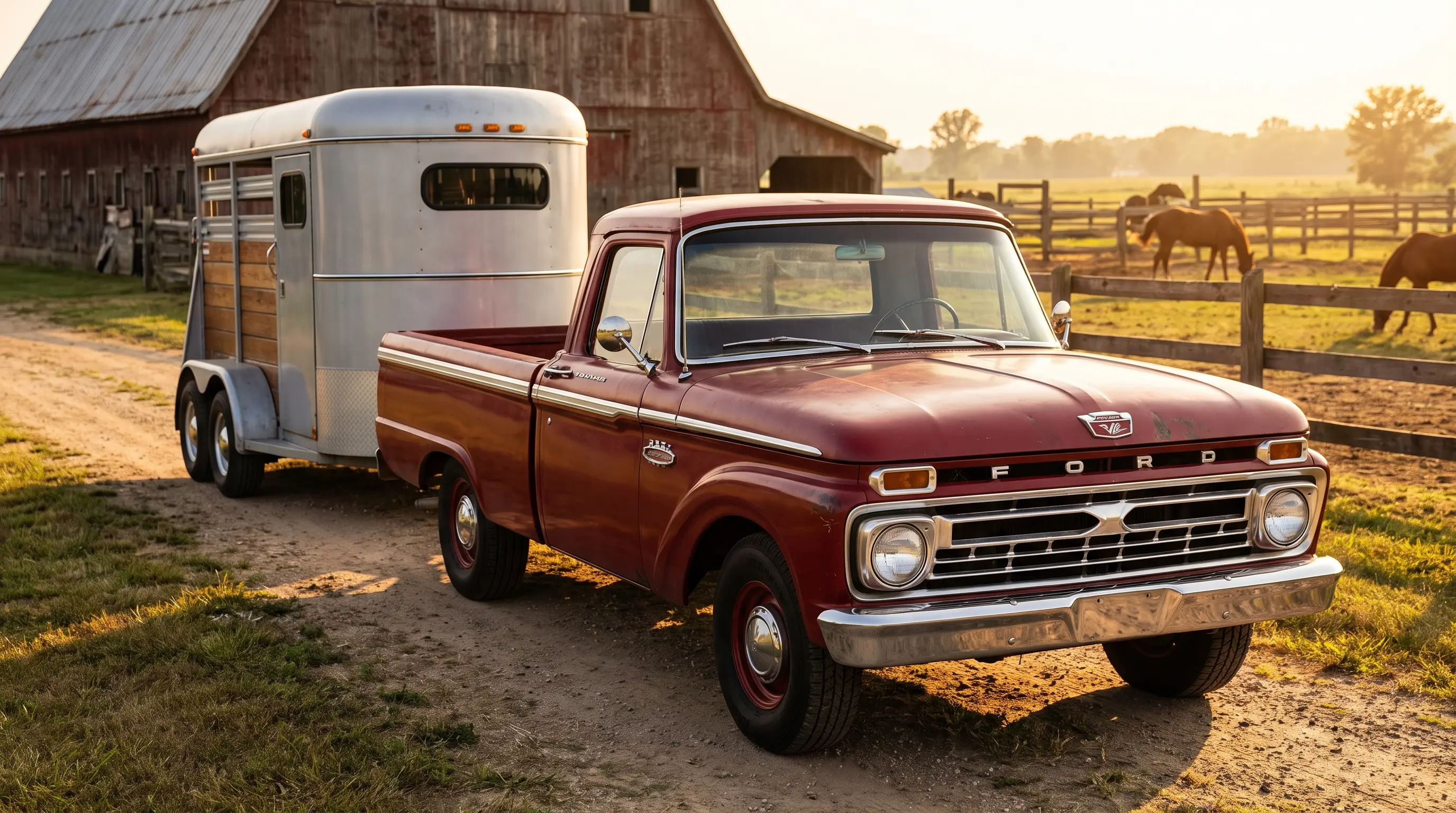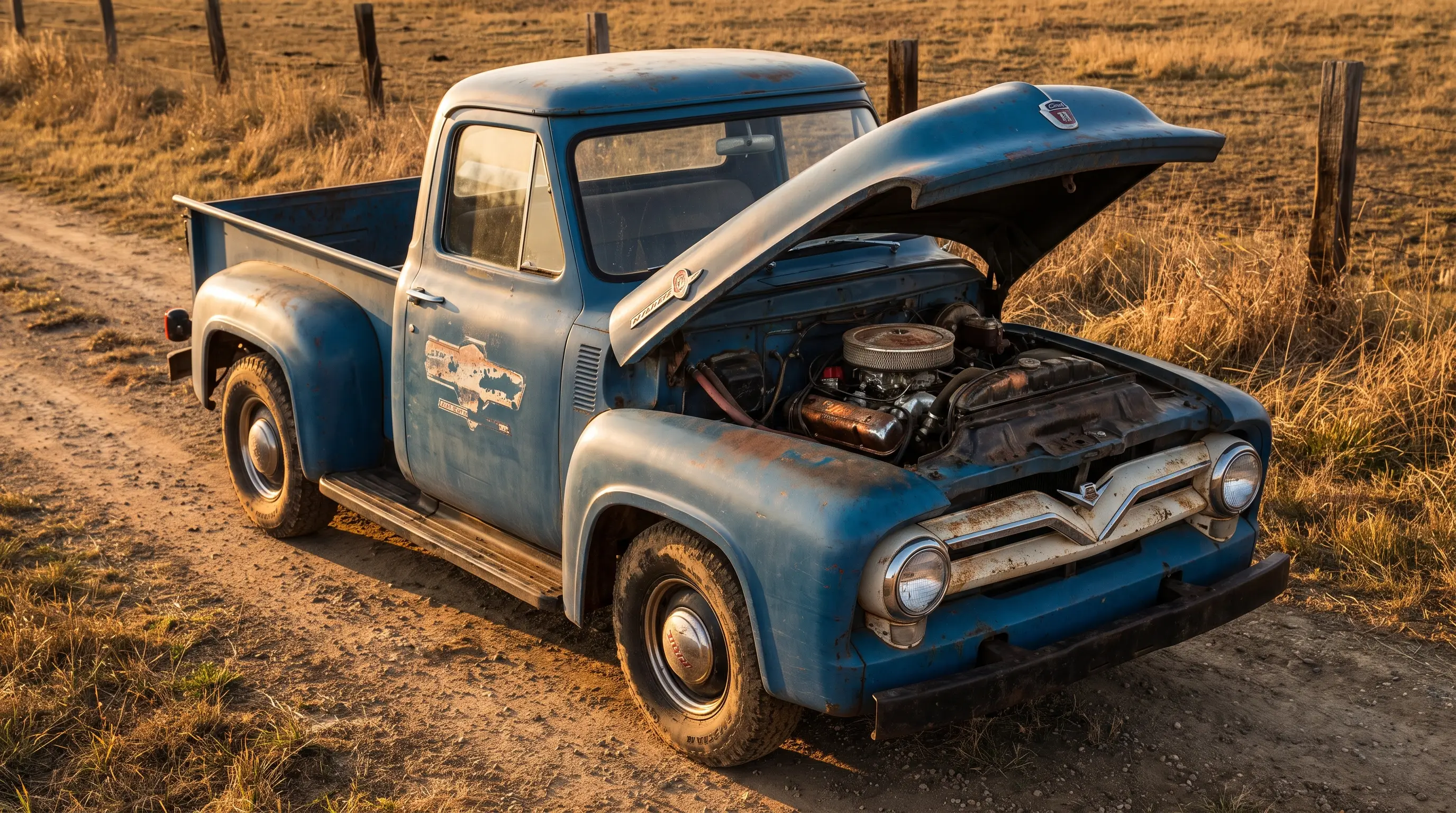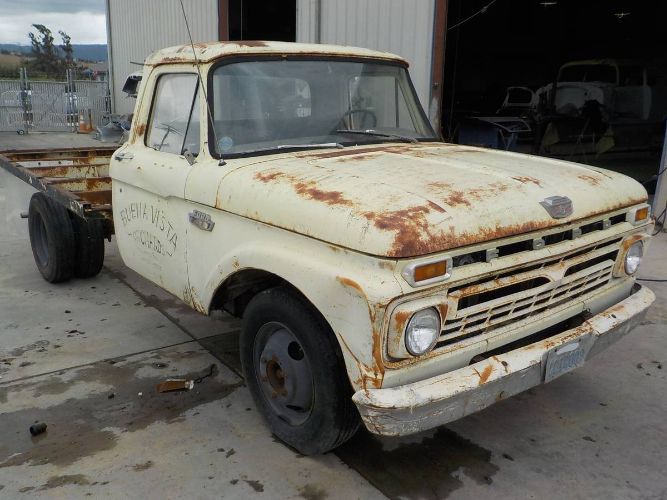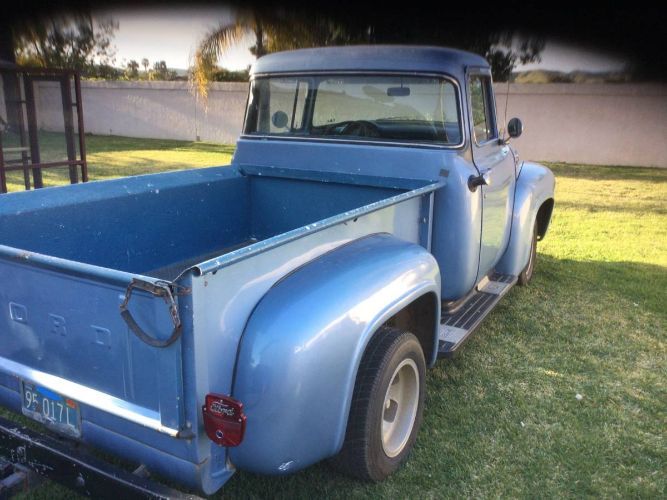
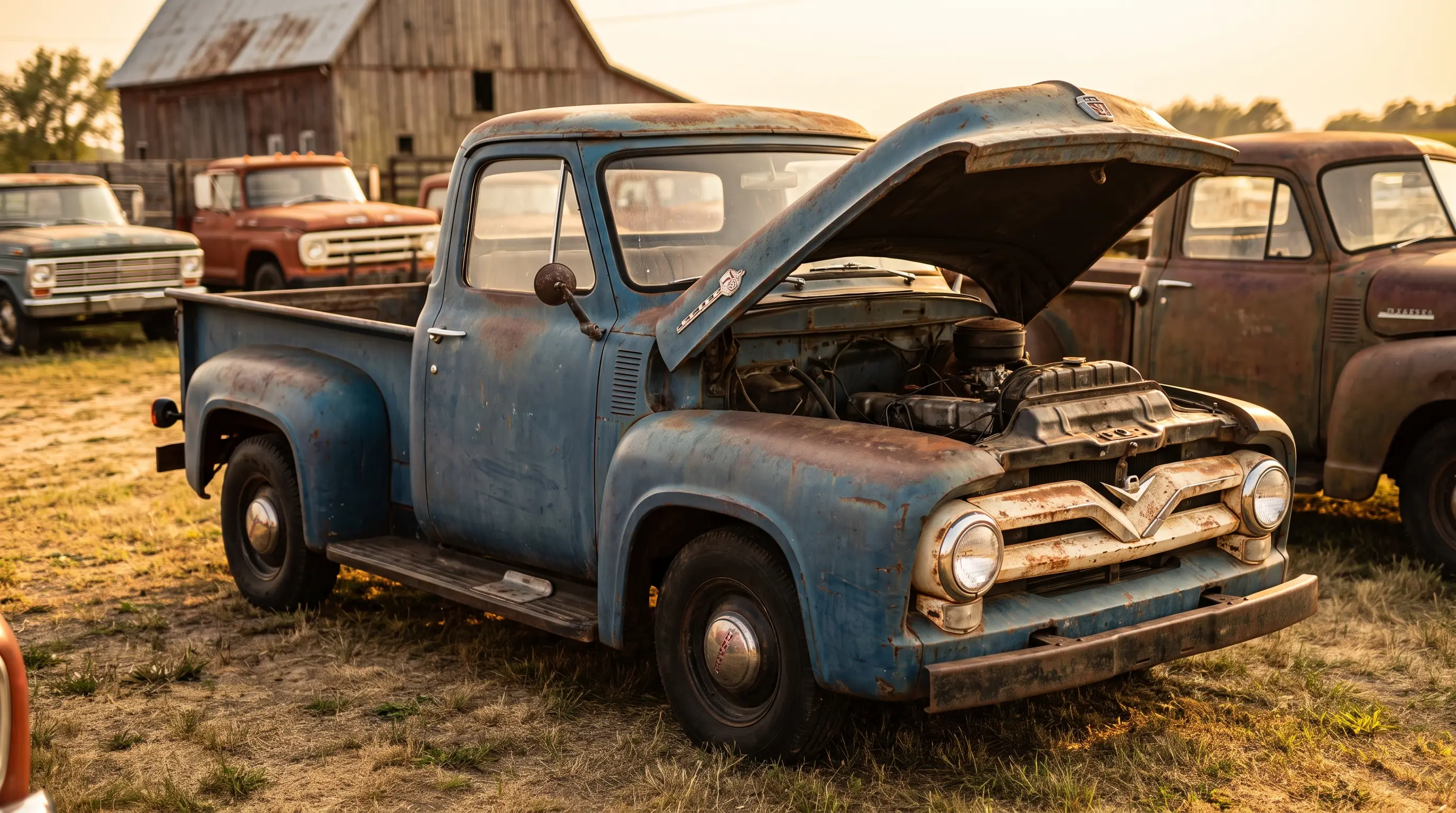
There is a fellow at our club's spring show who has been bringing the same 1955 F-100 for eleven years running, and every single year somebody new walks up, pops the hood, and says the same thing: "I didn't know they made a six that small." That engine is the Ford 223 six, and it deserves a lot more credit than it usually gets from people who only know the F-100 story through its V8 chapters.
The engine that came before the legends
The 223 arrived as Ford's standard truck six through the 1950s, sitting right alongside the flathead and later the Y-block V8 as an option buyer had to actually think about, not just default past. Displacing 223 cubic inches, it was not built to impress anybody. It was built to start every morning, run all day on a route or a job site, and cost as little as possible to keep that way. That is not a glamorous mission, but it is the mission that mattered most to the working buyers who made up the bulk of F-100 sales in this era.
What the old-timers in this club actually remember about it
I have talked to enough members with family history in these trucks to notice a pattern. Nobody tells a dramatic story about the 223. They tell quiet ones. A father who drove one to the same feed store for fifteen years without a major repair. A neighbor who bought a used F-100 specifically because it had "the little six" rather than the V8, since the fuel bill mattered more to him than the extra power ever would have. Those are the stories that build a real reputation, one unremarkable, reliable year at a time, not one flashy magazine test.
Why the six-cylinder buyer was making a smart choice
It is easy, looking back from a world of V8 nostalgia, to assume every period buyer secretly wanted the bigger engine and settled for the six out of necessity. That is not what the old club members tell me. Plenty of buyers actively chose the 223 because it matched what they actually needed: a truck that ran errands, hauled modest loads, and did not need to tow anything heavier than a small trailer now and then. Paying more for a V8 they would rarely use hard would have been the wrong decision for that buyer, not a compromise.
"Every club has a guy who will tell you the six-cylinder trucks are the ones that actually got used the way Ford intended. I've come around to thinking he's right more often than he's wrong."
- Wayne Coburn
The neighbor's truck, and why that story stuck with me
I mentioned a neighbor who chose the 223 over a V8 on purpose. His name was Earl, and he ran a small delivery route out of the back of that truck for the better part of two decades. He used to say the six-cylinder never once left him stranded, and he said it in a tone that suggested he had tried plenty of other engines that could not make the same claim. Earl was not sentimental about the truck. He sold it eventually when his eyesight got bad, and the fellow who bought it drove it for another decade before it finally landed at our club's swap meet, still running the original engine, still starting on the first try. That kind of longevity is not a fluke when you hear the same pattern repeated across enough trucks and enough owners.
Stories like Earl's are the reason I keep coming back to how underrated this engine is. Nobody wrote magazine features about the 223 in period. It just worked, decade after decade, in the background of a lot of ordinary lives, which is exactly the kind of quiet reliability that never gets the recognition it deserves until somebody actually goes looking for it.
Finding one today, and what to expect
A 223-powered F-100 is not the truck to buy if towing capacity tops the list of priorities. It is a genuinely appealing choice for a buyer who wants an honest, period-correct early F-100 without paying the premium that V8 trucks from the same years now command. Club members who own them describe an ownership experience that matches the engine's original reputation: modest power, easy maintenance, and a mechanical simplicity that makes troubleshooting far less intimidating for a first-time old-truck owner than a more complex engine bay would be.
The 223 does not exist in isolation from the rest of Ford's truck engine story, and understanding it alongside the flathead, the Y-block, and everything that followed gives a much fuller picture of why Ford offered so many engine choices at once. That full sequence is covered in where this started, tracing the whole lineup from the earliest trucks forward.
What to actually check before buying
Talk to enough owners at a show and you will hear consistent advice, not folklore. The 223's biggest enemy over the decades has been neglect rather than any inherent design flaw, and a truck that sat unused for years before a recent revival deserves closer scrutiny than one with a documented history of regular driving. Club members generally agree that a running example with a known owner history is worth more than a cheaper truck with an unknown past, even when the cheaper truck looks just as clean sitting still. That is not unique advice to the 223 specifically, but it applies to it just as strongly as it does to any other engine of this vintage, maybe more so given how many of these trucks spent years parked on a farm before anyone thought to save them. A truck's parked-for-a-decade past is not automatically disqualifying, but it changes what questions a buyer should be asking before signing anything, and a club member who has been through that exact scenario is usually happy to walk a newcomer through what to look for.
The club's honest verdict
Ask around any gathering of early F-100 owners long enough and you will hear the same conclusion in different words: the 223 was never meant to be exciting, and it succeeded completely at the job it was actually given. That is worth remembering the next time a six-cylinder truck gets passed over at a show in favor of something with more cylinders and a louder story attached to it. For anyone curious enough to go looking, there is real value sitting in these overlooked early trucks, and a good place to start comparing options is among current classic F-100 for sale listings, six-cylinder trucks included, before the rest of the hobby catches on to what our club figured out a long time ago.