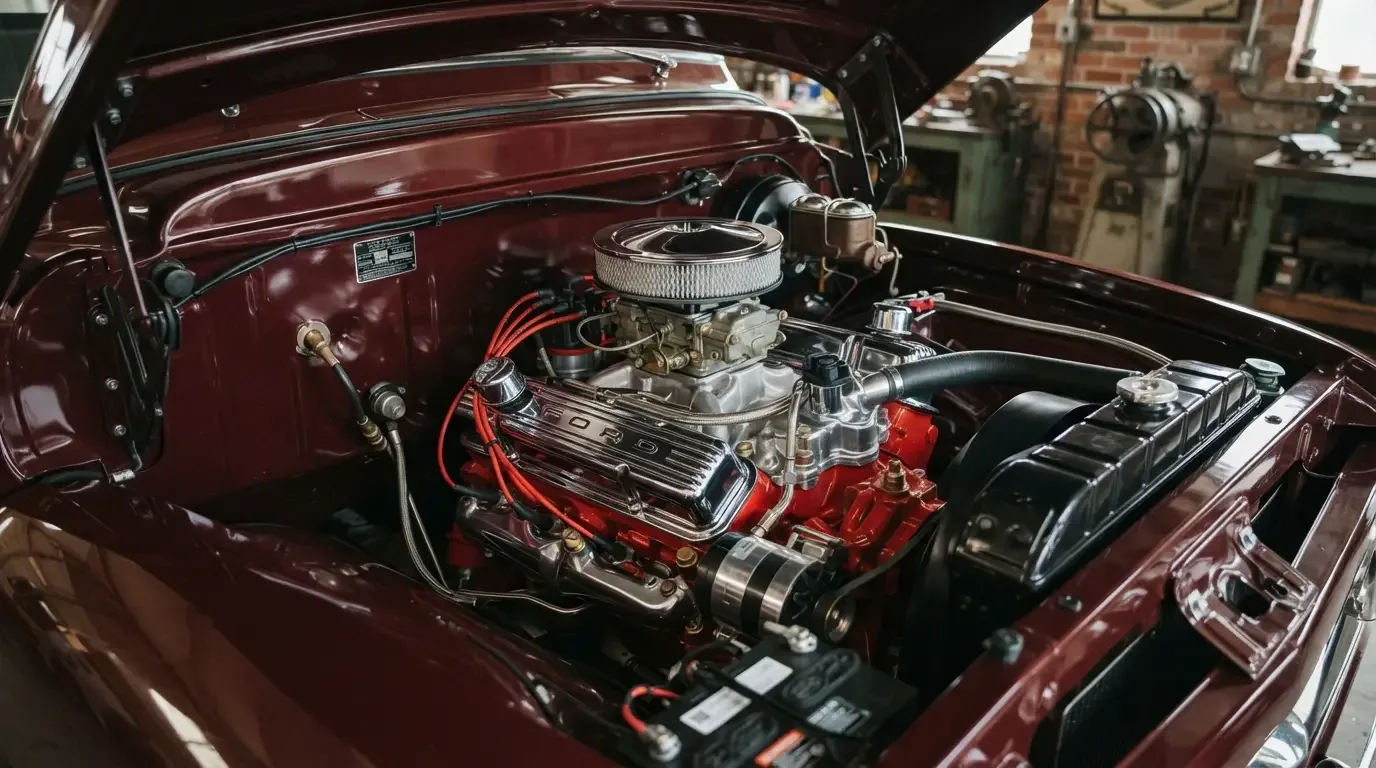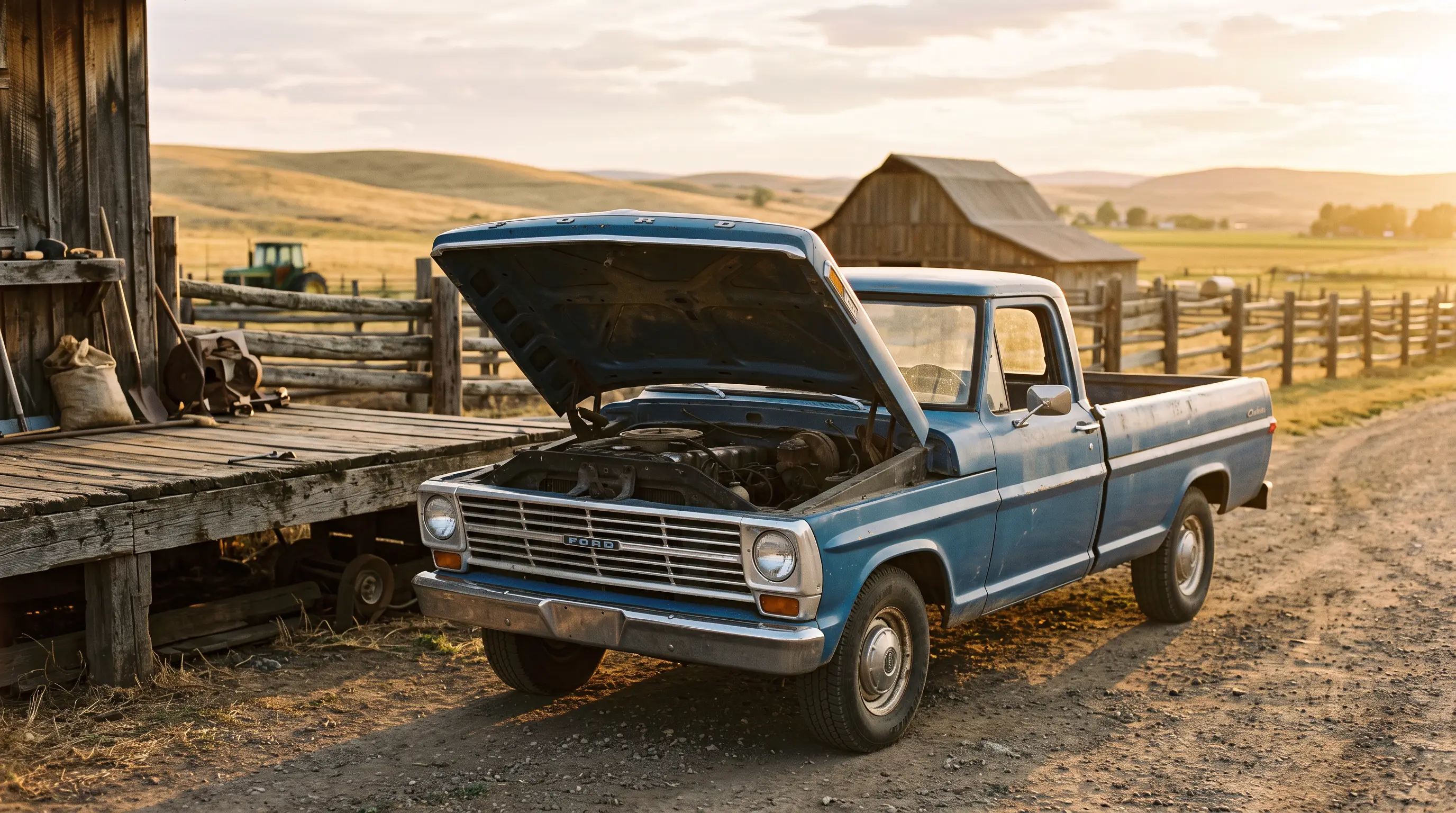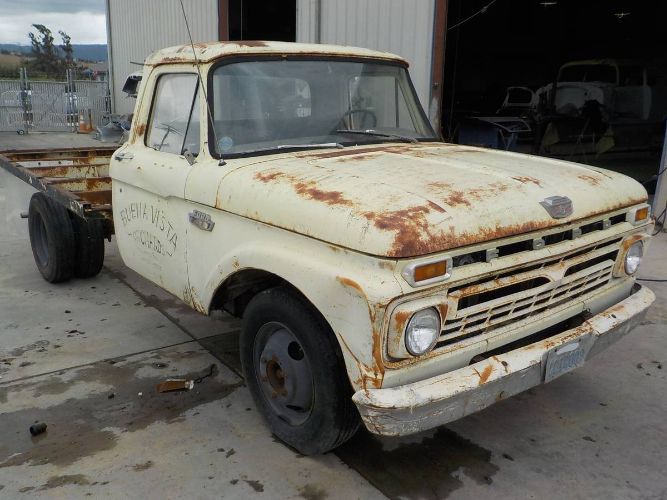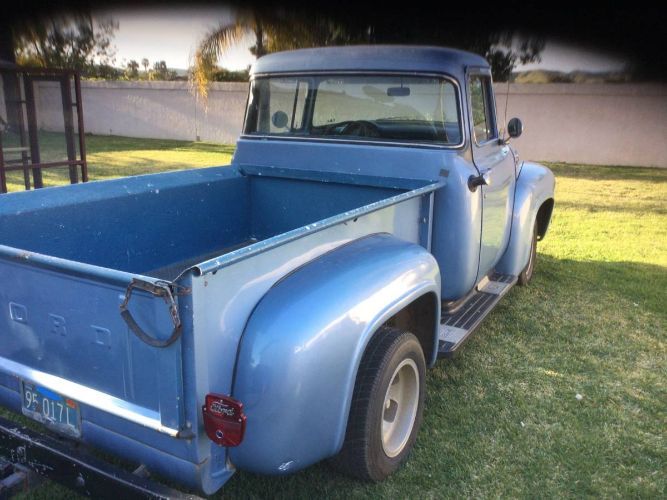
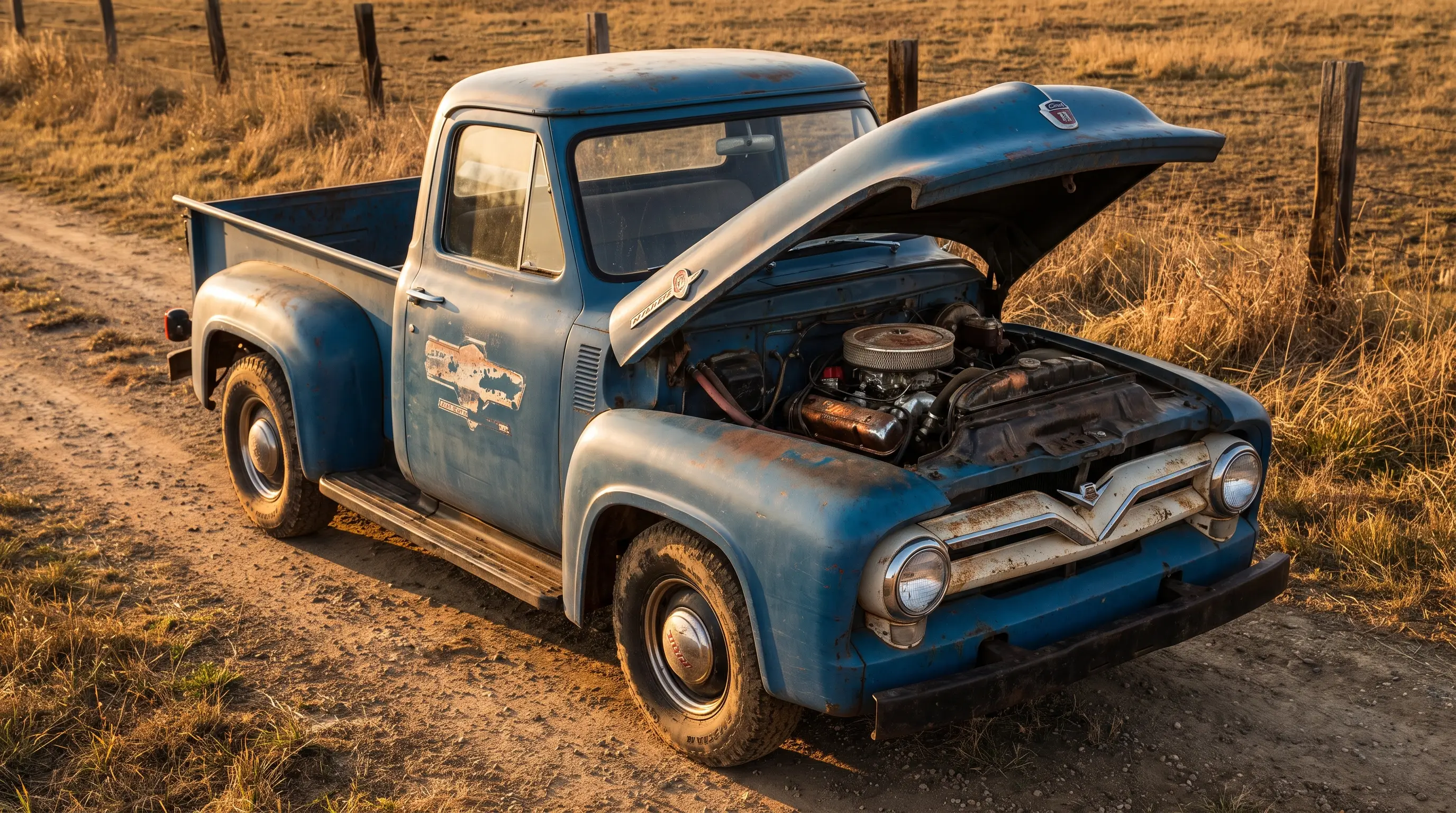
Of all the displacements Ford offered in the Y-block family, the Ford 292 y-block is the one most closely associated with the F-100, and there are specific engineering reasons why this particular size became the truck buyer's default rather than the smaller or larger alternatives on the same order sheet. This is a focused look at what made the 292 the workhorse of its generation.
The middle ground that actually worked
Ford's Y-block family spanned several displacements over its production life, from smaller passenger-car-oriented versions up through larger performance-focused variants. The 292 sat in a deliberate middle position: enough displacement to move a loaded truck confidently, without the added weight, cost, and complexity of the largest Y-block options that made more sense in a passenger car chasing outright power than in a work truck prioritizing durability and reasonable running cost. That balance is exactly why truck buyers gravitated toward it so consistently.
What the deep-skirt design meant for a truck specifically
The Y-block family's signature deep-skirt block, the feature that gives the whole family its name, produced a genuinely rigid bottom end for its era. Rigidity matters enormously in a truck application, where the engine absorbs constant load cycling from towing, hauling, and stop-and-go use far more punishing than typical passenger car duty. The 292's specific combination of that rigid architecture with a displacement large enough to make real torque, without being so large that it strained the rest of the truck's driveline, is what let it earn a reputation as the dependable choice rather than just an available one.
How it compares against its own family
| Y-block displacement | Primary use case | Truck relevance |
|---|---|---|
| 239 cubic inches | Early carryover displacement | Lower, entry-level truck use |
| 272 cubic inches | Mid-range option | Common but secondary to 292 |
| 292 cubic inches | Truck-optimized middle ground | The default choice for F-100 buyers |
| 312 cubic inches | Performance-leaning | Less common in truck applications |
Buyers cross-shopping these displacements in period generally found the 272 too close to the smaller engines to justify much of a premium, while the 312 carried a passenger-car performance reputation that did not translate into obvious truck benefits worth the added cost. The 292 threaded that needle cleanly, which is exactly why it became the option most F-100 buyers actually chose.
Dealers reinforced that pattern too. A truck ordered off a dealer lot rather than custom-specified was far more likely to arrive with a 292 already installed simply because dealers stocked what buyers were actually requesting in volume, and volume orders overwhelmingly favored this specific displacement over its siblings. That self-reinforcing cycle, buyer preference driving dealer stock, which in turn shaped what future buyers saw as the default option, is a big part of why the 292 became so thoroughly associated with the F-100 nameplate specifically.
"Engineers do not usually get to pick the exact displacement that becomes the default. The market picks it for them by simply buying more of one option than the others. That is what happened with the 292."
- Emily Chen
Why the numbers alone do not tell the whole story
Displacement is only one variable in what made the 292 the truck world's favorite Y-block, and it is worth being honest that raw cubic inches were never the deciding factor by themselves. Carburetor tuning, compression ratio, and the specific cylinder head castings paired with a given engine all shaped how that displacement translated into usable power on the road. Ford refined these details across the Y-block's production run, and later 292 examples generally ran better than the earliest ones simply because the surrounding engineering had matured, not because the core displacement itself changed. A buyer comparing two 292-powered trucks from different production years should not assume they perform identically just because the displacement figure on paper matches.
That nuance gets lost easily in casual conversation about old truck engines, where displacement tends to dominate the discussion because it is the easiest number to quote. The real story of why the 292 worked as well as it did involves dozens of smaller engineering decisions stacked on top of a sound base displacement, and that combination is much harder to summarize in a single spec sheet line.
What ownership involves today
A 292-powered F-100 remains one of the more approachable classic Y-block trucks to own, largely because its popularity in period translated into better parts support decades later than the less common displacements enjoy today. That said, the Y-block family's known oiling limitations, more pronounced in early production, apply to the 292 the same way they applied to the smaller displacements, and a buyer should confirm maintenance history rather than assume a running engine has been properly cared for throughout its life. An engine that idles smoothly can still be running on borrowed time if oil changes were stretched for years by a previous owner.
Where the 292 fits in the larger engine story
The 292 did not exist as a standalone chapter. It sat inside a much longer evolution of F-Series engines that started with the flathead V8, moved through the full Y-block family, and eventually gave way to the FE big-blocks and later small-block designs as the decades went on. The full story traces that entire sequence for anyone who wants the complete picture rather than just this one displacement's chapter of it.
Bottom line for buyers
The 292 earned its reputation as the F-100's defining Y-block through a genuinely sound engineering trade-off, not marketing or luck. A well-maintained example remains a solid, honest choice for anyone building a period-correct F-100 from this era, and there is real inventory worth comparing among browse classic F-100 listings for buyers ready to see what is actually available today. Given how much of the F-Series' early success rode on this specific engine, it deserves to be judged on its own terms rather than treated as a footnote to the flashier engines that came later. The 292 earned its place in this truck's history the same way any good engine does, one reliable mile at a time.
What a proper inspection should focus on
Given the oiling concerns already noted, a serious buyer should ask specifically about how consistently the previous owner changed oil, whether the truck has sat unused for extended stretches, and whether any oil pressure issues have surfaced under load. None of that requires special expertise to ask about, but it does require asking directly rather than accepting a general "runs great" assurance at face value. A seller with genuine maintenance records for a 292-powered truck is offering real, verifiable value that a seller without them simply cannot match, and that difference should show up in the price both parties agree to.