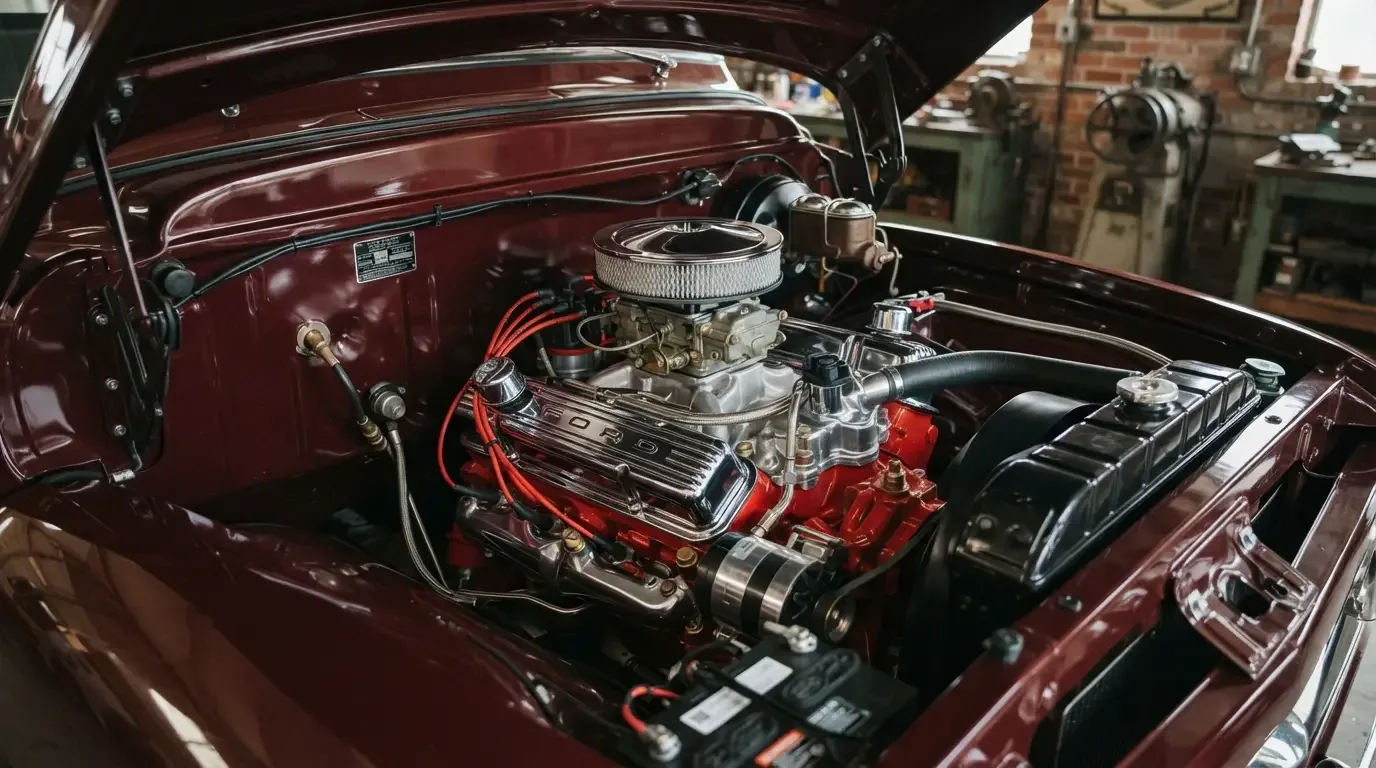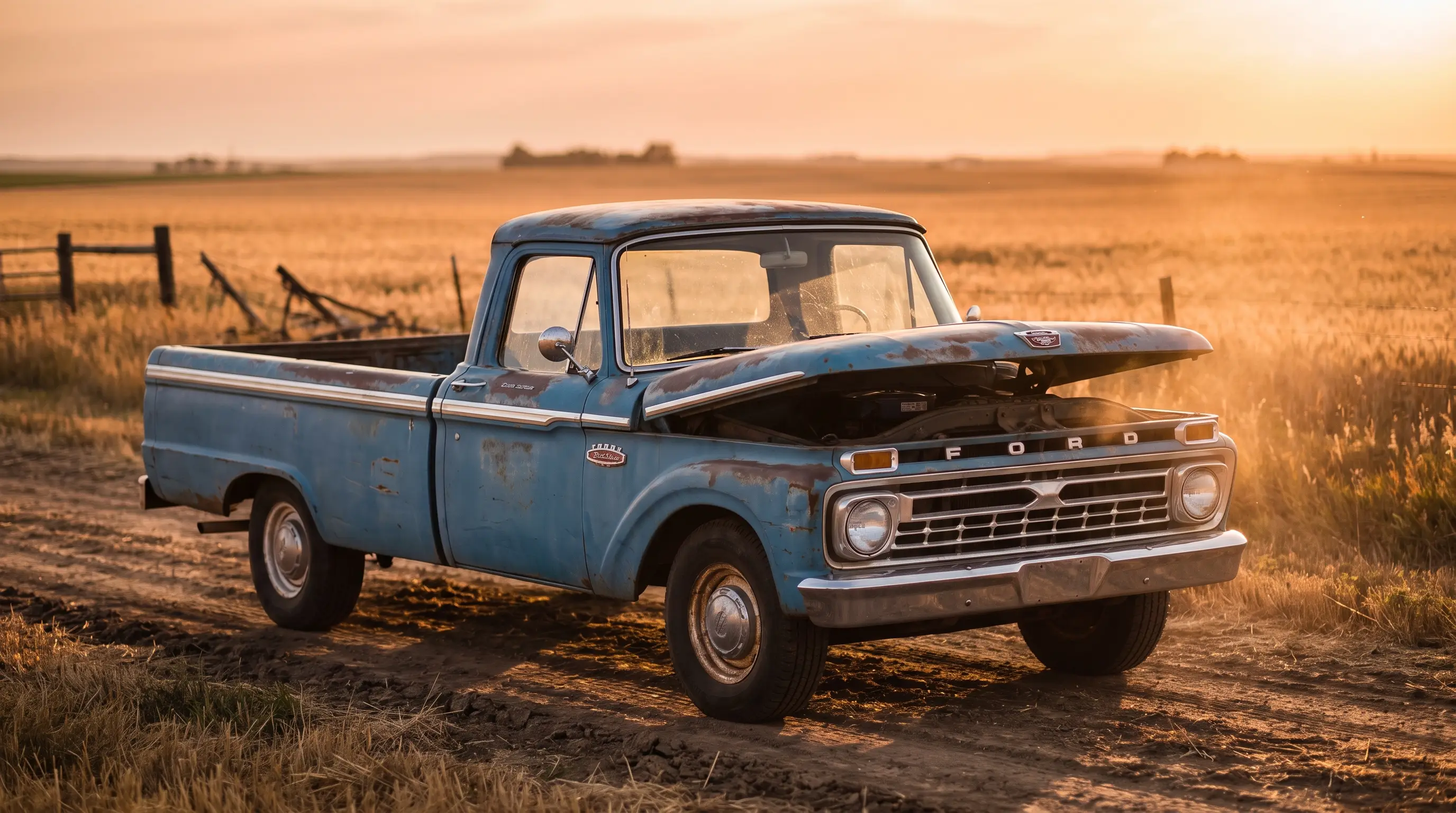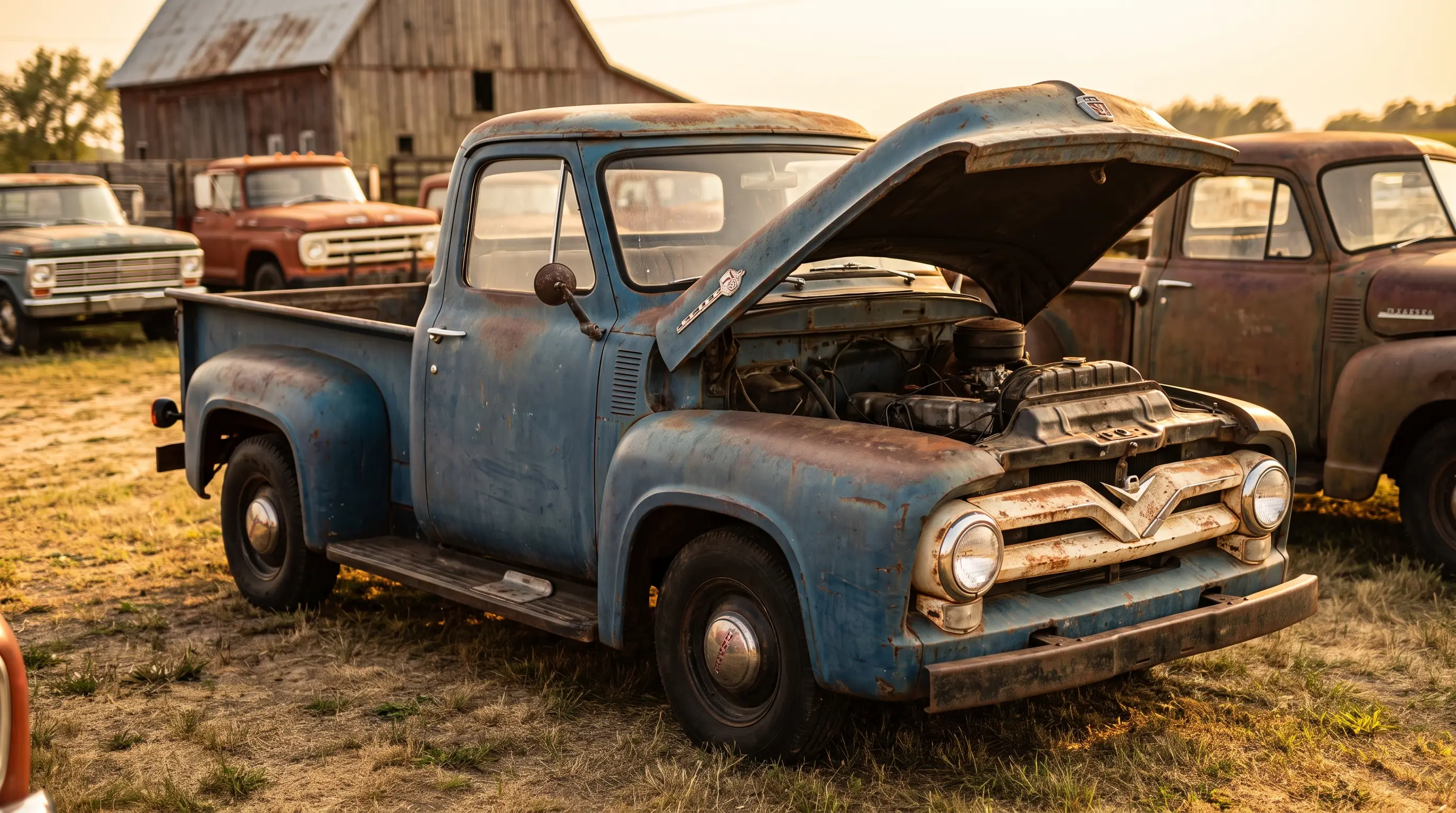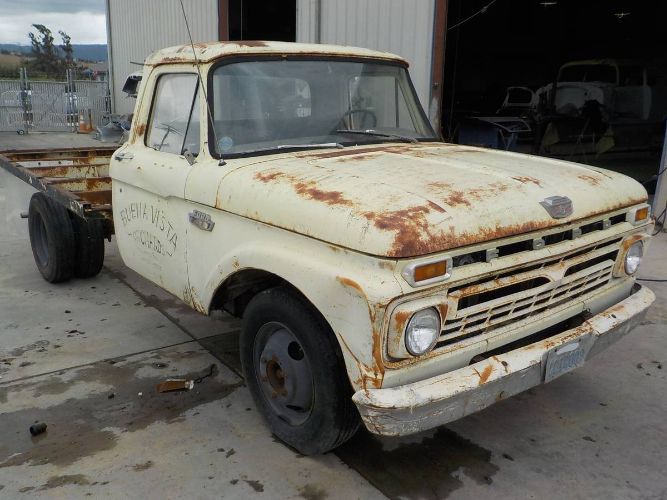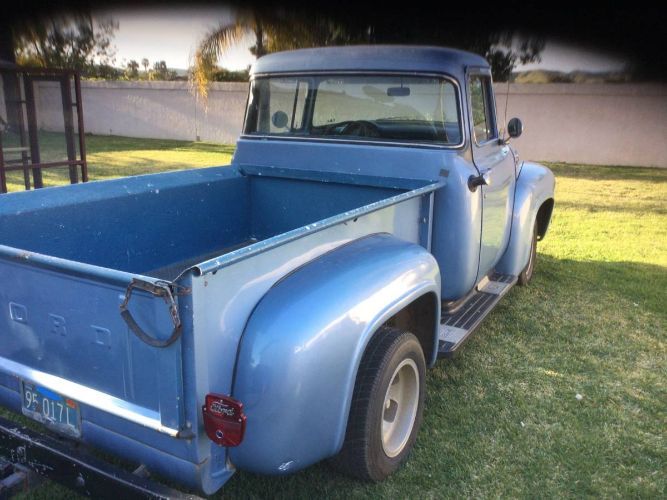
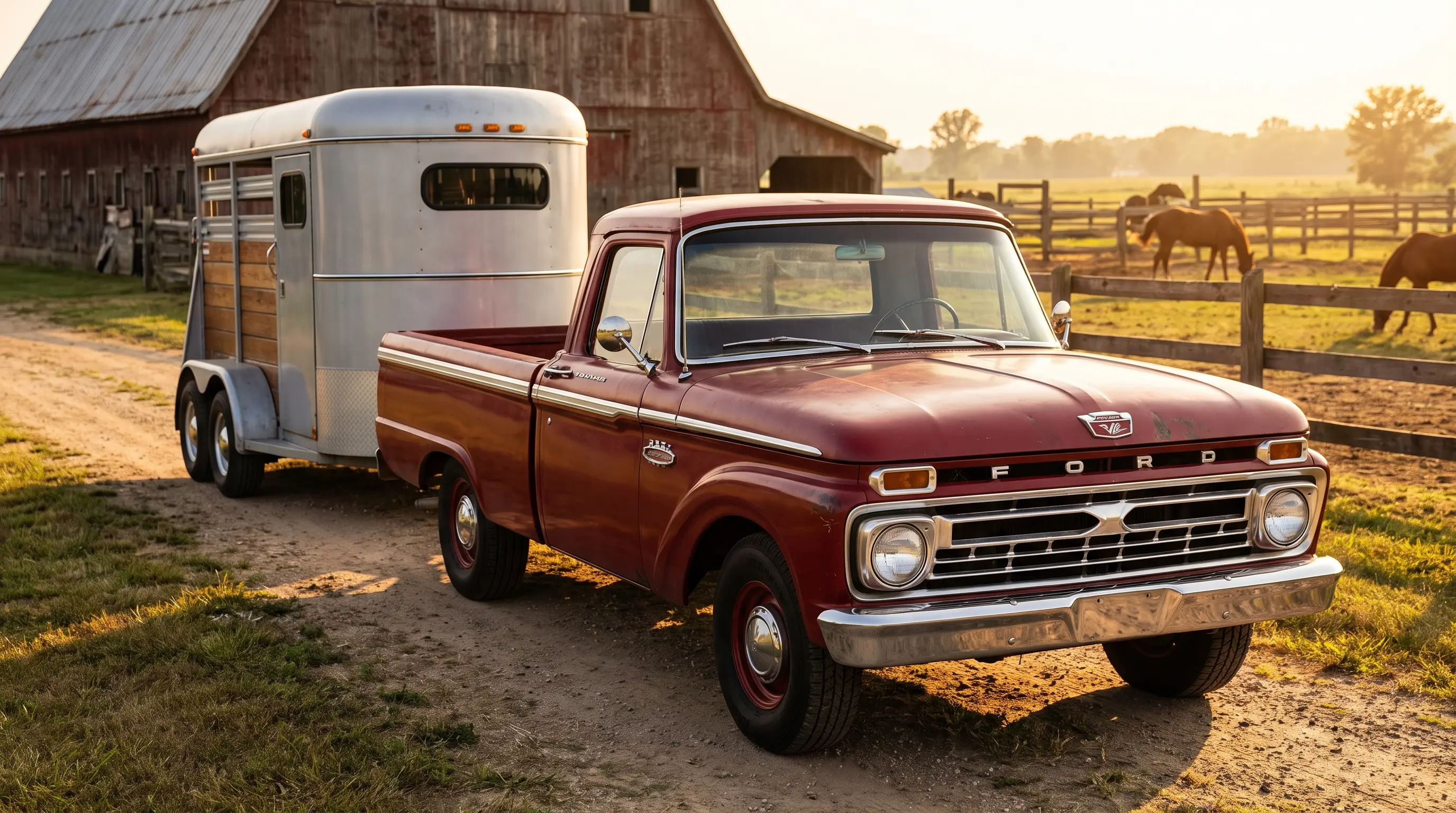
Ford's FE engine family brought real capability to the F-100 lineup starting in 1965, when the 352 replaced the outgoing 292 Y-block as the top V8 option, and the two displacements that mattered most for truck buyers were the 352 and the 390. The Ford FE 390 engine in particular became the benchmark big-block for anyone who needed serious towing and hauling power from a half-ton truck, and understanding how it got there requires looking at both engines together, not just the more famous one.
What FE actually stands for, and why it mattered
FE stands for Ford-Edsel, a naming convention tied to the era when the engine family was developed to serve multiple divisions at once. The architecture was engineered from the outset to scale across a wide range of displacements and applications, from passenger cars to full-size trucks, which is exactly the kind of flexibility Ford needed as truck buyers started demanding more capability without a completely new engine program for every application. That scalability is the real engineering achievement here, more than any single displacement's output numbers.
The 352: the workhorse that arrived first
The 352 entered F-100 service as the more accessible FE option, offering a genuine step up from the Y-block and six-cylinder engines it sat alongside on the order sheet. It gave buyers meaningfully more torque for towing and hauling without the added cost and complexity of the largest FE displacements. For a lot of working buyers in the 1960s, the 352 was the practical answer: enough capability to matter, without paying for capability they would rarely use.
The 390: the number every serious buyer wanted
The 390 pushed the FE family's truck application further, delivering real towing capability that made the F-100 genuinely competitive against heavier-duty trucks in situations that actually mattered to owners: pulling a loaded trailer up a real grade, hauling a full bed without straining, and doing it repeatedly without excessive wear. Roughly 376 lb-ft of torque in a typical truck-tuned 2-barrel configuration (255 horsepower at 4,400 rpm and 376 lb-ft at 2,600 rpm was a common late-1960s F-100 rating) gave the 390-equipped F-100 a working margin that the smaller engines in the lineup simply did not have. That margin is why the 390 became the engine enthusiasts remember most clearly when they talk about capable F-100 trucks from this era.
"The 352 did the job. The 390 did the job with room to spare. That difference is small on paper and enormous the first time you actually need it."
- Emily Chen
The performance world's influence on truck buyers
The FE family's reputation was not built entirely inside truck showrooms. The same architecture powered some of Ford's most celebrated performance cars of the 1960s, and that halo effect followed the engine family into the truck world whether Ford intended it or not. A buyer choosing a 390-equipped F-100 in period knew, at least by reputation, that they were getting an engine family with real performance pedigree, not just a generic big-block. That association gave the 390 a certain cachet among truck buyers who wanted capability with a bit of extra bragging rights attached, something the more purely utilitarian 352 never quite matched in the public imagination even though it did its job just as competently.
That cachet has only grown with time. Collectors today who specifically seek out FE-powered trucks are often drawn in by that same performance-world connection, even when the truck itself was never built for anything more exciting than hauling lumber and towing a boat trailer on weekends.
Reliability and what owners actually reported
Both engines shared the FE family's general reputation for durability when properly maintained, though the additional strain of truck duty, especially sustained towing, exposed cooling system limitations more readily than it did in passenger car applications. Owners who kept the cooling system in good order and stayed on top of routine maintenance generally reported long service lives from both displacements. Owners who neglected cooling system upkeep, particularly under repeated heavy towing, saw problems surface sooner. That pattern is consistent with most big-block engines of the era, not a unique weakness of the FE family specifically.
352 versus 390 for today's buyer
| Consideration | 352 | 390 |
|---|---|---|
| Towing capability | Solid, adequate for most loads | Noticeably stronger margin |
| Fuel economy | Better than the 390 | Lower, reflecting the added displacement |
| Parts availability today | Good, shares much with 390 | Good, more enthusiast demand |
| Collector interest | Solid but secondary | Higher, the more sought-after option |
Neither engine is a wrong choice for a buyer today, and both remain genuinely enjoyable to drive by the standards of their era. The decision comes down to how the truck will actually be used and how much of a premium a buyer is willing to pay for the 390's stronger reputation and generally higher collector interest.
Where these engines sit in the bigger picture
The FE family did not appear in isolation. It followed the Y-block's run and eventually gave way to Ford's later small-block and big-block designs as the F-Series continued evolving through the 1970s. Understanding the 352 and 390 in that broader context makes it easier to see why they mattered so much when they arrived: more on the ford f100 engines lays out that full sequence. For readers who want to go back to the very beginning of the F-Series story, where this started covers the truck's origins before any of these engines existed.
Buying an FE-powered F-100 today
Confirming which FE displacement sits under the hood matters before assuming a listing's claims are accurate, since these engines share enough visual similarity that a casual look is not always reliable. Casting numbers and documentation are the only sure way to confirm a 352 from a 390 without pulling measurements directly, and a buyer relying solely on a seller's verbal description is taking on more risk than they may realize. Buyers focused specifically on maximum towing capability and stronger collector interest should prioritize a documented 390. Buyers who care more about fuel economy and lower running cost while still wanting real V8 capability have a perfectly reasonable case for the 352 instead. Neither choice should be treated as objectively correct without weighing how the truck will actually be used once it is parked in the driveway.
Either way, the FE-powered F-100 remains one of the most capable and best-supported classic truck platforms from this era, and there is real depth of inventory to choose from among classic F-100s on the market right now for buyers ready to compare a 352 against a 390 in person.
Whichever displacement a buyer lands on, the broader lesson from this generation of engines holds true: the FE family proved that a single flexible architecture could serve a work truck and a performance car equally well, and that versatility is exactly why these engines are remembered as fondly as they are decades later.