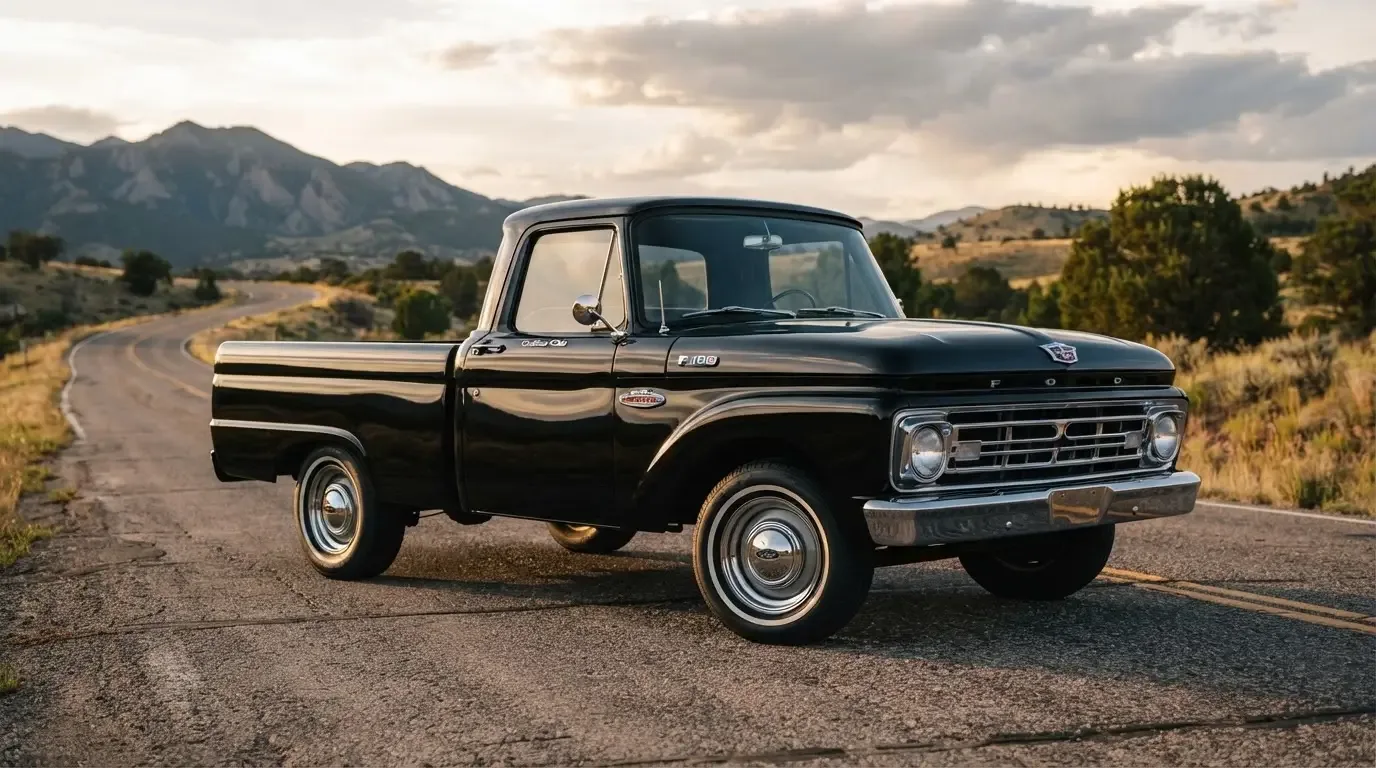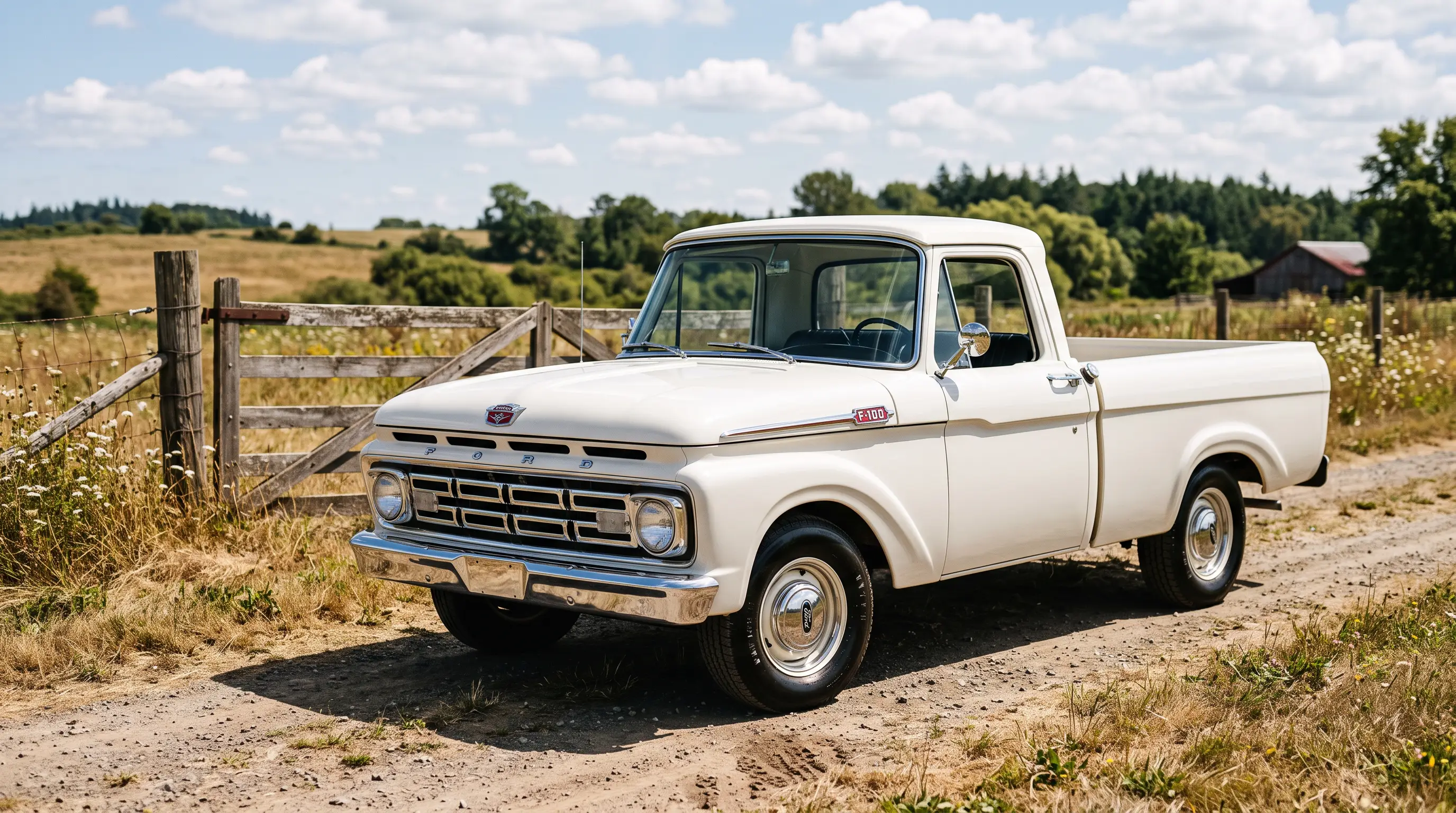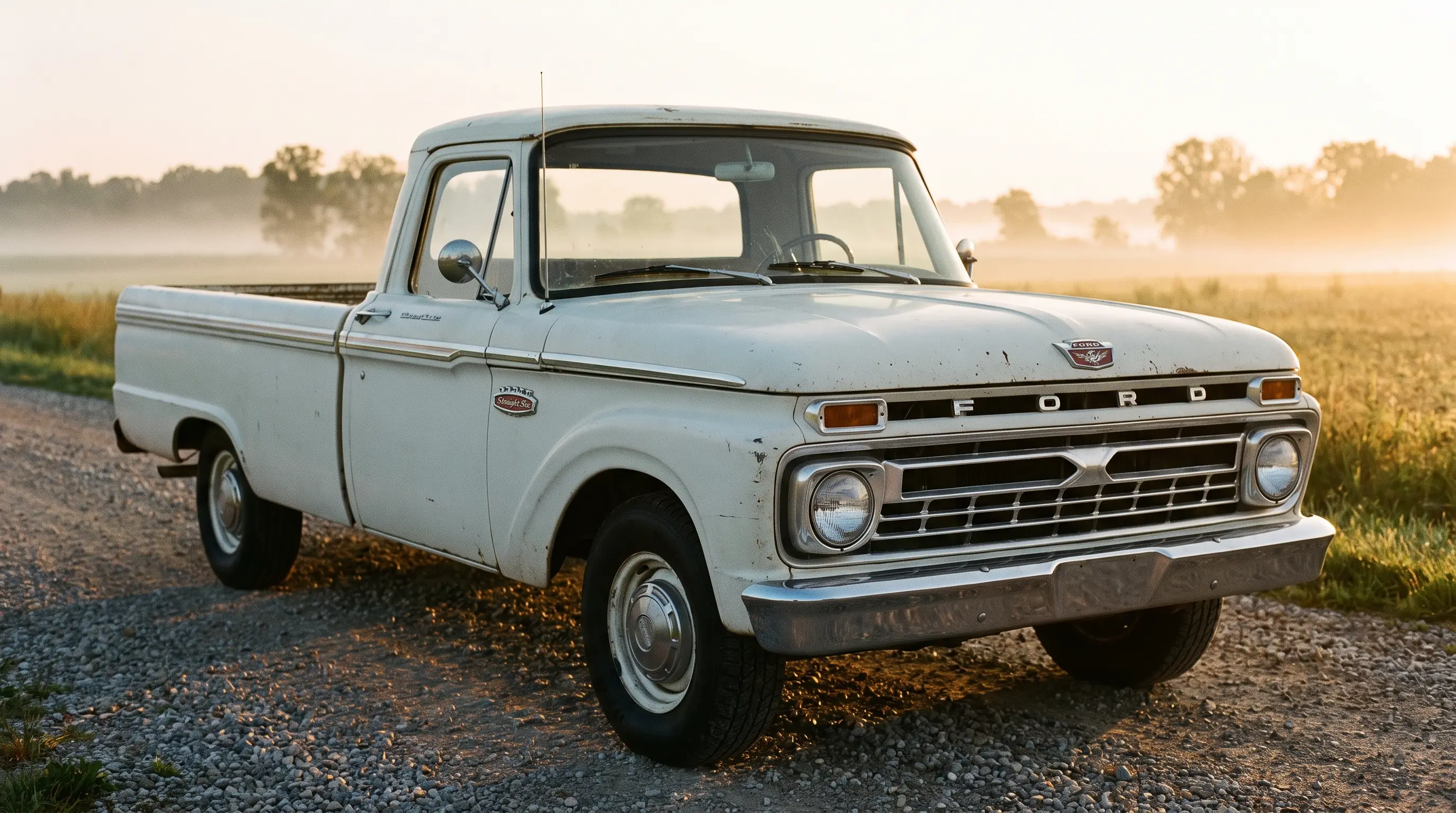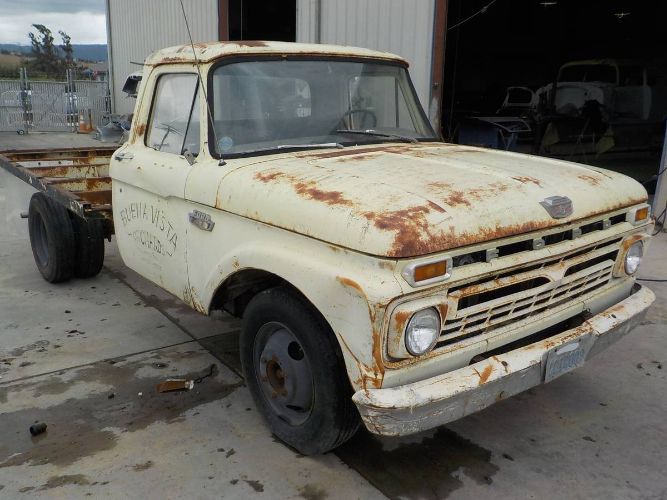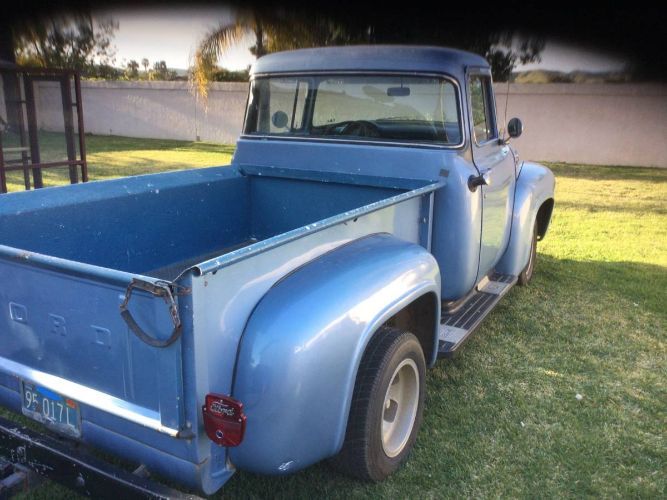
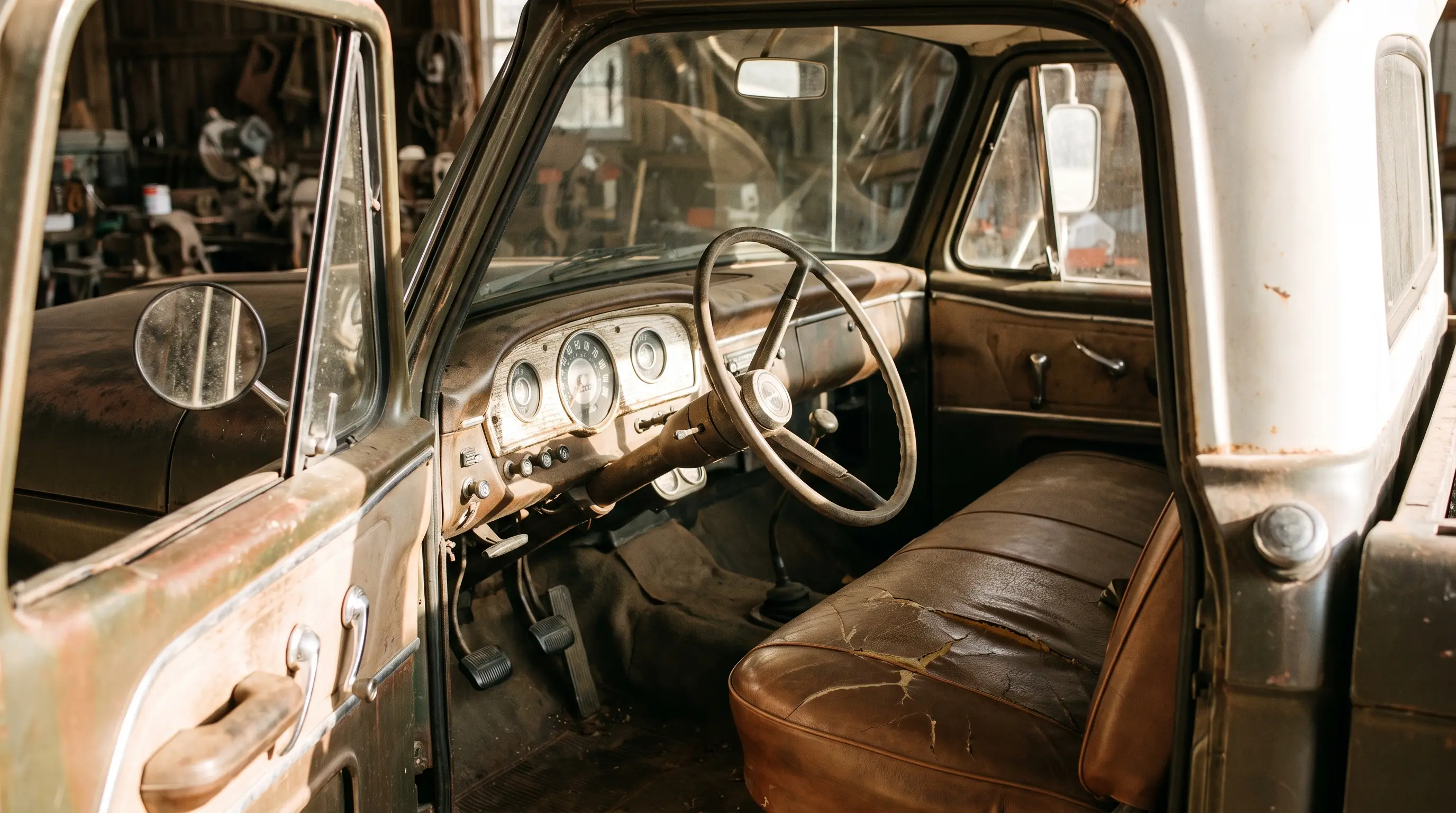
Climb into an unrestored 1961 to 1966 Ford F-100 and the first thing you notice is how little pretense the cab has. There is no wraparound dash trying to impress you, no fake wood, just a straightforward layout built for someone who needed to see their gauges, reach their controls, and get on with the day's work. That honesty is exactly why builders keep coming back to this interior when they plan a restoration or a custom build, because there is real substance underneath, not just surface trim to strip and redo.
A dash built for function first
The instrument panel on this generation of F-100 keeps things simple. A speedometer sits front and center, flanked by basic gauges for fuel and temperature, with warning lights handling the rest of the truck's vital signs rather than a full gauge cluster. That simplicity is a real advantage for anyone restoring the cab today, since there are fewer failure points to chase down and fewer obscure parts to hunt for compared to trucks from later decades that piled on more electronics. When something does need attention, the layout is straightforward enough that even a builder new to this specific truck can trace a wiring run without much guesswork.
Bench seats and basic comfort
Standard trucks came with a single bench seat trimmed in a durable vinyl or cloth material chosen for how well it would hold up to work clothes and daily abuse, not for how it would look in a magazine. Higher trim levels, including the Ranger package introduced partway through this generation, upgraded that material to something noticeably nicer, with better cushioning and more attractive patterns. For a restorer working on a base-trim truck, that means original replacement material is usually simpler to source than the fancier Ranger-specific patterns, though reproduction upholstery houses have gotten better at covering both over the years.
What actually wears out first
Anyone who has pulled apart enough of these cabs knows the pattern. Floor pans rust from the outside in, usually starting at the cab corners and around the pedal box where water collects and sits. Seat frames sag before the upholstery itself fails outright, since the springs underneath take decades of daily use long before the vinyl on top gives out. Door panels crack at the mounting points from repeated slamming, a small thing that adds up over sixty years of use. None of this is dramatic, but it is exactly the kind of wear a builder needs to check for before committing to a project truck, since interior rot is often a better indicator of a truck's overall condition than the paint ever is.
"You can tell more about a truck's real history from the floor pan under the seat than from anything on the outside. Paint lies. Rust doesn't."
- Jim Vasquez
Small details that separate trim levels
Beyond the obvious differences in seat material, base and upgraded trims parted ways in smaller places too, things like the presence or absence of an armrest, a slightly nicer steering wheel design, or additional chrome around the window cranks and door handles. None of these details change how the truck functions, but they matter enormously to anyone doing a correct restoration, since mixing base and upgraded trim parts on the same cab is an easy way to end up with a build that looks slightly off to anyone who actually knows this generation well. Careful builders keep a running reference of exactly which trim level they are restoring toward before ordering a single reproduction part, since correcting a mismatched interior after the fact costs far more time than getting it right the first pass.
Restoring versus modernizing the cab
Builders working on this generation generally split into two camps. Some chase a period-correct restoration, matching original upholstery patterns, dash colors, and trim down to the smallest detail, treating the cab as a historical artifact worth preserving exactly as Ford built it. Others take a lighter touch toward modernizing comfort, adding sound deadening or upgraded seating while keeping the outward look faithful to the original design. Neither approach is wrong, and the honest, simple structure of this interior accommodates both paths reasonably well, since there is enough original material left in the parts market to go either direction depending on what the builder actually wants from the finished truck.
That interior sits inside a much larger story about how this generation of F-100 developed, one covered more fully in the full story of the 1961 to 1966 trucks. For anyone shopping a project or a driver today, cab condition deserves as much scrutiny as the exterior sheet metal, and buyers browsing current classic F-100 for sale listings should always ask to see photos of the floor pans and seat frame before falling for a nice-looking paint job on the outside.
What the cab tells you the exterior can't
I have walked away from more than one nice-looking truck after pulling back a floor mat and finding daylight where solid steel should have been. A cab tells you the truth about a truck's life in a way fresh paint never will, since exterior bodywork is relatively easy to hide behind a good repaint, while a rotted floor pan or a collapsed seat frame takes real, expensive work to fix properly. Any builder serious about this generation learns to treat the interior inspection as the deciding factor on a project truck, not an afterthought handled after the deal is already done. Get the cab right, and the rest of the build follows a lot more predictably than it does the other way around.
I have also learned to trust smell over sight when checking a cab for the first time. Musty carpet or a lingering damp odor almost always points to a water intrusion problem the seller either does not know about or is not mentioning, even on a truck whose paint and upholstery look presentable in photos. Get inside, sit for a minute, and pay attention to what your nose tells you before you get distracted by chrome and paint. It has saved me from more than one bad purchase over the years, and it costs nothing but a few extra minutes at a showing.
What a correct interior is actually worth
On the resale side, a correctly restored, period-appropriate interior adds real, measurable value to a finished truck, often more than buyers expect going in. A truck with a beautiful exterior and a mismatched, incorrect interior tends to sell for noticeably less than one where both ends of the build match the same standard of care, since experienced buyers know that interior work is exactly the kind of detail that gets skipped when a build runs short on budget near the end. Treating the cab as a priority from the start, rather than an afterthought squeezed in after the paint and chrome are finished, pays off both in how the finished truck drives and in what it is worth if you ever decide to sell it.