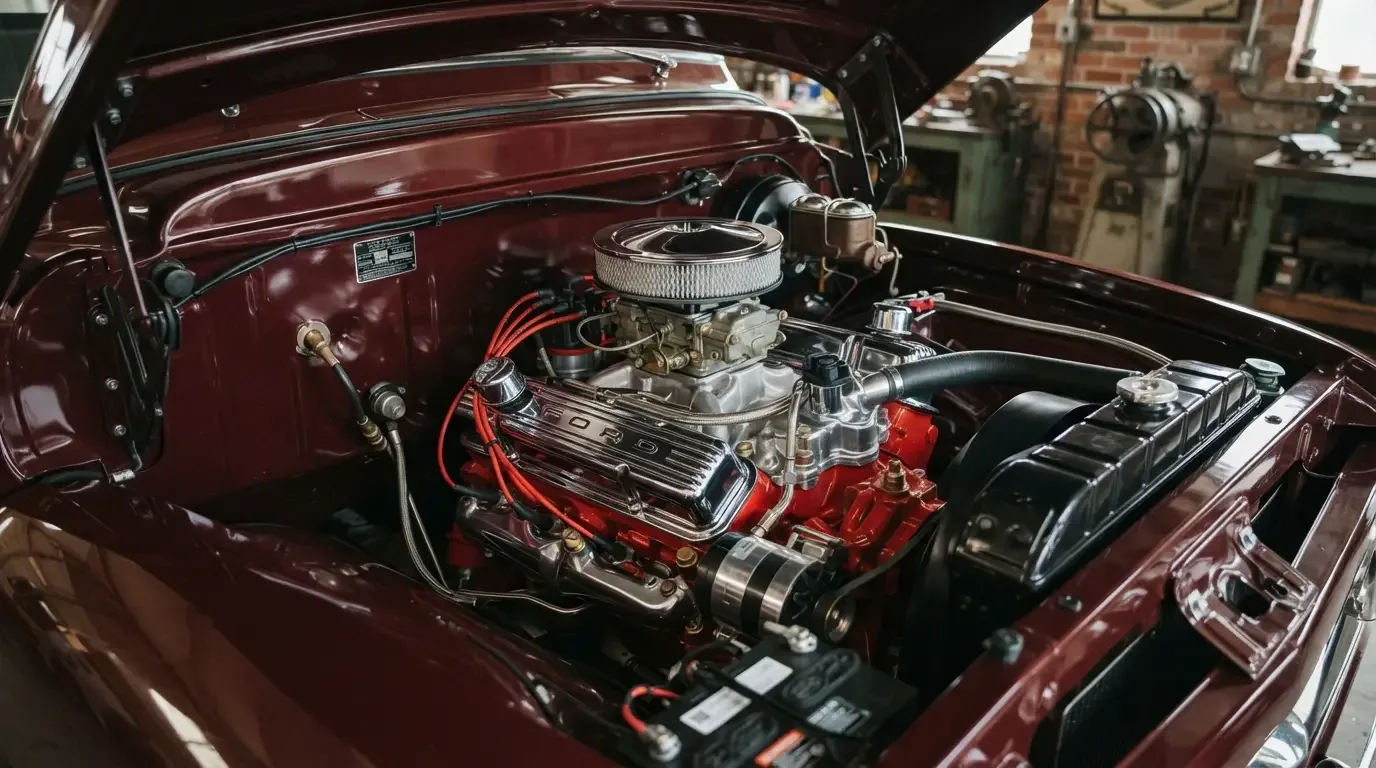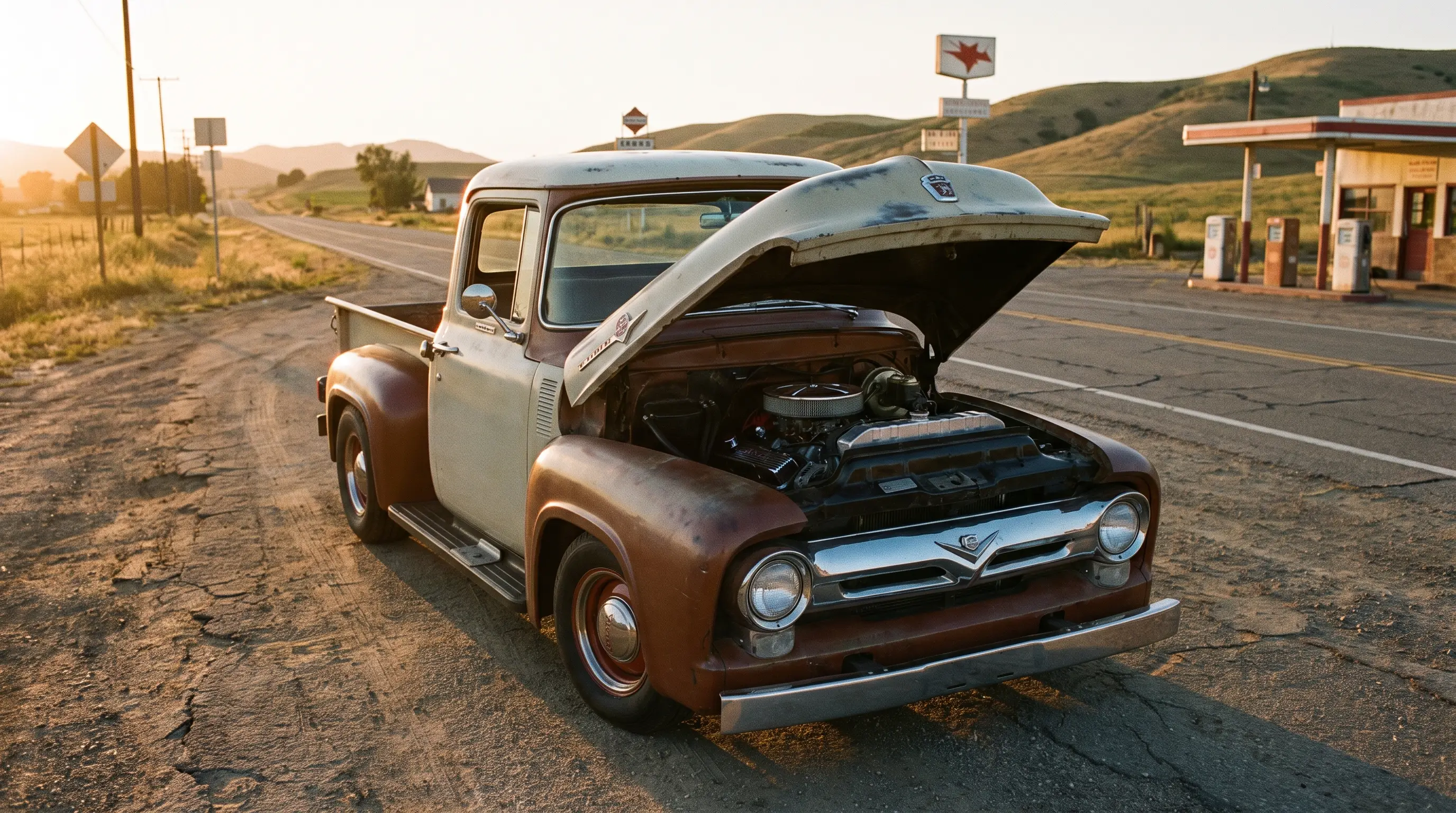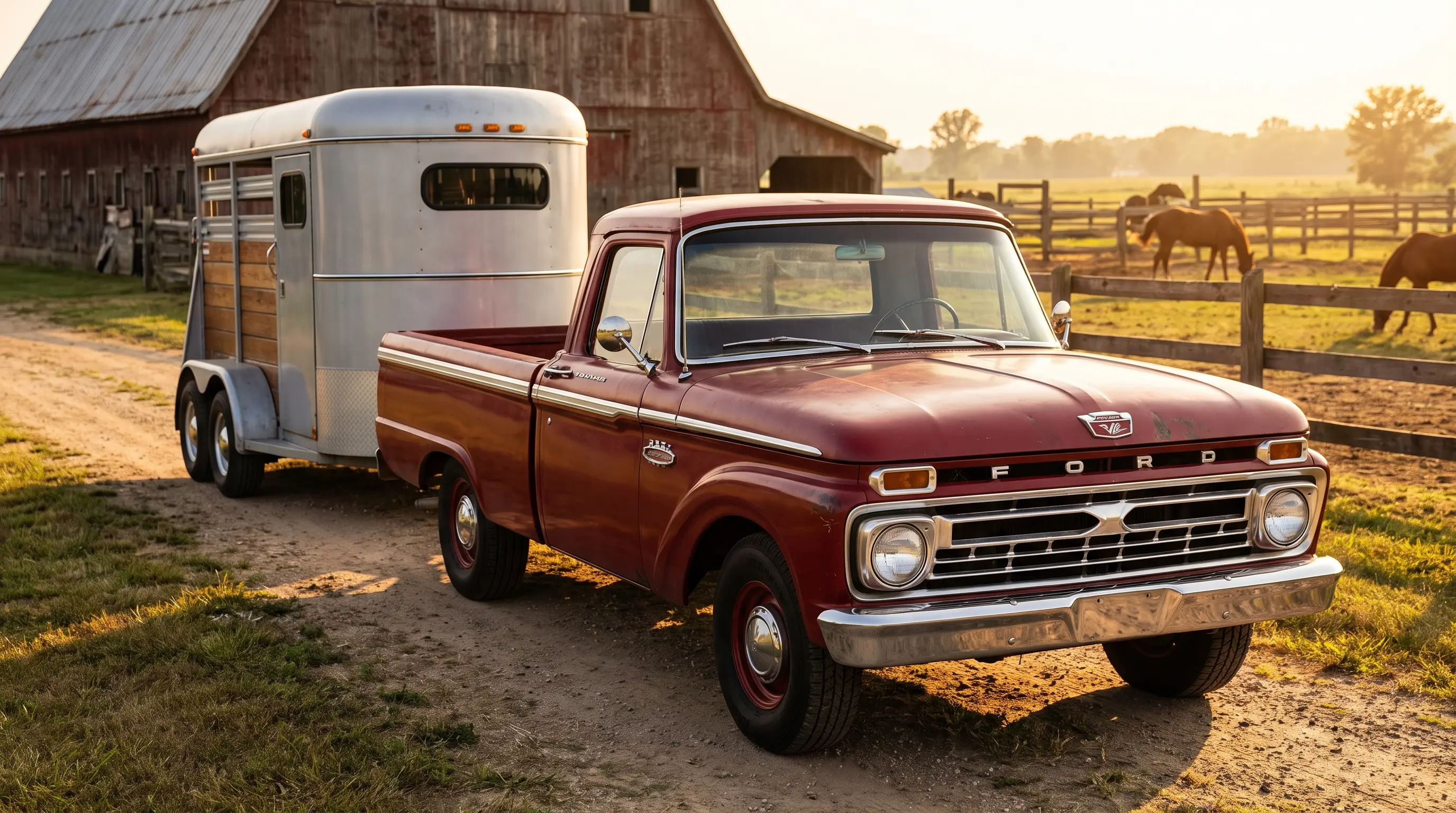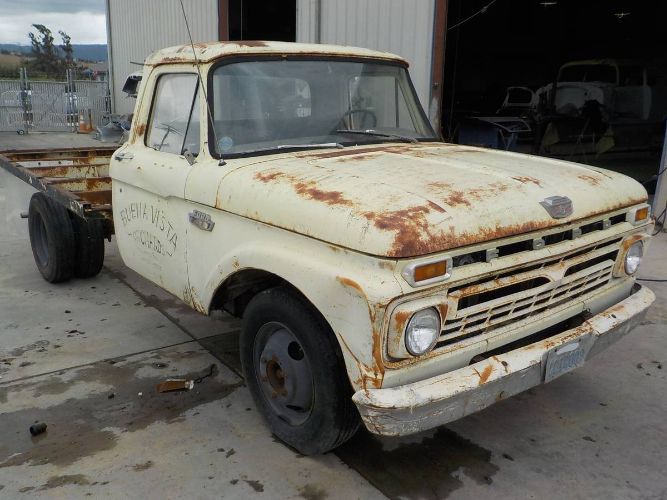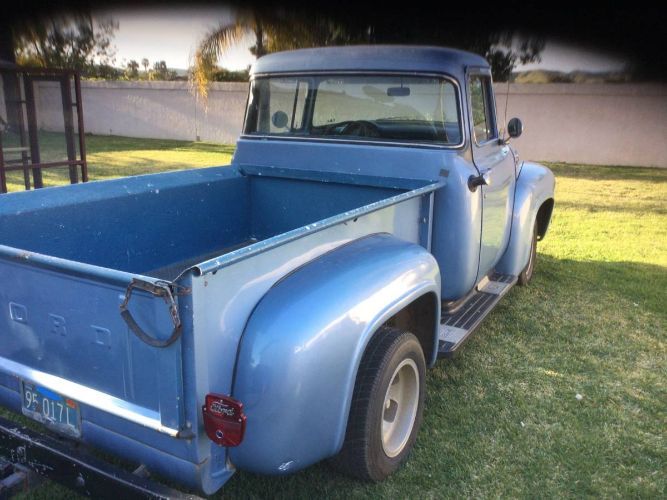

The Ford 300 inline six engine did not need a marketing campaign. It needed twenty years of ranchers, plumbers, and delivery drivers refusing to kill it, and it got exactly that. Introduced for the 1965 model year and carried well into the F-100's later years, this straight-six built a reputation for outliving the trucks around it, and the reputation was earned honestly. Here is what the numbers say.
300 cubic inches, one job, done right
The 300 displaced almost exactly what its name promised, and Ford tuned it for torque rather than speed from the start. Around 283 lb-ft of torque arriving low in the rev range, at just 1,600 rpm, meant the engine could pull a loaded bed without being worked hard to do it. That matters more than a horsepower figure for a truck that spends its life towing, hauling, or idling at a job site. A six-cylinder that makes its power gently and predictably is exactly what a work truck buyer wants, and the 300 delivered that without complication.
Why simple beat clever
Straight-six architecture is inherently simpler than a V8: fewer moving parts, a single cylinder head, and a naturally smoother firing order that reduces vibration without needing a balance shaft or exotic engineering. Ford leaned into that simplicity rather than fighting it. The 300 was never the engine you picked for bragging rights at a stoplight. It was the engine you picked because it started every morning, ran all day, and did not care whether the last oil change was on schedule or three months late.
The reputation, tested against reality
Every old truck engine has a legend attached to it, and most legends get softened by nostalgia over time. The 300's reputation for durability holds up better than most under scrutiny, largely because it is backed by an unusually long production run across multiple vehicle platforms, not just anecdotes from one generation of owners. An engine that keeps getting specified by fleet buyers and heavy-duty applications for decades after its debut is an engine that earned that continued use through actual performance, not sentiment.
"Fleet buyers do not choose engines out of loyalty. They choose whatever costs the least to keep running for the longest number of miles. The 300 kept winning that math for twenty years."
- Dan Reeves
Where it fits against the F-100's V8 options
Buyers cross-shopping a six-cylinder F-100 against a V8 truck of the same year were making a real trade. The V8 offered more capability for heavier loads and higher speeds. The 300 offered lower fuel cost, fewer failure points, and a maintenance bill that stayed predictable year after year. Neither choice was wrong. They served different jobs, and Ford kept both on the order sheet for exactly that reason. The FE-series big-blocks that competed for buyer attention in the same era are worth a look too for anyone weighing that same trade-off today.
Where the 300 actually came from
The 300 did not appear out of nowhere. It grew out of Ford's earlier inline-six family, sharing basic architecture with smaller-displacement six-cylinder engines the company had already been refining for years. That evolutionary path matters, because it means the 300 arrived with a lot of the early bugs already worked out elsewhere in the lineup. Ford was not experimenting when it introduced the 300. It was scaling up a formula that had already proven itself in smaller form, and that incremental approach shows up in how few significant design changes the engine needed over its long production life.
Compare that to a clean-sheet engine design, which typically needs several years of running changes to sort out early weaknesses. The 300 largely skipped that shakeout period because so much of the underlying engineering was already mature by the time it launched. That is a big part of why fleet buyers trusted it almost immediately rather than waiting to see how it held up.
That trust carried over into the used truck market too. A buyer shopping a five-year-old F-100 with the 300 under the hood in period was not taking a gamble on an unproven design. The engine's track record was already public knowledge by the mid-1970s, and that reputation is exactly what still drives interest in these trucks decades later.
The number that impressed buyers most: cost per mile
Fuel economy on a six-cylinder work truck was never going to be dramatic by modern standards, but relative to the V8 options sitting next to it on the order sheet, the 300 offered a real advantage for buyers running high annual mileage. Fleet operators, utility companies, and small businesses running multiple trucks cared enormously about that gap, because a few miles per gallon multiplied across dozens of trucks and tens of thousands of miles a year adds up to serious money. That cost advantage, stacked on top of lower expected repair frequency, is the actual math that kept the 300 in high-volume fleet orders for so long, not sentiment or brand loyalty.
What ownership looks like now
A 300-powered F-100 today is one of the easiest classic trucks to own day to day. Parts remain widely available, the engine tolerates modest neglect better than most of its contemporaries, and a mechanically sound example is genuinely usable as a regular driver rather than a fair-weather show truck. That usability keeps demand steady among buyers who want an old truck they can actually rely on, not just one that looks good parked.
The trade-off for that reliability is straightforward: a six-cylinder truck will never match a V8 truck's towing capacity or acceleration, and buyers who need serious hauling capability should shop accordingly rather than assume the 300's reputation makes it a universal answer. It is the right engine for a specific kind of ownership, one built around daily usability and low running cost, not for a buyer chasing maximum capability on paper.
For the fuller picture connecting the 300 to every other engine Ford put in this truck across three decades, read the background. The FE big-blocks referenced above are worth a look too for the complete comparison.
Bottom line
The 300 six is not glamorous and never tried to be. It is the engine that quietly kept F-100 trucks running long after flashier options had already worn out or been parked for good. That kind of unglamorous durability is exactly what makes a classic truck engine worth respecting, and it is a major reason so many 300-powered trucks are still on the road today rather than sitting in a scrapyard. Anyone shopping seriously should shop classic F-100 listings and see how many of them are still running the original six after all these decades, a number that says more about this engine than any spec sheet ever could.