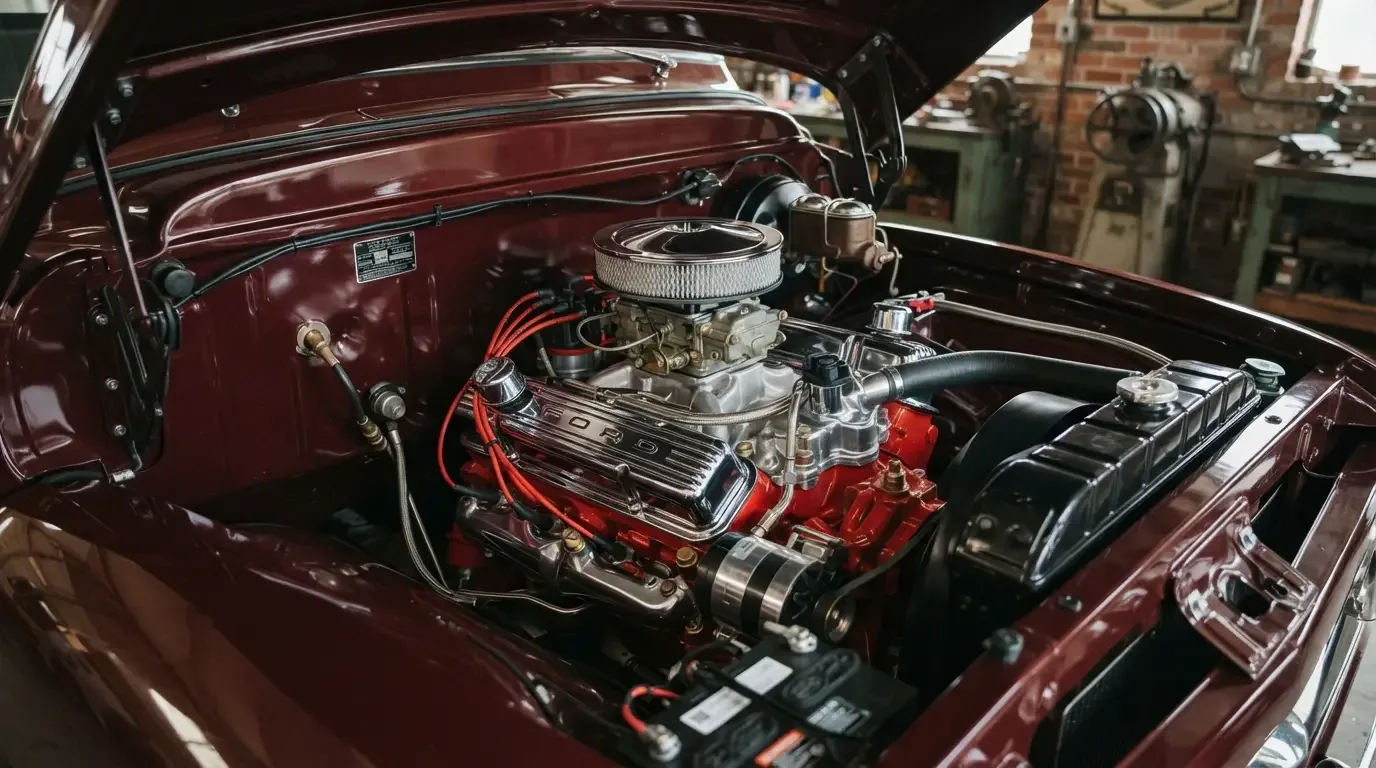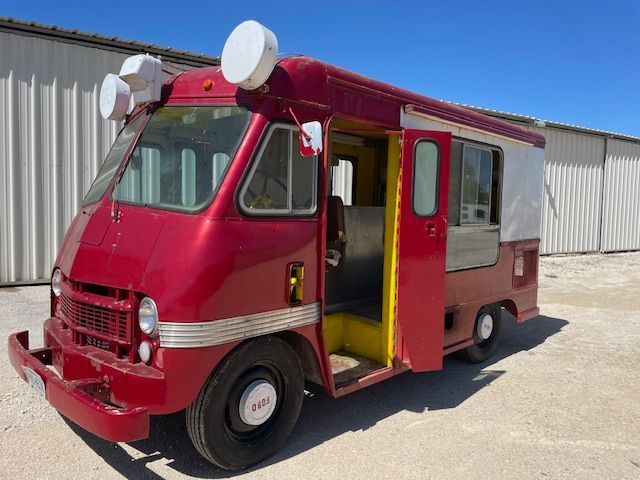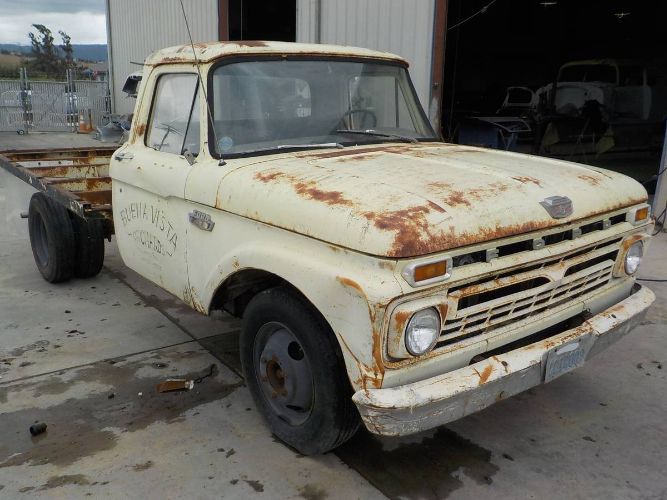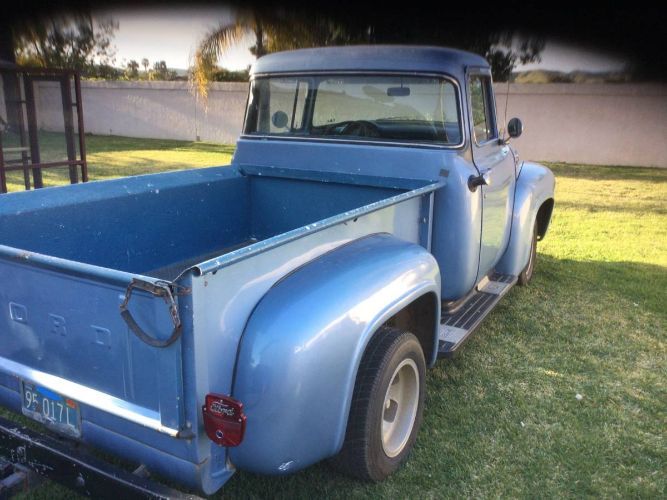
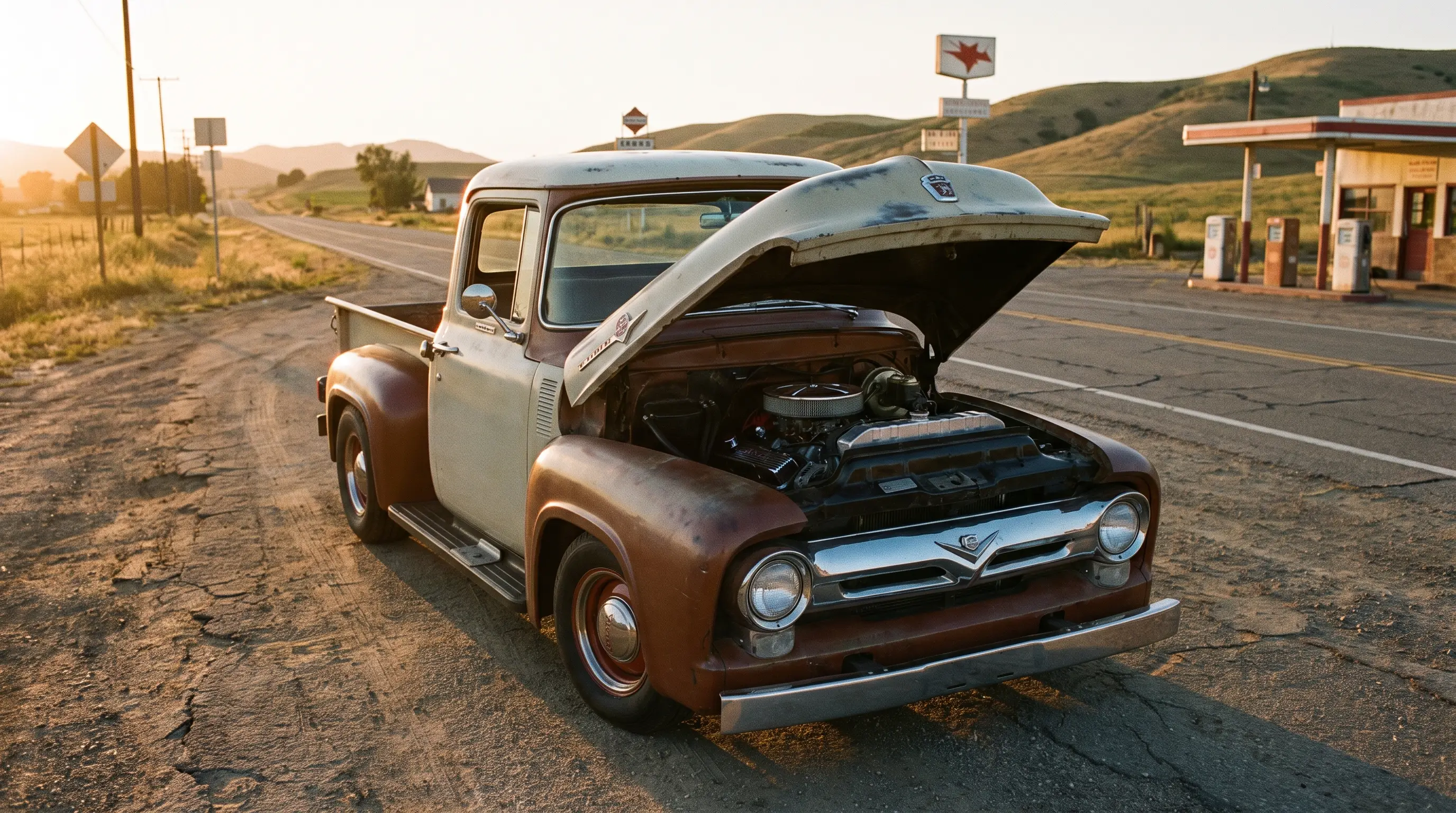
The Ford Y-block V8 replaced the flathead in F-Series trucks in 1954 and stayed in the lineup for roughly a decade, and it deserves a more careful look than it usually gets. Named for the shape its block casting makes when viewed in cross-section, with the crankcase skirt extending well below the crank centerline, the engine solved real problems the flathead never fully overcame while creating a few of its own. This is a straightforward account of what changed, what worked, and what did not.
What the Y-block actually fixed
The flathead V8's biggest limitation was breathing. Valves sitting in the block rather than the head restrict airflow no matter how well the rest of the engine is designed. Ford's Y-block moved to overhead valves, which let the engine breathe more freely and run cooler under sustained load, exactly the kind of load a work truck deals with constantly. Early Y-block trucks displaced 239 cubic inches, the same starting point as the outgoing flathead, but the improved cylinder head design meant more usable power without leaning on brute displacement to get there.
The deep-skirt block design that gives the engine its name also made it notably rigid for its era, which mattered for durability under the kind of stop-and-go, load-and-unload cycle a work truck sees over years of daily use. A stiffer block resists the flex and vibration that eventually cracks a weaker casting.
The trade-offs nobody advertised
The Y-block's deep skirt design that made it strong also made it tall and heavy relative to the displacement it produced, a real disadvantage compared to engines that came later with more efficient packaging. Oiling was another known weak point, particularly in the earliest examples, where the passages feeding the rocker arms could starve under hard use if maintenance lapsed. None of this made the engine unreliable when properly cared for. It did mean the Y-block rewarded an attentive owner and punished a neglectful one more than some of its contemporaries.
Displacement grew as the decade went on
| Displacement | Era in production | Notable trait |
|---|---|---|
| 239 cubic inches | Early introduction | Direct displacement carryover from the flathead |
| 272 cubic inches | Mid-decade | Common mid-range truck option |
| 292 cubic inches | Later years | The most widely remembered Y-block displacement |
| 312 cubic inches | Passenger car focused | Higher-output tune, less common in trucks |
The 292 in particular became the version most associated with F-Series trucks of the period, offering a workable balance of torque and durability that made it the default choice for buyers who wanted more than the base six-cylinder without stepping up to a bigger, thirstier engine. That specific displacement has its own dedicated story worth reading for anyone focused on that engine alone.
How it compares to what came before and after
Set next to the flathead it replaced, the Y-block is a clear engineering improvement on paper: better breathing, better cooling behavior, and a stiffer bottom end. Set next to the FE-series big-blocks that eventually replaced it in the early 1960s, the Y-block looks like a transitional design, competent but already being outpaced by engines built with more modern manufacturing tolerances and simpler serviceability in mind. That is not a criticism so much as an honest placement in the timeline. Every engine in this lineage exists to solve the specific problems of its moment, and the Y-block solved 1950s problems well.
"The Y-block is a good example of an engine that gets undersold because it sits between two more famous designs. Judged on its own terms, against its own era's competition, it held up."
- Emily Chen
Manufacturing tolerances and what they meant on the road
Ford built the Y-block during a period when manufacturing precision across the industry was improving quickly year over year, and that shows in how the engine evolved even within its own production run. Early examples had tolerance issues that later revisions addressed, particularly around the oiling passages already mentioned. A truck buyer looking at Y-block trucks today should treat the exact production year as more relevant than it would be for a more mature, settled design, since a 1958 Y-block and a 1954 Y-block are not mechanically identical even though they share a name and a basic architecture.
This kind of within-generation evolution is common in engines built during periods of rapid engineering change, and the Y-block is a textbook case. It rewards buyers who research the specific production year of the truck they are considering rather than assuming every Y-block behaves the same way under the same conditions.
Six-cylinder alternative, and why some buyers skipped the V8 entirely
It is worth remembering that the Y-block was never the only engine available in an F-100 during these years. Ford's inline six-cylinder options remained on the order sheet the entire time, and plenty of buyers chose the six deliberately, trading some power for lower cost, simpler maintenance, and better fuel economy on routes that did not demand heavy hauling. The Y-block existed for the buyer who needed or wanted more capability and was willing to pay for it in upfront cost and maintenance complexity. That choice, V8 capability against six-cylinder simplicity, ran through the entire F-Series lineup for decades and the Y-block era is where that pattern really took hold.
What this means for a buyer today
A Y-block powered F-100 from the mid to late 1950s is a reasonable choice for a buyer who wants period-correct mechanicals without chasing the rarer, pricier flathead trucks. Parts support is thinner than for the later small-block and FE engines that followed, so buyers should factor that into their expectations before committing, particularly for less common displacements like the 312, which saw far less truck-specific use than the 292. A well-maintained example with documented service history is a genuinely solid ownership proposition, not just a nostalgia purchase.
Regular oil changes matter more with a Y-block than with most later engines in this lineage, given the oiling design already discussed, and a buyer should ask directly about maintenance intervals rather than assume a running engine is a healthy one. An engine that sounds fine at idle can still be quietly starving its valvetrain if the previous owner stretched service intervals for years. A pre-purchase inspection that specifically checks oil pressure under load, not just at idle, is worth the extra time and cost for exactly this reason.
For the full arc connecting the flathead, the Y-block, and everything that came after it across three decades of F-Series production, our complete history lays it all out in order, including the exact years each engine handed off to the next. Anyone ready to shop rather than just read should find a classic F-100 and compare what is actually available against the specifications above.