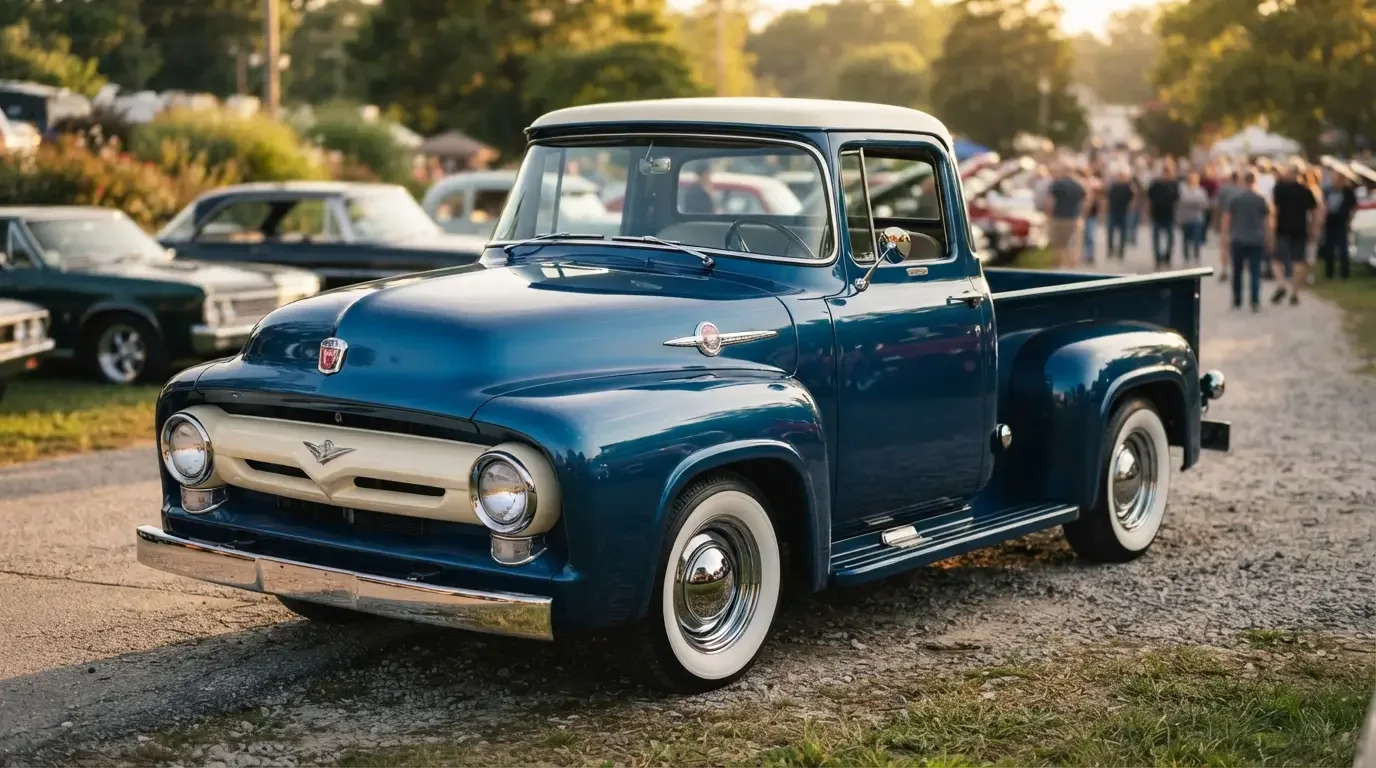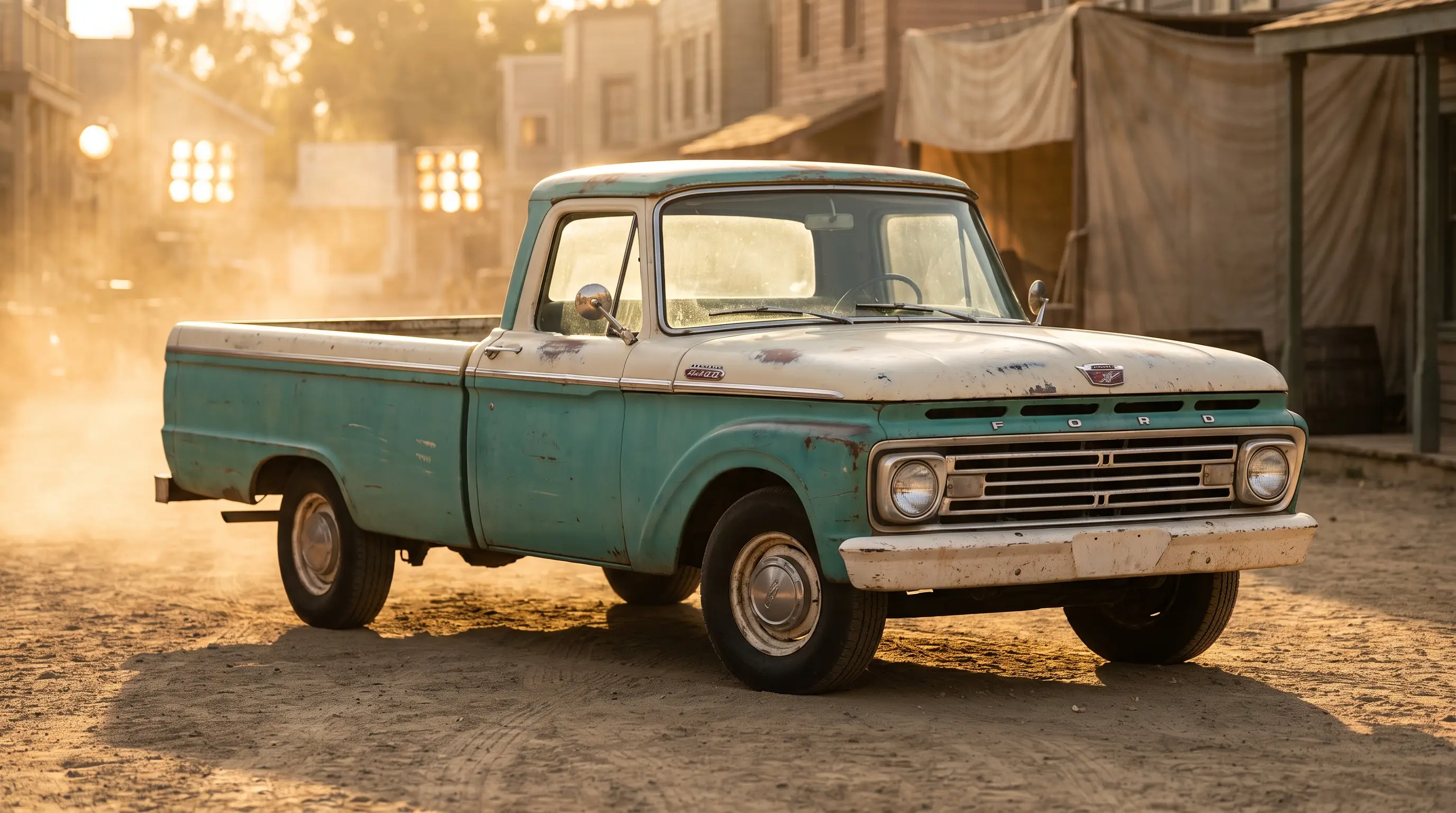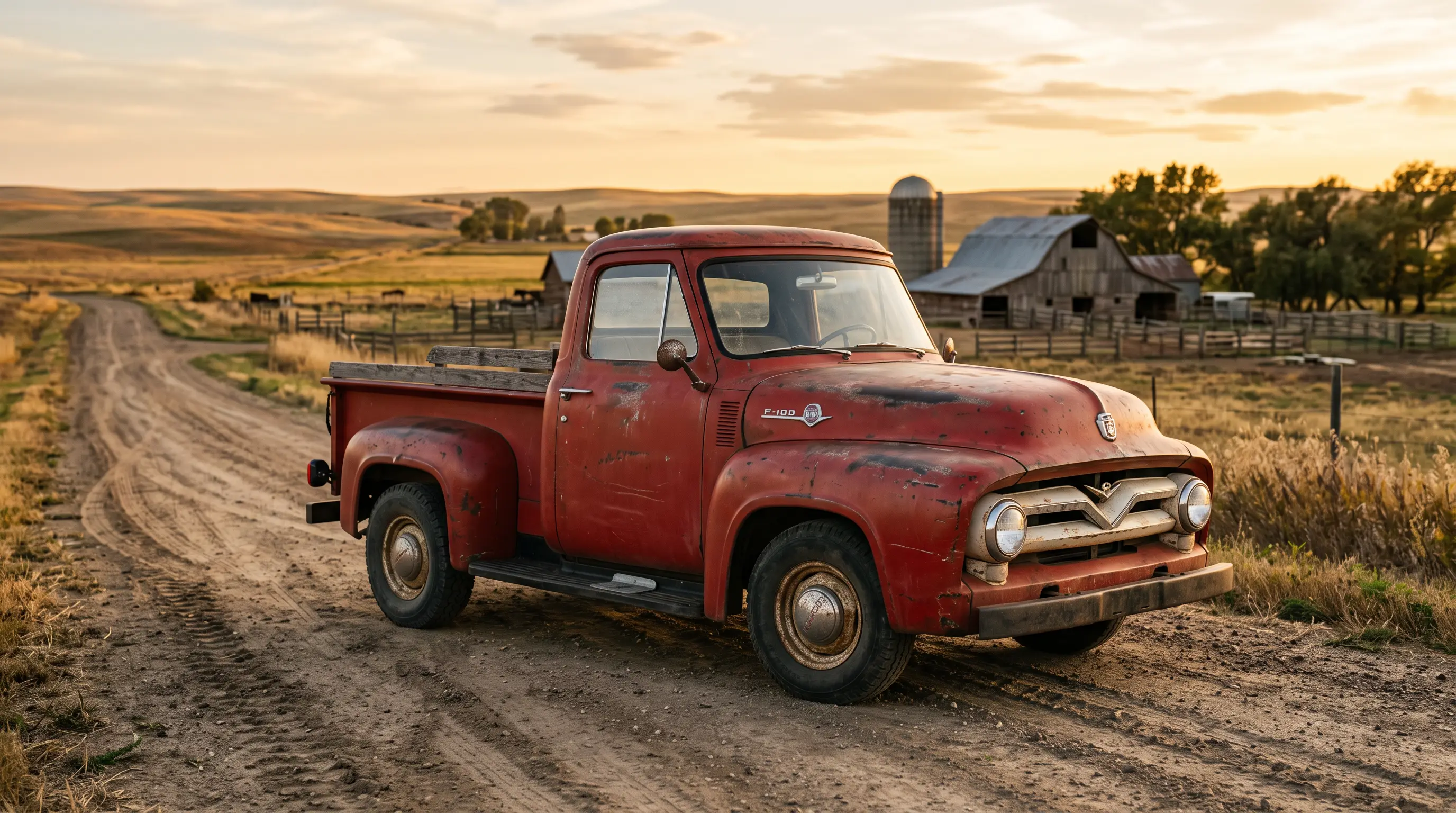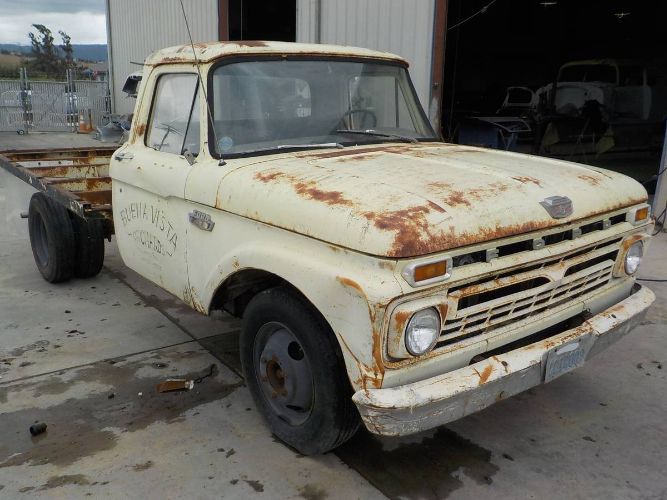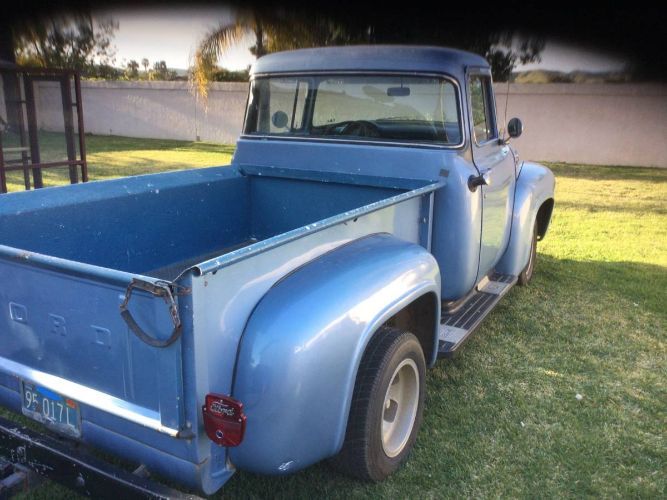
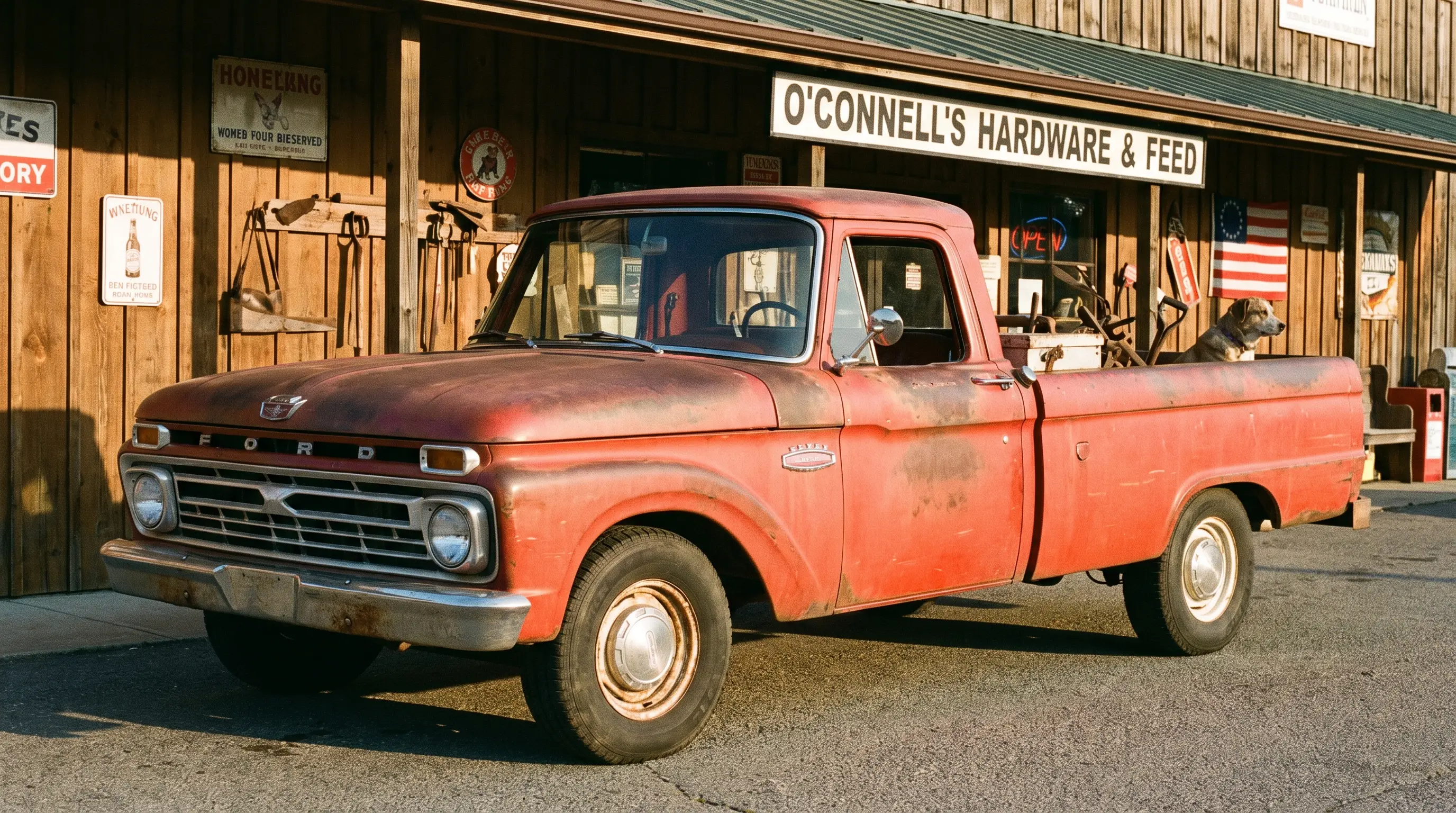
A neighbor down the road from where I grew up kept a faded red 1966 F-100 parked under a carport for thirty years, and he never once explained why he wouldn't sell it. He didn't need to. Anyone who has spent time around one understands. The Ford F-100 American icon status was never manufactured by a marketing department. It won that status because it sat in driveways from Maine to California doing the unglamorous work that built the country, one load at a time.
It was built for people, not for prestige
When Ford launched the F-Series in 1948, the target buyer was not a status seeker. It was a farmer, a contractor, a small business owner who needed a vehicle that could haul lumber on Monday and take the family to church on Sunday. The F-100 nameplate, introduced in 1953 for the half-ton model, embodied that dual purpose better than almost anything else on the road. It did not pretend to be anything other than what it was, and that honesty is a big part of why people still love it.
There is something distinctly American about a machine that refuses to overpromise. The F-100 offered a bench seat, a straightforward dashboard, and an engine bay you could actually work on with hand tools. No pretense, no complication. Just a truck that did its job and asked for gas and oil in return.
Every small town had one, and that mattered
Drive through any town that existed before 1980 and you will find old photographs, newspaper clippings, or simply memories of an F-100 parked outside the hardware store, the feed mill, or the volunteer fire station. These trucks were not rare. They were common enough to become part of the visual furniture of American life, and that ubiquity is exactly what turned them into icons decades later. A machine has to be present in enough lives before it can become a shared memory, and the F-100 was present in millions of them.
That kind of presence built loyalty across generations. Sons inherited their father's F-100. Daughters learned to drive stick in one. The truck became a fixture at family farms, passed down not because it was valuable, but because it worked and because it meant something.
It survived the era that killed off its competitors
By the late 1970s, plenty of American nameplates had vanished or shrunk into irrelevance. The F-100 did not disappear so much as evolve, giving way to the F-150 in 1975 as emissions rules and fuel economy standards reshaped the market. But the F-100's identity did not vanish with the badge change. It lived on in barns, on farms, and eventually in the hands of restorers who understood that the truck represented something worth preserving. You can read ford f100 history history to see how that preservation instinct turned into a full collector culture.
Part of what makes the F-100 an enduring icon is that it never needed a nostalgia campaign to earn its place. Real people kept these trucks running because they were useful, then kept them running because they were loved, and the two motivations blurred together over the decades until nobody could quite separate them.
"An icon is not a machine that got famous. It is a machine that got trusted by so many ordinary people, for so many ordinary years, that trust became its own kind of fame."
- Nora Beckett
Its shape became shorthand for a certain American life
Rounded fenders, a simple grille, a cab that sat high enough to see over a fence line. That silhouette became visual shorthand, recognizable even to people who never owned one, for a version of American life built around land, work, and self-reliance. Advertisers, filmmakers, and photographers have leaned on that shorthand for decades because it communicates instantly. You see an old F-100 in a frame and you understand the story before a word gets spoken, which connects directly to a related story about how often Hollywood reached for exactly that truck.
None of this happened by design. Ford built a work truck, not a cultural symbol. The symbolism arrived later, earned through decades of ordinary use by ordinary people who never thought of themselves as participating in anything larger than getting the day's work done.
It bridges a divide that few other machines manage
Ask a rancher in Montana and a collector in Southern California what makes the F-100 special, and you will likely get two very different answers that somehow agree at the core. The rancher talks about payload, ground clearance, and how the truck never left him stranded during calving season. The collector talks about proportion, patina, and the way the two-tone paint schemes from the mid-1960s photograph in golden hour light. Both are describing the same object, and both are right.
That range of appeal is rare. Most vehicles that earn cult status do it by being extreme in one direction, either impossibly fast, impossibly rare, or impossibly luxurious. The F-100 became beloved by being reasonable, dependable, and present in enough lives that its meaning grew organically rather than by design. It is an icon built from repetition, not spectacle, and that makes it harder to fake and easier to trust.
What the icon status means for owners today
Owning an F-100 now means owning a piece of that accumulated meaning, whether or not the current owner ever intended to. The truck carries the weight of every farmer, every tradesman, every teenager who learned to drive in one, even for owners who bought theirs purely for the styling or the investment. That inherited history is part of what keeps demand steady and what keeps these trucks rolling into car shows instead of scrap yards.
If that history speaks to you the way it speaks to so many others, F-100s for sale now offer a direct way into it, whether you want a driver, a project, or something already finished. The truck earned its icon status the slow way, one job at a time, and that is exactly why it still means something.
My neighbor's red F-100 finally left that carport a few years back, sold to his grandson who wanted to learn how to wrench on something honest. The truck did not change hands because it stopped mattering. It changed hands because that is how icons actually survive, passed forward by people who understand what they are holding.