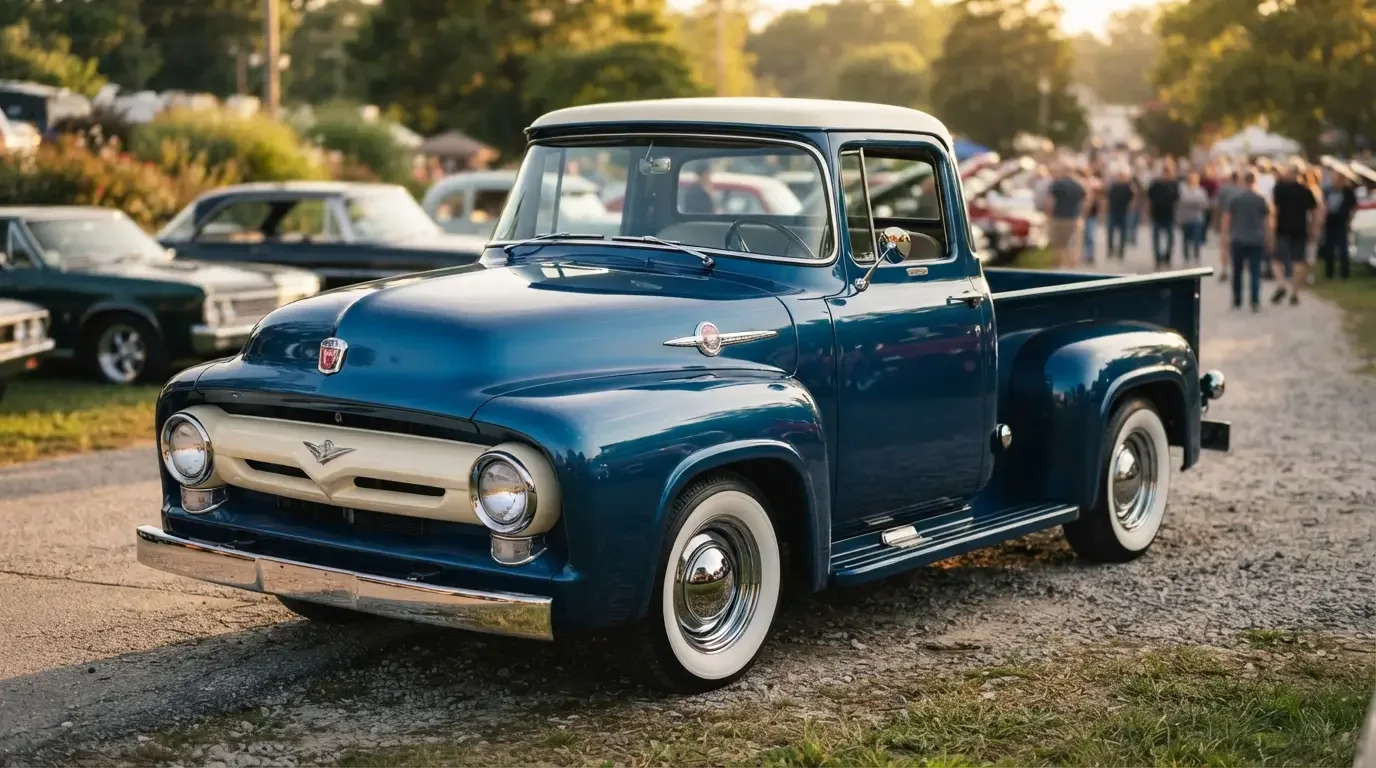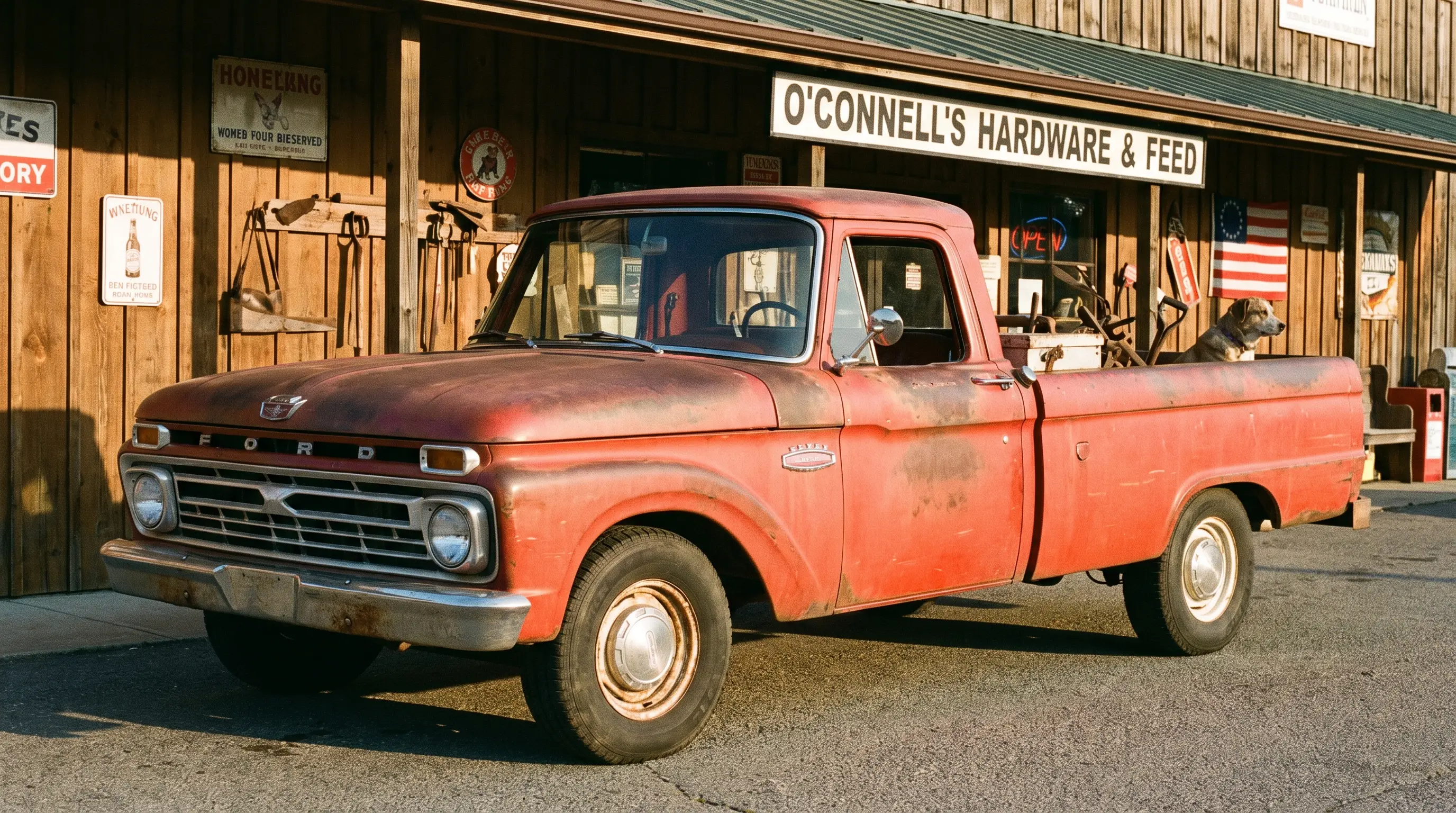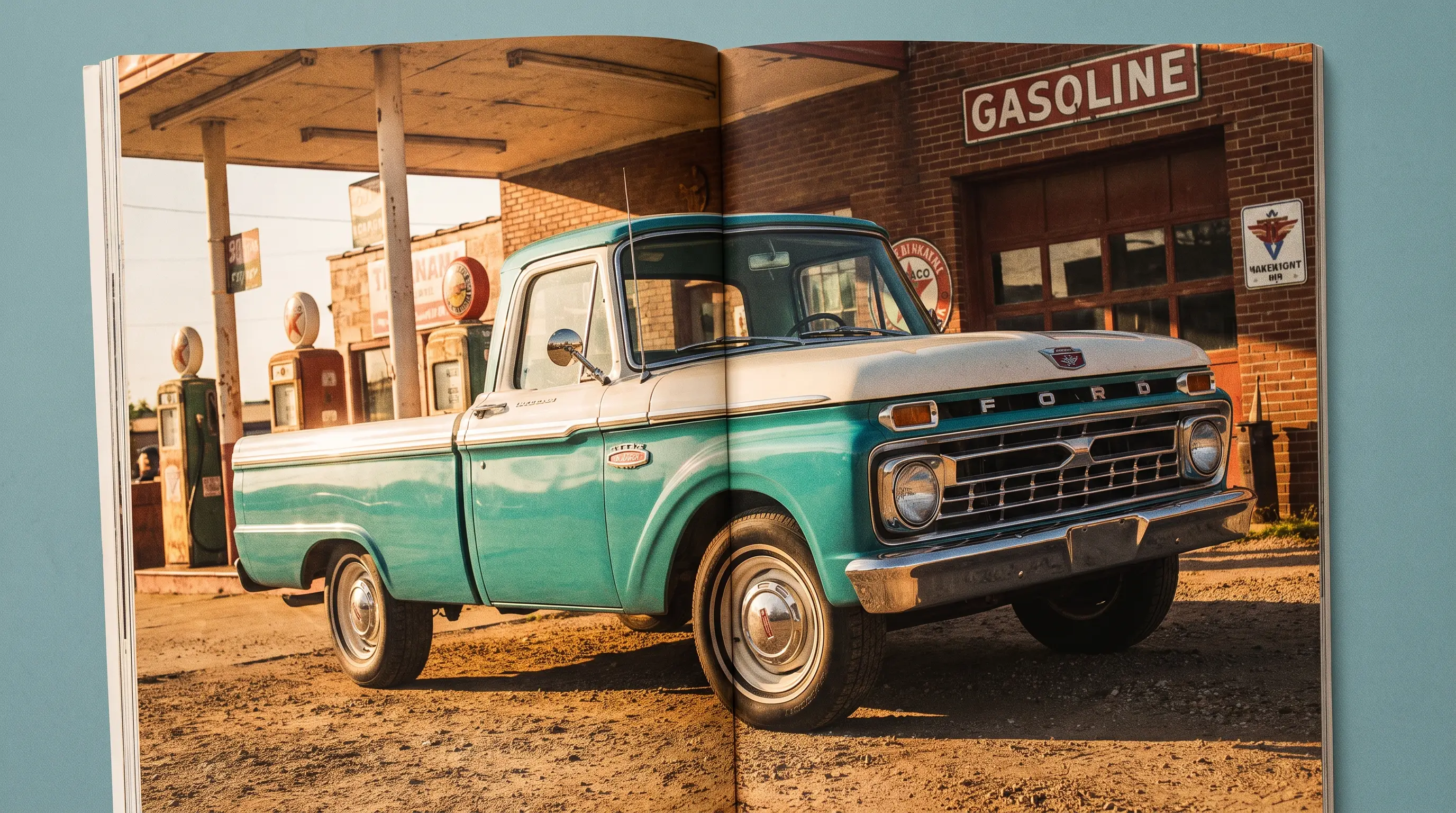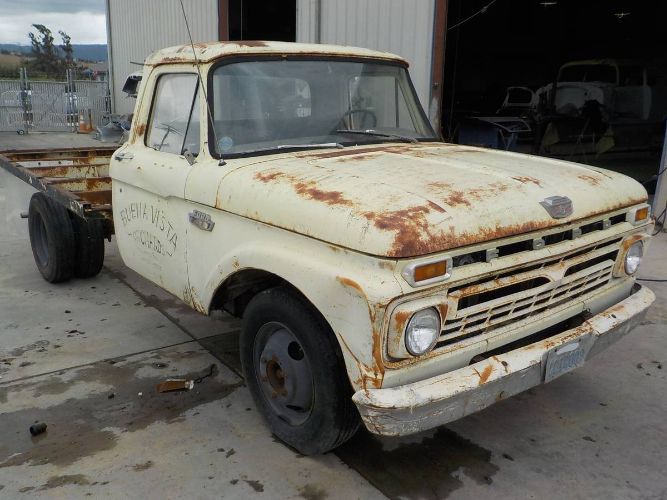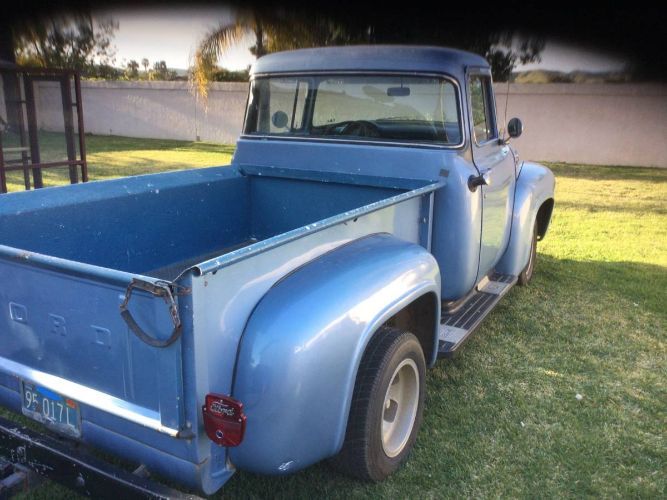
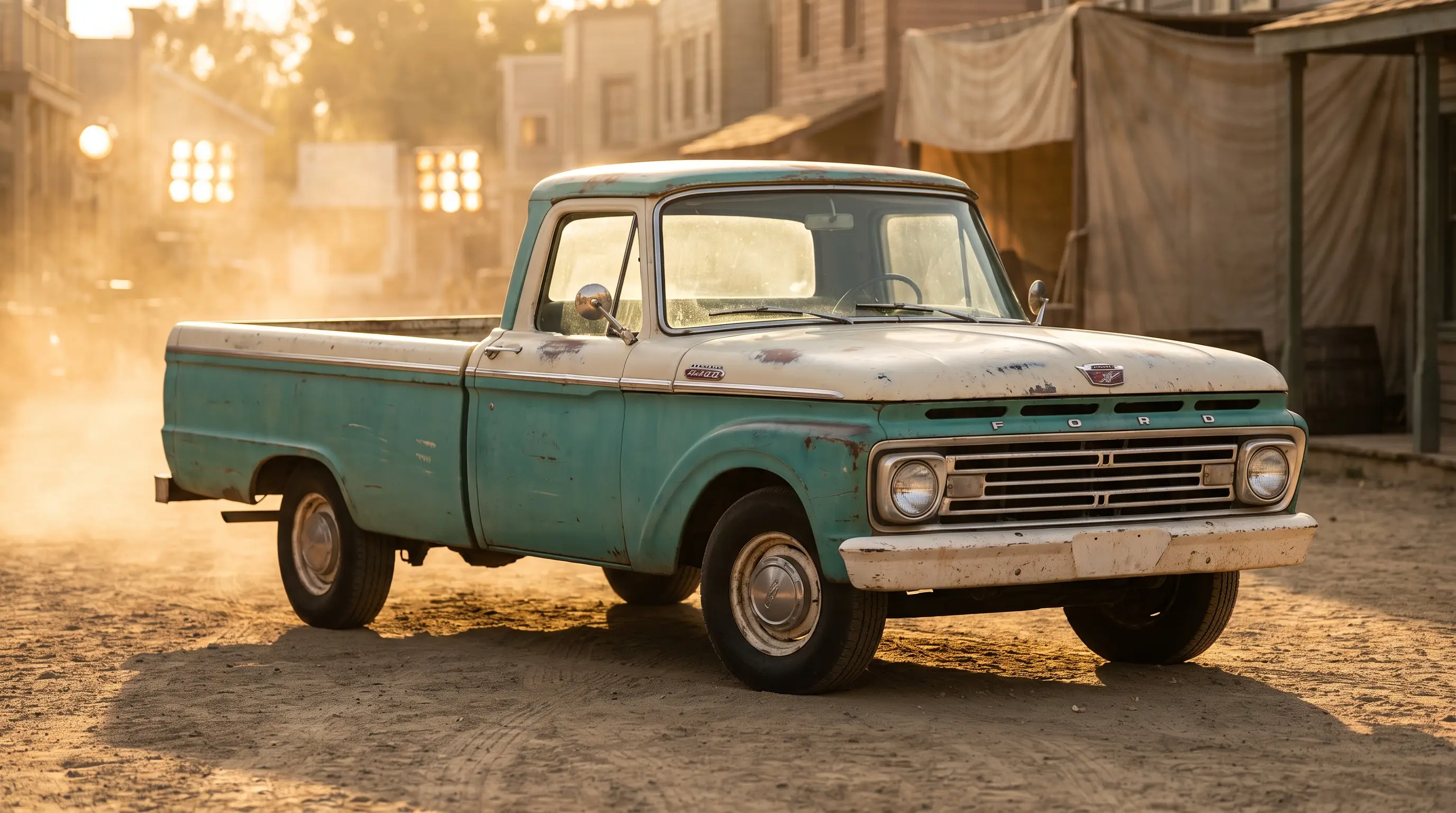
A truck rolls into frame, dust kicking off the rear tires, and before a single line of dialogue lands, the audience already knows something about the character behind the wheel. That is the power directors have leaned on for decades, and the Ford F-100 movies keep returning to prove it works every time. This is not an accident of casting. It is a deliberate choice, made over and over, because the F-100 communicates something no dialogue can match.
Hollywood found the F-100 early and never really let go
By the late 1950s and into the 1960s, the F-100 had already become common enough on American roads that filmmakers reached for it whenever a scene called for authenticity rather than glamour. Westerns transitioning into modern-day settings used the F-100 as visual shorthand for rural, working-class life. It sat in driveways in films where the truck itself never got a line of dialogue but still did narrative work, telling the audience who owned it and what kind of life that person led.
That casting logic never really went away. Even decades later, when production designers want to signal a character who works with their hands, lives outside a city, or carries some connection to an older version of America, the F-100 remains one of the fastest ways to say all of that without a word of script.
Television leaned on it just as hard as film did
Series set in rural or small-town America during the 1960s and 1970s regularly featured F-100s as background vehicles and, occasionally, as something closer to a supporting character. The truck's presence on television mattered differently than film. A movie audience sees a truck once. A television audience sees the same truck, parked in the same driveway, week after week for years, and that repetition built a different kind of familiarity. Viewers started to recognize the shape and the sound of an F-100 the way they recognized a familiar neighbor's car.
This steady presence on the small screen did as much to cement the F-100's cultural footprint as any single feature film appearance. It became furniture in the American living room, appearing so consistently that most viewers never consciously registered it, which is exactly the kind of ambient recognition that builds lasting cultural weight.
The truck plays a specific character type, almost every time
Watch enough films and television featuring an F-100 and a pattern emerges. The truck rarely belongs to the villain. It rarely belongs to wealth. It almost always belongs to someone grounded: a father, a rancher, a mechanic, a small-town sheriff, someone whose values the story wants the audience to trust before they even speak. Filmmakers use vehicle choice as characterization constantly, and the F-100's association with honest labor made it a reliable tool for signaling trustworthiness on screen.
That typecasting is not a limitation. It shows how consistently the truck's real-world reputation translated onto film. Ford spent decades building the F-100's identity as dependable and unpretentious, and Hollywood simply borrowed that identity wholesale, because audiences already believed it before the cameras rolled.
"You put an F-100 in a driveway and audiences make a hundred assumptions about the person who lives there before anyone says a word. That is not luck. That is decades of the truck earning that reputation on actual American roads."
- Patrick Walsh
Restoration culture gave the F-100 a second cinematic life
As classic truck restoration grew into its own hobby through the 1990s and 2000s, filmmakers found a new reason to reach for the F-100: nostalgia itself became the point. Films and shows set in earlier decades, or built around characters actively restoring old vehicles, began featuring cleaned-up F-100s as symbols of craftsmanship and patience rather than just period-accurate background dressing. The truck shifted from being simply present in a scene to being the subject of a scene, admired for its lines and its history rather than treated as incidental.
This shift mirrors what happened in our complete history of the truck's rise as a collector vehicle. Screen appearances and real-world collector interest fed each other, each reinforcing the F-100's growing reputation as something worth preserving rather than simply using up.
Regional filmmaking shaped which trucks showed up
Productions shot in the American South and Southwest, where F-100s were especially common as work vehicles, tended to feature them more heavily than productions shot elsewhere, simply because local rental fleets and background vehicle wranglers had easier access to them. That regional bias is a small detail, but it explains why certain film eras and certain settings feature the truck so consistently while others barely touch it. Location shooting and vehicle availability shape film history just as much as any deliberate creative choice.
Independent films in particular leaned on the F-100 for budget reasons as much as aesthetic ones. A production designer looking for an authentic period truck without the licensing costs of a more exotic classic could often find an F-100 through a local owner willing to rent it out for a modest fee, which kept the truck appearing in smaller, character-driven films long after big studios had moved toward newer vehicles for their action sequences.
Why the on-screen legacy still matters to buyers today
None of this cinematic history changes what an F-100 actually is under the sheet metal, but it does shape how people feel walking up to one at a show or a dealer's lot. Recognition breeds affection, and affection drives demand. Buyers who grew up watching these trucks on screen often carry that association into adulthood, and it shows up in what they are willing to pay for a clean example decades later.
If that screen legacy has you looking twice at these trucks, now is a fine time to find a classic F-100 of your own, one that never needed a script to earn its reputation, just decades of doing the job right in front of anyone paying attention.
Sit through enough of these films and shows and you start noticing the pattern everywhere, in the background of scenes where nobody thought you would be looking. That is the strange gift of a truck this common in its own era. It became invisible enough to be everywhere, and now, decades later, that invisibility has turned into its own kind of fame. Once you start seeing it, you cannot stop, and that is a strange kind of tribute for a truck that never once tried to steal the scene.