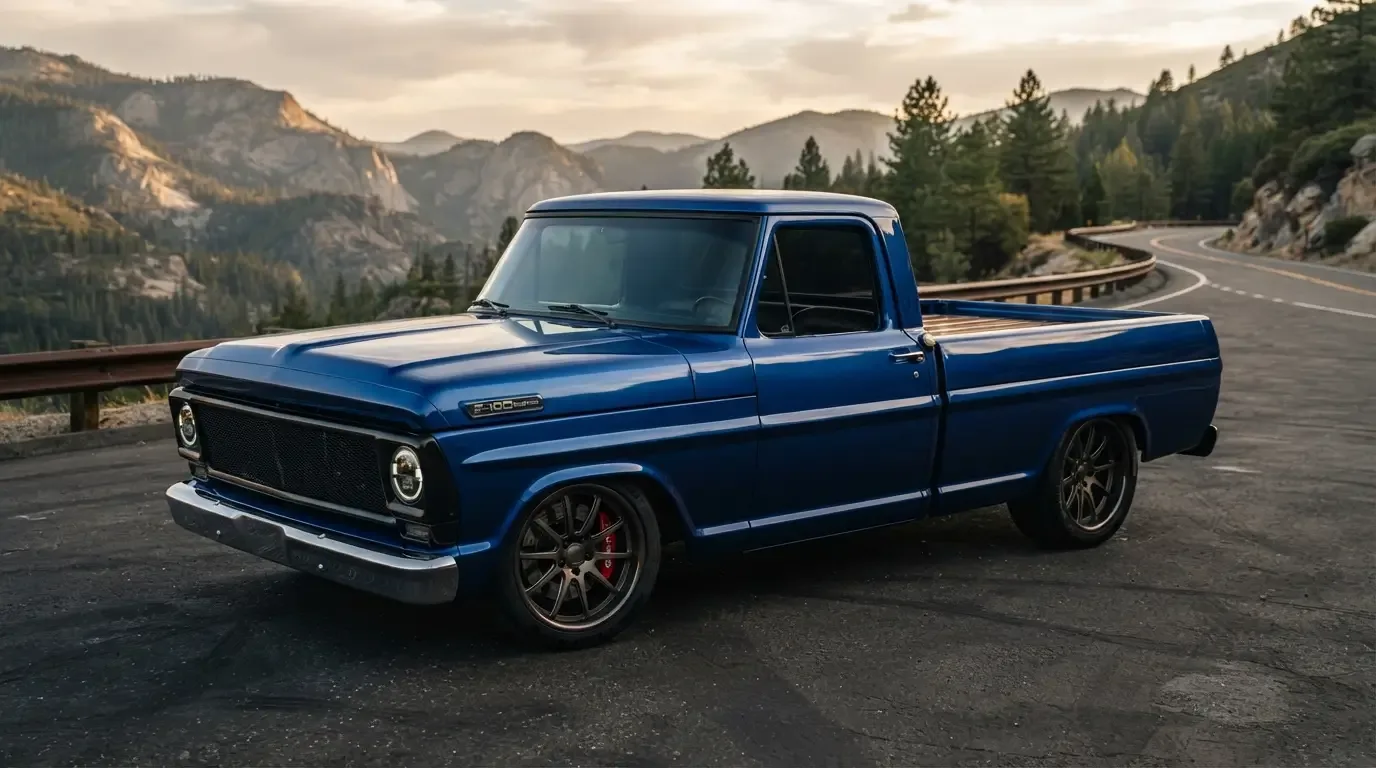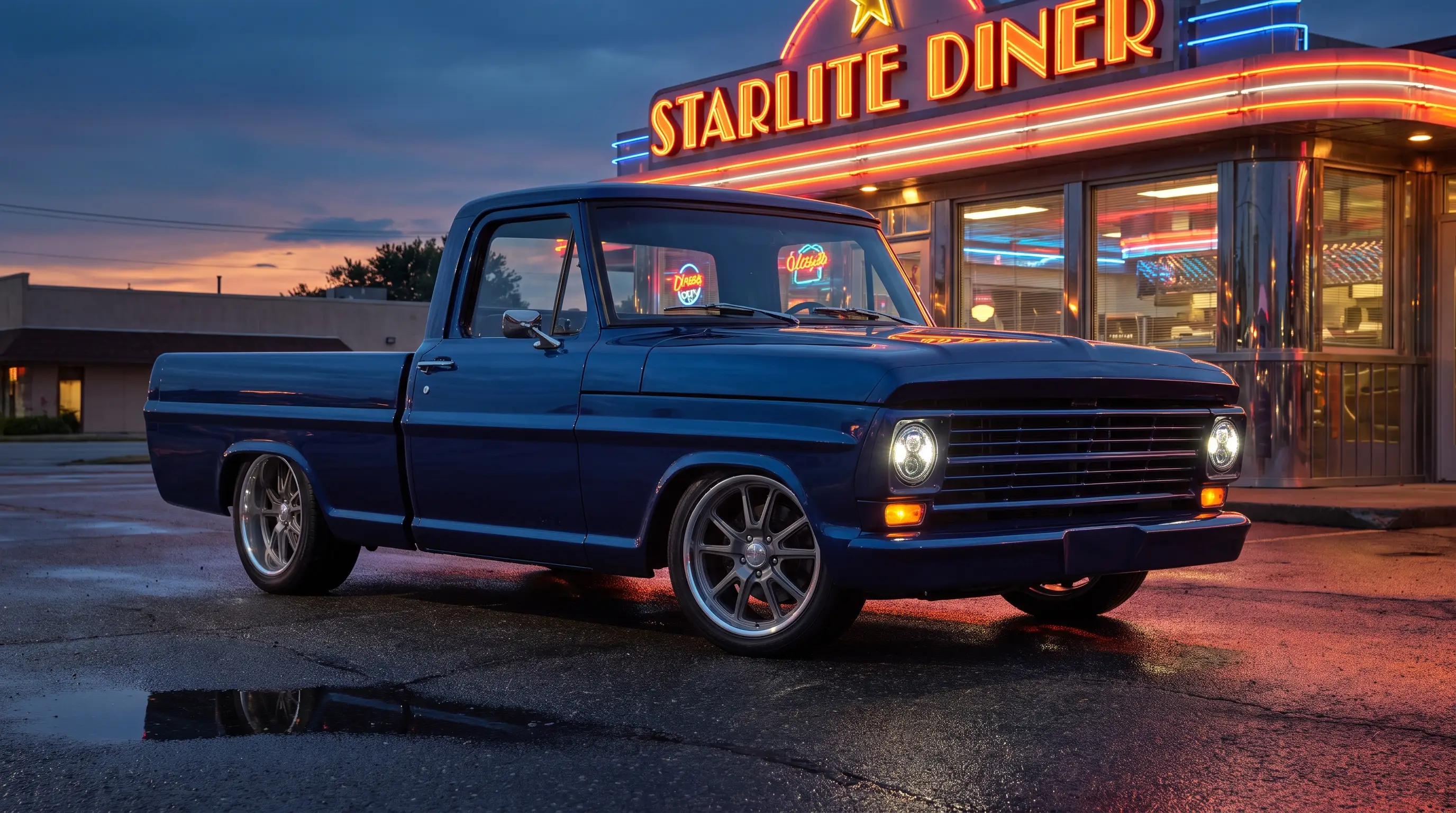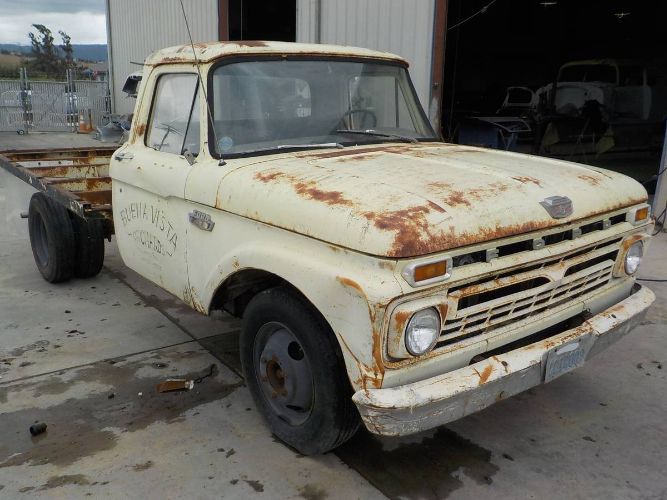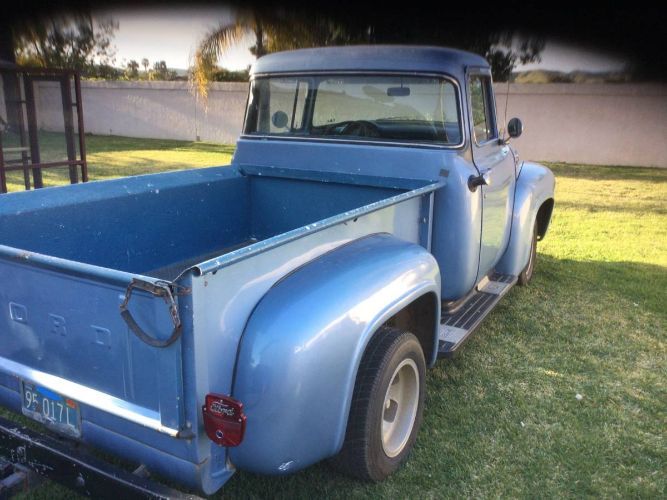
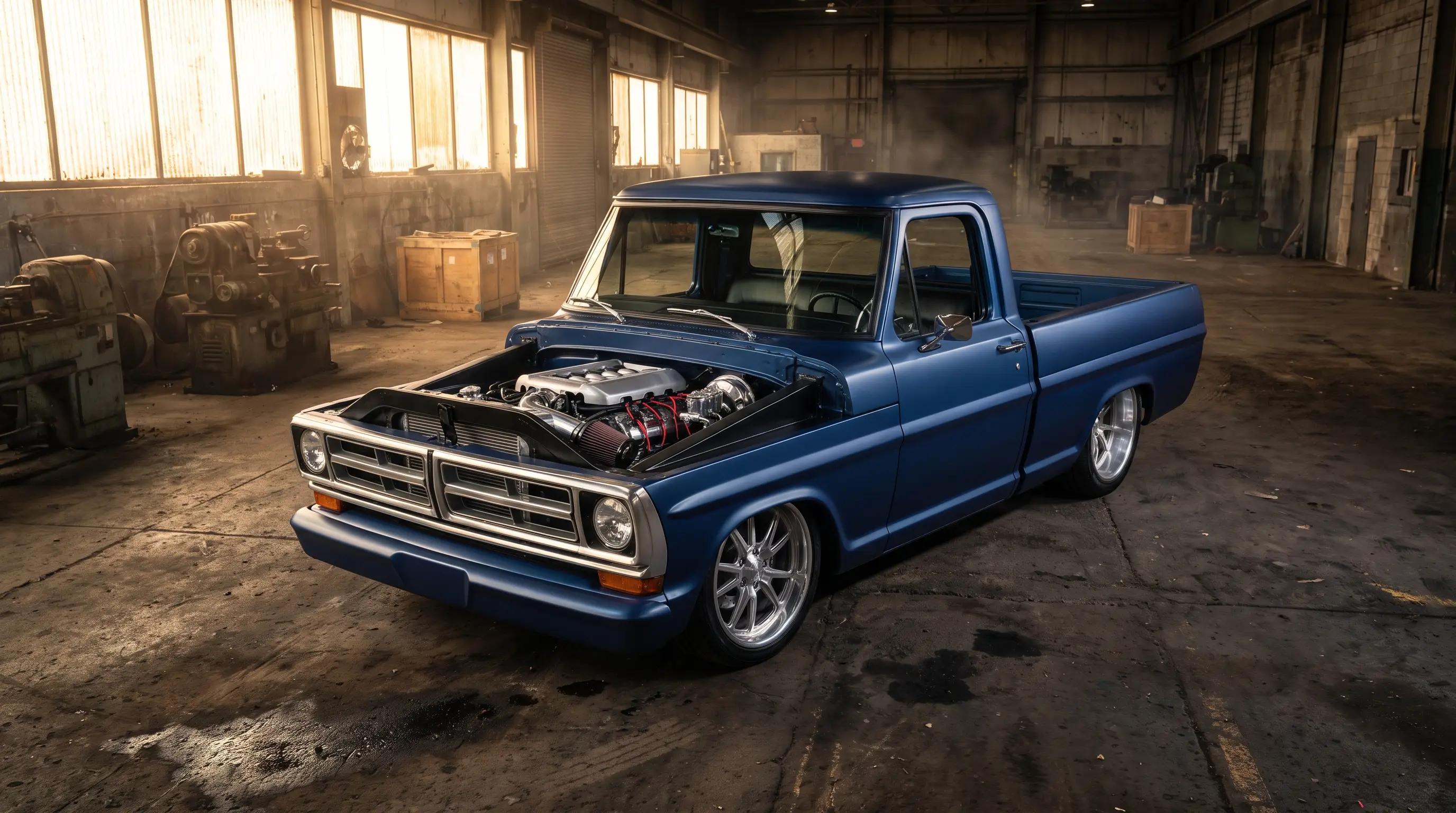
Somebody at the swap meet always asks the same question when they see a clean old F-100 idle a little too smoothly for a fifty-year-old truck: what's actually under the hood? Nine times out of ten lately, the answer involves a Coyote. The Ford F-100 coyote swap has become close to a default choice for builders modernizing these trucks, to the point where hearing the word "Coyote" at a truck meet no longer needs explaining to anyone in earshot.
What people mean when they say Coyote
The name refers to Ford's modern 5.0-liter V8, the engine family that has powered Mustangs and F-150s since the platform debuted for the 2011 model year. It is not a period-correct engine for a 1950s through 1970s F-100 by any stretch, and nobody doing this swap is pretending otherwise. The appeal is straightforward: modern fuel injection, modern reliability, real power, and a well-documented aftermarket that has already solved most of the fitment questions a builder runs into when dropping a current engine into a truck designed decades before it existed.
That last part matters more than people give it credit for. A swap only becomes a movement once enough builders have done it that the hard problems are already solved by someone else. Mounting solutions, wiring harness adapters, and transmission pairing options for the Coyote in an F-100 chassis are, at this point, thoroughly worked out territory. A builder starting a Coyote swap today is not solving new problems, they are choosing from an established menu of solutions other people spent years refining.
Why this engine specifically, and not something else
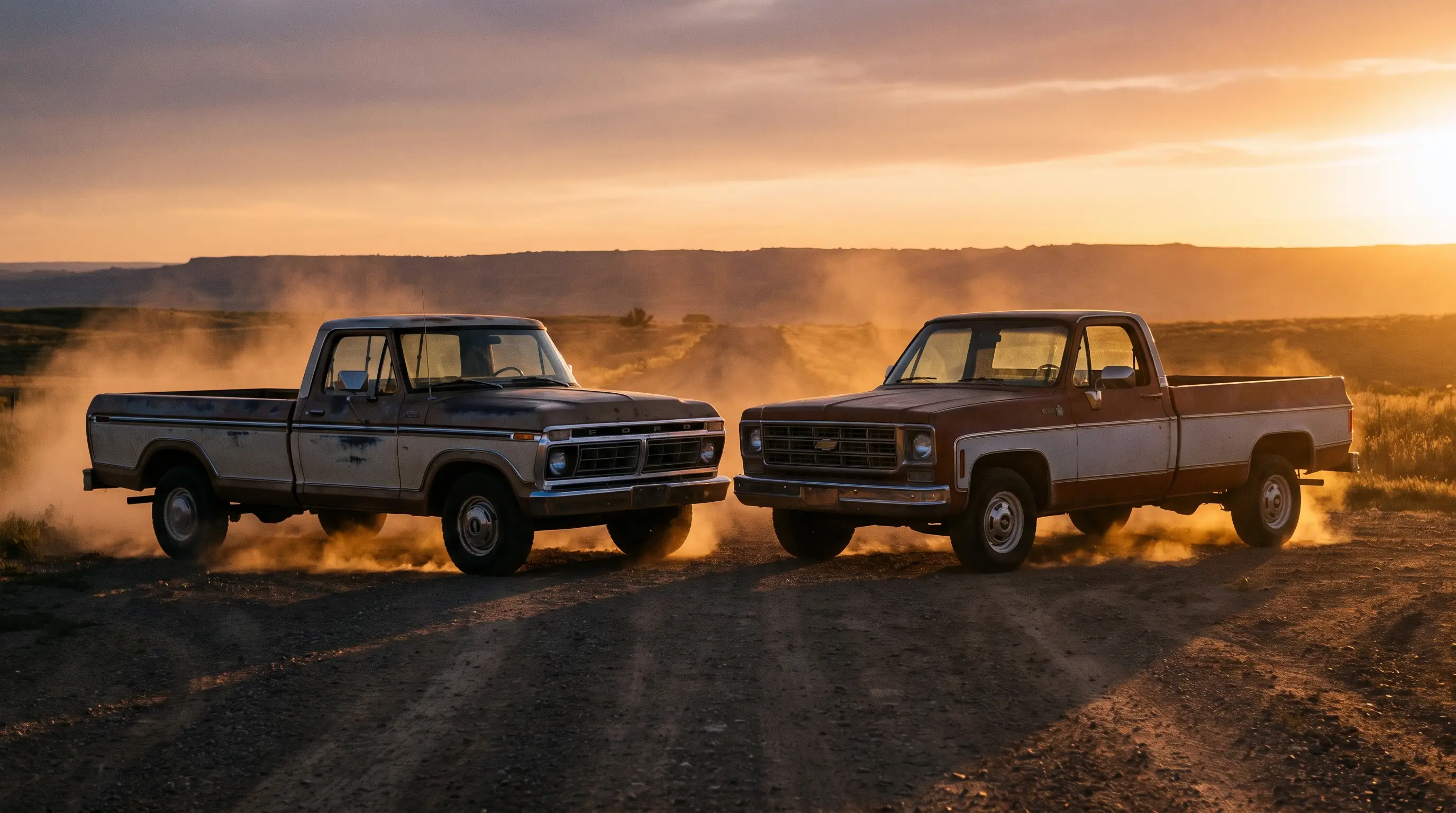
Builders have swapped all kinds of engines into old F-100s over the decades, small-block Fords, Chevy V8s crossed over from the rival camp, big-blocks for straight-line power. The Coyote's rise to prominence in this specific truck is really about timing and identity. It is a Ford engine going into a Ford truck, which matters to a certain kind of purist who wants modern performance without abandoning the badge on the grille. It also arrived at the exact moment the restomod truck scene was exploding in visibility, giving it a built-in audience already primed to care.
There is also a simple performance argument. The Coyote produces power and drivability that period-correct engines from the F-100's original era cannot approach, all while running on pump gas and starting reliably in cold weather without any fuss. For a truck that a lot of owners now want to actually drive rather than trailer to shows, that reliability argument carries real weight.
"Fellas used to argue about small-block versus big-block at every meet I went to. Now half of them are running a Coyote and arguing about which transmission pairs with it best instead."
- Wayne Coburn
The cultural shift this swap represents
Twenty years ago, a modified F-100 running a modern engine would have drawn skeptical looks at a lot of traditional truck shows, where originality still carried the most weight. That has changed substantially. Dedicated classes and entire show circuits now exist specifically for modified and restomod trucks, and a well-executed Coyote swap earns respect rather than raised eyebrows in those settings. The truck hobby broadly has made room for this approach to coexist alongside the originality-focused collector world rather than compete directly against it.
Part of that acceptance comes from how visible these builds have become. A Coyote-swapped F-100 posted online reaches an audience far beyond the regional show circuit that used to be the only stage for this kind of work. That visibility recruits new builders faster than word of mouth ever could, and it has normalized the swap to the point where it barely reads as controversial anymore within the hobby.
What the swap has done to the market
A well-documented Coyote-swapped F-100 tends to command a noticeably higher price than an equivalent stock truck, reflecting both the cost of the parts involved and the labor of doing the work correctly. That premium has shifted how some sellers approach the truck entirely, with certain shops now building F-100s around this exact swap from the start rather than retrofitting a customer's existing truck after the fact.
This has not been without friction. Some longtime collectors still see any engine swap as a departure from what made the original truck significant, and that debate is unlikely to resolve cleanly given how differently the two camps value the vehicle. Readers interested in that broader tension between originality and modification can find our complete history of the restomod movement the Coyote swap sits inside.
Where this trend is headed
There is no sign the Coyote swap is losing momentum within the F-100 world. If anything, the supporting industry around it, the mounting kits, the wiring solutions, the transmission adapters, keeps maturing, which only makes the swap more accessible to builders without a fabrication background of their own. What started as a handful of ambitious individual projects has become close to an established path for anyone wanting to modernize an old F-100 without reinventing the engineering from scratch.
Anyone shopping for a truck that has already had this work done, or looking for a solid base truck to start their own build on, can usually find a classic F-100 that fits either goal. The swap has changed what people expect from a modernized F-100, and at this point it is less a trend than simply the default answer to the question of what goes under the hood.
How the swap changed conversations at shows
A decade ago, popping the hood on a modified F-100 usually started a conversation about carburetor jetting or ignition timing, the kind of tuning talk that came with an older domestic V8. Popping the hood on a Coyote-swapped truck today starts a completely different conversation, one about wiring harness sourcing, engine control unit tuning, and which transmission controller pairs best with which gearbox. That shift reflects a broader change in what it means to be a hands-on truck owner, less about carburetor rebuilds and more about understanding modern engine management, and it has brought a wave of owners into the hobby who came from a more electronics-comfortable background than the traditional gearhead crowd.
That newer skill set has not replaced the old one so much as sat alongside it. Plenty of builders doing Coyote swaps still handle their own bodywork, upholstery, and chassis fabrication using the same hands-on methods owners have used on these trucks for decades. The swap has simply added a new layer of expertise to a hobby that already valued self-sufficiency, and that combination of old-school fabrication skill and modern engine tuning knowledge has become something of a badge of honor among serious builders in this specific corner of the F-100 world.