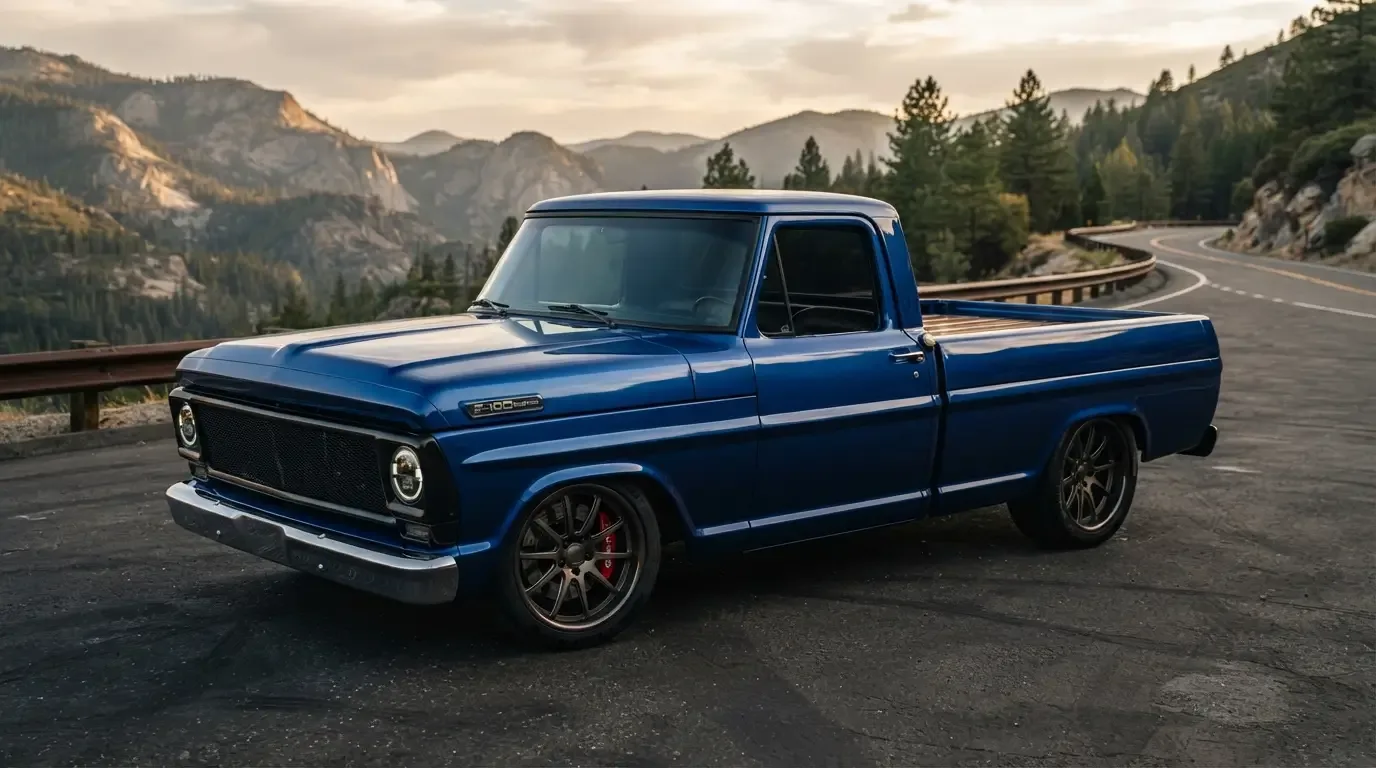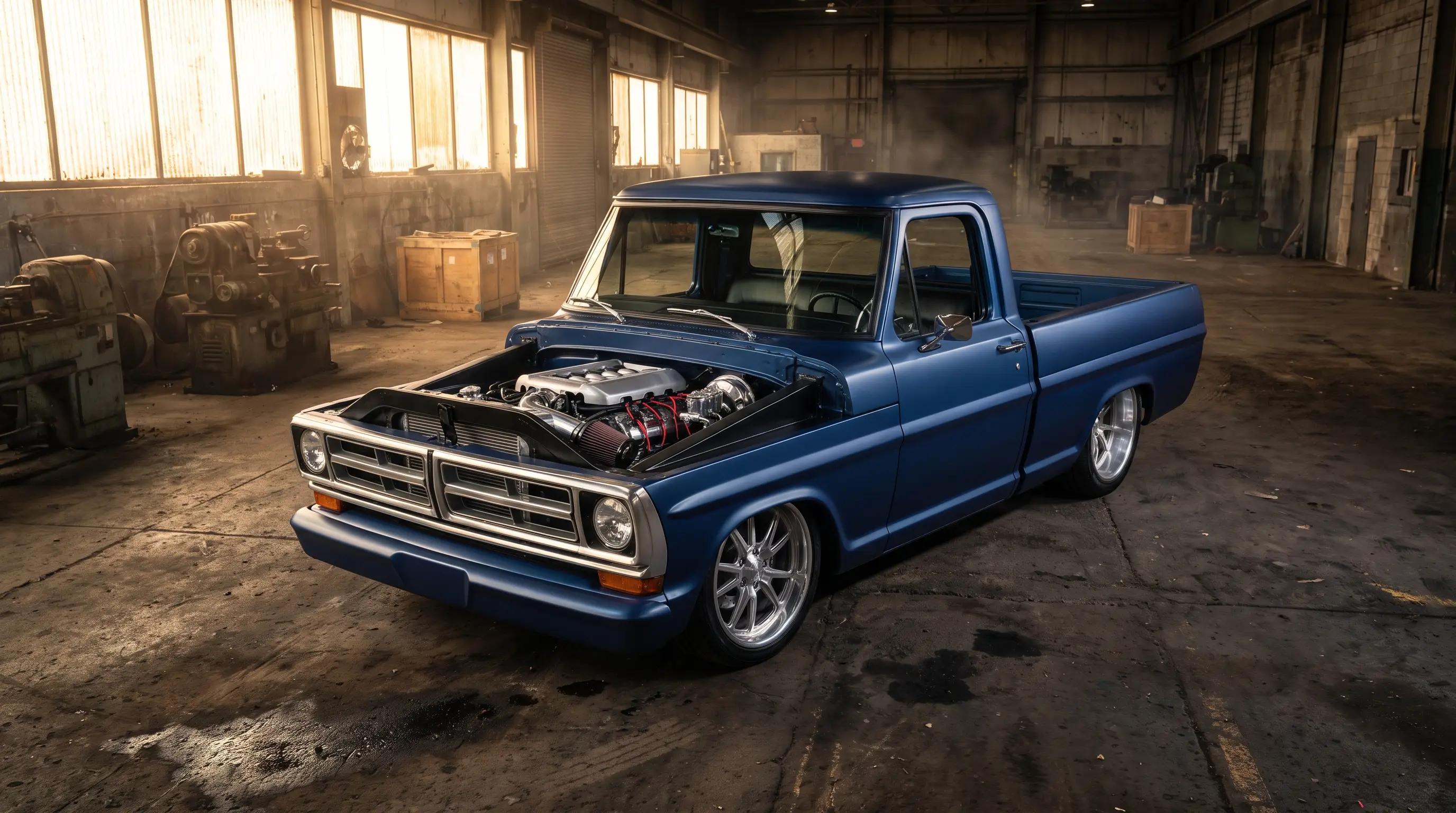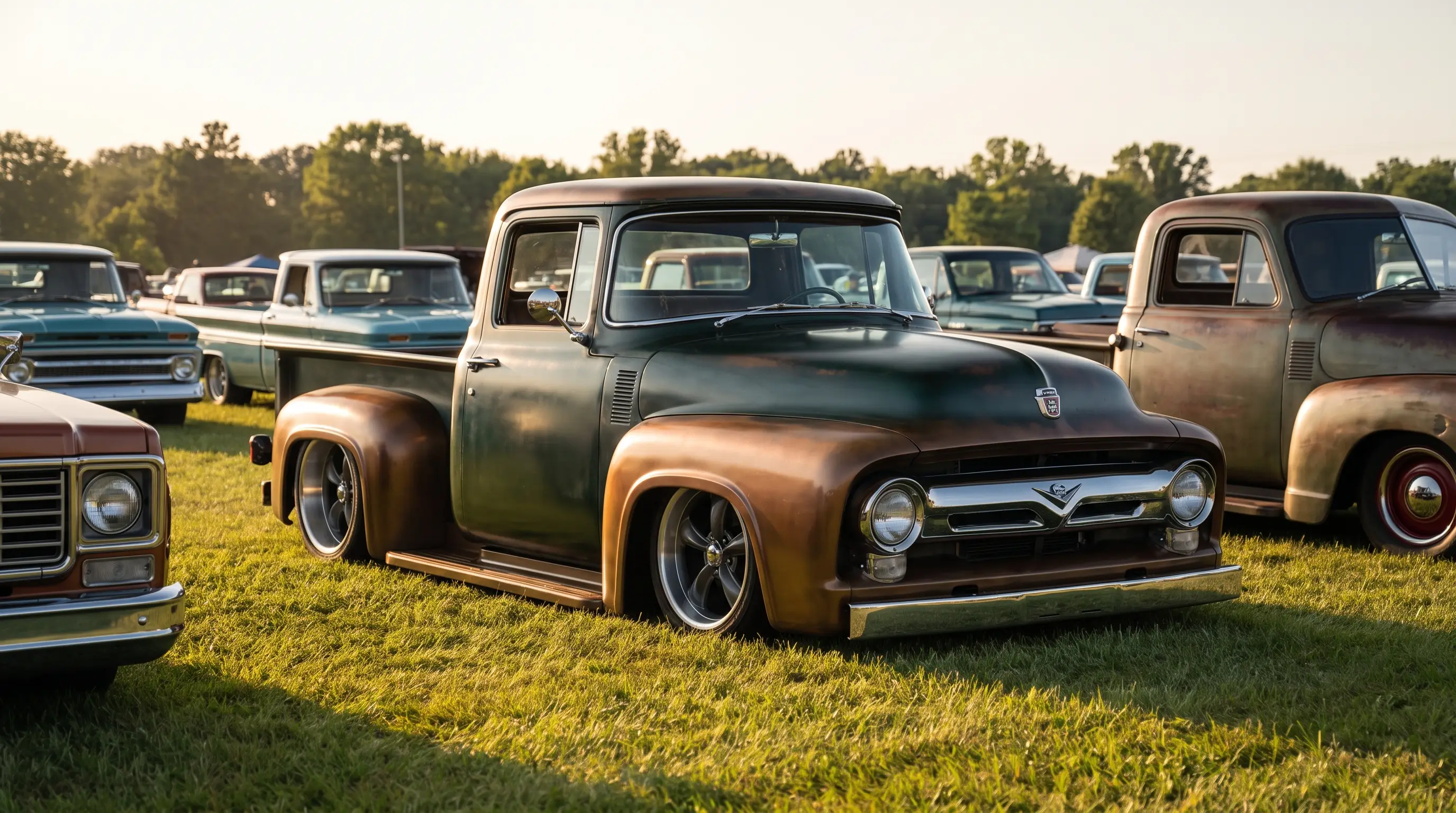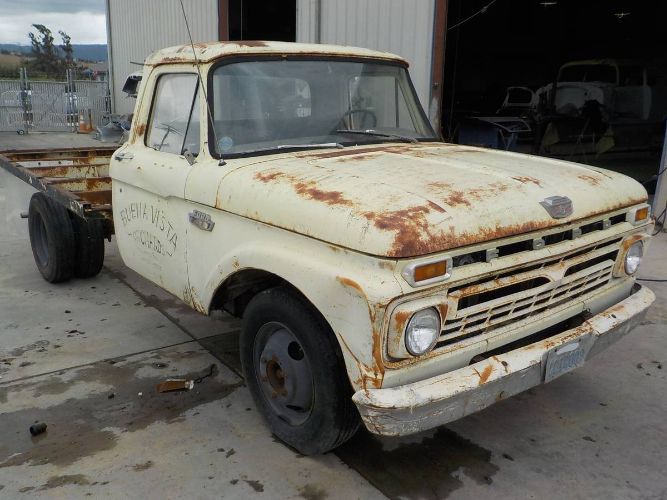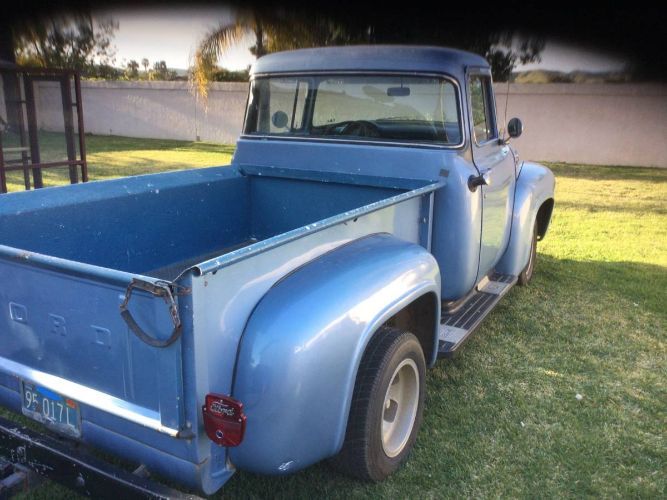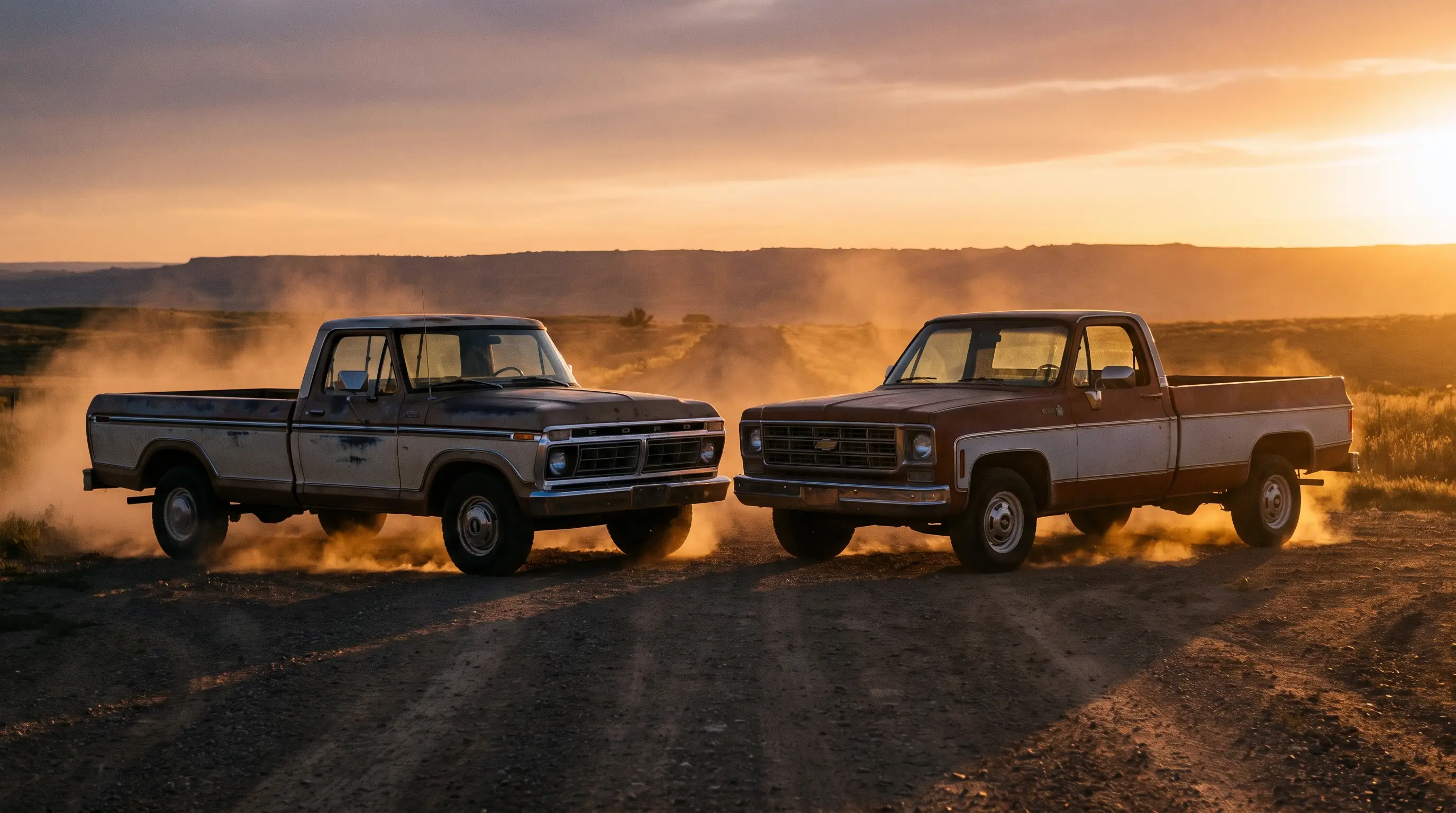
Every classic truck show has one argument that never actually gets settled, the f100 vs c10 debate. Park the two side by side, a clean 1970 Ford F-100 next to a 1970 Chevy C10, and you will get two completely different answers depending on which side of the tailgate the person answering grew up on. There is no scoreboard that ends this argument. There's just two well-built trucks with two different fan bases who each think they picked the right one.
Two trucks, two different design philosophies
Ford's F-100 and Chevy's C10 came from competing engineering teams solving the same basic problem, a durable half-ton work truck for a market that wanted simplicity and low cost of ownership. The F-100's fourth generation, running 1967 through 1972, is widely considered the sweet spot for the model, with a wider cab and cleaner lines than the trucks that came before it. The C10, meanwhile, hit its own stride starting in 1967 as well, when Chevy introduced what collectors now call the Action Line trucks, a redesign that gave the C10 a lower, more car-like stance than its predecessor.
The mechanical layouts were broadly similar, body-on-frame construction, live rear axles, a range of inline-six and V8 engine options depending on year and trim. Neither truck had a decisive engineering advantage over the other. The differences that actually matter to buyers today are mostly about character rather than capability.
Where the F-100 wins the argument
The F-100's straight-edged, upright styling has aged into something that reads as timeless rather than dated, and its wide range of production years, from the F-1 badge in 1948 through the F-100 name's final year in 1983, gives buyers more variety to choose from than almost any comparable truck on the market. Parts availability for common F-100 years is strong, driven by decades of sustained collector interest, and the truck's simple mechanical layout keeps ownership approachable for someone without a professional shop behind them.
There's also the badge itself. Ford's reputation for durable trucks predates the F-100 and has only grown since, and that brand loyalty runs deep enough that some F-100 owners will not seriously entertain owning anything else, regardless of what the C10 offers.
Where the C10 makes its case
Chevy loyalists point to the C10's smoother factory ride and what many consider a slightly more refined interior in comparable trim levels, along with an engine lineup that included some genuinely strong small-block V8 options across the truck's run. The C10's styling, especially the 1967 through 1972 Action Line trucks, has its own devoted following that finds the rounded, lower stance more appealing than the F-100's boxier lines.
The rivalry is not really about which truck is objectively better built, both have proven durable over half a century of ownership. It comes down to which shape and which badge a given buyer simply prefers, and that preference tends to run deep and stay fairly fixed once someone picks a side.
| Factor | Ford F-100 | Chevy C10 |
|---|---|---|
| Signature era | 1967-1972 (fourth gen) | 1967-1972 (Action Line) |
| Styling character | Boxy, upright, flat panels | Lower, rounder, more car-like |
| Common swap engine | Coyote 5.0 V8 | LS-series V8 |
| Reputation | Simple, durable, parts-rich | Refined ride, strong small-block history |
"I've wrenched on both trucks plenty. The F-100 is simpler to work on and that's not opinion, that's just how the two are laid out under the skin."
- Mike Sullivan
How the rivalry plays out in the market
Values for both trucks have climbed steadily as the classic truck segment overall has gained collector attention, and desirable years for each model now command real money at auction, particularly for well-documented originals or high-quality restomod builds. Neither truck has a decisive pricing edge over the other across the board, though specific configurations, a rare trim, a desirable engine option, a documented low-mileage survivor, can swing a premium in either direction depending on current demand.
What has changed more than the values themselves is the audience. Both trucks now draw younger buyers who are choosing based on the same restomod aesthetic that has reshaped much of the classic truck hobby, rather than any brand loyalty inherited from a parent or grandparent. That newer buyer often does not care much about the historic Ford-versus-Chevy rivalry at all, they simply pick whichever truck's proportions and stance appeal to them personally.
The custom scene keeps the rivalry alive
Nowhere is the F-100 versus C10 debate more visible than in the custom and restomod scene, where builders on both sides push their chosen truck toward the same lowered, modernized aesthetic and then argue over whose platform handled the transformation better. That side of the rivalry deserves its own look, and readers can find it in a companion piece that is worth a look too. For background on how the F-100's own restomod culture developed independent of the Chevy comparison, there's more in the read the background feature.
Neither truck is going to win this argument outright, and honestly nobody in the hobby really expects it to. The rivalry has outlasted both trucks' original production runs and shows no sign of quieting down. For anyone ready to pick a side and actually own one, it's worth taking time to shop classic F-100 listings and see what condition and price actually look like in the current market before making the call.
What the rivalry actually costs the hobby, if anything
Some longtime observers argue the F-100 versus C10 debate has done more good for both trucks than harm, pushing owners on each side to document their history more carefully and preserve examples more diligently than they might have without a rival camp watching closely. There is something to that argument. Neither brand's collector community wants to be seen as falling behind the other in terms of build quality, event turnout, or overall visibility, and that competitive pressure has arguably raised the bar for both trucks over the past two decades of growing classic truck interest.
It has also created genuinely useful cross-pollination. Techniques and solutions developed by C10 builders sometimes find their way into F-100 projects and vice versa, since both trucks share enough underlying engineering similarities that a clever fix on one platform often translates reasonably well to the other. The rivalry may be permanent, but it has never actually kept the two communities from learning from each other when it counts.
Ask the question at the right show and watch it spread
Bring up the F-100 versus C10 question at a mixed show, one that draws both Ford and Chevy owners rather than a brand-specific event, and it rarely stays a quiet conversation between two people for long. Other owners drift over, opinions stack up, and within a few minutes half the truck row has weighed in with a preference and a reason behind it. That kind of spontaneous debate is part of what makes these events fun to attend even for spectators who don't own either truck, and it says something about how deeply both platforms are embedded in classic truck culture that the argument never seems to run out of new angles.
What keeps the conversation civil, most of the time, is that everyone involved recognizes the other side has a legitimate case. Nobody walks away from that conversation thinking the other truck is actually bad. They just walk away certain, once again, that they bought the right one.