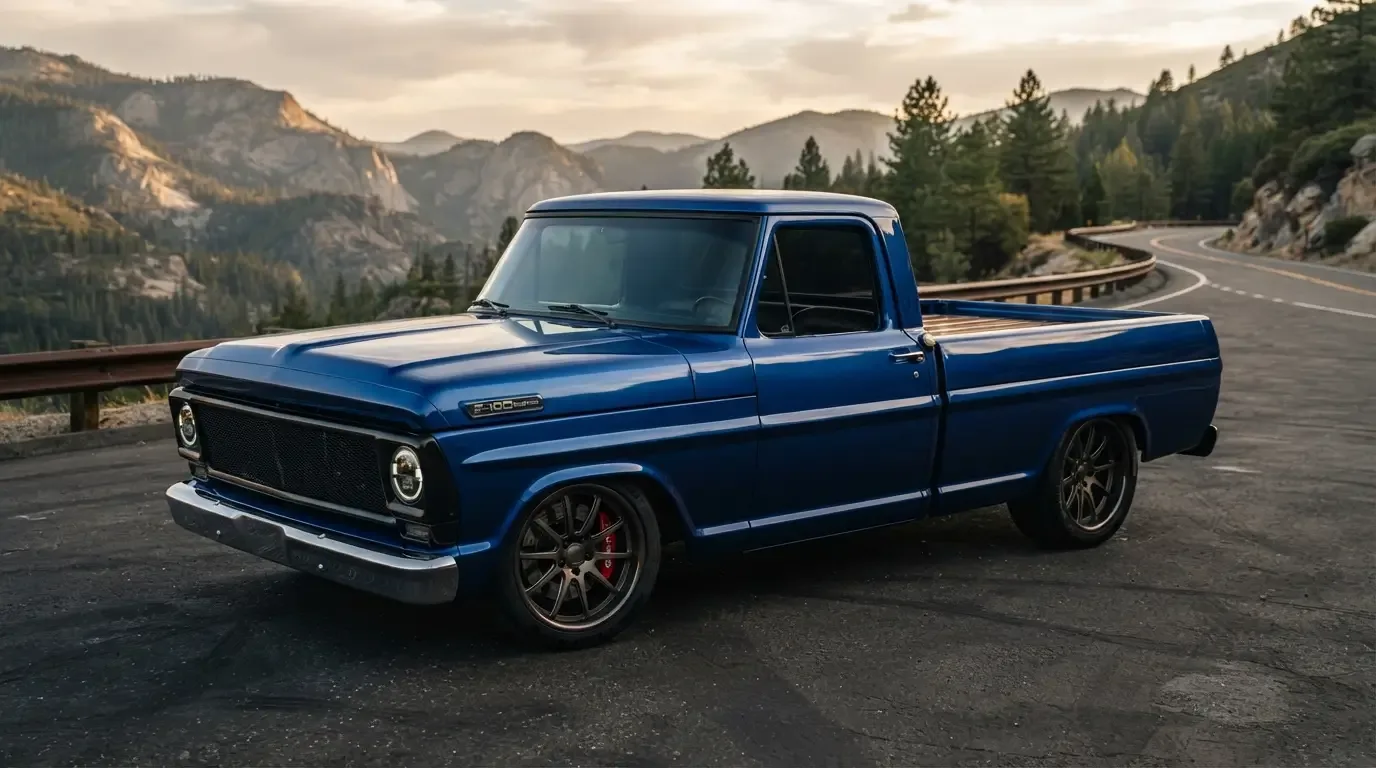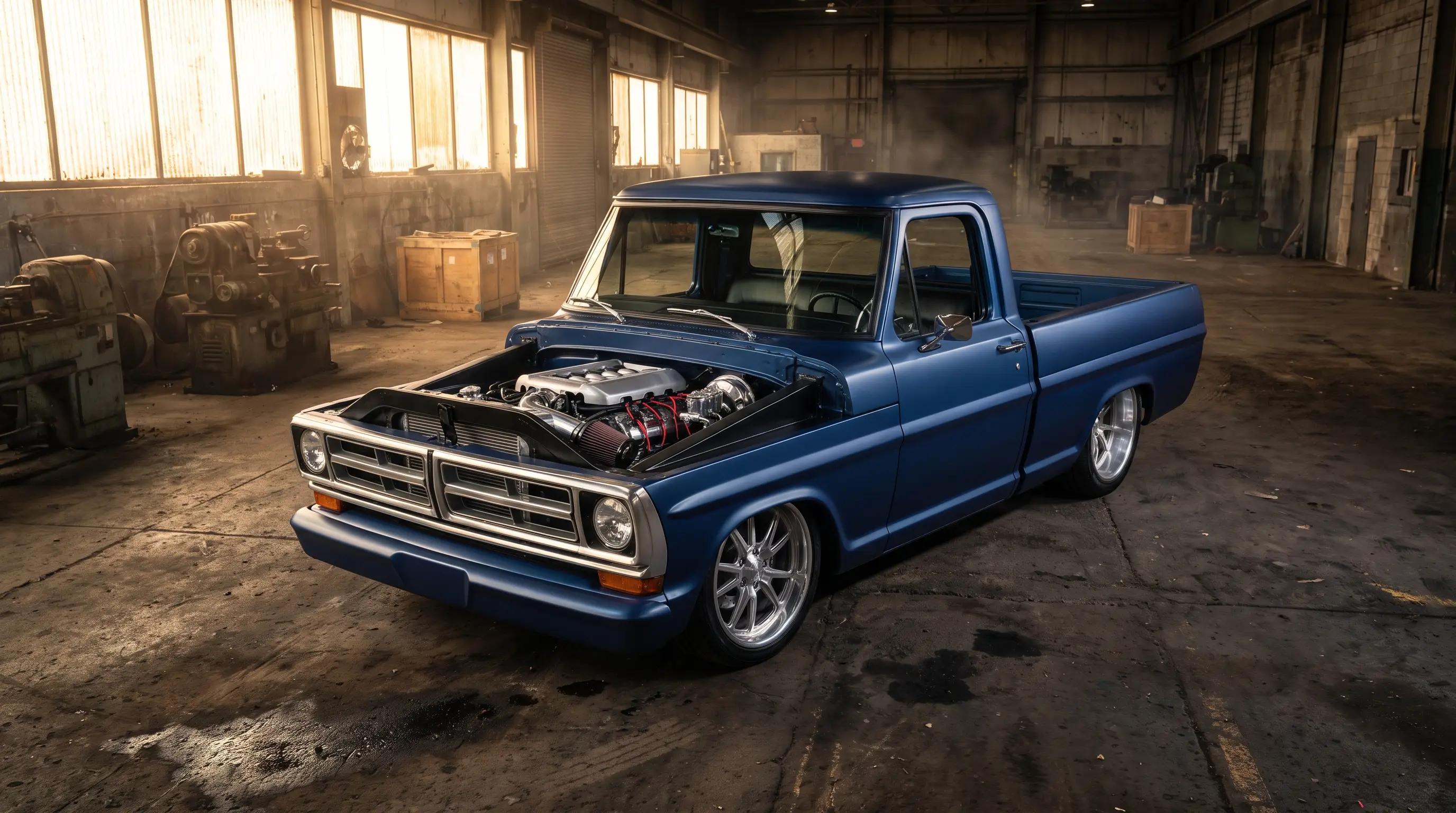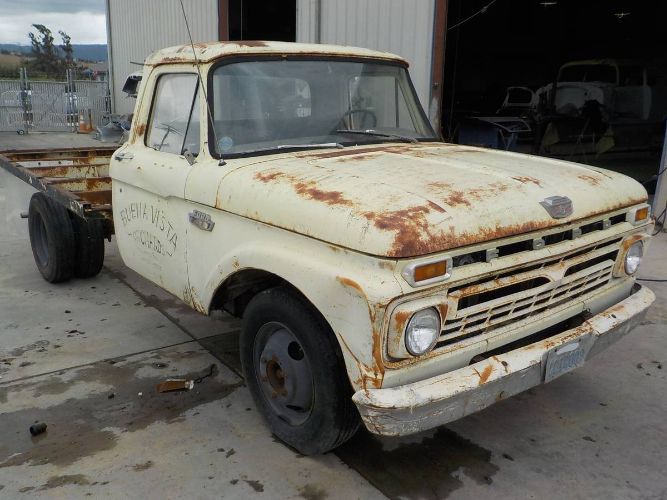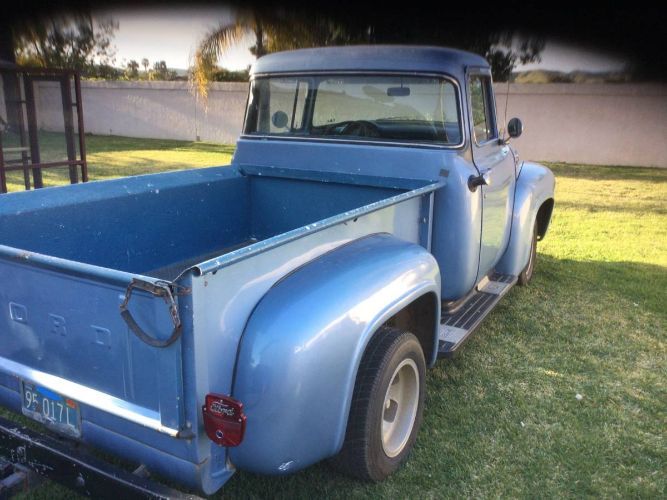
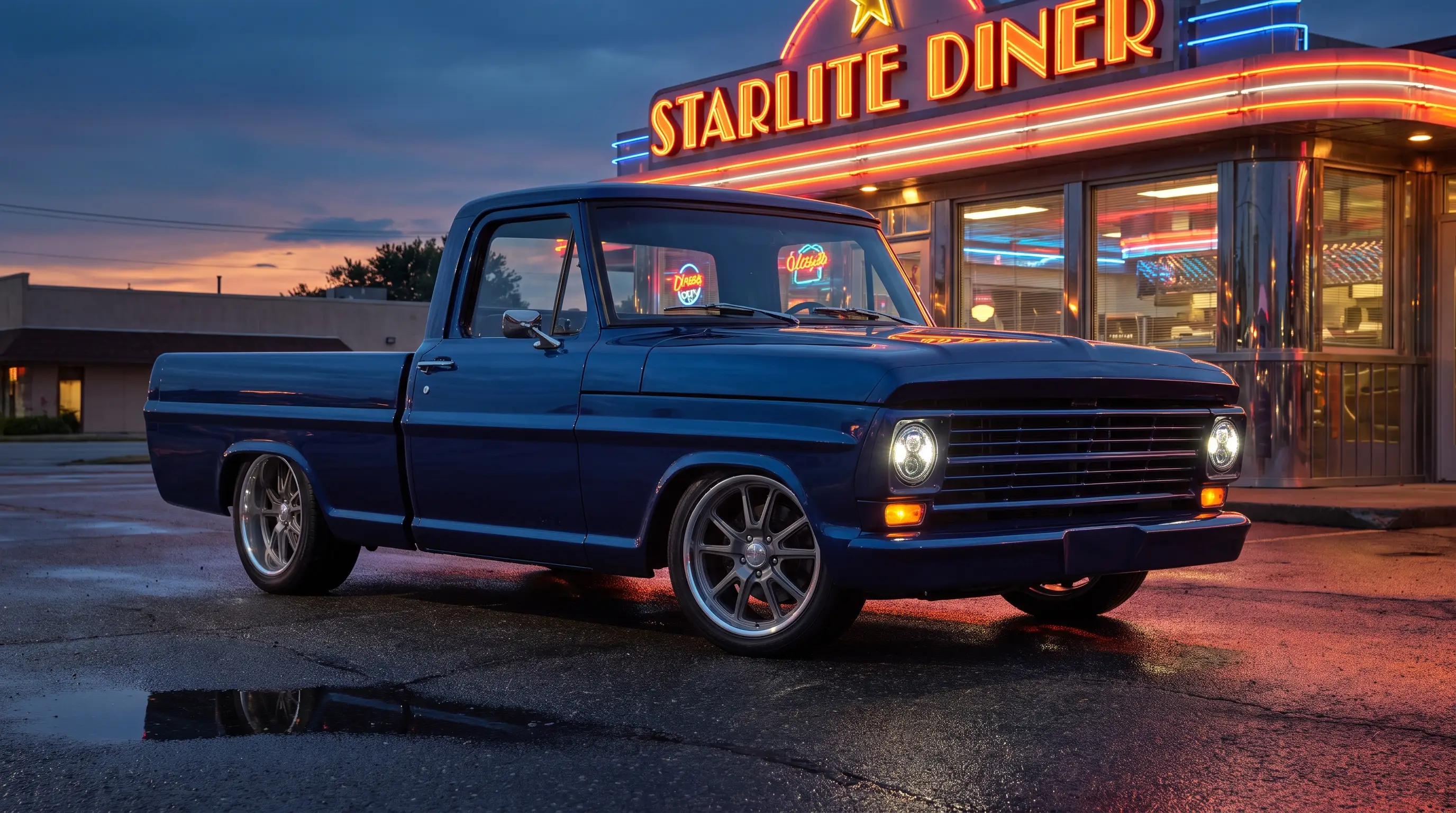
Park a bone-stock 1972 Ford F-100 next to a restomod version of the same truck and the difference is not subtle. Same hood line, same fender shape, same basic silhouette that Ford drew more than fifty years ago. But the restomod sits two inches off the pavement on wheels the factory never offered, runs a fuel-injected V8 that makes the original inline-six feel like a different era entirely, and stops on brakes that would embarrass the truck's original engineers. The Ford F-100 restomod build has become its own genre within the classic truck hobby, and at this point it may be more visible than the stock trucks themselves.
Why this particular truck became the restomod canon
Not every classic vehicle takes to modification equally well. Some shapes fight against modern proportions, wheel sizes that look right on a new car look wrong tucked under a fifty-year-old fender. The F-100 avoided that problem almost by accident. Its flat body panels, generous wheel arches, and simple greenhouse give a builder room to work without fighting the original design. Drop the stance, widen the wheels, and the truck does not look altered so much as finished, as if this was always the intended proportion and the factory just never got there.
That visual compatibility is a big part of why the fourth and fifth generation trucks, 1967 through 1979, dominate the restomod scene specifically. Their wider cabs and longer hoods give builders more room to fit modern drivetrain components than the tighter engine bays of earlier generations, and their proportions already lean toward the aggressive stance a lowered build wants to achieve.
What actually defines a restomod, culturally speaking
The word gets used loosely, but the core idea is consistent across the builds that matter: keep the body and the character of the original truck, replace everything underneath it with something that performs like a modern vehicle. That usually means an updated suspension for handling and stance, a contemporary V8 or crate engine swapped in for reliability and power, and interior or electrical upgrades that make the truck livable as a daily driver rather than a fair-weather show piece. None of that is a how-to here, it is simply what separates a restomod from a restoration. A restoration chases originality. A restomod chases usability wrapped in a shape everyone already loves.
The rise of this approach mirrors a broader shift in the classic truck hobby generally. Owners increasingly want to drive the vehicles they collect rather than trailer them to shows and park them under a cover the rest of the year. A restomod F-100 can handle a highway merge, run air conditioning on a hot afternoon, and start reliably every time, all while looking exactly like the truck someone's grandfather might have driven.
"The first time I saw a bagged '69 F-100 sitting on the right wheels, I understood the shape in a way stock trucks never showed me. Ford drew a canvas in 1967 and didn't even know it."
- Patrick Walsh
The community built around the build
What keeps the restomod F-100 scene growing is not any single shop or builder, it is the sheer number of people documenting their own trucks online and comparing notes with strangers who own the same generation. A builder in Texas and a builder in Oregon working on separate 1970 F-100s will end up solving nearly identical problems, and increasingly they find each other and share the solution rather than reinventing it independently. That collective knowledge base has lowered the barrier to entry for a serious build in a way that simply did not exist twenty years ago.
Shows dedicated specifically to custom and modified trucks have grown alongside this, giving builders a stage separate from the originality-focused concours events where a modified truck would traditionally lose points rather than gain attention. Readers curious about how this specific movement developed can dig into the ford f100 restomod history in more depth, and the engine side of the story, specifically the modern V8 swaps that define so many of these builds, gets covered in a related story worth reading alongside this one.
Not every purist approves, and that tension is part of the story
There is a real divide in the hobby between owners who see the restomod trend as the truck's natural evolution and owners who see it as erasing history. Concours-focused collectors tend to value a truck exactly as Ford built it, down to the correct paint code and original engine block casting numbers. Restomod builders tend to value the truck as a starting point, a shape worth preserving while the substance underneath gets modernized. Neither side is wrong, they are simply chasing different versions of what makes the F-100 worth owning.
That tension has not slowed the restomod trend down in the slightest. If anything, it has sharpened the identity of both camps, giving buyers a clearer choice between a numbers-matching original and a purpose-built driver when they go shopping.
Where the market stands now
A well-executed restomod F-100 today commands a real premium over a comparable stock truck, sometimes a significant one, because the labor and parts involved in a quality build add up fast. Buyers are not just paying for a shape anymore, they are paying for someone else's finished engineering work. That has turned the restomod scene from a hobbyist pursuit into something closer to a small industry, with dedicated shops building F-100s to order for customers who want the look without doing the wrenching themselves.
For anyone shopping that market directly, there are usually a handful of F-100s for sale now representing every point on the spectrum, from lightly refreshed drivers to full show-quality builds. The Ford F-100 restomod build is not a passing trend at this point. It has become one of the primary reasons the truck stays relevant to buyers who never had any interest in owning a stock classic in the first place.
How builders talk about the truck differently now
Ask a restomod builder what drew them to the F-100 specifically and the answer rarely mentions the truck's original working history. They talk about proportion, about the way a set of the right wheels fills the arch, about how the cab sits relative to the bed once the ride height changes. That is a genuinely different vocabulary than the one an originality-focused collector uses, and it reflects how thoroughly the restomod movement has reframed what people value about this particular shape. The truck's working-class origin as a plumber's or rancher's vehicle barely factors into the conversation anymore among this crowd.
That shift in vocabulary has practical consequences too. Builders now specify parts and design choices with an eye toward how a build will photograph and how it will read at a show, considerations that would have been foreign to an owner buying the same truck new in 1969 for hauling feed. The restomod scene has effectively created a second life for the F-100 built around an entirely different set of priorities than the ones Ford originally designed the truck to satisfy, and that second life shows no sign of slowing down as more builders discover what the shape can become.