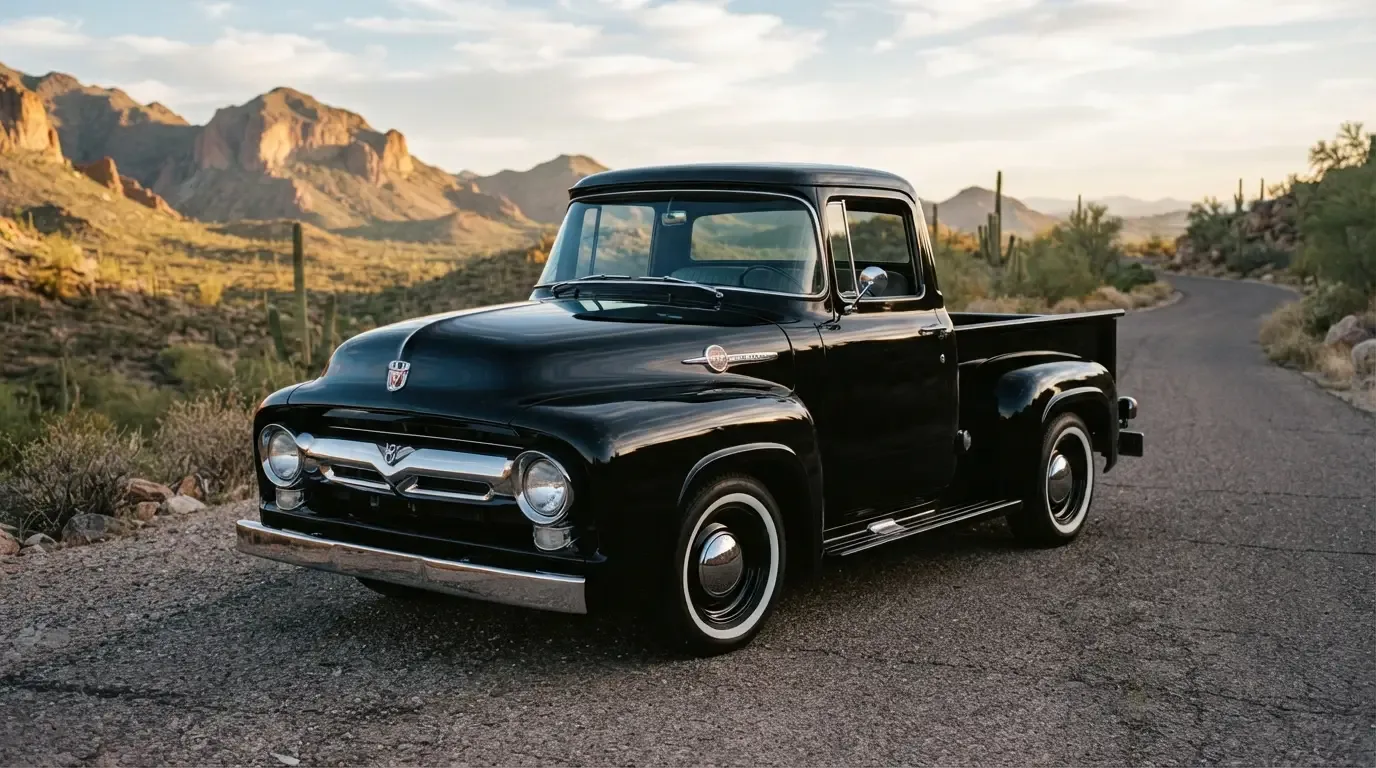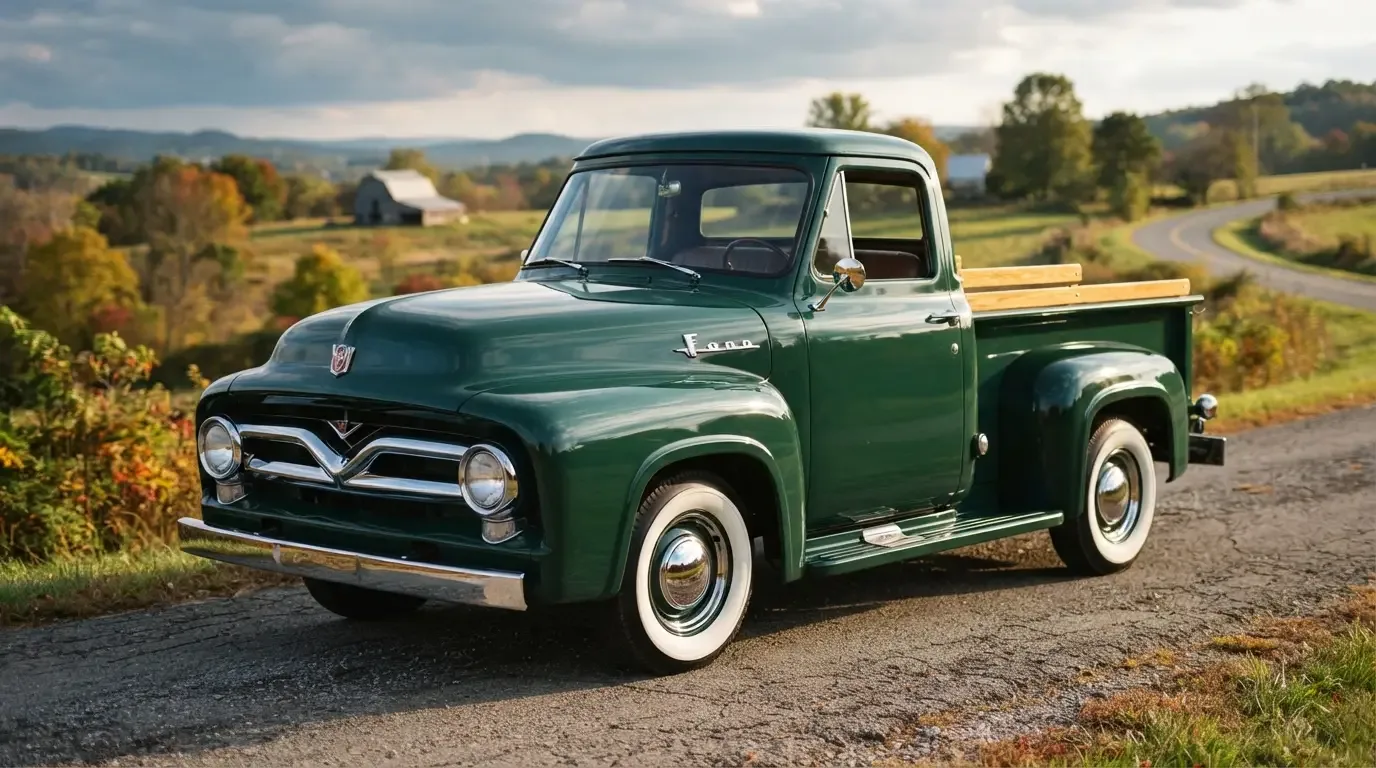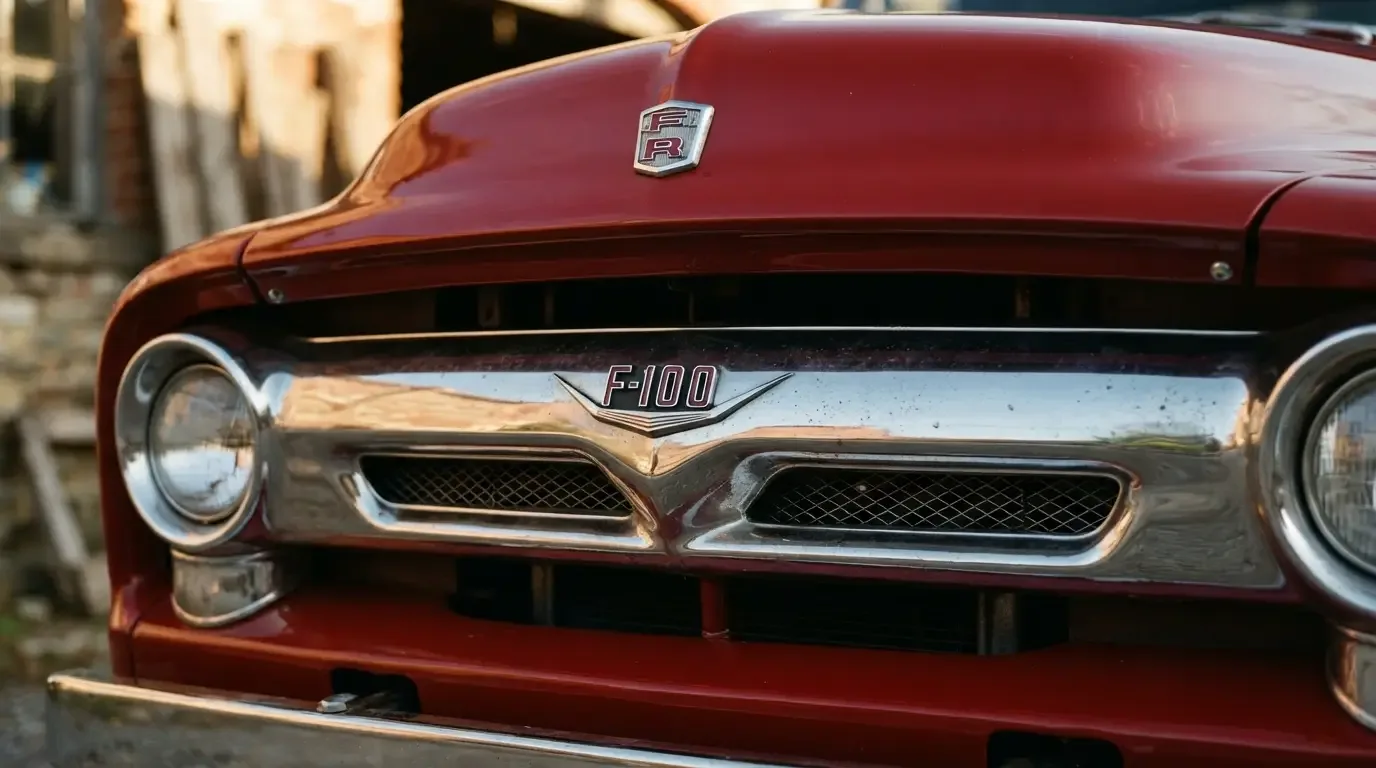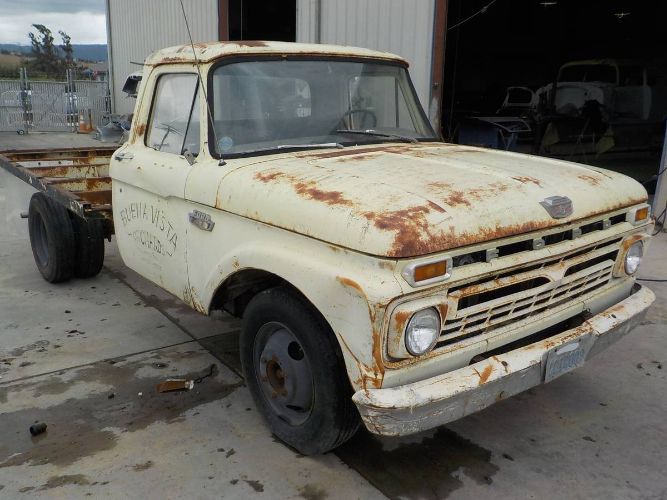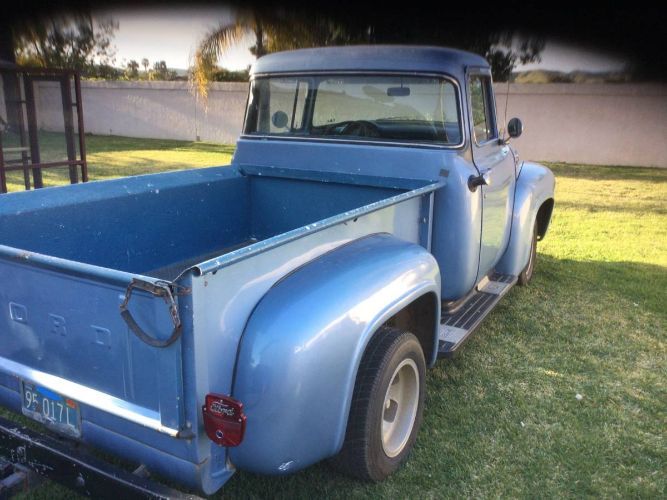
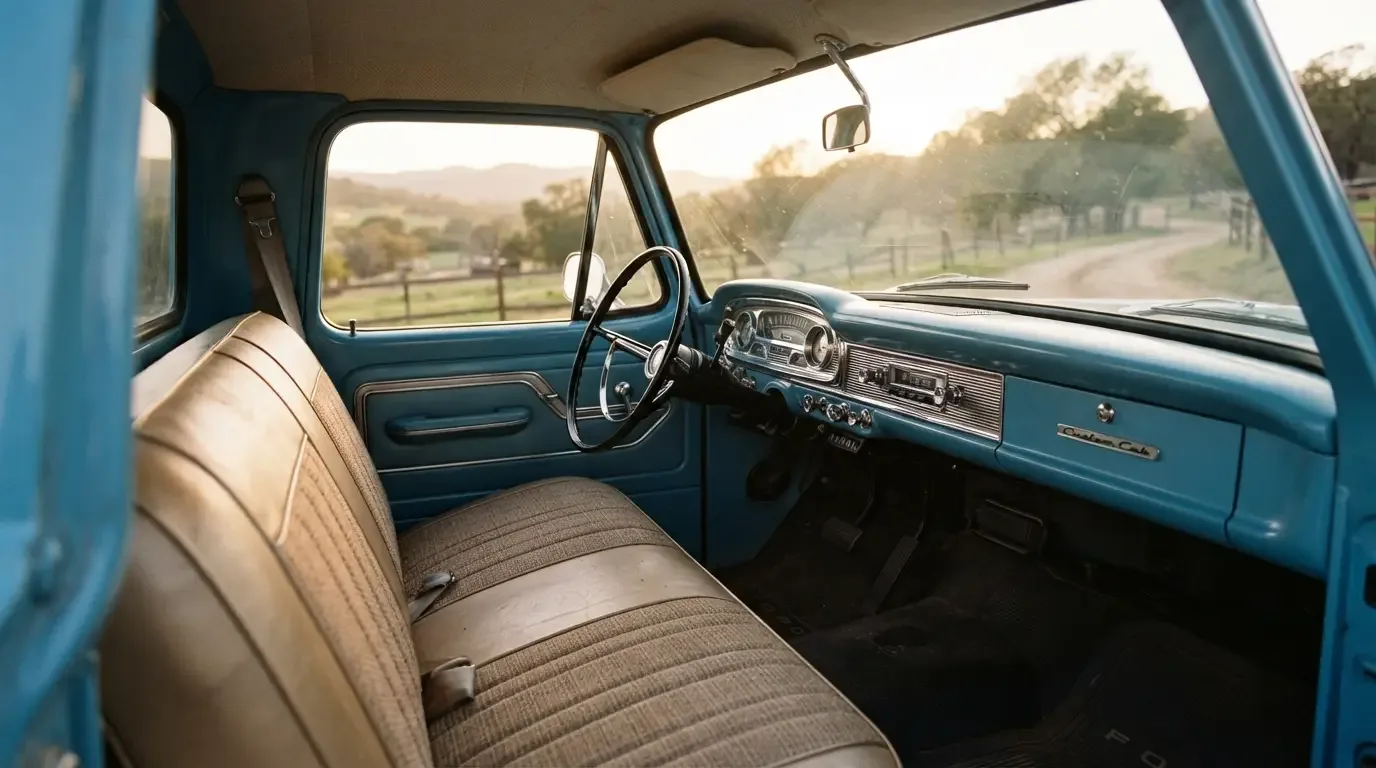
Ask a room full of club members what ford f100 custom cab actually means and you'll get three different answers before anyone agrees. That's not because nobody knows. It's because the Custom Cab package touched enough different parts of the truck, trim, seating, interior finish, that people remember whichever piece mattered most to them. I've heard grown adults argue about sun visors longer than seems reasonable. It's a good argument to have, honestly.
What Ford actually sold you
The Custom Cab name arrived for the 1955 model year, replacing the Deluxe Cab package Ford had offered on the 1953 and 1954 trucks under a different label. It was Ford's way of letting buyers dress up a work truck without turning it into something impractical. For a modest premium over the base cab, you got chrome trim around the windshield and grille, dual sun visors instead of one, a passenger-side armrest, better seat padding, and a nicer texture-grain headliner instead of the painted metal roof buyers got with the standard cab. None of it changed how the truck worked. All of it changed how the truck felt to sit in for eight hours a day.
That distinction is the whole story, really. Ford wasn't selling more capability with the Custom Cab package. It was selling comfort to buyers who'd finally decided their work truck didn't need to feel like punishment. After years of postwar trucks that prioritized function over everything else, that was a genuine shift in what Ford thought customers wanted.
Why it mattered more than it sounds like it should
Our club has a few members with base-cab trucks and a few with Custom Cab trucks, and every time we compare notes, the Custom Cab owners bring up the same thing: it's a genuinely more pleasant place to spend a workday. The extra padding in the seat isn't dramatic on paper, but after three hours on a bumpy county road it's the difference between finishing your errands comfortably and climbing out stiff. The second sun visor sounds minor until you're driving east in the morning and west in the evening every single day, which, if you were a tradesman or a farmer in the 1950s, you probably were.
Ford understood something with this package that a lot of manufacturers took years longer to figure out: comfort features sell trucks to people who use them daily, not just to people buying them for weekend errands. The Custom Cab package wasn't flashy. It was practical upgrades aimed at people who lived in these cabs, and that's exactly why it found buyers.
Spotting one today
If you're looking at a truck from this generation and trying to figure out whether it left the factory with the Custom Cab package, the chrome windshield trim is usually the easiest tell from across a parking lot. Inside, check for the dual visors and the armrest, since those got swapped out or removed more often than the exterior trim during decades of use. Original upholstery is rare enough at this point that most surviving examples have been reupholstered at least once, so the trim and hardware tend to be more reliable indicators of an original Custom Cab truck than the seat material itself.
None of this is complicated restoration work, and that's part of the appeal. The Custom Cab package added comfort without adding mechanical complexity, which means a base-cab truck can be brought up to Custom Cab spec relatively easily if you can source the right trim pieces.
"Every club has somebody who insists the base cab is the more honest truck, and somebody else who won't drive anything without the Custom Cab trim. Both of them are right. That's kind of the point of a package like this. It gave buyers an actual choice instead of a single take-it-or-leave-it interior."
- Wayne Coburn
How it fits the bigger picture
The Custom Cab package is a small piece of a much larger story about how Ford's trucks evolved across the 1953-56 generation, from the wider cab and lower stance introduced at the start, through the engine changes that followed. For the full background on how this generation developed year over year, read the background covers that broader arc in one place.
How the package changed across the generation
The comfort package itself did not stay frozen across these years, even before it carried the Custom Cab name. Trim details shifted year to year, chrome patterns updated, seat fabric options changed, and by 1956 the Custom Cab had grown a bit more elaborate than the original 1953 Deluxe Cab it descended from. Club members who track this closely can usually date a Custom Cab or Deluxe Cab truck within a year or two just from the specific trim pieces present, even without checking a build tag. That kind of granular knowledge takes years to build up, honestly, and it's part of why these club conversations never really get old. There's always another small variation somebody hasn't noticed yet.
Pricing for the option also crept up slightly as it evolved, reflecting the added content Ford packed into it over time. It never became an extravagant upgrade by any stretch, Ford kept it accessible to working buyers throughout the run, but the value proposition improved each year as more comfort features got folded into the same basic package name.
Why some owners skip it entirely
Not everybody wants the Custom Cab trim, and that's a legitimate position too. A few members of our club specifically sought out base-cab trucks because they wanted the plainer look, or because they were chasing a specific work-truck aesthetic tied to how these vehicles were actually used on farms and job sites at the time. There's nothing wrong with that preference. It just means the conversation about which cab is "better" usually comes down to what story an owner wants their truck to tell, comfort and style, or honest utility, rather than any objective ranking between the two.
The armrest debate, settled
I promised this at the start and I'm delivering on it. The sun visor argument at our meetings is nothing compared to the armrest debate, which has apparently been going on for longer than some of our members have owned trucks. Half the room insists the Custom Cab armrest was always chrome-trimmed. The other half swears theirs came painted to match the interior. Turns out both camps are right, just about different years. Trim details on small components like this shifted enough across the generation that neither side was actually wrong, they just owned trucks from different points in the run. Once somebody finally brought photographs to a meeting and sorted it out, the whole argument fizzled out almost disappointingly fast. Some mysteries are more fun unsolved.
A package worth knowing about
Talk to enough owners and you start to notice the Custom Cab package comes up constantly, even among people who don't know its official name. They just know their truck has the nicer visors, the better seat, the chrome trim around the glass, and they know exactly why they're glad it does. That's the mark of a good options package. Buyers remember what it did for them decades later, even if they've forgotten what Ford actually called it on the order sheet.
If a Custom Cab truck sounds like the right fit for your own garage, find a classic F-100 to see what's currently available.