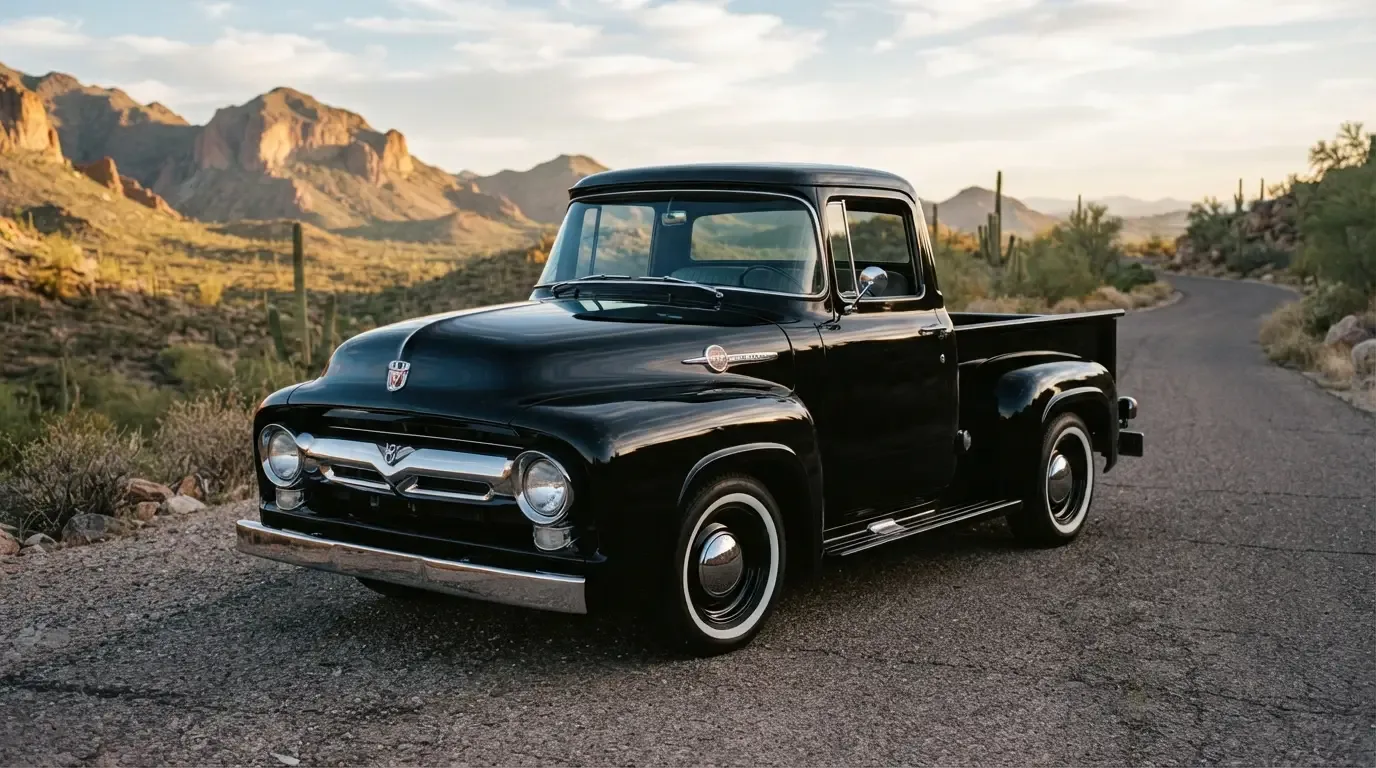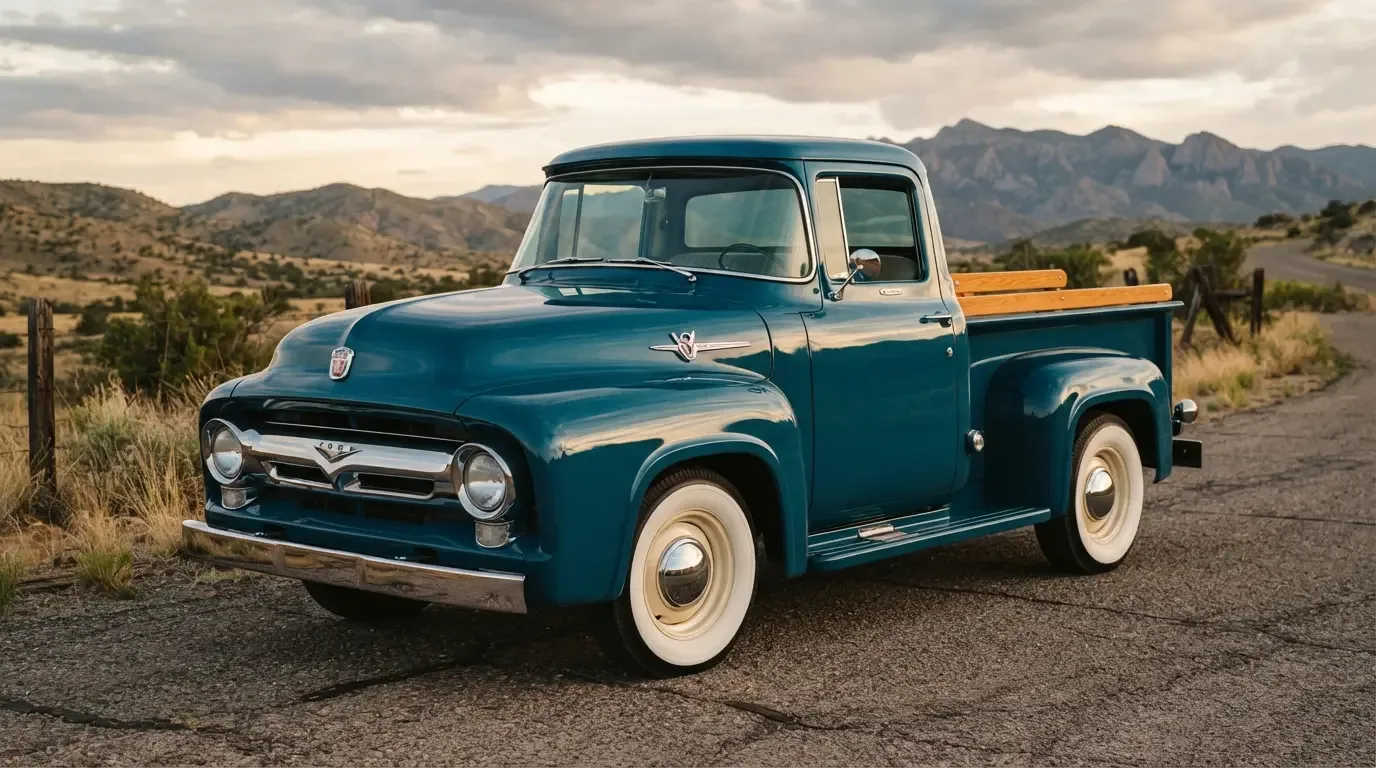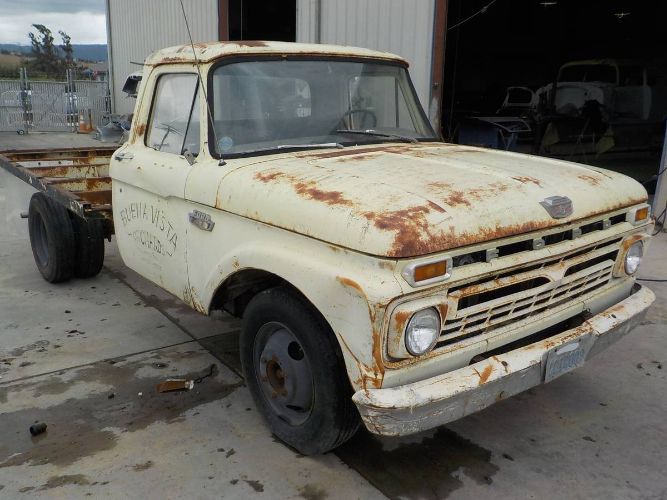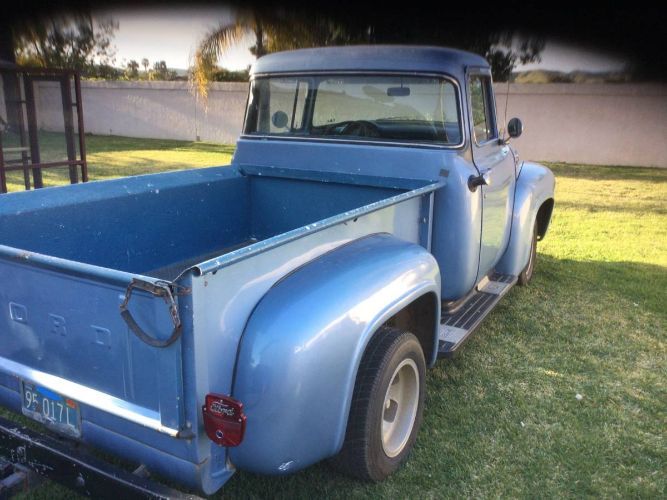
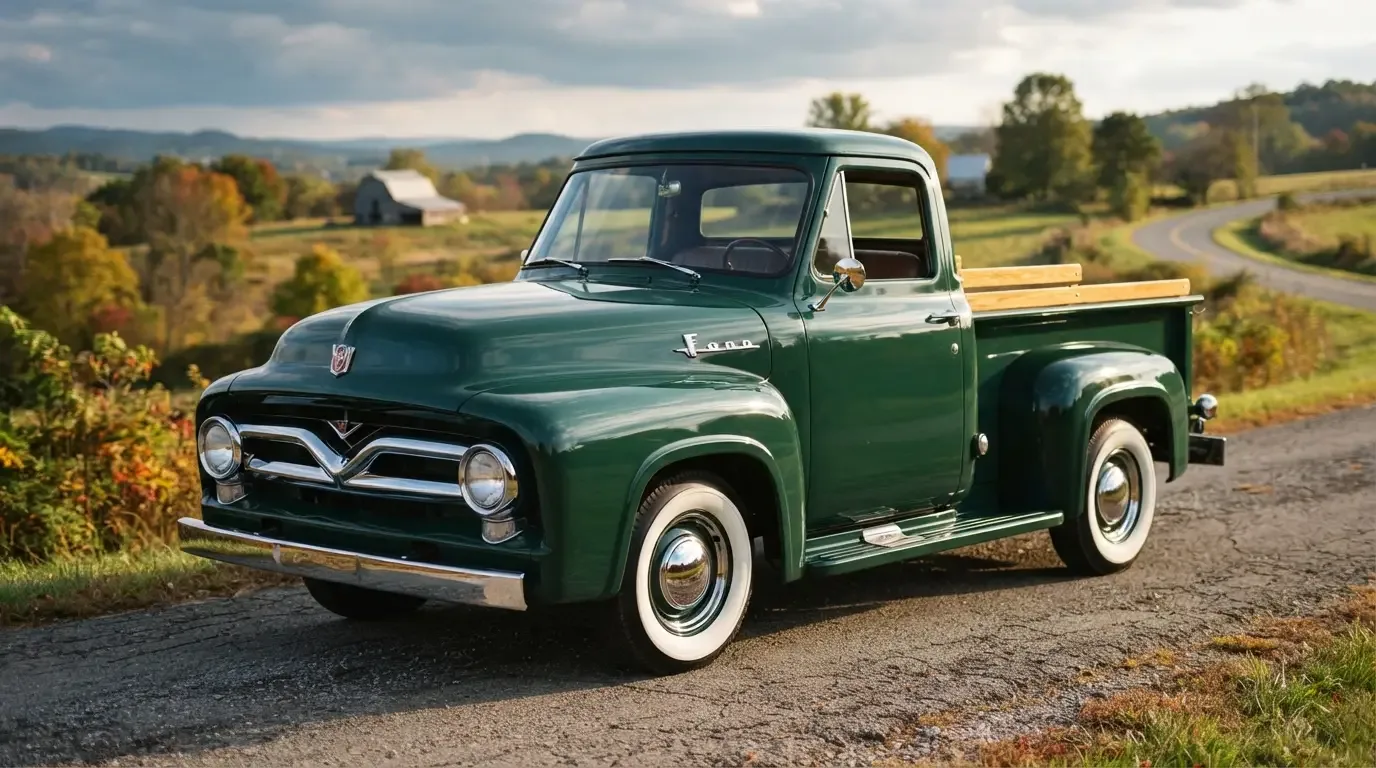
I've had my hands inside enough sheet metal over the years to know good body lines when I'm sanding them, and 1953 ford f100 design is one of those shapes that just works without trying too hard. No chrome overload, no gimmicks stacked on the fenders, just a truck that looks like it knows exactly what it is. That's harder to pull off than people think, and it's a big part of why this body style still gets built and shown decades after Ford stopped making it.
Proportions before ornament
Every builder I know who's worked on one of these trucks says the same thing eventually: the shape holds up because Ford got the basics right first. Wide, flat hood. Rounded fenders that flow into the cab instead of looking bolted on. A grille that sits low and horizontal instead of screaming for attention. When you're doing bodywork on a truck this old, you learn fast which cars were designed around chrome trim covering up weak lines, and which ones were designed with strong lines that chrome just accents. This one's the second kind. Strip the trim off a 1953-56 F-100 down to bare metal and it still reads as a good-looking truck, which tells you the design team did their job before the accessories department ever got involved.
That matters practically too. When you're metal-finishing a fender or laying out a patch panel, clean, honest proportions are a gift. There's nowhere for a bad repair to hide on a shape this simple, which keeps you honest as a builder, but it also means a well-executed repair blends in seamlessly instead of fighting the factory lines.
The cab that changed how these trucks get built today
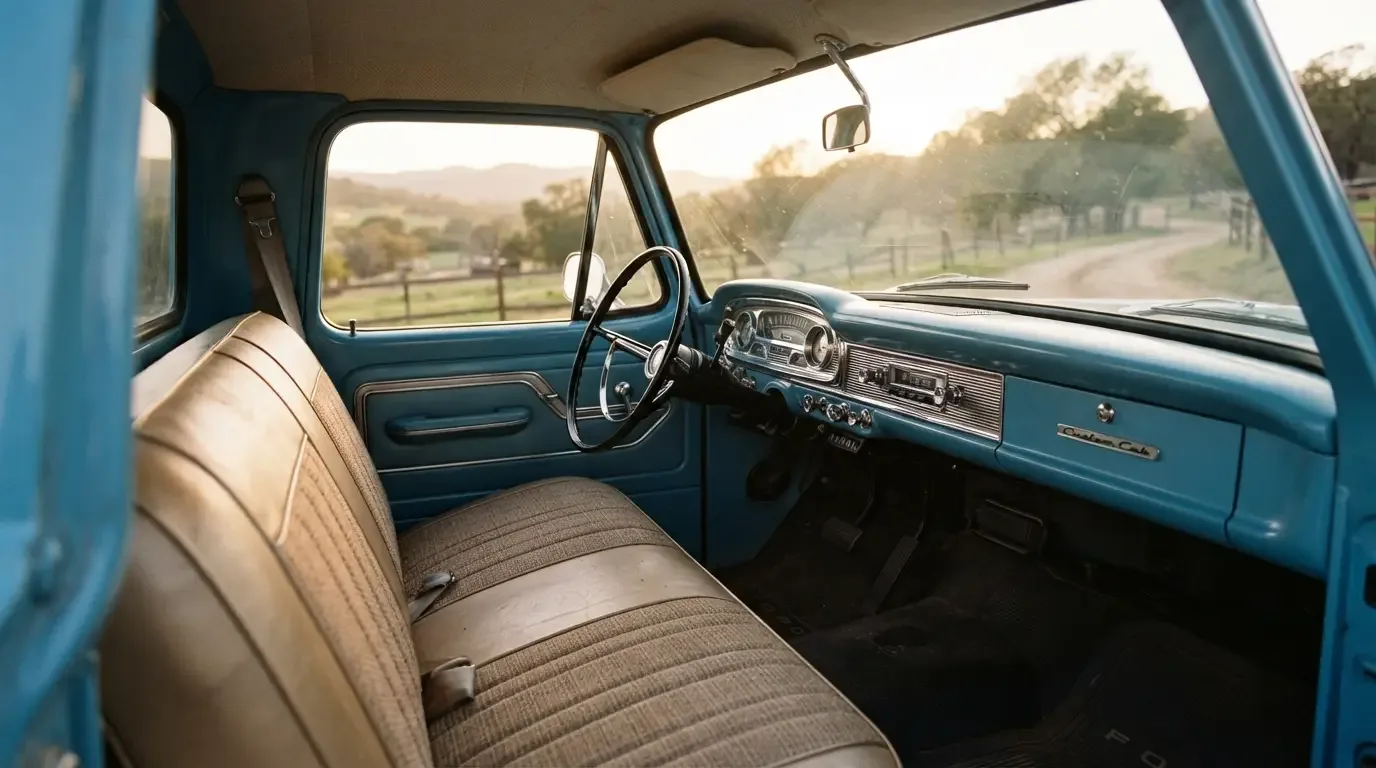
Ford widened the cab significantly over the old F-1, and that extra room is exactly why this generation is such a popular restomod platform now. Builders can fit modern seats, add sound deadening, run updated wiring harnesses, and still keep the factory dash opening looking period-correct. I've seen guys drop late-model drivetrains into these cabs and the factory proportions absorb the changes without looking wrong, which is not something you can say about every classic truck body out there.
I want to be clear about something though, because it matters to how this generation gets talked about. What these trucks get used for today, whether that's a full restomod build with a modern chassis or a numbers-matching restoration, is a separate conversation from what made the shape good in the first place. The design succeeded on its own terms in 1953. Everything builders do with it now is just proof the foundation was strong enough to support two very different eras of taste.
Period-correct versus poseur
Here's where I get particular. There's a real difference between a builder who understands why these lines work and someone slapping period-style pieces on a truck because they saw it in a magazine. A correct 1953-56 F-100 build respects the factory's restraint. The grille stays proportional to the hood. Trim pieces sit where Ford put them, not wherever looks flashiest on a lift. I've walked away from jobs where a customer wanted me to add fender flares or oversized trim that would have fought the original design instead of working with it. That's not me being precious about history for its own sake. It's that the original design already solved the problem these add-ons are trying to solve, and usually solved it better.
Good bodywork on these trucks means understanding what Ford's designers were doing with every panel gap and character line, then either preserving it faithfully or modifying it with the same restraint the original team used. That second option is harder than it sounds, and it's the difference between a build that ages well and one that looks dated in five years.
"You can always tell when a builder actually studied the factory lines before touching the metal, versus someone who just wanted a period truck to hang custom parts on. The good ones respect the restraint Ford's designers showed. The rest end up fighting the shape instead of working with it."
- Jim Vasquez
Why the shape still gets picked
Builders keep coming back to this body style because it gives you room to work without a lot of correction needed first. The cab is wide enough for a modern build, the fenders are simple enough to repair or modify cleanly, and the overall stance already looks right before you've touched a single panel. For anyone comparing this generation against its trim options, our 1956 ford f100 retrospective covers the full range of what Ford offered across these model years.
If you're curious about one specific upscale option that leaned into this same design restraint rather than fighting it, a related story breaks down what the Custom Cab package actually added.
What I tell customers before we start cutting metal
Before I touch a fender on one of these trucks, I walk the customer around the whole body and point out where the factory lines actually live. Most people have never looked closely enough to notice how the character line running along the bed sides ties into the cab's beltline, or how the fender crown matches the curve of the hood almost exactly. Once you see it, you can't unsee it, and it changes how you approach any repair or modification. You stop thinking about individual panels and start thinking about the whole shape as one connected idea.
That mindset matters just as much on a full restomod build as it does on a numbers-matching restoration. I've built these trucks both ways, chassis swaps and all, and the builds that turn out best are always the ones where somebody respected the original proportions even while modernizing everything underneath. A lowered stance works because the factory shape was already clean enough to handle it. A tucked bumper works because the front clip's lines support that kind of minimalism. None of that is an accident. It's a byproduct of a design that got the fundamentals right seven decades ago.
Paint and trim choices that respect the shape
Color choice matters more on a simple shape than people expect. A body this clean can carry a bold single color without looking busy, but it can also get overwhelmed by trim that fights the factory lines instead of following them. I steer customers toward two-tone combinations that echo what Ford actually offered during this generation, not because I'm precious about factory correctness on every build, but because those combinations were chosen by people who understood exactly how light falls across these panels. Modern paint technology gives you options Ford never had, but the underlying logic of where a break line should sit hasn't changed.
Good design doesn't need much defending
I've built plenty of trucks over the years, and the ones that keep getting compliments decades later are almost always the ones where the original design did most of the heavy lifting. That's exactly what you get with this generation. Clean lines, honest proportions, and a shape confident enough that it doesn't need a pile of chrome to make its case. If you're shopping for a project or a finished build, F-100s for sale now is a solid place to start looking at what's out there.