A grille tells you what a truck thinks of itself before you read a single badge. The 1955 ford f100 grille is where Ford stopped apologizing for building a work truck and started styling one, and if you spend any time around the 1953 to 1956 generation you learn to read the differences the way a barn find hunter reads rust patterns. Three model years, three distinct faces, and every one of them still argues with collectors at swap meets.
1953 starts plain on purpose
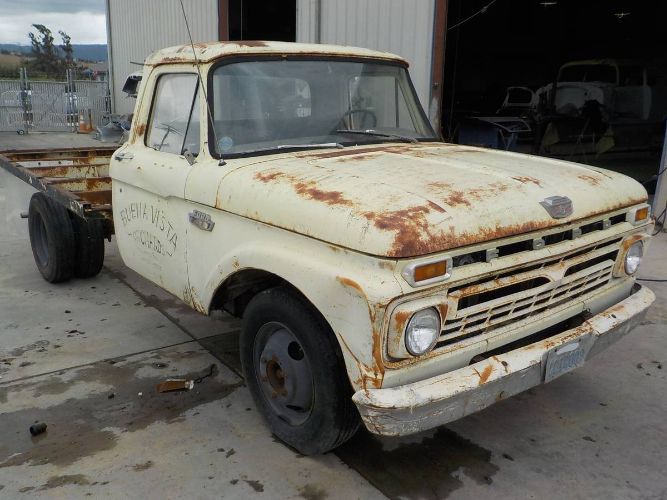
The 1953 F-100 grille is the quiet one. Ford had just renamed the whole truck line for its fiftieth anniversary, dropping the F-1 designation in favor of F-100, and the styling team spent its energy on the cab and hood rather than the face. The result is a simple horizontal bar grille with a painted surround, flanked by round headlights set into slightly hooded fenders. It reads almost like a car grille shrunk down and squared off. Nothing about it shouts. It sits low, it sits honest, and it matches a truck that was more concerned with proving its new unibody-adjacent cab design than winning a beauty contest.
Restorers chasing a correct 1953 grille quickly learn how few good originals survive. The stamped bars dent easily and the chrome plating on early production runs was thinner than what came later, so pitting is common on anything that lived outdoors. A straight, unpitted 1953 grille shell is a small trophy in its own right.
1954 adds teeth
By 1954 Ford had more confidence in the F-100 and it shows in the grille. The horizontal bars grow bolder, the center gets a heavier bright metal treatment, and the whole assembly reads wider even though the sheet metal underneath barely changed. This is also the year the Y-block V8 arrived as an option, and there is a case to be made that the beefier grille was Ford's way of signaling the truck had more muscle under the hood, even on the six-cylinder trucks that made up the bulk of production.
Parts interchange between 1953 and 1954 grilles is a constant source of confusion at swap meets. They look similar enough at a glance that sellers mislabel them regularly, and the mounting hardware is close enough to bolt up wrong without anyone noticing until the gaps look off in photos.
1956 and the wraparound era
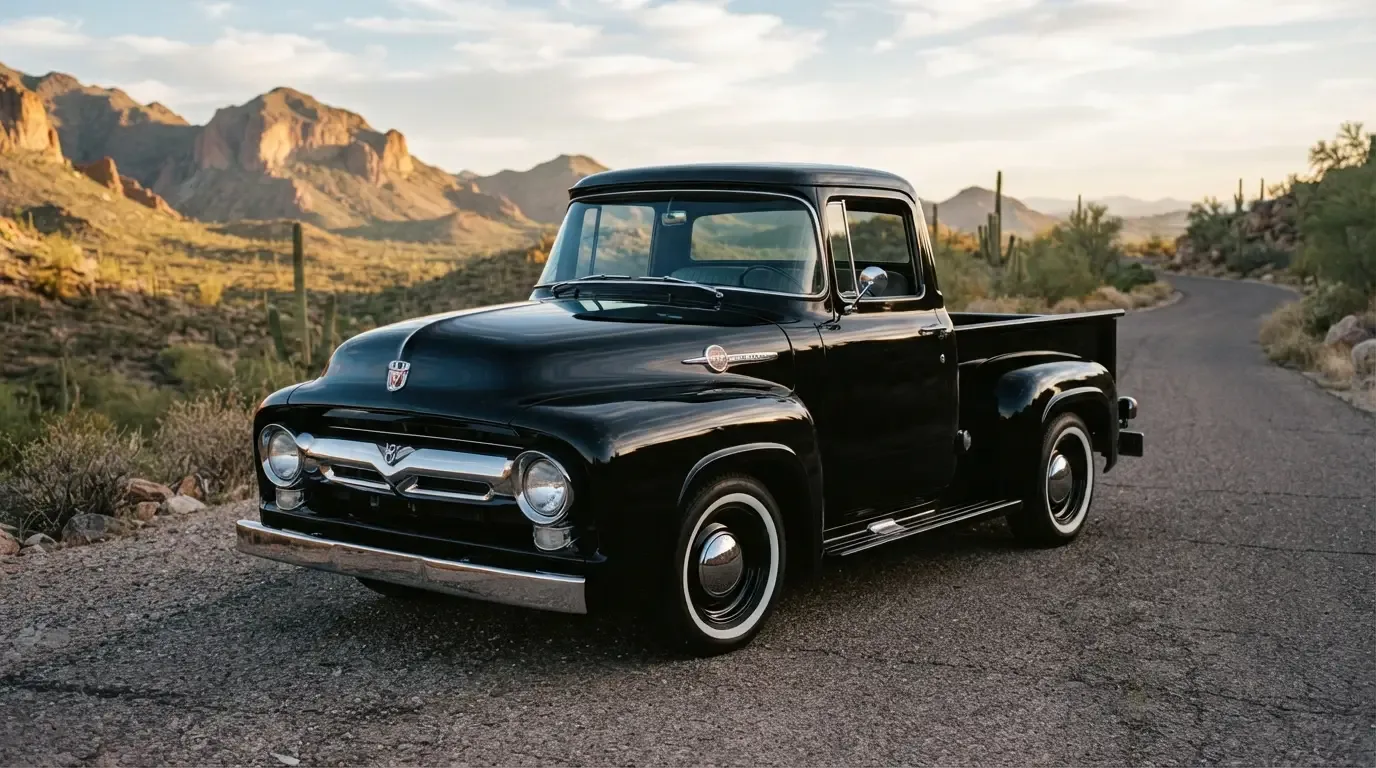
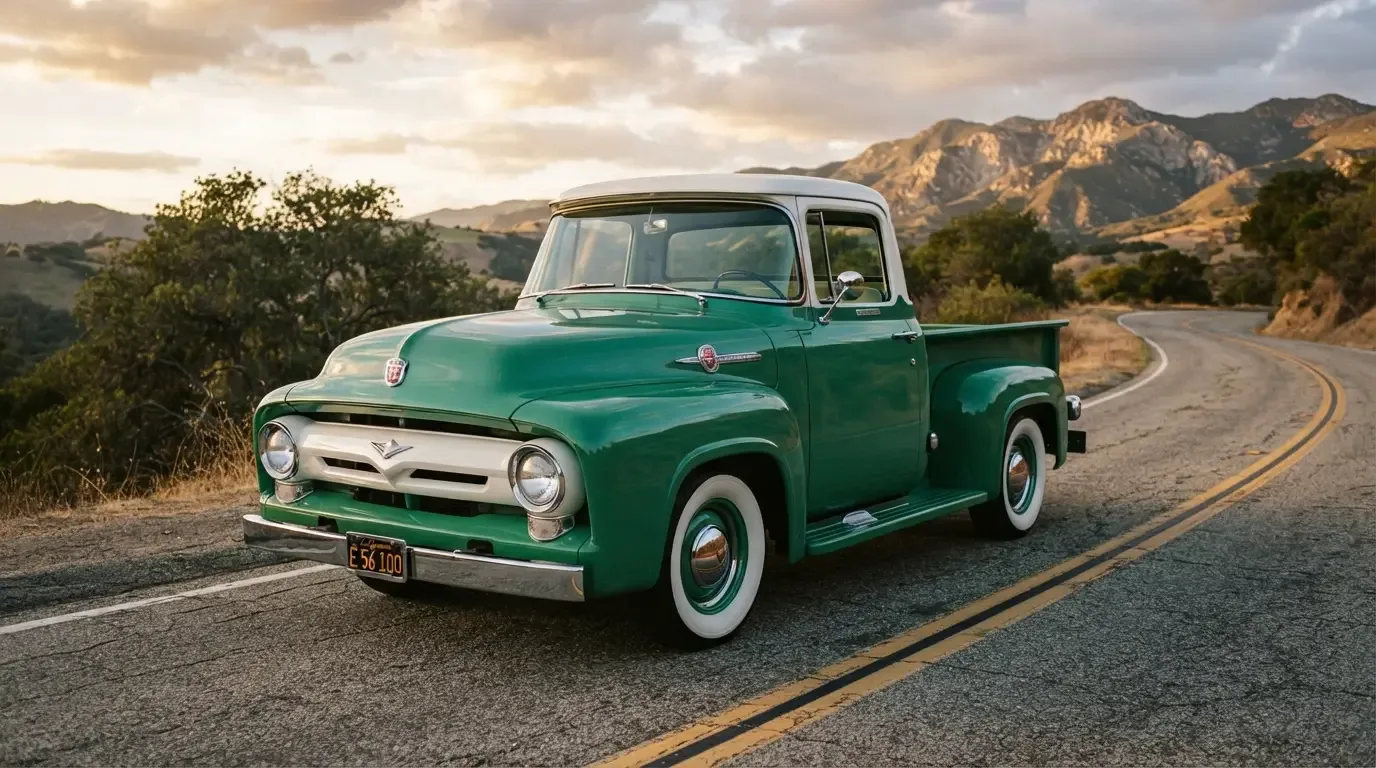
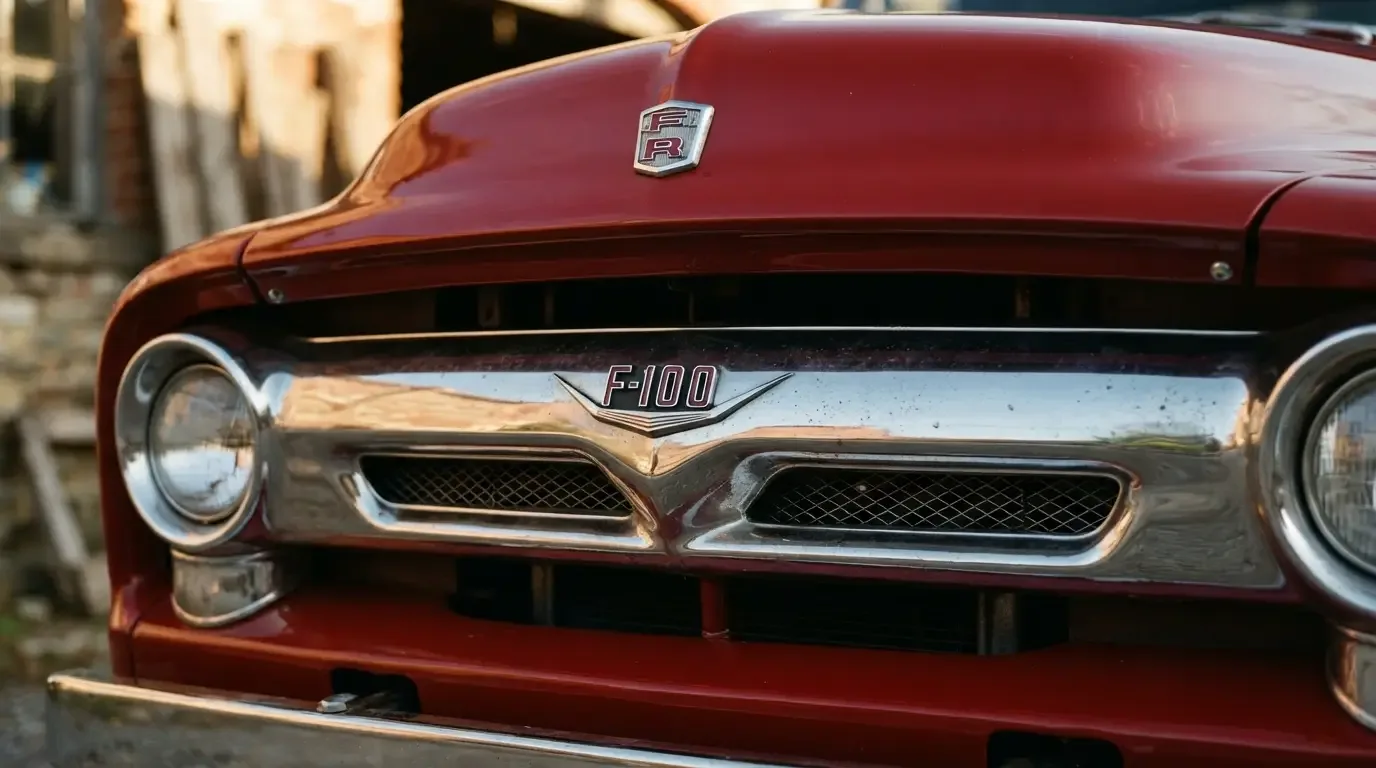
The 1955 ford f100 grille has a look all its own: a distinctive V-shaped, two-piece lower bar (collectors call it the "gullwing") replacing the simpler top-bar treatment of 1954, with a small emblem above the V showing a four-point star for the six-cylinder or an "8" over a wide "V" for the V8. It is the 1956 grille, though, that most people picture when they think of this generation, since that is the year Ford dropped the dipping V shape for a smoother, more integrated bar and paired it with the truck's first wraparound windshield. Wider still, with a heavier central bar and a more pronounced chrome treatment, the 1956 face is the one that shows up on calendars and diner signage. Ford also introduced its first factory seat belts as an option that year and moved to a 12 volt electrical system, so 1956 gets remembered as the year the F-100 grew up in more ways than the grille alone.
"You can tell a 1955 shell from a 1956 shell across a parking lot if you know where to look, but put them side by side under bad lighting and even guys who've restored a dozen of these will second-guess themselves."
- Jim Vasquez
The practical difference between 1955 and 1956 grilles comes down to that V dip in the lower bar: present and pronounced on 1955 trucks, smoothed away on 1956 trucks. Neither is dramatically better looking than the other, but original 1956 pieces in show condition bring a real premium because so many were swapped or damaged over seven decades of use as farm and work trucks.
Why the grille matters more than it should
A stepside F-100 with the wrong year grille still drives fine, still hauls fine, and still turns heads at a cruise night. But judged events care, and so do buyers who know the difference. A correct, straight, well-chromed grille on a 1953 to 1956 F-100 can shift a sale by real money because it signals the rest of the truck was probably kept correct too. Sellers who slap on whatever grille was cheapest at a swap meet are usually cutting corners elsewhere as well, and experienced buyers know it.
Reproduction grilles have gotten better over the last decade, closing much of the gap with NOS pieces, but the chrome quality and bar spacing still varies by supplier. If you are shopping shop classic F-100 listings and comparing trucks, a close look at the grille tells you almost as much as the paperwork.
Reading a truck by its face
Once you know the three faces, spotting a mismatched grille becomes second nature. A 1953 bar pattern on a 1956 cab, or a 1956 wraparound grille grafted onto a 1954 hood, are both things that happen more often than buyers expect, usually from a collision repair decades ago that used whatever the local yard had on the shelf. None of it is a dealbreaker. It is information. This corner of the story fits into the whole picture of what made the second generation F-100 such a turning point for Ford, a truck that went from utilitarian to genuinely styled in the space of four model years.
The grille is a small piece of stamped steel and chrome, but on these trucks it carries the whole story of a company learning that a work truck could also be something people wanted to look at.
What the paint underneath tells you
Pull a grille off any second generation F-100 and look at the paint on the mounting brackets behind it. Factory brackets were painted body color or satin black depending on trim level, and a mismatch there is one of the first things an experienced eye checks before believing a seller's claim of an unmolested truck. Overspray creeping onto the bracket edges usually means a repaint happened with the grille still bolted on, which tells you the shop doing the work was in a hurry. None of that ruins a truck, but it changes what you should expect to pay.
Fastener style matters too. Original grille bolts on these trucks used a specific slotted hex head that most hardware stores do not stock, so a grille held on with modern Phillips head screws is a small tell that someone has been in there before, possibly more than once. It is a five second check that saves an argument later.
Living with an original grille today
Owners who drive their F-100s regularly, rather than trailer them to shows, face a real decision about whether to run an original chrome grille or set it aside and drive on a reproduction. Gravel roads and highway debris are not kind to sixty year old plating, and a single bad stone chip can undo a fresh rechrome job in an afternoon. Some owners split the difference, keeping the numbers matching original in climate controlled storage and running a quality reproduction for daily miles. It is not the purist answer, but it is the practical one, and on a truck built to work for a living, practical has always been part of the appeal.
Whichever route an owner takes, the grille remains the single detail most likely to catch a knowledgeable buyer's eye first, and getting it right pays off whether the plan is showing, driving, or eventually selling.
Sources and notes
- Ford F-Series (second generation) - Wikipedia
- 1956 Ford F-100: Wraparound Windshield, 312 V8 & Specs - fordf100s.com
- 1953-1956 Ford F-100 (2nd Gen): Specs, Engines, Values - fordf100s.com
- Ford F-100 Truck Grilles by Year: 1948-1979 - CJ Pony Parts
- 1956 Ford F-Series F100 F250 F350 Pickups - Blue Oval Tech