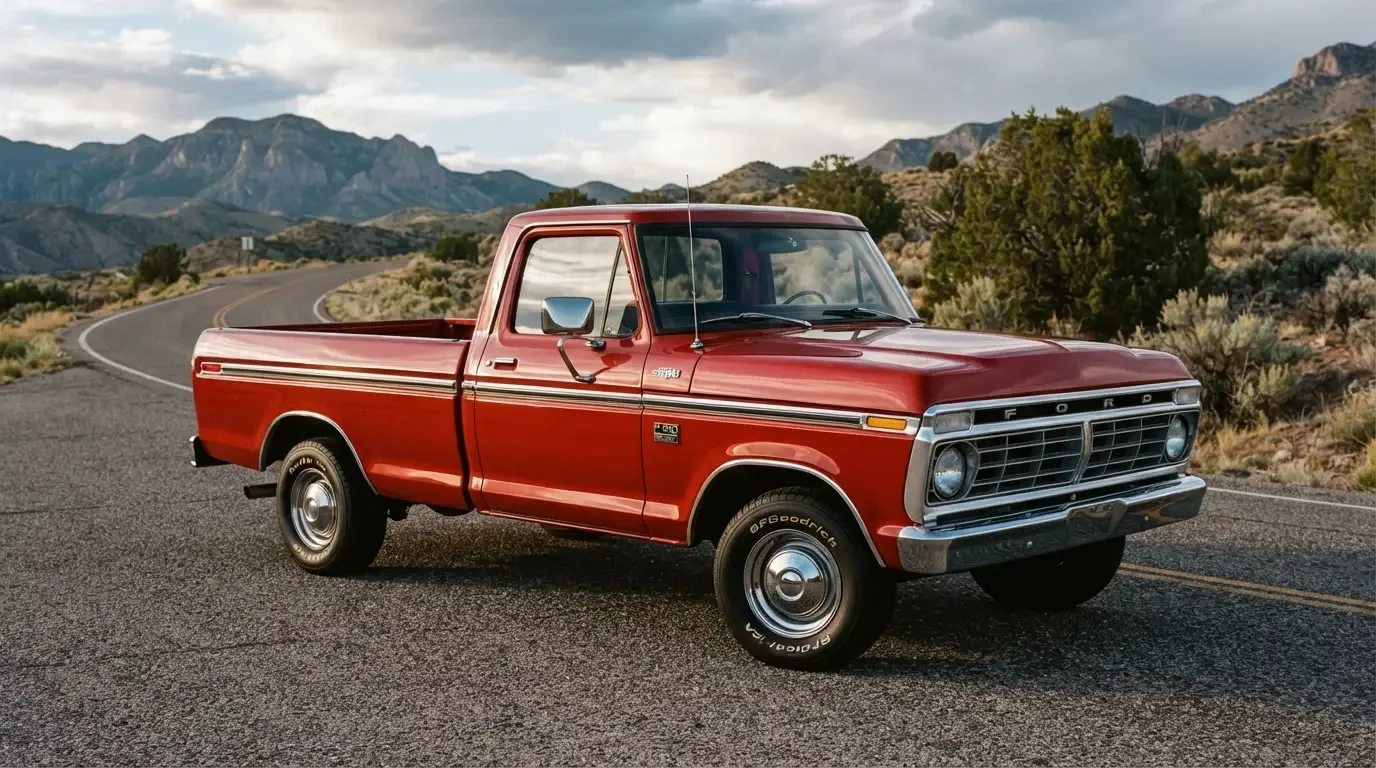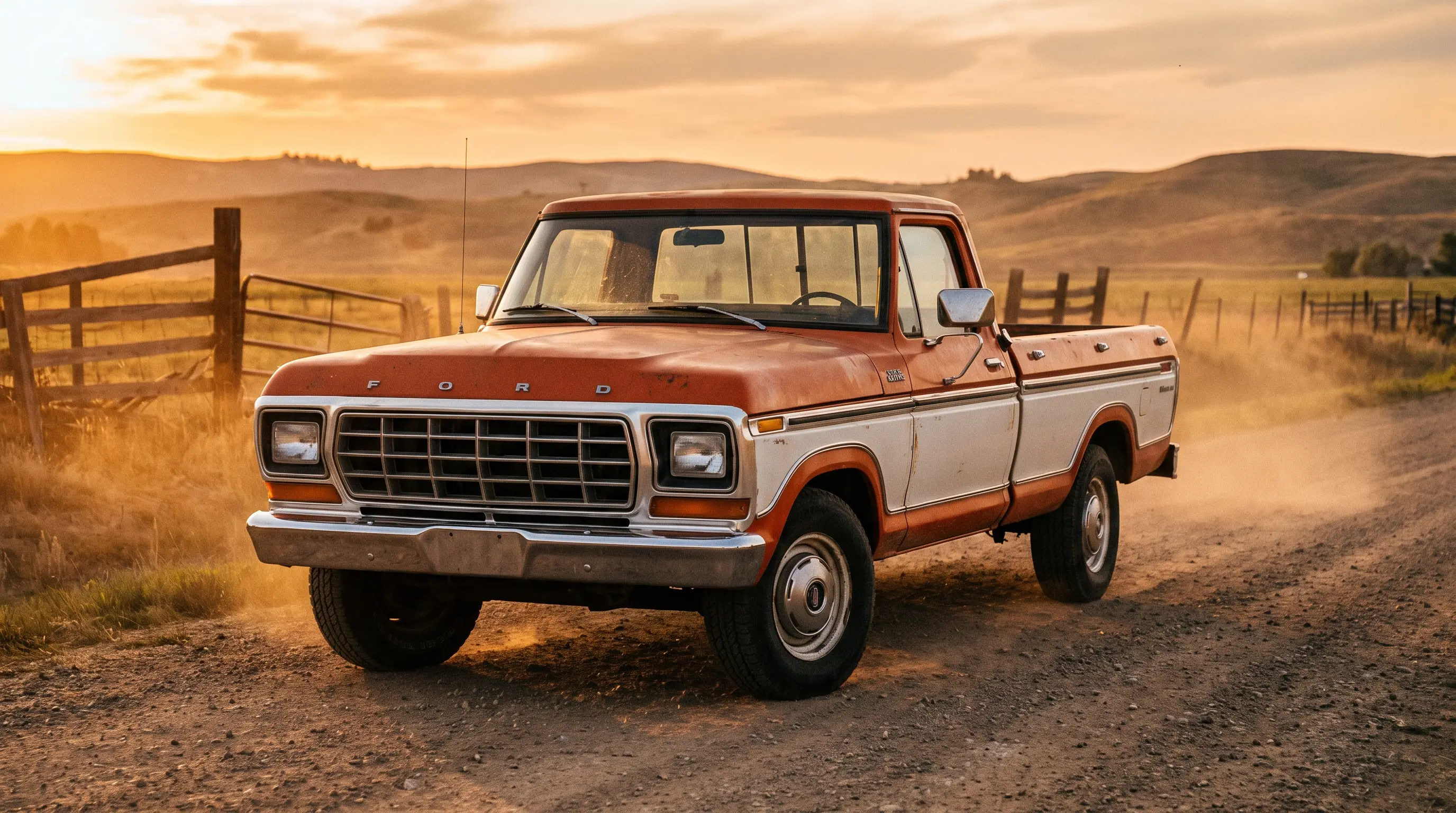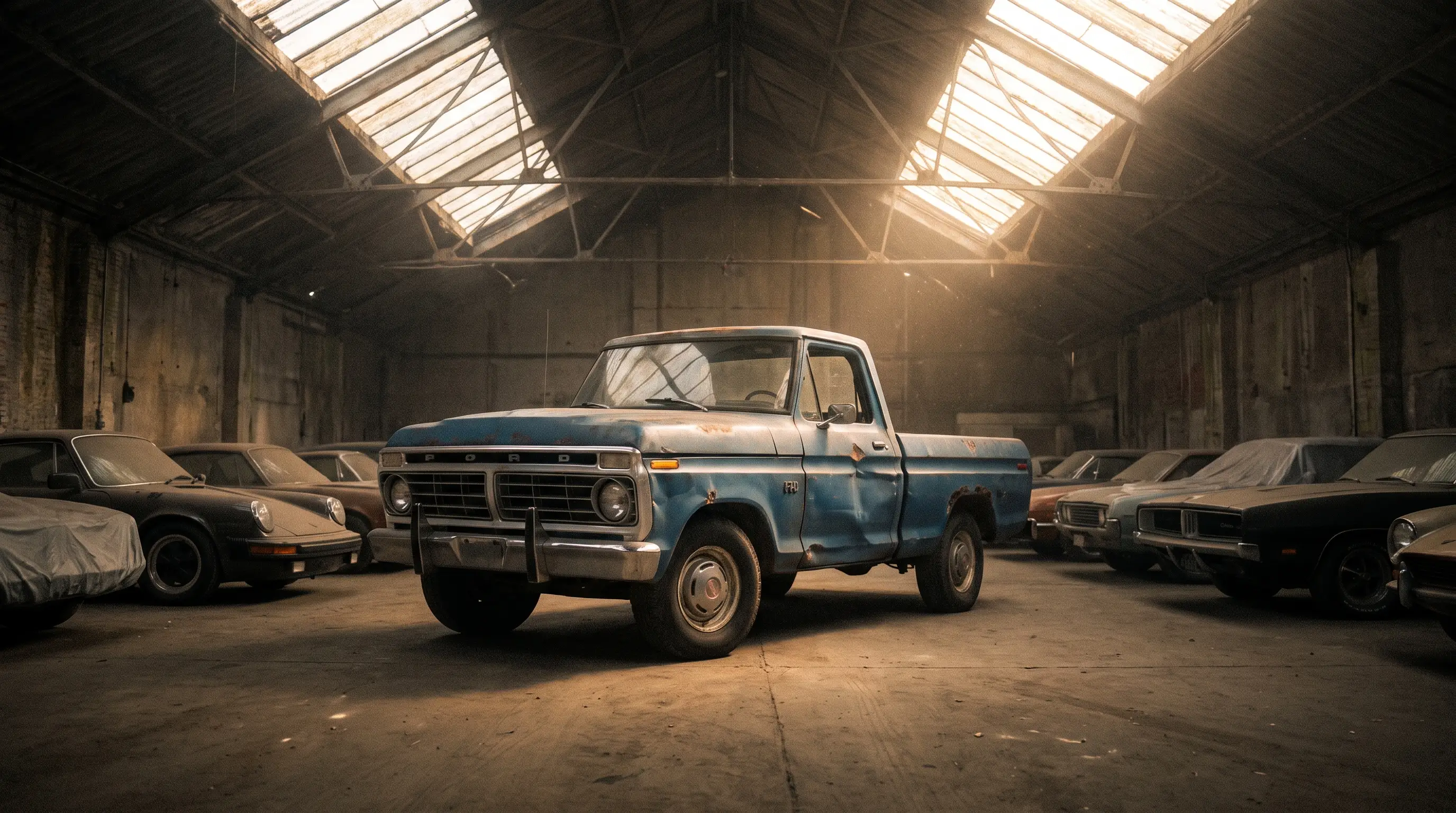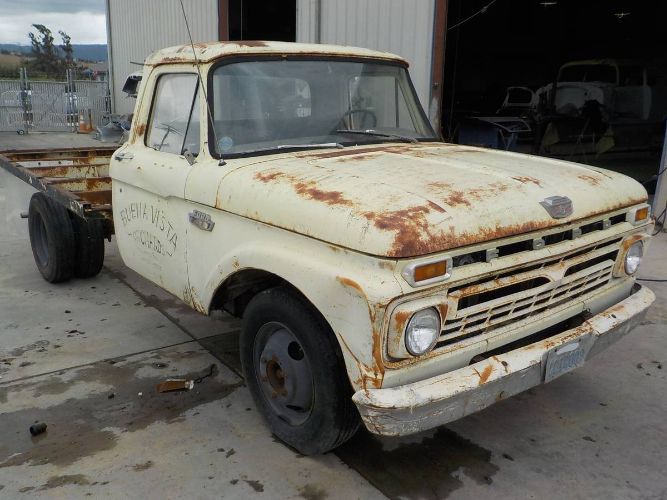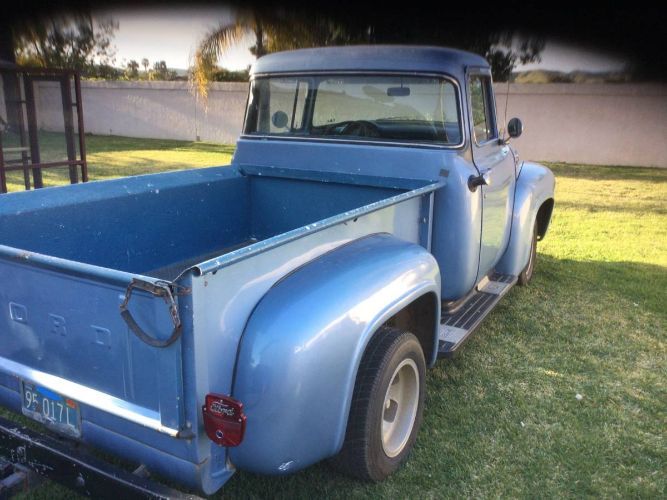
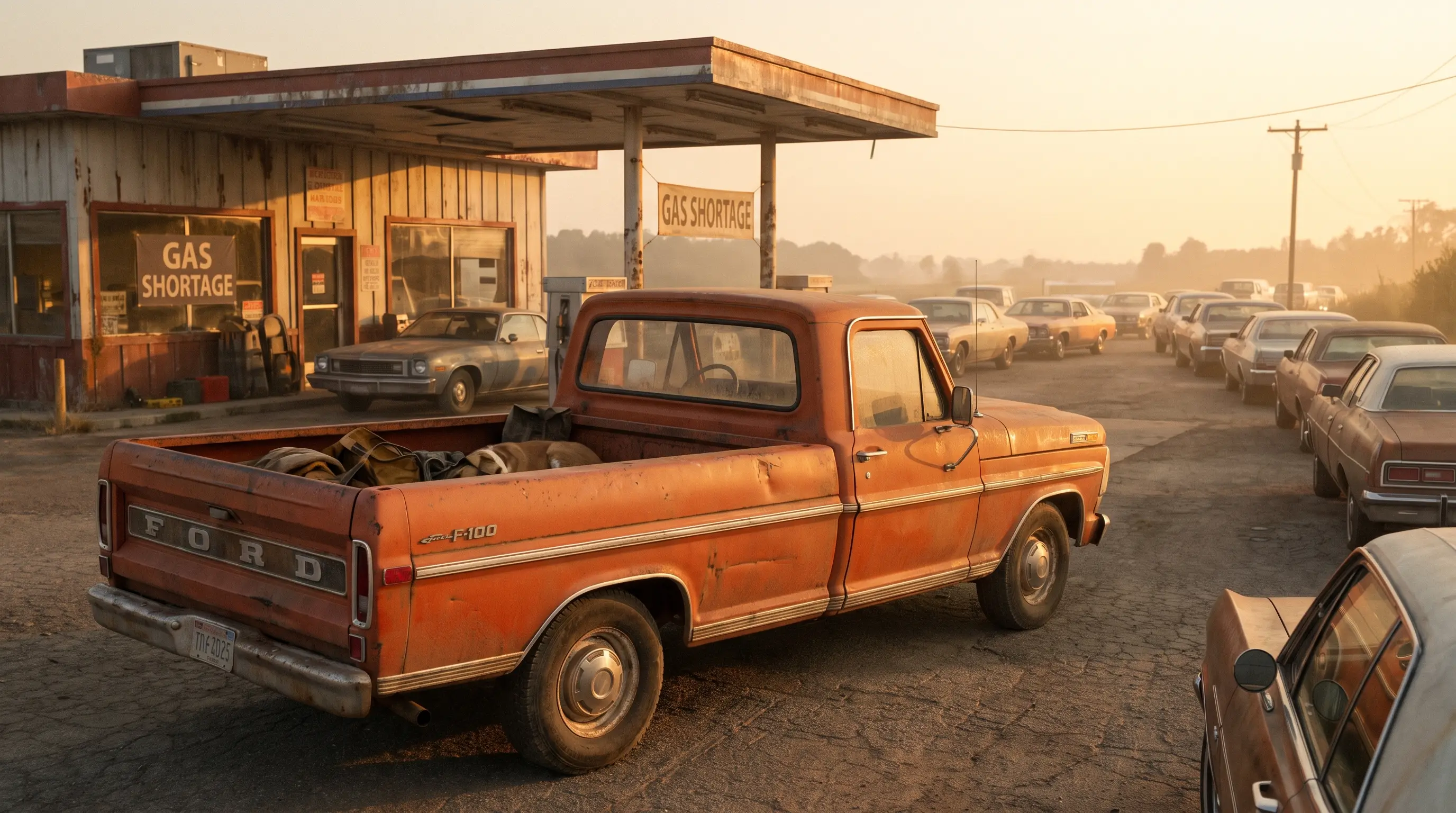
The Ford F-100 that rolled off the line in 1973 and the one Ford built for 1979 shared a body, but they did not share a philosophy. Between those two model years, the 1973 oil embargo and the 1979 energy crisis reshaped what American buyers expected from a half-ton truck, and Ford's engineers spent the entire dentside era reacting to fuel prices that swung wildly and never fully settled down.
The embargo hit right as the dentside launched
Ford's timing here was genuinely unlucky. The dentside redesign debuted for the 1973 model year, built around the assumption that buyers would keep favoring larger displacement V8s the way they had through the 1960s and early 1970s. Then the Arab oil embargo hit in October of that same year, quadrupling crude oil prices within months and sending gasoline prices sharply upward across the United States. Truck buyers who might have ordered a 390 or 460 cubic inch V8 without a second thought a year earlier suddenly started asking dealers about the smaller six-cylinder options instead, and Ford's order guides from 1974 and 1975 show a real shift in engine mix toward the more modest 300 cubic inch inline six as buyers recalibrated what they were willing to pay to fill the tank every week.
How Ford answered without redesigning the truck
Ford could not build an entirely new, more efficient truck platform overnight, so the response through the mid 1970s was incremental. Engineers worked on carburetor tuning and axle ratio changes aimed at squeezing marginally better fuel economy out of the existing engine lineup, and Ford's advertising for the F-100 during this period leaned harder into efficiency and value than it had in years prior, a notable shift for a truck lineup that had spent the previous decade selling primarily on capability and toughness. The full story of the 1973 redesign covers the mechanical side of that platform in depth, but the fuel crisis is the context that explains why so many of the engine and gearing decisions Ford made across the rest of the decade look conservative compared to what came before.
The second crisis finished what the first one started
Just as the truck market had adjusted to the 1973 embargo's aftermath, the 1979 energy crisis arrived, triggered by the Iranian Revolution disrupting oil exports and sending fuel prices climbing again along with renewed gas station lines across the country. This second shock landed in the F-100's final model year, and it accelerated a shift that had already been building for most of the decade, pushing buyers even further toward smaller engines and away from the heaviest, thirstiest configurations Ford still offered. It also strengthened the case for the F-150, whose slightly different certification path let Ford keep more usable performance in its V8 options even as fuel economy concerns mounted, one more factor working against the F-100 nameplate in the same year it was discontinued.
"You cannot separate the F-100's final years from what was happening at the gas pump. Every order guide from 1974 onward reads like a document responding to a crisis, not a truck being sold on its own terms."
- Tom Ramirez
Advertising had to change its whole pitch
Ford's print advertising for the F-100 through the mid to late 1970s tells its own version of this story, and it is worth reading closely because the tone shift is unmistakable. Ads from 1971 and 1972 leaned on power and toughness, presenting the truck as a rugged, capable machine with little mention of running costs. By 1975 and 1976, mileage claims and efficiency language start appearing prominently in the same campaigns, sometimes alongside the older toughness messaging rather than replacing it outright, a sign Ford's marketing team was trying to hold onto the truck's traditional appeal while addressing a genuinely new buyer concern. That balancing act, capability on one side and fuel anxiety on the other, defined how Ford talked about the F-100 for the rest of its production run, and it is a useful lens for understanding period brochures and dealer materials from these years if you come across them today.
What this means for the trucks that survived
Trucks ordered during these years reflect real buyer anxiety about fuel costs in ways that show up decades later in what survives. Six-cylinder F-100s from 1974 through 1979 are more common today than they would have been had the fuel crises never happened, simply because so many buyers chose that engine specifically to manage running costs during a period of genuine uncertainty about gas prices and availability. Classic F-100 for sale listings from this window often note the original engine specifically because collectors have come to understand that a six-cylinder truck from these years is not a base-model afterthought so much as a document of what buyers were actually thinking and worrying about at the time they signed the order form. That context adds a layer of history to a spec sheet that would otherwise read as a simple engine choice.
The dentside F-100 spent its entire seven-year production run bracketed by two fuel shocks that reshaped American driving habits for good. Understanding that context changes how you read a build sheet from this era, turning what looks like a modest engine choice into a small, honest record of a genuinely uncertain decade.
It is also worth remembering that none of these engineering and marketing decisions happened in isolation from the rest of the American auto industry. Chevrolet and Dodge were making nearly identical calculations on their own half-ton trucks during the same years, downsizing engine mixes and adjusting advertising language in response to the same two fuel shocks. What makes the F-100's version of this story distinct is the timing relative to its own production run. The truck launched right as the first crisis hit and was discontinued the same year the second one struck, which means its entire seven-year existence sits inside a period of sustained fuel anxiety almost without exception. Very few American vehicles from this era can claim that same bookend timing, and it gives the dentside F-100's engine and trim history a coherence that only becomes visible once you line the model years up against the oil market rather than against Ford's internal styling calendar alone.
Read that way, the F-100's final decade stops looking like a series of unrelated trim and engine tweaks and starts reading as a single, continuous response to circumstances outside Ford's control. That is not a dramatic story, and it will not show up in most casual histories of this truck. But for anyone researching a specific build sheet or trying to understand why a particular six-cylinder truck was ordered the way it was, the fuel crisis context is often the missing piece that makes the rest of the paperwork make sense.