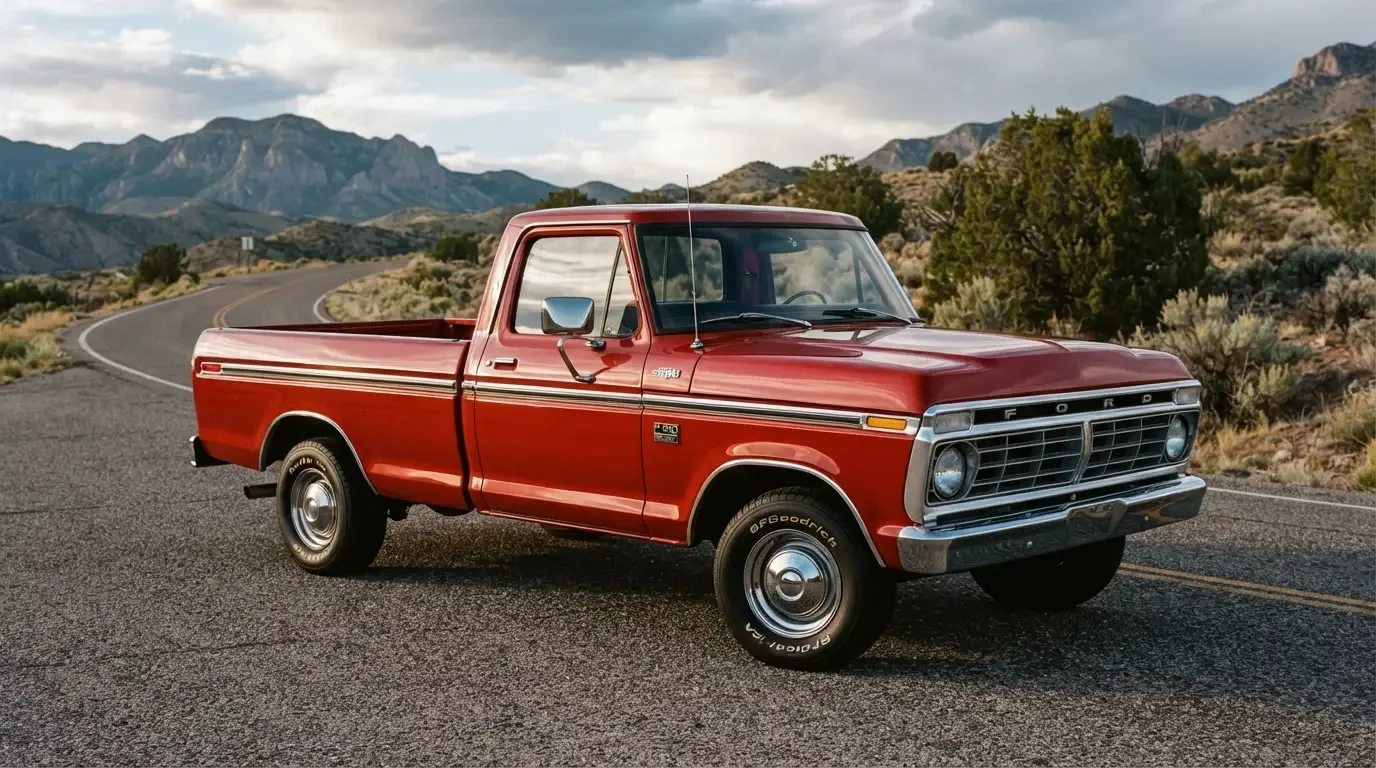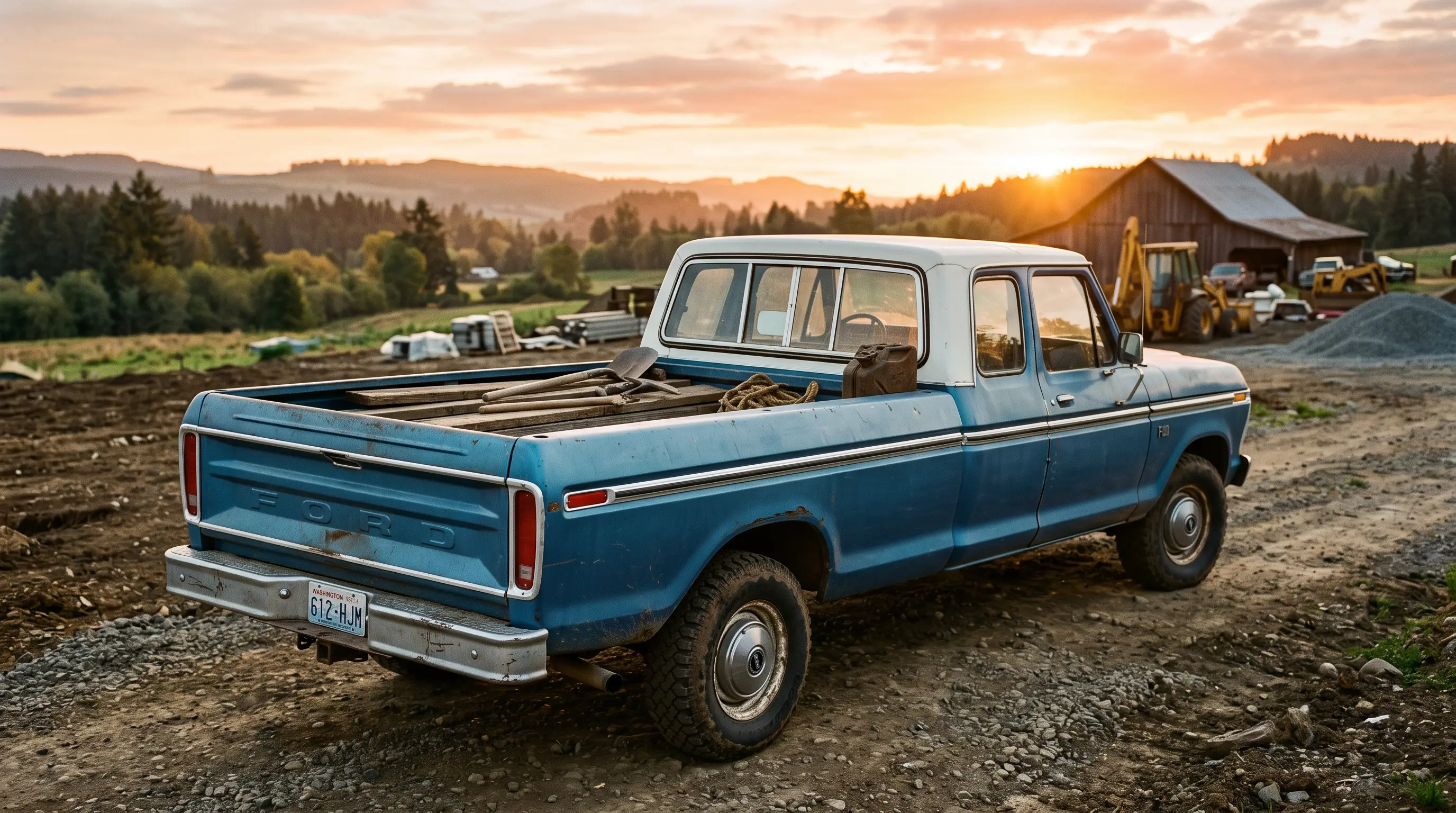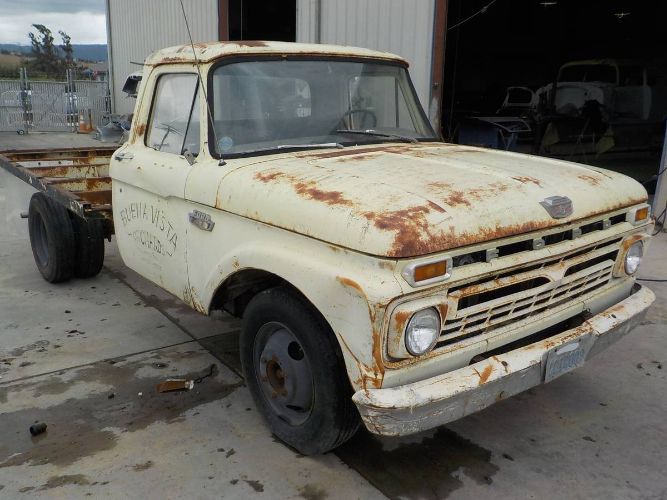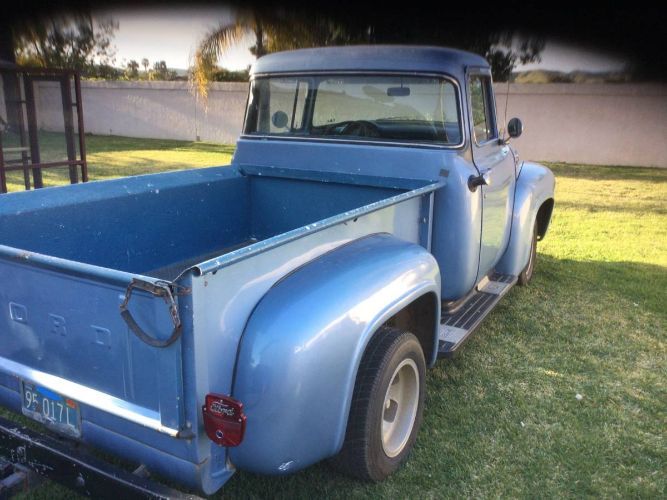
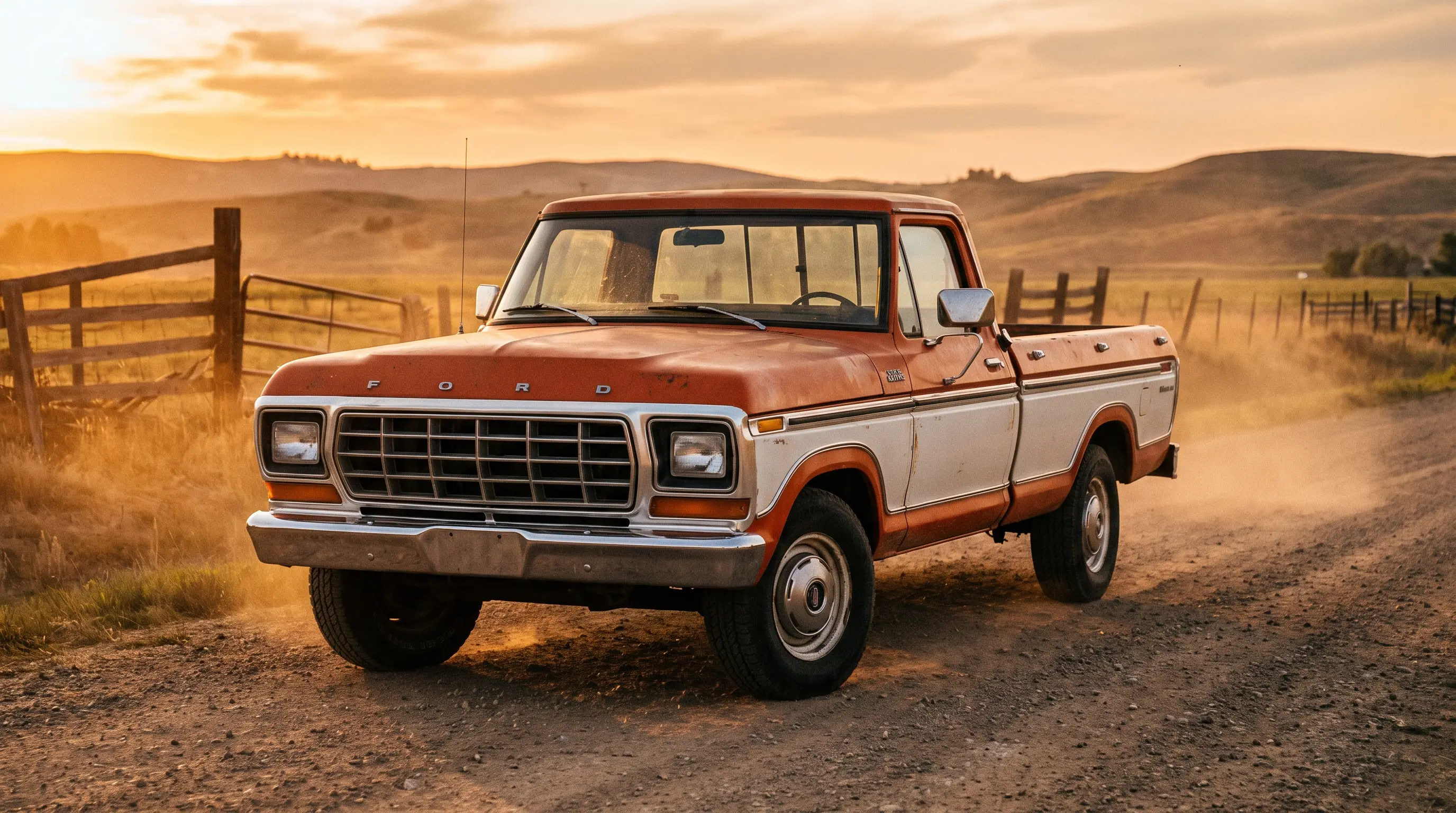
My neighbor kept a 1978 Ford F-100 in a shade Ford called Midnite Jade, a cool, muted green that looked almost gray under the streetlight and genuinely alive at noon. He washed it every other Saturday for eleven years that I watched, and he told me once that he chose the color because it reminded him of the kitchen his mother had painted in 1962. That is the thing about truck colors from this era. They were never just paint. They were choices people made about who they wanted to be seen as, parked in a driveway or idling outside a diner.
What the palette actually looked like in 1978
Ford offered a wide spread of colors on the dentside F-100 by 1978, ranging from practical work-truck whites and blues through warmer, more expressive tones that reflected the broader design language of the decade. Earth tones dominated much of the late-1970s catalog across the American auto industry, and Ford's truck lineup followed that trend with browns, tans, and olive-adjacent greens sitting alongside the more traditional reds and blues that had always sold well on a work vehicle. Two-tone combinations, especially on Ranger and Lariat trim trucks, let buyers pair a body color with a contrasting roof or lower panel treatment that traced the dentside crease running the length of the truck. Ford's 1978 truck color chart, decoded from the VIN warranty tag, confirms a genuinely wide spread that year, including Bright Yellow, Light Chamois, Light Blue, Bright Blue Metallic, Dark Brown Metallic, Bright Red (Castillo Red), Midnite Jade, Maroon, Dark Nectarine Metallic, Tangerine, Silver Metallic, and Jade Metallic (Jade Glow), among others, so a buyer cross-shopping the catalog that year had a real spectrum to choose from rather than a narrow handful of options.
Color as a class signal on a work truck
A base-trim F-100 in plain white or a single flat color read as exactly what it was, a tool bought to do a job. A two-tone Ranger XLT or Lariat in a warmer, more considered color combination read differently the moment it pulled into a driveway, signaling that the owner had spent a little more and cared about the truck's presence beyond its bed capacity. The 1973 Ford F-100 story covers how the dentside redesign gave Ford's designers a fresh canvas to build that hierarchy on, and color was one of the clearest ways buyers could telegraph which end of that spectrum their truck belonged to without anyone needing to check the trim badge on the fender.
Why certain colors survive better than others
Talk to anyone who has owned one of these trucks for decades and you will hear the same complaint about certain shades from this era. Some of the era's more unusual greens and browns were more prone to visible fading and chalking under UV exposure than the simpler primary colors Ford had offered for years before, since pigment technology of the period had not caught up evenly across every hue in the catalog. That means a surviving 1978 F-100 in one of the rarer earth tones, still holding real depth in its paint rather than a chalky, sun-bleached version of the original color, is genuinely harder to find than the same truck in a more common white or blue. My neighbor's Midnite Jade truck held its color remarkably well, something he credited to a covered carport rather than any special formula, and I believe him, because I have seen enough faded examples of that same shade at shows to know how much luck and care go into a survivor like his.
"He never once talked about horsepower with that truck. He talked about the color, every time, like it was the whole reason he bought it."
- Nora Beckett
The interior told its own quiet version of the story
Exterior color got most of the attention, but the interior palette on a 1978 F-100 carried its own version of the same signaling. Base trucks stuck to a narrow range of practical vinyl colors, mostly black, blue, or a neutral tan that hid dirt and wear from daily work use. Higher trims opened up warmer, more coordinated interior schemes designed to complement the exterior two-tone, with cloth inserts on Lariat-trim seats picking up tones from the paint outside rather than defaulting to whatever vinyl was cheapest to produce that month. It is a small detail most people never notice unless they are sitting in the truck, but it is consistent with everything else Ford was doing across the trim ladder in this era, using color and material choices to draw a clear line between a tool and a truck someone actually wanted to spend time inside.
What color tells you when you go shopping
If you are looking at a 1978 F-100 today, the original color is worth treating as part of the truck's story rather than a detail to change on a whim. A repainted truck in a color that never appeared on the factory order sheet loses something specific, a piece of documentation that tells you what the original buyer chose and why, even if you never learn the reason behind it the way I learned my neighbor's. Classic F-100s on the market with original, well-preserved paint in one of the less common late-1970s colors tend to draw attention precisely because that combination, rare hue and honest survival, is not something you can recreate with a fresh repaint alone. The full story of this nameplate's decades on the road covers a lot of ground, but the color a truck wore new remains one of the few details that still tells you something true about the person who chose it.
My neighbor sold that truck eventually, to a young couple who drove it away still smelling faintly of the wax he used every other Saturday. I do not know if they know about the kitchen his mother painted in 1962. But the color is still there, still holding, still telling a small piece of a story that started decades before they ever saw the truck.
I think about that truck every time I see a dentside F-100 at a show wearing a color I do not recognize from the era's catalog, because I know somewhere behind that fresh paint is probably a story nobody bothered to write down. Not every truck gets a neighbor who remembers the reason. Most of them just get repainted for resale, the original hue lost the moment someone decided white would sell faster. That is a practical decision, and I understand it. But it is also a small erasure, one color choice standing in for whatever memory or reason the first owner actually had, and it is part of why I find myself paying closer attention to paint than horsepower whenever one of these trucks rolls past.