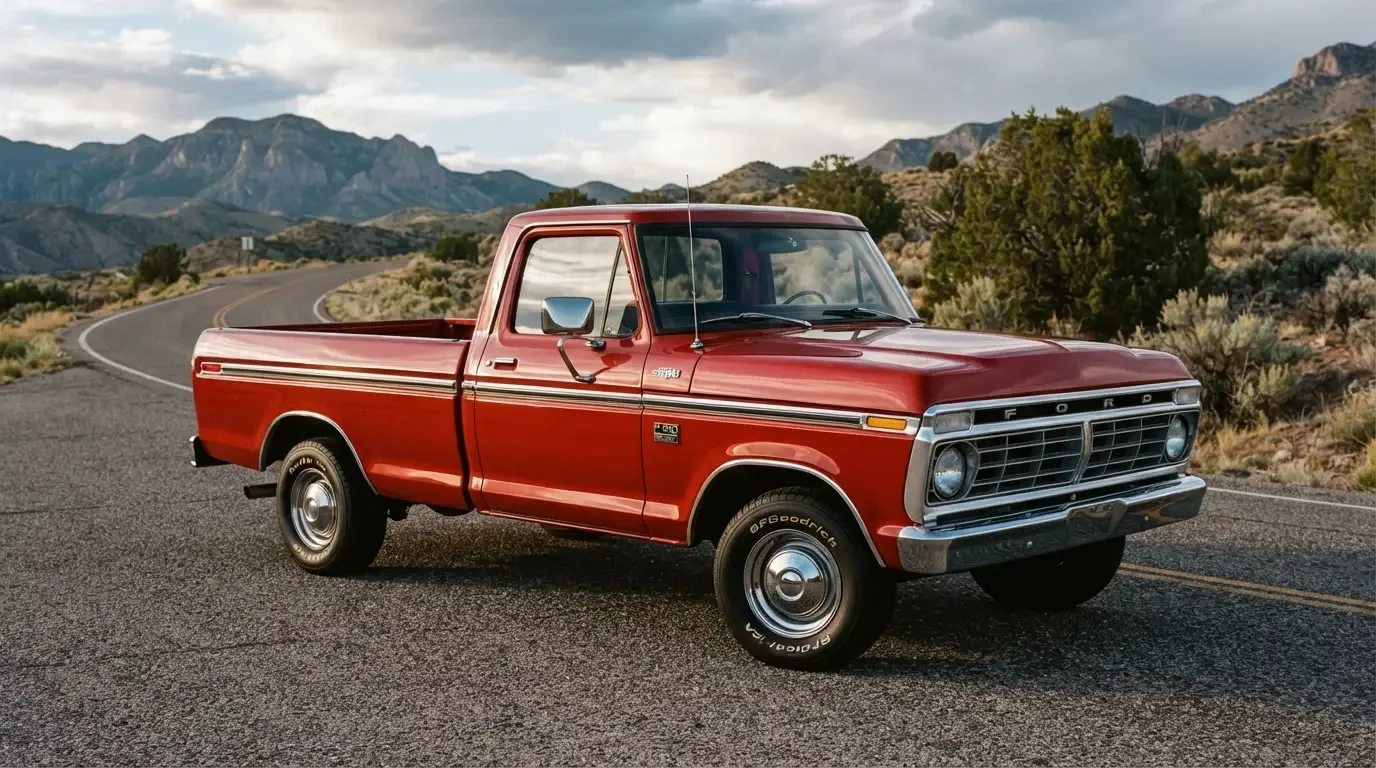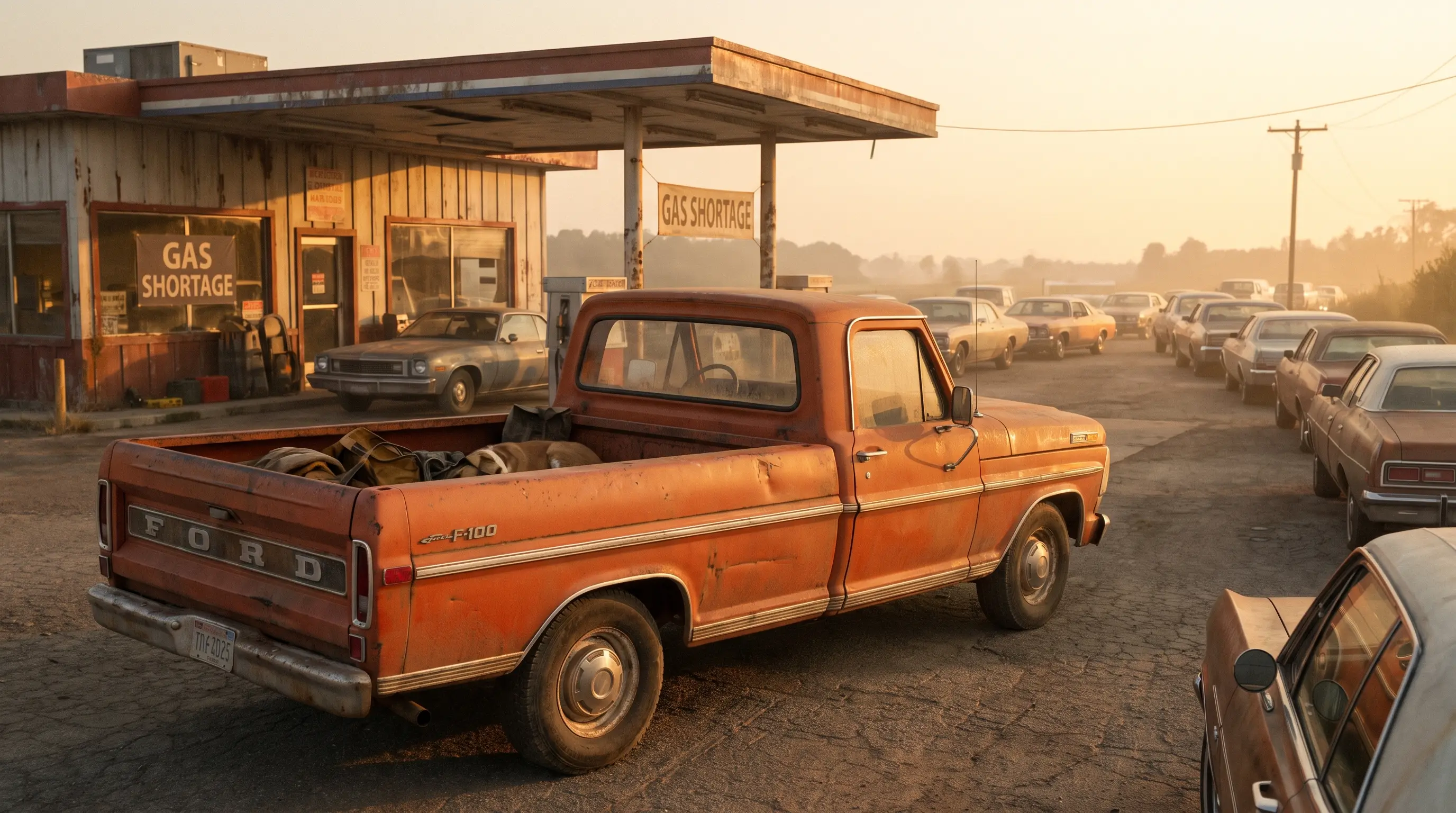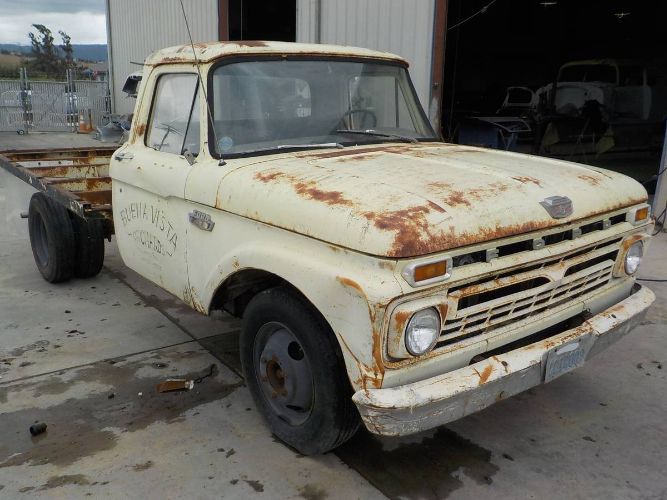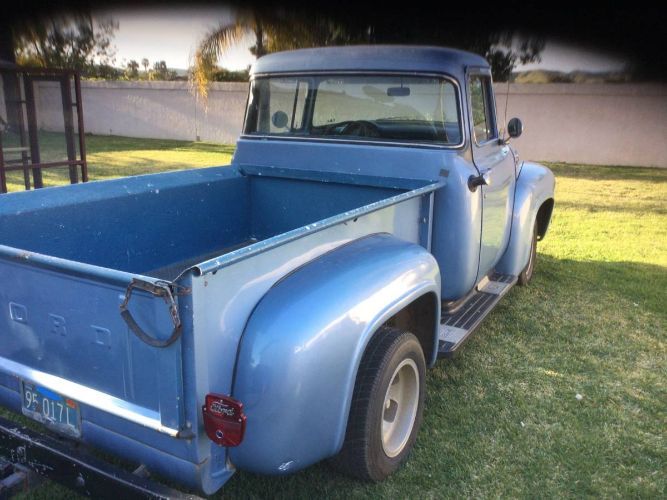
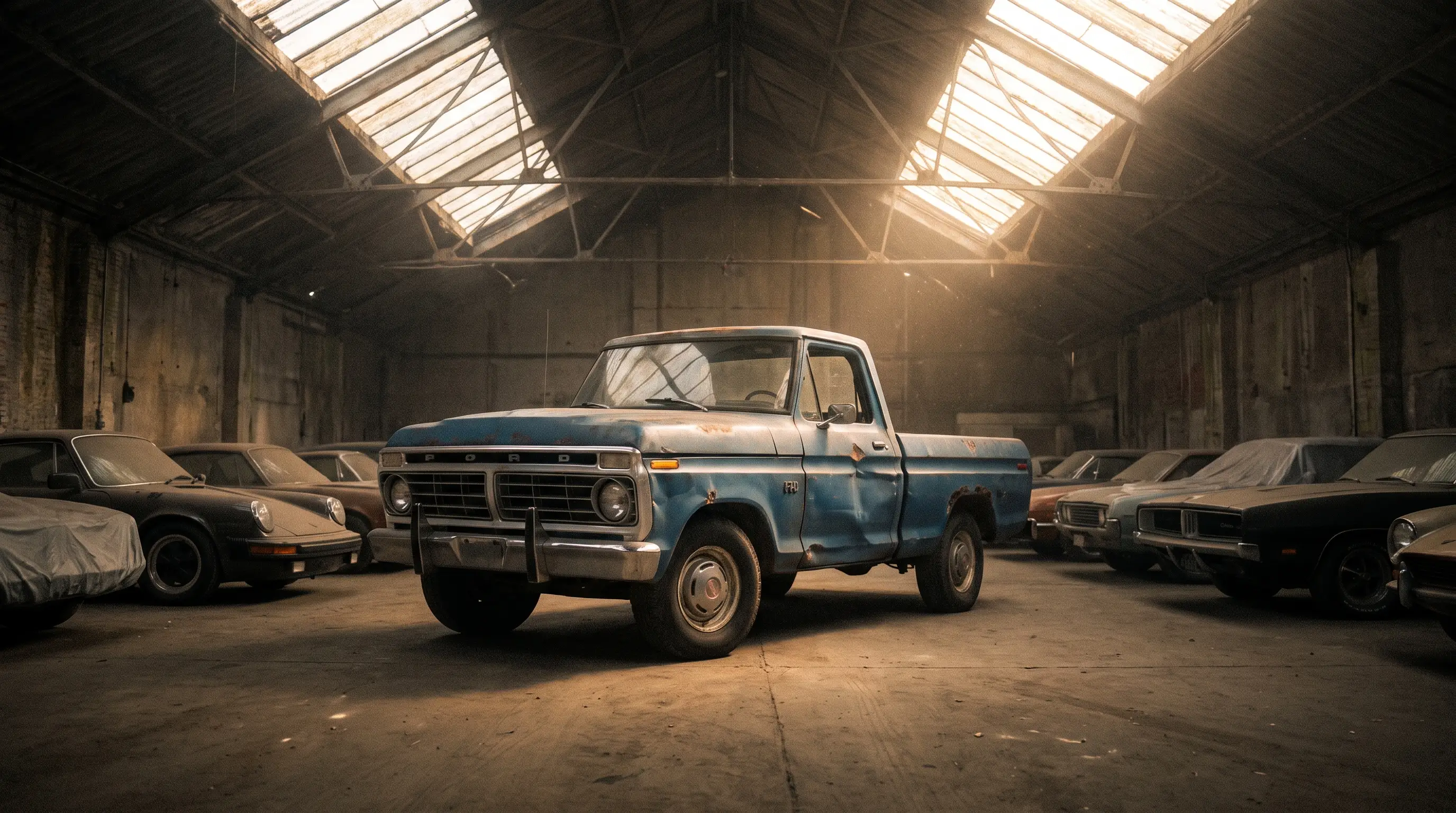
Documenting Ford F-100 production for 1978 and the surrounding years requires patience, because Ford's own record-keeping from this period was organized around total F-Series output rather than a clean, isolated F-100 figure that a researcher can simply pull from a single source. The dentside body's final production years, 1978 in particular, sit at an interesting inflection point where the F-100 badge was still on the order sheet but was clearly losing ground to the F-150 in the volume that actually left the factory floor.
Reading the production record correctly
Ford built F-Series trucks across multiple assembly plants during this period, including Louisville, the Michigan Truck Plant, and additional facilities handling regional demand, and total half-ton output for any given year gets reported in Ford's historical production summaries as combined F-100 and F-150 volume more often than as a badge-specific breakdown. This matters enormously for anyone trying to establish exactly how many 1978 F-100 trucks were built versus F-150s from the same model year. Enthusiast researchers who have worked through dealer invoices, regional distribution records, and surviving VIN documentation put 1978 F-100 output at roughly 158,000 units, a figure that should be treated as a well-researched estimate rather than an official factory tally, since Ford's own published totals from the period rarely isolated F-100 volume from combined half-ton output. Researchers working from that same body of evidence have pieced together a general picture that F-100 output was a distinct minority of total half-ton production by 1978, but a precise, universally agreed figure remains harder to pin down than collectors sometimes assume from casual references online.
Why VIN and build sheet documentation matters here
Given the ambiguity in aggregate production figures, individual documentation becomes the more reliable path for confirming a specific truck's history. A Ford VIN from this era encodes the assembly plant, model year, and body configuration in a decodable format, and pairing that with a surviving build sheet or window sticker gives a far more concrete record than any published production total can. Our complete history of the dentside generation covers the redesign that created this body style in 1973, but for anyone doing serious research into a specific 1978 truck's originality, the VIN plate and any surviving factory paperwork will tell you more than a production number ever could.
Cross-referencing the assembly plants
| Plant | Region served | Relevance to F-100 research |
|---|---|---|
| Louisville Assembly, Kentucky | Eastern and central US | Primary volume plant for F-Series half tons |
| Michigan Truck Plant, Wayne | Northern and Midwest US | Additional half-ton and larger truck output |
| Regional facilities | Varies by year | Supplemented volume; plant codes appear in VIN |
Knowing which plant produced a given truck is not just trivia for a researcher. The plant code embedded in the VIN can help confirm whether a truck's documented history is internally consistent, since a build sheet claiming options or specifications inconsistent with what a specific plant typically shipped in a given production window is worth a closer, more skeptical look. This kind of cross-referencing is slow, unglamorous work, but it is the difference between a documented, verifiable F-100 and one where an owner's memory or a previous seller's claim has simply been repeated without anyone checking it against the actual paper trail.
What the production imbalance means for collectors
The practical consequence of F-100 output trailing F-150 output through 1978 and 1979 is straightforward scarcity. Fewer F-100s were built in these final years than F-150s from the identical model years, and a smaller surviving population compounds that gap further after four decades of daily use, scrapping, and badge-swapping between the two nearly identical trucks. This is precisely why documentation carries so much weight for late dentside F-100s specifically. A truck with confirmed original F-100 badging, backed by VIN decode and any surviving paperwork, represents a genuinely less common survivor than the same body style wearing an F-150 badge from the same assembly year, even though the two trucks are mechanically almost indistinguishable.
"A production number without a VIN to match it tells you almost nothing about the truck sitting in front of you. The number describes a factory. The VIN describes this specific vehicle."
- Sarah Whitfield
What this means when evaluating a truck today
Anyone researching or shopping a 1978 F-100 should treat published production figures as useful context rather than as a verification tool for any individual truck. Browse classic F-100 listings and cross-reference any production claims made in a listing description against the truck's actual VIN decode and available paperwork before treating rarity claims as settled fact. The most reliable approach remains building a documentation file specific to the truck in question, starting with the VIN plate, adding any surviving build sheet or dealer invoice, and treating broader industry production totals as background context that explains why that documentation matters so much rather than as a substitute for it. Late dentside F-100s reward this kind of careful record-keeping precisely because the badge itself was already becoming uncommon the year it was built, and that scarcity only becomes meaningful once it is tied to a specific, verifiable vehicle rather than a general production estimate.
Common documentation gaps and how to work around them
Original build sheets rarely survive intact after forty-plus years, and when they do, they are often found tucked behind a seat cushion or under a headliner rather than kept safely in a folder by successive owners who had no reason to expect a truck's paperwork would matter decades later. When a build sheet is missing entirely, a Marti Report style deep VIN decode or a dealer's regional sales records, where they still exist, can sometimes fill gaps, though these secondary sources vary widely in completeness depending on the original dealership and how well its records were preserved after closing or changing ownership. A researcher working without any surviving paperwork at all is not without options, but the conclusions available shrink considerably, limited mostly to what the VIN plate itself can confirm about plant, year, and basic configuration rather than the full option list a build sheet would have documented.
This is worth stating plainly for anyone new to researching this generation. A truck without documentation is not automatically suspect, since paperwork loss is the norm rather than the exception after this many decades. But a truck with a specific, detailed originality claim and no documentation to back it deserves more scrutiny than the same claim paired with a surviving build sheet, and that distinction should shape how much weight any given description carries when comparing multiple trucks for sale.
None of this diminishes what a 1978 F-100 is as a vehicle, even absent perfect paperwork. It simply means that the story attached to any individual truck should be evaluated on the strength of its evidence rather than on confidence alone. Production history at the aggregate level tells you why F-100 documentation matters this much in the first place, a genuinely smaller badge share in a genuinely uncertain final production window, but it is the individual record, VIN by VIN and build sheet by build sheet, that turns that broader context into something a researcher can actually stand behind.