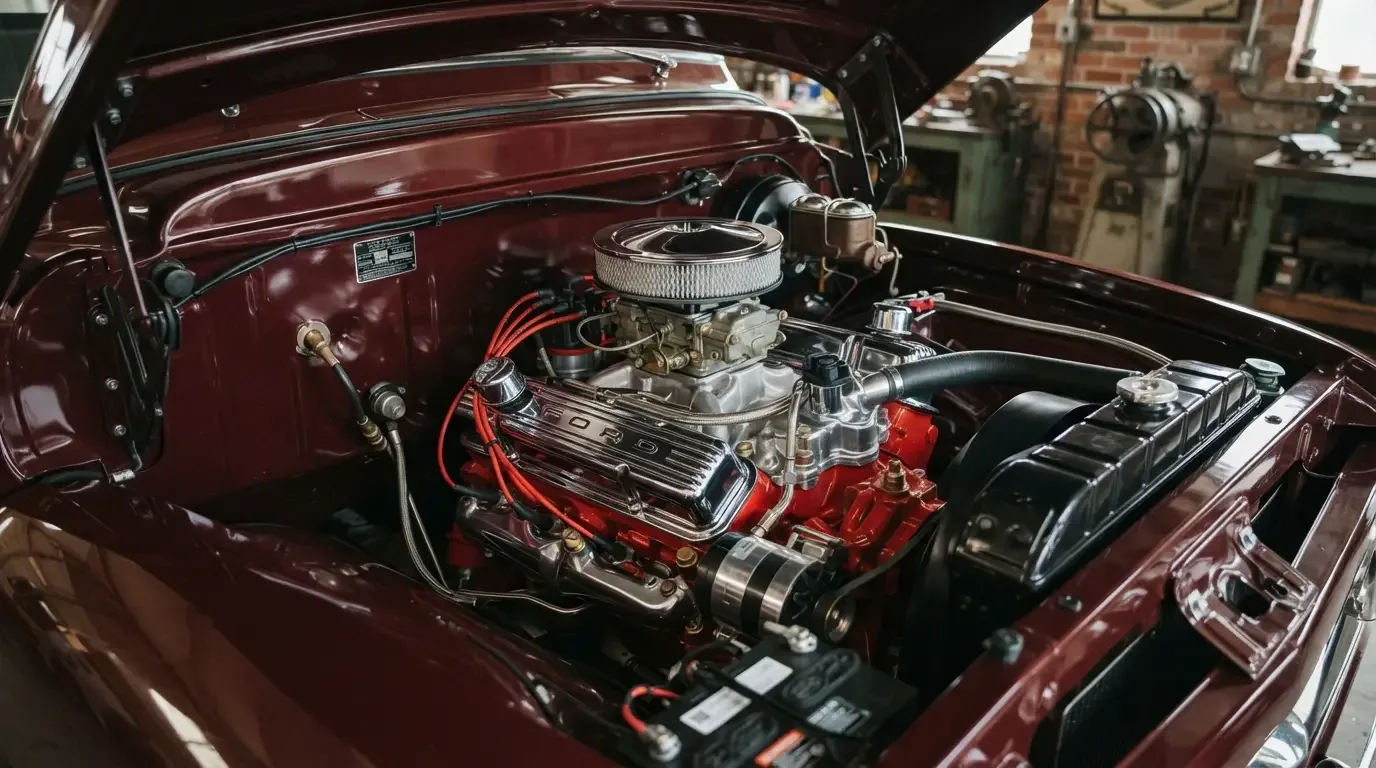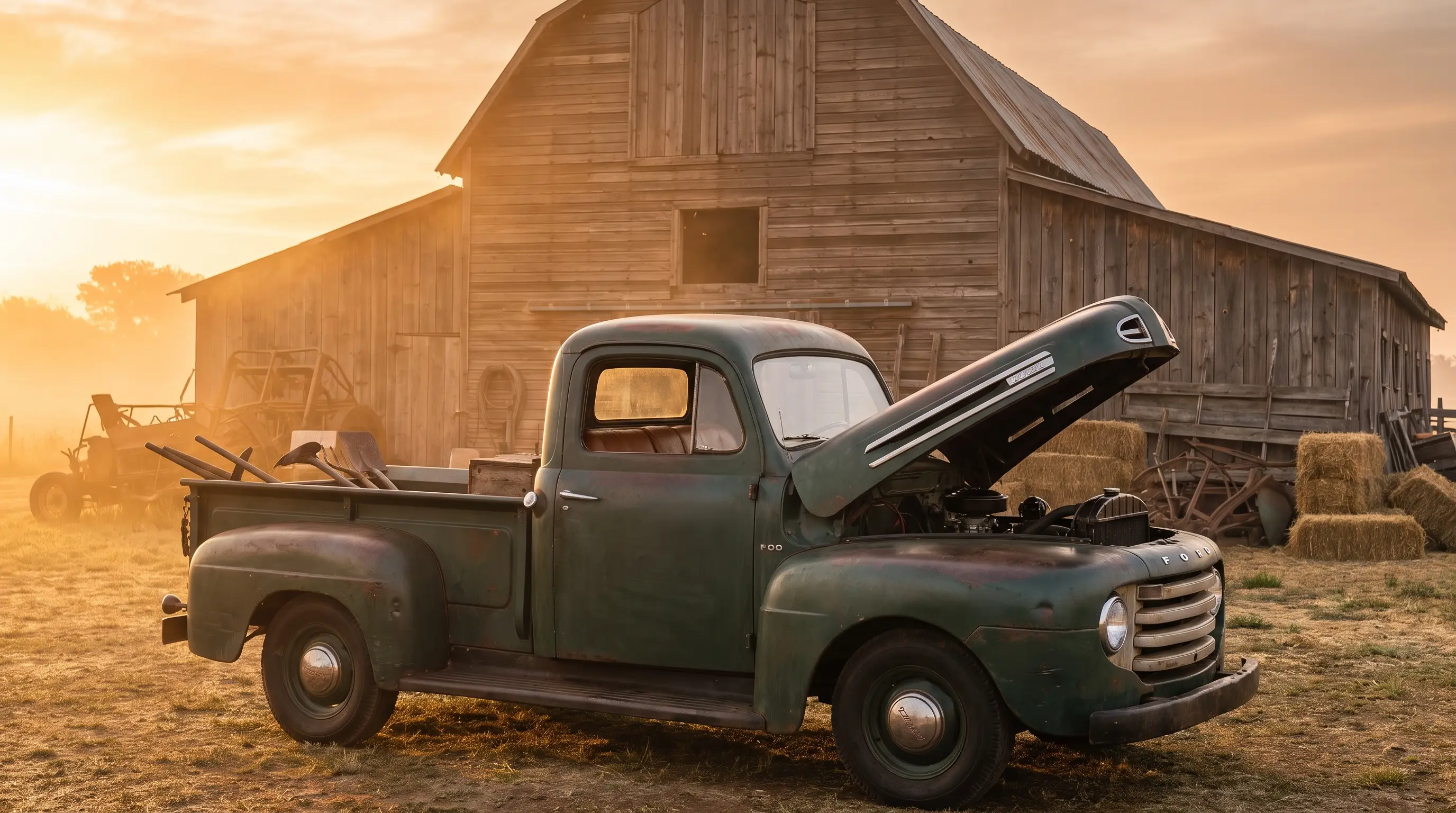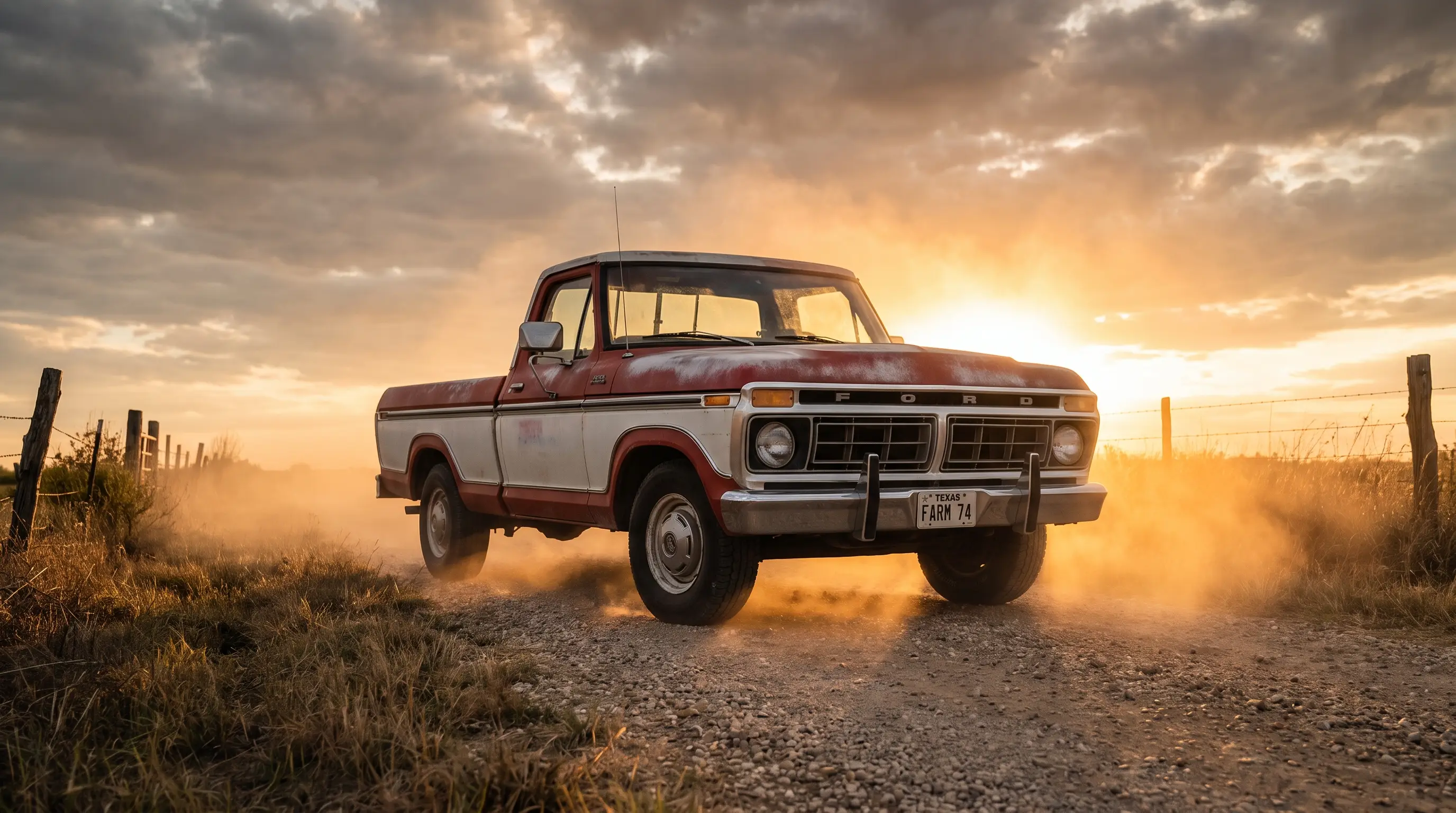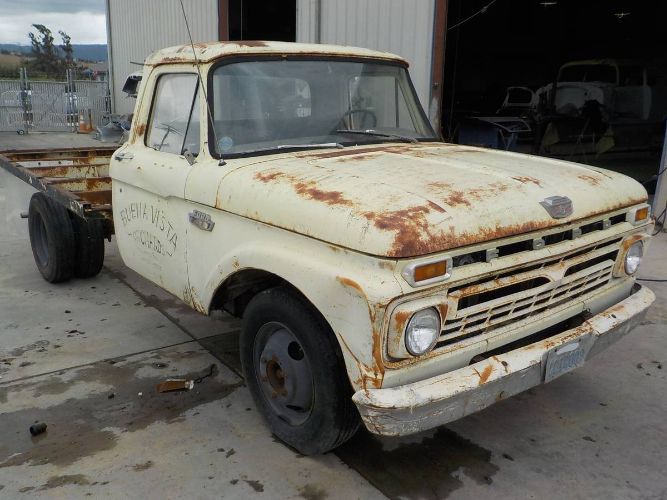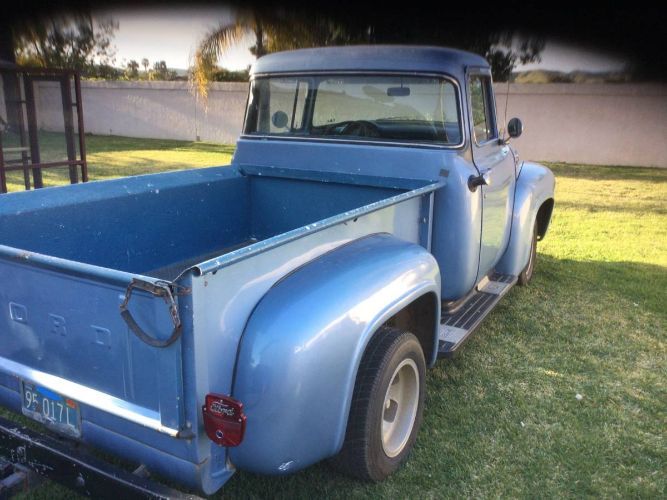
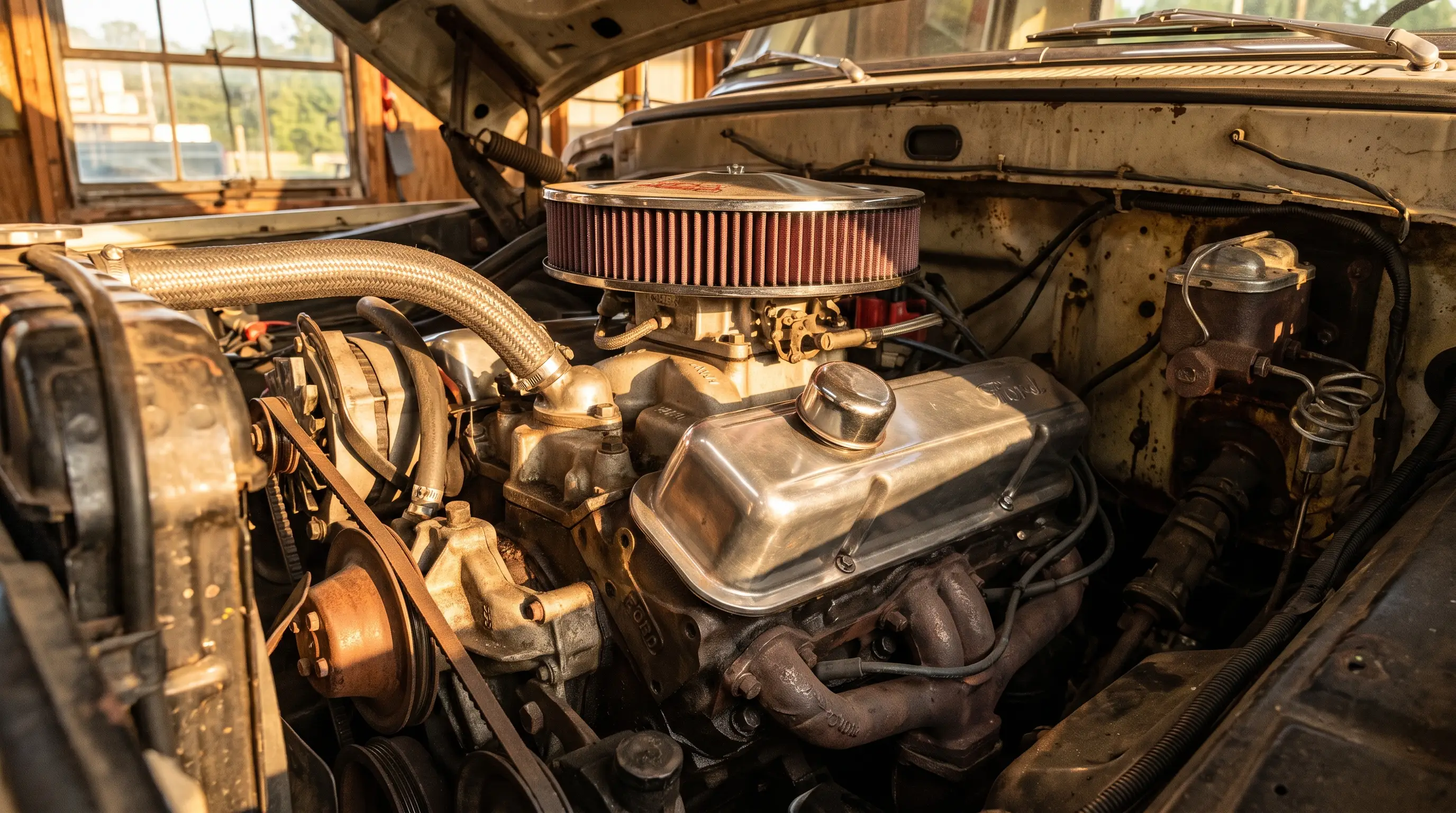
The Ford F-100 built its reputation on iron, not marketing copy. From 1948 through 1979, the engines under that hood did the actual work of proving what a half-ton truck could survive, and the numbers back up the legend better than any brochure ever did. This is a rundown of the ford f100 engine legends that mattered, told through what they actually delivered, not what Ford said they delivered.
The flathead V8 started the story, and it was already outdated
The 1948 F-1 launched with a 239 cubic inch flathead V8 rated at 100 horsepower, an engine design Ford had been refining since 1932. It was not advanced. Overhead valve V8s were already proving their worth at General Motors by the early 1950s, and Ford knew it. The flathead's real virtue was reliability born of simplicity: fewer moving parts, easier field repair, and a bottom end that could take abuse. Farmers and tradesmen did not need cutting edge. They needed a truck that started every morning, and the flathead did that job for the F-Series' first six model years before Ford finally retired it in 1954.
The number that matters here is not horsepower. It is longevity. A 100-horsepower engine sounds unimpressive today, but it moved a loaded half-ton truck reliably enough that Ford sold the F-Series in the hundreds of thousands during those flathead years. That is the real legend: not power, but staying power.
The Y-block changed the conversation in 1954
Ford dropped the flathead for the overhead-valve Y-block V8 in 1954, offering 239 and later 272 and 292 cubic inch versions. The Y-block pushed output past 130 horsepower in its early form and kept climbing through the decade. This was Ford catching up to the rest of the industry, and the F-100 benefited directly. Torque improved, cooling improved, and the engine ran cooler under sustained load, which mattered to anyone actually towing or hauling for a living.
The Y-block gets overlooked in F-100 history because it was a transitional engine, sandwiched between the flathead's romance and the FE-series' muscle. That is a mistake. The Y-block is the engine that proved Ford could modernize the F-100 without breaking what worked. Reliability held. Sales held. The truck kept earning its keep.
The FE-series 352 and 390 brought real muscle by the late 1960s
Ford's FE-series big blocks reached the F-100 lineup starting with the 332 in 1958 and the 352 by 1960, with the 390 cubic inch version arriving in 1967, the same FE family Ford used in full-size cars and even some early Mustangs. Truck-tuned 390s were rated around 255 horsepower in their most common configuration, a serious number for a work vehicle in that era. Towing capacity and payload both benefited, and the F-100 started attracting buyers who wanted a truck that could keep pace with traffic, not just survive a job site.
This is where where this started becomes relevant context. The FE-series engines did not appear in a vacuum. They were Ford's answer to a market that wanted more capability without giving up the F-100's basic honesty as a work truck.
"People want to talk about horsepower peaks. I want to talk about what an engine did on its ten thousandth start. The FE-series 390 in an F-100 did not blow up. That is the whole review."
- Dan Reeves
The 300 inline-six is the engine nobody bragged about and everybody trusted
Introduced in 1965, the 240 and later 300 cubic inch inline-six became the default engine for buyers who wanted a truck that just worked. The 300-six is not glamorous. It made around 120 to 170 horsepower depending on year and tune, numbers that never impressed anyone at a car show. But mechanics still talk about the 300-six as one of the most durable engines Ford ever built, with plenty running past 300,000 miles on basic maintenance.
That durability is the actual legend, more than any V8's peak output. A truck engine's job is to not fail, and the 300-six did not fail. Fleet buyers noticed. Ranchers noticed. The resale value on six-cylinder F-100s from the 1970s still reflects that trust.
| Engine | Years offered | Displacement | Approx. horsepower |
|---|---|---|---|
| Flathead V8 | 1948-1953 | 239 ci | 100 hp |
| Y-block V8 | 1954-1964 | 239-292 ci | 130-170 hp |
| FE-series V8 | 1958-1976 | 332-390 ci | 208-255 hp |
| 300 inline-six | 1965-1979 | 240-300 ci | 120-170 hp |
The small block 302 and 351 arrived as the practical middle ground
By the early 1970s Ford had added the 302 and 351 cubic inch small block V8s to the F-100 lineup, engines borrowed from the passenger car side but retuned for truck duty. The 351 Windsor made around 156 to 161 horsepower in net-rated form by the mid-1970s, a number that looks small next to the gross-rated figures of the previous decade, but the shift to net ratings in 1972 changed how every engine got measured, not just Ford's. Read straight, the 351 gave buyers V8 torque without the FE-series' weight and thirst, and it became a common choice for buyers who wanted more than the six but did not need a 390 under the hood.
The 302 filled a similar role at a smaller displacement, and both engines shared parts with Ford's car lines, which kept repair costs down at the dealer and the parts counter. That mattered to fleet buyers running dozens of trucks, and it is part of why so many small block F-100s from the 1970s survived long enough to become the project trucks people restore today.
By the F-100's final years, the engine lineup told the whole story of the truck
The F-100 badge ran through the 1983 model year in the United States, and by then the lineup still spanned the 300-six up through V8 options, a spread shaped by more than three decades of learning what worked. Ford did not chase the highest number. It chased the engine that survived the job. That is why the F-100's engine legends hold up: not because any single one was the most powerful truck engine of its era, but because each generation delivered exactly what its buyers actually needed, and did it without drama.
If you are hunting for one of these trucks today, the engine choice still matters as much as it did new. A well-kept 300-six will outlast a neglected big block every time, and buyers who understand that history tend to make better purchases. For those ready to look, you can shop classic F-100 listings and weigh engine history against condition before you commit.
Sources and notes
- Ford F-100 Years: Complete 1948-1983 Timeline
- Ford Y-block engine, Wikipedia
- Ford FE engine, Wikipedia
- 1953 Ford: The End of the Flathead V8 Era, Mac's Motor City Garage
- Automotive History: The Ford FE Series V8 Engine, Curbside Classic
- F-150 vs F-100: 1975-1983 Ford Truck Comparison Guide, CJ Pony Parts