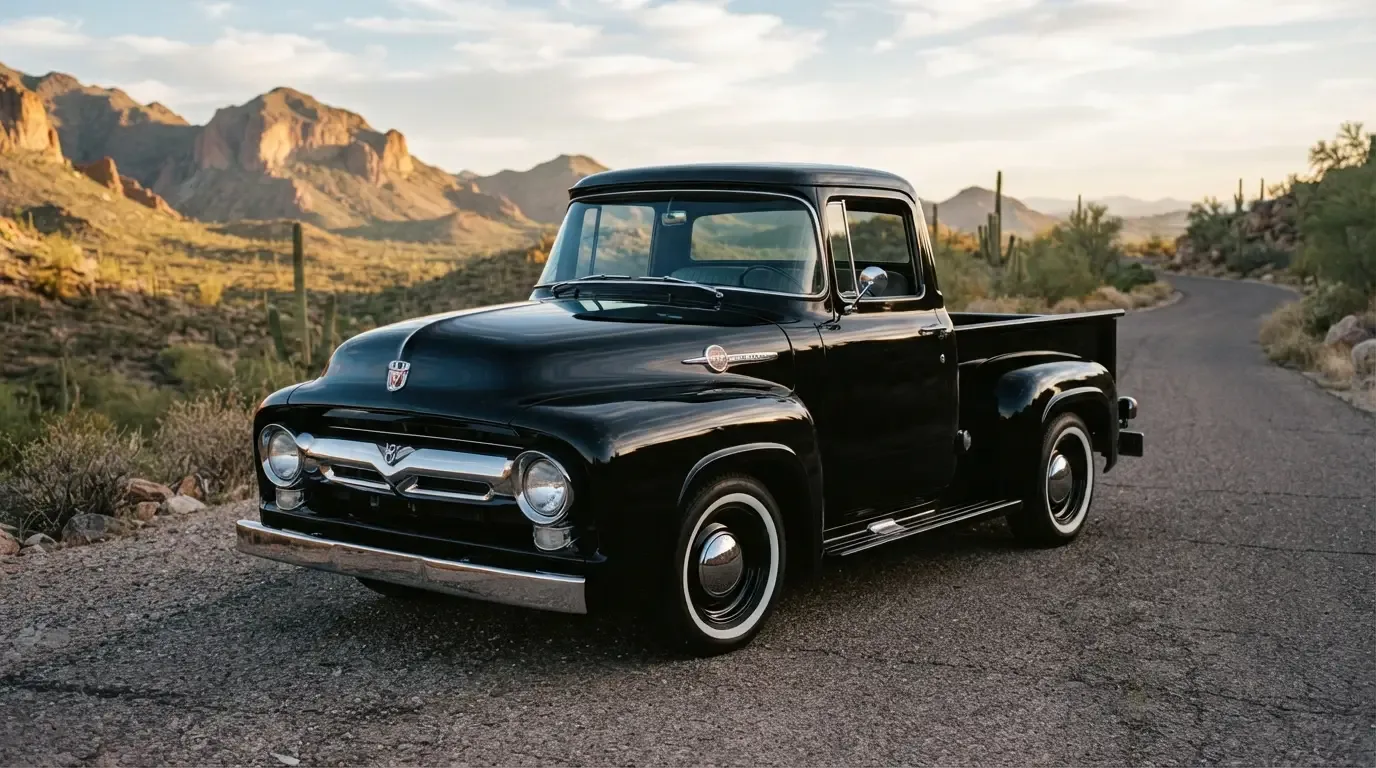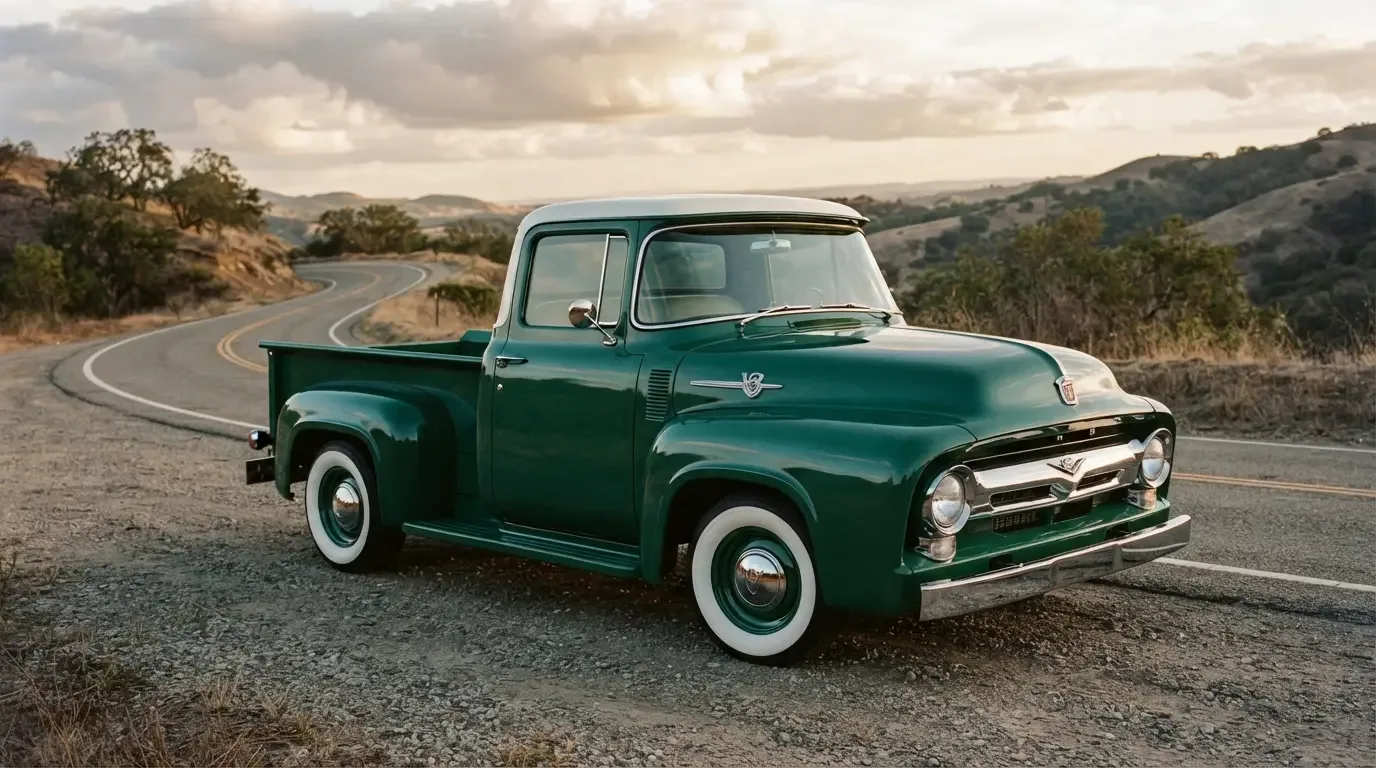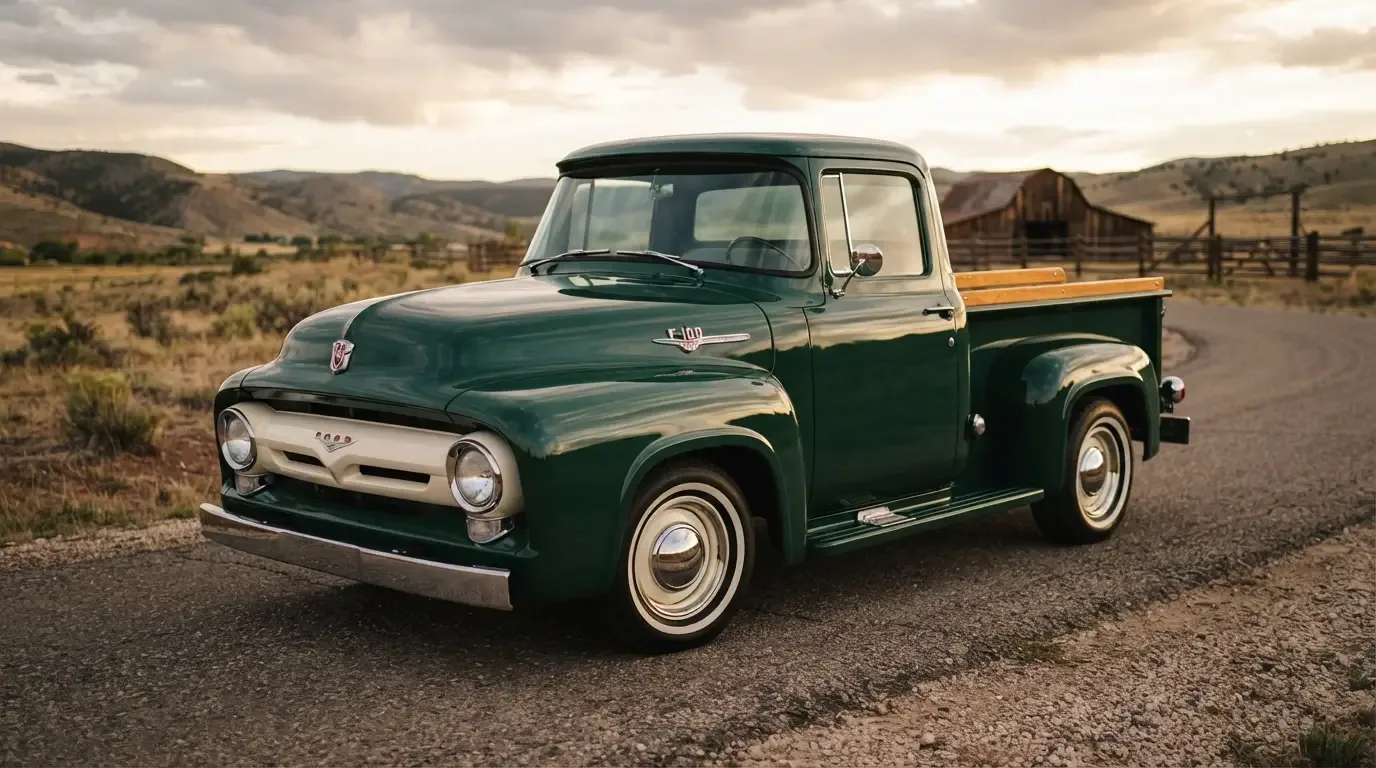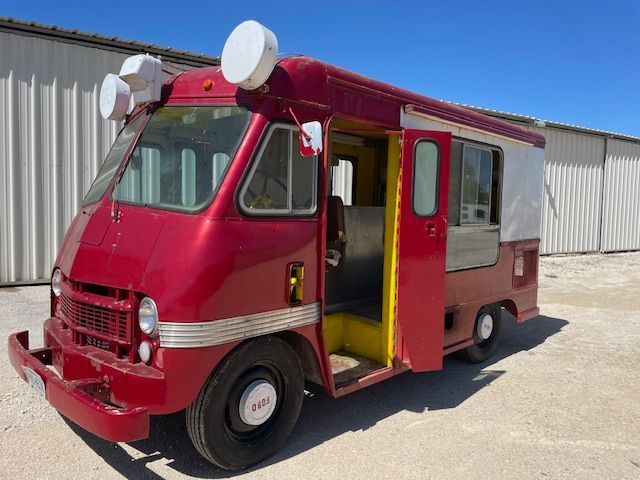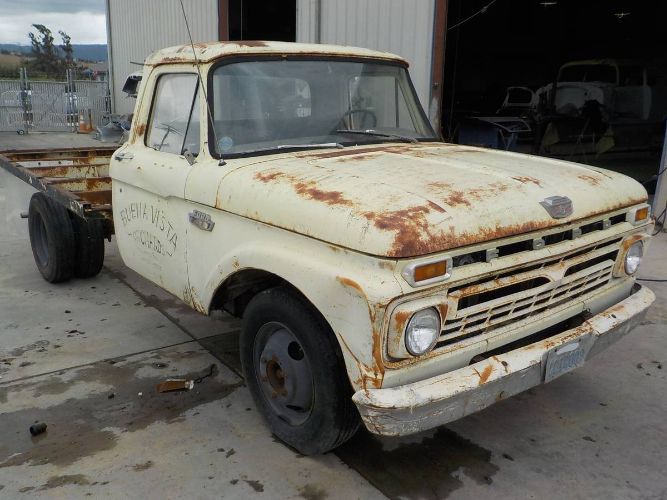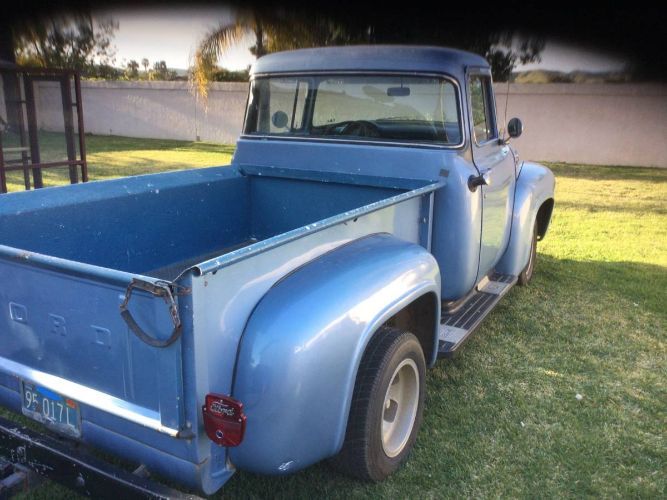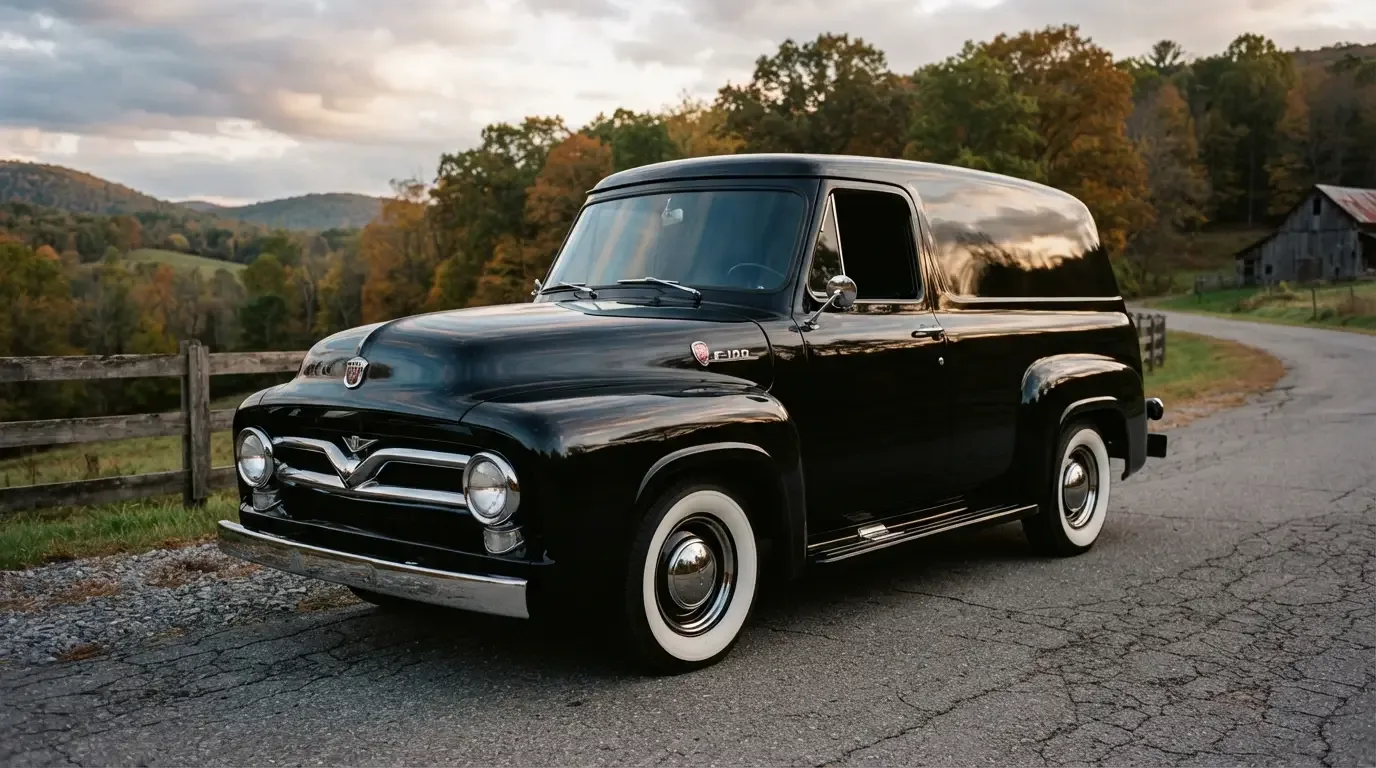
There is a particular thrill in spotting a ford f100 panel truck at a car show, the kind that makes people stop mid-sentence and walk over for a closer look. Most collectors have seen dozens of stepside pickups from the 1953 to 1956 era. Far fewer have stood next to the enclosed panel version, and that rarity alone turns heads before anyone even notices the paint.
The truck that hid in plain sight
Ford built the panel delivery on the same F-100 chassis and front clip as the pickup, but replaced the open bed with a fully enclosed cargo box, complete with side-hinged rear doors and no side windows behind the cab. It was aimed squarely at delivery businesses, bakeries, florists, appliance repair outfits, anyone who needed to move goods that could not ride exposed to weather in an open bed. Picture a small town hardware store or a laundry service running one with the company name painted across the doors, and you have the truck's original job description in a single image.
Because it served such a specific commercial niche, Ford never produced the panel truck in anything close to the volumes of the standard pickup. Fleet buyers ordered them in modest numbers compared to the tens of thousands of stepside pickups rolling off the line each year, and that gap in production is the entire reason surviving examples draw a crowd today.
A different truck to drive
Behind the wheel, a panel truck feels noticeably different from its pickup sibling despite sharing a chassis. The enclosed box changes the truck's balance and sound, with road noise echoing off the metal cargo walls in a way an open bed never produces. Rear visibility disappears almost entirely without a bed to glance back at, forcing a driver to rely on mirrors the way a modern van driver would. It is a small reminder that this was a purpose-built commercial tool first and a collector's curiosity only decades later.
Cargo capacity was the whole point, and Ford outfitted the interior cargo area simply, with a plain painted metal floor and walls rather than any trim, since nobody was paying extra to dress up a space meant for boxes and crates rather than passengers.
Why so few survived
Commercial vehicles get worked harder and retired sooner than personal trucks, and the panel delivery was no exception. Businesses ran them until they were no longer economical to repair, then scrapped them without a second thought, since nobody in 1965 was thinking about collector value for a delivery truck. Add in the fact that enclosed cargo boxes rust from the inside out in places an owner rarely inspects, and a lot of panel trucks that did survive their working lives eventually succumbed to corrosion nobody caught in time.
"I remember the first one I saw at a swap meet years ago. I'd been going to these things since I was a kid and I'd genuinely never seen one in person. Everybody who walked by did a double take."
- Patrick Walsh
That scarcity is exactly why the panel truck has become such a prized find among collectors who already own a stepside and want something genuinely different for their collection. It is not necessarily rarer in a strict production sense than some other configurations, but it is far rarer in the sense of what actually shows up for sale, which is the number that matters to a buyer trying to find one.
Restoring the box, not just the cab
Restoring a panel truck brings challenges the standard pickup restoration crowd rarely has to think about. Sourcing correct rear door hardware, weather seals for a box style that shared little with the open bed, and even period-correct commercial signage references all require digging through more specialized channels than a typical stepside restoration would. Shops that specialize in this generation of F-100 sometimes have to fabricate reproduction parts entirely from scratch simply because demand has never been high enough to justify a mainstream reproduction run.
That specialization connects directly to the broader story of the era covered in 1956 ford f100 history, where the panel truck represents one branch of a much larger product family built around the same basic chassis and cab. Readers curious about how this fits alongside the more common configurations from the same years can also check out a related story covering how many of each body style Ford actually built.
What a buyer should expect
Anyone hunting for a panel truck should expect a longer search than shopping for a comparable pickup, along with a real premium once one does turn up in decent condition. Patience pays off here more than almost anywhere else in the F-100 world, and buyers willing to accept a project rather than a finished truck will find far more options than those insisting on a turnkey example.
Buyers serious about landing one should keep an eye on F-100s for sale now and be ready to move quickly, because when a genuine panel truck does surface, it rarely stays on the market long.
The custom crowd finally noticed
For decades the panel truck sat outside the mainstream custom scene, overshadowed by stepside pickups that were easier to find and cheaper to build. That has shifted over the last fifteen years or so as builders started looking for something that would stand out at a show without requiring a completely different platform. The enclosed cargo box turns out to be a blank canvas in a way an open pickup bed never was, whether that means a period-correct commercial paint job recreating a fictional 1950s business, or a fully custom interior build that turns the cargo area into an unexpected lounge space at a truck show.
That renewed attention has pushed prices up steadily, and it has also encouraged a handful of specialty shops to start offering reproduction sheet metal for the most rust-prone sections of the box. It is still nowhere near the parts support a stepside pickup enjoys, but it is meaningfully better than it was a decade ago, and that alone has convinced some buyers who previously avoided panel trucks over parts concerns to finally take the plunge.
Even with better parts support, a panel truck build still asks more of its owner than a straightforward pickup restoration, and that is precisely the appeal for builders who want a project their friends have not already seen a dozen times over.