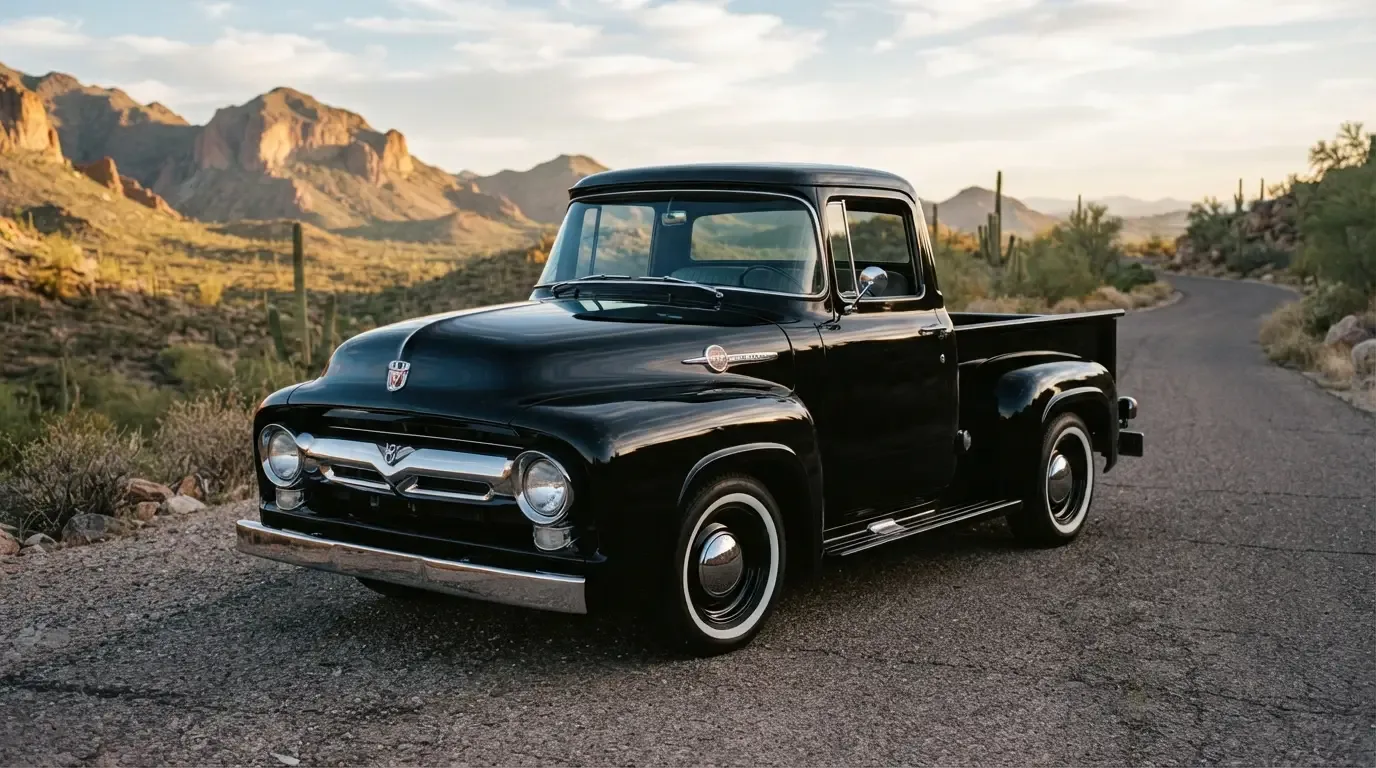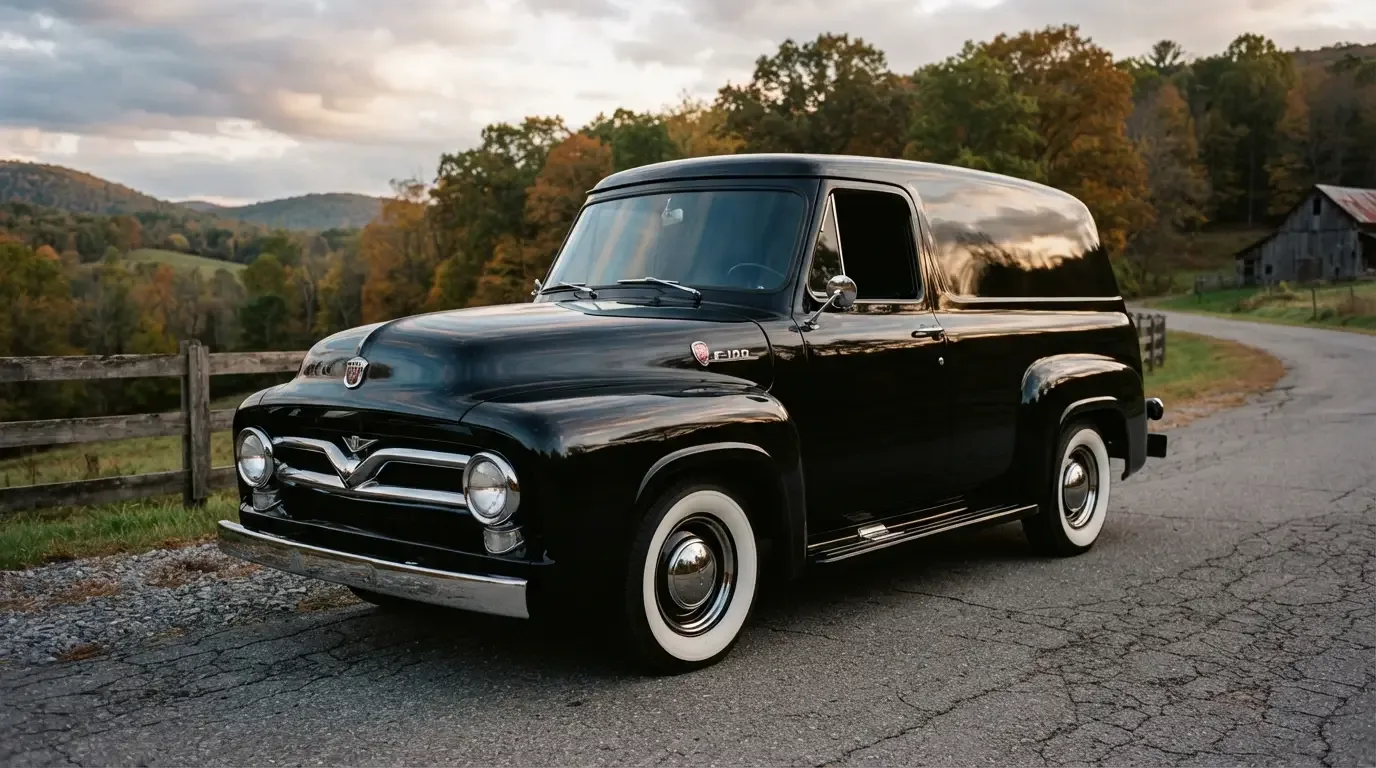
Ask ten people why ford f100 popular status has held for seventy years and you will get ten different answers, but ask a guy who has actually wrenched on one and the answer gets simpler fast. This truck works, it looks right doing it, and it never made you feel like you needed an engineering degree to keep it running. That is not romance. That is just what made people buy them new and what still makes people restore them today.
It showed up right when trucks needed to grow up
Before 1953, a pickup truck was mostly a farm implement with a cab bolted on. Ford's redesign that year, timed to the company's fiftieth anniversary, gave the F-100 a wider cab, better visibility, and a ride that did not beat a driver up on a highway the way earlier trucks did. That mattered because America itself was changing. Suburbs were spreading, small businesses needed reliable transportation that did not look like a leftover from the war years, and families were starting to see a truck as a second vehicle rather than strictly a farm tool. The F-100 landed in exactly that gap.
It did not hurt that Ford kept improving the truck every year through the mid-1950s instead of letting it stagnate. The wraparound windshield, the move to a 12 volt electrical system, the Y-block V8 option, all of it kept the F-100 feeling current at a time when a lot of competitors were still selling prewar thinking with a new coat of paint.
Simple enough to fix in a driveway
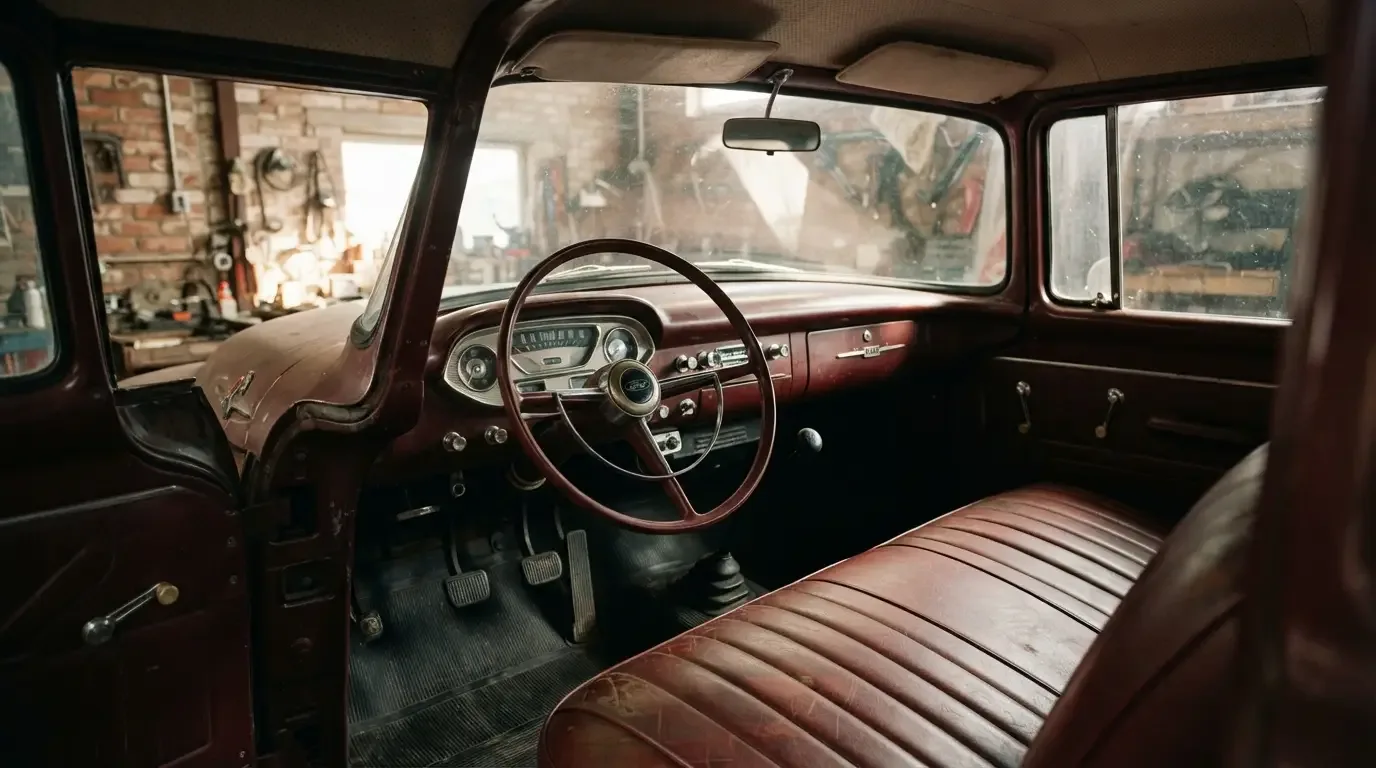
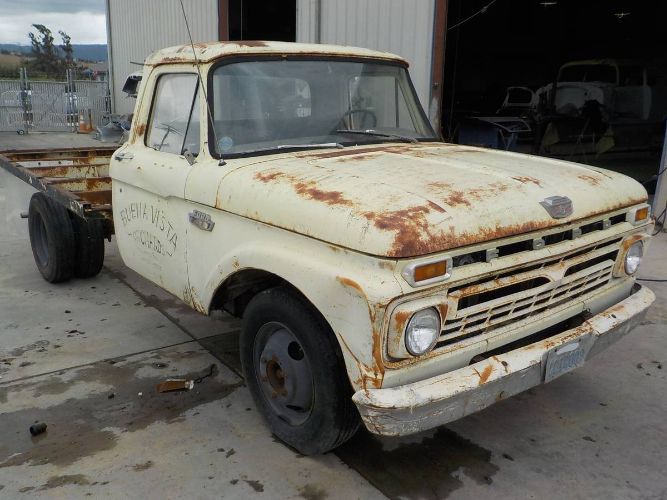
Here is the part that gets lost when people talk about styling and colors. The reason so many of these trucks survived long enough to become collectible is that they were genuinely easy to keep running. A six-cylinder F-100 with a manual transmission has maybe a dozen systems a competent shade tree mechanic needs to understand, and parts were common enough that a broken truck rarely sat idle waiting on something rare. Farmers and contractors did not baby these trucks. They worked them hard and fixed them themselves, and a design that tolerated that kind of ownership earned loyalty that a fussier truck never would have.
"You didn't need a dealership to keep one of these running. That's the whole reason half of them are still around. Nobody threw away a truck they could fix themselves on a Saturday morning."
- Mike Sullivan
It looked good without trying too hard
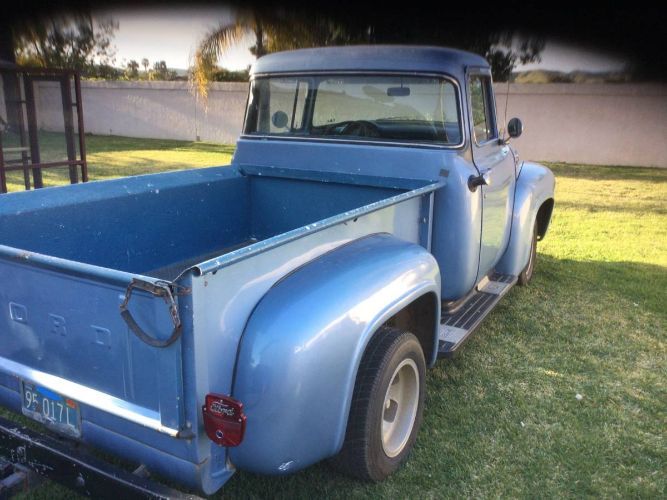
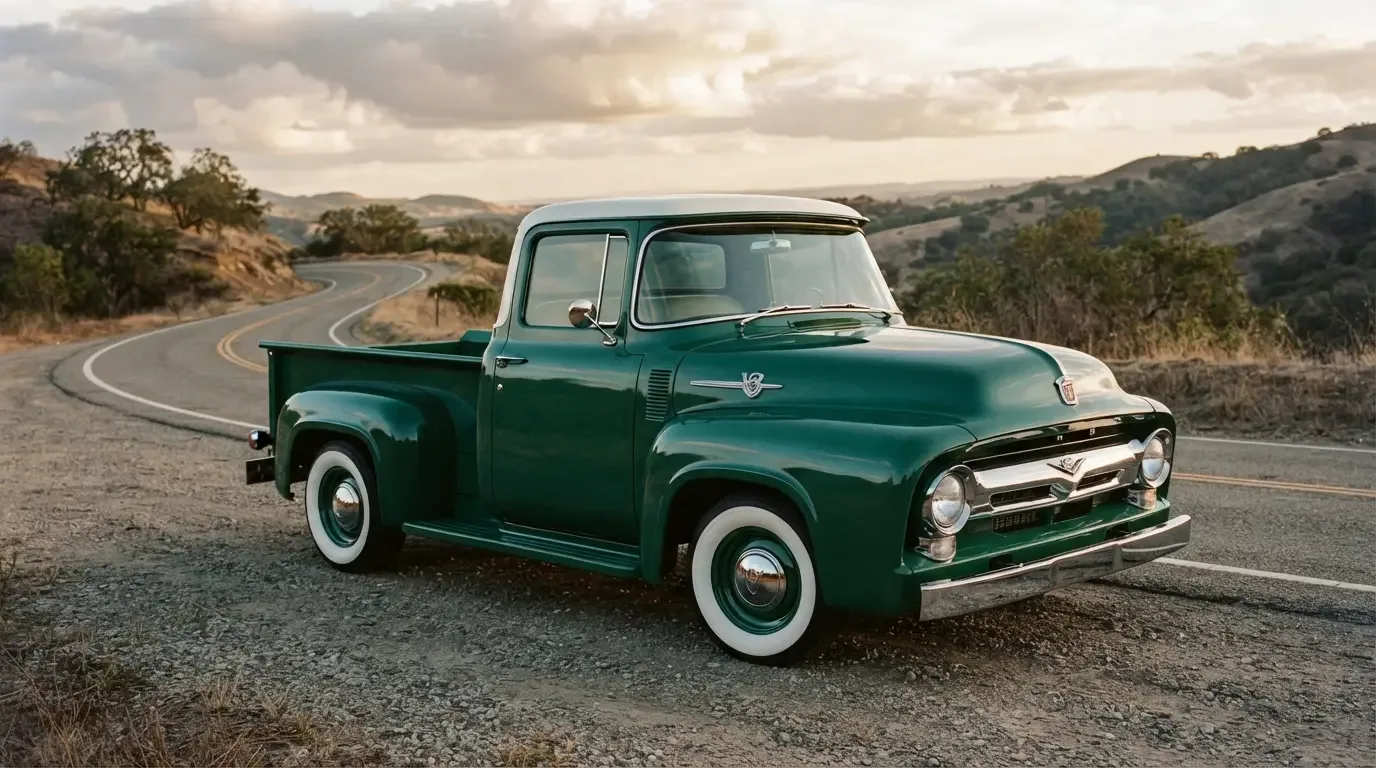
Styling matters too, and the F-100's did not chase every trend of its decade. The stepside bed, the simple grille progression across model years, the two-tone paint options, none of it screamed for attention the way some contemporary cars did with excessive chrome and fins. That restraint aged well. A lot of flashier 1950s designs look dated now in a way the F-100 mostly avoids, because its proportions were honest rather than decorative. Modern builders and restomod shops still gravitate toward this body style precisely because it takes custom paint, wheels, and drivetrain swaps without ever looking wrong.
Pop culture kept it visible
The F-100's silhouette became shorthand for a certain kind of American nostalgia, showing up in movies, on diner signage, and eventually on the walls of countless garages as a poster truck for a generation that grew up around them. That visibility mattered for its collectibility later. A truck that stays culturally present, even in the background of other stories, stays in demand longer than one that simply fades from memory. By the time serious collector interest in classic trucks took off in the 1990s and 2000s, the F-100 already had decades of cultural presence working in its favor.
None of that happened by accident, exactly, but it also was not purely planned by Ford's marketing department. A truck earns that kind of staying power by actually being good at its job for long enough that multiple generations grew up around one, whether it was grandpa's farm truck or a neighbor's daily driver.
Why it still resonates with new owners
Younger buyers coming to classic trucks for the first time often gravitate to the F-100 for the same reasons their grandparents did, even if they would not phrase it that way. It is simple enough to actually own and drive without a specialist on speed dial, parts support remains strong thanks to decades of aftermarket interest, and the styling still reads as clean rather than dated. Add in a healthy restomod community swapping in modern drivetrains while keeping the original body lines, and you have a truck that keeps finding new fans instead of just holding onto the old ones.
That combination, honest engineering, timeless proportions, and a genuine cultural footprint, explains our complete history of how this generation earned its icon status rather than just claiming it. It was not marketing. It was seven decades of trucks that kept running and kept looking right while they did it.
Anyone who takes a weekend to browse classic F-100 listings and actually drives a few will understand the appeal fast. This is not a truck you admire from a distance. It is one you want to drive home.
What separates the icons from the forgotten trucks
Not every truck from this era earned lasting affection, and it is worth asking why the F-100 did while some competitors from the same decade barely register with collectors today. Part of it comes down to consistency. Ford did not chase a radically different look every model year the way some manufacturers did, chasing sales spikes with dramatic redesigns that dated quickly. Instead the F-100 evolved gradually, refining a formula that already worked rather than replacing it outright. That consistency meant a 1956 truck still felt like a natural descendant of the 1953 original, not an unrelated product wearing the same badge.
Dealer support and parts commonality across model years also kept these trucks on the road longer than rivals with more fragmented lineups. A mechanic who learned one F-100 engine bay could work on nearly any truck in the generation without relearning the basics, and that kind of practical consistency built trust with owners who depended on their trucks for a living. Trust, more than styling alone, is often what turns a good truck into a genuinely beloved one, and the F-100 earned it one repair job at a time.