Numbers do not lie, but they do require patience, and 1956 ford f100 production figures are one of those areas where careful sourcing matters more than a confident guess. Ford's records from this era survive in varying degrees of completeness, split across body styles, trim levels, and regional assembly plants, which means anyone trying to reconstruct exactly how many trucks left the factory in a given year has to piece the picture together from several sources rather than a single tidy figure.
Why the count gets complicated
The F-100 was not built at a single plant, and Ford's regional assembly operations kept their own production tallies that were later consolidated at the corporate level, a process that introduces room for discrepancy between contemporary trade publication estimates and figures cited decades later in enthusiast literature. Add in the fact that the F-100 shared its basic platform with the heavier F-250 and F-350 trucks, and early record keeping did not always cleanly separate the model lines the way a modern researcher would want. The pickup totals most often cited by enthusiast researchers run roughly 116,000 units for 1953, around 101,000 for 1954, about 125,000 for 1955, and somewhere near 163,000 for 1956 once short-bed and long-bed variants are combined, but even those figures shift depending on whether a given source is counting calendar year or model year production.
What is well established is the general shape of the story. Sales grew steadily across the 1953 to 1956 generation as Ford's redesign found its footing with buyers, with each model year building on the momentum of the last. The truck line's expanding market share against Chevrolet's competing Task Force trucks, introduced partway through this same period, is documented clearly enough in period sales literature even where individual unit counts require more careful sourcing.
Body style breakdown matters more than the total
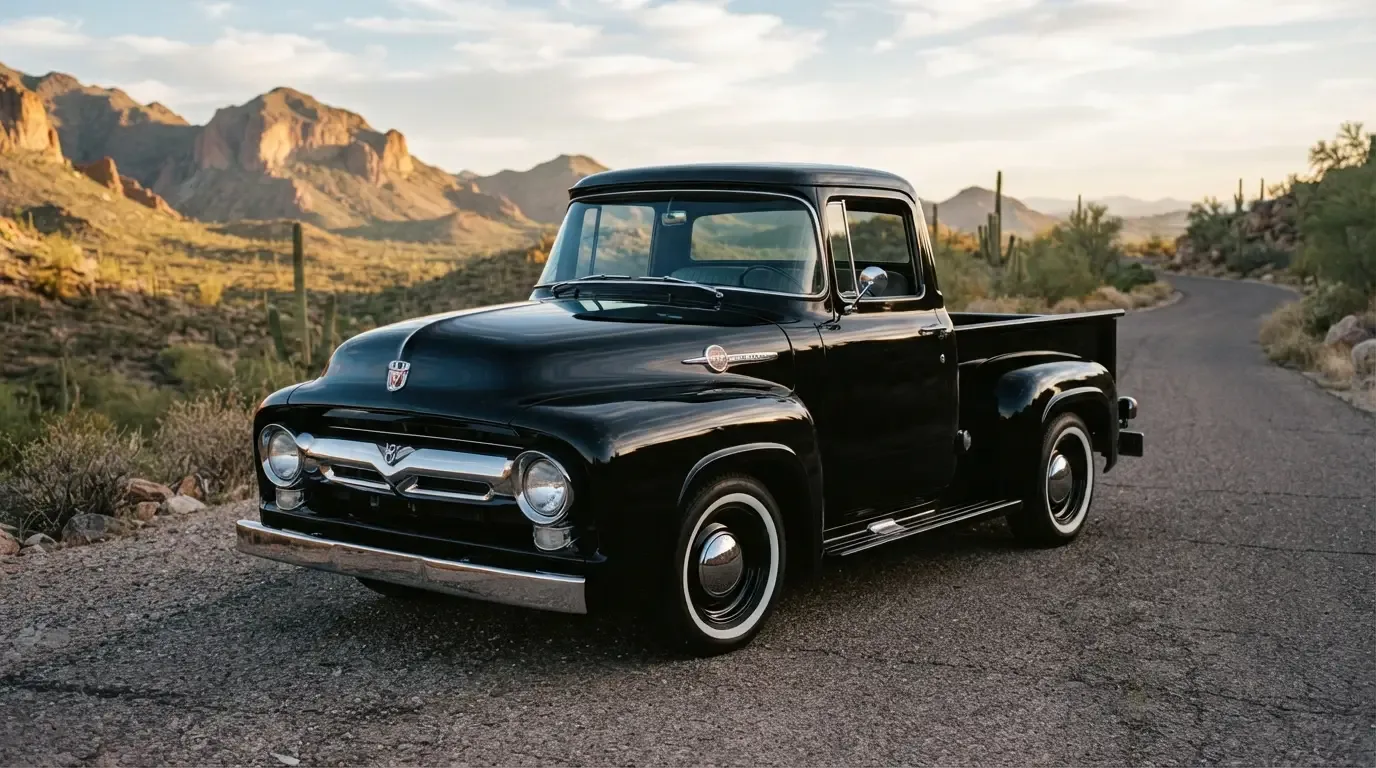
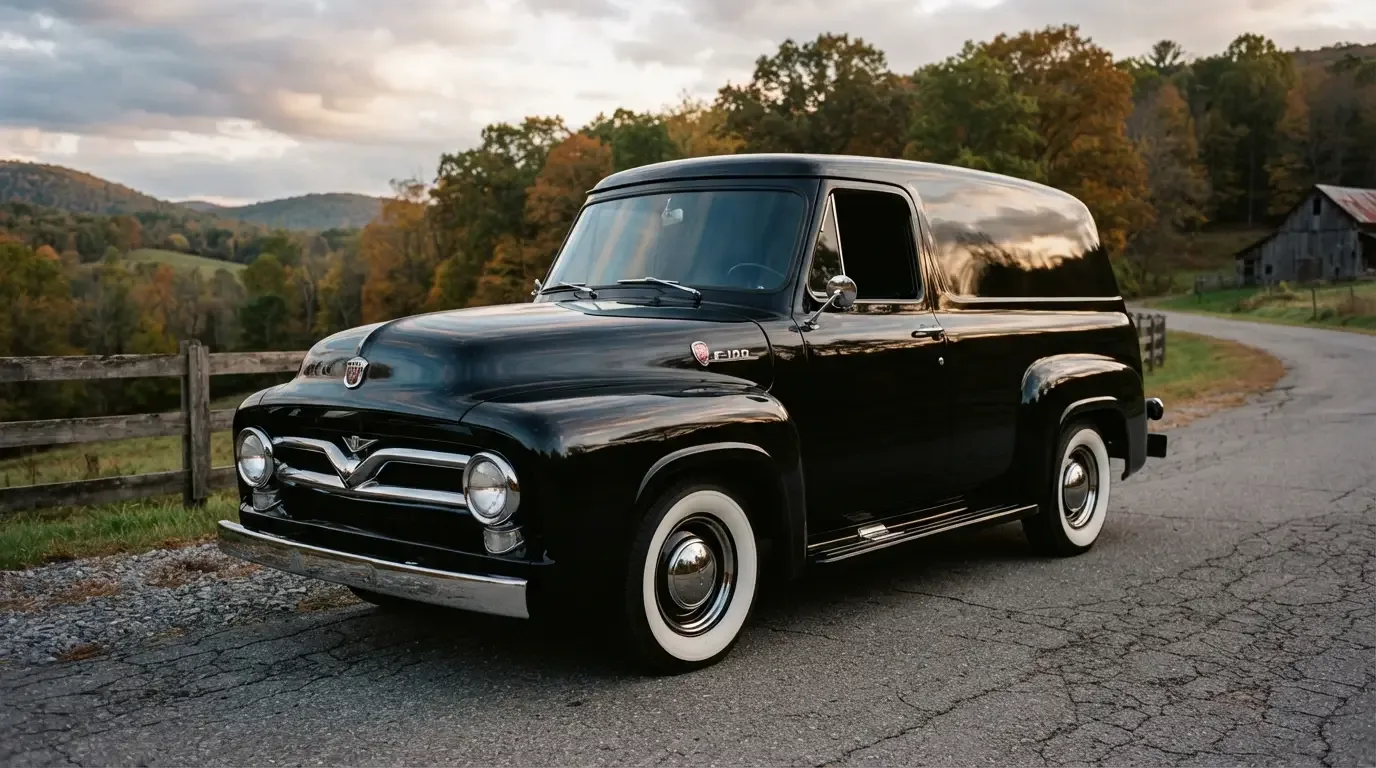
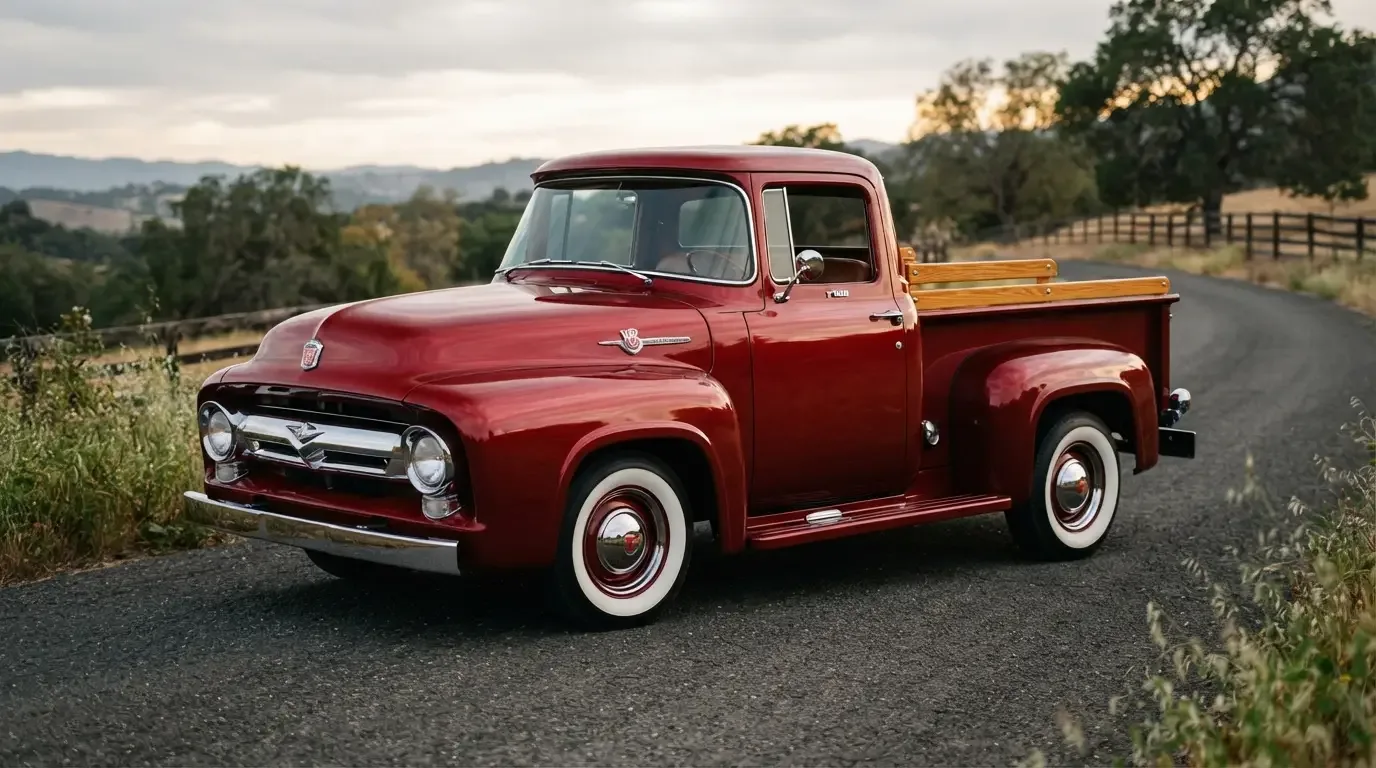
A single production total for any given year tells you less than a breakdown by body style, since the standard stepside pickup, the panel delivery, and various chassis cab configurations sold in wildly different volumes. The stepside pickup dominated sales by a wide margin, the configuration most buyers pictured when they thought of an F-100 at all. Panel deliveries and other specialty configurations occupied a much smaller slice of total production, aimed at commercial buyers with specific cargo needs rather than the general market.
Understanding this breakdown matters directly to how rare a given surviving truck actually is today. A stepside pickup in a common color combination is, by definition, one of many. A panel delivery in a documented original configuration is a different proposition entirely, simply because so many fewer left the factory in the first place.
What documentation actually survives
Serious researchers into this generation of F-100 rely on a combination of surviving dealer order guides, period trade magazine reporting, and Ford's own historical archive materials where accessible. Door tags and serial number sequences on surviving trucks provide another layer of evidence, letting a careful researcher cross-reference an individual vehicle against known production windows even when aggregate totals remain harder to pin down with full confidence.
"People want a single clean number and I understand why. But good history rarely comes in one clean number. It comes in layers of documentation that mostly agree with each other, and you learn to trust the pattern more than any single source."
- Sarah Whitfield
This is also why provenance research on an individual truck carries real weight in the collector market. A door tag that checks out against known production sequences for its stated model year adds confidence that a vehicle is what a seller claims, in a way that a bare production total for the whole model year simply cannot.
Reading production trends against the bigger picture
Placed in context, the growth pattern across 1953 to 1956 reflects Ford's broader strategic bet on the light truck market at exactly the moment American consumer habits were shifting toward suburban living and small business growth. Each model year's improvements, from the wraparound windshield to the move to a 12 volt electrical system, were not cosmetic alone. They were investments meant to keep pace with rising expectations from a buyer base that increasingly saw a truck as everyday transportation rather than strictly a farm implement.
That strategic context connects directly to the whole picture of how this generation reshaped Ford's truck business heading into the redesign that would follow in 1957. Production numbers alone are a dry way to tell that story, but they underpin every claim of rarity and desirability that gets made about individual surviving trucks today.
Buyers who want to understand what they are actually looking at before they find a classic F-100 owe it to themselves to dig past the headline sales numbers and into the specific body style and configuration that interests them most.
How researchers cross-check conflicting figures
When two sources disagree on a production total, careful researchers do not simply pick the more convenient number. They look for the underlying methodology behind each figure, whether it counted calendar year production or model year production, whether it included trucks built for export markets, and whether it separated the F-100 cleanly from its heavier siblings on the same assembly line. Calendar year and model year totals in particular are a common source of confusion, since a truck built in late 1955 might carry a 1956 model year designation depending on when the changeover happened at a given plant.
Export figures add another wrinkle. Ford shipped F-100 components and complete trucks to assembly operations outside the United States during this period, and depending on how a given historical source treats those units, the domestic production total can shift meaningfully. None of this makes the broader growth story any less true, but it does mean a researcher chasing a precise annual figure for a specific body style should expect some genuine uncertainty at the margins, and should treat any single confident number with appropriate skepticism until it can be checked against at least one independent source.
What this means for today's collector market
The uncertainty around exact totals rarely changes how the market actually prices these trucks, since buyers and sellers both rely more on visible scarcity, how often a given configuration actually turns up for sale, than on a historical production statistic most casual buyers never see. Still, for anyone building a serious collection or writing up provenance documentation for a future sale, understanding where the numbers come from and how confidently they can be cited is part of doing the job properly rather than repeating a figure simply because it appears in enough places online to feel true.