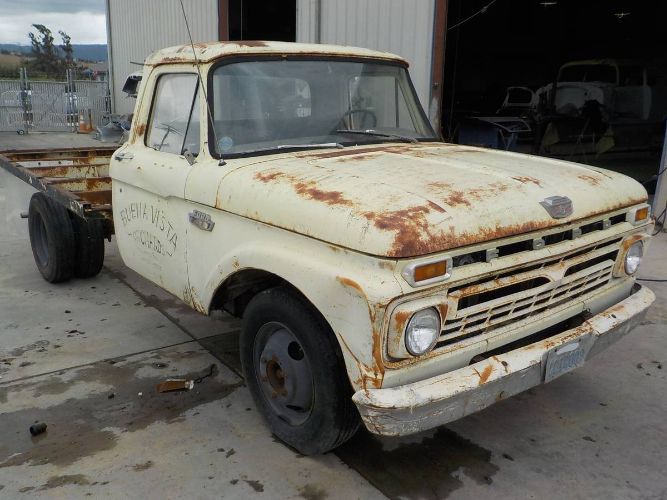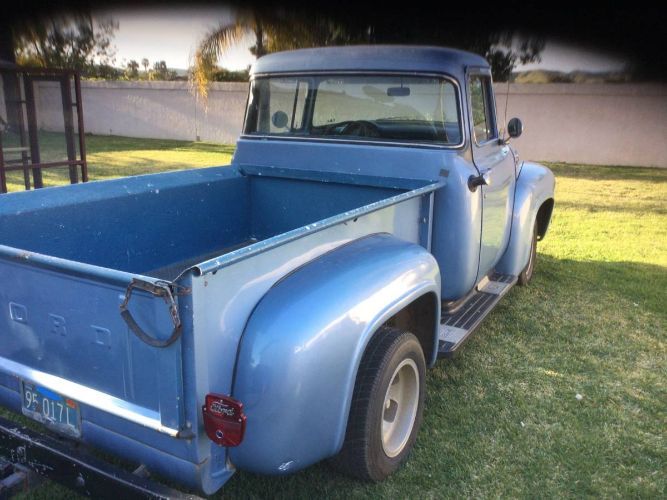
I found a stack of old Ford dealer brochures in a toolbox drawer a few years back, water stained and half stuck together, and spent an evening reading them instead of finishing the job I was actually paid to do. Ford f100 vintage ads were never subtle. They sold work, plain and simple, and looking back at them now tells you more about how America actually lived than most history books bother to.
The 1948 launch ads sold survival, not style
Ford's earliest F-Series print ads leaned hard on toughness. Copy talked about payload capacity, engine durability, and how the truck would outwork anything else on the lot. There was almost no talk of comfort, styling, or status, because in 1948 nobody buying a work truck cared about any of that. Farmers wanted a machine that would haul feed and not break down halfway through the job. The ads knew their audience and did not waste ink pretending otherwise.
You can tell a lot about a product by what its first advertisement chooses to brag about. Ford bragged about the F-100's bones. That tells you everything about who Ford thought was buying, and it turned out Ford was right.
By the 1950s, the copy started softening toward the family buyer
As the F-100 matured through the mid-1950s, Ford's advertising started adding a second audience alongside the tradesman: the family that needed one vehicle to do double duty, hauling lumber during the week and taking the kids to a Sunday drive. Ads from this period show the truck parked outside a home, sometimes with a family standing near it, a shift away from purely industrial imagery toward something closer to a lifestyle pitch.
This was smart business. A truck that only appealed to farmers and contractors had a ceiling. A truck that also appealed to a working family looking for value did not. Ford's ad copy tracked that expanding market carefully, year over year, without ever losing the core promise of durability that had sold the truck in the first place.
The color and trim ads of the 1960s tell their own story
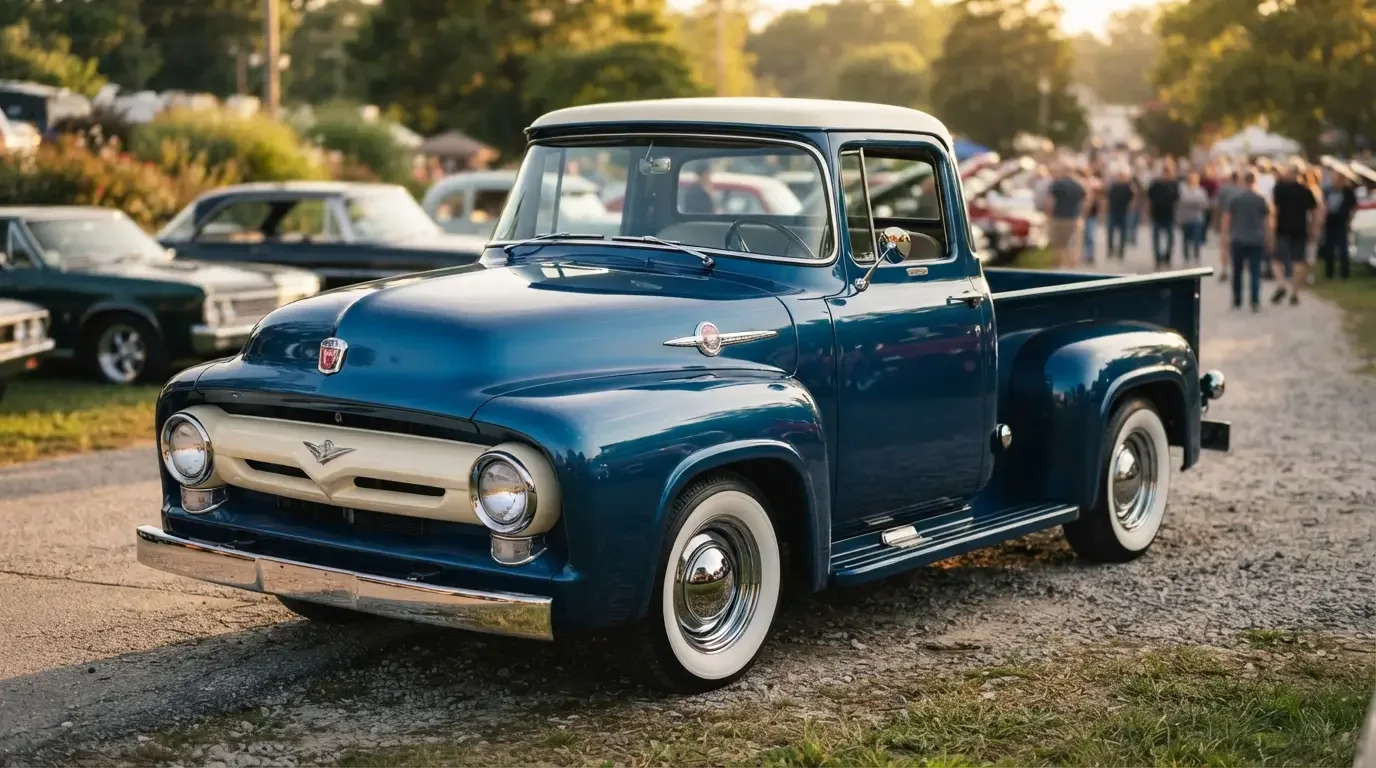
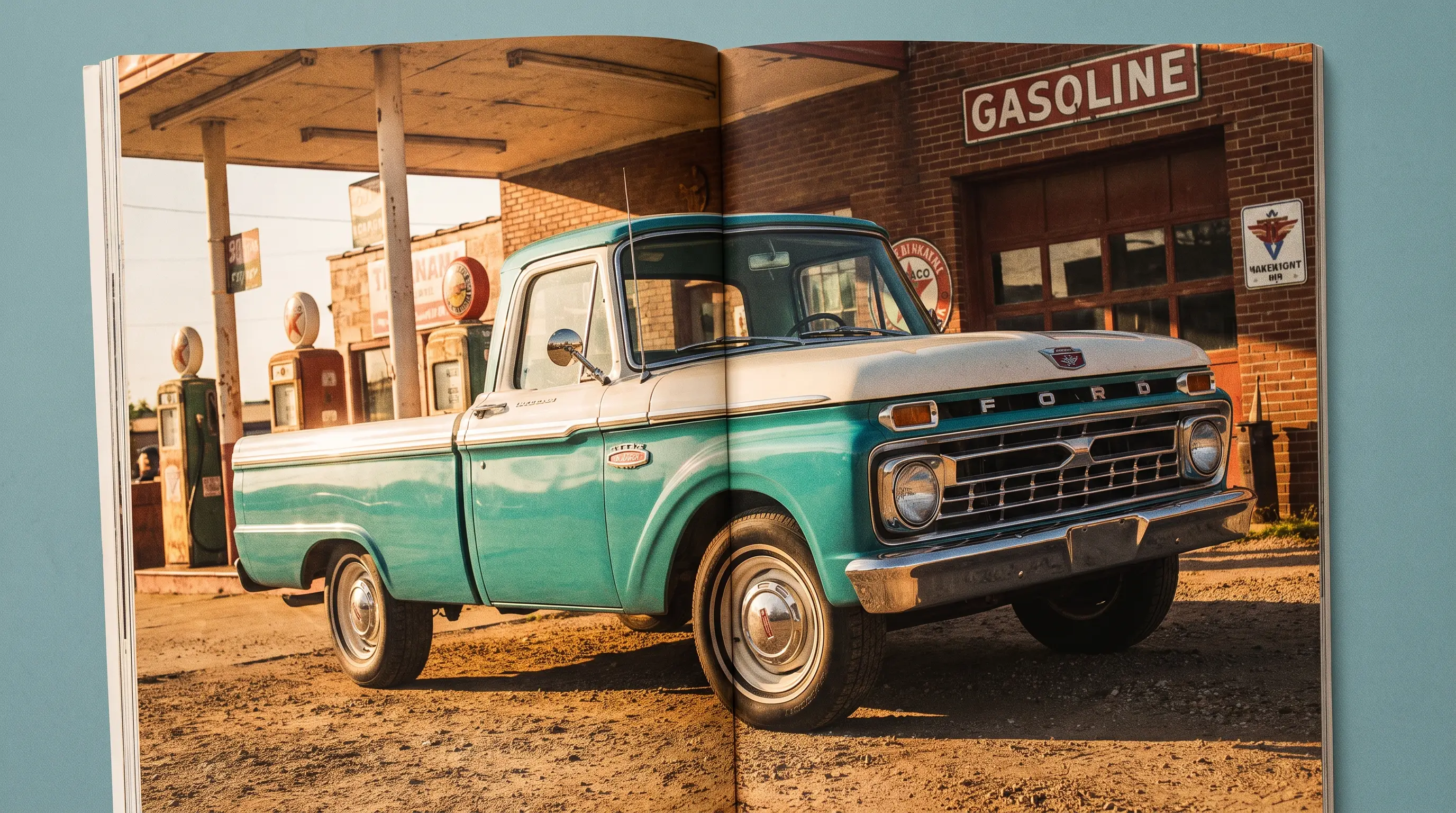
Once you hit the 1960s, F-100 advertising started spending real space on two-tone paint options and interior trim levels, a clear sign the truck was competing on more than just capability by then. Chevrolet and Dodge were both pushing hard into the same market, and Ford's ads responded by making the F-100 look good parked in a driveway, not just useful parked at a job site. Full-page color spreads showed the truck in bright hues that had nothing to do with hauling capacity and everything to do with curb appeal.
None of that marketing polish changed what was actually under the hood, and that is the part worth remembering. The engines and the frame stayed honest even as the ad copy got flashier. Ford was selling the same reliable truck, just dressed up a little better for a market that had more choices than it did in 1948.
"Doesn't matter how good the copywriter was. If the truck couldn't back up the claim, word would get around a small town in about a week. These ads worked because the trucks actually did what they said."
- Mike Sullivan
Ads from the 1970s leaned into toughness again as the market shifted
By the early to mid-1970s, with fuel costs rising and the market getting more competitive, Ford's F-100 advertising swung back toward emphasizing capability and value rather than styling alone. Copy started highlighting towing figures, bed dimensions, and engine options more explicitly, likely a response to buyers who were watching their money more carefully during a decade of economic uncertainty. It is a pattern worth noticing: whenever the economy tightens, truck advertising tends to get more literal and less aspirational, because buyers stop responding to lifestyle pitches and start responding to specifications.
This shift set the stage for the F-100's later years, after Ford introduced the F-150 in 1975 as a heavier-duty half-ton and the F-100 kept selling alongside it as the lighter, more affordable option until the nameplate was finally retired after 1983. The vintage ad archive from this era captures a truck and a company both adjusting to a changing world, without ever abandoning the basic promise that had carried the nameplate since 1948.
| Decade | Ad focus | Typical selling point |
|---|---|---|
| 1948-1953 | Industrial toughness | Payload, durability, low cost of ownership |
| 1954-1959 | Family crossover appeal | Comfort plus utility for one-vehicle households |
| 1960-1969 | Styling and trim | Two-tone paint, interior options, curb appeal |
| 1970-1983 | Value and specification | Towing capacity, fuel considerations, engine choice |
What the ads leave out is almost as telling as what they include
Read enough of these old brochures and you notice the gaps as much as the pitches. Fuel economy barely gets mentioned before the early 1970s, because nobody advertising a work truck in 1955 thought buyers cared about miles per gallon. Safety features get almost no ink at all through most of the run, a reminder of how differently the industry approached that topic before regulation forced the issue in later decades. These omissions are not failures of the ad copy. They are a snapshot of what buyers actually prioritized at the time, and reading between the lines tells you as much as the headlines do.
I keep a few of these old brochures in the shop, tucked in a drawer next to actual parts manuals, because they remind me why these trucks were built the way they were. Every panel line and every option list traces back to a decision someone made about what a working buyer actually needed, not what a marketing department thought would look good in a glossy spread.
Why these old ads still matter to collectors
Original dealer brochures and print ads have become collectible in their own right, sought after by owners who want period-correct documentation to go along with a restored truck. A well-preserved ad from the same model year as your F-100 adds context that no modern description can replace, showing exactly what Ford promised buyers at the time and what a showroom floor actually looked like. Collectors treat these paper artifacts the way they treat the trucks themselves: as honest documentation of a specific moment.
If you want more background on how that collector instinct developed, read the background on the broader culture around these trucks, and if you are curious what other corners of F-100 fandom look like, worth a look too covers the enthusiasts who keep this history alive. And if the old ads have you wanting the real thing instead of just the paper, you can always shop classic F-100 listings and see what is actually available.
Either way, spend an evening with the old ads first if you can find them. They will tell you what to expect from the truck before you ever turn a wrench on it yourself.