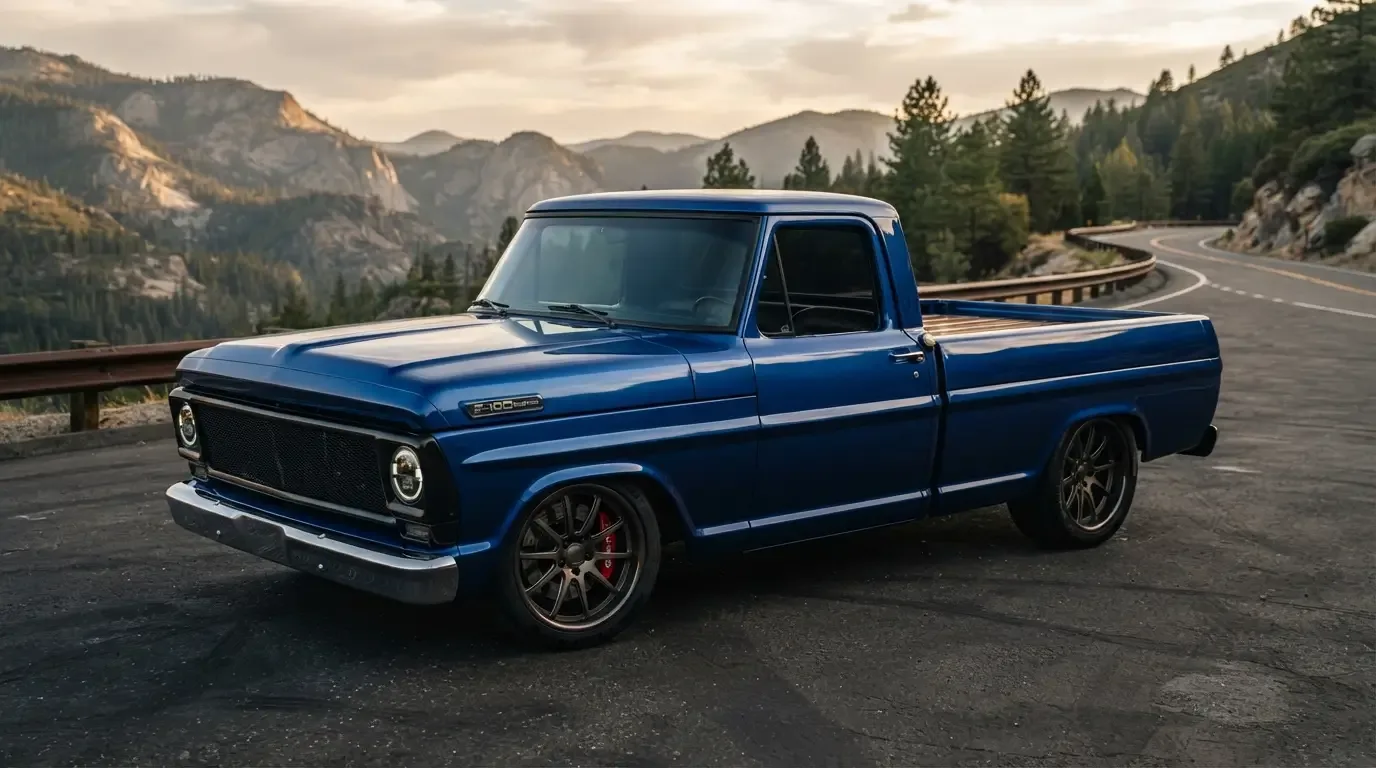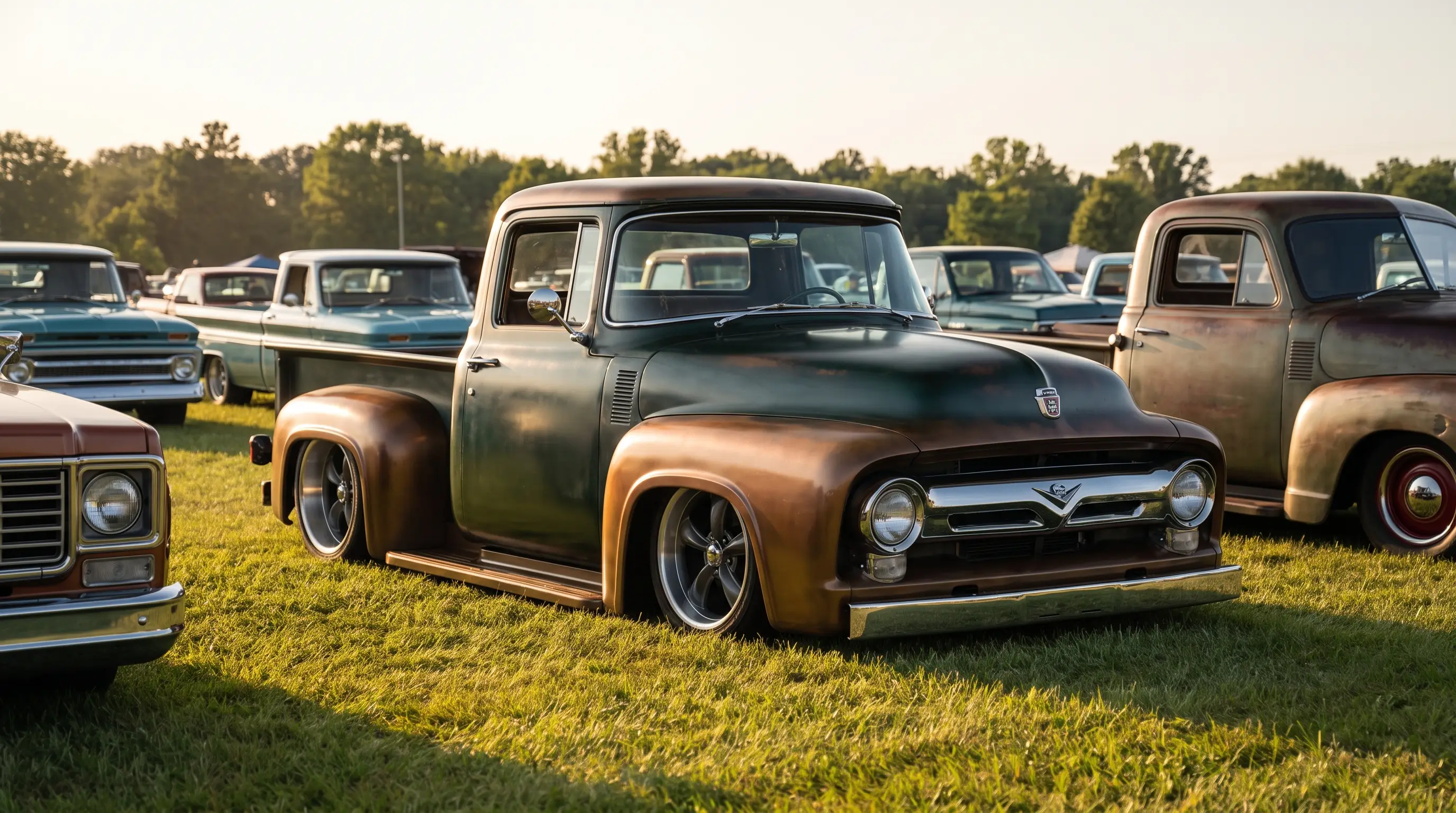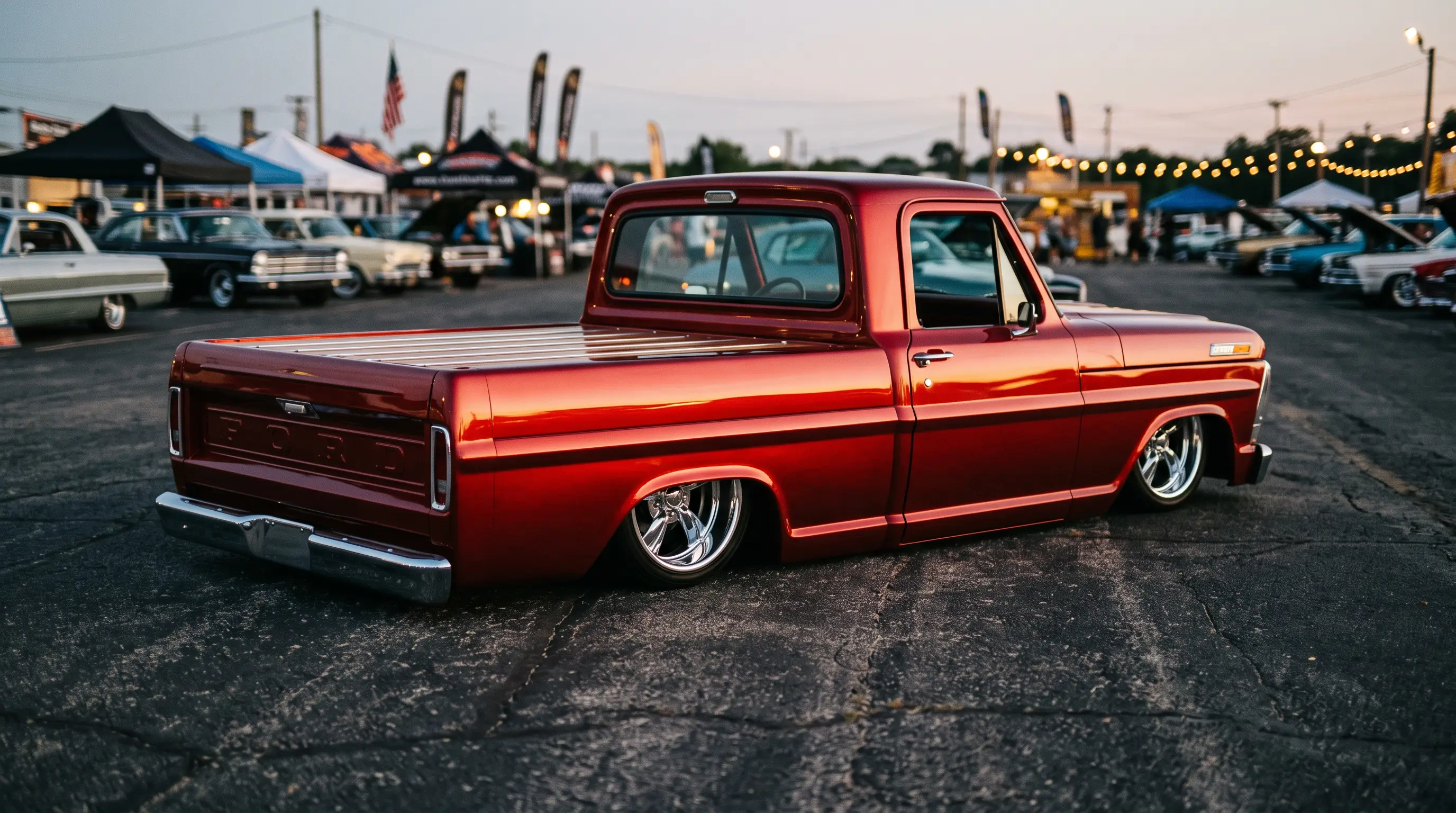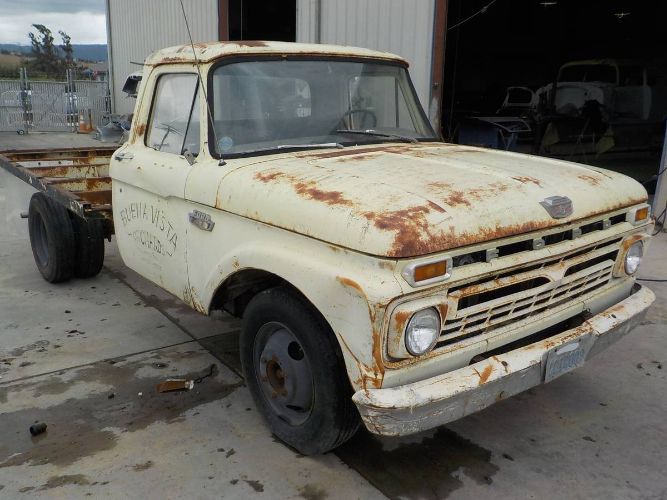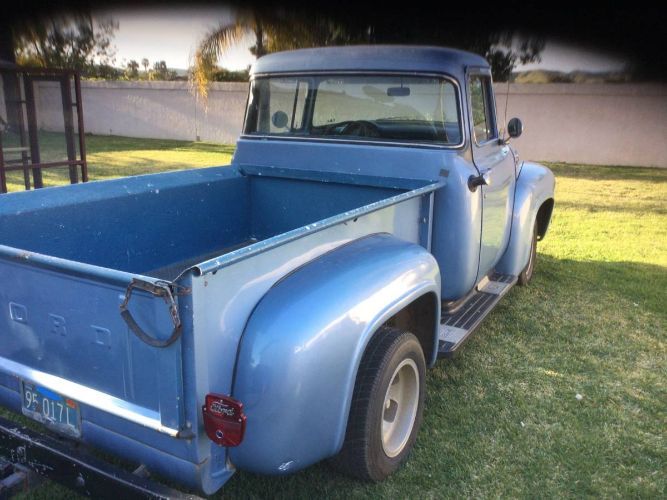
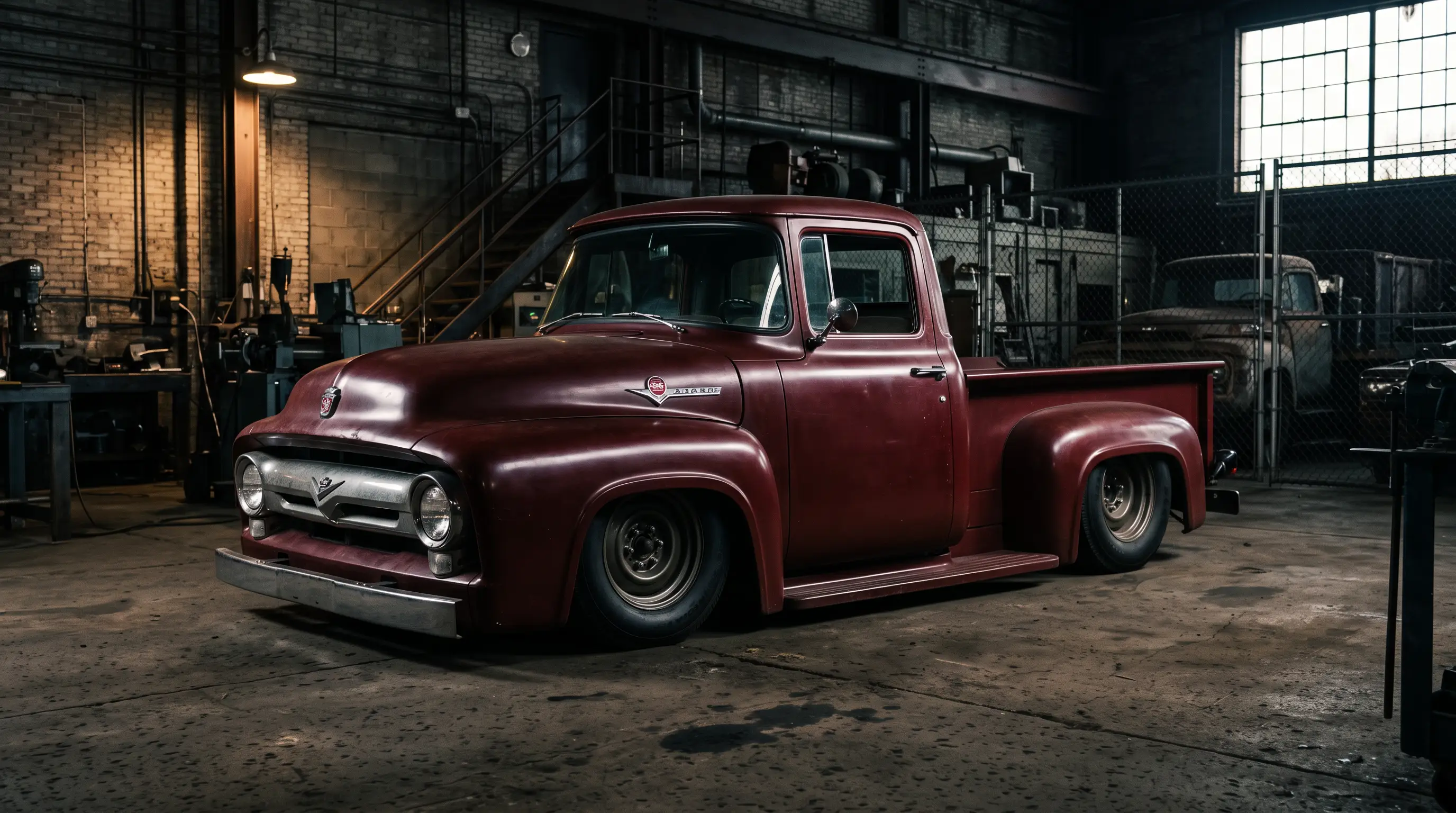
There's a particular moment every builder describes the same way, the first time they see their truck rolled off the trailer sitting low, wheels tucked, no gap between tire and fender. That moment is why the lowered Ford F-100 look has become such a defining part of the custom truck scene. A stock F-100 rides high on its factory suspension, built that way for hauling and rough roads. Drop that same truck a few inches and the whole visual character changes, from work vehicle to something closer to a piece of rolling sculpture.
What actually changes when a truck gets lowered
The factory ride height on an F-100 exists for practical reasons, ground clearance for unpaved roads, suspension travel for a loaded bed, and enough wheel well room to handle real cargo weight without bottoming out. None of those priorities matter to a builder chasing the stance look, and once ride height comes down, the truck's proportions shift dramatically. The gap between tire and fender that reads as normal on a work truck starts to look wrong once you've seen the alternative, and that's really the whole appeal in a sentence. Lowered changes how the eye reads the entire vehicle.
This is a purely aesthetic conversation here, not a mechanical one. The engineering and installation choices involved in achieving a stance belong to a different kind of article entirely. What matters for understanding the culture is why builders chase this look in the first place, and what it has come to represent within the F-100 community specifically.
Why this look took hold on the F-100 specifically
Not every classic vehicle responds well to a dramatic drop in ride height. Some proportions fight against it, throwing off the visual balance between hood, cab, and bed. The F-100, especially the fourth generation trucks from 1967 through 1972, happens to respond beautifully. Its long, flat hood and generous wheel arches give a lowered stance room to look intentional rather than awkward, and the truck's boxy factory lines, which read as plain at stock height, suddenly look aggressive and purposeful once the ride height drops and the right wheels fill those arches.
There's also a lineage here worth noting. The lowered truck look did not originate with the F-100, it traces back through decades of custom car culture generally, but the F-100 became one of its most enthusiastic adopters as the truck gained broader collector attention. Builders bringing lessons learned from lowered cars applied the same principles to trucks, and the F-100's shape happened to be an ideal canvas for that translation.
"A truck sitting right does more for a crowd than any engine bay ever will. People walk past a nice motor. They stop dead for a good stance."
- Wayne Coburn
Stance as its own culture within the culture
Within the broader F-100 restomod world, stance-focused builders form something close to their own subculture, with dedicated forums, meets, and even show classes judging trucks specifically on how well the wheel and fender relationship reads rather than on overall build quality or drivetrain work. A truck can be otherwise unremarkable mechanically and still win serious respect in this crowd purely on the strength of its stance. That is a fairly unusual value system compared to most of the collector car world, where mechanical originality or performance usually carries more weight.
Wheel choice matters enormously in this culture too, arguably as much as the ride height itself. A drop with the wrong wheel width or offset can look as awkward as no drop at all, while the right combination on the same truck can transform it completely. This is part of why stance-focused builders spend so much time discussing wheel specifications specifically, sometimes more than they discuss anything happening under the hood.
Not every owner is on board with the look
Originality-focused collectors tend to view a dramatically lowered F-100 as a departure from what made the truck significant in the first place, a work vehicle whose factory ride height served a real purpose. That criticism has some fair ground under it, a lowered F-100 genuinely cannot do the hauling work the truck was originally engineered for. But that argument misses what stance-focused builders are actually chasing, which was never about restoring or preserving the truck's original working capability in the first place. It's a different goal entirely, closer to sculpture than to utility.
Readers interested in the broader restomod movement this stance culture sits inside can find where this started, tracing the full arc of how the F-100 became a custom-build favorite in the first place, stance included as just one thread of a much larger story.
Where the lowered look stands today
The lowered F-100 aesthetic shows no sign of fading as a defining look within the custom truck scene, and if anything it keeps influencing how newer builders approach their own trucks from the very beginning of a project rather than as an afterthought once the mechanical work is done. What started as a niche preference among a handful of dedicated builders has become close to a default expectation for anyone building a serious custom F-100 today.
For anyone drawn to that look and ready to find a truck of their own, there are usually several classic F-100 for sale already built to this exact aesthetic, along with plenty of stock trucks waiting for a builder to give them the same treatment. The lowered F-100 stance didn't happen by accident, and at this point it has become one of the truck's most recognizable modern identities.
How the look photographs versus how it drives
There's an honest tension worth naming here. The angles that make a lowered F-100 look its absolute best in a photograph, wheels tucked tight, frame nearly kissing the pavement, are often the angles that make the truck the least practical to actually drive on a daily basis. Owners who chase the most dramatic stance tend to accept real compromises in ride comfort and ground clearance in exchange for that visual payoff, and most of them will tell you honestly that the tradeoff is worth it purely for how the truck looks sitting still.
That tension has pushed some builders toward a middle ground, a stance dramatic enough to transform the truck's character without sacrificing everyday usability entirely. Finding that balance point has become its own skill within the culture, and the builders who get it right, trucks that look aggressive parked yet still drive comfortably to the grocery store, tend to earn more lasting respect than builds that only work as static show pieces.
A look that changes with the light
Anyone who has photographed a lowered F-100 at a show knows the truck reads completely differently depending on the hour. Early morning light raking low across the hood exaggerates every line of the drop, while midday sun tends to flatten the same truck out and mute the drama that made it stand out a few hours earlier. Builders who shoot their own trucks for social media learn this quickly, and it's part of why so many standout photos of stance-focused F-100s come from golden hour rather than the middle of a show day when the crowds are thickest.
That sensitivity to lighting has become almost its own skill within the community, separate from the mechanical work of achieving the stance in the first place. A truck built beautifully can still look ordinary in a bad photo, and a truck with a more modest drop can look sensational shot at the right angle in the right light. The lowered F-100 look, in other words, rewards owners who think about presentation as carefully as they think about the build itself.