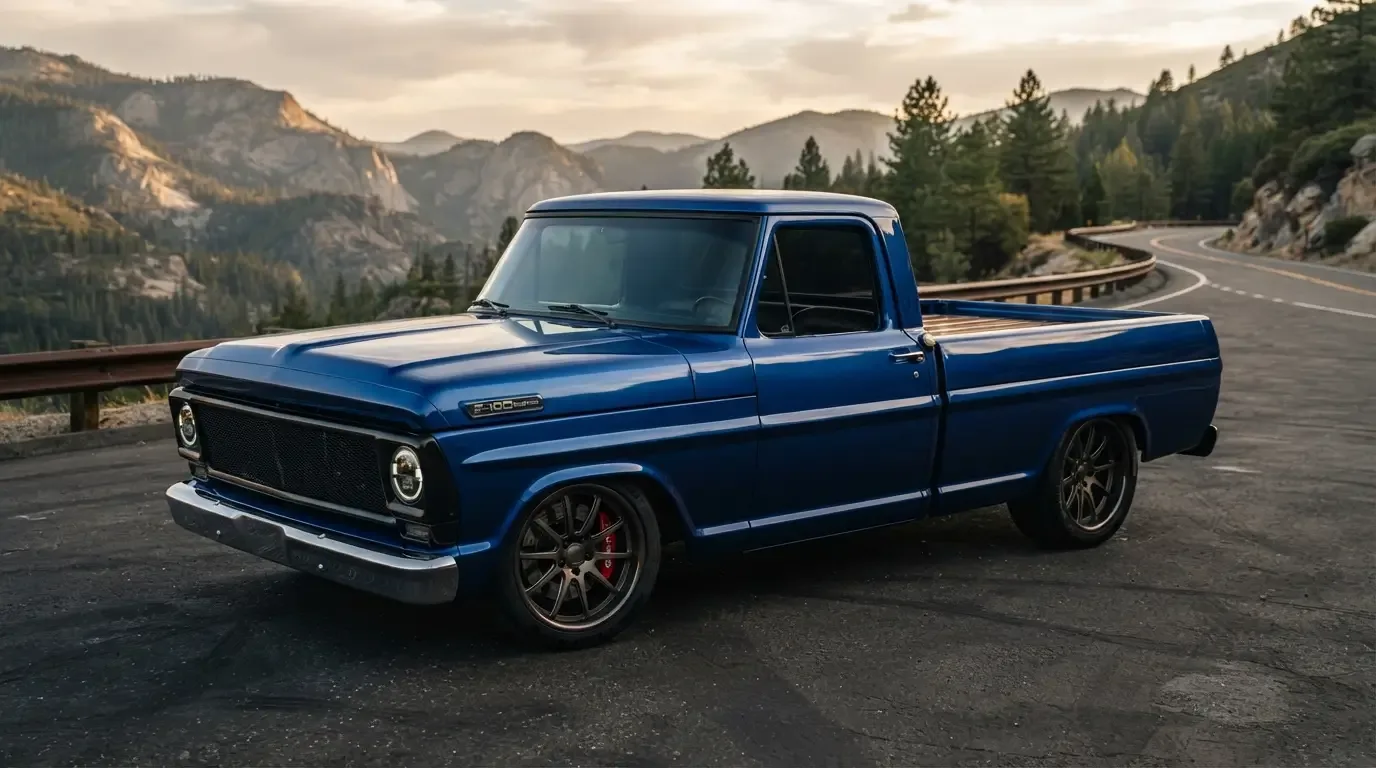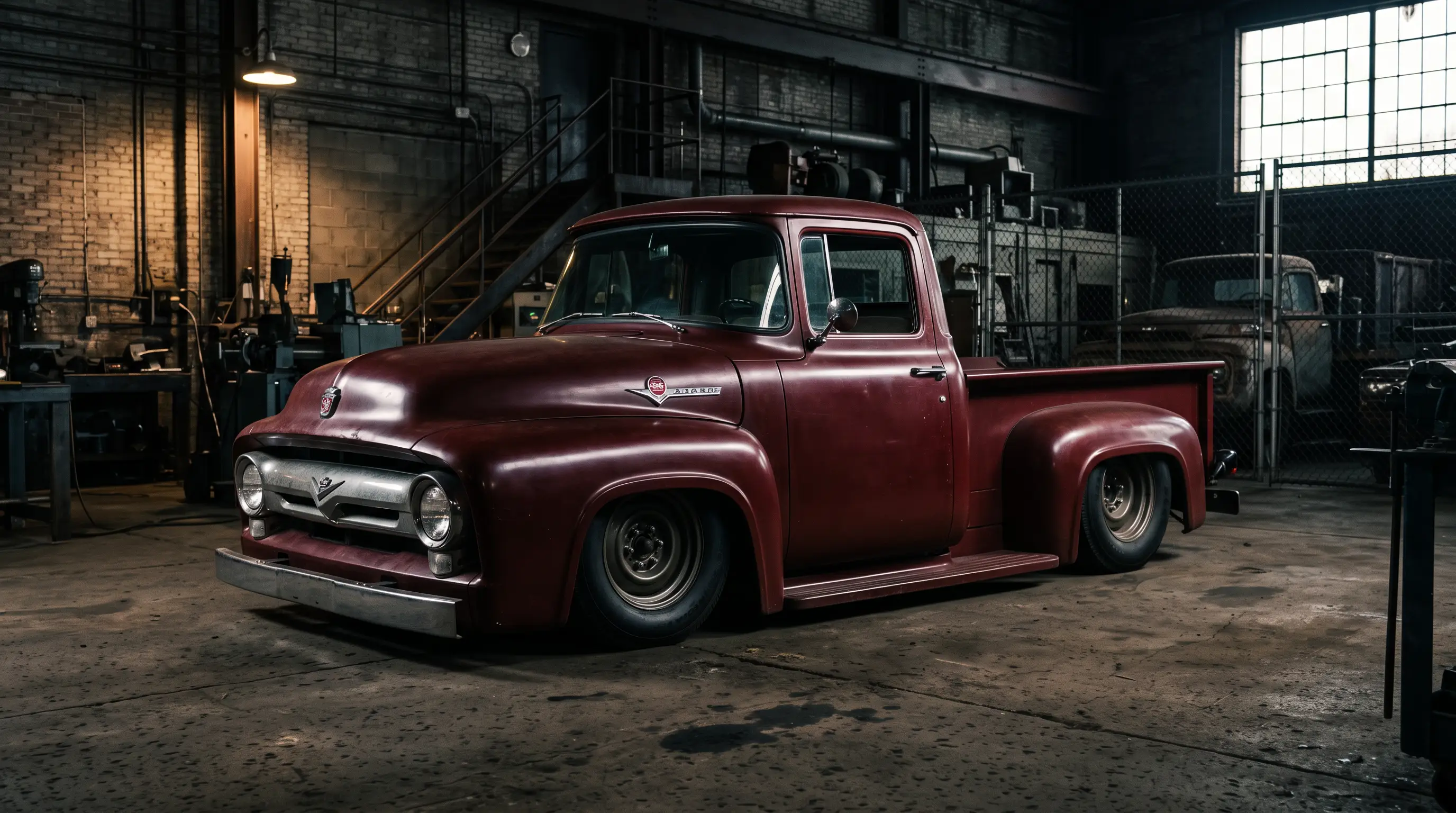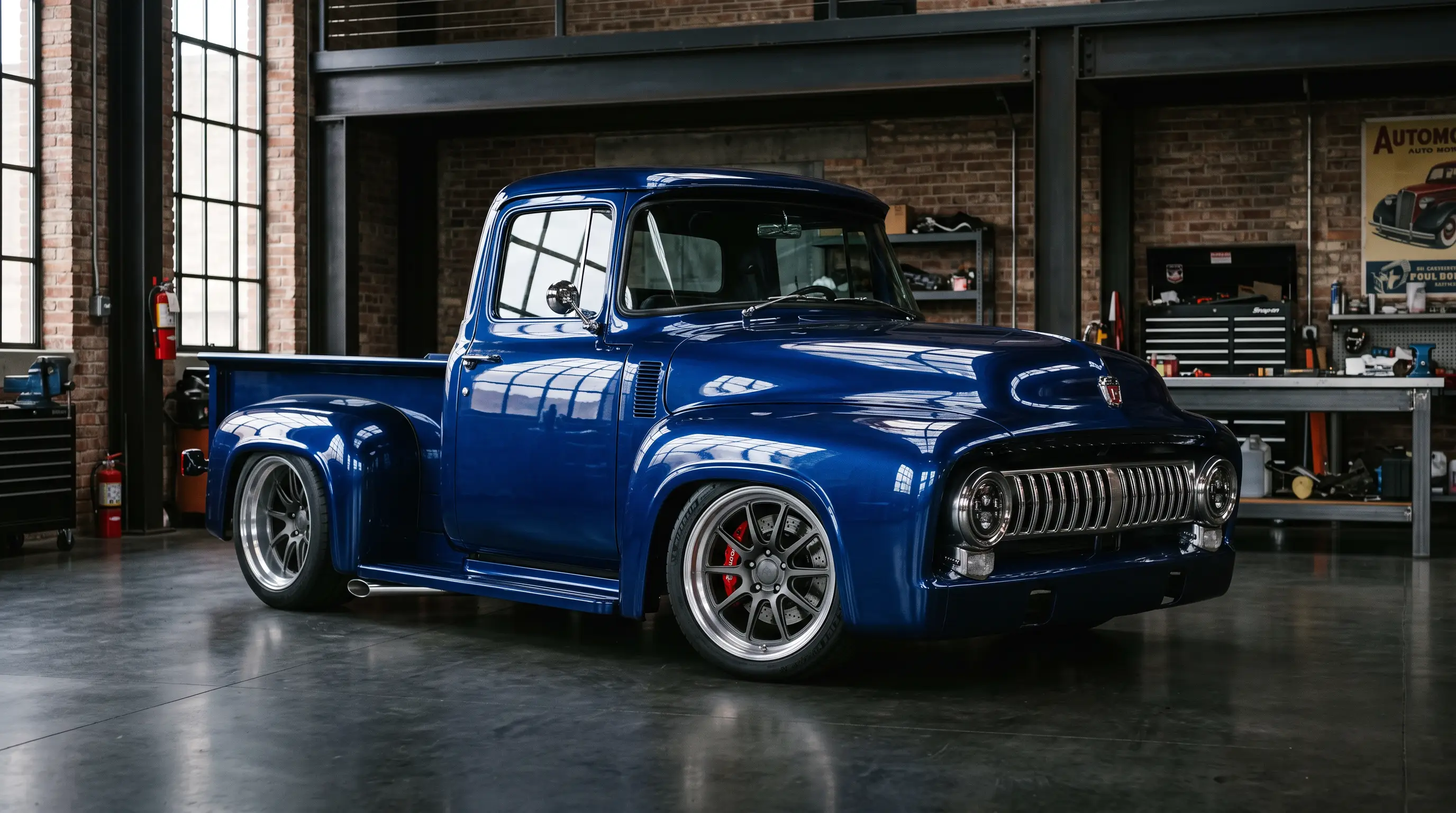
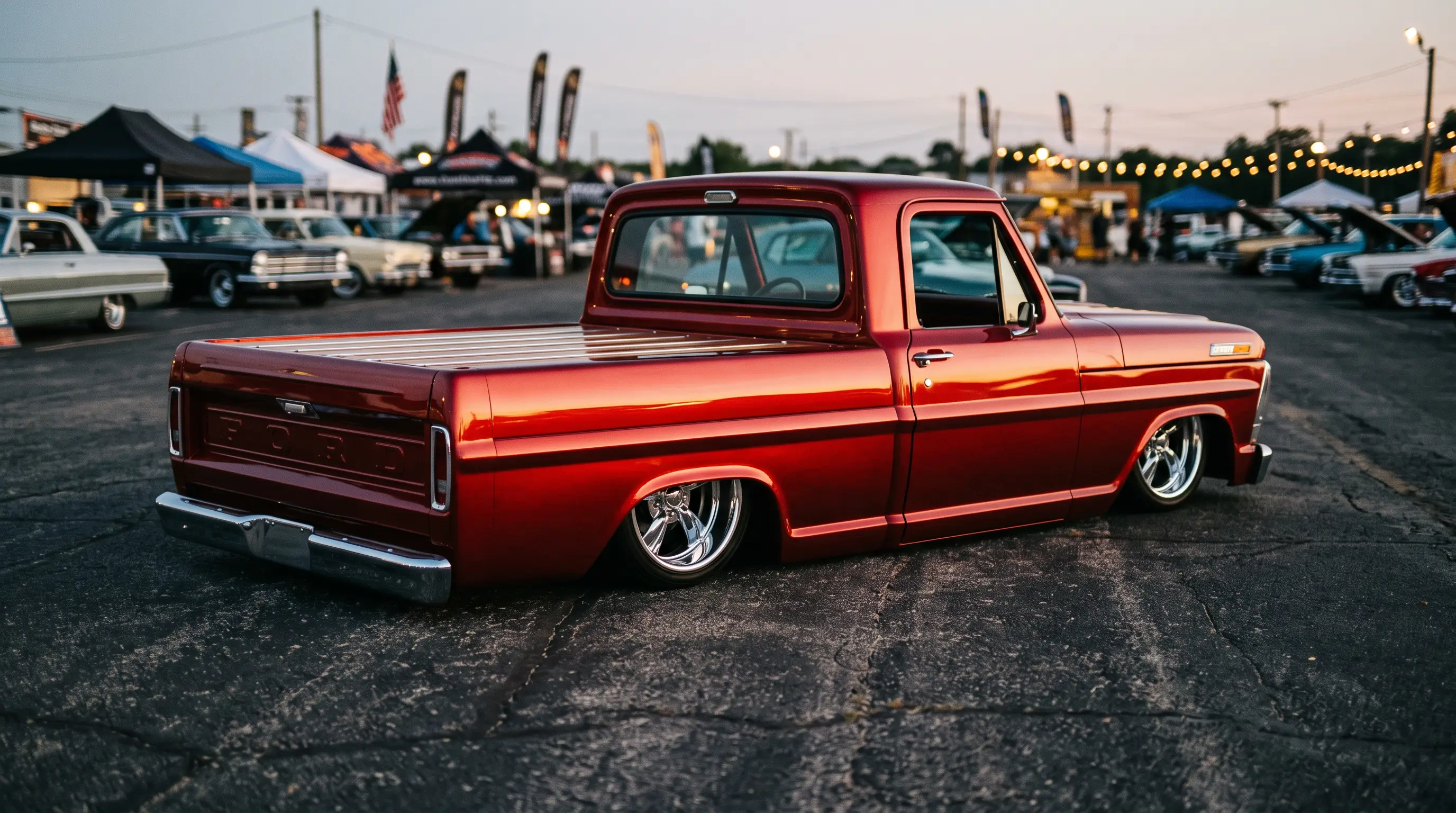
Watch a bagged Ford F-100 pull into a show and there's usually a small crowd waiting for the moment it settles onto the ground, air hissing out of the system as the frame drops the last inch onto its bump stops. That little bit of theater is part of the appeal. A bagged F-100 isn't just lowered, it's lowered on command, capable of sitting on the pavement one minute and rolling comfortably down the highway the next. That flexibility is what separates the bagged truck crowd from the rest of the stance-focused custom scene.
What "bagged" actually means, in plain terms
Air ride suspension replaces a truck's factory springs with air-filled bags that a compressor system inflates or deflates on demand. The result is a ride height the driver controls rather than something fixed by static springs, letting a truck drop dramatically low for a show or a parking lot photo and then raise back up enough to clear speed bumps and driveways on the way home. This is a cultural and functional discussion here, not an installation guide. What matters for understanding the trend is why builders choose this approach over a fixed drop, and what it has come to represent within the F-100 world specifically.
Compared to a static lowered suspension, air ride offers something no fixed setup can match: versatility. A statically dropped F-100 commits to one ride height permanently, which looks great parked but can turn every steep driveway or speed bump into a genuine hazard for the front bumper and exhaust. Bagged trucks avoid that tradeoff entirely, which is a big part of why the approach has become so popular among builders who actually want to drive their trucks regularly rather than trailer them everywhere.
Why the F-100 specifically took to this trend
The F-100's flat body panels and generous factory wheel arches give a bagged setup plenty of room to show off the full range of motion, from a dramatic laid-out drop to a comfortable daily ride height, without the wheels ever looking awkward at either extreme. That range is part of the appeal at a show specifically, since a bagged truck can demonstrate its capability live, dropping and rising in front of a crowd in a way a static build simply cannot replicate.
Fourth and fifth generation trucks, spanning 1967 through 1979, tend to dominate the bagged F-100 scene, largely for the same reasons they dominate the broader restomod world generally: wider cabs, more room to work with underneath, and body proportions that respond well to an aggressive stance at full drop.
"Guys ask me why I'd spend that kind of money on air instead of just cutting springs and being done with it. Because I still gotta drive the thing home afterward, that's why."
- Mike Sullivan
A show feature as much as a ride quality upgrade
There is a genuine performance argument for air ride, a properly tuned system can actually improve ride comfort over a harsh static drop, since the air bags absorb bumps differently than a stiff lowered spring does. But most builders in this scene will admit the show factor matters just as much as the ride quality, if not more. Watching a truck settle onto the ground is a moment of spectacle that a static build cannot offer, and that spectacle has become its own draw at shows specifically built around custom trucks.
This has turned bagged F-100 builds into something of a performance art within the hobby. Owners time their arrival at a show for maximum visual effect, dropping the truck slowly as a crowd gathers, and that ritual has become as much a part of the culture as the build itself.
The cost and commitment involved
A quality bagged setup represents a serious investment relative to a static lowering job, since the compressor, tank, bags, and control system all add complexity and cost that a fixed drop simply doesn't require. That expense has made bagged builds something of a statement within the F-100 scene, signaling a level of commitment to the project beyond what a basic stance modification requires.
That investment shows up in resale value too. A well-executed bagged F-100 with a properly installed system tends to command a real premium over a comparable static build, reflecting both the parts cost involved and the added versatility the system provides to whoever buys the truck next. Readers interested in how this fits into the broader restomod movement can find the full story covering the wider trend this bagged scene sits inside.
Where the bagged F-100 scene is heading
Air ride technology keeps improving, with more compact tank and compressor setups making the system easier to package into a truck without sacrificing bed space or ground clearance in the way older systems sometimes did. That ongoing improvement keeps making the bagged approach more accessible to builders who might have once been put off by how much room a full air ride system used to require.
For anyone drawn to that dropped-on-command look and ready to find a truck of their own, there are usually a few builds already fitted with air ride among the browse classic F-100 listings worth checking regularly, alongside stock trucks waiting for their own transformation. The bagged F-100 has earned its place as one of the custom scene's most theatrical expressions, and that theater is exactly the point.
Why some builders still choose static over bagged
Not every stance-focused builder goes the air ride route, and it's worth understanding why. A static lowering setup is simpler mechanically, with fewer components that can fail and less ongoing maintenance than a full compressor and bag system requires. Some owners prefer that simplicity, accepting the fixed ride height tradeoff in exchange for a setup they never have to think about beyond the initial installation. For a truck that mostly sits at a single show location rather than getting driven regularly on varied terrain, that tradeoff can make plenty of sense.
The choice between static and bagged ultimately comes down to how an owner actually plans to use the truck. A builder chasing maximum drama for occasional show appearances might lean static and accept the limitations that come with it. A builder who wants a genuine daily driver capable of clearing a steep driveway one minute and laying frame on the pavement the next has a much stronger case for investing in air ride despite the added cost and complexity. Neither choice is wrong, they simply serve different versions of what an owner wants from a bagged Ford F-100 build.
The sound and feel that comes with the system
Owners who have never spent time around a bagged truck are often surprised by how much the system adds to the experience beyond the visual drop itself. The compressor cycling on to refill the tank has its own distinct rhythm, one that regular attendees at custom truck shows learn to recognize from across a parking lot. Riding in a bagged F-100 feels different too, a softer, more cushioned response over rough pavement compared to a stiff static setup, though that comfort can vary quite a bit depending on how well the specific system has been tuned.
That sensory layer, the sound of the compressor, the particular way the cab settles as the bags deflate, has become part of what people associate with this specific style of build. It's a detail that rarely comes across in a photograph but registers immediately for anyone standing next to the truck in person, and it's one more reason bagged builds tend to draw a crowd at shows rather than just quiet admiration from a distance.