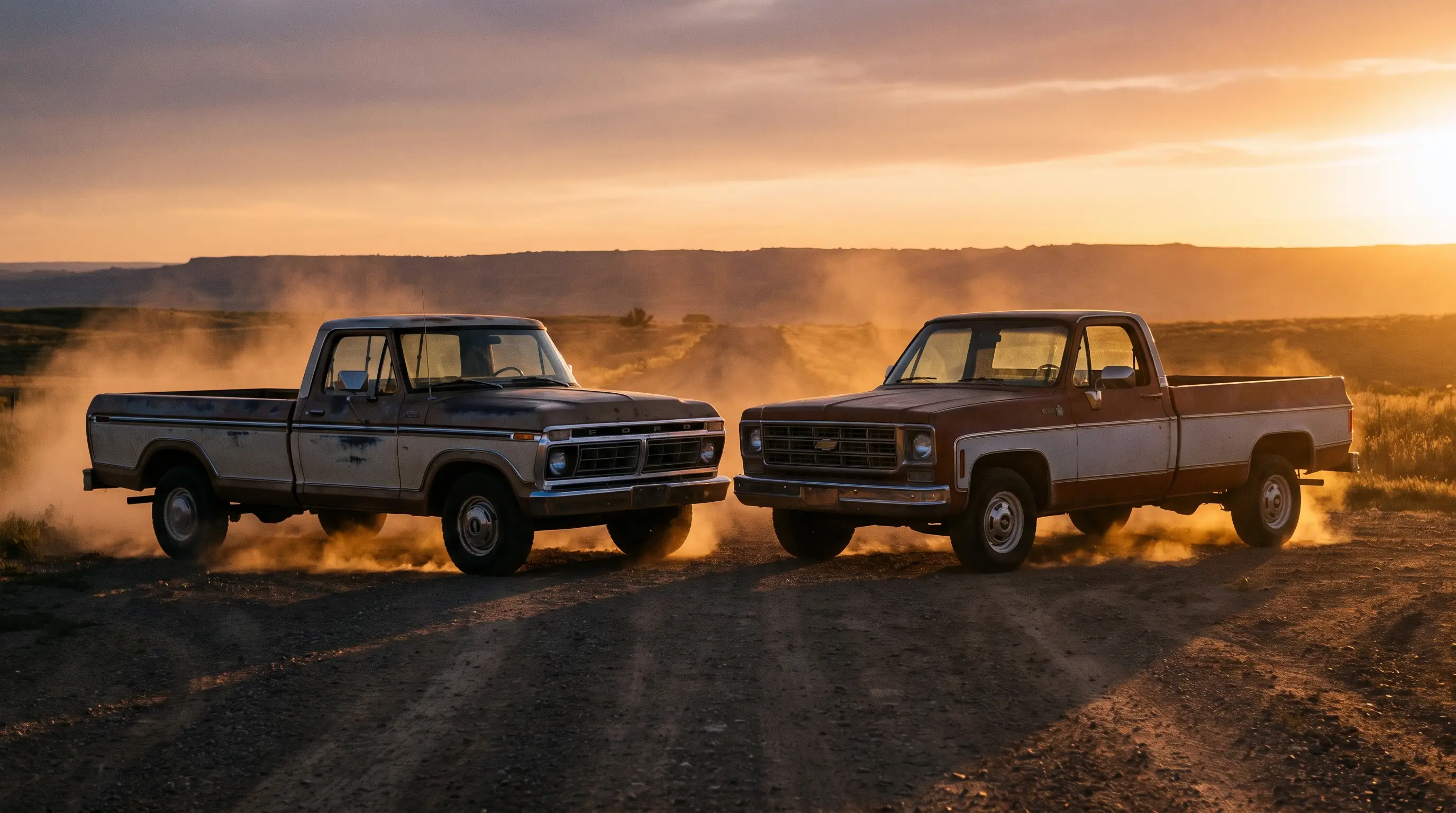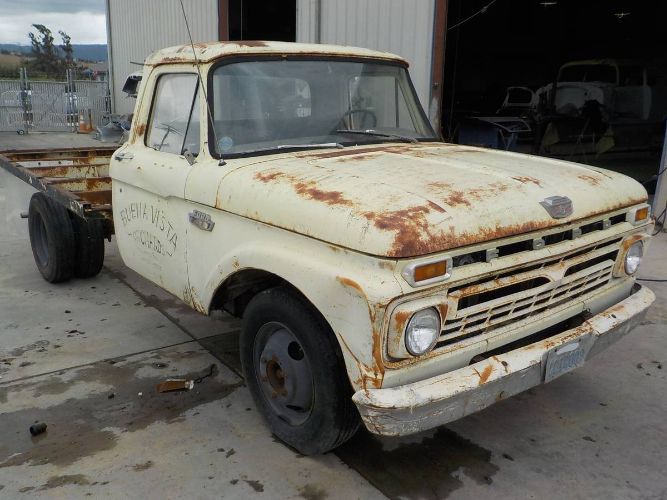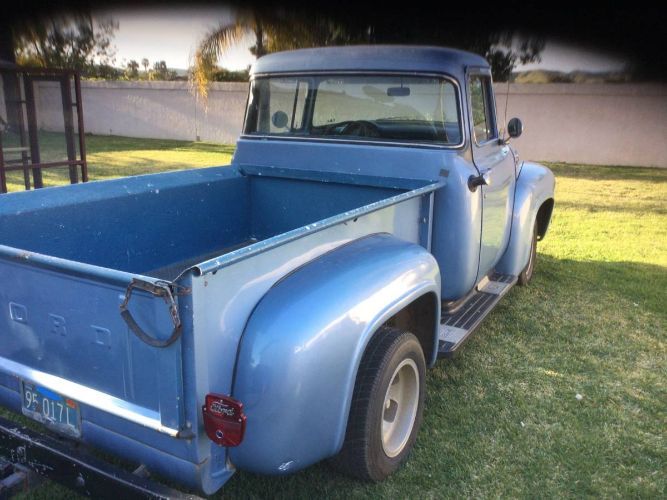
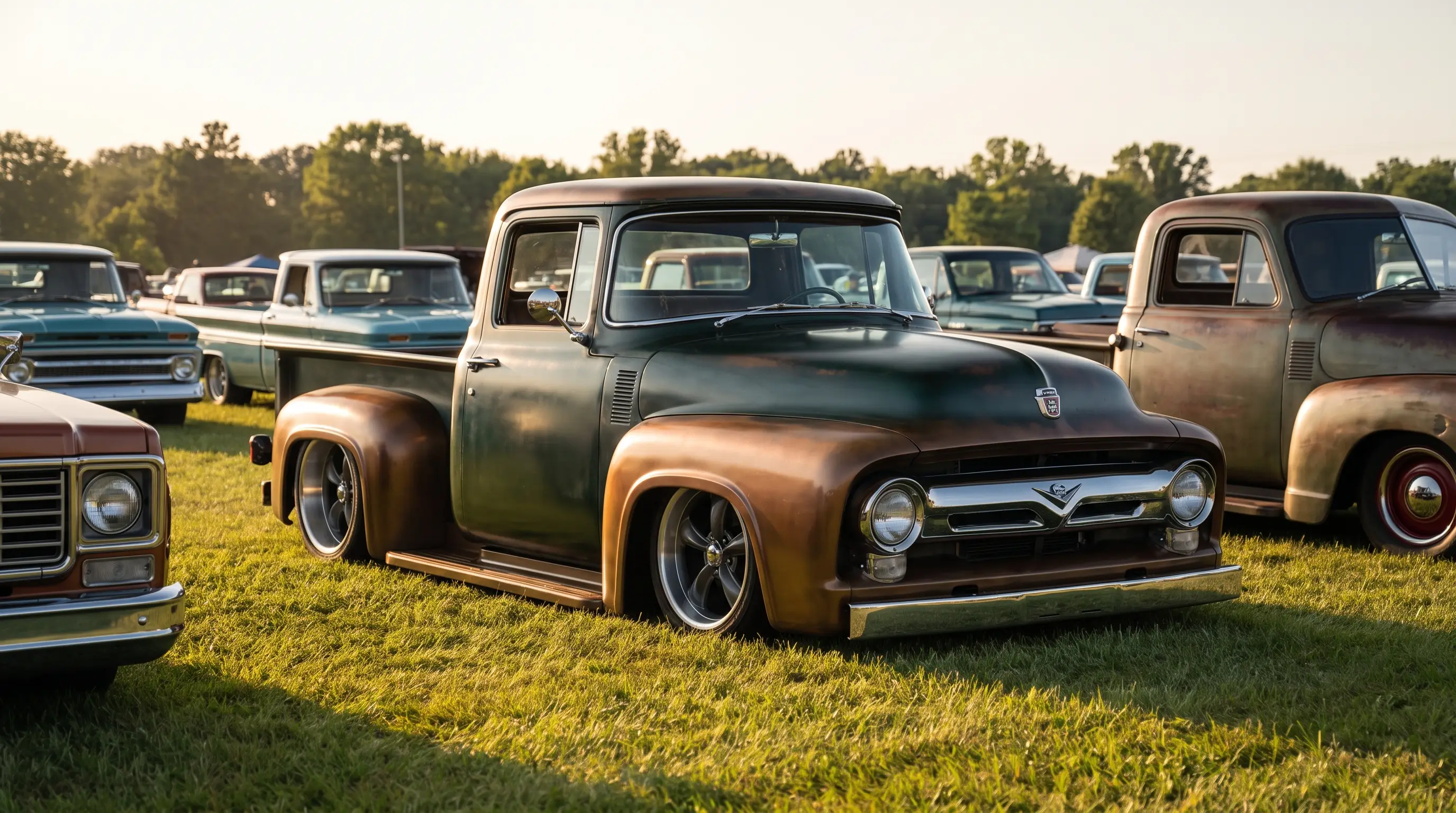
At a builder's meet a while back, two trucks sat nose to nose in the gravel lot for most of an afternoon, a bagged F-100 on one side and a bagged C10 on the other, neither owner willing to admit the other truck looked better. That's the custom scene's version of the old Ford-versus-Chevy fight, and unlike the stock-truck argument, this one plays out in stance, wheel fitment, and paint rather than horsepower figures. The f100 vs c10 custom debate is really its own separate rivalry, running on different rules than the factory-original comparison.
A different set of criteria entirely
Stock-truck purists judge originality, correct paint codes, factory casting numbers, unmolested interiors. None of that applies once a truck enters the custom scene. Here the criteria are stance, proportion, wheel choice, and how convincingly the modifications read as intentional rather than bolted-on. An F-100 or a C10 built well in this style looks like it rolled off the assembly line already lowered, already running the right wheels, which is exactly the effect a skilled builder is chasing.
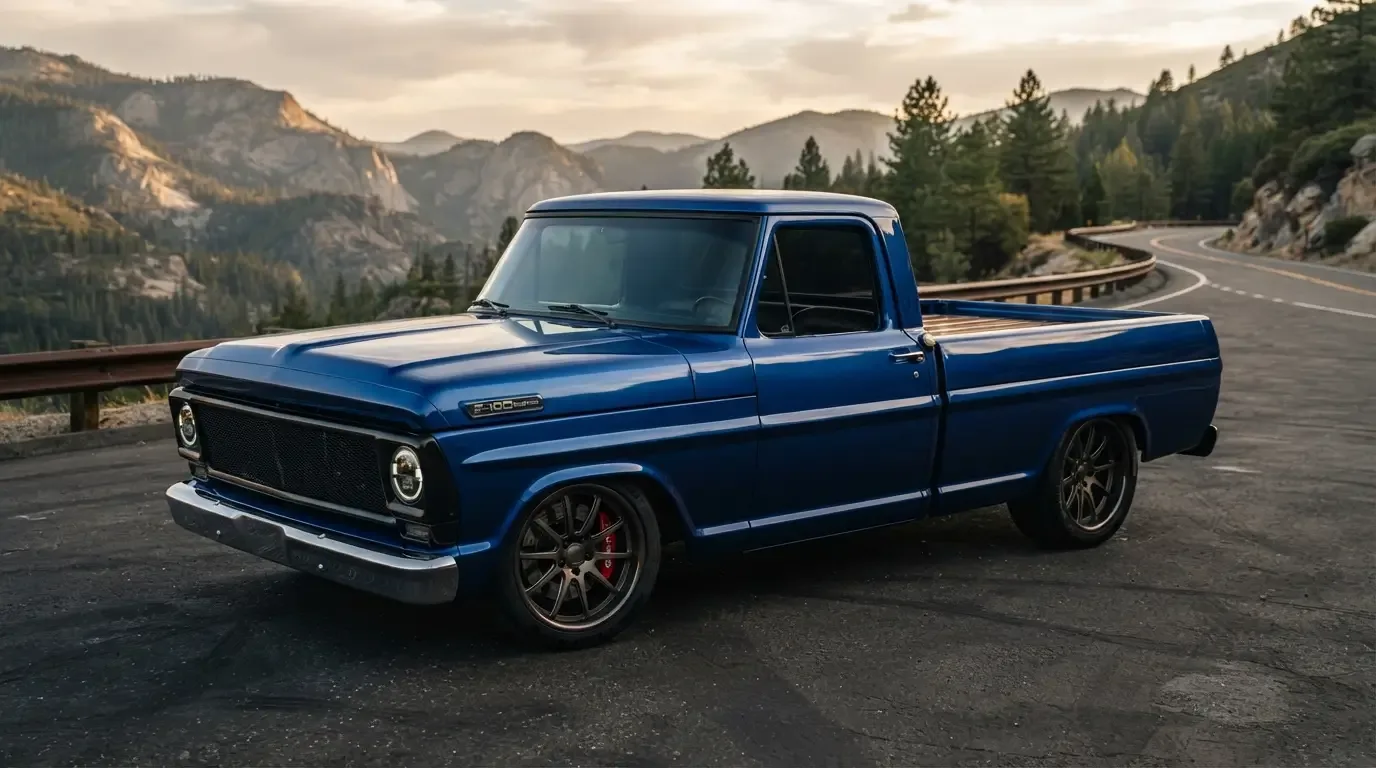
The F-100's flat body panels and generous wheel arches, especially on the fourth generation trucks from 1967 through 1972, give builders a wide canvas to work with. The C10 from the same Action Line era offers its own advantages, a slightly lower factory stance to begin with and rounder fender lines that some builders feel blend more naturally into an aggressive modern wheel and tire package. Neither shape has a clear technical edge, it comes down to which proportions a given builder is chasing.
Where the F-100 tends to pull ahead in this scene
Builders who favor the F-100 for custom work point to its upright greenhouse and flat hood as an advantage once the truck is lowered, the boxiness that looks plain on a stock truck suddenly reads as aggressive and intentional once the ride height drops and the wheels fill the arches properly. That transformation from ordinary work truck to genuinely striking custom is part of what has made the F-100 restomod scene grow as fast as it has over the past decade.
There is also a badge-loyalty element here too, just as there is in the stock comparison. Some builders simply will not work on a Chevy platform regardless of how the C10 might suit their vision, and that loyalty shows up just as strongly in the custom world as it does among originality-focused collectors. Readers who want the fuller picture of how this movement developed can find more on the ford f100 restomod in a dedicated feature covering the trend from its earliest builders through today.
"You can put the same wheels, same drop, same paint booth work into an F-100 and a C10, and they still won't look the same truck twins. That's the whole reason this argument never dies."
- Patrick Walsh
The C10's case in the custom world
C10 builders counter that their platform's lower factory stance to begin with means less work to achieve an aggressive look, and that the truck's rounder factory lines pair more naturally with the wider, deep-lip wheel styles that dominate current custom truck trends. There's a strong argument there. A lot of standout C10 builds achieve their stance with less dramatic modification than an equivalent F-100 needs to hit the same visual target, since the C10 starts closer to that look from the factory.
Both camps have produced genuinely show-stopping trucks, and neither side is likely to concede the argument any time soon. What both sides agree on, interestingly, is that the rivalry itself has been good for the hobby, pushing builders on each platform to raise their standards in response to what the other side is producing.
How the aftermarket has responded
Wheel manufacturers, suspension companies, and fabrication shops have all built out dedicated product lines for both platforms as demand has grown, which has narrowed whatever practical gap once existed between building a custom F-100 and building a custom C10. A decade ago, a builder choosing the F-100 might have had a harder time sourcing certain parts than a C10 builder working with Chevy's larger factory production numbers. That gap has closed considerably as the F-100 custom scene matured and demand justified more dedicated aftermarket support.
This maturity shows up in build quality across the board. The average custom F-100 or C10 at a serious show today reflects a level of fabrication and finish that would have been unusual even fifteen years ago, driven in large part by builders on each side pushing to outdo what the other platform's community was producing.
Where this leaves a prospective buyer
Anyone trying to decide between the two for a custom project is better off starting with the shape they personally respond to rather than trying to win an argument that has been running for decades without resolution. For background on how the F-100 itself got to this point culturally, there's more where this started, tracing the truck from its earliest years through to today's custom scene.
For buyers ready to act on either side of the argument, there are usually several classic F-100s on the market at various stages of build quality, from stock trucks ready for a first project to finished customs ready to show. The f100 vs c10 custom rivalry isn't going away, and honestly, neither camp seems to want it to.
What separates a good custom build from a great one
Regardless of which platform a builder chooses, judges and enthusiasts in the custom scene tend to agree on what separates an average build from a genuinely great one, and it usually has nothing to do with which badge is on the grille. Cohesion matters more than any single modification. A truck where the stance, wheel choice, paint, and interior all feel like they were planned together as one vision reads as far more accomplished than a truck with an expensive individual part list assembled without that same unifying sense of proportion. That standard applies just as strictly to an F-100 as it does to a C10, and it's the real reason certain builds stand out at a show regardless of platform loyalty.
That shared standard is part of what keeps this rivalry friendly rather than genuinely divisive. Builders on both sides respect craftsmanship when they see it, even from a truck wearing the other badge, and that mutual respect has done more to elevate the overall quality of custom truck builds than either camp's platform loyalty ever could on its own.
Where new builders tend to land
Someone starting their first custom truck project today, without any inherited brand loyalty pulling them one direction, often makes the call based on something as simple as which truck they happened to find first at a price they could afford. That practical reality shapes the hobby just as much as any aesthetic argument does. A clean, reasonably priced F-100 sitting in a driveway two towns over can decide the whole question for a first-time builder faster than any amount of debating stance and proportion ever could.
Once that first truck is chosen, though, loyalty tends to set in fast. Builders rarely switch platforms after finishing their first serious custom project, and that stickiness is a big part of why both the F-100 and C10 custom scenes keep growing in parallel rather than one eventually absorbing the other. Each new builder becomes an advocate for whichever platform they started on, and the argument renews itself with every new project that rolls into a show for the first time.