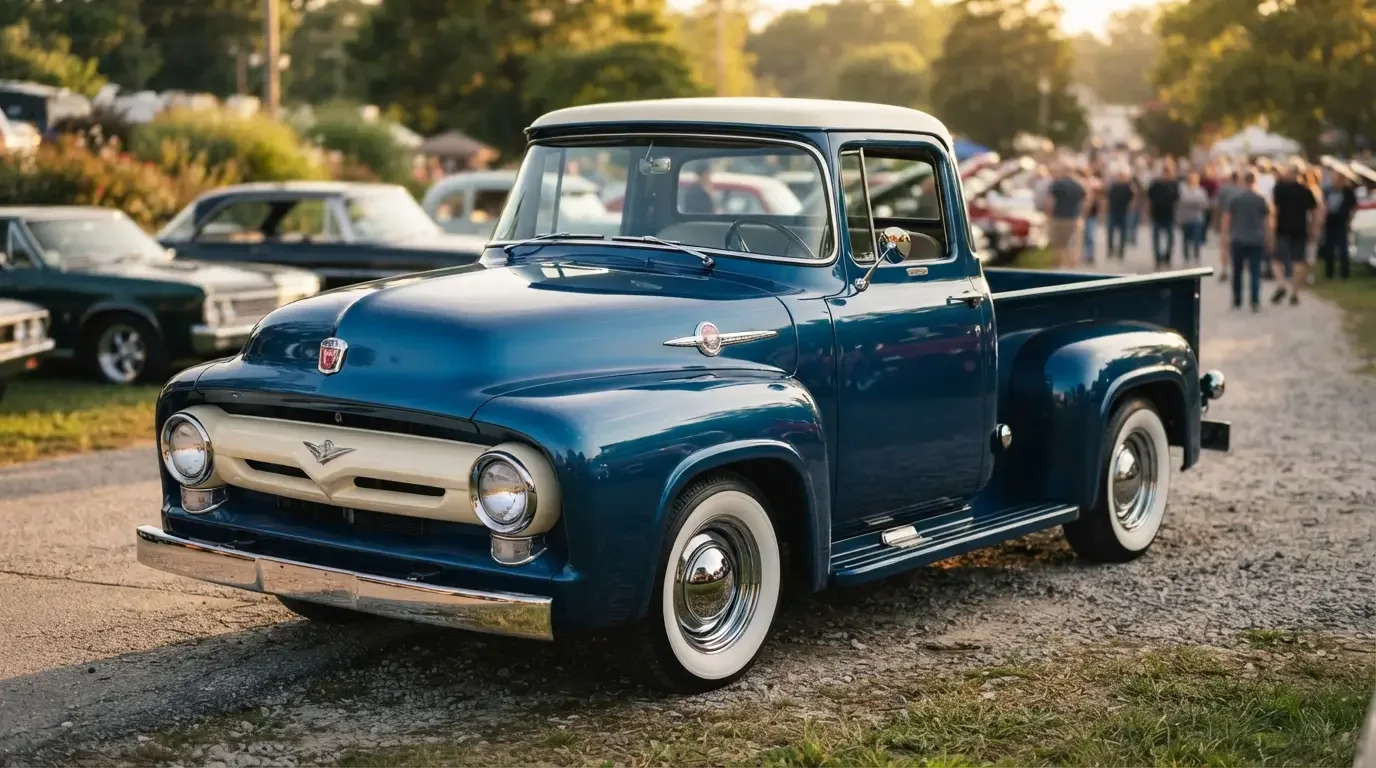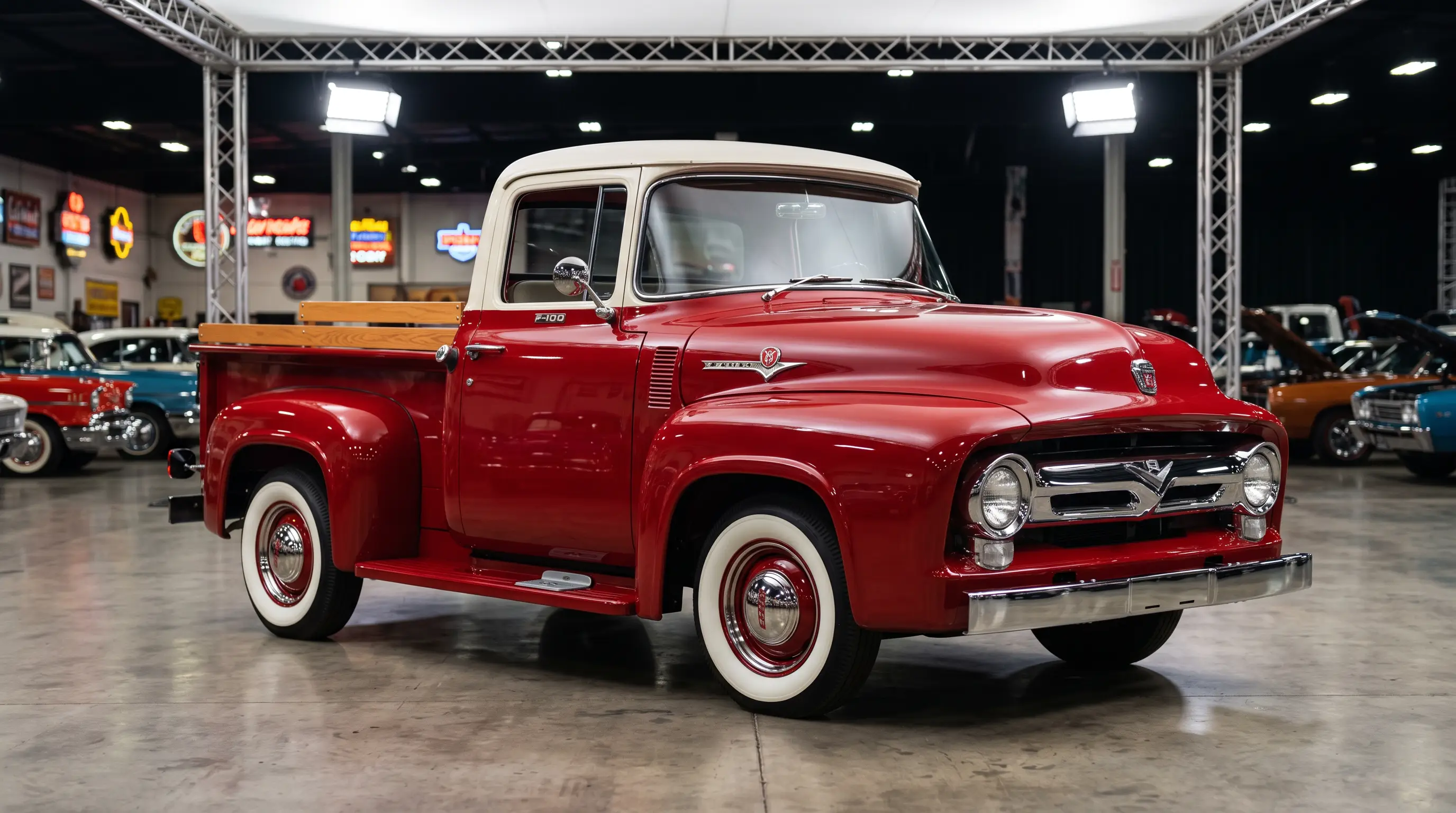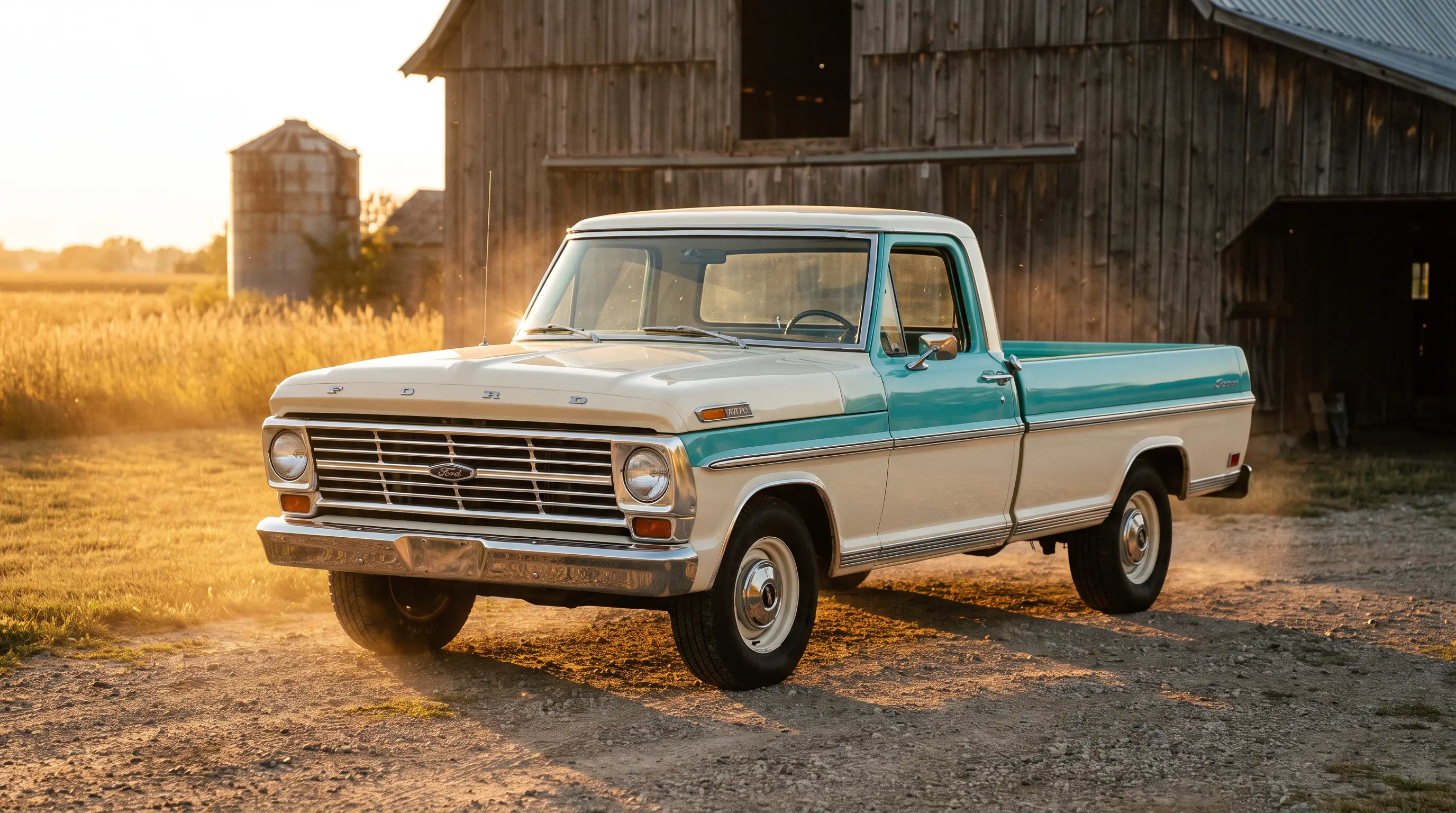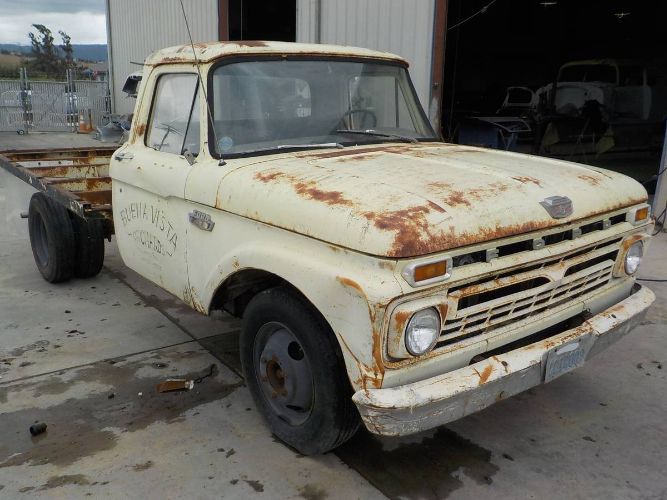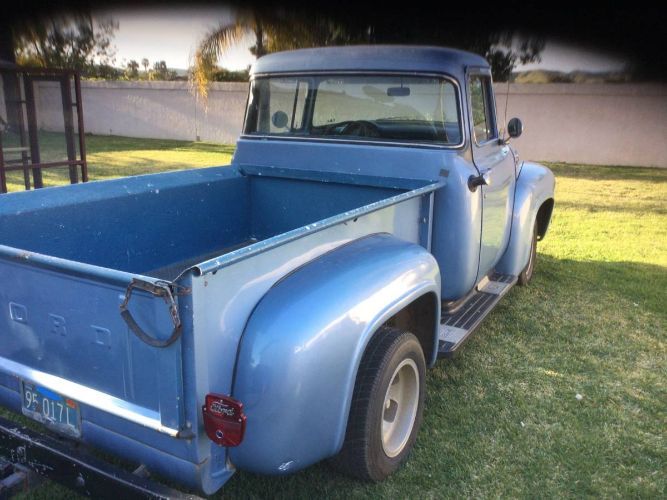
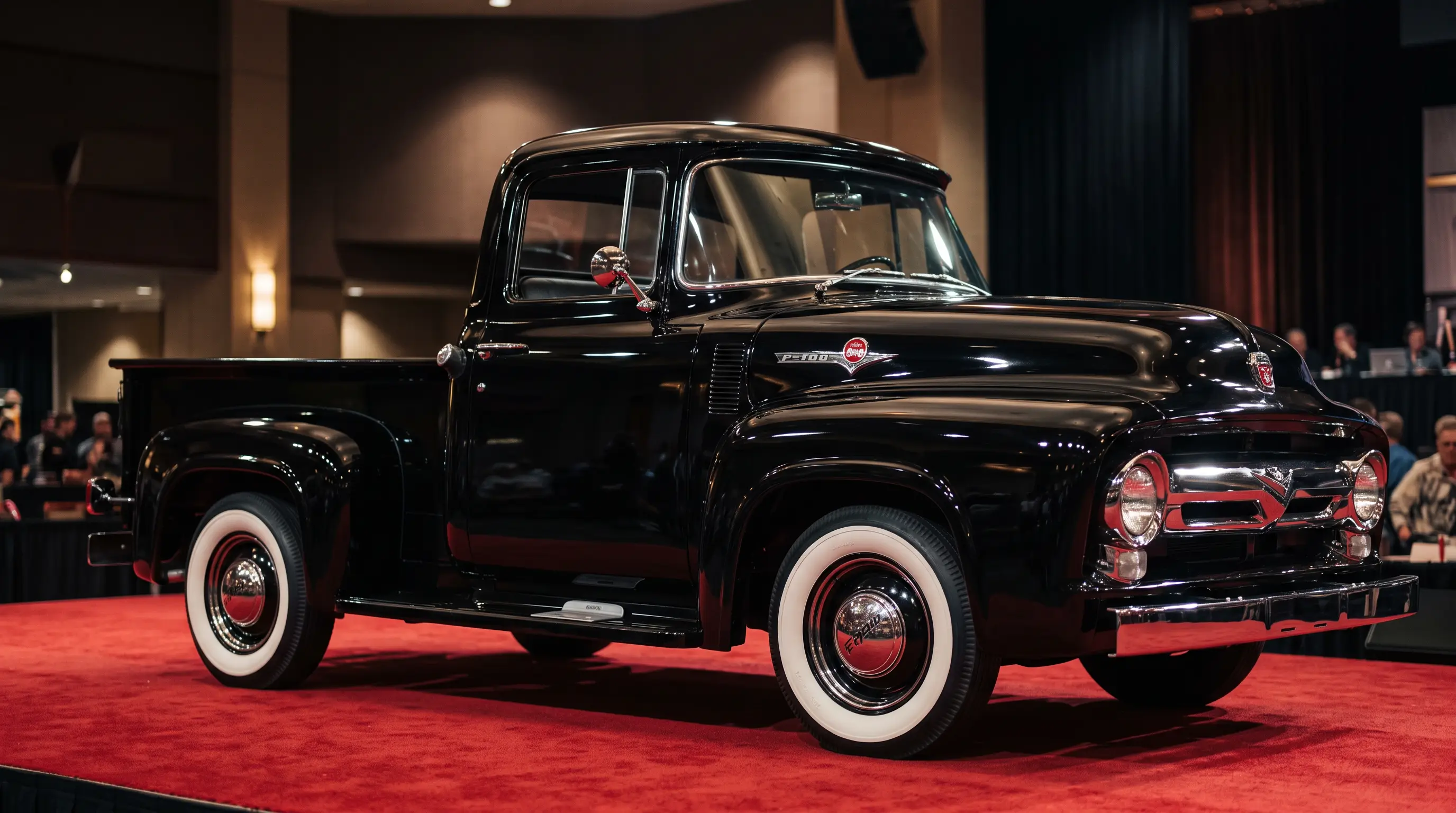
Clients occasionally ask me what the most expensive ford f100 ever sold actually looked like, expecting the answer to involve some hidden factory rarity nobody has heard of. The real answer is less mysterious and more instructive. The highest recorded sale prices for this platform tend to share a small set of traits, and understanding why those specific trucks broke records tells you more about how this market actually works than any single headline number does on its own.
What tends to top the results
The single highest publicized F-100 sale on record is the "Snakebit" 1956 F-100, a Carroll Shelby-built custom carrying a supercharged Shelby GT500 V8, which brought $450,000 at Barrett-Jackson's Scottsdale sale in 2014 with proceeds going to a children's hospital charity. That is an outlier in a different way than most record sales: it was driven as much by the charity angle and the Shelby name as by the truck itself. Set that one-off aside and the trucks that consistently land at the top of results among documented, numbers-matching originals are short-bed, big-window examples with a well-known ownership history or a professionally executed, period-correct restoration, typically bringing well into six figures at major auctions. That is a narrow combination of factors, and it explains why the truck that tops a given sale season is rarely a truck the general public would recognize by name. These are not celebrity-owned vehicles or trucks with a famous film credit attached. They are simply the best-documented, rarest-configuration survivors that happened to come to market at the right moment in front of the right bidders.
Bidding wars, when they happen, tend to occur between two or three specific collectors chasing a gap in their own collection rather than a broad field of interested buyers. That dynamic matters for interpreting record sales correctly. A single record-breaking result driven by two determined bidders competing directly against each other is not the same signal as a broad market consensus that every comparable truck is suddenly worth that much more.
Why the record number is not the market number
This is the point I make most often to clients who read about a record sale and assume their own truck's value has jumped overnight. A single exceptional result at the top of the market tells you what is possible under ideal conditions: perfect documentation, exceptional rarity, and two motivated bidders in the same room. It does not tell you what a comparable but slightly less documented truck will actually bring, and the gap between the two can be substantial. I have seen sellers price a truck against a record headline only to sit unsold for months because the truck, while genuinely good, was missing one of the specific factors that drove the record sale in the first place.
Appraisers who do this work seriously look past the headline number entirely and instead track the broader distribution of results across a category. That distribution tells a more useful and considerably more boring story than any single record sale, but it is the story that actually predicts what a given truck will bring at market.
Buyer's premium and fees change the real number
One detail that gets lost in casual reporting on record sales is that the headline figure usually represents the hammer price before buyer's premium and other fees, which can add a meaningful percentage on top of the number that actually gets reported in the press. Anyone comparing a record sale against their own truck's estimated value should account for that gap, since the effective total cost to the winning bidder is consistently higher than the widely quoted figure suggests.
"A record sale is a data point, not a market. I have had clients try to price an honest, well-kept truck against a headline number that involved two specific bidders chasing something neither of them could find anywhere else. That is not how the rest of the market prices."
- Marcus Feld
Documentation carries almost the entire premium at this level
At the very top of the market, condition alone stops being the differentiator. Plenty of trucks are restored to an equally high cosmetic and mechanical standard. What separates the record-setting example from a merely excellent one is almost always the depth of documented history: original invoices, factory build sheets, continuous ownership records, and independent verification of matching numbers. That paperwork does not add value in a straightforward, percentage-based way the further up the market you go. It becomes close to a precondition for competing at that level at all, and trucks lacking it, however well restored, simply are not part of the conversation for record-breaking prices regardless of how they look in photographs.
This is worth internalizing for anyone who owns a truck with strong original documentation sitting in a file cabinet somewhere. That paperwork is not a nice-to-have. At the top end of this market, it is close to the entire basis for the premium, and sellers who fail to present it clearly and prominently are leaving real money on the table.
What this means for buyers who are not chasing a record
None of this should discourage a buyer who simply wants an honest, well-sorted F-100 for regular ownership rather than an investment-grade trophy. Record sale prices apply to an extremely narrow slice of the overall population, and the vast majority of trucks on the market trade at prices that reflect genuine condition and usability rather than headline-chasing bidding wars. For readers who want the fuller context behind why this platform commands the attention and prices it does today, the full story covers the collecting culture that underpins this entire market.
Buyers interested in what is actually available at realistic price points, rather than the outlier headline numbers discussed here, can browse classic F-100 for sale to see the range of condition and pricing that makes up the honest middle of this market.
How I advise a seller sitting on a genuinely exceptional truck
When a client does own a truck with a real shot at record-tier money, meaning documented originality, a rare body configuration, and a clean ownership history, my advice on how to sell it differs meaningfully from how I advise the typical seller. Consignment through an auction house that specializes in this platform and has a track record of attracting the specific two or three collectors likely to bid seriously matters far more here than it does for an ordinary truck sold through a general listing. A record-caliber truck sold through the wrong channel, in front of the wrong audience, can badly underperform its true value simply because the handful of buyers capable of pushing the price into record territory never saw the listing.
I also tell these clients to resist the temptation to set an asking price anchored to the last headline record sale. Every truck's documentation and configuration is different enough that a direct comparison rarely holds up, and an unrealistic anchor price can scare off serious bidders before the auction even starts. A well-run auction with the right audience in the room will find the truck's actual value more reliably than any pre-sale guess, headline-anchored or otherwise.