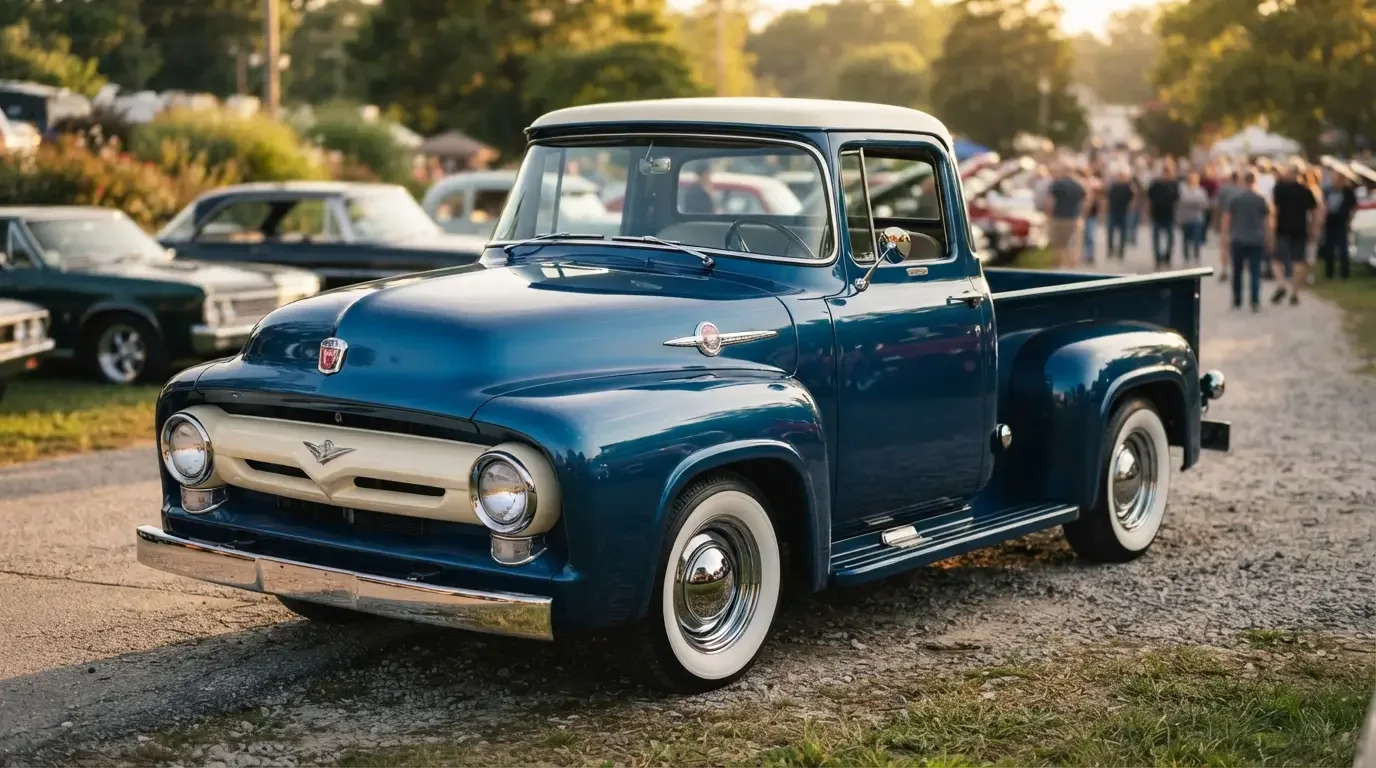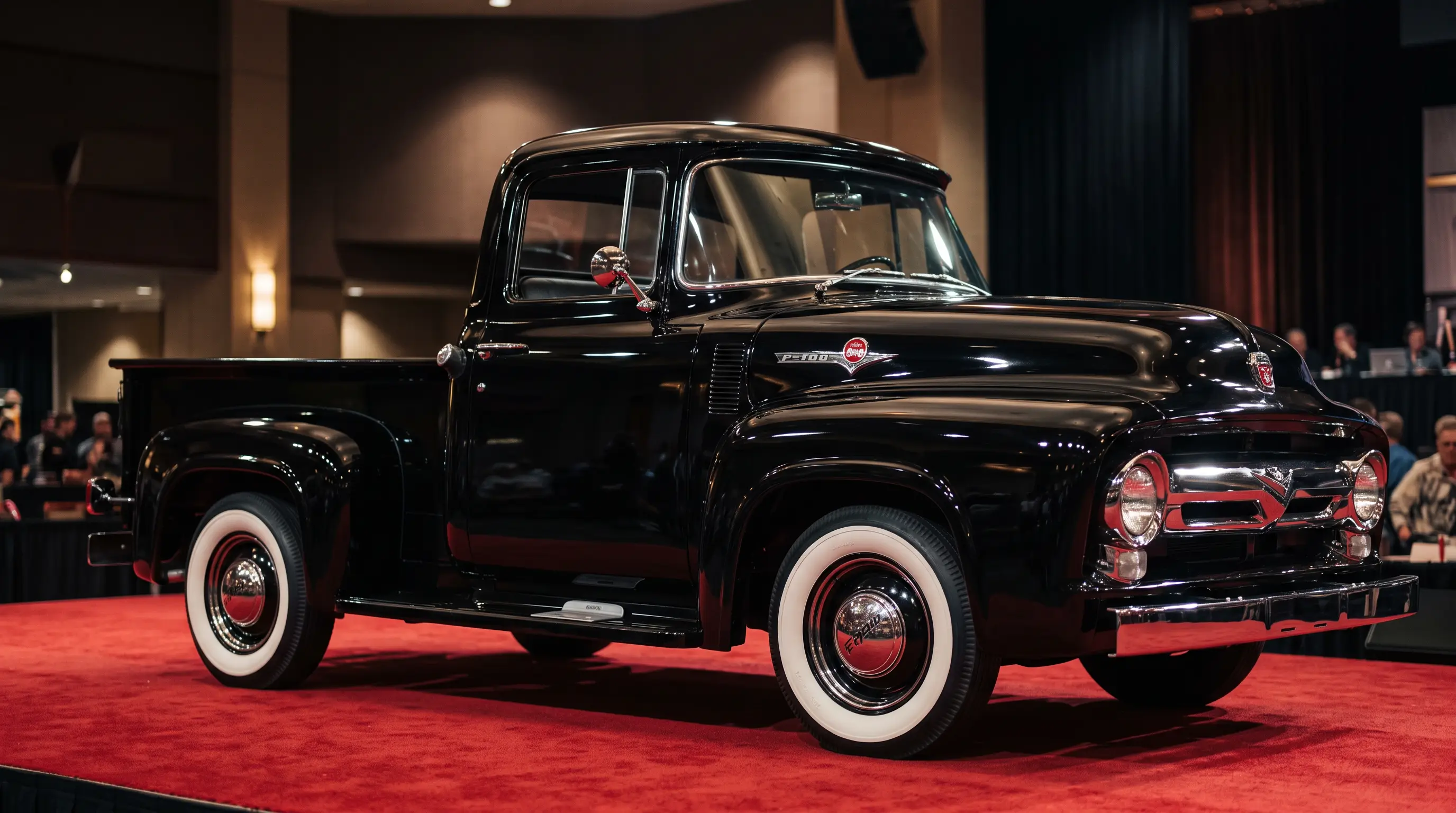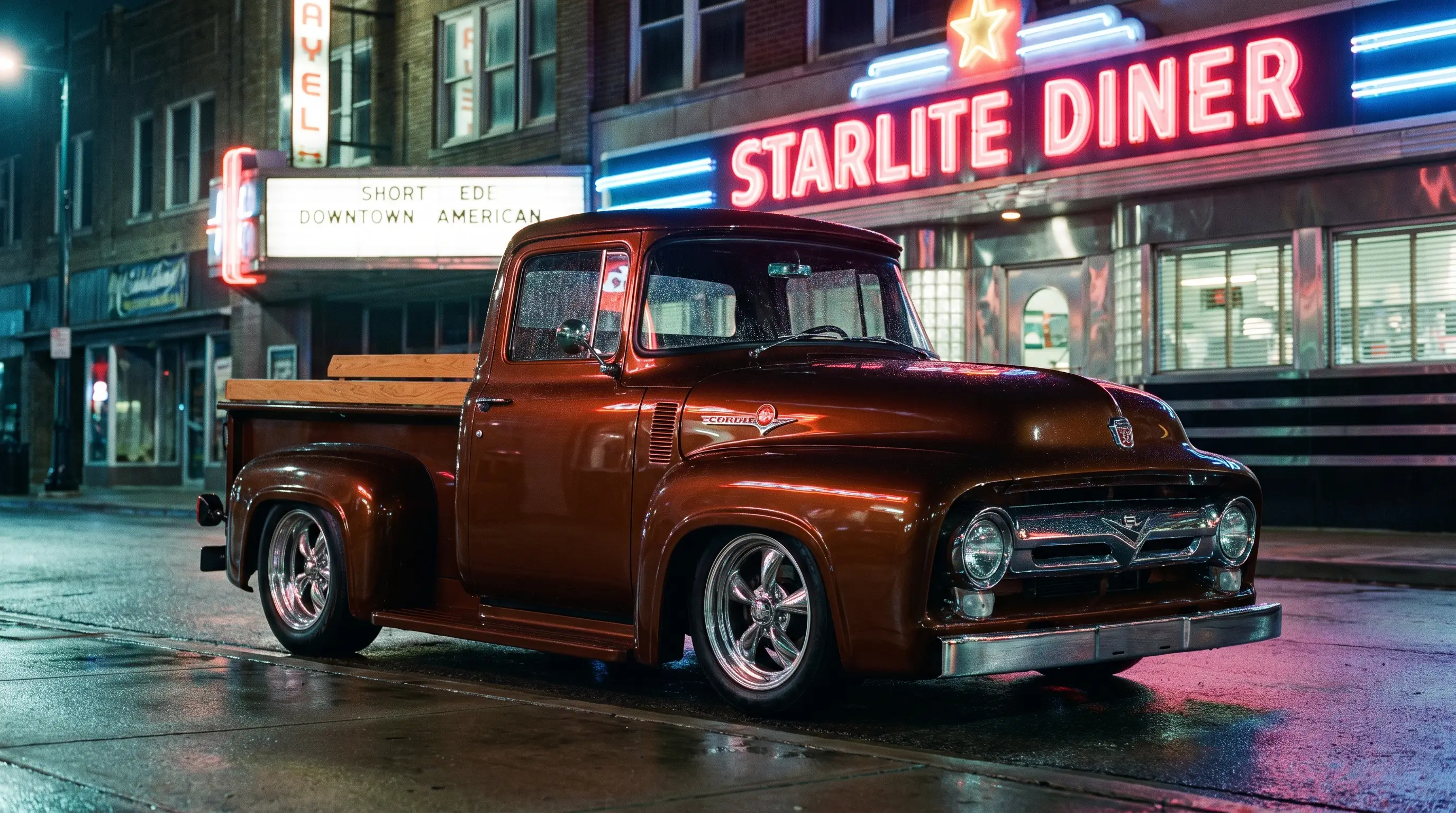
People ask me all the time what to buy for their first classic, and I steer a lot of them toward a starter classic ford f100 before I mention anything fancier. Not because it is the flashiest option out there. Because it is honest. Simple mechanicals, a huge parts supply, and a design that does not punish you for not knowing everything on day one.
Simple is not a compliment people give enough credit
Modern classics with fuel injection and computer controls scare off a lot of first-time owners for good reason. An old F-100 with a carbureted six or a Y-block V8 is a truck you can actually understand with a shop manual and a Saturday afternoon. There is no module to diagnose, no wiring harness with forty connectors hidden behind the dash. Points, plugs, carburetor, and a distributor you can set with a timing light and a little patience. That simplicity means a beginner can genuinely learn how the whole system works rather than just replacing parts and hoping.
I have had guys come into the shop who could not tell a distributor cap from a valve cover, and two years later they are doing their own tune-ups because the truck taught them, one repair at a time. That does not happen with a lot of other classics where half the work requires specialized tools or factory diagnostic equipment nobody outside a dealership owns anymore.
Parts availability is the real deciding factor
I tell every beginner the same thing. It does not matter how much you love a car if you cannot find the parts to keep it running. This is where the F-100 wins outright over a lot of other classics people consider for a first project. Fenders, floor pans, trim, interior kits, entire cabs in some cases, all of it gets reproduced because the demand has stayed steady for decades. You are not hunting swap meets for a decade hoping to find one taillight lens. You order it, it shows up, you install it.
Compare that to some of the lower-production classics from the same era, where a broken piece of trim means months of searching or paying a premium for a used part that might be just as tired as the one you are replacing. A beginner does not need that headache on top of everything else they are already learning.
Forgiving mistakes without punishing your wallet
New owners make mistakes. They overtighten something, they buy the wrong part the first time, they misdiagnose a problem and replace the wrong component. On a lot of classics, those mistakes get expensive fast. On an F-100, the parts are cheap enough and the labor simple enough that a wrong guess costs you a weekend and maybe forty bucks, not a month's wages. That forgiveness matters more than people realize when they are shopping for a first project, because everybody makes mistakes on their first classic. The question is whether those mistakes are cheap lessons or expensive ones.
"Buy the truck that lets you screw up cheap. That is the whole secret to a first classic, and the F-100 lets you screw up about as cheap as anything out there."
- Mike Sullivan
What a beginner should still watch for
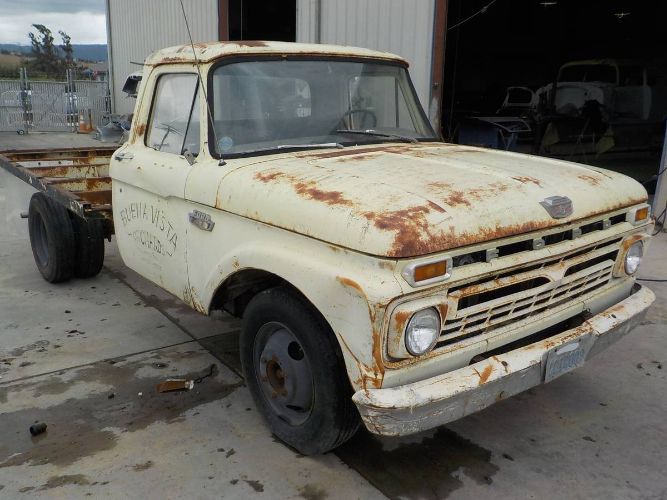
None of this means every F-100 on the market is a good buy for a first-timer. Rust is the real enemy on these trucks, especially in the cab corners, floor pans, and bed. A truck that looks solid in photos can be hiding serious structural rot underneath, and a beginner without an experienced eye can get burned buying a truck that needs far more work than it appears to. Bring someone who knows what they are looking at before you hand over money, or budget for a pre-purchase inspection if you do not have that person in your corner.
| What to check | Why it matters for a first buy |
|---|---|
| Cab corners and floor pans | Common rust points, expensive if structural |
| Bed wood and crossmembers | Cheap to replace if caught early, costly if ignored |
| Engine compression and oil pressure | Tells you the real mechanical condition fast |
| Title and ownership paperwork | Avoids registration headaches down the road |
| Parts availability for your specific model year | Confirms you are not buying an orphan configuration |
Setting realistic expectations before you buy
A beginner should also go in understanding that even a "starter" classic still requires a real budget beyond the purchase price. Tires, brakes, fluids, and general safety items add up fast on a truck that has been sitting, and skipping those to save money is how a good learning project turns into a dangerous one. Set aside a real cushion for these basics before you ever start looking at cosmetic upgrades or performance parts, because a truck that stops and steers reliably is worth more to a new owner than one with a fresh paint job and worn-out brake lines underneath it.
For readers who want to understand why this particular truck became such a popular entry point into the hobby in the first place, our complete history covers how the F-100 built the reputation and parts ecosystem that makes it such a practical first classic today. And when you are ready to start shopping seriously rather than just reading about it, browse classic F-100 listings to see what is actually out there at prices that fit a first-timer's budget.
The community makes the learning curve shorter
One thing I underline for every new owner is how much easier this hobby gets once you find the right people. F-100 owners clubs and online forums have been answering the exact same beginner questions for decades at this point, and that means whatever problem you are staring at right now, somebody has already solved it and written the solution down somewhere. A stumped first-timer with a rough-running six-cylinder can post a description of the symptoms and get three or four experienced owners chiming in within a day, often narrowing the problem down to something specific before a single wrench gets picked up.
That community support matters more for a beginner than it does for an experienced restorer, because a beginner does not yet have the instinct to know which symptom points to which cause. Leaning on people who have already made every mistake you are about to make saves real money and real time, and it is one more reason this particular truck makes sense as a first classic. The knowledge base built up around it over the decades is deep, current, and generally happy to help someone just getting started.
A truck that grows with you
The other advantage nobody mentions enough is that an F-100 does not box you into one direction once you own it. Keep it stock and simple as a first project, or use it as the foundation for a more ambitious build once you have learned the basics and want to take on something bigger. The truck does not punish either choice, and plenty of owners I know started with a bone-stock, budget-friendly six-cylinder truck and worked their way up to a full engine swap and custom interior years later, using the original project as their education along the way. That flexibility is rare in a first classic, and it is a big part of why I keep recommending this truck to people who walk into the shop unsure of where to start.