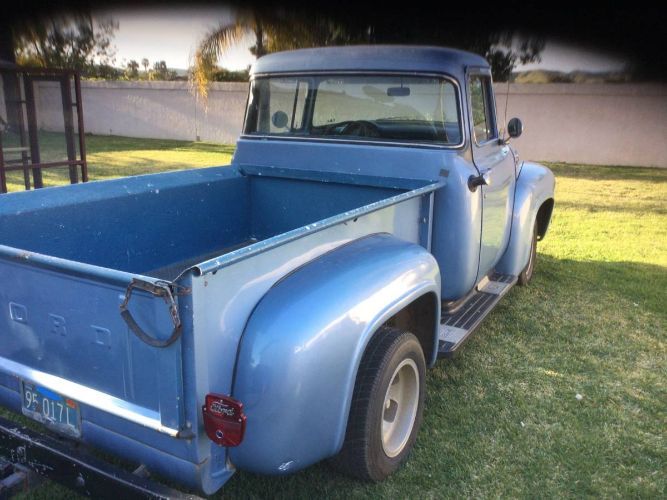
She stood at the edge of the show field for a long time before she finally asked the owner what the color was called, a deep, almost bruised turquoise that seemed to shift under the afternoon light. He told her it was mixed to match a swatch his grandfather kept in a coffee can for thirty years. That is the thing about ford f100 custom colors. They are rarely just paint. They are usually somebody's memory, translated onto sheet metal.
The factory palette builders keep returning to
Ford offered a genuinely wide range of colors on F-100s through the 1950s and 1960s, from soft pastels to deep, almost automotive-grade blues and greens that were unusual for a work truck at the time. Many custom builders today deliberately return to those original factory hues rather than reaching for something modern, because the colors already look correct against the truck's period shape. A 1956 F-100 in its factory-correct Meadowmist Green carries a kind of quiet authority that a flashier modern color sometimes cannot match, especially to judges who know their Ford color codes by heart.
Candy and metalflake made their mark
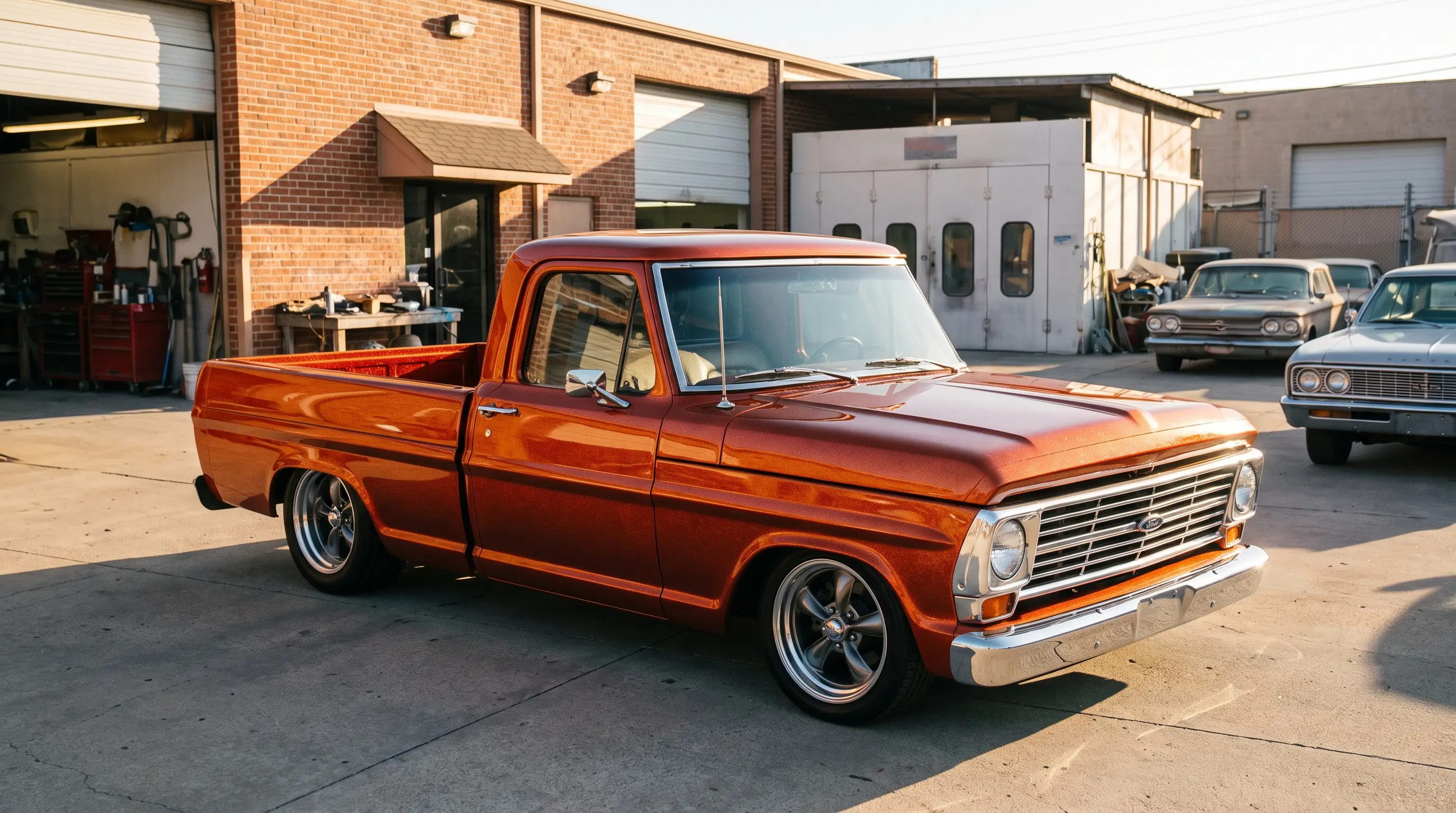
The 1960s and 1970s brought candy paint and metalflake into truck culture, techniques borrowed directly from custom car builders working in garages up and down the West Coast. A candy paint job layers translucent color over a metallic base, so the finish deepens and shifts as the light changes across a panel. On an F-100's broad, flat door and simple fender shapes, that effect reads especially well, since there is little bodywork detail to interrupt the color's movement. Builders who wanted to stand out at a show leaned hard into this look, and some of the era's most photographed trucks owe their reputation as much to the paint booth as to anything under the hood.
The muted, monochrome shift
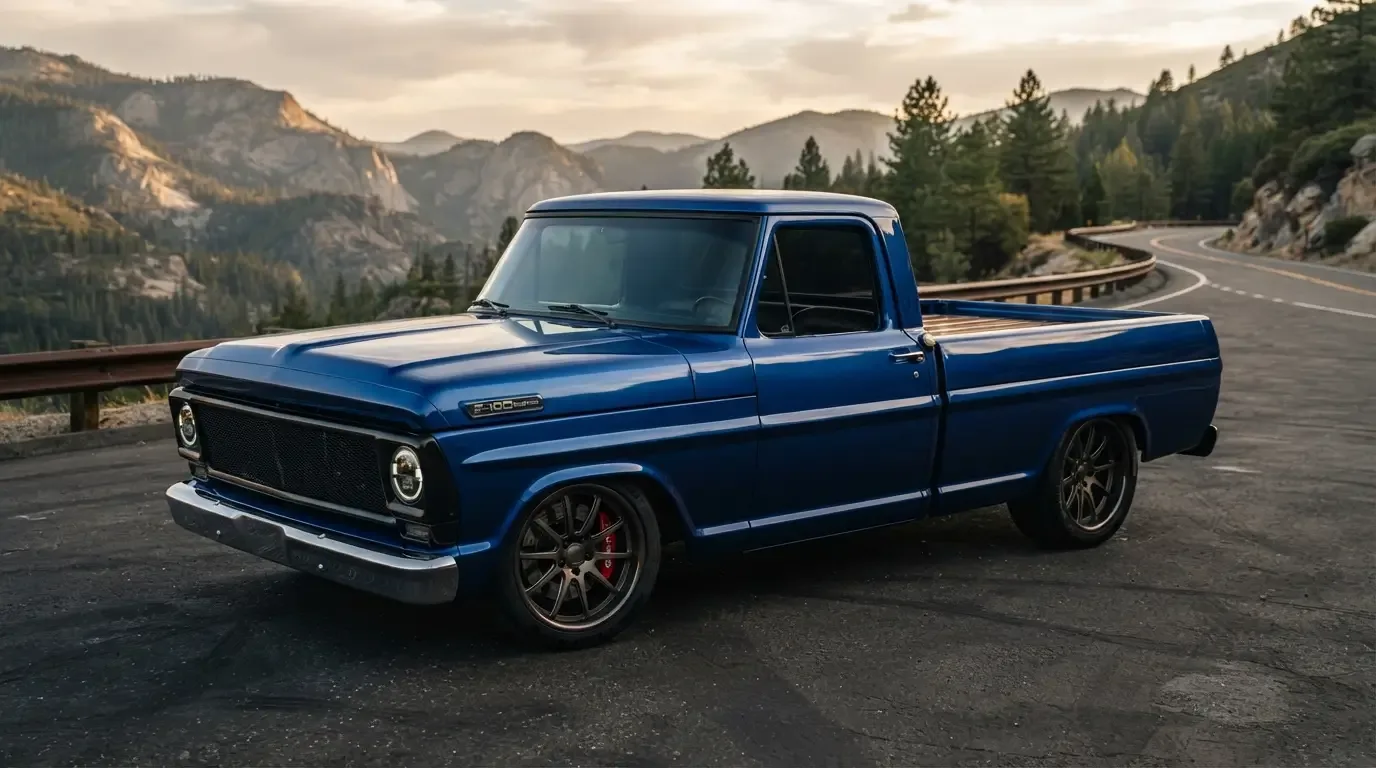
Paint trends on custom F-100s have swung noticeably toward restraint over the past decade. Builders now favor deep monochromatic colors, matte or satin finishes, and single-stage looks that trade the theatrical shimmer of earlier decades for a quieter kind of confidence. Part of that shift traces back to the broader restomod movement covered in our complete history of these trucks, where subtlety has increasingly replaced spectacle as the mark of a serious build. A single flat color, applied with flawless prep work, now often earns more respect on a show field than a wilder paint scheme would have a generation ago.
"The color someone chooses for a truck they've spent years building is rarely arbitrary. It carries a small history of its own, whether that is a childhood memory of a neighbor's truck or a color they simply could not stop thinking about."
- Nora Beckett
Two-tone and the return of a factory habit
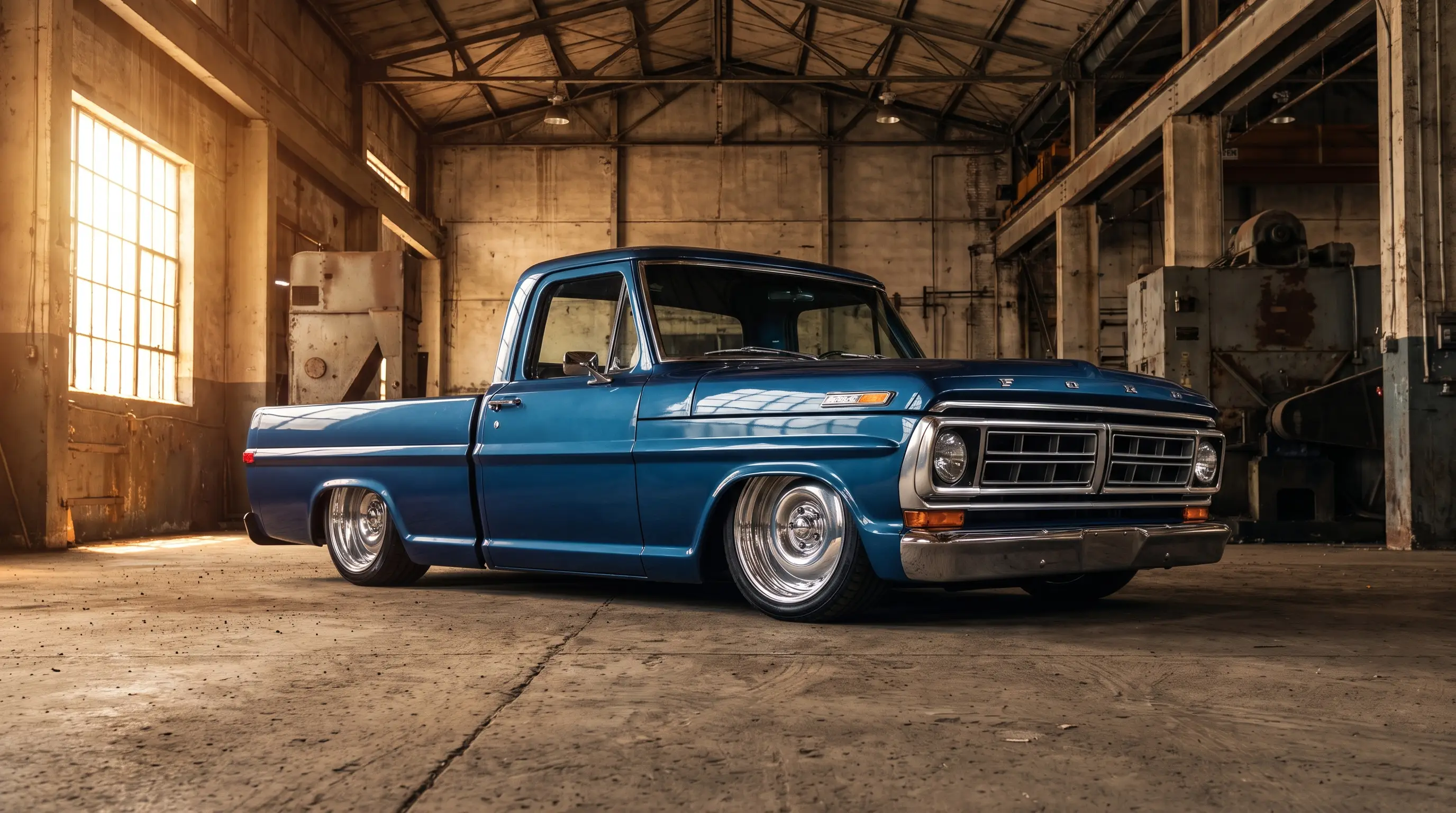
Two-tone paint, a genuine factory option on many F-100s, has come back into style among restomod builders looking for a way to nod at originality without committing to a fully stock appearance. A contrasting roof or lower panel breaks up the truck's mass in a way a single color cannot, and it gives builders a chance to reference the factory catalog while still making a personal choice about which two colors to pair. That balance between homage and individuality is a large part of why two-tone schemes have aged so well across nearly seventy years of F-100 history.
Prep work decides how any color holds up
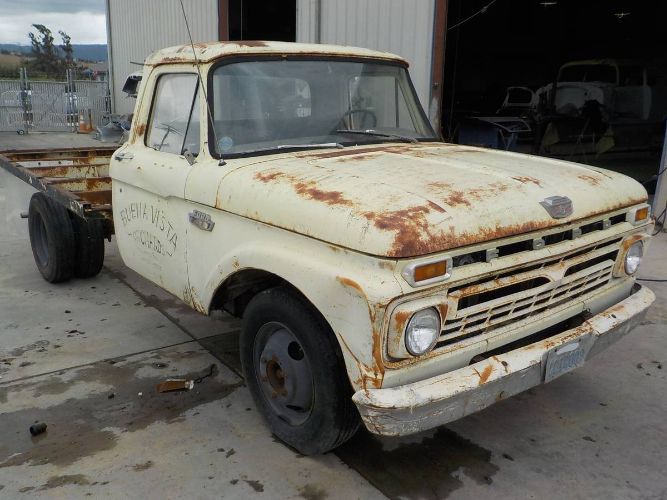
No color trend, however well chosen, survives poor bodywork underneath it. A straight, well-blocked panel will make even a modest single-stage color look sharp under show lighting, while the boldest custom-mixed color cannot hide a wavy fender or filler that was applied without patience. Experienced painters spend far more time on bodywork and prep than on the actual spray session, and that ratio only gets more extreme as a color's gloss level increases, since a high-gloss finish reflects every imperfection a lower-gloss paint might have hidden. This is part of why two trucks wearing what appears to be the identical color can look completely different in person, with one reading as flawless and the other as merely acceptable.
Interior color follows the same instincts
The conversation about custom F-100 color rarely stops at the body panels. Interior upholstery choices have followed roughly the same arc, moving from bright, almost playful vinyl combinations in the 1960s toward the deep, restrained leather and tweed treatments favored on today's higher-end builds. A truck with a candy orange exterior from the 1970s might have carried a black and white houndstooth bench seat that would look almost cartoonish on a modern build, yet it read as completely natural at the time. Builders working on period-correct restorations pay close attention to these interior color pairings, since getting the exterior right while ignoring the cab's original character undercuts the whole effort.
How color choices affect resale
Color is one of the more emotional decisions a builder makes, and it is also one that carries real financial consequences down the line. A bold, highly personal color scheme can make a truck harder to sell to the next owner, who may love everything else about the build but simply cannot picture the truck in that specific shade. Builders who plan to sell eventually often lean toward more universally appealing colors for exactly this reason, saving the more adventurous choices for trucks they intend to keep long term. That tension between personal expression and resale practicality shapes more paint decisions on custom F-100s than most owners like to admit out loud. A shop that has built many trucks will often talk an owner through this tradeoff directly, laying out the resale math next to the emotional pull of a particular shade before a single panel gets sprayed. Most owners still choose with their heart in the end, and the paint booth conversations that lead to a truck's final color are often remembered as fondly as the finished result itself. Ask any longtime owner how they landed on their truck's color and you will usually get a story, not a spec sheet, and that story tends to outlast whatever the current trend happens to be at any given show.
What color says about a build
For buyers evaluating a custom F-100, paint condition and color choice can say almost as much as the mechanical work underneath. A well-executed color, applied with patience and good prep, tends to signal an owner who took the same care with everything else on the truck. Those chasing a specific color or era-correct finish can browse classic F-100 listings to see just how wide the current market's range of paint choices really is, from factory-correct originals to bold modern reinterpretations.