A friend of mine used to say you could tell the whole story of a custom truck build before you ever looked at the paint, just by looking at the wheels. He was mostly right. Ford f100 wheels have carried more meaning across the decades than almost any other single choice a builder makes, and the trends have swung harder than most people expect.
The chrome reversed era
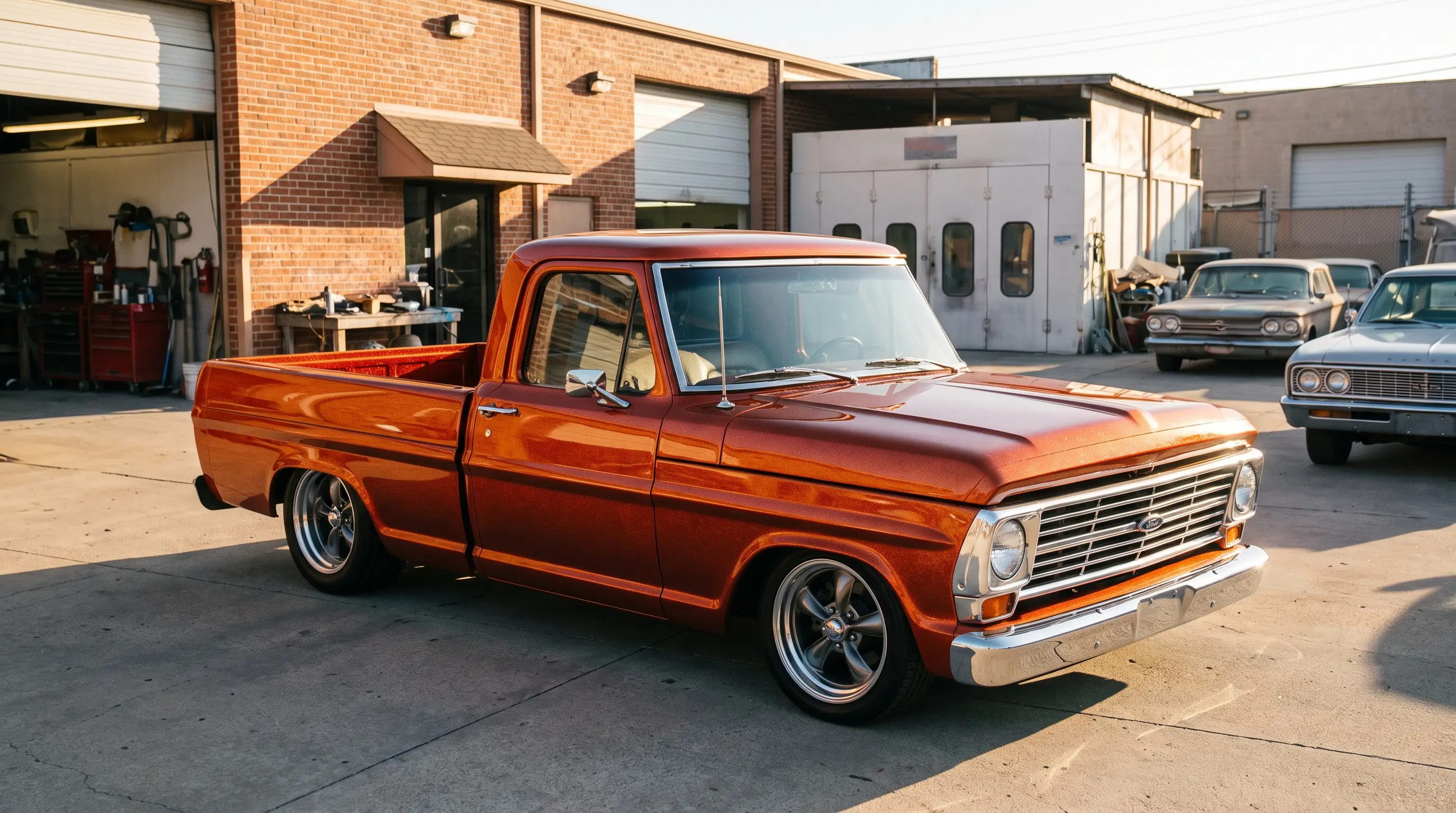
Through the 1960s and into the 1970s, chrome reversed rims were the default upgrade for anyone stepping away from stock steelies. The look was simple: a narrow lip, deep dish, and a shine that caught the sun from across a parking lot. Those wheels paired naturally with the F-100's straightforward factory shape, and for a long stretch, that combination was simply what a customized truck was supposed to look like. Plenty of clubs still run this look today specifically because it reads as period-correct on a first or second-generation truck in a way that modern wheels never will.
The billet years
The 1980s and 1990s brought billet aluminum wheels into the mainstream, polished to a mirror finish and often with a multi-spoke design that had nothing to do with anything Ford ever built. Boyd Coddington's wheel company became closely associated with this look, and F-100 builders adopted it right alongside street rod and muscle car owners. The trend eventually became so common that it started to feel dated faster than the chrome reverse look it replaced, which is part of why a lot of builders spent the 2000s stripping billet wheels back off their trucks in favor of something with more restraint.
The bagged and big-and-little look
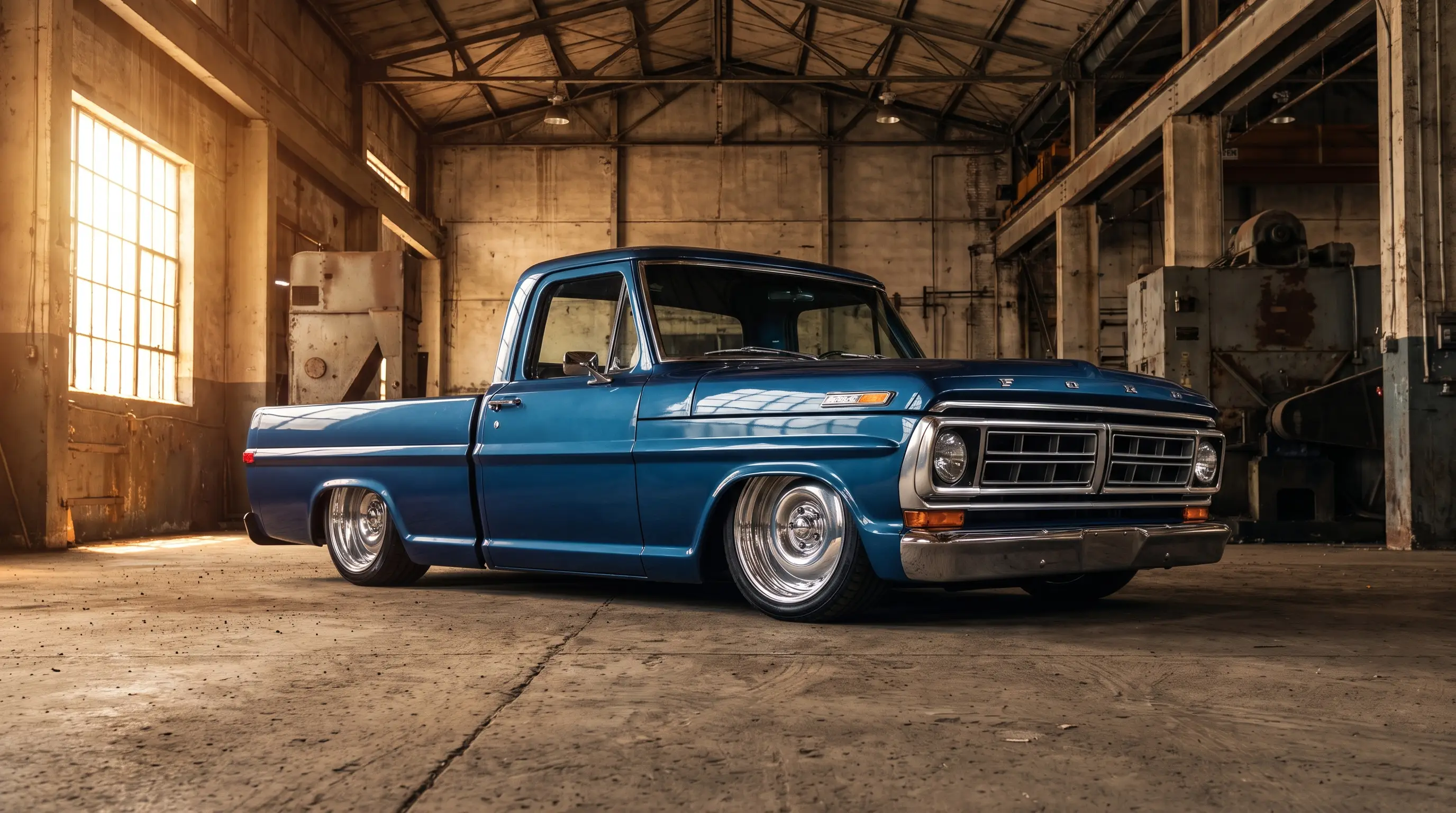
Air suspension changed what a wheel setup could do on an F-100. Once a truck could raise and lower its own stance, builders started running dramatically staggered wheel sizes, small in front and large in back, to exaggerate a raked posture when the truck was aired out. That look became closely tied to the lowrider and custom truck scenes on the West Coast and spread from there. It also demanded a completely different suspension approach than earlier decades of F-100 customization, which is one reason the wheel trend and the mechanical trend moved together rather than separately.
"You can date a truck almost to the year just by the wheels somebody bolted on, even if the rest of the build never changed. Wheels are the fastest way a builder tells you what decade he's talking to."
- Wayne Coburn
Where the trend sits now
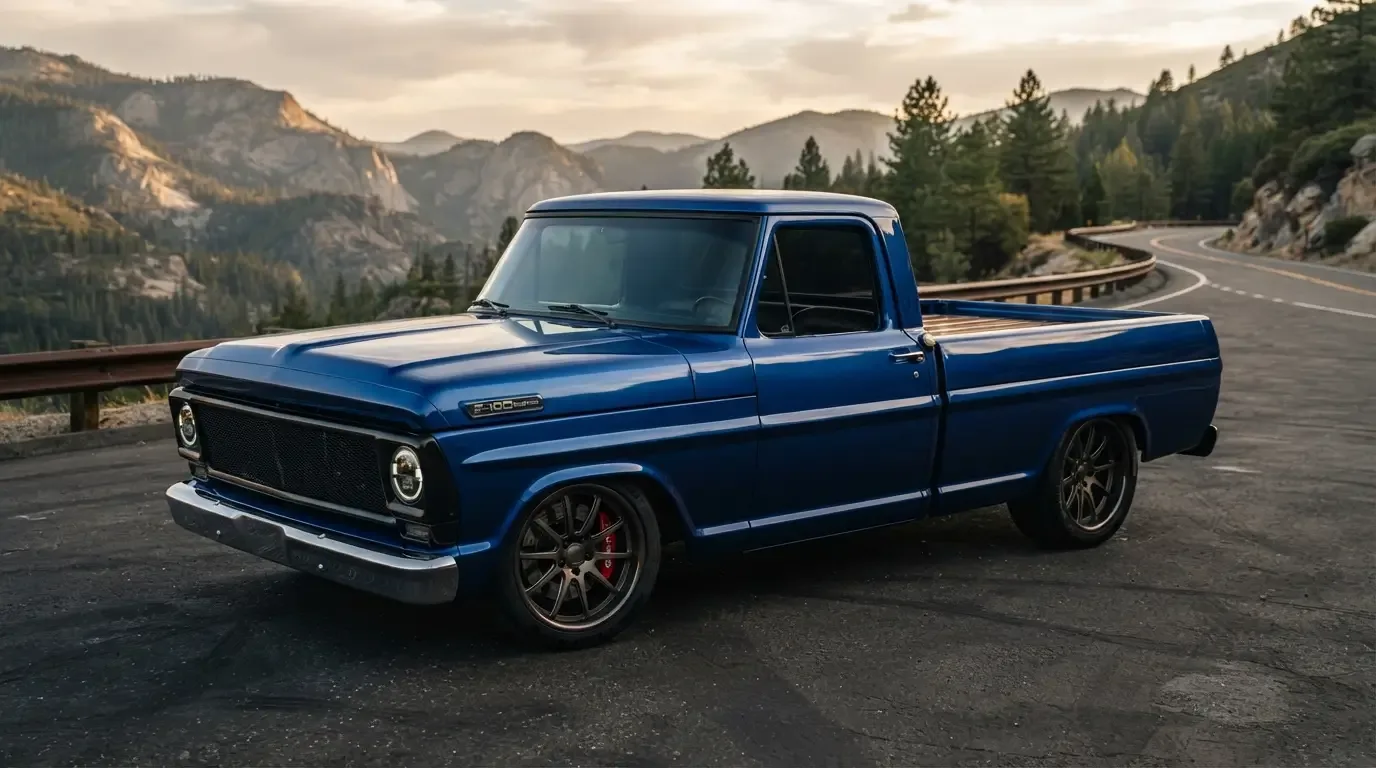
Current F-100 builds favor a more understated wheel, often a smooth five-spoke or a period-style steel wheel with a modern lip width, sized to fill the fender opening without the exaggerated stance of the bagged era. That restraint mirrors a broader shift in how builders approach these trucks generally, treating the F-100's original shape as something to complement rather than fight. Readers looking for the full story on how that whole restomod philosophy developed will find the wheel trend is really just one thread in a much larger shift toward subtlety over spectacle.
Suspension travel decides what wheel fits
A wheel and tire combination that looks perfect in a photo does not always work once the truck is actually loaded and moving. Suspension travel, particularly at full compression over a bump, determines the real limit on how wide a tire an F-100 can run before it starts rubbing the frame or the inner fender lip. Builders working with a bagged air suspension have more flexibility here, since they can adjust ride height to avoid contact at the moment it matters most, while a truck riding on static coilovers has to be set up correctly the first time or live with the compromise permanently. This is one of the quieter engineering problems behind every dramatic wheel and tire package, and it is a big part of why a truck that looks similar to another from across a parking lot can actually represent very different amounts of underlying suspension work.
Tire sidewall height matters as much as wheel diameter
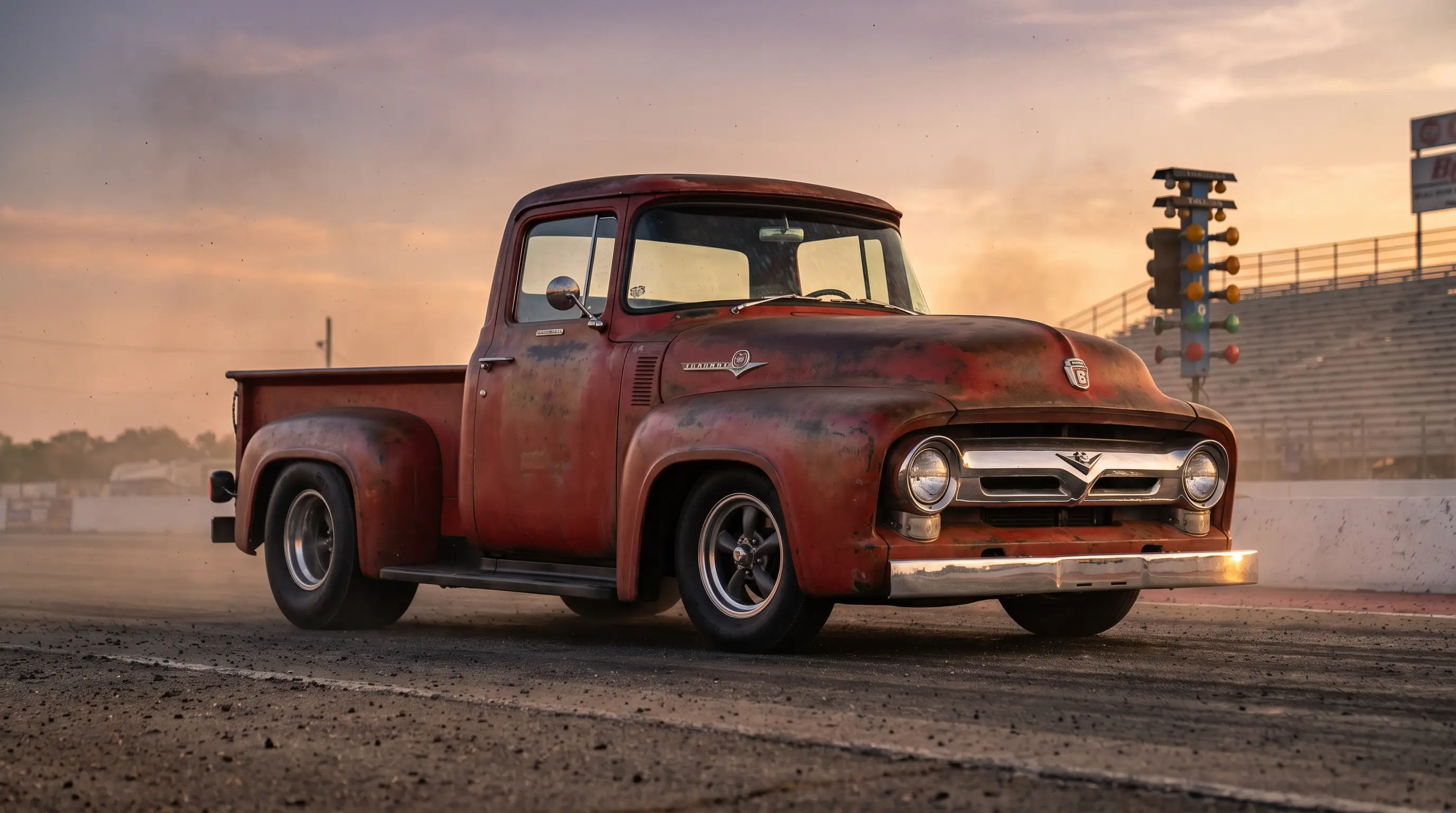
Wheel diameter gets most of the attention in conversations about stance, but tire sidewall height quietly does as much work in defining how a build reads visually. A tall sidewall on a smaller diameter wheel gives a truck a softer, more vintage silhouette, closely echoing how these trucks actually looked rolling off a Ford lot in the 1950s. A low-profile tire on a large diameter wheel produces the opposite effect, sharpening the truck's stance and making it read as distinctly modern regardless of what era the rest of the build references. Builders chasing a specific decade's look have to get both numbers right together, since a period-correct wheel paired with a modern low-profile tire tends to look wrong in a way that is hard to pin down until you compare it directly against an original photograph.
Regional differences still show up
Wheel style on custom F-100s still varies noticeably by region, even in an era when photos and builds circulate instantly online. Texas and the broader Southwest have long favored a bigger, more aggressive wheel and tire combination, closely tied to that region's lowered truck culture. The Pacific Northwest and parts of the Midwest tend toward smaller, more restrained wheel choices, often paired with a more traditional stance overall. Neither approach is more correct than the other, but recognizing the regional signature can help a buyer understand where a particular truck's build style actually came from, especially when a seller's description does not mention it directly. These regional habits also tend to move with the builders themselves, so a shop that relocates across the country sometimes brings its home region's wheel preferences along, gradually influencing the local scene in its new city over several years. Online forums and social media have blurred these regional lines somewhat over the past decade, but longtime club members insist they can still spot a Texas-built truck from a Northwest-built one at fifty paces, wheel choice included. That kind of regional literacy takes years at truck shows to develop, and it remains one of the small pleasures veteran club members get from walking a show field slowly instead of rushing past every truck on the way to the food trucks.
What it means for buyers today
Wheel choice is one of the few reversible decisions on a custom truck, and that makes it a useful signal for buyers trying to judge a build's overall quality. A truck with a thoughtful, period-appropriate wheel and tire package usually reflects the same care in the mechanical work underneath it, while a mismatched or oversized wheel setup can be a warning sign that the rest of the build was rushed too. Anyone shopping with that in mind can look through classic F-100 for sale listings and use the wheel choice as an early filter before digging into the rest of the truck's history.