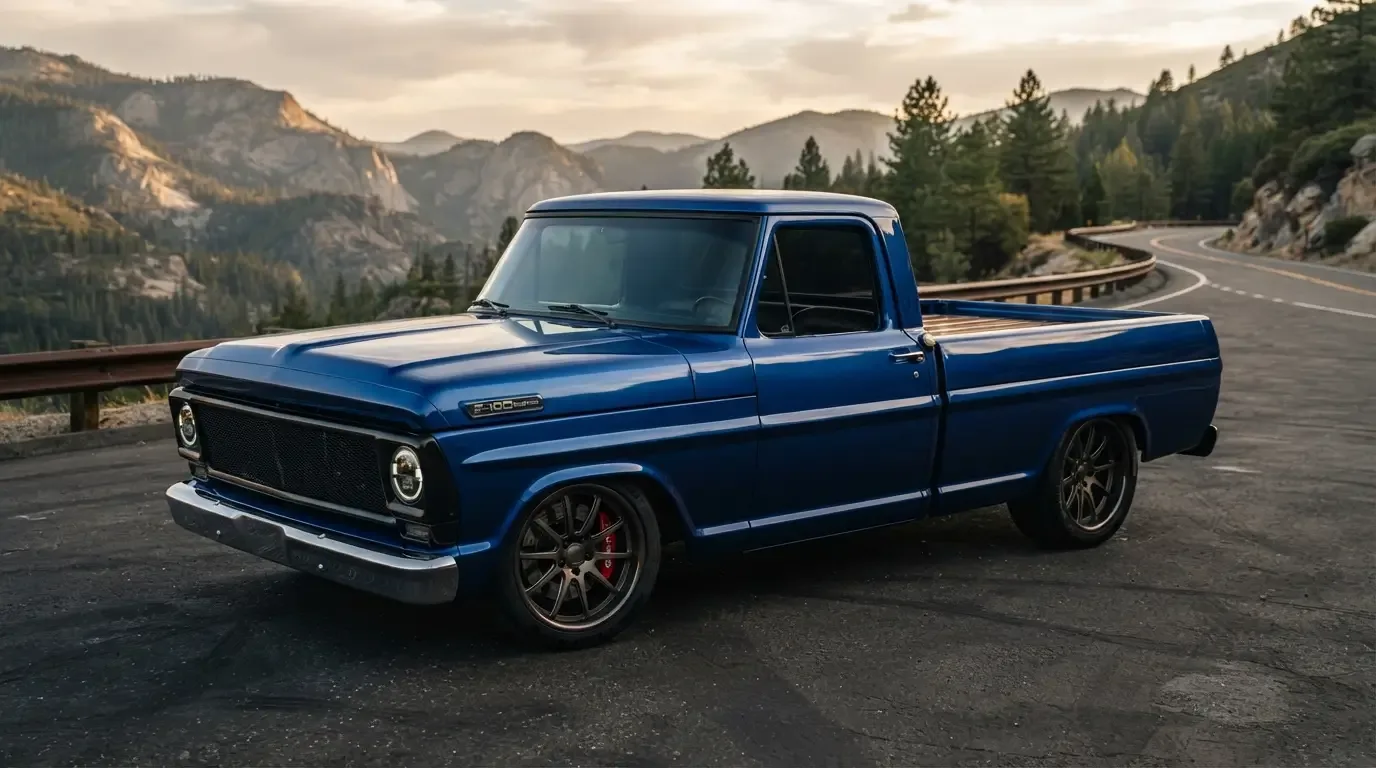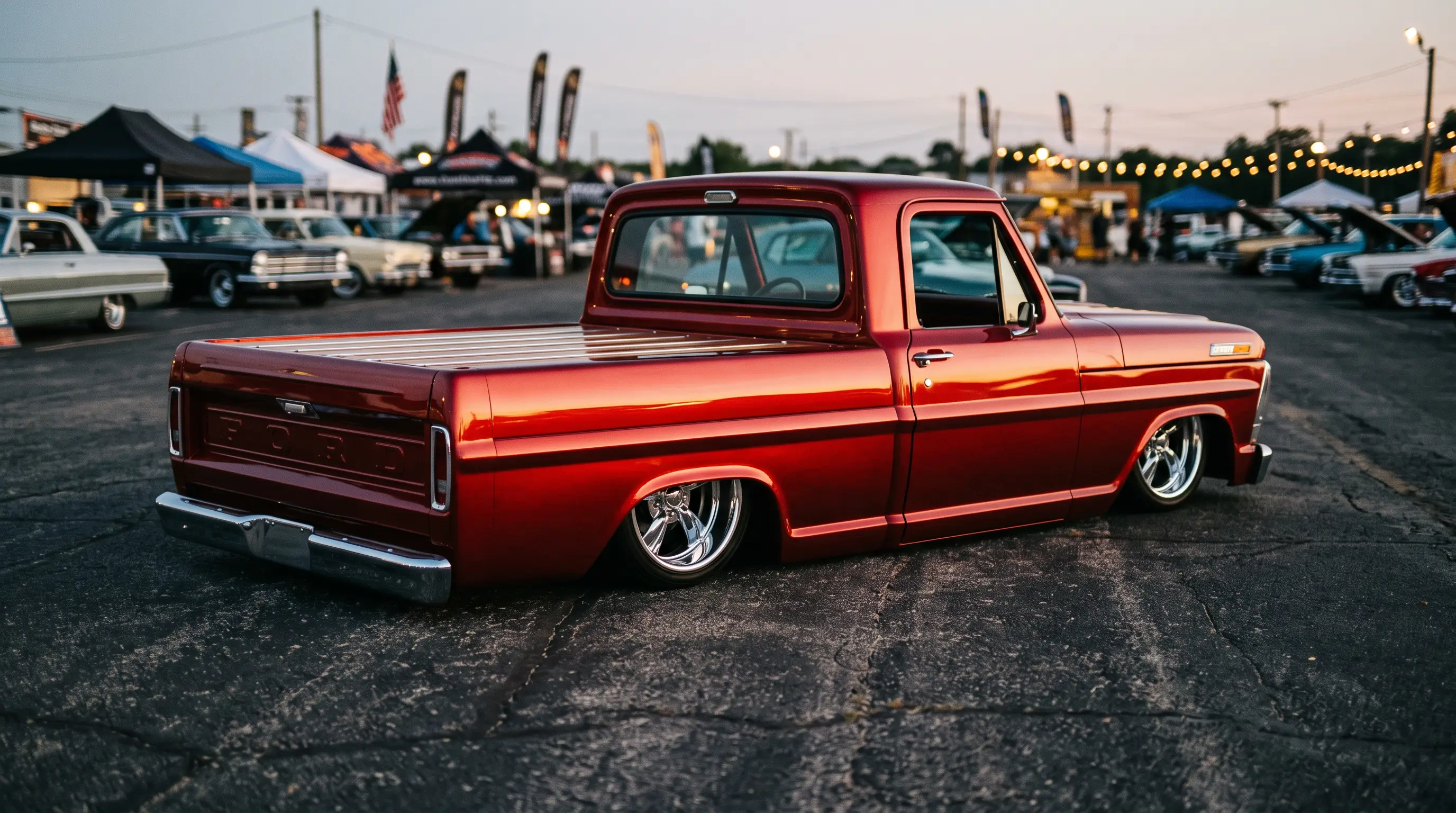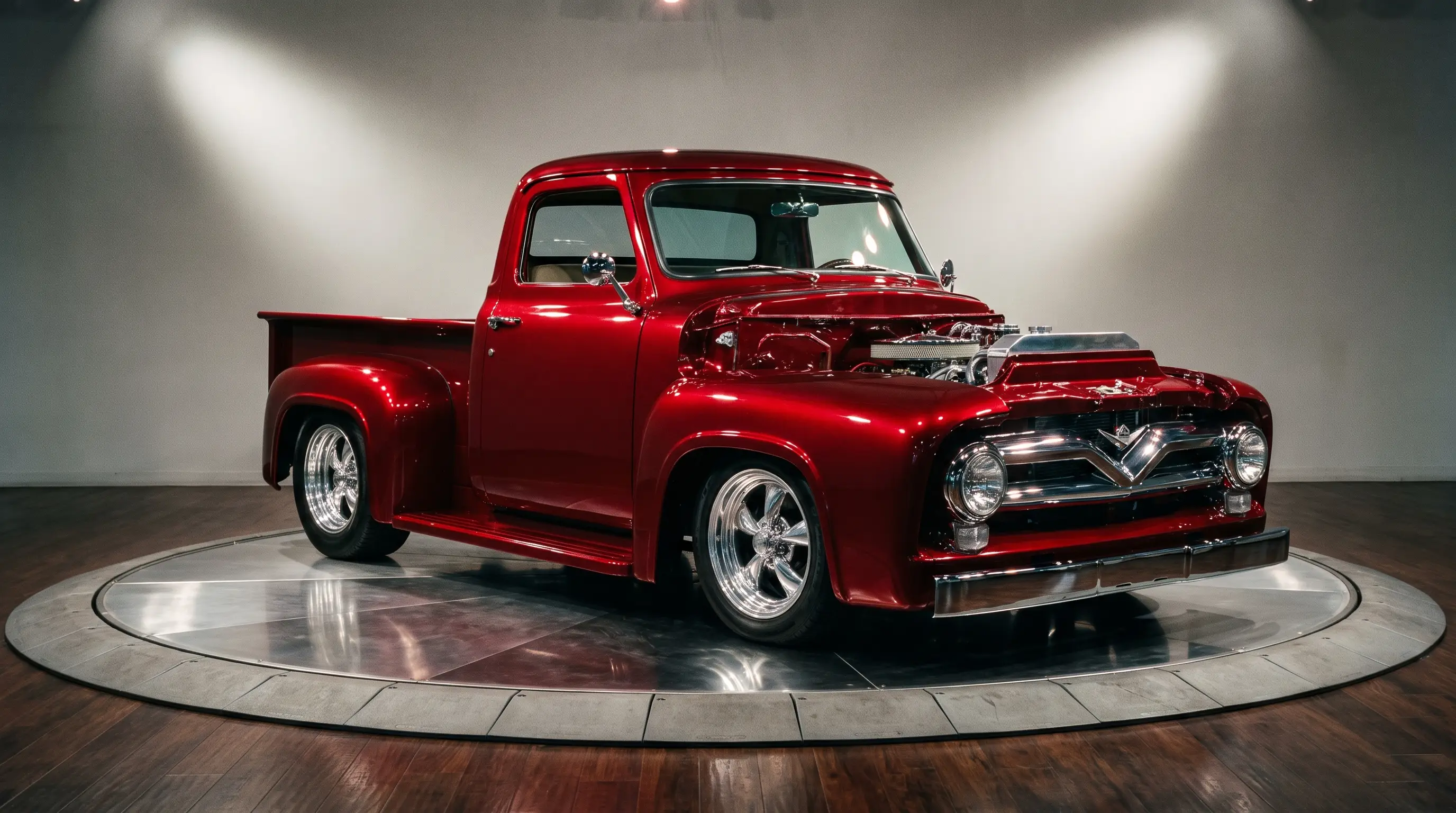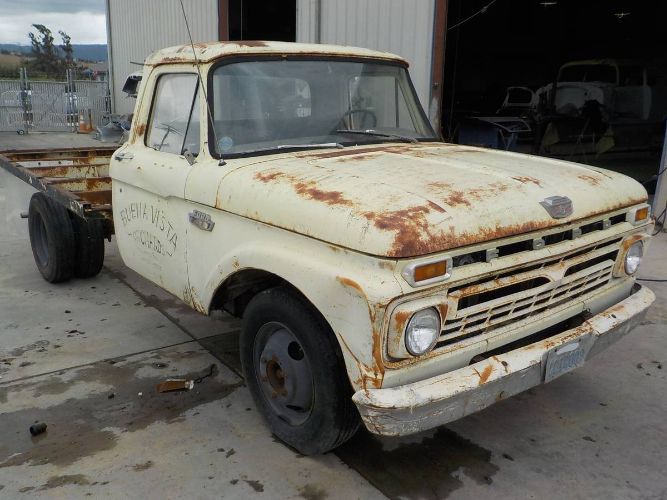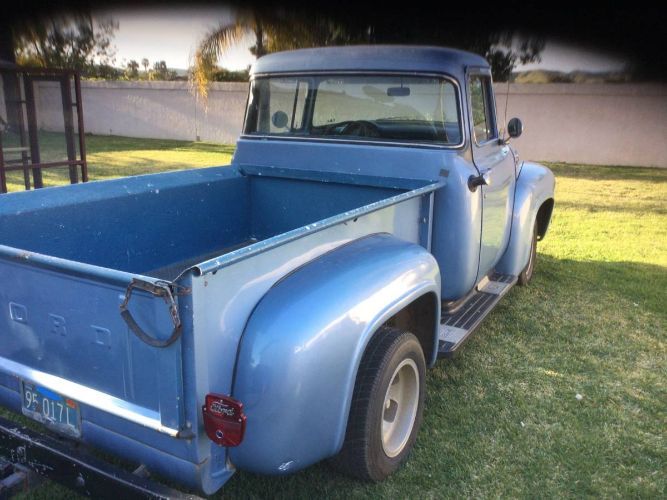
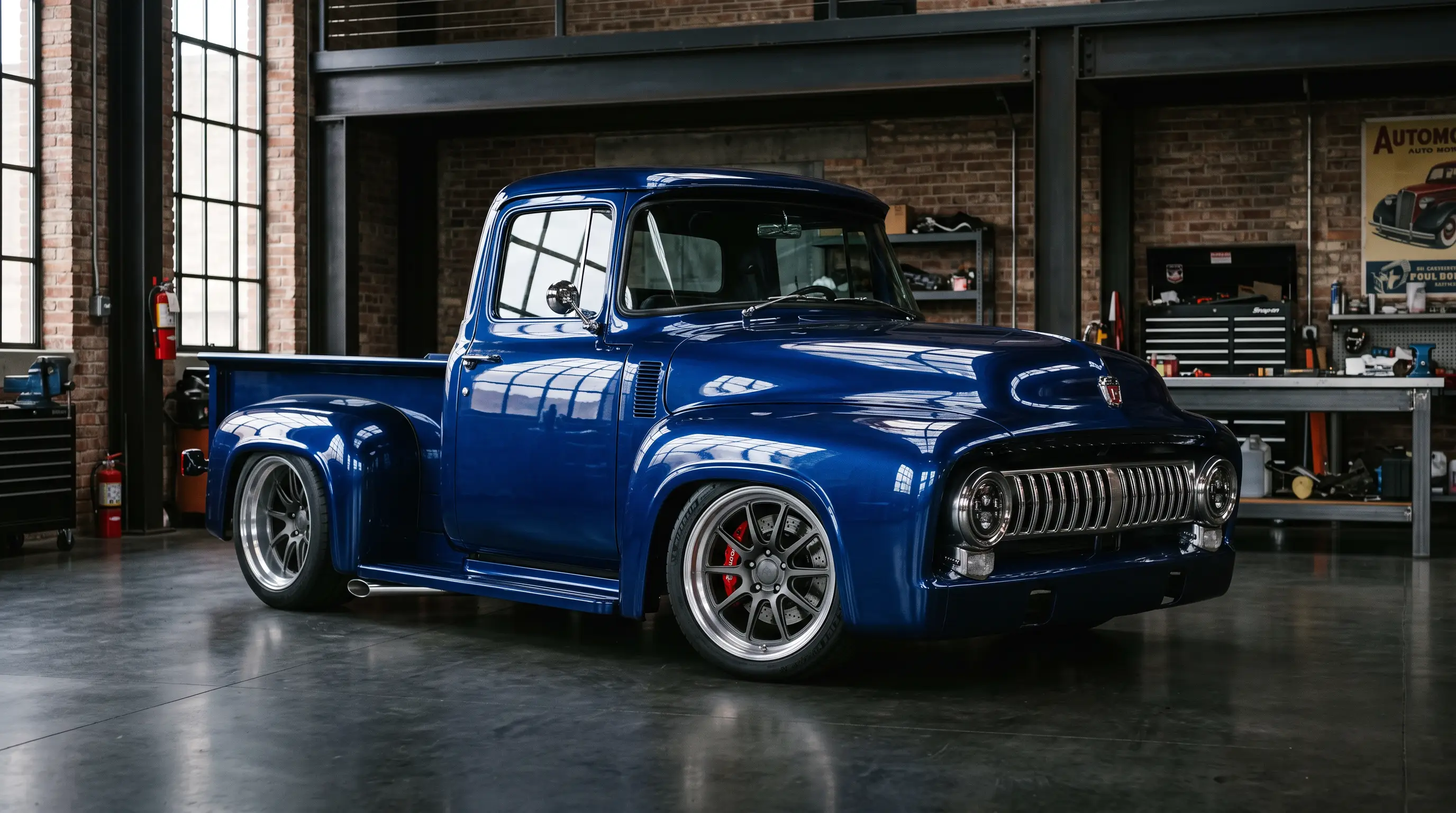
The garage lights are off by ten at most shows, but at the Goodguys events where pro-touring trucks gather, somebody is always still out there with a flashlight checking panel gaps at midnight. That is the crowd that built the f100 pro touring movement, and it did not happen by accident. It happened because a generation of builders looked at a stock F-100 and decided the truck did not have to choose between a period-correct stance and a car that could actually turn a corner.
What pro-touring means on a truck
Pro-touring started as a car term, born out of Pro Street's failure to actually handle. Where Pro Street chased quarter-mile bragging rights with tubbed rear ends and skinny front tires, pro-touring chased balance. Big brakes, modern suspension geometry, real sway bars, and tires wide enough front and rear to plant the truck through a sweeper. When that philosophy landed on the F-100, it changed what a fifties or sixties Ford pickup could be asked to do. A truck that once struggled to stop from 60 mph could suddenly be trusted on a mountain road.
The bones of an early F-100 do not naturally want this. Ford built these trucks with a solid front axle through the 1950s and leaf springs that were tuned for hauling lumber, not apexing a corner. Builders had to replace nearly everything under the frame rails: independent front suspension, four-link rear setups, disc brakes at all four corners, and wheel and tire packages that would have looked absurd on a factory truck lot in 1956.
The shops that made it a category
A handful of shops turned pro-touring trucks from one-off experiments into a recognized lane at the big shows. Roadster Shop in Illinois built F-100s with fully custom chassis that put modern sports car geometry under a body that still reads as vintage Ford from the curb. Ringbrothers in Wisconsin pushed the same idea further, pairing pro-touring chassis work with panel-shaving and subtle bodywork that made their trucks look almost factory-correct until you saw the wheel and tire combination. These builds are why F-100s for sale now so often list a modern chassis as a headline feature rather than a footnote.
The result is a truck that can sit on the show field on Saturday and get driven hard on Sunday, which was never really true of the trucks Ford sold new. That dual identity, showable and drivable, is the whole appeal of the format.
Engines built for the road, not the strip
Pro-touring builds tend to favor engines that make usable power across a wide range rather than a peaky combination built for one quarter-mile pass. LS-series V8s became the default swap for exactly this reason: reliable, compact, and capable of real torque without the fragility of a built big-block. A Coyote crate engine shows up almost as often now, especially in builds that want to keep the whole drivetrain within the Ford family. Neither swap is a restoration technique, and neither one belongs in a stock truck's story. It is a separate culture, built around a separate goal.
Why the F-100 fits the format so well
Part of the reason pro-touring took to the F-100 instead of, say, a Chevy stepside is proportion. The F-100's cab sits high and square on the frame, which gives builders room to run a wider stance without the truck looking cartoonish. The straight beltline and simple surfacing of the 1953 through 1972 trucks also age well next to modern wheels, where a busier factory design would fight the new proportions. Builders talk about this as much as they talk about horsepower figures. A truck that looks right at 40 mph and 100 mph is rare, and the F-100's shape earns that on its own. For more on how that whole culture came together, a related story covers the individual trucks that pushed it forward.
"Nobody at Ford in 1956 drew this truck to run a nine-inch rear and a coilover suspension, and that is exactly why it works. The shape was never trying to be aggressive, so when you make it capable, it reads as honest instead of desperate."
- Patrick Walsh
Brakes did as much work as the suspension
Suspension gets most of the attention in pro-touring conversations, but the brake upgrade underneath these trucks is arguably the bigger safety story. A stock 1950s F-100 typically ran drum brakes on all four corners, adequate for a lightly loaded work truck moving at neighborhood speeds but genuinely dangerous once a builder adds 400 horsepower and a set of sticky tires. Pro-touring builds standardized large multi-piston disc brakes at all four corners, often borrowed from a modern performance car's parts bin and adapted to fit factory F-100 spindles and axles. That single change did more to make these trucks safe to actually drive hard than any horsepower figure ever could.
Tire technology mattered just as much. The pro-touring era coincided with a jump in what street-legal performance tires could do, and builders leaned on that improvement heavily. A modern high-performance tire, sized correctly and mounted on a wheel with the right offset, transforms how a heavy truck body sits through a corner compared to the bias-ply tires these trucks wore when new. None of this is restoration work, and none of it belongs anywhere near a numbers-matching original. It is a separate, parallel tradition, built for people who want to drive their F-100 the way they would drive anything else in the garage.
Where the movement is headed
The category keeps growing more precise. Early pro-touring F-100s from the 2000s often bolted on off-the-shelf suspension kits and called it done. The current generation of builds treats geometry as its own discipline, with builders corner-weighting trucks and tuning anti-dive numbers the way a road racer would. That shift has raised the ceiling for what a truck can do on a track day, and it has raised buyer expectations along with it. Anyone shopping in this space now expects documentation of the suspension work, not just a spec sheet of parts bolted on.
Track day events built specifically for classic trucks have also grown alongside the format, giving owners a place to actually test whether their pro-touring build lives up to its billing. These events are far less forgiving than a static show judging table. A truck can look perfect sitting still and still reveal a flexing frame or an undersized brake rotor the moment it is pushed through a real corner at speed. That accountability has pushed the entire pro-touring F-100 category toward more serious engineering over the past decade, and it shows in how these trucks are marketed and sold today.
The full arc of how restomod culture reached this point, from the first swapped small-blocks to today's chassis-built trucks, runs through our ford f100 restomod retrospective. The pro-touring lane is one branch of that bigger tree, but it is the branch that turned the F-100 from a show truck into something a driver actually wants behind the wheel.