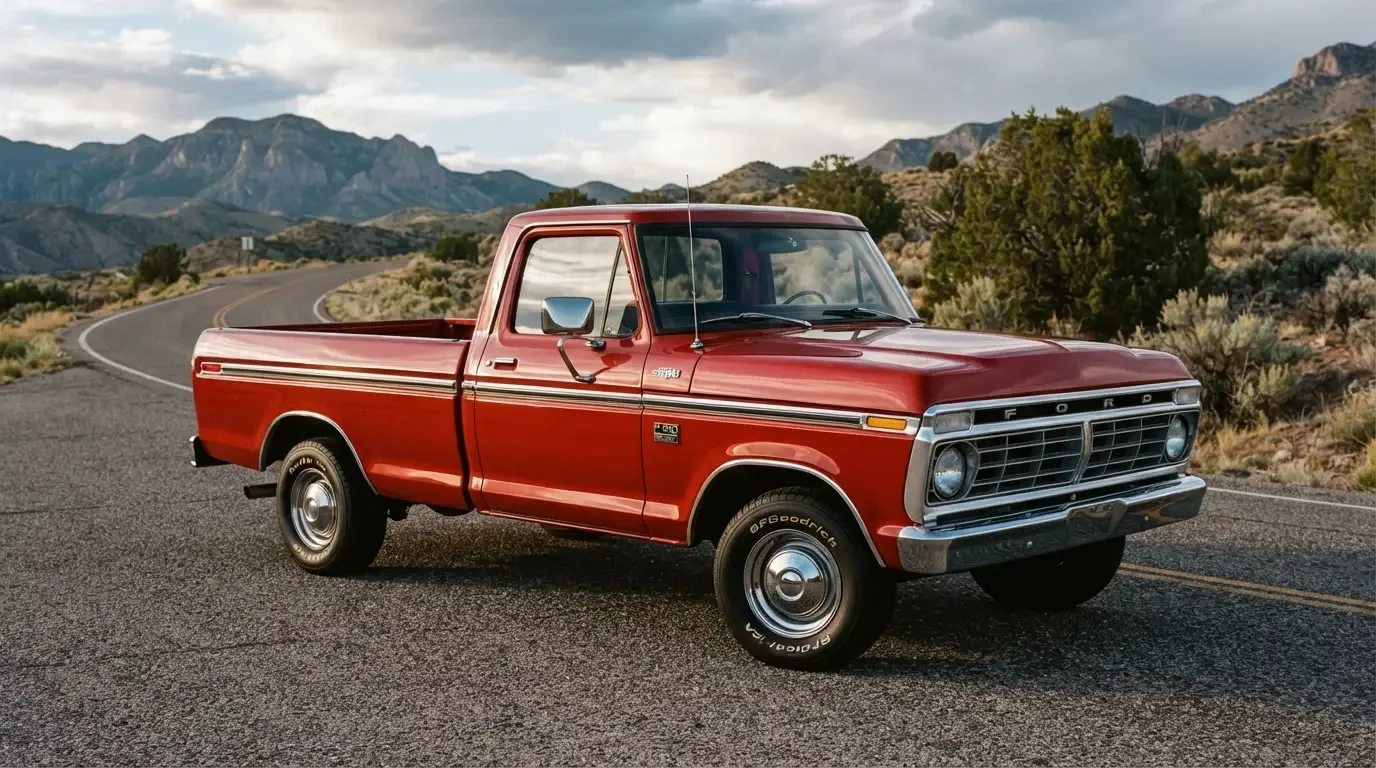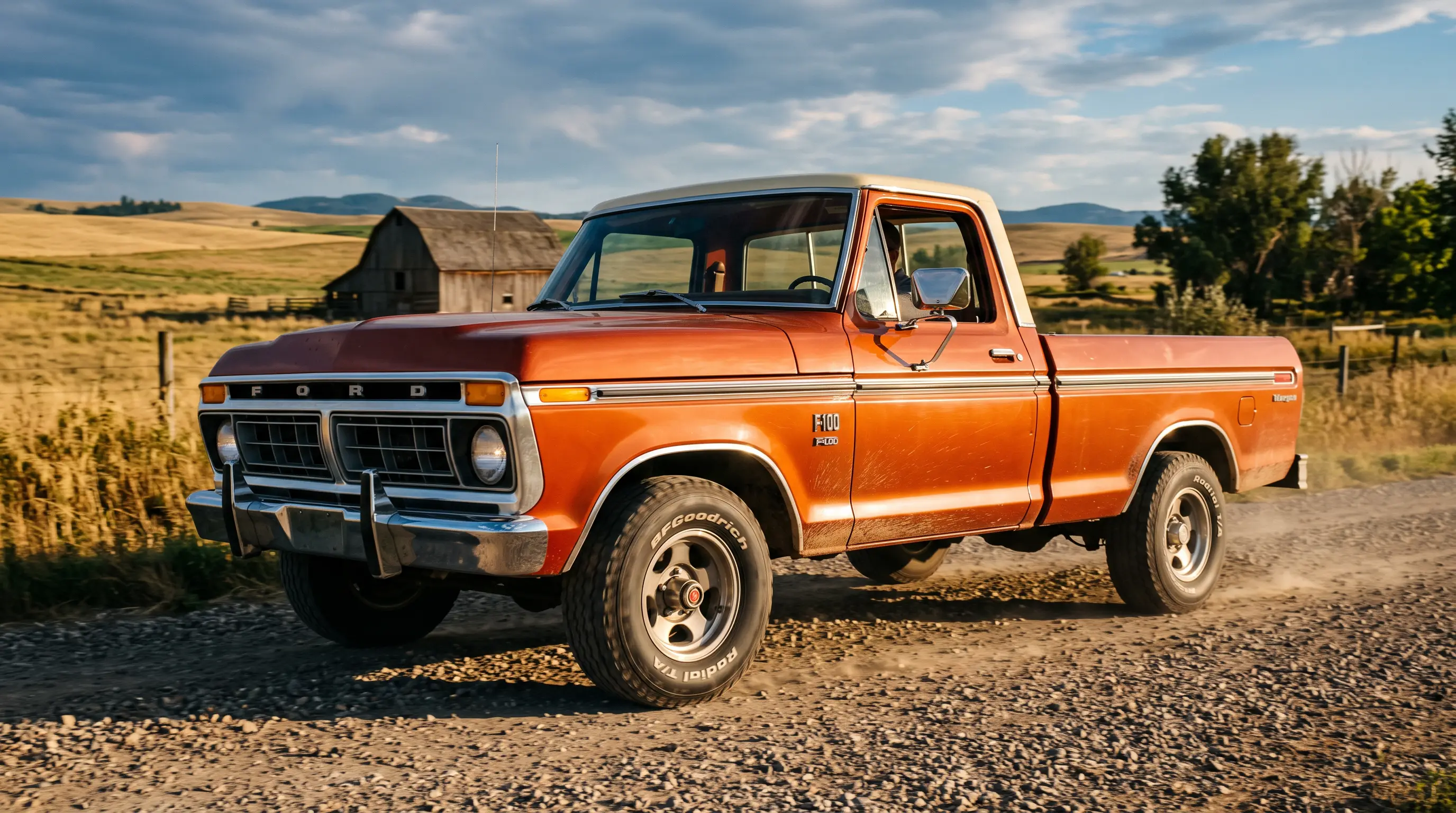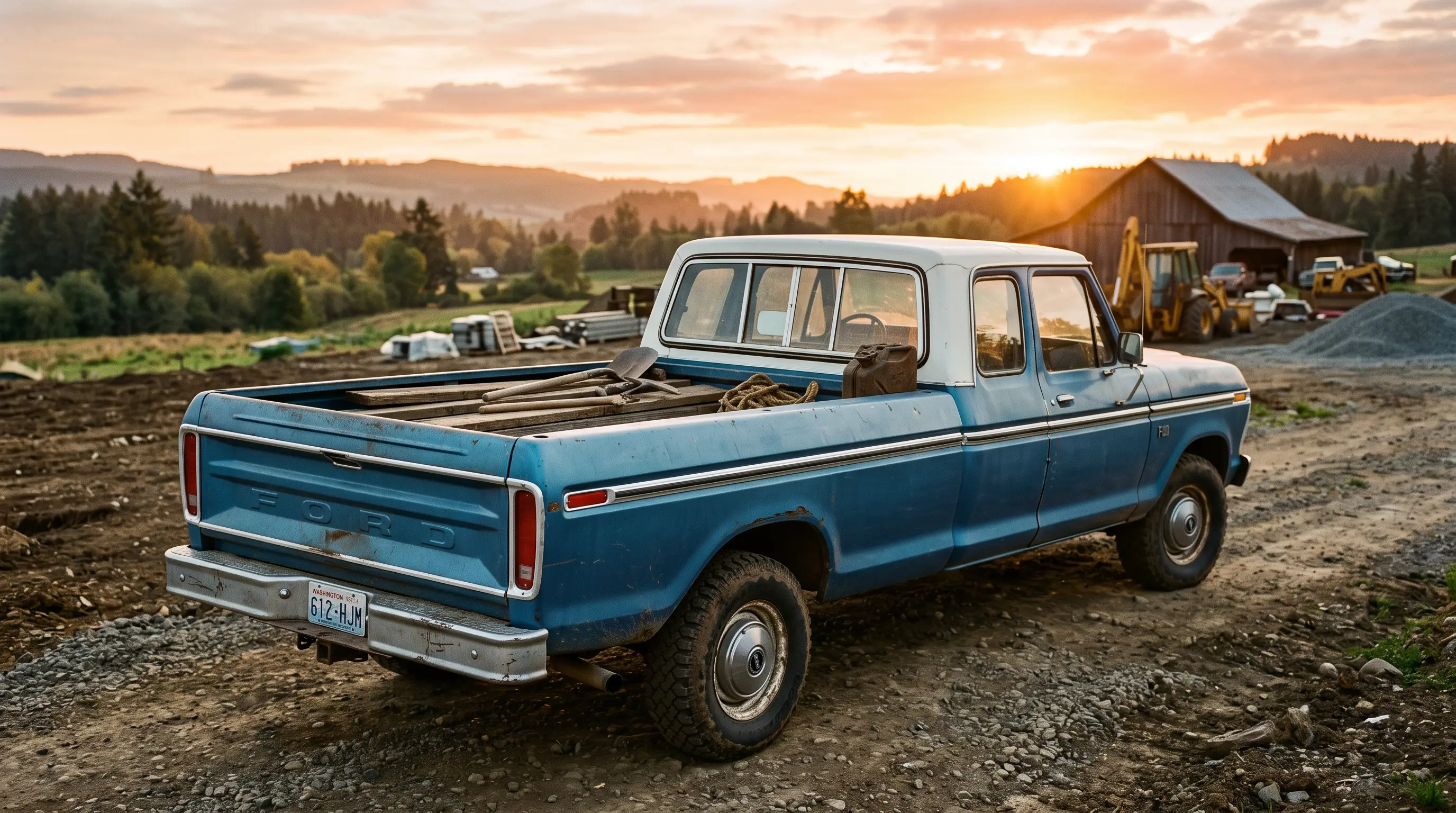
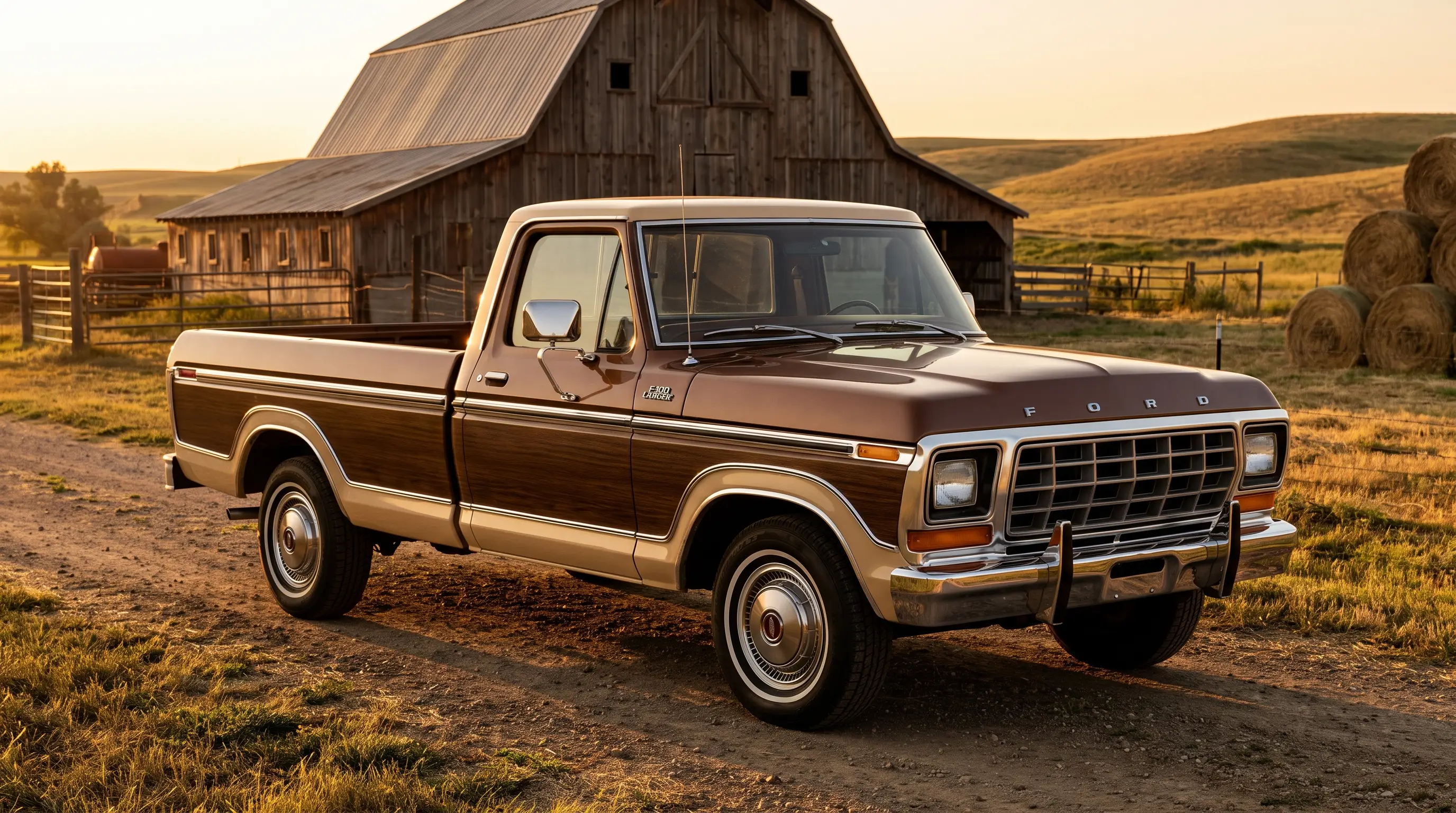
A guy at our monthly truck meet in Ohio brought his 1978 Ford F-100 Ranger Lariat to a show a few years back, and I watched three separate people walk up, open the door, and go quiet for a second before saying some version of "this is a work truck?" That reaction is the whole story of the Lariat trim in one moment. Ford took its cheapest, most utilitarian half ton and dressed it up so thoroughly that people who grew up around these trucks still get surprised by how far the top trim went.
How the Lariat name landed on a truck
The Ranger trim had been Ford's step-up package on F-Series trucks since the mid 1960s, but by the 1973 redesign Ford wanted a genuine top-shelf option above it, something that competed directly with the plush trims Chevrolet and Dodge were rolling out on their own half tons. Lariat became that answer, riding above Ranger XLT as the truck's true luxury package. Read the background on that full dentside redesign to see how much changed underneath the truck in 1973, but the trim ladder above it is really where Ford drew the sharpest lines between a stripped work rig and something a family would drive to church on Sunday.
What actually separated a Lariat from a base truck
Climb into a Lariat-trimmed F-100 and the difference hits you before you turn the key. Woodgrain trim on the dash and door panels, a padded instrument panel, cloth or vinyl bench seating well beyond the base truck's bare vinyl bench, extra sound insulation, chrome trim around the windows and grille, and two-tone paint that traced the dentside crease down the length of the truck. None of it changed what the truck could haul. A Lariat carried the same payload as an identically configured base F-100. What it changed was who wanted to drive it every day, and Ford's order guides from the period show Lariat and Ranger XLT trucks steadily gaining share of the total half-ton mix as the decade went on, proof that buyers were willing to pay up for comfort on a truck they still used for real work.
Stories from the club circuit
Every truck club has at least one Lariat story like the one I opened with, and mine is not unusual. I have heard from a member in Texas whose father bought a green and white 1977 Lariat new as a ranch truck specifically because his wife refused to ride in anything with a bare metal dash, and I have talked to a woman in Indiana who inherited her grandfather's 1979 Lariat and only found out from a Ford dealer's old paperwork that it had been special-ordered with options most base trucks never saw. That is the pattern with this trim. It rarely shows up in dry sales figures the way it shows up in family stories, because these were the trucks people kept, passed down, and talked about at reunions instead of trading in after five years of fleet duty.
"Every club has a Lariat truck with a story attached to it. Nobody tells a story about a stripped work truck's bench seat. They tell you about the Lariat their dad wouldn't let them eat in."
- Wayne Coburn
How the Lariat compared to the mid-level Ranger XLT
People new to this generation often lump Ranger, Ranger XLT, and Ranger Lariat together as one vague upgrade path, but club members who have owned more than one of these trucks know the gaps between them clearly. Base Ranger trim added carpet and some brightwork over a stripped work truck, a modest step up that most buyers treated as the sensible middle ground. Ranger XLT pushed further with better seating and additional exterior chrome, aimed at buyers who wanted the truck to look finished without paying for every option box. Lariat sat above both, and the jump from XLT to Lariat was noticeably bigger than the jump from base Ranger to XLT, which is part of why Lariat trucks feel like such a different animal today. It was not an incremental upgrade. It was Ford building the nicest half-ton interior it had in the catalog and putting it inside a truck that could still tow a horse trailer on Monday morning.
That gap matters to club members shopping for one now, because a genuine Lariat commands real interest at a show in a way an XLT rarely does, even though the two trucks might look similar at a glance from across a parking lot. Once you know what to look for, the differences are obvious. The woodgrain, the extra insulation, the seat upholstery pattern, all of it reads clearly once you have sat in enough of these trucks to know the baseline. Most of our club's newer members learn this the same way I did, by sitting in a dozen trucks at a show and asking the owners which trim they actually have until the pattern clicks.
Documentation is what makes a Lariat worth chasing
Here is where the fun stories run into the practical side of collecting one. A Lariat badge on the fender does not always mean the truck actually left the factory that way, since badges and trim pieces get swapped over forty-plus years of ownership. What separates a real Lariat from a dressed-up base truck is the paper trail, a build sheet, a window sticker, or a dealer invoice confirming the original order. Club members who track this generation closely will tell you the same thing every time: chase the documentation before you chase the chrome. Find a classic F-100 listing that includes original paperwork alongside Lariat trim and you have found something genuinely worth a premium, not just a truck somebody dressed up to sell.
What keeps this trim interesting decades later is the contrast it still delivers. It is a half-ton work truck wearing a woodgrain dash and two-tone paint, built for a buyer who wanted both capability and comfort in the same vehicle, and that combination still catches people off guard at a show the same way it caught those three strangers off guard at ours. Some truck details fade in interest over time. This one has not, and every club meet I go to confirms it again.
I still think about the guy who brought his 1978 Lariat to that Ohio show. He was not there to win a trophy or debate build sheets with anyone. He wanted a place to park a truck his father had bought new and talk about it with people who understood why a woodgrain dash on a work truck mattered to a family forty years ago. That is what this trim represents better than any spec list can. It is the F-100 that a lot of families actually lived with, not just worked with, and those are usually the trucks that end up staying in a family, and eventually in a club, longer than anything else Ford built on this platform.