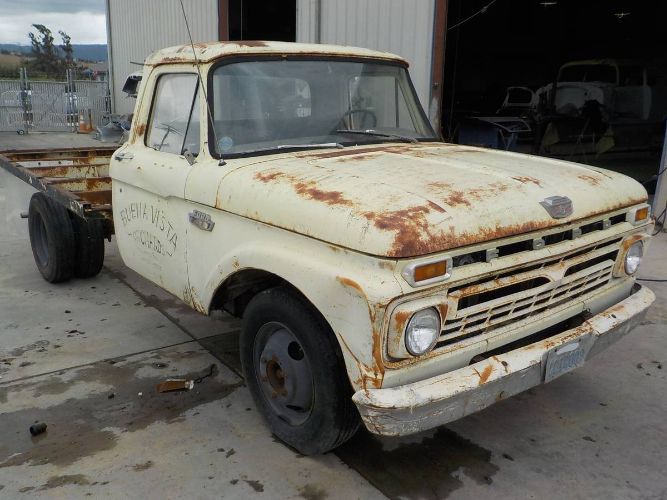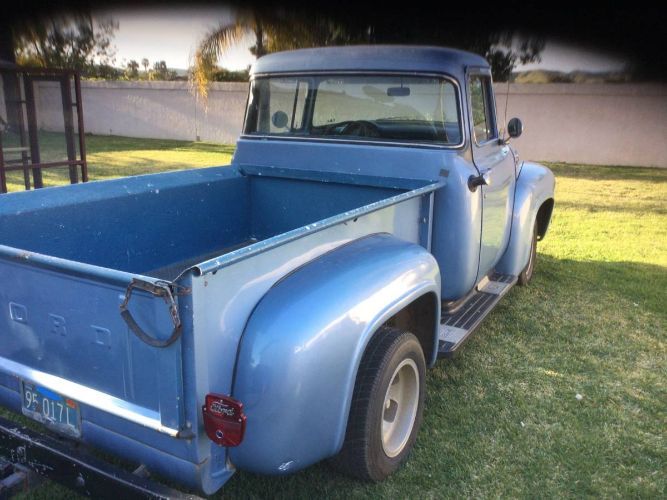
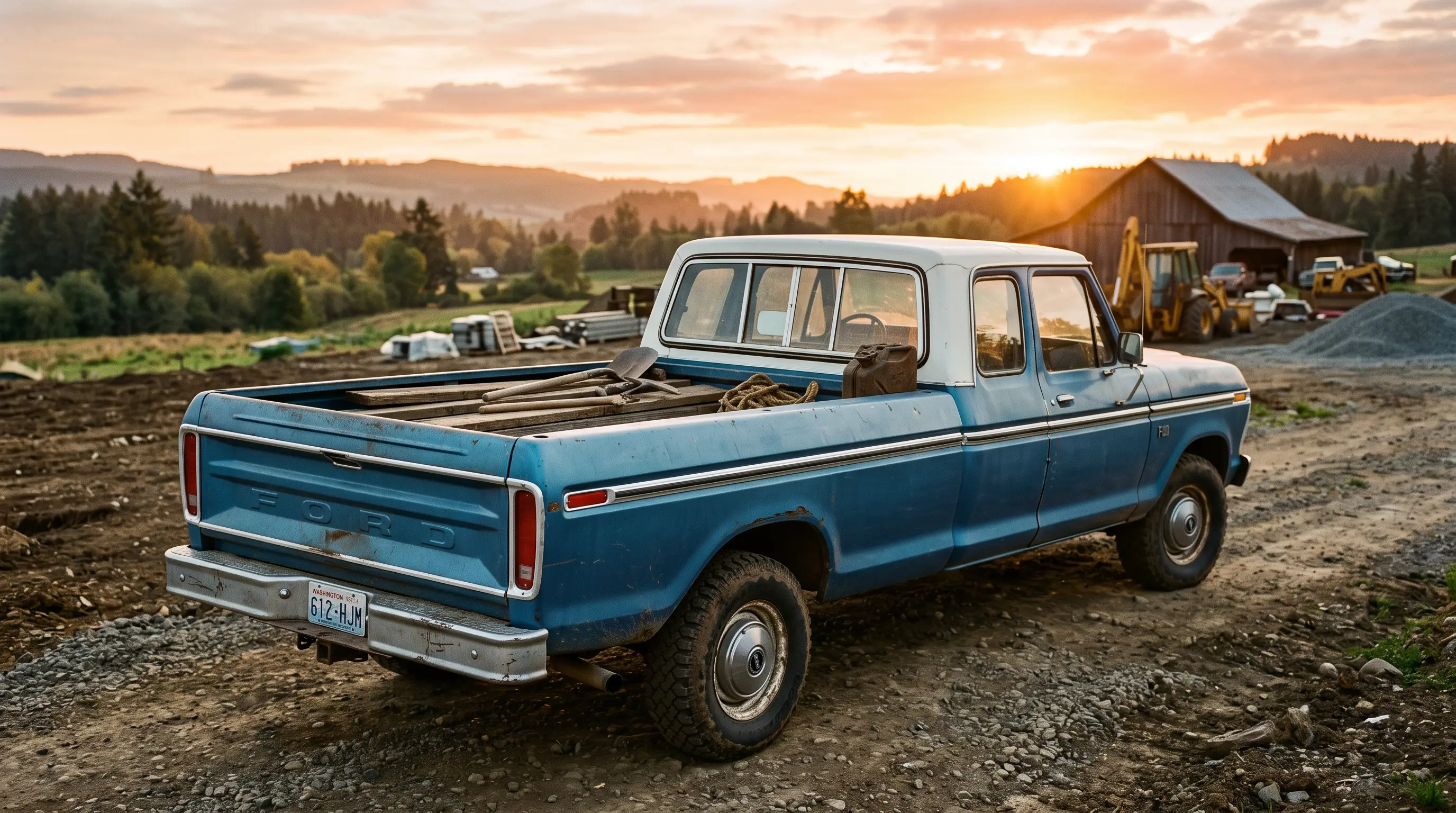
Ford introduced the SuperCab on the dentside F-100 in 1974, and it solved a problem every truck owner of that era understood without needing it explained. You had gear, or a third passenger, or both, and a standard cab bench seat left nowhere to put any of it except the bed, exposed to weather and theft. The SuperCab gave the F-100 a stretched cab with a small rear area behind the front seat, and it changed what a half-ton work truck could actually be used for on a daily basis.
What the SuperCab actually added
The SuperCab extended the cab length by roughly eighteen inches over a standard cab, and Ford used that space for a rear bench or jump seats along with lockable storage behind the front seat. It was not a full four-door crew cab. There were no rear doors on the early versions, so anyone or anything going into that rear space came in through the front doors and around the front seatback. That limitation sounds awkward today next to a modern crew cab, but in 1974 it was a genuine innovation for a half-ton truck, giving buyers a place to lock away tools, a spare parts box, or a jacket without eating into bed space or leaving it exposed on the seat next to the driver.
Who actually bought one
Contractors and utility crews were the obvious early adopters, since the extra storage space solved a real daily problem for anyone hauling tools between job sites. But the SuperCab also found buyers among families who wanted occasional third-passenger capacity without stepping up to a full crew cab or a larger truck, and hunters and outdoorsmen who wanted a secure place to store gear overnight at a campsite rather than leaving it in an open bed. The whole picture of the 1973 redesign explains how the dentside body was engineered with enough frame length flexibility to accommodate this stretched cab without a full platform redesign, which is part of why Ford was able to bring the SuperCab to market as quickly as it did.
How it changed the F-100's reputation
Before the SuperCab, a half-ton work truck was understood as strictly a two-seat proposition unless you ordered a heavier crew cab configuration on a bigger platform. Ford was not actually first to this idea. Dodge beat it to market by a single model year with the 1973 Club Cab, and Ford's SuperCab followed for 1974 as a direct answer. But Ford's version blurred the two-seat-truck line for a mainstream half ton in a way that stuck, and Chevrolet followed with its own extended cab configuration not long after, which tells you the whole industry had identified real demand rather than a novelty feature nobody wanted. For the F-100 specifically, the SuperCab option helped keep the truck relevant against a growing field of half-ton competitors right as the F-150 was starting to pull sales share away from it, giving the F-100 badge one more genuine selling point in its later years on the market.
"Guys who ran service trucks loved the SuperCab the second it came out, because it meant your good tools rode inside the cab instead of in a bed liner getting rained on every night."
- Mike Sullivan
Comparing the cab options side by side
| Cab type | Passenger capacity | Rear storage | Access |
|---|---|---|---|
| Standard cab | 2-3 (bench seat) | None | N/A |
| SuperCab | 2-5 with rear seating | Lockable rear area behind front seat | Through front doors, seat folded forward |
Laid out this way, the appeal is obvious. A crew running two people and a trailer of equipment could keep hand tools, a first aid kit, and a spare jacket locked inside the cab instead of rattling around an open bed, all without needing a second vehicle or a bigger, thirstier truck. That is a small operational change that made a real difference for anyone using the truck for actual work rather than just weekend driving, and it is the kind of practical upgrade that tends to age well because it solved a problem people still have today, even if modern trucks solve it with four real doors instead of a fold-forward seat.
Finding one today
SuperCab dentside trucks are less common than standard cabs from the same years, since the option carried a real price premium new and buyers on tight fleet budgets often skipped it. That relative scarcity has made surviving SuperCab F-100s a specific target for collectors who want the practicality of extra storage alongside the visual novelty of the longer cab profile. Shop classic F-100 listings and you will notice SuperCab trucks get called out specifically in most listing descriptions rather than buried in the general spec sheet, because buyers actively search for the configuration by name. Before paying a premium for one, confirm the rear storage area and seat mechanism are intact and functioning, since interior components in that rear space see less daily wear than the front bench but are also harder to source replacement parts for given how much less common these cabs are compared to standard configurations.
The SuperCab did not reinvent the F-100 so much as it stretched a proven idea into a shape that made the truck more useful without changing what it fundamentally was. That is a modest kind of innovation, but it is the kind that sticks, and every extended cab pickup built since owes something to what Ford figured out on this platform in 1974.
I have wrenched on a handful of these SuperCab trucks over the years, and the thing that surprises most owners is how solid that extended cab structure actually is once you get underneath and look at the added framing Ford used to support the longer roofline. It was not a flimsy afterthought bolted onto a standard cab shell. The floor pan, roof structure, and rear cab wall were all reworked to handle the extra length without introducing the flex problems you might expect from stretching a cab that was not originally designed for it. That is part of why surviving SuperCabs from this era tend to hold up structurally as well as standard cabs do, provided rust has been kept in check, and it is one more reason these trucks are worth a careful look rather than a pass just because the configuration is less common.
Parts sourcing is the one area where the SuperCab genuinely separates itself from a standard cab truck of the same year, and it is worth knowing that going in. The rear seat hardware, the interior trim panels behind the front seat, and the specific weatherstripping around the stretched roofline are not shared with standard cab trucks, so a damaged or missing piece can mean a longer search than you would expect on a body style built in far smaller numbers to begin with. None of that should scare off a buyer who finds a complete, straight example. It just means doing the walk-around a little more carefully than you would on the more common standard cab, because replacing what is missing later is not always a quick fix.