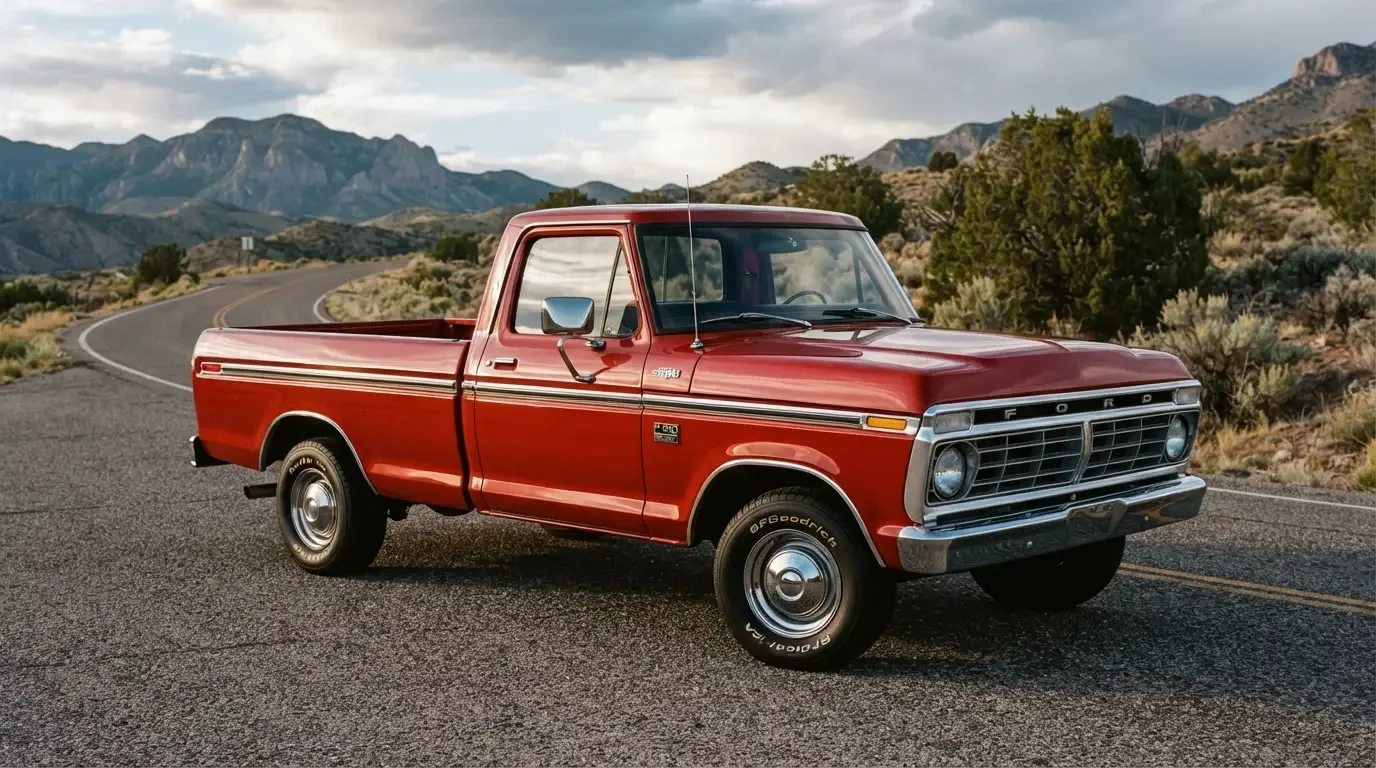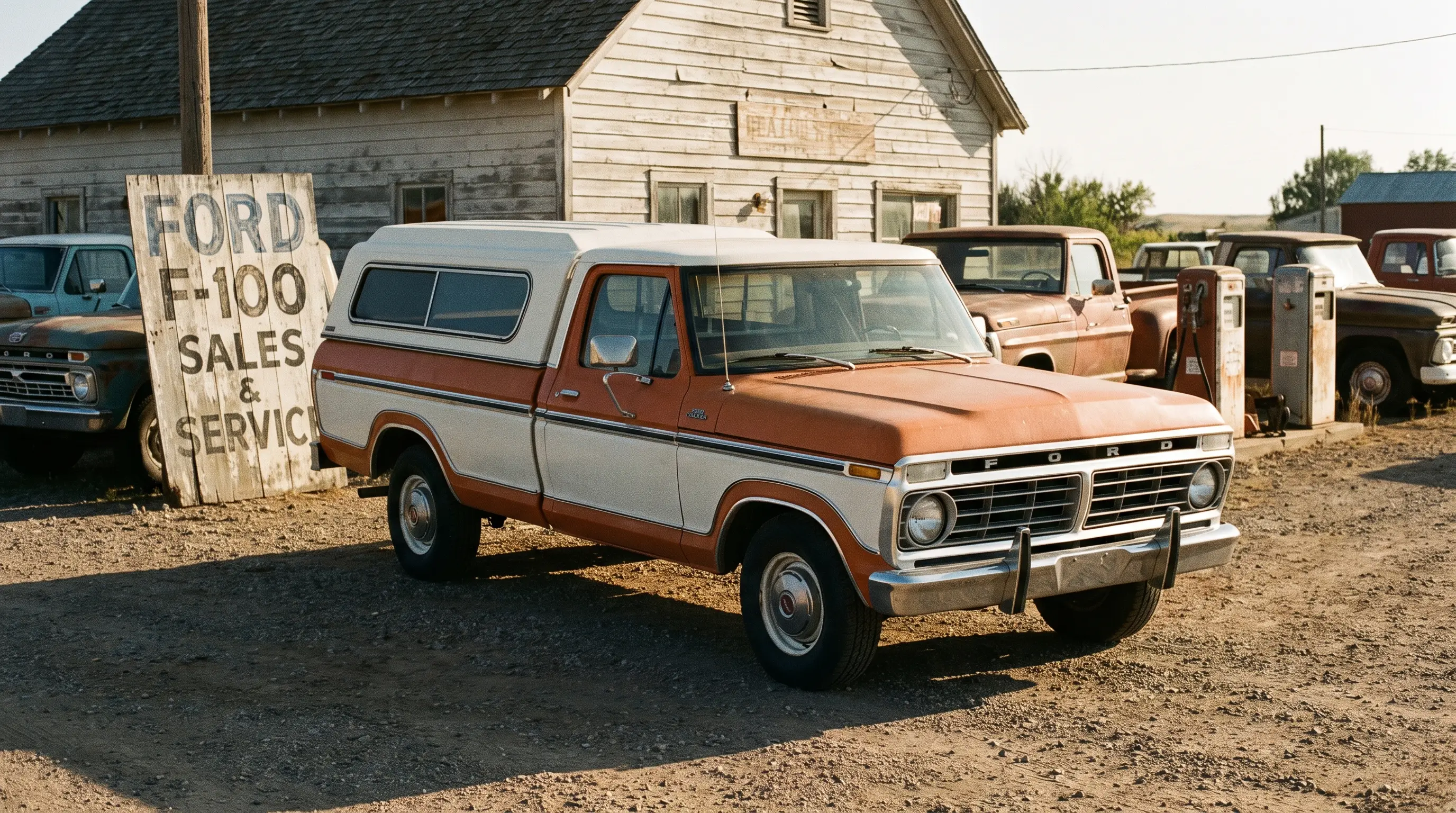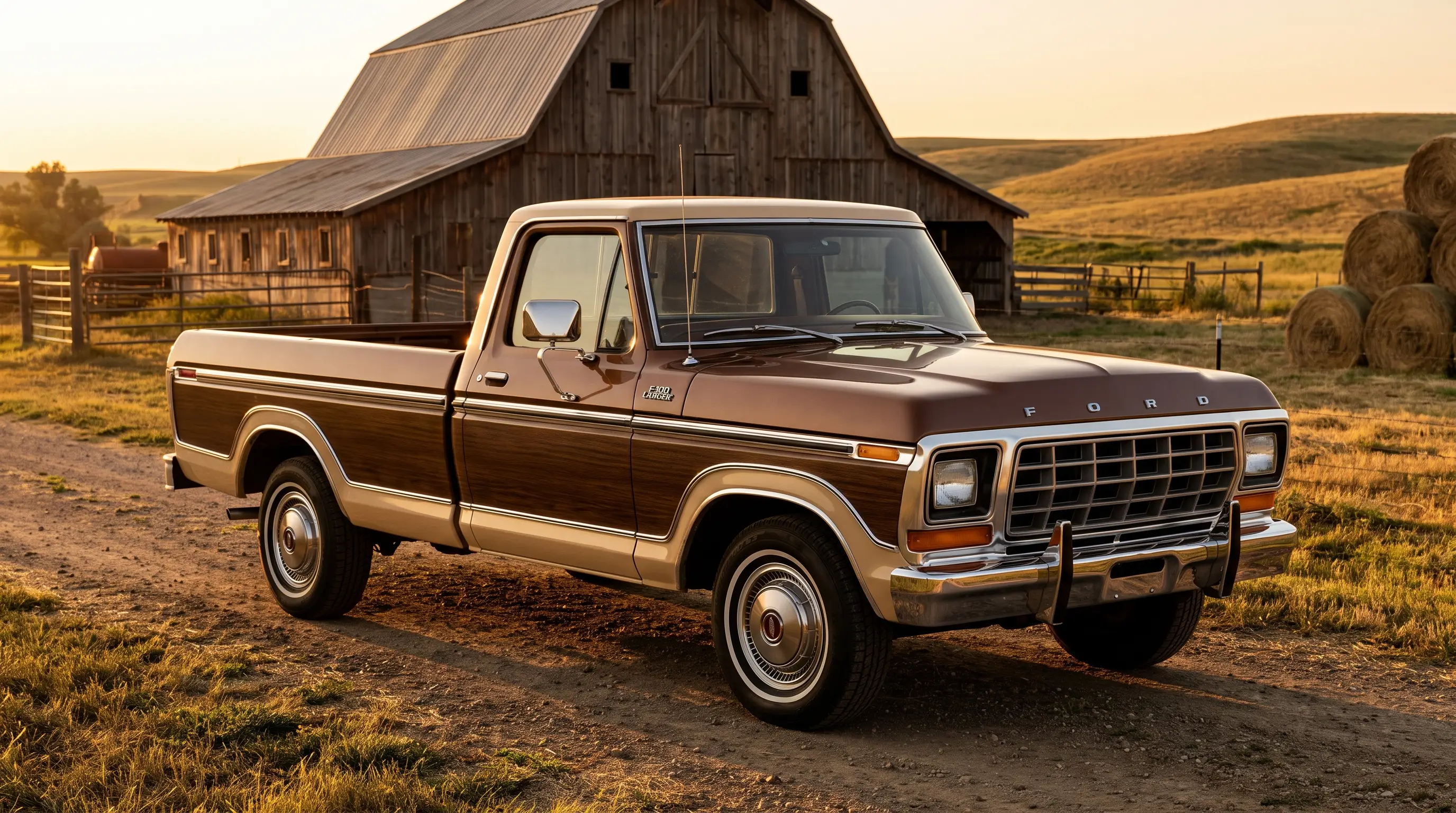
Every builder I know calls the 1973 through 1979 Ford F-100 the same thing before they call it anything else: the dentside. Not the "seventh generation," not the model code, just dentside, because of the long rectangular crease pressed into each door and bedside. It is a small detail that ended up defining an entire era of Ford truck styling, and if you have spent any time in a body shop straightening one of these panels, you know that crease is the reason people fall in love with this shape.
Where the crease came from
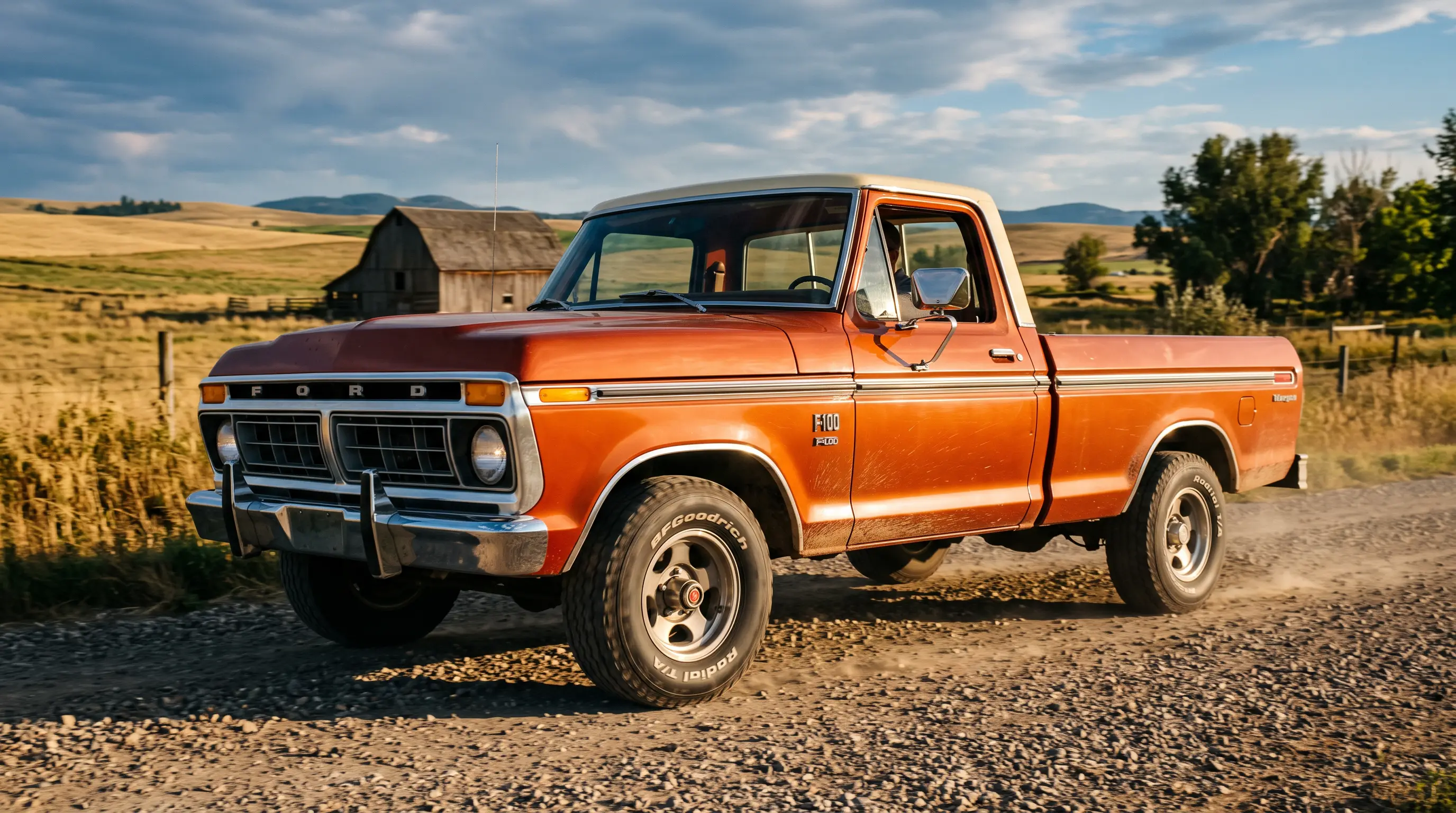
Ford's designers were not chasing a gimmick when they drew that indentation into the bedsides and doors for the 1973 redesign. Flat sheet metal panels of that size oil-can under stress, meaning they flex and pop audibly when you press on them, which reads as cheap and eventually leads to fatigue cracking around the edges. The dentside crease acts as a structural rib, stiffening the panel without adding weight or cost the way a full body line stamping would. Our 1973 Ford F-100 retrospective covers the full redesign in detail, but from a builder's standpoint the crease is the single most important styling decision Ford made on that truck, because it solved an engineering problem and became the visual signature of the whole generation in the same move.
What period-correct actually means on this body
I get asked constantly whether a smoothed-out dentside, one where the owner has filled the crease and shaved the body lines flat for a custom look, counts as a legitimate build or a poseur move. My answer has not changed in years. It is a legitimate custom choice if you own it as exactly that, a deliberate departure from factory styling, done with real metalwork rather than a skim coat of filler over a crease that was never designed to be hidden. What I do not respect is a builder claiming a smoothed dentside is somehow more original or more correct than a stock one. It is the opposite. The crease is the defining feature of this body style, and removing it is a statement, not a restoration.
Trim levels changed the story the crease told
Ford leaned into the dentside shape differently depending on trim. A base-model work truck let the crease do all the talking, with a single body color and minimal brightwork letting the panel's sculpting read as the only design element. Move up to a Ranger or the top-tier Ranger Lariat and Ford added two-tone paint schemes that traced the crease line itself, turning what started as a structural rib into a paint break that emphasized the truck's length and lowered its visual stance. A related story on those luxury trims goes deeper into how far Ford pushed the interior side of that upgrade, but on the exterior, the two-tone treatment is the clearest example of Ford's designers building an entire trim hierarchy around one styling cue.
"You can tell a shop that respects this body the second you see how they handled the crease. Filled and forgotten, or straightened and left alone. There is no in-between that looks right."
- Jim Vasquez
How the front end evolved alongside the crease
The dentside body was not a static design across its seven-year run. Ford refreshed the grille and front clip more than once, moving from a horizontal bar treatment in the early years to a bolder, more upright grille by the 1978 and 1979 trucks, and each update had to work with the bedside crease rather than fight it. The single-headlight setup on early dentsides gave the truck a narrower, plainer face that matched the utilitarian trim levels most buyers ordered, while the later dual-headlight arrangement on higher trims widened the visual stance of the front end to better match the length the crease implied down the sides. None of these changes touched the core stamping. Ford understood that the crease itself was doing the heavy lifting for the truck's identity, and the front end updates were there to keep pace with it rather than compete with it.
Color choice interacted with the crease more than most owners realize until they have repainted one. A dark solid color tends to hide the crease's depth in flat lighting and only reveals it under direct sun or at an angle, while lighter colors and the factory two-tone splits catch the shadow line constantly and make the truck look sculpted even parked in shade. Builders picking a paint scheme for a dentside restoration who want the crease to read clearly from a distance are usually better served by a two-tone job that follows the factory break line than by a modern solid color that was never designed with this body's proportions in mind. It is a small decision that changes how the whole truck presents, and it is one more reason the crease deserves more credit than it usually gets in conversations about this generation's styling.
Working on the panels today
From a bodywork perspective, the dentside crease is unforgiving in a way flat panels are not. A dent or rust hole that lands on the crease line itself is far harder to repair invisibly than the same damage on a flat section of bedside, because the crease has to stay perfectly straight and consistent in depth across the whole panel length or the eye catches the inconsistency immediately, even from a distance. Builders sourcing replacement bedsides for these trucks generally prefer full panel swaps over patch repairs specifically because of this, since a patched crease rarely disappears completely even after careful metal finishing. F-100s for sale now that still carry straight, unmolested crease lines and original bedsides are worth a real premium over trucks that have been patched, and anyone shopping this generation should run a hand down the crease before anything else, because paint hides a lot but it rarely hides a wavy line.
The dentside shape earned its nickname honestly. It is not a marketing term Ford ever used, it is what the people who actually work on these trucks started calling them because the design detail was impossible to ignore. Nearly fifty years later, that crease is still the first thing a builder looks at, and it remains the clearest signature Ford ever pressed into a truck body.
What keeps me coming back to this generation in the shop is how much the design still holds up against trucks built decades after it. Modern truck styling leans on aggressive character lines and creased hoods borrowed straight from this same idea, a single pressed detail carrying the whole visual identity of the vehicle. The dentside did it first, did it honestly, and did it for a practical reason rather than a styling trend chasing attention. That is the difference between a design that ages well and one that reads as dated the moment the next model year arrives, and it is why builders still treat a straight, unmolested dentside panel as something worth protecting rather than replacing.