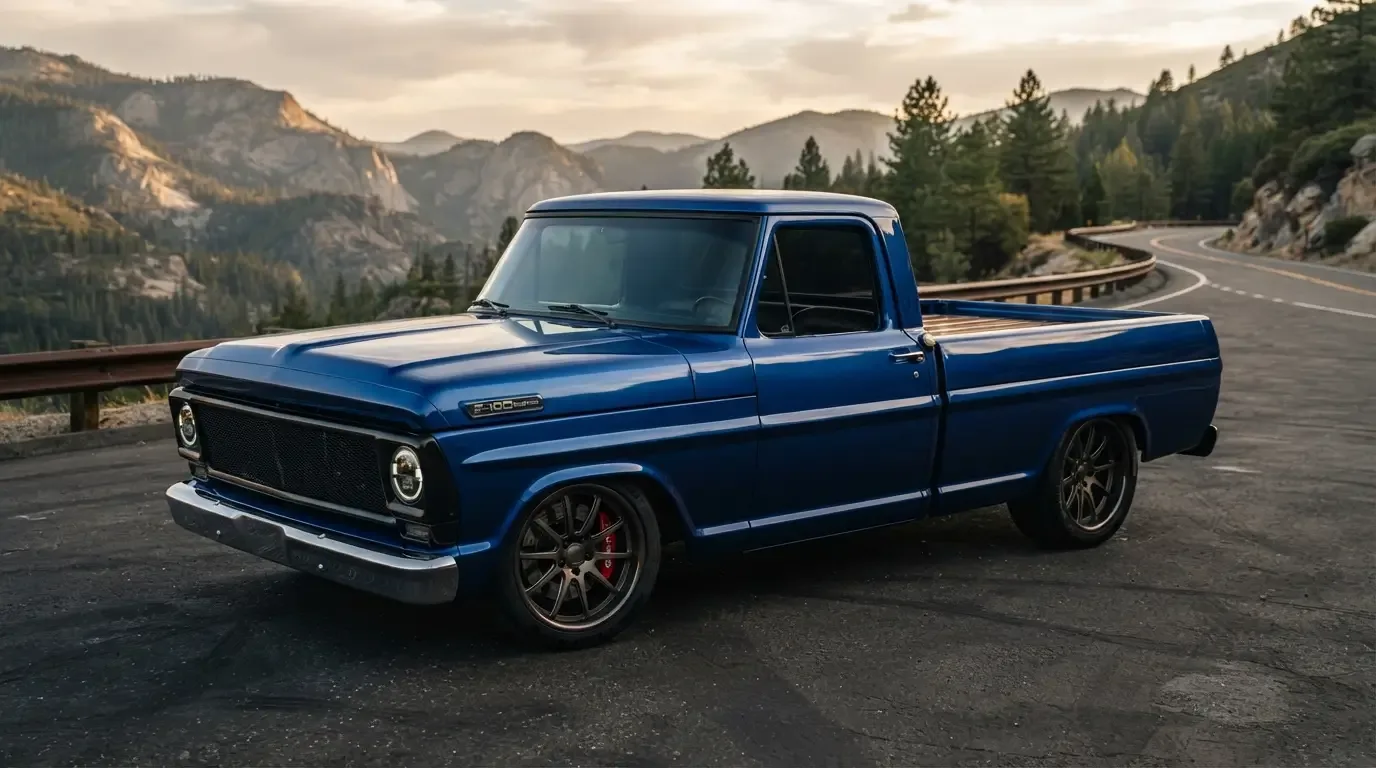
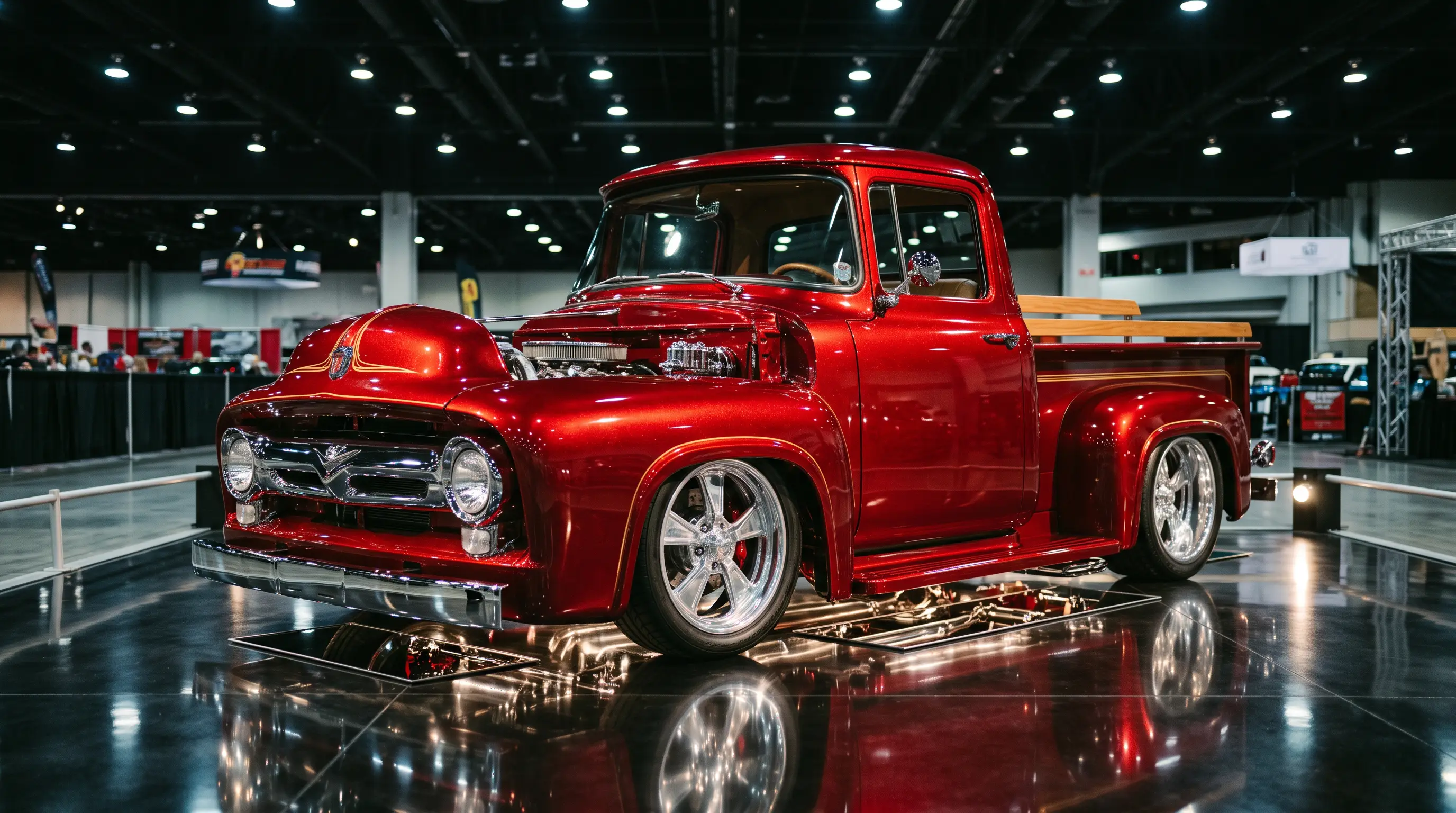
There is a particular hush that falls over a judging area when a serious contender rolls up, engine off, being pushed the last twenty feet by three guys who clearly do not want a single spot of grease on the tires. That hush is reserved for a small class of trucks, the ones that consistently take home hardware. An award winning ford f100 does not happen by luck, and the trucks that keep winning share more in common than most spectators realize.
What judges actually look for
Show judging on a build of this caliber comes down to details most people never think to check: panel gaps consistent to a fraction of an inch on all four sides of a door, wiring routed and loomed so cleanly it looks factory, and paint depth that holds up under direct show lighting without showing a single flaw. Judges at events like the Detroit Autorama or Grand National Roadster Show have seen thousands of trucks, and they know instantly when a build is hiding a shortcut under a coat of clear. The trucks that consistently place are the ones where every inch, including places a casual viewer would never check, was finished to the same standard as the parts everyone photographs.
Regional shows build the reputation first
National recognition rarely comes without years of regional groundwork first. Most award-winning F-100s spend a season or more competing at smaller local and regional shows before they ever reach a stage like the Detroit Autorama or Grand National Roadster Show. Those regional events serve a real function beyond trophies. They give a builder honest feedback from a range of judges with different specialties, catching flaws that might otherwise go unnoticed until a national panel finds them in front of a much bigger audience. A truck that wins consistently at the regional level, across judges who have never seen it before, has effectively been tested and refined through real-world scrutiny long before it takes on national competition.
Owners who skip that regional groundwork and jump straight to a major national event with an unproven truck rarely fare well, no matter how much money went into the build. Judges at the top level expect a truck to already be sorted, and a build that surfaces problems for the first time on a national stage tends to get remembered for the wrong reasons. That is part of why the most respected award-winning F-100s usually carry a documented multi-year show history rather than a single headline win.
The Ridler and Autorama pedigree
Winning the Ridler Award at the Detroit Autorama is the highest honor a custom vehicle can earn on the show circuit, and while it has more often gone to cars, F-100s have made serious runs at the Great 8 finalist round in recent years. Getting that close means a truck has already survived a brutal qualifying process at regional shows across the country, each one another round of scrutiny from a different panel of judges. A truck that reaches the Great 8 has effectively been vetted by dozens of experts before it ever reaches the national stage, which is part of why that pedigree carries so much weight among collectors afterward.
What it costs to build at this level
Trucks competing seriously for major awards are rarely modest budgets. Between custom chassis fabrication, hand-formed bodywork, multi-stage paint, and an interior built by a specialist upholstery shop, a genuine contender can represent thousands of hours of labor spread across a build that took years to finish. That level of investment is part of why award-winning F-100s hold their value so well afterward. A documented show history from a recognized event adds a layer of provenance that a private, undocumented build simply cannot match, regardless of how good the workmanship might actually be. For the fuller context on how show culture and everyday restomod culture diverged, the whole picture is worth reading before assuming every well-built truck is chasing a trophy.
"I've judged trucks where the owner could tell me the torque spec on every bolt in the engine bay from memory. That kind of obsession is the actual difference between a nice truck and a winning one."
- Wayne Coburn
The interior gets judged as hard as the paint
Casual show spectators tend to focus on paint and engine bay work, but serious judges spend nearly as much time evaluating an F-100's interior. Stitching consistency, gauge legibility, carpet fitment around the transmission tunnel, and even the feel of the door panels all factor into a top-tier score. A show-winning F-100 interior is usually built by a specialist upholstery shop working from a design plan as detailed as the exterior's paint scheme, with material choices coordinated to complement the truck's color rather than simply matching it. Judges who have seen thousands of trucks can spot an interior that was an afterthought within seconds, and that impression tends to color how they evaluate everything else on the build afterward.
Sound deadening and climate control upgrades have also become part of the judging conversation, even though neither is visible at a glance. Builders competing at the highest level now often install these systems specifically so the truck functions comfortably enough to actually be driven to the show rather than trailered, and some judges factor that drivability into their overall impression of the build's completeness. A truck that arrives under its own power, running cool and quiet, tends to make a stronger case than one that needed a trailer for even a short trip across town. Some events now recognize this directly with a dedicated driven-to-the-show category, separating trucks that made their own way there from trailer queens and giving builders another reason to prioritize genuine drivability alongside show finish. That category has quietly become one of the more respected awards at several regional events, precisely because it rewards a completeness that pure static judging cannot fully measure.
Life after the trophy
Winning a major award changes a truck's trajectory permanently. Some owners keep campaigning the same build across multiple seasons, chasing additional titles and building a reputation that follows the truck through every future sale. Others retire an award-winning truck from competition entirely, treating the win as the finish line and preserving the truck exactly as it looked on its best day. Either path tends to protect the truck's value, since a documented award sits on the vehicle's history permanently, distinct from the ordinary wear and resale cycle that affects most custom builds. Buyers interested in this tier of the market, or simply looking for a well-documented starting point of their own, can find a classic F-100 and compare how award pedigree shows up in asking prices across current listings.